Category: Sub-Saharan Africa

  • A Response to Fr. William Devlin / Complex Crisis Facing Northern Nigeria

    A Response to Fr. William Devlin / Complex Crisis Facing Northern Nigeria

    Understanding the Complex Crisis Facing Northern Nigeria

    A Response to Fr. William Devlin

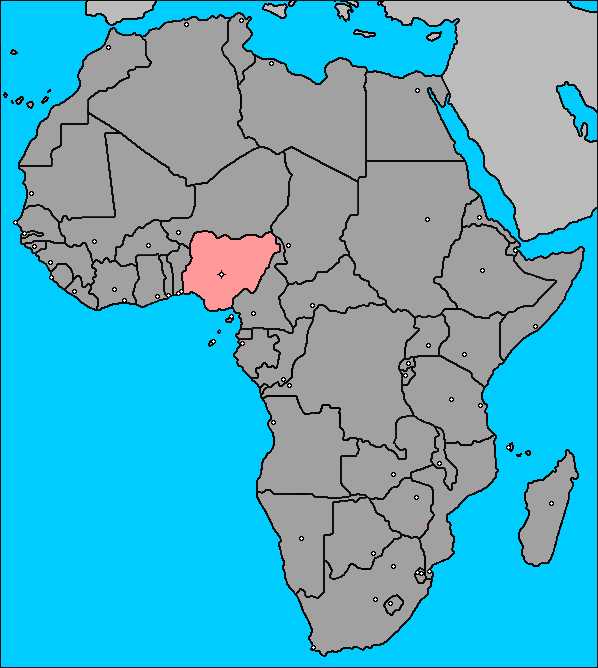
    For over two decades, I have closely followed the situation in Northern Nigeria through conversations with diplomats at the United Nations, NGOs operating on the ground, and countless Nigerian citizens from both Christian and Muslim communities. The plight of Christians in the region is real and deeply painful. However, to frame the violence as a one-sided “Muslims versus Christians” campaign is not only inaccurate it is dangerously reductive and risks undermining efforts toward peace and justice. Most recently, my attention was drawn back to this tragic issue by my dear friend, Fr. Bill Devlin, a courageous and tireless global advocate for the persecuted. He expressed his heartbreak by describing the atrocities as “Muslims murdering Christians.” His concern is heartfelt, and his compassion for the suffering is beyond question. However, this characterization—though emotionally charged—oversimplifies a deeply layered crisis and risks inflaming sectarian divisions in a region already suffering under the weight of historical injustice and broken governance.

     The Facts on the Ground , Yes, Christians in Northern Nigeria face alarming challenges so does Muslims . In several Muslim majority locations, discrimination, marginalization, and targeted violence are disturbingly frequent on both sides. Attacks on churches, mosques, kidnappings of clergy, and the displacement of Christian farming communities have been documented extensively. Boko Haram and ISWAP (Islamic State West Africa Province) have carried out heinous crimes, many of them targeting Christians specifically. But to reduce this complex, multii dimensional crisis to a narrative of “Muslims killing Christians” is not only factually incorrect it is morally irresponsible.

     A complex conflict far beyond religion is what is on the ground . The violence in Northern Nigeria is fueled by a volatile mix of ethnic conflict, land use disputes, criminal banditry, terrorism, and governmental failures. Religious identity is often used to justify or exacerbate conflict, but it is rarely the root cause. Ethnic tensions: Clashes between Muslim Fulani herders and largely Christian farming groups such as the Tiv and Berom are often framed in religious terms, but the underlying issues revolve around land use, grazing rights, and environmental degradation. Banditry and criminality: Armed gangs without clear ideological or religious motivation have ravaged both Muslim and Christian communities. Kidnapping for ransom, extortion, and village raids are tragically common and indiscriminate.

     Political failure: The Nigerian government has repeatedly failed to prevent violence or prosecute perpetrators. This impunity has emboldened criminal actors and fueled cycles of revenge. Muslim victims: Thousands of Muslim civilians have also been targeted by Boko Haram, bandits, and even retaliatory attacks. Mosques have been bombed, imams executed, and entire Muslim communities displaced or wiped out. To frame this tragedy as a religious war as Fr. Devlin has conveyed it  does a disservice to victims on both sides. Consider these facts:

     In 2014, Boko Haram bombed a mosque in Kano, killing over 100 Muslims.

     In 2021, over 200 Muslim civilians were massacred in Zamfara State by bandits.

     In Kaduna, interfaith peace dialogues have been violently disrupted by attacks that struck both Muslim and Christian communities.

     In Plateau and Benue, retaliatory attacks have consumed entire villages—Christian and Muslim alike.

     To say “these are Muslims doing the murders” As Fr William Devlin said  is to erase the profound suffering of Muslim victims and to cast suspicion on millions of innocent Nigerians who desire nothing more than to live in peace with their neighbors.

     What Global Institutions Say: It’s Not Just Religion

    Internationally respected organizations from human rights monitors to interfaith NGOs have thoroughly investigated the conflict. Their consensus is clear: religion isa small or  just one of many overlapping factors. Here’s what they have documented:

     1. U.S. Commission on International Religious Freedom (USCIRF)

    “Conflicts between herders and farmers in the Middle Belt are complex… It is an oversimplification to frame them as purely Muslim-Christian violence.”

    (USCIRF Nigeria Factsheet, 2023)

     2. Amnesty International

    “Both Christian and Muslim communities have been victims and perpetrators… To ascribe the violence solely to Muslim  motivations ignores the deep-rooted causes including poverty, impunity, and failure of security forces.”

    (Harvest of Death, 2022)

     3. International Crisis Group (ICG)

    “Portraying the herder-farmer violence as a religious war is misleading. It is driven largely by competition for land and water, desertification, and poor governance.”

    (Africa Report No. 301, May 2021)

     4. Search for Common Ground

    “Both Christians and Muslims express fear, loss, and anger. Religious identity becomes weaponized in the absence of governance, but that doesn’t mean the conflict is about faith.”

    (Peacebuilding Report, 2020)

     5. The Tony Blair Institute for Global Change

    “Groups like Boko Haram use religion to justify brutality, but their recruitment is often rooted in economic despair and lack of state presence. Blaming Islam as a whole plays into their propaganda.”

    (Policy Brief, 2022)

     6. Human Rights Watch (HRW)

    “Muslim civilians—particularly those who oppose extremist ideologies are regularly targeted… Dozens of imams have been killed for preaching peace.”

    (HRW Nigeria Annual Review, 2023)

     7. UN Office for the Coordination of Humanitarian Affairs (UNOCHA)

    “Both Muslim and Christian children have been displaced, orphaned, or abducted. Aid must not be politicized—religious identity does not define vulnerability in this conflict.”

    (UNOCHA-UNICEF Report, Q2 2023)

     A Call for Responsible Advocacy : Religious freedom must be defended. The persecution of Christians in Northern Nigeria is real and must never be minimized or Muslim persecution. But truthful advocacy demands we avoid sweeping generalizations that turn victims into enemies or demonize entire faith communities. There are brave Muslim imams who hide Christians in their mosques, Muslim villagers who protect their Christian neighbors, and interfaith alliances that work every day toward justice and peace. Their courage deserves our support not our silence. To reduce such a complex humanitarian crisis to a binary of “Muslims killing Christians” as Fr William Devlin’s conveyed to me not only distorts the facts it feeds Islamophobia, Looks to delegitimizes  a whole of Muslims community , obstructs peace efforts, and risks repeating the mistakes of history where rhetoric incited violence.

    Conclusion: Stand for Justice, Not Division Fr. Devlin.

    In the face of unspeakable violence, let us be defenders of truth not amplifiers of fear. Let us commit to justice not vengeance. And let us advocate for all who suffer Christian, Muslim, or otherwise not because of their faith, but because of their humanity.

     Let us not allow the extremists to define the narrative for either side. Terrorism is not Islam, and those who commit atrocities in its name do not represent the faith of over 90 million peaceful Muslims in Nigeria.

    May we raise our voices firmly, responsibly, and compassionately on behalf of all who seek peace and dignity in Northern Nigeria.

    Ibrahim Kurtulus 
    Community Activist 
  • Winston Churchill’s sister-in-law urged him not to convert to Islam

    Winston Churchill’s sister-in-law urged him not to convert to Islam

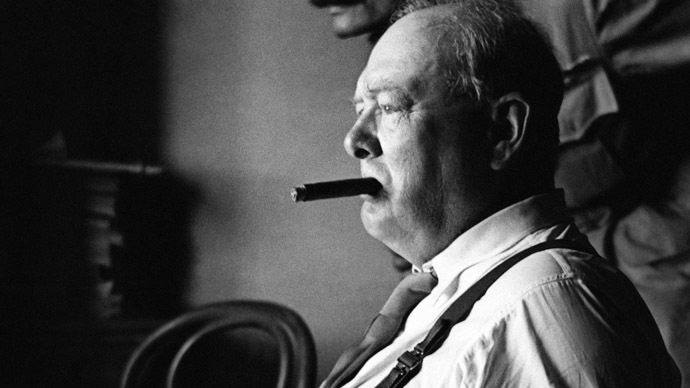
    British Prime Minister Sir Winston Churchill (AFP Photo/Cpt Tanner, No 2 Army Film and Photographic Unit)
    British Prime Minister Sir Winston Churchill (AFP Photo/Cpt Tanner, No 2 Army Film and Photographic Unit)

    Sir Winston Churchill’s family begged him to “fight against” the desire to convert to Islam, according to a newly-discovered letter.

    “Please don’t become converted to Islam; I have noticed in your disposition a tendency to orientalise, Pasha-like tendencies, I really have, the letter from Churchill’s future sister-in-law, dated August 1907, says, the Independent reported.

    “If you come into contact with Islam your conversion might be effected with greater ease than you might have supposed, call of the blood, don’t you know what I mean, do fight against it,” Lady Gwendoline Bertie, who was soon to marry Churchill’s brother Jack, added.

    The letter was found by a historian at Cambridge University, Warren Dockter, while he was researching for his book ‘Winston Churchill and the Islamic World: Orientalism, Empire and Diplomacy in the Middle East’.

    The former UK prime minister was greatly interested in Islam and oriental culture, but “never seriously considered converting,” Dockter told the paper.

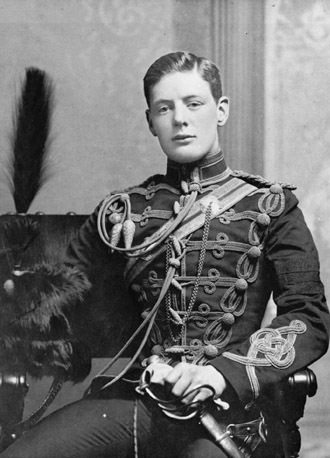
    Churchill in military uniform, 1895. (Image from Wikipedia/the Imperial War Museum)
    Churchill in military uniform, 1895. (Image from Wikipedia/the Imperial War Museum)

    “He was more or less an atheist by this time anyway. He did however have a fascination with Islamic culture, which was common among Victorians,” he added.

    Churchill became acquainted with Islamic culture during his army service in Sudan, and was greatly taken with it.

    The researcher noted the possible reason behind the letter, and that those close to Churchill needn’t have been worried. He may have been a great admirer of the culture, but was also critical in his views on Islamic society.

    “The fact that in Mohammedan law every woman must belong to some man as his absolute property, either as a child, a wife, or a concubine, must delay the final extinction of slavery until the faith of Islam has ceased to be a great power among men,” Churchill wrote in 1899 of his experience in Sudan.

    Russia Today (UK), 29 December 2014

  • Caribbean states demand reparations from European powers for slave trade

    Caribbean states demand reparations from European powers for slave trade

    Most of the Caribbean nations have adopted a single plan to solicit from former slaving nations an apology, more aid and damages for 300 years of slavery, which they say have hobbled their economies and public health

    slavery
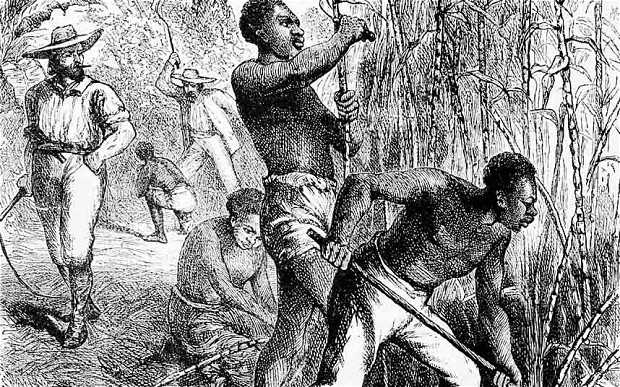
    Sugar Plantation Slaves 1858 engraving of slaves in the British West Indies working the sugar cane Photo: Lordprice Collection/ Alamy

    By Philip Sherwell, New York

    A coalition of Caribbean countries has unveiled its demands for reparations from Britain and other European nations for the enduring legacy of the slave trade.

    The leaders of 15 states adopted a wide-ranging plan, including seeking a formal apology from former colonial powers, debt cancellation, greater development aid as well as unspecified financial damages for the persisting “psychological trauma” from the days of plantation slavery.

    The series of demands to be made of former slaving nations such as Britain, France, Spain, Portugal and The Netherlands were agreed at a closed-door meeting of the Caribbean Community (Caricom) in St Vincent and the Grenadines.

    The Atlantic slave trade took place from the 16th through to the 19th centuries.

    The group hired Leigh Day, the British law firm, to push their claims after the company secured a £20 million compensation award for Kenyans who were tortured by colonial authorities during the Mau Mau rebellion in the 1950s.

    The reparations debate has long simmered in the Caribbean where many blame slavery for modern ills, ranging from economic weakness to health epidemics such as diabetes and hyper-tension allegedly caused by their ancestors’ poor diets.

    Caricom is pushing for increased technological assistance as it says European powers shackled the region during the world’s industrialisation by confining it to producing and exporting raw materials such as sugar.

    The plan also demands an increase of aid for public health and educational and cultural institutions such as museums and research centres.

    And it calls for the creation of a “repatriation programmes” to help resettle members of the Rastafarian movement in Africa. Repatriation to Africa has long been a central belief of Rastafarians.

    Martin Day, of Leigh Day, said he would request a meeting with European officials to seek a negotiated settlement, but would pursue a legal complaint if Caribbean nations are not satisfied with the outcome of any talks.

    It has been 180 years since Britain abolished slavery but the demand for an unqualified apology remains as controversial as the calls for financial damages.

    In 2007, Tony Blair, the then prime minister, expressed “deep sorrow and regret” for the “unbearable suffering” caused by Britain’s role in slavery but stopped short of a formal apology. His words angered many in the Caribbean as inadequate and resonating of legal caution.

    The British government, which currently contributes about £15million a year in development to the Caribbean, said that it has not been presented with the demands, but has consistently signalled opposition to financial reparations.

    “The UK has been clear that we deplore the human suffering caused by slavery and the slave trade,” a Foreign Office spokesman said. “However we do not see reparations as the answer. Instead, we should concentrate on identifying ways forward with a focus on the shared global challenges that face our countries in the twenty-first century.”

    But Professor Verene Shepherd, the chairman of Jamaica’s reparations committee, told The Daily Telegraph last month that British colonisers had “disfigured the Caribbean”, and that their descendants should now pay to repair the damage.

    “If you commit a crime against humanity, you are bound to make amends,” she said. “The planters were given compensation, but not one cent went to the freed Jamaicans”.

    The Caricom nations highlighted the region’s enduring troubles as well the suffering of the victims of the trade in humanity and the profits made by the slaving powers.

    “The transatlantic slave trade is the largest forced migration in human history and has no parallel in terms of man’s inhumanity to man,” their claim reads. “This trade in enchained bodies was a highly successful commercial business for the nations of Europe.”

    www.telegraph.co.uk, 11 Mar 2014

  • Mandela was a true freedom fighter

    Mandela was a true freedom fighter

    It is with sadness that I heard of the news of Mzee Nelson Mandela’s death.

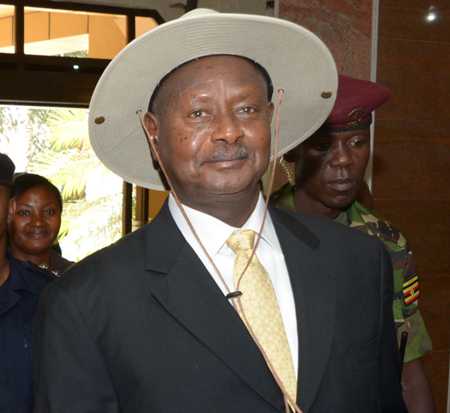
    Museveni-ICCThe sad and heroic story of Mzee Mandela starts in 1453 AD when the Ottoman Turks captured Constantinople (Istanbul as it is called today) from the Byzantine empire.

    That capture blocked the overland route from Europe to Asia that had been established by Marco Polo many centuries before.

    That route was important to Europe especially for spices and silk trade.

    With that blockage, the Europeans started looking for an alternative sea route to the east, around the massive African continent.

    Prince Henry, the navigator, of Portugal established a naval school at Cadiz to improve on the construction of ships and on navigation techniques so that they could have ships that could withstand long ocean voyages to Asia, around Africa.

    This is not the time and place to go into the details of that European effort of circumventing the Moslem blockade.

    Suffice it to say that by 1498, a mere 45 years after the fall of Constantinople, the Portuguese, Vasco Da Gama, had rounded the Cape of Good Hope (Cape Town) and spent the Christmas of that year at Natal, that is why that area was so named, remembering the birth of Christ.

    With the discovery of the sea route to the Far East by the Europeans, that is where the sad but also heroic story of Nelson Mandela and Africa begins. Initially, the Europeans came as traders, establishing refuelling and replenishment stations for their ships on the way to the Far East.

    Within a few centuries, however, the traders had become the colonisers. The sad thing is that while all this was unfolding, the African chiefs and other leaders never made serious efforts to co-ordinate in order to guarantee our future as free people. Yes, various tribes fought the colonialists. However, the co-ordination was either not there or too late.

    On account of internal weaknesses within Africa, therefore, by the birth of Mzee Mandela in 1918, the whole of African continent, except for Ethiopia, had been colonized. Therefore, Mandela had the misfortune of being born under colonialism like many of us were.

    Various individuals reacted differently to this situation.  Many acquiesced and accepted colonialism or even collaborated with it. However, a few others like Mandela, Albert Luthuli, Walter Sisulu, Oliver Tambo, etc., chose the difficult, hard route of resistance to colonialism.

    That resistance invited reprisals from the oppressors. The African National Congress (ANC) people are more qualified to go into the details of that resistance by the party and the individuals that were involved. On account of our Pan-Africanist orientation, we linked up with the ANC in 1967 in Dar esSalaam.

    Ever since that time, the NRM, or its precursors, have been working closely with the liberation movements of southern Africa – ZANU, ZAPU, FRELIMO, ANC, SWAPO, MPLA, etc, etc.

    The resistance of all the colonized peoples in the world had benefitted from three factors: the continued resistance of those colonised peoples, the fratricidal fighting among the imperialists (the first and second World Wars); and the solidarity from the socialist countries (Soviet Union, China, etc, ever since 1917).

    That resistance had led to some of the cleverer imperialists giving back the freedom of the people peacefully, examples being India and many of the African countries, including Uganda. However, those who were not so clever, such as Portugal and the Boers of South Africa and Rhodesia, thought they could maintain their colonial or minority and racist regimes.

    It was the lot of freedom fighters like Mzee Mandela and his colleagues to sacrifice and fight those regimes. Mzee Mandela spent almost the whole of his adult life fighting for freedom, starting as a youth in the 1940s.

    Eventually, he went to jail where he spent 27 years. Out of his 95 years on earth, given to him by God, it is only in the last 22 years, since 1991, that he has lived as a free man. What a sacrifice!!

    Even those 22 last years of his life, he was not out of danger. Did I not recently hear of South African racists that were plotting to kill him for fighting for freedom?

    Didn’t Chris Hani die, shot dead, when South Africa was preparing for the first democratic elections? Chris Hani had been at Rwakitura to visit me where I tried to prevail on him not to go back to South Africa yet, but in vain.

    Mzee Mandela and his colleagues in the ANC have fulfilled their mission of throwing out the oppressors. It is the duty of the present generation to immunize Africa against future colonisation.

    Salutations to the sacrifices and achievements of Mzee Mandela and his colleagues.

    The author is the president of Uganda.

    via The Observer – Mandela was a true freedom fighter.

  • Turkey denies involvement in US raid in Somalia

    Turkey denies involvement in US raid in Somalia

    214931_mainimg

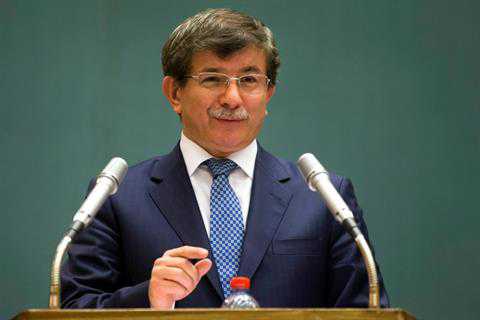
    Turkey’s Foreign Minister Ahmet Davutoglu gives a speech at the European headquarters of the United Nations, in Geneva, Switzerland, Monday, Sept. 30, 2013. (AP Photo/Keystone, Salvatore Di Nolfi)

    ISTANBUL: Turkey denied Sunday that its forces were involved in an assault in Somalia by US commandos against a suspected military leader of the Islamist Shebab group.

    “We deny these allegations completely,” a foreign ministry spokesman told AFP.

    US Navy Seals stormed two militant targets in Africa on Saturday, snatching a top Al-Qaeda suspect in the Libyan capital Tripoli and raiding a Shebab leader’s home in the Somalian port of Barawe.

    The action in Somalia came two weeks after the siege by Al-Qaeda linked Shebab fighters at the Westgate shopping mall in Nairobi which left at least 67 people dead.

    The raid in Barawe failed to capture the wanted militant and it was unclear whether he had been killed, but a US official said several Shebab operatives had been slain.

    Shebab spokesman Abdulaziz Abu Musab told AFP that the “failed” beach assault had been led by Britain and Turkey.

    London has also denied any involvement.

    via Turkey denies involvement in US raid in Somalia | News , Middle East | THE DAILY STAR.

  • Where Is The $80 million Gold From Ghana Seized In Turkey?

    Where Is The $80 million Gold From Ghana Seized In Turkey?

    Turkey stopped cargo freight flier with Gold from Ghana. Turkey is gradually becoming the busiest hub for gold shipments to the Middle East. The Turkish authorities gave four days in Istanbul to a freighter laden with 1.5 tons (worth $80 million) of gold from Ghana. The plane landed around early January at the airport Ataturk in Istanbul and was arrested for four days with 1.5 tons of gold on board by the authorities.

    The Turkish fleet origin, an Airbus A300, cargo aircraft was chartered for transporting Gold from Ghana to Dubai. Other media reported that the machine had come from Algeria. For safety reasons, the Turkish authorities (customs) sealed the aircraft, since the crew had no genuine documents covering their freight on board, they were requested by the Turkish authorities to present required requisite documents.

    Not quiet long ago, the Turkish Government was repeatedly criticised and advised from the international community to be watchdogs since large quantities of gold from Turkey in the Islamic Republic were delivered in the past few months despite an international embargo against the Iran.

    The Geological Survey Department (GSD) has absolved itself from blame in the on-ongoing investigations into the seizure of an aircraft in Istanbul, Turkey, allegedly carrying 1.5 tonnes (worth $80 million) of gold originating from Ghana and destined for the Islamic Republic of Iran.

    The GSD Director, John Agyei Duodu insists his outfit only carried out laboratory analysis on mineral samples and not on gold bars, when speaking to Peacefmonline.com in an interview. The Bureau of National Investigations (BNI) carried investigation into how a shipment described as mineral samples could turn to gold bullion. It will be recalled that sections of the media reported on the supposed gold bars seized at Istanbul-Turkey due to lack of documents. It was widely conjectured that the said shipment was payment by Ghana government in respect of some financial transaction with the Islamic Republic of Iran.

    Government, in two separate responses, denied any involvement in the use of gold to settle any transaction with the Government of Iran. Following that denial, President John Dramani Mahama directed that the matter be investigated by the security agencies. Even though president John Dramani Mahama had to rush to Turkey, we were later told he went there to commission Ghana Embassy in Istanbul/Turkey.

    Before the BNI could come out with its initial findings, sections of the media published that the US$80 million supposed gold bars, have mysteriously changed into thirty (30) boxes of mineral samples weighing 1,500kgs.

    The publication further accused state officials at the GSD and Customs Division of the Ghana Revenue Authority of collusion for the detained Gold from Ghana. The publications also questioned why and how state officials at the GSD, Customs Division of the Ghana Revenue Authority, Ghana National Chamber of Commerce and Industry and SG-SSB Bank Limited, with the speed of light, hurriedly prepared and signed for “Omanye” Gold Mining Limited, the company at the centre of the whole DEAL on December 31, 2012, to enable them haul the 30 boxes of so-called mineral samples to Dubai.

    The publications further sought to malign the integrity of the GSDsaying the claim on the certificate that the 30 boxes of minerals for laboratory analysis only and are of no commercial value could be a clever means by the Geological Survey Department to outwit tax officials because the regulations mandates Bank of Ghana to collect tax from both the buyers and the sellers.

    The absence of proper documentation on the said gold, according to the publication citing experts’ opinion, is said to have accounted for the lie that the gold was on its way to Iran to settle Ghana’s bilateral transactions, leading to the Turkish officials seizing the consignment on board the cargo aircraft chartered from Tripoli-Libya.

    Now, figures here, figures there, investigations yesterday, investigations today and investigations tomorrow, fact and the question is! where is the 1,5 tonnes of the Ghanaian Gold, worth $80 million which was temporarily confiscated in Turkey? Was is really a DEAL meant to settle (Ghana) debt in Iran or where ever, a THEFT or an act of CORRUPTION?

    FRANCIS TAWIAH (Duisburg – Germany)

    via Where Is The $80 million Gold From Ghana Seized In Turkey? | Feature Article 2013-04-23.