Category: Iraq

  • Turkey: A midwife for a Kurdish state?

    Turkey: A midwife for a Kurdish state?

    Ankara has willy-nilly helped the Kurdish genie escape from the bottle and it will be very difficult for Turkey to push it back inside.
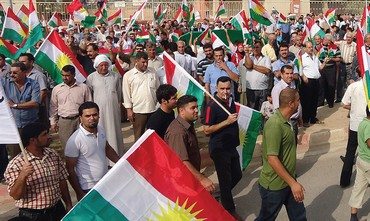
    Photo: REUTERS

    If there is one country that has helped build a Kurdish entity in Iraqi Kurdistan it is Turkey. This assertion seems paradoxical in view of Ankara’s traditional opposition to such an eventuality in Iraq and the well known pressures it applied on its allies, especially the United States, not to lend any support to the Kurds of Iraq because of the possible spillover effects on its own restive Kurds. Turkey’s new stance appears even more paradoxical against the backdrop of the latest upheavals in the region and their contagious effects both on its own Kurds and those of Syria.

    How is one to explain these paradoxes? First let us have a quick look at the facts on the ground. Since the 1991 Gulf War and much more so after the 2003 Gulf War Turkey has turned itself, slowly but surely, and against its better judgment, into the lifeline for Iraqi Kurdistan, which is led by the Kurdistan Regional Government (KRG), the euphemism for a Kurdish state in the making.

    The slow change in Ankara’s policy towards the KRG was not due to any altruistic considerations but for very pragmatic, down to earth ones. Immediately after the 1991 Gulf War and the crushing of the Kurdish uprising which ensued, Turkey was confronted with the problem of a million Kurdish refugees on its border. Unwilling to burden itself with another million Kurds, Turkey devised with the Allies the “Provide Comfort” project for the fleeing Kurds to enable them to go back to their homes.

    This plan, together with “the no-fly zone” where the Iraqi army could not act against the Kurds, as well as the ruptured relations between Ankara and Baghdad due to the war, set in motion the schizophrenic relations that would develop between Turkey and the KRG.

    On the one hand Turkey was extremely apprehensive of the possible contagious effects of the KRG on its own Kurds, hence Ankara’s attempts to thwart any political and diplomatic gains by the KRG. On the other hand Ankara did its best to reap the fruits of its relations with the emerging entity, one of the most important of which were economic gains. This approach turned the Kurdistan Region into a huge investment area for Turkish companies whose number reached around 900 by 2012 and amounted to half of the companies acting in the KRG.

    To this list one should add other large business, cultural and social ventures which turned the KRG into an undeclared Turkish sphere of influence. The net result was that no less than seven percent of Turkish exports went to the KRG.

    Ankara’s thirst for oil and gas and the pressure brought to bear on it to stop importing from Iran go a long way to explain the surprising pipeline deal it cut with the KRG on May 20, 2012, without the approval of the central government in Baghdad. If it materializes, the deal, which envisaged the building of two oil pipelines and one gas pipeline from the Kurdistan Region to Turkey, might give further boost to Kurdish aspirations for independence.

    Interestingly, the Turkish Minister of Energy and Natural Resources, Taner Yildiz, declared on that occasion that “Turkey should also be considered as the Regional Kurdish Government’s gateway to the West.”

    A second important aim for developing these relations was the hope that the KRG would help in solving Turkey’s own acute Kurdish domestic problem, namely the ongoing attacks which the armed Turkish Kurdish PKK continued to launch against Turkish state targets.

    However, Ankara’s hope that the KRG would fight against, or at least contain the PKK, whose bases are found in Iraqi Kurdistan, was not fulfilled. The third and perhaps most important consideration was Ankara’s need to attune itself to the region’s changing geostrategic map, which pushed it to act according to the dictum “my enemy’s enemy is my friend.”

    The geostrategic considerations gathered momentum in the past two years due to several developments, all of which impacted negatively on Turkey’s environment and its foreign policy configurations.

    Before analyzing these changes it must be stressed that the stance of the AKP government toward the Kurdish domestic issue as well as towards the KRG underwent slow transformation, which distinguished the AKP from earlier Kemalist governments.

    The geostrategic changes were quite drastic, including the “Arab Spring,” which accelerated the collapse of the Turkish-Iranian-Syrian axis. Furthermore, the revolution in Syria not only turned Ankara and Damascus into sworn enemies once again but also raised the specter of the influx of Syrian refugees. Worse still, it opened the Pandora’s box of Syrian Kurds and their possible collaboration with their brethren in Turkey, not to speak of the PKK card which Damascus started to employ once again against Ankara.

    The withdrawal of the American forces from Iraq in November 2011 and the vacuum left thereby was another very worrying development for Turkey, as it enhanced its competition with Iran for filling this vacuum.

    Lastly, one should note the deteriorating relations between Ankara and Baghdad against the background of the Sunni-Shi’ite rivalry in the region, Iraqi Prime Minister Nuri al-Maliki’s growing tilt toward Iran and his support for Syrian president Bashar al-Assad, as well as the growing personal antipathy between Turkish Prime Minister Tayyip Erdogan and Maliki.

    All this weakened Ankara’s “commitment” to the almost sacred notion of Iraqi unity and emboldened it in its bilateral ties with the KRG, the most challenging of which for Baghdad was the oil pipeline deal mentioned above.

    Turkey’s changing policy towards the KRG and its president Masu’d Barzani found its expression on the symbolic level as well.

    Barzani’s April visit to Turkey was a case in point. While in the past Ankara treated Barzani as a mere “head of tribe,” in this most recent visit it accorded him a welcome befitting a head of state, thus turning him into one of its important allies in the region. Moreover, in this visit Barzani reiterated publicly the Kurds’ right to self-determination but, interestingly enough, Turkish officials and the media chose to turn “a deaf ear” to this declaration.

    Turkey is facing now a Kurdish problem on all three fronts, which has multiplied its dilemmas but which has moved it, so it seems, to adopt a flexible and non-conventional policy: Embracing the KRG so as to contain its own Kurds and Syria’s as well. Should Turkey decide to give Barzani the green light, he would not hesitate to go the extra mile and declare independence. One thing is certain: Turkey has willy-nilly helped the Kurdish genie escape from the bottle and it will be very difficult for Ankara to push it back inside.

    Prof. Ofra Bengio is head of the Kurdish Studies Program at the Moshe Dayan Center, Tel Aviv University and author of The Kurds of Iraq: Building a State within a State.
  • Iraq Warns Kurds Against Striking Oil Deal With Turkey

    By Palash R. Ghosh

    The central government of Iraq warned the Kurdish-ruled semi-autonomous region of northern Iraq that it must obtain Baghdad’s approval for any oil export deals signed with Turkey.

    Kurdistan Regional Government Natural Resources Minister Hawrami speaks with Turkish Energy Minister Yildiz during a joint news conference in Arbil.

    On Sunday, Iraqi Kurdistan unveiled an agreement to sell oil through Turkey into the international markets, thereby leaving Baghdad completely out of the loop. The Kurdish oil minister Ashti Hawrami said Iraqi Kurdistan will construct a huge 1 million barrel per day pipeline over the next 12 months through which oil and gas will be carried through Turkey.

    “We envisage the building of a new pipeline taking Kurdistan’s oil, particularly the heavier component part to Cihan,” Hawrami said at a conference with Taner Yildez, the Turkish energy minister.

    Baghdad believes such an arrangement contravenes Iraqi laws, while Kurds assert they can sign any contract regarding their natural resources according to the terms of the constitution.

    Since 2003, the Kurds have entered into dozens of gas and oil deals, all of which have been classified as “illegal” by the authorities in Baghdad, who have also blacklisted the companies involved, including Exxon Mobil Corp. (NYSE: XOM), from doing business in Iraq’s southern oilfields.

    “We have no problem with any deals, but they have to be according to the Iraqi constitution and laws that govern relations between Baghdad and the Kurdish region,” said Ali al-Moussawi, an adviser to Iraqi Prime Minister Nouri al-Maliki.

    Earlier, the Kurds and the central Iraqi government entered into a deal under which Kurdistan would transport its oil to Baghdad, which would then sell it on the international market (with each side taking half of the revenue). However, in April, the Kurds cancelled this agreement, citing a payment dispute with Baghdad.

    But Hawrami insisted that there is no distinction between Kurdish oil and Iraq oil.

    “When we say oil from Kurdistan, it’s Iraqi oil,” Hawrami said.

    “There is no difference between Iraqi oil or Basra oil from Kurdistan.”

    A pact between Iraqi Kurdistan and Turkey was inevitable.

    “If you look at Turkey, which is the second-fastest-growing country in the world, its gas needs, which increase significantly every year, and then the price of oil, I think people realize that Turkey is looking to Iraq — particularly the Kurdish regional government — very carefully, because of economics, not because of politics,” Mehmet Sepil, chairman of Turkey’s Genel Energy, told al-Jazeera.

    Iraq is now Turkey’s second-biggest trade partner, although most of that trade is with the Kurdish region.

    According to the Kurdish government, there are about 143 billion barrels of proven oil reserves in the south of Iraq, while the northern (Kurdish) semi-autonomous region has about 45 billion barrels,.

    Meanwhile, any deals with Turkey will likely worsen already tense relations between Ankara and Baghdad.

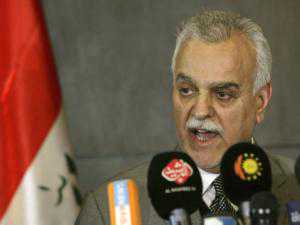
    Maliki of Baghdad was also outraged recently when Turkey’s Prime Minister Recep Tayyip Erdogan hosted Tariq al-Hashemi, the Iraqi vice president who had been issued an arrest warrant by Baghdad for allegedly forming death squads. Hashemi has since escaped to Iraqi Kurdistan for refuge.

    via Iraq Warns Kurds Against Striking Oil Deal With Turkey – International Business Times.

  • Turkey Aims to Contain Iraq, Iran

    Turkey Aims to Contain Iraq, Iran

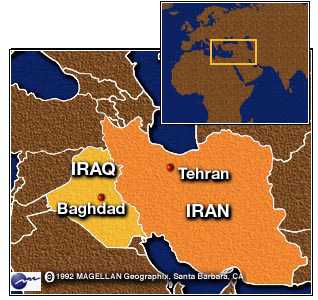
    A bitter rift with Iraq has exposed Turkey’s role in a wider Middle East power struggle, with Ankara acting to protect its stability and prosperity from an Iranian-Iraqi “Shiite axis” it fears in the wake of the US military withdrawal from Iraq.

    Turkey, a regional power bordering Iraq, Iran and Syria, long tried to play regional mediator.

    But the fallout wrought by Arab Spring uprisings and the US exit from Iraq have forced Turkey to make tricky adjustments by cutting old alliances and forming new ones, jettisoning its “zero problems with the neighbors” policy.

    That shift, coupled with a more aggressive diplomacy personified by an increasingly combative Prime Minister Recep Tayyip Erdogan – has thrust Turkey into a regional strategic game pitting Gulf Arab states and Ankara against Iran.

    “What is really critical is the American withdrawal from Iraq, because that basically made Iraq a much more open playing field for the Iranians,” said Soli Ozel, a prominent Turkish academic and commentator.

    Turkish officials have been waging a war of words with Baghdad since December when Iraqi Prime Minister Nuri Al-Maliki ordered the arrest of Sunni Vice President Tareq Al-Hashemi, based on allegations that he ran death squads.

    The row is symptomatic of Turkish anxiety that the country’s rising “soft power,” based on a booming economy and relative democratic stability ushered in by Erdogan after a long era of military coups, could be threatened by a nascent “Shiite axis” embodied by Iran and Al-Maliki’s Tehran-backed Baghdad government.

    “This is about an escalating power struggle in Baghdad combined with the regional conflict between Iran, Turkey and the Gulf Arab states being played out in Syria and Iraq,” said Hasan Turunc, a fellow at Oxford University. Turkey accuses Al-Maliki of sowing sectarian discord by trying to sideline his Sunni rivals – Al-Maliki also called on Parliament to remove his Sunni Deputy Prime Minister Saleh Al-Mutlaq – and has warned of a regional Shiite-Sunni “cold war.”

    Al-Maliki says it is Ankara that is stirring sectarian tension, calling Turkey a “hostile nation” meddling in Iraq’s internal affairs. Erdogan and Al-Maliki have exchanged public insults and both countries have summoned each other’s top diplomats over the past few months in tit-for-tat maneuvers.

    Compounding tension, Turkish leaders have met publicly with Al-Hashemi, now sheltering in Istanbul after fleeing Iraq in December. Interpol is seeking the arrest of Al-Hashemi, who is being tried in absentia in Iraq. Al-Hashemi denies the charges.

    Ankara’s aversion to Al-Maliki is not new. Turkey, anxious to protect trade interests in Iraq amid fears that any renewed Iraqi sectarian war could wash over its borders, long strived to encourage a precarious balance between Iraq’s Sunni, Shiite and Kurdish factions.

    This was no better exemplified than by Erdogan’s trip to Iraq in March 2011 when he made sure to visit all three centers of power: Baghdad, Najaf and Arbil.

    But that balancing act, analysts say, ended after the US troop withdrawal from Iraq at the end of last year.

    Turkey has since publicly received the president of the autonomous Kurdistan Regional Government in Iraq, Masoud Barzani, and Al-Maliki’s rival and Iraqiya leader, Iyad Allawi.

    For its part, Iran has seen Turkey’s shift in orientation in toward its own backyard, a region it once deemed “backward,” as a more potent challenge to its aspirations to Middle East predominance than the old, purely pro-Europe Turkey.

    As with Iraq, Turkey has traditionally tried to mediate over Iran, particularly Tehran’s controversial nuclear ambitions.

    But friction between Turkey and Iran has mounted over their backing of opposing sides in Syria’s conflagration and Ankara’s assent to housing part of a NATO missile defense shield that the United States says is directed against the Islamic Republic.

    Some Iranian officials also objected to Turkey playing host to a revival of talks between the six global powers and Iran to head off confrontation over its shadowy nuclear program.

    The talks between Iran and Britain, China, France, Germany, Russia and the United States did go ahead in Istanbul in April but not before Erdogan lashed out at Tehran, saying the Iranians “lacked honesty” and were “losing their international prestige.”

    Sinan Ulgen, a former Turkish diplomat and now chairman of the Center for Economics and Foreign Policy Studies think-tank, said Erdogan’s increasingly strident approach was aggravating strains in ties between Ankara and its neighbors.

    “It is his posturing that has led to crises with our neighbors. If he hadn’t approached matters in a polarizing, black-and-white fashion, we wouldn’t have lost the ability to manage these relationships,” Ulgen said.

    “Instead of being the last person to intervene, very often he is the first to react. What he says then becomes policy, and limits Turkey’s room for maneuver; it corners us and policy becomes ossified.” One entity that has profited from this regional power tussle is the semi-autonomous Kurdish region in northern Iraq.

    www.menafn.com

    via Turkey Aims to Contain Iraq, Iran.

  • Turkey won’t deport Iraq’s al-Hashemi

    Turkey won’t deport Iraq’s al-Hashemi

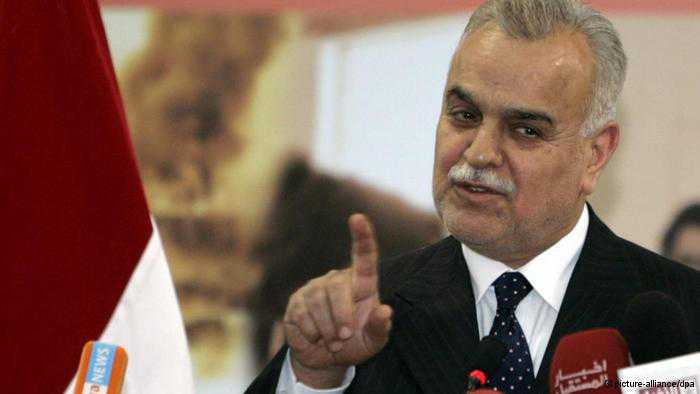
    Turkey will not deport Iraqi Vice President Tareq al-Hashemi despite an international Red Notice for his arrest issued by Interpol. In Iraq, Hashemi is accused of running a death squad.

    In spite of being put on Interpol’s most wanted list on Tuesday, the Turkish government said on Wednesday it sees no reason to extradite the Iraqi Vice President, who is in Turkey for medical treatment.

    “We will not extradite someone who we have supported since the very beginning,” Deputy Prime Minister Bekir Bozdag was quoted as saying by the Anatolia news agency.

    Bozdag also pointed out that Iraq was not cooperating enough in Turkey’s efforts to detain supporters of the Kurdish rebel group PKK, which carries out attacks inside Turkey from bases in northern Iraq.

    Al-Hashemi is being tried in absentia in Iraq on charges of terrorism. He is being accused of guiding and financing death squads that targeted government officials, security forces and Shiite pilgrims.

    Bozdag’s comments came a day after Interpol issued an international Red Notice for the arrest of al-Hashemi, one of Iraq’s top Sunni Arab officials, on suspicion of “guiding and financing terrorist attacks”.

    Al-Hashemi, who has been in Istanbul since April 9, insisted in a statement posted on his website on Tuesday that he was not above the law and was ready to appear in court if his security and a fair trial could be guaranteed. But he also claimed that the charges were false and motivated by the Shiite-led Iraqi leadership’s animosity towards Sunni politicians.

    ng/ipj (AFP, AP)

    via Turkey won’t deport Iraq’s al-Hashemi | News | DW.DE | 09.05.2012.

  • Iraqi fugitive VP will return home: Turkey PM

    Iraqi fugitive VP will return home: Turkey PM

    Iraqi fugitive VP will return home: Turkey PM

    May 8 2012 at 05:58pm

    By SAPA

    iol pic wld Tareq al-Hashemi

    Reuters

    Iraq’s fugitive Vice-President Tareq al-Hashemi.

    Ankara, Turkey –

    Turkey’s prime minister said Tuesday that Iraq’s fugitive vice president Tareq al-Hashemi would return home once he has finished treatment for his health, the Anatolia news agency reported.

    Hashemi, who is being tried in absentia in Baghdad accused of running a death squad, has been staying in Turkey since early April.

    Turkey’s Recep Tayyip Erdogan said Hashemi was in his country for health reasons as well as for political contacts.

    “I believe that he will return to his home country after completing the treatment for his health problems,” Erdogan was quoted as saying by Anatolia to journalists during the Turkish leader’s visit to Rome.

    He also voiced support for the Iraqi leader concerning the legal case he was facing in Baghdad.

    “As I said earlier, we’ve supported him and will continue supporting him on this issue,” said Erdogan.

    The Sunni vice-president has sought refuge in Iraq’s autonomous Kurdish region after he was accused by Prime Minister Nuri al-Maliki’s government of running death squads against Shiites Ä a charge he denies.

    Erdogan’s remarks came after Interpol said Tuesday it had issued an international Red Notice for Hashemi’s arrest on suspicion of “guiding and financing terrorist attacks”.

    “The Red Notice for al-Hashemi represents a regional and international alert to all of Interpol’s 190 member countries to seek their help in locating and arresting him,” the Lyon-based international police agency said. – Sapa-AFP

    via Iraqi fugitive VP will return home: Turkey PM – World News | IOL News | IOL.co.za.

  • Turkey Is Drawn into Iraqi Affairs

    Turkey Is Drawn into Iraqi Affairs

    Turkey Is Drawn into Iraqi Affairs

    Publication: Eurasia Daily Monitor Volume: 9 Issue: 84
    May 3, 2012
    By: Saban Kardas
    The developments in Iraqi domestic politics, coupled with their regional implications, continue to drag Turkey deeper into Middle Eastern affairs, while its involvement in the Syrian conflict already occupies a large part of Ankara’s foreign policy agenda. The ongoing power struggle between Iraqi Prime Minister Nouri al-Maliki and his opponents on the one hand, and the complicated relationship between the central government in Baghdad and the Kurdistan Regional Government (KRG) in Northern Iraq on the other have taken an interesting turn, creating reverberations for Turkey’s regional policies.

    In the wake of the withdrawal of US forces, Maliki has moved to consolidate his power, threatening to undermine the delicate balance between various sectarian and ethnic groups. Maliki, who assumed his current post following a 2010 power sharing agreement, has failed to work toward national reconciliation. On the contrary, in this already fractured country, he has even undermined the governing coalition and also put Iraq on a collision course. His campaign against Vice President Tariq al-Hashimi, who took refuge in Northern Iraq fearing for his life, crystallized the power struggle. The dispute grew into an impasse, with the increasingly harsher tone of the parties, engulfing Turkey (EDM, January 18). After spending some time in Kurdistan, Hashemi visited Saudi Arabia and Doha and later came to Turkey, effectively beginning his days in “exile.” Calling openly for Ankara’s support, Hashimi also furthered its involvement in his country’s affairs (Anadolu Ajansi, April 10).

    A parallel process concerned Iraqi Kurds. The KRG’s relationship to Baghdad is complicated over the status of the disputed city of Kirkuk and the conflict over revenues from the exploration of natural resources in the North. In the ongoing standoff, the leader of KRG, Masoud Barzani, supports Hashimi and has used the leverage he gained to further bolster his position in Iraqi domestic politics. Last month, Barzani suggested he could hold a referendum to redefine ties to Baghdad. In a move that further accentuated this trend, during his trip to the US earlier this month, Barzani urged Washington to reconsider its backing of Maliki. Then, Barzani visited Turkey to meet with Hashimi and Turkish leaders (Anadolu Ajansi, April 20).

    Barzani’s visit also underscored the degree to which Turkey has readjusted its regional policies. After years of confrontation with the KRG, Turkey already moved to normalize its relations with the Northern Iraqi Kurdish leadership to solicit their backing for Ankara’s fight against the PKK. In the wake of the latest developments, Ankara has further moved toward Iraqi Kurds to cope with the challenges in Iraqi domestic politics.

    In the region, too, Turkey faces a similar fluid environment. With the unfolding of the Syrian uprising, Ankara’s partnerships in the region have gone through a new reshuffling. Faced with Tehran’s support for the Syrian regime and its backing of Iraq’s Maliki, Turkey’s coordination of its policies with the Syrian opposition, Iraqi opposition and the Gulf countries raise interesting questions about the patterns of Ankara’s alignment.

    These realignments lead some to suggest that Turkey has been drawn into sectarian groupings but the Turkish government rejects those claims. Ankara justified its support for the Syrian opposition on the principles of human rights and democracy, rather than any sectarian affiliation. In Iraq, Turkey again refrained from framing its support for the Sunni leader Hashimi in sectarian terms and instead underlined the divisive nature of Maliki’s policies.

    However, such statements from Turkish officials have far from convinced the Iraqi leadership. Maliki, already critical of Turkey’s policy on Syria, reacted harshly to recent developments and, in a press release, accused Turkey of interfering in Iraqi internal affairs and acting in a hostile manner (Milliyet, April 21). Reflecting the new regional realignment, Maliki then paid a two-day visit to Tehran on April 22-23, where he met with key Iranian leaders. In his first visit after his reelection, Maliki expressed solidarity with the Iranian leadership and vowed to work in tandem on regional issues (www.presstv.ir, April 23).

    Both Prime Minister Recep Tayip Erdogan and Turkey’s Ministry of Foreign Affairs gave a very strong reaction to Maliki’s remarks. On his way back from Doha, where he discussed Middle East issues with his regional counterparts, Erdogan called Maliki insincere and maintained that his oppressive policies threatened to divide Iraq. Suggesting that Maliki himself might have a sectarian agenda, Erdogan insisted that Ankara was in communication with all Iraqi groups including Shiite leaders (Sabah, April 22). The MFA’s statement also referred to Maliki’s attempts to monopolize power and exclude others as the basis of the current crisis in Iraq (www.mfa.gov.tr, April 21). Both countries summoned each other’s diplomats posted to the respective capitals over the developments.

    To Turkey’s credit, concerns over Maliki’s course are indeed shared by a larger number of Iraqi actors, including Shiite groups. Increasingly, the inability of Maliki to build up coalitions with other groups and the weakening of the ties between Baghdad and the provinces, most notably Northern Iraq, are criticized by major Iraqi actors. Shiite cleric Moqtada al-Sadr also visited Northern Iraq for the first time, in an effort to establish bridges between the parties (Anadolu Ajansi, April 26).

    For years, Turkey has worked to ensure a smooth political transition in Iraq. Ankara’s policy was based on the understanding that if national reconciliation cannot be achieved, it could deepen the fragmentation and pave the way for an independent Kurdish state, not to mention other damaging repercussions for regional peace. It was for this reason that Ankara supported the Maliki-led government, although its initial preferences after the Iraqi elections had been different. With the ongoing political crisis and tensions in the region, Turkey has increasingly found itself on the same page as the KRG.

    For his part, Barzani apparently hopes to deepen his cooperation with Turkey to further consolidate his position in Iraq. This development inevitably raises speculations as to whether the Iraqi Kurds might press for independence or a greater degree of autonomy from Baghdad, which, ironically, will put Turkey in a difficult position. Given Ankara’s own concerns about an independent Kurdish state and the Kurds’ claims over Kirkuk, Turkey’s support for Barzani will be conditional and it will hardly be the midwife to an independent Kurdistan.

    https://jamestown.org/program/turkey-is-drawn-into-iraqi-affairs/