Category: Non-EU Countries

  • President Gül: Turkey plays active role in shaping new world order

    President Gül: Turkey plays active role in shaping new world order

    Turkish President Abdullah Gül suggested on Monday that Turkey is already playing an active part in shaping the future international order that will replace the three-dimensionally “imperfect equilibrium” that characterizes the current state of affairs after the Cold War.
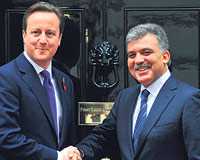
    Gül was speaking at Chatham House, the British think tank that will today present Gül with its prestigious Chatham House Prize from the hands of the Queen. During his speech titled “International System, Europe and Turkey in the first quarter of the 21st century,” Gül suggested that the Cold War era world system was yet to be replaced by a new and normal system that will manage international relations effectively. Gül compared the current situation to a three-dimensional “imperfect equilibrium” where the normalcy has to be attained in political, economic and finally social and humanitarian issues.

    Gül reiterated his position about the imperfectness of the current equilibrium in the political sphere by referring to the newly emerging power centers like Russia, China, India and Brazil and to the changing and expanding understanding of security in the new era. On the economic front, Gül pointed to the huge deficits of the developed market economies and the rising economies with fast growth rates and large sovereign funds emanating from current account surpluses. He didn’t specify the shortcomings and deficits of the current international structure in terms of social and humanitarian values, but chose to say that they are “obvious.”

    President Gül suggested that the new and normal order will be accomplished in the next decade and shared his thoughts about the main characteristics of the new normal international order. He suggested that this new order must address the three-dimensional deficits and that the new order countries would not be categorized as First, Second and Third World countries. Gül added that this new order must focus on the whole world and reject a Euro-centric understanding of history and international affairs. He suggested that in this order, principles and goals must prevail over club membership reflexes and that instead of an order in which winners are rewarded and losers are punished, the new order should enable us to win the hearts and minds of the defeated. Gül said that the new order must be a multicultural, multi-dimensional, heterogeneous but harmonized one where a single power’s hegemony is refused and where people distinguish themselves not by bearing symbols but qualifications, and express themselves not with rhetoric but with their deeds.

    In his speech, President Gül also claimed that Turkey has been doing its part in shaping the world towards such a new and normal order by exemplifying the zero-problem policy as an alternative to the zero-sum game of the Cold War era.

    In London, Gül also had a 45-minute meeting with British Prime Minister David Cameron. There was no immediate statement after the talks. Cameron is a staunch supporter of Turkey’s accession into the EU and, in a speech during a visit to Turkey in July, he promised to “fight” for Turkey’s accession. “My view is clear. I believe it is just wrong to say that Turkey can guard the camp but not be allowed to sit in the tent,” he said in a speech at the Turkish Parliament.

    On Monday, Gül also gave a speech on “The Islamic World, Democracy and Development,” at the Oxford Center for Islamic Studies, where Gül is also a member of the board.

    Red Book rewritten, not revised

    Gül also commented on some of the key issues in Turkish foreign policy while speaking to reporters on Sunday evening. Gül, responding to a question, said the recent revision of Turkey’s National Security Policy Document (MGSB), a classified document that outlines national security priorities, amounted to a complete rewriting. “It is not that some of the articles have been revised. The whole document has been rewritten,” Gül said, explaining that the former version of the MGSB reflected the realities of the Cold War era. The MGSB, commonly referred to as the Red Book, has been amended to remove Turkey’s immediate neighbors from a list of nations considered as potential enemies. The document was also cleansed of references to “domestic threats.” Experts say the MGSB overhaul indicates that the Justice and Development Party (AK Party), which has been in power since 2002, has finally managed to revise the main foreign and security principles in line with its priorities.

    Gül said the new MGSB does not contain any reference to any segments of the society as a security threat, explaining that the concept of security used throughout the document was interpreted on a broad basis to include economic and energy-related aspects of security. On plans to build a NATO-wide missile defense system, Gül dismissed claims that the planned shield is designed to protect Israel from a possible Iranian missile attack. Gül said instead that the planned shield is designed to protect all NATO allies from a possible ballistic missile threat.

    09 November 2010, Tuesday

    KERIM BALCI  LONDON

    ZAMAN
  • No ifs or buts, Turkey must be part of the EU

    No ifs or buts, Turkey must be part of the EU

    Cyprus is just an excuse for those who cannot stomach the accession of a Muslim country

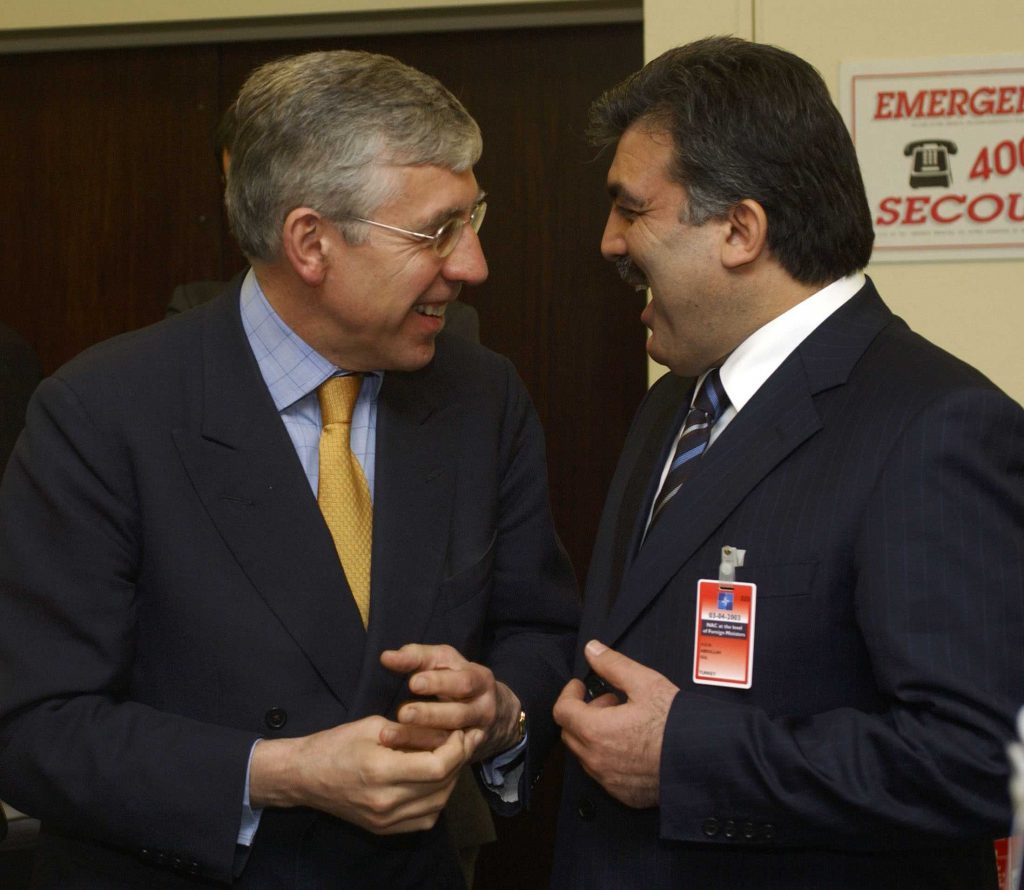
    Jack Straw

    Photo: NATO

    The most important strategic decision facing the EU is its future relationship with Turkey. The UK’s position has long been clear and bipartisan — full Turkish membership of the EU as soon as possible. David Cameron told the Commons in June that “we should back \[Turkey’s membership\] wholeheartedly”. Britain’s unambiguous support for Turkey will be underscored by the visit of Abdullah Gül, its President, this week, with the award to him tomorrow by the Queen of the Chatham House Prize.

    Forty-six years after Turkey first signalled its wish to join the EU, there was some hope in 2005 that rapid progress towards this goal might be achieved. Following tortuous negotiations under the UK Presidency all 27 members of the EU agreed on 3 October 2005 actively to start accession negotiations with Turkey .

    But the wheels have come off, with potentially disastrous consequences. In the summer, in light of Turkey’s refusal to back tougher sanctions on Iran , Robert Gates, the US Defence Secretary, claimed that Turkey may have been “pushed by some in Europe” towards Iran. This “pushing away” has not followed from any conscious rethinking of the 2005 decision to embrace Turkey, but principally because Europe’s strategic future with Turkey (population 74 million) is now hostage to negotiations over Cyprus. (Greek Cypriot population 0.75 million, Turkish Cypriot 0.25 million).

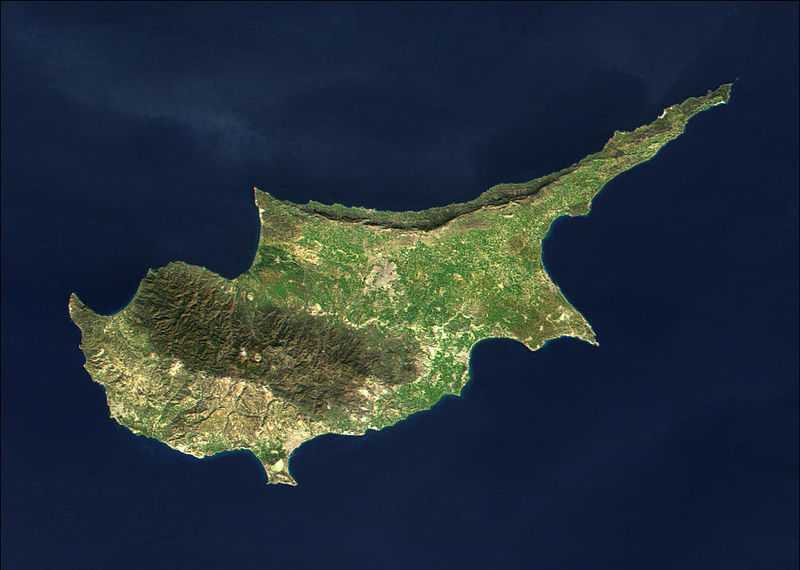
    Cyprus is an internationally recognised sovereign state. However, the writ of the Government of Cyprus extends only to the south of the island, ever since the Turkish Army’s occupation of the predominantly Turkish Cypriot north in 1974. A UN “Green Line” runs through the middle of the capital, Nicosia, with the government of the not-so-far recognised “Turkish Republic of Northern Cyprus” (TRNC) in control in the north, with thousands of Turkish troops garrisoned there too.

    There are two stories: one of the “unjustifiable” Turkish invasion; the other of such “violent oppression” by the Greek majority of the minority that Turkish protection was (and is) vital. Both sets of stories have truths, but because Greek Cyprus was admitted to the EU before any settlement of the island’s future it is their truths which dominate EU decisions on Turkey .

    Of the 35 chapters of the draft accession treaty with Turkey, 18 (the key ones) are blocked or frozen — eight by a formal EU decision, four by France, and six by Cyprus. Although there is opposition in France to Turkish membership, the naked vulgarity of those whose real objections are that Turkey is 98 per cent Muslim would be far easier to counter without the convenient excuse that Cyprus provides.

    Each of the blocks on Turkey’s accession can be plausibly explained by reference to some failure by Turkey , or the TRNC, to meet formal undertakings in full. But there is a larger reality here, that failures by the EU or Cyprus are brushed aside. In 2004 the President of Cyprus, Tassos Papadopoulos, signed a UN accord for a referendum on a new power-sharing constitution. He then campaigned duplicitously for a “no” vote. He was rewarded with EU membership, while solemn EU commitments to the Turkish Cypriots who kept to their side of the bargain and voted “yes” have never properly been delivered.

    Despite Turkey’s longstanding acknowledgement that because of its size, and differential wage costs, there would have to be decades-long transitional restrictions, especially on free movement of labour, it has been more toughly treated by the EU than any other applicant state.

    Take Bulgaria and Romania . They were admitted to the EU in 2007 after waiting only ten years. Their GDP per head is similar to Turkey’s. There are serious concerns, still, about corruption and inadequate judicial systems in these two countries. Yet the EU chose (and I was party to this) to apply a Nelson’s eye to some of those shortcomings in pursuit of a wider strategic goal. In other words the EU showed some practical vision now so lamentably lacking for Turkey.

    Under a succession of able Special Representatives the UN has made heroic efforts over the years to find a one-state solution for Cyprus, in accordance with the UN mandate for a “bi-zonal bi-communal federation, with political equality”. This task now falls to Alexander Downer, the former Australian Foreign Minister. He’s talented and experienced, and might pull off success.

    Next week, the Greek Cypriot President Demetris Christofias, and the TRNC President Dervis Eroglu have critical talks with the UN Secretary-General. We should pray for success. But the chances of a settlement would be greatly enhanced if the international community broke a taboo, and started publicly to recognise that if “political equality” cannot be achieved within one state, then it could with two states — north and south.

    It is time for the UK Government to consider formally the partition of Cyprus if the talks fail. This will be very controversial in the UN as well as the EU. Russia will be vehement in its opposition — as it was with Kosovo. But those who respond by inviting me to wash my mouth out with carbolic might like to say how much longer the EU and the UN can tolerate the current approach, whose only consequence so far has been to paralyse the development of relations with Turkey.

    Good reasons led me to believe that having (Greek Cypriot) Cyprus within the EU would assist the peace process. This judgment has not been borne out by events. When in 2004 Cypriot behaviour did lead us to have second thoughts, we should have faced down the explicit threat from Greece to veto all other accessions (of states such as Poland and Hungary ) unless Cyprus came in at the same time.

    We cannot turn the clock back. But we can change the terms of trade. The EU needs Turkey rather more than Turkey needs the EU.

    Jack Straw was Foreign Secretary 2001-06

    The Times, London

  • The Queen joins Facebook

    The Queen joins Facebook

    New site will contain authoritative record of engagements, videos, photographs and the Court Circular

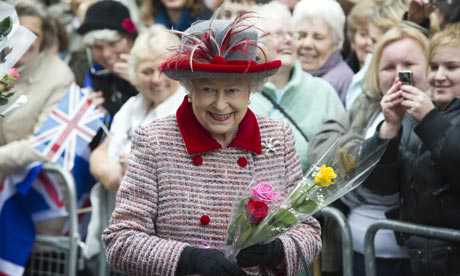
    Queen Elizabeth II and the rest of the royal family now have their own page on Facebook. Photograph: Geoff Pugh/PA

    Already on Twitter, YouTube and Flickr, Britain’s royal family now has a presence on Facebook. Launching this morning, Facebook.com/TheBritishMonarchy has videos, photos and the Court Circular, the 200-year-old authoritative record of engagements also on Buckingham Palace’s website. The royal Facebook does not have a personal profile, so users cannot ask the royals to be their Facebook “friend”; instead they can click to “like” the page. Several unofficial pages already exist on Facebook; one, the professional-looking The-British-Monarchy page, is “liked” by more than 20,000 people.

    https://www.theguardian.com/uk/2010/nov/07/the-queen-joins-facebook, 7 November 2010

    Have you “liked” Turkish Forum’s facebook page yet?

  • BBC apologises to Bob Geldof over Band Aid claims

    BBC apologises to Bob Geldof over Band Aid claims

    BBC admits it was wrong to have given ‘impression’ that money from charity song ended up being spent on weapons


    Not many people come away from a clash with Bob Geldof unscathed. And for the BBC it has proved no different. Today, across BBC1, Radio 4 and the World Service, it will broadcast an apology to the singer-philanthropist and the Band Aid Trust he founded.

    Accused by Geldof of causing “appalling damage” to the famine relief charity he founded in 1985, the BBC will admit that it was wrong, in a story broadcast in March this year, to have given the “impression” that money raised from the Band Aid single Do They Know It’s Christmas ended up being spent on weapons rather than charity. It is a climbdown that Geldof said would “begin to repair some of the appalling damage done” to the reputation of Band Aid, and he welcomed it “on behalf of all those members of the public who have so magnificently donated to Band Aid and Live Aid over the last 26 years”.

    Once, the BBC’s relationship with Geldof was very different. It was dispatches by BBC reporter Michael Buerk from famine-hit Ethiopia that prompted Geldof to record the song in the first place, and it was the corporation that broadcast the Live Aid concert in 1985.

    But goodwill evaporated this year when the World Service’s Africa editor, Martin Plaut, broadcast a story featuring a former Ethiopian rebel commander who claimed that in 1985 only 5% of the $100m destined for famine relief in the northern province of Tigray reached the starving.

    The BBC now admits that Assignment programme failed to clearly distinguish that in fact no Band Aid cash was diverted for arms sales – an embarrassing admission that Geldof said was a “lapse in standards” by the corporation.

    An inquiry by the BBC’s editorial complaints unit stressed that Assignment “did not make the allegation that relief aid provided by Band Aid was diverted” but conceded that “this impression could have been taken from the programme” because viewers would have assumed that claims made by the former rebel applied to the money he helped raise.

    The programme also carried an allegation from another former rebel that the Tigrayan People’s Liberation Front had tricked aid workers into giving them money meant to buy food for the starving. The story was picked up by BBC news bulletins, including the Six O’Clock News.

    The BBC said it “should have been more explicit in making it clear that the [Tigrayan] allegations did not relate specifically to Band Aid. There will be on air apologies and corrections and we are looking at the lessons that can be learnt.”

    Today Sir Brian Barder, the British ambassador to Ethiopia between 1982 and 1986, said: “I welcome the BBC’s far-reaching apology to the Band Aid Trust for the seriously unfair and misleading impression given by the BBC World Service Assignment programme about alleged diversion of famine relief aid in limited rebel-held areas of the Ethiopian province of Tigray in the 1980s.

    “The apology makes it absolutely clear that none of these allegations applied to the Band Aid relief effort.”

    The publicity will be a blow to the BBC, just a day after world affairs editor John Simpson compared last month’s hastily negotiated licence fee settlement with “waterboarding”, arguing it leaves the corporation “at the government’s mercy”. To add to the corporation’s woes it is also facing a 48-hour strike from Friday by BBC journalists over pension changes.

    The Guardian

  • 101,000 stop and searches. No terror arrests

    101,000 stop and searches. No terror arrests

    Heavy-handed police tactics have harmed race relations, human rights groups warn

    By Robert Verkaik, Home Affairs Editor

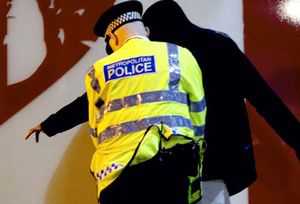
    Not one person stopped and searched under anti-terrorism powers in Britain was arrested for terrorism-related offences last year, the Government’s own figures show.

    The alarmingly high use of random searches is more evidence of heavy-handed policing which will alienate all communities, human rights groups said yesterday.

    The Home Office statistics also revealed that no terror suspects had been held in custody before charge for longer than 14 days since 2007. In all, 101,248 people were stopped and searched in England, Wales and Scotland under Section 44 of the Terrorism Act, which does not require a police officer to have reasonable suspicion that an offence might have been committed.

    Of the 506 arrests that resulted, none were terrorism-related. Since July, police are not allowed to stop and search people unless they “reasonably suspect” them of being a terrorist.

    Of all the searches, four out of five were made in the Metropolitan Police area, with almost a fifth being made by British Transport Police. Shami Chakrabarti, director of the civil rights group Liberty, said the statistics highlighted what a “crude and blunt instrument” stop and search had been. “It costs us dearly in race equality and consent-based policing with very little return in terms of enhanced security,” she added. 

    Overall, 59 per cent of the people stopped described themselves as white, 17 per cent as Asian or Asian British, 10 per cent as black or black British and 2 per cent as of mixed ethnicity, the figures showed. The use of stop and search powers fell by 60 per cent compared with 2008-09.

    Detention and stop and search powers are being looked at as part of a review of the Government’s counter-terrorism policy by the Liberal Democrat peer Lord Ken Macdonald, whose findings are to be published shortly.

    The former shadow home secretary David Davis said the figures showed “what a massively counter-productive policy this is”. He added: “A policy which fuels resentment and antagonism amongst minority communities without achieving a single terrorist conviction serves only to help our enemies and increase the terrorism threat.”

    Massoud Shadjareh, chairman of the Islamic Human Rights Commission, said it was clear that some ethnic groups were still being disproportionately targeted and that the powers were “irrelevant and useless, as well as a waste of money and resources”.

    But the Policing and Criminal Justice minister, Nick Herbert, said: “The [terrorism] threat to the UK remains at severe. I commend the hard work of the police, the agencies and the CPS in foiling those who would do us harm and in bringing them to justice.

    “The Government is committed to ensuring that all counter terrorism powers are used proportionately and the Counter Terrorism Review will report back shortly.”

     http://www.independent.co.uk/news/uk/crime/101000-stop-and-searches-no-terror-arrests-2119529.html, 29 October 2010

  • BNP leader Nick Griffin could lose Euro seat as party faces bankruptcy

    BNP leader Nick Griffin could lose Euro seat as party faces bankruptcy

    By Tom Mctague
     
    Griffin could lose Euro seat as party faces bankruptcy
     

    BNP leader Nick Griffin faces being axed as a Euro MP as he fights to avoid bankruptcy over his party’s soaring cash crisis.

    He is among top officials thought to be personally liable for the racist group’s £700,000 debts – which it admits it cannot pay.

    Anyone made bankrupt is legally barred from being an MP or Euro MP.

    The BNP’s money woes were laid bare by ex-chief fundraiser James Dowson in a letter seen by the Mirror.

    Mr Dowson told North-East printers who produced its newsletter that the finances were like “a shipwreck”

    He added: “Cash is in very short supply… [it is] impossible for the BNP and persons associated with it to pay outstanding bills in anything like a normal timescale, if indeed at all.” The “very grave” crisis meant it could only pay 20% of what it owed, he added.

    Its money problems have been made worse by having to settle a legal row after illegally using Marmite in an ad and the cost of fighting the Equality and Human Rights Commission over its whites-only admission rules.

    Meanwhile, electoral chiefs are still probing its 2008 accounts as they contain gaps that breach the law.

    The BNP’s debt meltdown comes amid a spate of defections and expulsions.

    Mr Dowson and media officer Paul Golding have left while campaigns chief Eddy Butler and London Assembly member Richard Barnbrook were recently expelled.

    Mr Griffin was not responding to our requests for a comment last night.

    , 3/11/2010