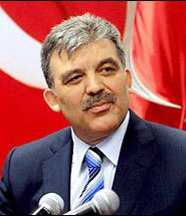
The Turkish president, Abdullah Gül, wants to see more Swiss businesses investing in his country.
Speaking to journalists in Zurich after meeting some 20 businessmen on the second day of his official visit to Switzerland, he said Turkey had a solid infrastructure, with important oil and gas pipelines, and was a hub between Europe and Asia.
Gerold Bührer, president of the Swiss Business Federation, economiesuisse, told the Swiss news agency that the talks with the Turkish representatives had been positive.
Turkey offers particularly attractive investment opportunities for Swiss chemical and pharmaceutical companies, he said.
Gül said more than 450 Swiss enterprises were already active in Turkey, and he hoped that more would come.
“We are doing our best to create the necessary framework for that,” he said.
Swiss President Doris Leuthard noted that Switzerland would like to strengthen economic ties with the country.
The Turkish leader also took part in a forum on cleantech and went on a boat tour of Lake Zurich on Friday.
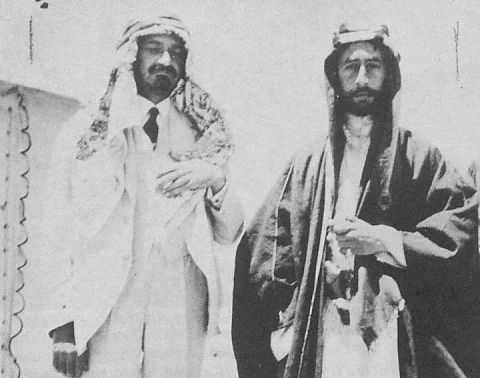
Emir Feisal I (right) and Chaim Weizmann (also wearing Arab dress as a sign of friendship) in Syria. Feisal later became King of Iraq.
by ISI LEIBLER
Chaim Weizmann would turn in his grave were he aware of the public attacks on the Israeli government by some in the UK Jewish leadership.
Mick Davis, the South African-born chief executive of the powerful mining group Xstrata, is chairman of Anglo Jewry’s United Jewish Israel Appeal (UJIA) – the principal fund-raising institution for Israel of the UK Jewish community.
He also heads a body known as the Jewish Leadership Council (JLC) – essentially comprised of a group of wealthy British Jews and their acolytes who, by virtue of their financial largesse, assume a dominant influence on many levels of communal life. The power represented by their collective wealth enables them not to be accountable to anyone and few would dare question their policies.
Anglo Jewry has been blessed in the past with rich philanthropists, many of whom were also endowed with wisdom. Despite his immense wealth and access to the most important leaders in the land, Sir Moses Montefiore was devoted to his people and, far from radiating hubris or arrogance, generated respect and love.
In striking contrast, Mick Davis, also known as “Big Mick,” displays characteristics associated with the nouveau riche, akin to the behavior of some of the Russian- Jewish oligarchs. His opinions are rarely challenged and he contemptuously rejects the suggestion that holding a communal role in any way precludes him from publicly expressing views which would normally be considered incompatible for anyone occupying such a position.
Needless to say, Davis is fully entitled to say whatever comes to his mind. Nobody seeks to deprive him of freedom of expression.
Many Jews are critical of Israeli governments.
But for a person holding senior public office in a major Diaspora community to indulge in crude public attacks on Israeli leaders and relate to Israel’s security requirements in relation to their impact on his image in non-Jewish circles is surely bizarre and utterly unconscionable.
While occupying the role of chairman of the UIJA in a country in which hatred of Israel and anti-Semitism have reached record levels, Davis brazenly incites his fellow Jews to criticize Israel.
RESIDENT IN London, he had the chutzpa to berate the Israeli prime minister “for lacking the courage to take the steps” to advance the peace process, arguing that “I don’t understand the lack of strategy in Israel.” He also employed the terminology of our enemies, predicting an “apartheid state” unless Israel was able to achieve a two-state solution – unashamedly blaming Israelis rather than Palestinians for being the obstacle to peace.
His sheer arrogance was best demonstrated in his most outrageous remark: “I think the government of Israel has to recognize that their actions directly impact on me as a Jew living in London, UK.
When they do good things, it is good for me; when they do bad things, it is bad for me. And the impact on me is as significant as it is on Jews living in Israel… I want them to recognize that.”
Aside from implying that Israel is responsible for the anti-Semitism he is encountering, Davis is effectively warning that when considering defense issues which may have life-or-death implications for Israelis, the government must be sure not to create problems for him in his non- Jewish social circles. From his London mansion, he blithely brushes aside suicide bombers, rockets launched against our children and the threat of nuclear annihilation because his gentile friends might complain about the behavior of his Israeli friends.
Jonathan Hoffman, vice president of the UK Zionist Federation (one of the few Anglo-Jewish leaders courageous enough to criticize Davis), expressed outrage that the UIJA chairman could make such a remark. “We are not aware that Hampstead is within range of Iranian or Hamas missiles, nor that its residents have to send their children to the IDF for three years,” he said.
It is telling that over recent years, Davis has not been renowned for condemning the shameful policies of British governments in relation to Israel. And it is no coincidence that immediately after the UK abstained from the UN vote on the Goldstone Report, Davis chaired a JLC reception at which former foreign minister David Miliband was the key speaker. On that occasion, the “outspoken” Davis felt constrained not to express a single word of complaint or disappointment at the perfidious behavior of the British government in relation to this issue.
Admittedly, Davis’ latest outburst is neither intellectually challenging nor persuasive.
But emanating from a Jewish “leader” in the anti-Semitic UK environment in which campaigns to boycott and delegitimize Israel are at an all-time high, and at a time when Israel is under siege and fighting for its existence, it surely represents a level of unprecedented vulgarity.
IN ANY self-respecting Diaspora Jewish community, Davis would have been obliged to tender his resignation immediately after making such outrageous remarks.
Not so in sunny London.
Instead of condemning him, the Anglo- Jewish establishment groveled. Many even seemed delighted that one of their leading spokesmen had distanced himself from what many of them may regard as the unsavory government which the people of Israel had democratically elected.
With the exception of Jewish National Fund head Samuel Hayek, not a single member of the JLC criticized Davis.
The president of the Board of Deputies of British Jews, Vivian Wineman, said, “Mick Davis is entitled to make his remarks – there are a wide range of views in the country and in Israel on these issues.”
Simon Hochhauser, president of the Orthodox United Synagogue and a JLC trustee, may one day regret and feel ashamed for having stated that “there is nothing in the quoted comments I would disagree with.”
Former UIA chairman Brian Kerner said that he was “broadly supportive” of the views expressed by Davis, but questioned voicing them in public because “it is only picked up by our enemies, distorted and used against us.”
Harvey Rose, chairman of the Zionist Federation, also agreed with “much” of the position expressed by Davis, noting that “how Israel is perceived in the UK has a direct bearing on our comfort levels in Britain.”
The non-Orthodox groups, some of whom had always been inclined against Zionism, applauded Davis as “a remarkable leader and a true Zionist leader.”
Anglo-Jewish leaders share a long tradition of burying their head in the sand, avoiding confrontation and displaying a determination not to rock the boat under any circumstances. One of their leaders actually wrote in The Jerusalem Post, proudly boasting how their pro-Israel advocacy approach was based on “whispering” rather than “shouting.”
Today, by lacking the courage to challenge the propriety of one of its most senior “leaders” indulging in coarse public condemnations of Israel, the trembling Israelite establishment has further undermined the standing of the UK Jewish community.
When one proudly recalls the outstanding contribution of British Jews to the development of Zionism, and the role played by leaders of the caliber of Chaim Weizmann, one is left with a sense of profound sadness. The Anglo- Jewish Zionist pioneers would turn in their graves were they aware of the irresponsible behavior of those who have currently assumed the mantle of leadership of their community.
Turkish President Abdullah Gul will travel to Switzerland on Thursday.
A statement by Presidential Press Center said on Wednesday that Gul would pay a state visit to Switzerland upon invitation by Doris Leuthard, President of Swiss Confederation, on November 25 and 26.
“Our relations with Switzerland gained a significant momentum in the recent years. The two parties have sound will and determination to boost bilateral ties and cooperation in the coming period,” the statement said.
President Gul will be accompanied by Interior Minister Besir Atalay, Enviroment & Forestry Minister Veysel Eroglu, lawmakers and academicians during his visit.
Gul will hold talks with President Leuthard, the Council of States President Erika Forster-Vannini and other officials.
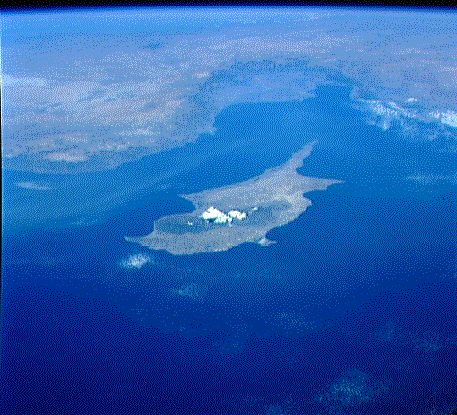
For more than three decades now, efforts to resolve the territorial dispute in Cyprus between its Greek and Turkish residents have failed. Since reunification plans have been rejected, is it time to officially partition the island?
Nabil Ahmed – President of the Federation of Student Islamic Societies (FOSIS) – guest writes about a new dilemma facing young British Muslims.
With over 100,000 Muslim students in the UK now in higher education one would imagine that the future of Muslims in the UK, academically at least, would be extremely positive. Over the years the numbers of Muslim students attending university has rapidly progressed from a time when it was simply international students to a point now where the majority of Muslim students are British born and emerging as leaders of our communities. The importance of British Muslims who are able and willing to go to University cannot be understated.
Through education we are living those timeless teachings that we all know: “Read! In the name of your Lordâ€, “Are those equal, those who know and those who do not know?â€, “Behold! in the creation of the heavens and the Earth, and the alternation of night and day, there are indeed signs for people who have understandingâ€. Education is at the heart of a change of condition and the fulfilment of a command; at an individual as well as a collective level.
Let us realise the particular immense value of higher education. Through educating our youth in Universities today we are insha’Allah planting a seed, where we will grow Muslims who are successful leaders, business people, academics, politicians, community leaders, scientists and so forth. We will insha’Allah through this develop individuals who are not only able to achieve and contribute from a level playing field in a country where many go to University, but who are also serious leaders able to tackle the challenges of our time and reform the world we live in.
The UK’s reputation for providing world-class higher education and facilities is clearly evident and is something that Muslim students have long been privileged with. That four out of the top 10 universities in the world were UK-based institutions, with Cambridge knocking off Harvard from the top spot for the first time since 2004, is telling. Moreover, there are thousands who seek to apply each year to the country’s top institutions. For Muslims in the UK, it has almost been taken for granted that we will naturally enter higher education.
However, this is where the good news stops. This could all change very quickly as government proposals seek to radically change the funding structures to higher education. As well as poorer communities, Muslim students in particular face being disproportionately affected by these proposals.
Amid the global financial crisis, universities in the UK face major cuts to teaching budgets and the former system of a maximum £3,290 per year tuition fee has been deemed unsustainable. Thus the UK’s coalition government last week announced proposals that universities could charge students £9,000 a year, meaning students studying a 3 year university course could end up with an average debt of at £25,000 – before even considering the cost of living at University. Of particular concern for Muslim students is that any student loans taken out to pay for the tuition fees would have to be paid with a market-rate of interest of 3% plus inflation. This differs to the current system where student-loan interest is linked to the rate of inflation.
These proposals are contrary to the pursuit of a fair and accessible education system and would increase social inequalities. The prospect of a £25,000 debt in university fees alone will not only serve to deter people from less advantaged backgrounds from applying to university, it will result in our highest quality institutions becoming financially ring-fenced, outside the reach of the majority of students.
Secondly, these proposed changes will have a devastating impact on Muslim and black and minority ethnic (BME) communities who are under-represented in Higher Education and already face a number of barriers towards participation. The encouragement of BME and Muslim participation in Higher Education is crucial, however, if enforced, these proposals will further discourage Muslim students, a significant number of whom are from deprived backgrounds, from continuing onto university.
Unlike the US, where high tuition fees are often subsidised by scholarships, the UK has only recently began charging students to enter into higher education, and as such, there are no effective systems or processes to ensure that the poor are not priced out of university. When one takes into consideration that the Muslim community is the poorest in the UK – nearly 50% of Pakistani and Bengali people in the UK are below the poverty line and are likely to earn less money than any other ethnic community – we can begin to see the dire ramifications of these new proposals.
Finally, this issue is compounded by the market rate of interest on student loans, the main form of “assistance†provided by the government. In the past there has been a discussion in the Muslim community as to whether such loans are permissible, as the interest due would be paid back at the rate of inflation. However, at a market rate of interest of 3% plus inflation this is the point-of-no-return for a number of Muslim students.
As responsible leaders we realise that this is an issue for communities around the UK; and in particular, we realise the impact on Muslim students. It is wrong for the poor to be priced out of education and face a debt of over £25,000 before even starting; education should be accessible to those able and willing, not just those that can afford it. And we realise that a market-rate of interest is no solution to rising debt-levels for students – interest is at the heart of social inequality and will only increase debt for all students. We cannot accept the door of higher education being shut to young Muslims.
Unless of course, we work hard to prevent these proposals from being passed.
The Federation of Student Islamic Societies has been working with a number of Muslim organisations, scholars, community leaders and the National Union of Students (NUS) to campaign against the proposals. The response has been fantastic, and in collaboration with the Muslim Council of Britain, we disseminated a khutbah to a number of Masaajid and university Islamic Societies on the topic.
We have had phenomenal support from a number of scholars and community leaders, including Abu Eesa Niamatullah, who realise the significance of these proposals and the negative impact this will have on the Muslim community. The response from Islamic Societies has been equally impressive and in conjunction with FOSIS, many Islamic Societies have signed a joint statement expressing concern with the HE funding review. FOSIS have also been working closely with the NUS, highlighting the issue to raise concerns with MPs, and worked to get as many students to attend a national demonstration that took place on 10th November 2010 in Central London.
We will continue to publicise the issue and work to campaign on behalf of Muslim students. We were interviewed by BBC News, and we hope that this is just the start, but we need your support!
What can you do?
It is vital that the Muslim community takes an active role in opposing these proposals and here are ways to get involved:
* Lobby your local MP, particularly Liberal Democrat MPs who were looking to scrap tuition fees altogether before the general election
* Raise awareness locally about the issue – for example, for a copy of the khutbah on education and higher education for Muslims please contact us (see below) – add this article to your Facebook or post-up Abu Eesa’s video
* If you are a local institution or mosque please sign our statement (email to below)
* Contact FOSIS and get involved in some of the initiatives we are running: vp.studentaffairs[@]fosis.org.uk
…………………………………….UNN
David Cameron has flatly contradicted George W Bush and said he does not believe that waterboarding, the controversial interrogation technique, saves lives.
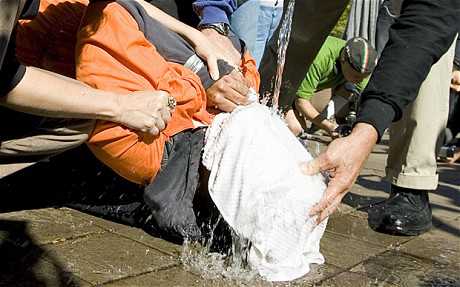
Protesters demonstrate the use of waterboarding in front of the Justice Department in Washington Photo: AP
By Andrew Porter in Seoul
The British prime minister, speaking at the G20 summit in South Korea, repeated the official British line that torture was wrong, and he went further, attacking policies pursued by the Bush administration on the detention and treatment of prisoners which he said had helped to radicalise people and made the West “less safe”.
Mr Bush memoirs, which were published this week, asserted strongly that the waterboarding of prisoners had averted huge terrorist attacks on key London targets. The former US president also said that he did not believe that waterboarding constituted torture.
In an interview on Thursday. Mr Cameron said he disagreed with Mr Bush, though he did not deal directly with the belief that specific attacks had been headed off. “Look, I think torture is wrong and I think we ought to be very clear about that,” Mr Cameron said. “And I think we should also be clear that if actually you’re getting information from torture, it’s very likely to be unreliable information.”
When pressed on whether torture saves lives, he added: “I think there is both a moral reason for being opposed to torture – and Britain doesn’t sanction torture – but secondly I think there’s also an effectiveness thing … if you look at the effect of Guantánamo Bay and other things like that, long-term that has actually helped to radicalise people and make our country and our world less safe. So I don’t agree.”
Mr Bush has claimed attacks on Canary Wharf and Heathrow airport were foiled as a result of the controversial interrogation technique. Speaking on the release of his book Decision Points, he said of Khalid Sheikh Mohammed, the supposed architect of 9/11: “We capture the guy, the chief operating officer of al-Qaeda, who kills 3,000 people. We felt he had the information about another attack. He says, ‘I’ll talk to you when I get my lawyer’. I say, ‘What options are available and legal?’”
Last month, Sir John Sawers, the head of the UK’s Secret Intelligence Service, said: “Torture is illegal and abhorrent under any circumstances and we have nothing whatsoever to do with it.” But the Foreign Office has accepted that information gained from waterboarding would be used if it could stop an imminent terrorist attack.
Mr Bush’s views have run into opposition from a number of experts in the UK. Lord Macdonald of River Glaven, the former Director of Public Prosecutions said: “These stories about waterboarding thwarting attacks on Canary Wharf and Heathrow – I’ve never seen anything to substantiate these claims. It’s an easy claim to make, it’s much more difficult to prove. These claims are to be treated with a great deal of scepticism.”
However US intelligence officials involved in the 9/11 investigation have said Mr Bush’s claim was supported by a welter of evidence, including a confession made by Mohammed to a military tribunal at Guantánamo Bay.
http://www.telegraph.co.uk/news/uknews/terrorism-in-the-uk/8126623/David-Cameron-waterboarding-does-not-save-lives.html, 11 Nov 2010