Category: EU Members

European Council decided to open accession negotiations with Turkey on 17 Dec. 2004

  • Backdoor of the United States for the Aegean!

    Backdoor of the United States for the Aegean!

    Blinken’s second letter to Congress facilitates and serves Turkey to permanently challenge Greek sovereignty over islands and islets

    25.02.2024 • 22:03

    The Biden administration with not one, but two letters from the US Secretary of State Blinken to the Congress on the guarantees of the sale of F-16s to Turkey facilitates and authorizes it to permanently and completely question the Greek sovereignty over islands, islets and islets in the Aegean, with the Mitsotakis government not having realized the deadly/disastrous trap for Greek sovereignty in the Aegean and the opposition parties being in a criminal nirvana, which leads to a division of Greek sovereignty in the Aegean.

    From Kyra Adam

    The letter on the restrictions on the sale of F-16s to Turkey was presented journalistically as a Greek success, and this because none of the government or the competent experts understood the phrase “internationally recognized sovereignty. US Secretary of State Blinken sent his first secret letter to Congress on the approval of the sale of spare parts and new F-16s to Turkey, involving the Turkish F-16s with the Greek F-35s “to maintain the balance of power”.

    However, motivated by the pre-election period in the USA and the fierce votes of the Greek and Cypriot lobby, a group of American senators around Senator Bob Menendez and Greek-American actors demanded a second letter from Blinken to Congress, with the aim of making clear and clearly visible Turkey’s commitments to do not use the F-16s against Greece.

    This was the occasion for the State Department, with the cooperation and assistance of the pro-Turkish Legal Service of the US Department of State, at this time, to formulate the second Blinken letter to Congress, giving the right and authorization to Ankara from the US to fragment Greek sovereignty and all national Greek interests within the Athens FIR. A fact that allows Turkey to return to the era and actions of 1996, with the Declaration of Athens now looking like… rag paper.

    In particular, in this second letter Blinken states verbatim: “…If a NATO ally commits repeated violations within the internationally recognized borders of another ally, the US will try to resolve the situation diplomatically.” If the situation cannot be resolved through normal diplomatic channels, the US will use additional political and economic tools to resolve the situation. With the fancy term “internationally recognized borders” between NATO allies, in this case Greece and Turkey, the US is striking directly against Greek sovereignty at 10 p.m. of the national airspace in the Aegean, against Greekness and Greek sovereignty over the islets and rocky islets of the Aegean, while rendering the Athens FIR non-existent.

    In other words, they offer another gift to Erdogan, in his aspirations and claims against Greek sovereignty and Greek interests in the Aegean, now openly and directly supporting Turkish positions at the expense of Greece. And, in fact, through an official letter to Congress, which aimed to prohibit Turkey from using the American-made F-16s it will receive at the expense of Greece.

    Secret document ‘nullifies’ Athens FIR and 10 miles of national airspace

    It is noted that the second Blinken letter:

    • Firstly, it takes advantage of the fact that Greece from the mouth of the Evros to the east of Kastellorizos has no continuous sea border with Turkey, only the middle line between the Greek islands and the coast of Turkey.

    But even this middle line is not agreed upon between Greece and Turkey both through fault and because of Turkey’s views. However, between Samothraki and Lemnos, Lemnos and Lesvos, Lesvos and Chios, Chios and Samos, Rhodes and Kastelorizo, etc. there are no Greek-Turkish borders at all, nor can they ever be defined, since the distances from the Turkish coasts to the Greek islands are greater than the territorial waters of the two countries (6+6=12 nm) and there is no middle line.

    With the American wording-Trojan horse, which is misleadingly presented as protection of Greek sovereignty, “within internationally recognized borders”, Turkey is granted the right to enter the Aegean with the American F-16s unchecked through international airspace, e.g. between Lemnos and Lesvos and without filing a flight plan, to thresh in the international airspace of the Aegean, and to exit the international sea and the international airspace between Rhodes – Kastellorizos, thus having operational control (with all Turkish military aircraft) throughout the international airspace of the Aegean and the Mediterranean.

    And this is because according to the Blinken letter and pursuant to this letter, Turkey does not violate internationally recognized borders, given that the international sea and international airspace do not constitute recognized borders under International Law. At the same time, with regard to military aircraft – namely the American-made F-16 – the Athens FIR, which is not a recognized Greece-Turkey border, is also abolished.

    • Secondly, according to the Chicago Convention and the Law of the Sea, but also the statements of Mitsotakis – Gerapetritis that Greece has 6 nautical miles. sovereignty, it is proved that the islands of Samothraki, Lemnos, Lesbos, Rhodes, Kastellorizo, etc. they have internationally recognized sovereignty at 6 nautical miles, which NATO also accepts and applies.

    Thus, with the second Blinken letter, the airspace on the islands beyond 6 n.m. ( 6-10 n.m.) is not internationally recognized Greek sovereignty, with the result that Turkish F-16s and UAVs can fly at 6-9 n.m. from the islands, “approaching” Greek sovereignty, without any compensation for the Mitsotakis government and much more for Greece.

    • Thirdly, Turkey’s disputes and claims against Greece, as a single and continuous event, and against Greece’s sovereignty and national interests are a controllable and manageable problem. However, they turn into a dangerous threat when the Mitsotakis government cannot legally and indeed in an international context – support Greek sovereignty itself.

    In particular, Turkey questions the Greekness of a large number of islets and islets in the Aegean. He even sent a letter to the UN, in which he questions the sovereignty over islands, islets and islets in the Aegean. However, the Mitsotakis government has been found incapable of ensuring the Greekness of islets and islets in the Aegean.

    This is proven by the fact that the Mitsotakis government sent a reply letter to the UN under the Ministry of Foreign Affairs Dendias, in which it is stated that islets and rocky islets in the Aegean were granted to Greece by the Lausanne and Paris Treaties. However, in these two Treaties, nowhere is it written that the islets and islets were granted to Greece by the Treaties, nor do they even mention the words “islands” and “rock islets”.

    This fact constitutes a criminal indifference on the part of the government to the detriment of Greek sovereignty, since the islets and islets, although they are completely Greek, the government, whether out of indifference or weakness or purposefulness (?), does not legally support them, with the result that country to become internationally resilient and reduce Greek sovereignty in the Aegean. And this is because the Greekness of the rocky islands is not stated in the Treaties, but in international agreements signed by Turkey, which, unfortunately, the government does not bother to identify, in order to ensure Greek sovereignty in the Aegean.

    Based on the second letter, the US government ensures Greek sovereignty from Turkish F-16s only from the mouth of the Evros to Didymoteicho, because there is a Greek-Turkish border, internationally recognizing Greek sovereignty based on the Treaty of Lausanne. From Evros to Kastelorizo, the US is putting the Aegean at the mercy of Erdogan, because there is no sovereignty in the international sea.

    Blinken’s second “carmaniola” letter about Greek sovereignty and national interests in the Aegean cannot be a surprise, as it follows to the letter the Report of the Congressional Research Directorate on US-Turkish relations in 2023. This pitiful report, to which the Greek government did not react at all, officially characterizes Greek islands in the Aegean as non-Greek, but disputed, arguing that Turkish overflights do not violate Greek sovereignty over the islands, because they are not Greek, but disputed.

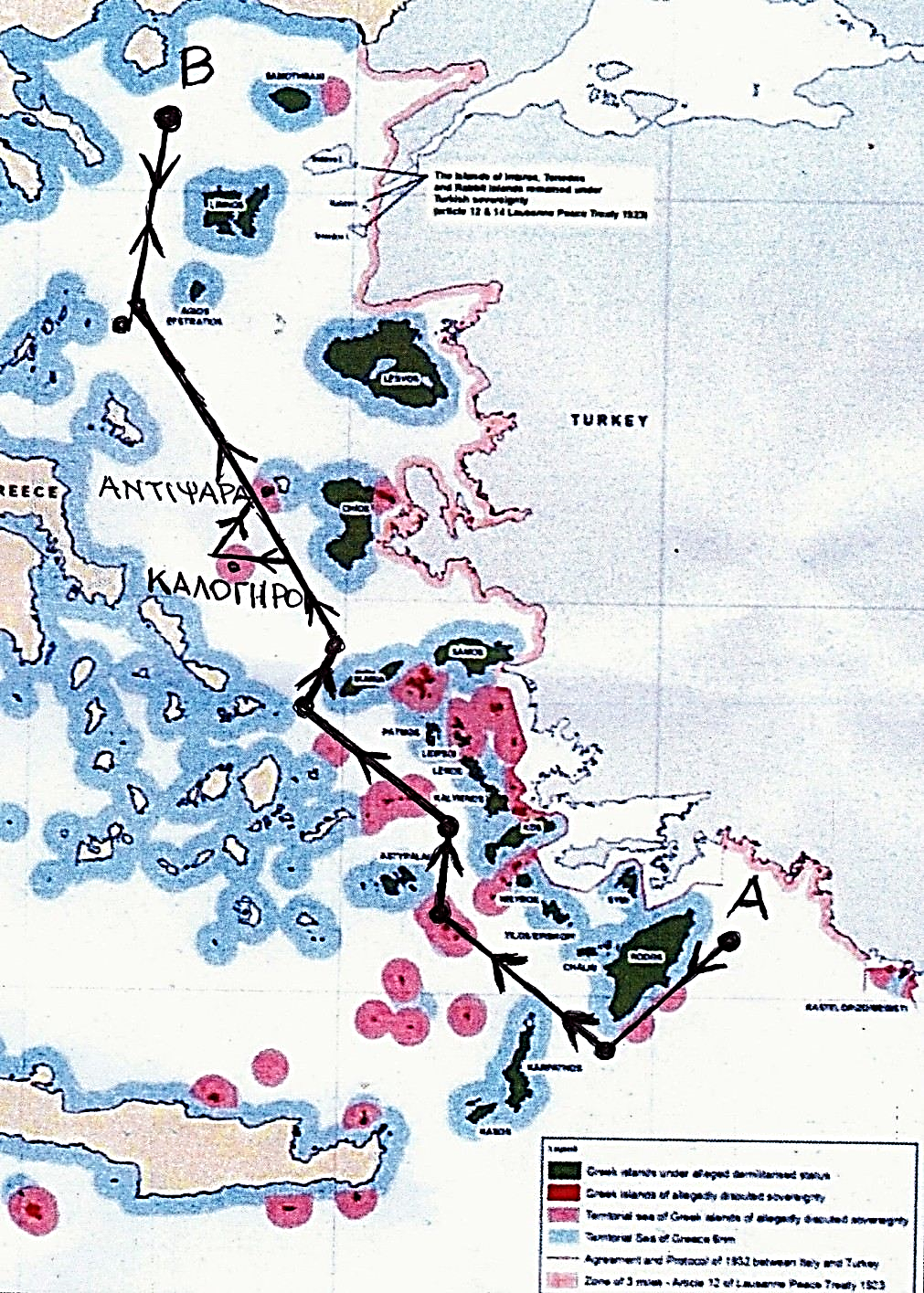
    In the relevant Map of the Congress Report, cited by the “Sunday democracy” as a presumption for the Biden administration, from 2023 the islands, islets and islets are not Greek (in pink on the Map):

    • In the area of Crete: Gavdos, Chrysi, Koufonisi, Dia, Dragonada, Elassa.
    • In the area of Karpathos: Astakida, Zafora, Pacheia, Makra.
    • As well as the islets and rocky islets of Stefania, Pontikousa, Giali, Imia, Pserimos, Lipsi, Farmakonisi, Arkioi, Agathonisi, Agrelousa, Hatapodia, Melabioi, Donousa, Kalogeri, Antipsara, Oinuses, Tzourafa, Strogyli and Khina.

    Namely, 29 Greek islands, islets and rocky islets according to the Biden administration and Turkey, at the same time do not have Greek sovereignty, they are disputed and stray, without ownership status, since they do not belong to either Greece or Turkey. And this second Blinken letter to Congress is a second godsend to Erdogan, who is “liberated” to fragment Greek sovereignty with the thumb of the Biden administration.
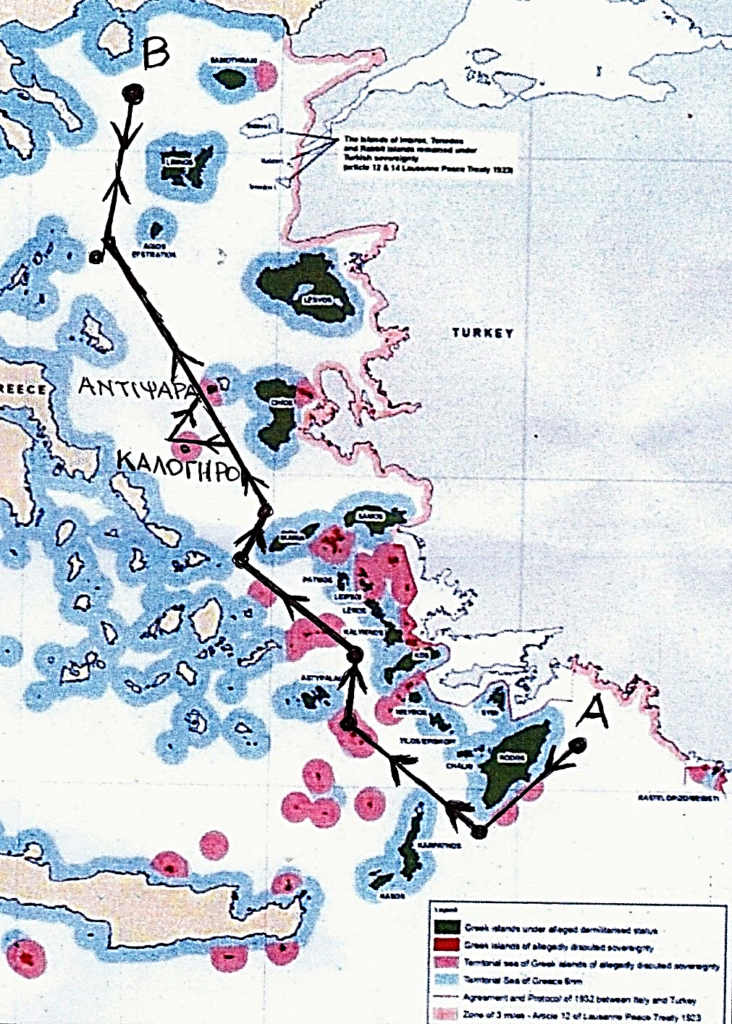
    On the map of the Report of the American Congress, 29 of our islands are colored pink and are marked as disputed. On the same map we see the almost daily violations of Greek sovereignty by Turkish UAVsTurkey continues to run almost daily with UAVs undisturbed through Greek sovereignty in the Aegean, from Rhodes to Thassos, and back, occupying Greek islands, islets and rocky islets, issuing the relevant illegal international notice in the Athens FIR (see map ).
  • When Armenia Occupied Azerbaijani Lands Josep Borrell Was Very Silent…

    When Armenia Occupied Azerbaijani Lands Josep Borrell Was Very Silent…

    By Azer HASRET

    During his press remarks after the Foreign Affairs Council the High Representative on Foreign Affairs of the European Union Josep Borrell voiced baseless and unjustified claims regarding Azerbaijan. He noted that Azerbaijan has territorial claims against Armenia. He had even stressed that the President of Azerbaijan Ilham Aliyev voiced these claims.

    To see the issue deeper let’s read through what was said by Mr. Borrell on Jan 22, 2024, during his press remarks.

    “…we agreed that Azerbaijan needs to return to substantive peace and normalization talks with Armenia. The latest territorial claims by President [of Azerbaijan, Ilham] Aliyev are very concerning. And any violation of Armenia’s territorial integrity will be unacceptable and will have severe consequences for our relations with Azerbaijan.”

    As is seen Mr. Borrell is talking about President Aliyev’s territorial claims against Armenia. But as a citizen of Azerbaijan, plus as a person closely following political developments not only within, but outside of Azerbaijan I can strongly oppose these claims by Mr. Borrell and assure that President Aliyev never voiced territorial claims against Armenia. What I know the President continuously states that Azerbaijan has no intention to occupy any piece of territory of any other country including Armenia.

    This is obvious and even Mr. Borrell has an opportunity to contact Mr. Aliyev and ask him if he has territorial claims against Armenia. But as we see Mr. Borrell didn’t dare to do this and check the truthfulness of the claims spread by some propaganda centers. He made himself a tool of propaganda for those centers. Unfortunately…

    Now we’ll see which country has the territorial claims against its neighbor. That is Armenia, not Azerbaijan having territorial claims. And we have quite enough evidence to prove this.

    Let’s read through The Constitution of Armenia. Just in its Preamble, we can see that Armenia has territorial claims against Azerbaijan! And this is the major soul of that Constitution thus making this country an aggressor.

    To see the details let’s read through the mentioned Preamble:

    “The Armenian People, accepting as a basis the fundamental principles of Armenian statehood and pan-national aspirations enshrined in the Declaration on the Independence of Armenia, having fulfilled the sacred behest of its freedom-loving ancestors to restore the sovereign state, dedicated to the strengthening and prosperity of the fatherland, with the aim of ensuring the freedom, general well-being, and civic solidarity of the generations, and affirming its commitment to universal values, adopts the Constitution of the Republic of Armenia”.

    One who doesn’t know the issue well would say that where is the territorial claim here? We’ll explain.

    The Preamble is quoting The Declaration on the Independence of Armenia. And very this document openly expresses territorial claims against Azerbaijan!

    Let’s see this time the mentioned Declaration:

    “The Supreme Council of the Armenian Soviet Socialist Republic

    Expressing the united will of the Armenian people;

    …Based on the December 1, 1989, joint decision of the Armenian SSR Supreme Council and the Artsakh National Council on the “Reunification of the Armenian SSR and the Mountainous Region of Karabakh”;..

    Declares

    The beginning of the process of establishing of independent statehood positioning the question of the creation of a democratic society based on the rule of law;..”

    This Declaration was adopted on August 23, 1990, and is taken as a basis for The Constitution of Armenia. Mr. Borrell before accusing Azerbaijan of territorial claims against Armenia could look through this Constitution and see the real territorial claimers…

    And this is not even the last evidence showing Armenia’s territorial claims against its neighbors. The Constitution of Armenia has one more piece of evidence, this time against Türkiye.

    Let’s see again The Constitution:

    Article 21. The Symbols of the Republic of Armenia

    …The coat of arms of the Republic of Armenia shall depict, in the center on a shield, Mount Ararat with Noah’s ark and the coats of arms of the four kingdoms of historical Armenia…

    Thus, once again a person with no imagination about the region would see nothing here. But if look deeper one can see that Armenia has territorial claims against Türkiye. As we know the mount which Armenia calls “Ararat” is a Mount Aghri based in the territory of Türkiye. Why would a country depict a natural object of another country on its national symbol? Where is the logic?

    This is one more piece of evidence proving that Armenia has territorial claims against at least two of its neighbors: Azerbaijan and Türkiye. But Mr. Borrell is accusing Azerbaijan of “having territorial claims against Armenia”…

    Going through this evidence we can once more see that the EU High Representative Josep Borrell is voluntarily acting as part of the Armenian propaganda machine. But we here in Azerbaijan and other countries of the region were seeing the European Union and its representatives as those who could guarantee more freedom, justice, and well-being for our people…

    P.S. Armenia kept under its occupation about 20 percent of the territory of Azerbaijan for more than 28 years. This very Mr. Borrell never talked about Armenia’s obvious occupation while the evidence was very clear. But now he is accusing Azerbaijan for having territorial claims against Azerbaijan while he has no single evidence to prove this…

  • Sarbanes Letter to President Biden

    Sarbanes Letter to President Biden

    Sarbanes, Hellenic Caucus Leaders Urge President Biden to Formally Invite the President of Cyprus to the White House to Mark 50th Anniversary of Turkish Invasion of Cyprus

    January 18, 2024

    WASHINGTON, D.C. – Today, Congressman John Sarbanes (D-MD) joined Congressional Hellenic Caucus co-chairs Chris Pappas (D-NH) and Gus Bilirakis (R-FL) and vice co-chairs Dina Titus (D-NV) and Nicole Malliotakis (R-NY) in sending a letter to President Biden requesting he observe the 50th anniversary of Turkey’s invasion and ongoing occupation of the Republic of Cyprus by formally inviting Cypriot President Nikos Christodoulides to the White House and taking other measures to strengthen the strategic partnership between the United States and Cyprus.

    Read the full letter linked here and below:

    Dear President Biden:

    This year we mark the 50th observance of Turkey’s brutal invasion and ongoing occupation of the Republic of Cyprus. From your earliest days in the Senate, few elected officials have matched your understanding of this unforgiving tragedy, and even fewer have equaled your level of unwavering support for reunification of the island as a bi-zonal, bi-communal federation.   

    As members of the Congressional Hellenic Caucus, we urge your administration to mark this sober year of remembrance with meaningful actions that will materially elevate the United States’ relationship with one of our most reliable strategic partners. We agree with your recent statement that American leadership is what holds the world together, that American alliances are what keep us, America, safe. Affirming our bond with key partners — in this case, the Republic of Cyprus — is critical to projecting American values and bolstering international collaboration on the world’s most pressing challenges.

    On July 20, 1974, Turkish forces descended upon Cypriot towns and villages, sending their rightful inhabitants fleeing for their lives. Since that time, Cypriots have endured a massive Turkish occupation in an ongoing affront to their sovereignty and democratic liberties. Your observation that we know that our allies and, maybe most importantly, our adversaries and competitors, are watching could not be more applicable than to Turkey’s actions in Cyprus.

    In 2014, you became the highest-ranking U.S. official to visit Cyprus since then-Vice President Lyndon B. Johnson in 1962. During that visit, you recognized Cyprus’ important role as an ally, observing: “Cyprus can be a growing force for peace, prosperity and stability in the Eastern Mediterranean and that would benefit the world.” Almost a decade later, Cyprus has consistently proven to be the stabilizing and peaceful force in the region you rightly predicted, having aligned its policies with U.S. interests and collaborated with the larger Eastern Mediterranean region. Cyprus has worked to combat Russian money laundering, captured tons of Iranian explosives and shown itself to be a compassionate and reliable partner by treating wounded U.S. Marines prevented from receiving care at the U.S. Incirlik Base in Turkey. Most recently, in response to Hamas’ brutal attack on Israeli civilians, Cyprus rescued thousands of innocent Americans and others fleeing from Israel and is currently leading efforts to establish a humanitarian aid corridor to Gaza. Beyond this demonstrated vital partnership, our nations have found key areas of collaboration through the 3+1 Eastern Mediterranean Cooperation Framework, including its development of CYCLOPS, a facility that hosts joint training on maritime and border security, counterterrorism and cybersecurity between the U.S., Cyprus and other regional allies. 

    It is with this convincing record of collaboration in mind that we propose your consideration of several key actions that will signal America’s appreciation of Cyprus’ vital role and also act to further strengthen the U.S.-Cypriot strategic partnership. This partnership has already catalyzed greater cooperation, innovation and security amongst our friends and allies in the Eastern Mediterranean region.

    First, we urge you to formally welcome Cypriot President Nikos Christodoulides to the White House. A formal state visit will shine a powerful light on the peace building that remains to be done in Cyprus and will demonstrate America’s broad interest in peaceful conflict resolution across the globe. It will be an important statement to allies under threat of authoritarian control that the United States is a resolute world leader committed to the preservation and promotion of democratic liberties. You have done more than any American President in recent memory to raise the alarm about the threats to democracy at home and abroad. Demonstrating solidarity with the Republic of Cyprus, a key partner in that continuing struggle, will reaffirm your unwavering commitment to strengthening democratic principles at this critical moment.   

    Second, we ask that you leverage the power of the 3+1 Framework to further the shared strategic interests of the United States and Cyprus in the Eastern Mediterranean region by expeditiously convening a 3+1 Foreign Ministerial meeting. During a time of rising global tensions, it is more important than ever to promote regional stability and enhance collaboration among key partner nations on mutual economic and political goals by facilitating these regional talks. 

    Third, we applaud initial steps to add Cyprus to the Visa Waiver Program alongside many of its European Union neighbors. This Program serves to strengthen people-to-people ties between nations and the inclusion of Cyprus is the right policy. We urge a smooth and efficient admission of Cyprus into the Program once the necessary security steps are completed by your administration. 

    Finally, we wish to thank you for fully lifting the arms embargo on Cyprus through 2024. This decision is a testament to the reforms Cyprus has implemented consistent with the Eastern Mediterranean Security and Energy Partnership Act of 2019, to thwart Russian influence and money laundering. While we believe this is an important first step in recognition of Cyprus’ ongoing commitment to these reforms, we urge you to extend this lifting of the arms embargo beyond a one-year time frame which will allow for advanced planning and ensure interoperability with allies. 

    Your long-standing record of support for the U.S.- Cyprus relationship is deeply appreciated by all who have worked over these last five decades to achieve justice for the Cypriot people. We know that you feel the gravity of this moment as acutely as we do and ask you to mark this sober occasion with concrete, meaningful actions that can advance a just solution in Cyprus.  

    Sincerely,

    Chris Pappas, Co-Chair, Hellenic Caucus

    Gus Bilirakis, Co-Chair, Hellenic Caucus

    Dina Titus, Vice Co-Chair, Hellenic Caucus

    Nicole Malliotakis, Vice Co-Chair, Hellenic Caucus

    John P. Sarbanes, Member, Hellenic Caucus 

  • Mount Athos (Aynoroz)

    Mount Athos (Aynoroz)

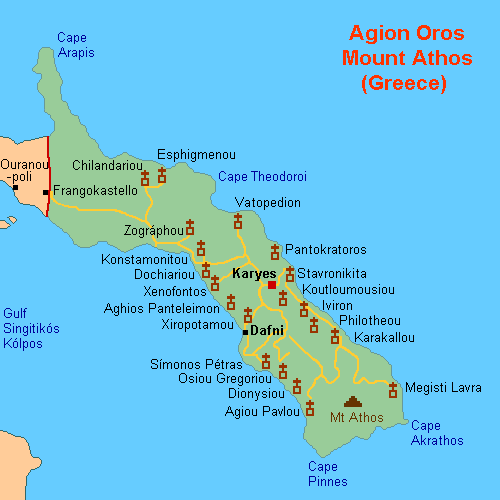
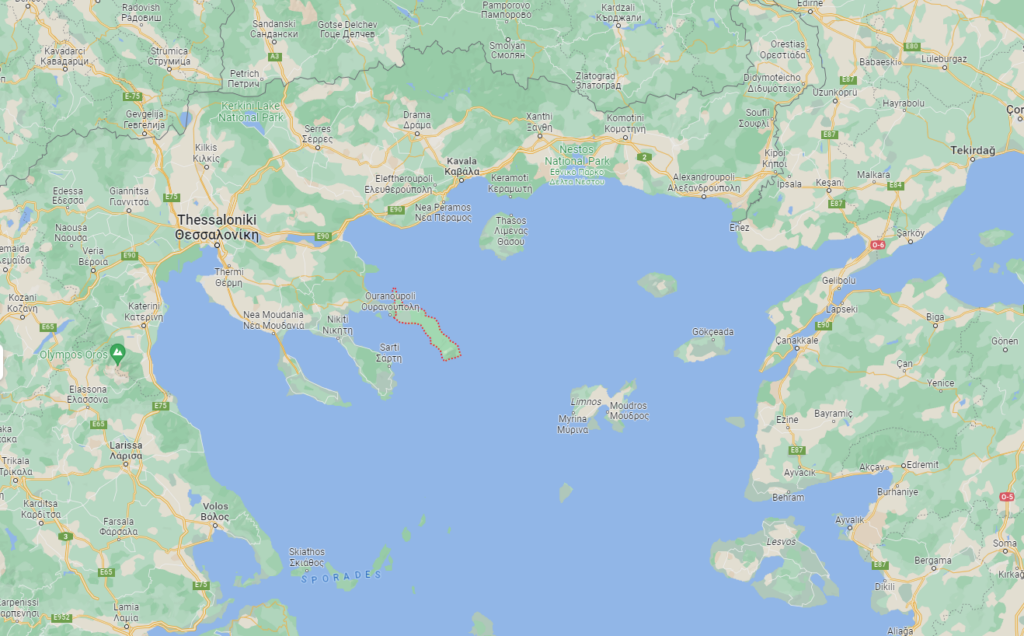
    Mount Athos is a peninsula in northern Greece (in the geographical region of Macedonia). It is home to 20 Orthodox Christian monasteries and administratively it is an autonomous polity, governed by a Holy Community consisting of representatives of those monasteries. Civil authority is represented by a Civil Governor appointed by the Foreign Ministry of Greece.

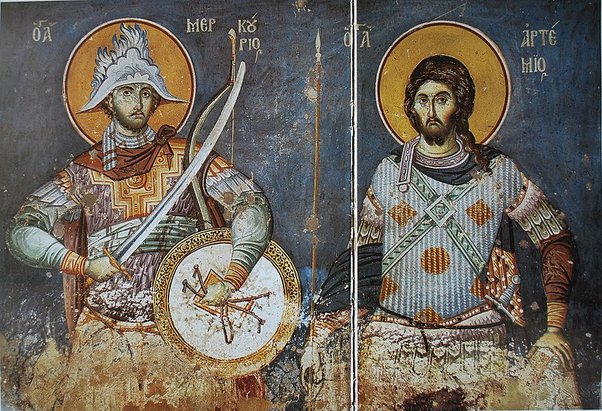
    A fresco with Saint Mercurius and Artemius of Antioch.

    In terms of culture, however, Mount Athos retains many Byzantine traditions & items and indeed some commentators have stated that it is like a place ‘frozen in time’. The Mount operates under a charter granted by Emperor Ioannes Tzimisces in 972. Byzantine cultural and religious practices are retained in those monasteries, most of which were built between the 10th and 15th centuries and are scattered over the heavily forested, hilly peninsula. They posses many medieval art treasures, including liturgical objects and vestments, Christian texts, Byzantine imperial chrysobulls (decrees), icons and holy relics. As such, one can say that Mount Athos is still Byzantine in a way.

  • Was Romania part of the Ottoman Empire?

    Was Romania part of the Ottoman Empire?

    Yes, Romania was part of the Ottoman Empire for a significant portion of its history. The region that is now Romania was under Ottoman rule for several centuries, starting in the late 14th century and lasting until the 19th century.

    The Ottoman Empire began to expand into the Balkans in the late 14th century, and by the early 15th century, it had established control over various territories in what is now Romania. Wallachia and Moldavia, two of the three historical regions that make up modern Romania (the third being Transylvania), came under Ottoman suzerainty, meaning they had to pay tribute to the Ottoman Empire and were subject to Ottoman influence.

    While Wallachia and Moldavia were technically under Ottoman control, they also retained a degree of autonomy and had their own local rulers (voivodes) who governed with a degree of independence, provided they paid tribute and maintained loyalty to the Ottoman Sultan.

    Transylvania, on the other hand, was not directly ruled by the Ottomans but was often caught in the struggle for influence between the Ottoman Empire and the Habsburg Monarchy.

    Although Romanians will deny this information saying that they were never Ottoman citizens and they had their own citizenship even before their independence, their claim was not recognized by the Ottoman Empire and neither by any state as a matter of fact.

    During the XIXth century, when modern diplomacy did not recognize any relationship of vassality and suzeranity between states as in the Middle Ages, Moldavians and Wallachians were considered as special subjects (citizens) of the Ottoman Empire. As far as international and Ottoman law was concerned, this means that they had Ottoman citizenship and the Ottoman Law of citizenship of 1869 applied to them. Any child born from a Moldavian or Wallachian father and mother or just from the father was by jus sangvinis also considered an Ottoman citizen and was issued an Ottoman passport. Any foreigner naturalized on Moldavian or Wallachian soil also became Ottoman citizen. All this till Romania gained its independence in 1878.

    When a Romanian was traveling within the Ottoman Empire outside of the provinces of Moldavia and Wallachia, in their own minds they were a foreigner, but as far as Ottoman authorities were concerned, they were an Ottoman national travelling in their own country, even if they were in Constantinople, Damascus or Tunis. Romanians also like to call their country before their independence as United Principalities but again, they had no international status as “principalities” and officially they were just provinces (memalik-i mahruse) of the Ottoman Empire.

  • Will Turkey and Greece go to War?

    Will Turkey and Greece go to War?

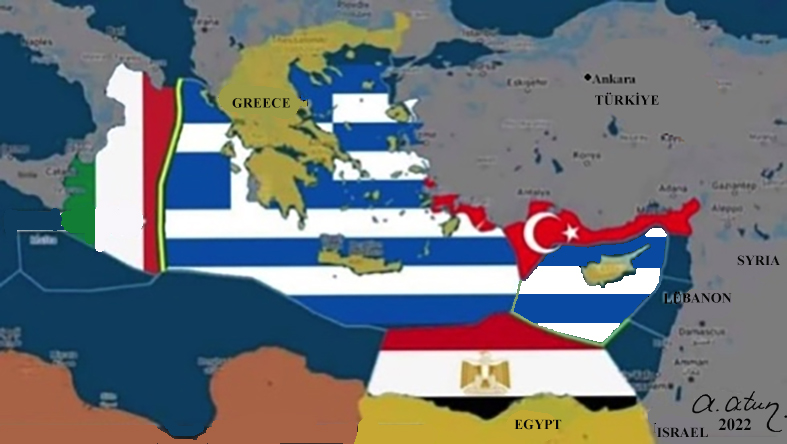
    Discover the centuries-old conflict between Greece 🇬🇷 and Turkey 🇹🇷! Territorial disputes, historic rivalries, and access to resources fuel this tension. Could it lead to Europe’s next war? Find out now!