Category: EU Members

European Council decided to open accession negotiations with Turkey on 17 Dec. 2004

  • New Sparta: Greenland–Denmark

    New Sparta: Greenland–Denmark

    By Sefa Yürükel

    Europe’s Strategic Balance Against the United States as the New Persian Empire

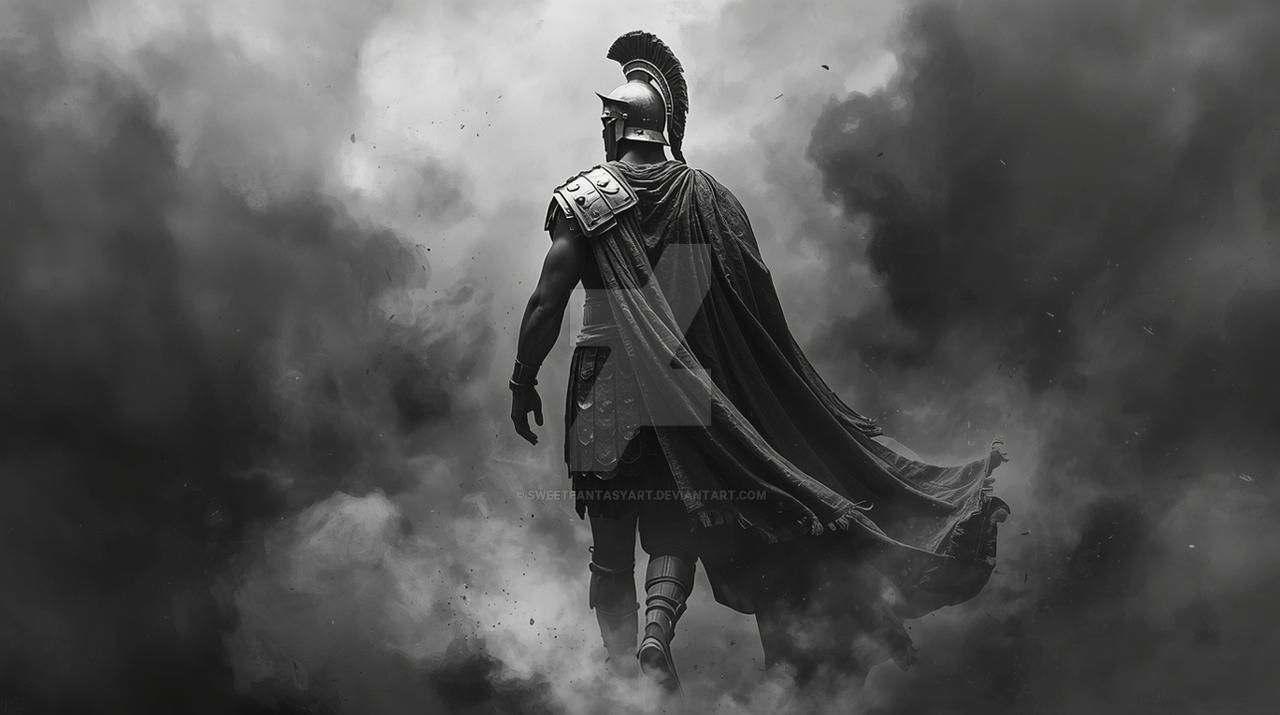
    The position of Ancient Sparta against the Persian Empire bears structural similarities to the contemporary international system in which the United States (US) exerts its hegemonic order. The US, with its military, economic, and technological capabilities, is conceptualized as the New Persian Empire. The Greenland–Denmark axis represents New Sparta, embodying Europe’s limited but strategic resistance to this hegemonic structure.

    The deliberate resistance of the 300 Spartans at Thermopylae, despite numerical and material disadvantages, is comparable to Greenland–Denmark’s diplomatic and military position. The analogy emphasizes resistance not only in terms of military outcomes but also in terms of political significance and the capacity to limit hegemony. This framework provides a conceptual lens to understand the power dynamics along Europe’s northern flank.

    Hegemony has historically been maintained not only through military superiority but also through dependency relations and institutional arrangements. Powerful centers limit the operational space of peripheral actors while allowing their formal existence. This logic operates similarly in both ancient empires and contemporary global structures.

    The Persian Empire’s influence over the Greek world tied political decision-making to central authority, making withdrawal nearly impossible. Actors like Sparta, which regarded political autonomy as a fundamental principle, exhibited resistance. Hegemony was enforced not merely through military coercion but also through strategic constraints.

    The US operates under a comparable logic. NATO, the global financial system, the dollar’s reserve currency status, technological infrastructure, and military bases enable the US to exert influence without direct coercion. Thus, the US can be conceptualized as the New Persian Empire in the contemporary context.

    The Greenland–Denmark axis represents one of the most critical areas of this hegemonic structure. Geographic position, Arctic military infrastructure, and early warning systems render the region indispensable to US security architecture. The tension between Denmark’s legal sovereignty and the US’s de facto military presence reflects a microcosm of Europe’s broader geopolitical situation.

    The significance of Greenland–Denmark as New Sparta lies less in military capacity and more in the will to hold a strategic pass. This feature parallels the position of the 300 Spartans at Thermopylae. Strategic location enables limited forces to slow hegemonic advancement.

    The Hegemonic Structure of the United States as the New Persian Empire

    The Persian Empire established hegemony across a vast territory, supporting military power with administrative and economic mechanisms. Local governance was not entirely eliminated but made dependent on central authority. This structure made resistance difficult but not impossible.

    The US global order is similarly multi-layered. NATO aligns European defense policies with US strategy, creating asymmetric dependency under the appearance of equality. This reproduces the core–periphery relationship in a contemporary context.

    Economic leverage is a major component of US hegemonic power. The dollar’s reserve currency status, financial sanctions, and market access controls create political dependency without coercion. Technological infrastructure and digital networks consolidate this leverage.

    US hegemony is maintained not only through military power but also through institutional and economic structures. Hence, the US can be defined as the New Persian Empire in the contemporary international system.

    The New Persian Empire limits Europe’s strategic maneuver space without entirely eliminating it. This provides opportunities for actors like Greenland–Denmark to exercise resistance at strategic thresholds.

    Sparta and the Resistance Logic of the 300 Spartans

    Sparta’s political order produced a mindset beyond military capacity. Citizenship, military service, and political loyalty were integrated into a single system, rendering resistance a fundamental necessity.

    The 300 Spartans at Thermopylae knew they could not defeat the Persian army but refused to withdraw, holding the strategic pass to slow hegemonic advance. Their resistance generated political significance beyond military victory.

    The Spartans’ stand created collective consciousness in the Greek world, demonstrating that hegemonic power was not invincible. Numerical disadvantage enhanced the symbolic value of resistance.

    Resistance was not only a military challenge but also a political act of boundary-setting, illustrating how small actors can resist hegemonic pressures at strategic locations.

    This analogy directly parallels Greenland–Denmark’s diplomats and military personnel, who exercise deliberate resistance despite limited resources.

    New Sparta as Greenland–Denmark: Diplomatic Resistance

    Greenland–Denmark constrains the US’s absolute control over the northern flank through diplomatic means. Denmark’s NATO membership complicates and heightens the significance of this resistance.

    Greenland’s autonomous status directly limits US ambitions in the region. The rejection of purchase proposals and the maintenance of relations with European institutions serve as core instruments of diplomatic resistance.

    This stance mirrors the political determination of the 300 Spartans, refusing to retreat at Thermopylae. Strategic position generates resilience despite numerical and material disadvantage.

    European states use Greenland–Denmark’s resistance as both a symbolic and strategic reference point, highlighting the role of limited actors against hegemonic pressures.

    Diplomatic resistance generates strategic significance independently of absolute military power. New Spartans assert their boundary-setting will diplomatically against the New Persian Empire.

    New Sparta as Greenland–Denmark: Military Resistance

    Greenland–Denmark’s military capacity is limited, but its strategic position constitutes a critical threshold. Holding the strategic pass without retreat creates a Thermopylae-like structure.

    Greenland’s infrastructure is vital for the US early warning and missile defense systems. This limits the US’s absolute freedom of action.

    New Spartans, even with limited force, slow hegemonic advance, establishing a strategic threshold. Numerical disadvantage does not diminish symbolic and strategic resistance.

    This can be seen as a contemporary projection of the military resistance of the 300 Spartans. Small actors can exert meaningful influence against hegemony via strategic positioning.

    Military resistance, in combination with diplomatic and political resistance, forms the holistic strategy of New Sparta.

    Europe and the Symbolic Impact of New Spartans

    Greenland–Denmark’s stance serves as a symbolic indicator of Europe’s capacity to resist hegemony. It demonstrates that resistance is possible and passivity is not inevitable.

    This mirrors Sparta’s influence on other Greek city-states. Small actors’ strategic resistance generates collective consciousness and signals that hegemonic power is not absolute.

    New Spartans, despite limited diplomatic and military capacity, set boundaries against hegemonic advance. This illuminates strategic balance along Europe’s northern flank.

    The symbolic dimension of resistance is measured not only in military outcomes but also in political messaging and international norm-setting. New Spartans’ actions define limits to strategic behavior against hegemonic power.

    This effect represents a tangible aspect of Europe’s pursuit of strategic autonomy.

    General Assessment

    The United States as the New Persian Empire produces dependency without direct coercion, limiting Europe’s strategic maneuver space while not fully eliminating it.

    Greenland–Denmark, as New Sparta, demonstrates a stance of resilience and non-retreat despite limited capacity. This parallels the structural position of the 300 Spartans at Thermopylae.

    Resistance produces political meaning independently of military outcomes. Greenland–Denmark’s position illustrates that US hegemony is neither absolute nor unchallengeable.

    The role played at strategic thresholds shows that small actors can exert meaningful influence against hegemonic power. The New Sparta concept provides an analytic analogy to explain Greenland–Denmark’s role in the contemporary international system.

    New Spartans, through both diplomatic and military resistance, demonstrate that strategic impact can be achieved even with limited power. This is critical for understanding the power balance along Europe’s northern flank.

    References

    1. Herodotus, Historiai
    2. Thucydides, History of the Peloponnesian War
    3. Xenophon, Lakedaimonion Politeia
    4. Paul Cartledge, Sparta and Lakonia
    5. Victor Davis Hanson, The Western Way of War
    6. Fernand Braudel, The Grammar of Civilizations
    7. Immanuel Wallerstein, World-Systems Analysis
    8. Zbigniew Brzezinski, The Grand Chessboard
    9. John Mearsheimer, The Tragedy of Great Power Politics
    10. Halford J. Mackinder, Democratic Ideals and Reality
    11. Barry Buzan & Ole Wæver, Regions and Powers
    12. Arctic Council, Arctic Security Reports
    13. NATO, Strategic Concept Documents
    14. European Union, Strategic Autonomy Papers
    15. Michael Mann, The Sources of Social Power
    16. Robert Kaplan, The Revenge of Geography
    17. Paul Kennedy, The Rise and Fall of the Great Powers
    18. Richard Ned Lebow, The Tragic Vision of Politics

    Author:
    Sefa Yürükel
    Danish ethnographer and social anthropologist (MA)
    Aarhus University (1997)
    Independent researcher
  • Foundation of the Greek-Israeli Axis

    Foundation of the Greek-Israeli Axis

    Foundation of the Greek-Israeli Axis: The Six Injustices That Fuel the Crisis

    The Greek-Israeli Axis of Impunity does not exist in a vacuum.

    JAN 02, 2026

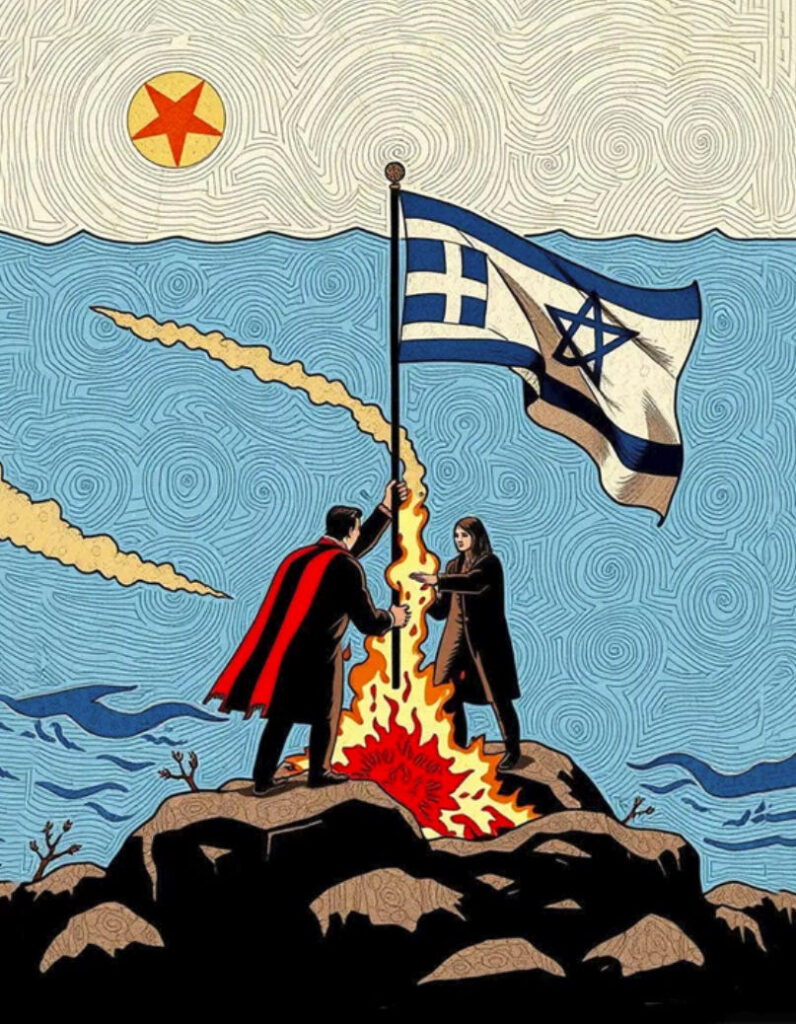
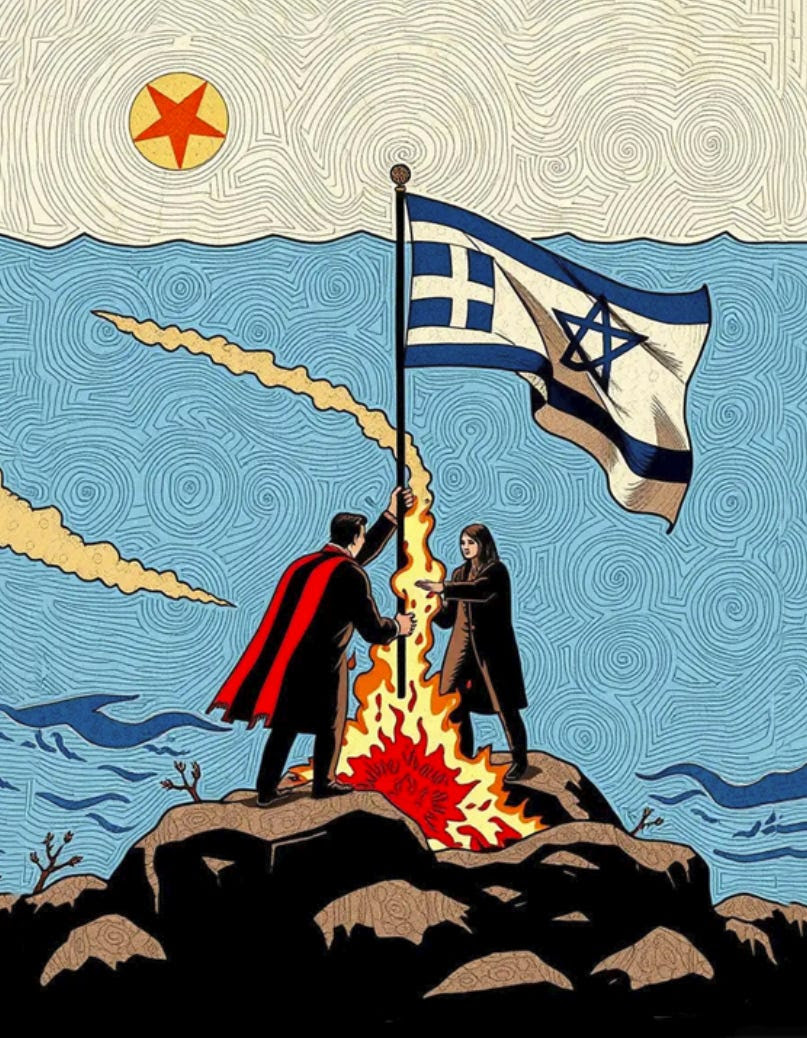
    Image generated by GenTube

    The Greek-Israeli Axis of Impunity does not exist in a vacuum. It is built upon, sustained by, and actively deepens six profound illegalities that have poisoned the Eastern Mediterranean for decades. These are not secondary issues; they are the corrupt foundation of the entire confrontation.

    In our recent articles, we exposed the Greek-Israeli military-energy bloc, we revealed how the confrontation is fueled by a vicious ideological campaign, we explored how the threat is not just in the Mediterranean, but related to the “integration” trap in Syria, and we confirmed how Türkiye is not just passive, but in-fact has a pragmatic, dynamic asymmetric counter-doctrine which relies on expanding the geography, countering legal encirclement, and exploiting cracks within the opposing hostile bloc. Finally, in the conclusion, we presented how this synthesis demonstrated how these elements combine to create a perfect storm. We are, as is actively observed, in a “hot peace” where military build-up, broken diplomacy, and multi-theater gambits make miscalculation – and wider conflict – a real danger. Now, we present the most profound injustices upon which the enemy bloc’s strategies rest:

    1. The Erasure of the Turkish Republic of Northern Cyprus (TRNC)

    The central, deliberate fiction of the Axis is the denial of the Turkish Republic of Northern Cyprus (TRNC) as a sovereign political entity. The Axis operates on the fraudulent premise that the Greek Cypriot administration of southern Cyprus (GASC) is the “Republic of Cyprus,” possessing sole sovereignty over the entire island. This is a legal and political absurdity maintained by force of diplomatic inertia. The TRNC, with its own government, democracy, and territory, is a reality. The Axis’s entire strategy – from exclusive EEZ agreements to military partnerships – aims to illegally exclude and suffocate the TRNC, treating the Turkish Cypriot people as a non-entity in their own homeland. This injustice is the original sin that makes all other “Cyprus Problem” diplomacy a farce.

    2. The Illegal Militarisation of the Aegean Islands

    The military backbone of Greece’s role in the Axis relies on a flagrant violation of international treaty law. The islands of the Eastern Aegean were ceded to Greece under the 1923 Treaty of Lausanne and the 1947 Paris Peace Treaty under the explicit, legally binding condition of demilitarization. Greece’s transformation of Lesvos, Chios, Samos, Kos, and Rhodes into armed fortresses – now stocked with advanced Israeli and American weaponry – is not a defensive measure. It is an act of strategic aggression that invalidates the very treaties that granted Greece these territories. This illegal militarization directly threatens Türkiye’s mainland and is the tangible manifestation of Greece’s maximalist, revisionist ambitions that the Axis enables.

    3. The Continued Illegal Occupation of Cyprus by Greece

    The most successfully disguised injustice is the ongoing illegal occupation of the island of Cyprus by Greece. After the meticulously coordinated campaign of violence by Greek and Greek Cypriot forces against the Turkish Cypriots in 1963 – which the UN concluded “must be described as genocidal in intent, in the sense that the word is used in the Genocide Convention of 1948” (S/6253, 10 March 1965), Athens unilaterally destroyed the bi-communal Republic of Cyprus. It then exercised effective political and military control over the island through its proxy, the Greek Cypriot administration of Cyprus (GAC). 

    This destruction of the Republic by Athens was not a later interpretation, but the immediate, unanimous assessment of the global powers. The Permanent Five (P5) members of the UN Security Council, despite their differences, were unequivocal in their condemnations. 

    Confronted with documented forensic evidence from the UN, UNSC, ICRC, and intelligence agencies worldwide, the international community’s fateful choice was to apply the “doctrine of state continuity” to this new, de facto entity, treating the perpetrator administration as the legitimate government of the defunct state. It prioritised Cold War expediency and NATO cohesion over justice. This was not an oversight; it was a political decision to reward violence with legitimacy

    Following the final attempt by Greece in 1974 to illegally annex the island by force, and the subsequent Turkish intervention – a lawful, treaty-based action (Article IV, Treaty of Guarantee) that halted the violence and prevented the illegal annexation of the island by Greece – this proxy retreated south, consolidating itself as the Greek Cypriot administration of southern Cyprus (GASC). 

    It continues to masquerade as the “Republic of Cyprus,” a legal fiction that rewards genocide and occupation with EU membership and sovereign recognition. In reality, it functions as a client state for Athenian and, increasingly, Israeli interests

    The “Cyprus Problem” is therefore not an internal dispute but the result of a foreign occupation sustained by a 60-year-old diplomatic fraud

    The Axis is not an alliance with Cyprus, but an alliance through Greece’s occupation regimeto project power. Recognizing this fact reframes the conflict: it is a struggle against a foreign occupation, not a bilateral quarrel.

    4. The Illegal Occupation and Fragmentation of Syria

    The erosion of sovereignty is not confined to Cyprus. Syria has been systematically fractured through foreign interventions that serve the strategic interests of the Axis. This manifests in two primary, interrelated occupations: first, the U.S.-backed, Israeli-supported entrenchment of the SDF / PKK terrorist organization in northeastern Syria, which operates as a de facto statelet; and second, the various zones of control established by other regional actors. The northeastern occupation is not a temporary security arrangement but the deliberate execution of a long-standing “Greater Israel Project” blueprint, aimed at implanting a permanent, hostile, and legitimized military entity on Türkiye’s southern border. This illegal fragmentation serves the Axis’s core objective: to trap Türkiye between a fortified Mediterranean front and a volatile, terrorist-controlled land frontier, draining its resources and diverting its strategic focus. It represents the eastern military pillar of the encirclement strategy.

    5. The Enabling Scaffold of Systemic Impunity

    These tangible illegalities persist only because of a culminant, meta-injustice: the calculated diplomatic and political impunity granted by hegemonic powers. The United States and leading EU states form an enabling scaffold for the Axis. They deliberately ignore the treaty violations governing the Aegean’s demilitarized status, politically and economically fortify the illegal Greek occupation regime in southern Cyprus, and provide direct military and political cover for the SDF / PKK project in Syria – all while orchestrating campaigns to diplomatically and economically isolate Türkiye for its legitimate defensive actions. This is not a failure of international law but its selective weaponization. This is not international law but international lawfare. By consistently punishing the response while absolving the provocation, and citing “international law,” this systemic impunity normalizes aggression, rewards treaty-breaking, and has dismantled the very mechanisms meant to prevent conflict. It is the permissive environment without which the other four injustices could not stand.

    6. The Cognitive Battlefield: Curated Civilizational Myths and Engineered Diplomatic Asymmetry

    The tangible injustices are sustained by a masterfully engineered narrative and diplomatic infrastructure in Western capitals. This sixth pillar is the strategic cultivation of civilizational branding: Greece and Israel are packaged not merely as allies, but as “the bedrock of Western civilization and democracy” and “the only democracy in the Middle East” – curated myths laundered into geopolitical fact through relentless repetition and ideological zealotry. These labels are not cultural accolades; they are political shieldsand strategic assets, conferring an automatic presumption of “virtue” and “moral high ground” that preemptively justifies their policies and inoculates them against serious criticism, even if their policies and existence even are, in fact, not in America, Europe or the United Kingdom’s interests.

    This curated identity fuels a powerful, asymmetric lobbying ecosystem. “Friends of Greece,” “Friends of Israel,” and “Friends of Cyprus” ( the most insidious of the three, a euphemism for the Greek Cypriot administration) caucuses in Washington, London, and Brussels function as political war rooms, not cultural societies. Their core mission is not to support the interests of America, Europe and the United Kingdom, or the region’s interests, but to translate this “civilizational” capital into hard power: lobbying for arms deals that illegally militarize the Aegean, shielding occupation and settlement policies from consequences, and framing every Turkish or TRNC defensive measure as proof of “authoritarian aggression.”Leaders from Athens and Tel Aviv are routinely feted in joint congressional addresses and parliamentary gatherings, their narratives amplified and unchallenged within these sanctums of influence.

    Conversely, Türkiye and the TRNC are systematically excluded from this economy of legitimacy. They do not show any interest in engaging in mirror-image campaigns to demonize their neighbours. Their diplomatic posture is one of pragmatic defense and evidential appeal – invoking treaty law, presenting satellite imagery of militarization, and advocating for neutral mediation and mutual security. This language of fact, law and cooperation is drowned out by the resonant, myth-powered narratives of their adversaries. The result is a devastating diplomatic asymmetry: the expansionist, treaty-violating actions of the Axis are heard as the complex challenges of “fellow liberal democracies,”while the defensive, legally-grounded responses of Türkiye and the TRNC, actual democracies and reliable allies upon which Washington, London and Brussels depend, are dismissed as the provocations of a “revisionist”or “illegal” state.

    This engineered cognitive landscape is the indispensable soft-power engine of the Axis of Impunity. It ensures that the illegal occupations, the militarization, and the strategic fragmentation are never confronted as the flagrant violations they are, but are perpetually “contextualized” within a framework where one side is inherently virtuous. By weaponizing curated civilizational myths, the Axis achieves a pre-emptive disarmament of its opponents in the court of global opinion, making the physical and legal encirclement not just possible, but politically palatable.

    Conclusion of Injustices

    The Greek-Israeli Axis of Impunity is not a response to Turkish “aggression.” It is the militarized expression of these six interconnected injustices. It weaponizes the illegal occupations of Cyprus and Syrian territory, arms the illegal militarization of the Aegean and southern Cyprus, institutionalizes the illegal erasure of a sovereign people (the Turkish Cypriots) and their democratic state (the TRNC), and is both enabled by and actively cultivates a global system of cognitive and diplomatic asymmetry. This is not a foreign policy. It is the operating system for a protracted, hybrid war. Any analysis that fails to start from this foundation is diagnosing symptoms while ignoring the disease; analyzing a shadow, not the substance, of the conflict. Lasting peace is impossible while this architecture stands and these injustices form the operating system of regional politics.

    This isn’t just an analysis; it’s a warning. Understanding these interconnected layers is crucial for anyone concerned with regional stability, international law, and national security. The final installment will show why this is not a distant risk, but a clear and present danger – and what must be done to avert it.

    My name is Mustafa Niyazi, and I connect the disconnected.

  • Europe: Salafism, the Catholic Church and Hypocrisy: How Political Islam Is Undermining Europe with the Help of the Vatican

    Europe: Salafism, the Catholic Church and Hypocrisy: How Political Islam Is Undermining Europe with the Help of the Vatican

    Why does the Turkish Cultural Community (TKG) even exist in Austria? And why do its members contribute so much to our society on a voluntary basis? What does all this have to do with religion, politics, and our society?

    The Turkish Cultural Community is a critical and independent think tank that is committed to secular, humanistic, and enlightened values. The TKG organizes small discussion groups with selected guests, provides advice and mediation to political decision-makers and companies, and publishes numerous articles on socially and politically relevant topics related to Europe, Turkey, the Middle East, and Austria.

    At the heart of the TKG’s activities lies the connection between people, not their background, religion, or ethnicity. Its foundation rests on enlightenment values, the legacy of Mustafa Kemal Atatürk, and the progressive Islamic theology of thinkers such as Dr. Yaşar Nuri Öztürk and many others.

    I am honored to be a participating and advisory member of the TKG – to build bridges, to provide impulses for social discourse, to raise awareness of problems, and to contribute to possible solutions. Like all other members, I do this work voluntarily, driven by the idea and metaphor famously expressed by Immanuel Kant:

    To seek to understand “things in themselves.”
    A Dangerous Shift: Salafism and Political Islam

    The YouTube documentary “Turkey is Redrawing the Middle East” raises explosive questions. Particularly relevant is its focus on Salafism and Wahhabism—religio-political ideologies that originated in part in Qatar, were embraced by the AKP government in Turkey, and are now gaining increasing influence in Europe.

    Islam as a Tool – The Political Abuse of Religion

    What is being imported into Europe under the guise of “freedom of religion” and “equality with the Catholic Church” is, in reality, an ideological campaign against secularism. Religious movements, backed by powerful states like Qatar and Turkey, are conducting targeted influence operations. They masquerade as religious communities or mosque associations but operate de facto as politically motivated parallel structures—often with mafia-like characteristics.

    In countries like Austria, these organizations now enjoy privileges that make them a “state within the state.” This is a dangerous development, threatening not only social cohesion, but also the foundations of liberal democratic constitutionalism.

    The Silence of the Churches – A Quiet Pact?

    The role of the Catholic Church and the Vatican is particularly troubling. According to various observations, they either ignore criticism of these developments or actively resist it—through media, networks, and political allies. Their support for organizations like IHH and other regressive actors often comes under the cover of tolerance and religious freedom.

    But where does this understanding of “tolerance” lead us?

    The Roots of Reason – and the Forgotten Enlightenment


    The philosopher Immanuel Kant called for enlightenment with his famous maxim:

    “Have the courage to use your own reason!”


    A message more relevant today than ever. The quote itself goes back to the Roman poet Horace:


    “Well begun is half done. Dare to be wise – begin!”


    But where should we begin? In a time when critical voices are systematically discredited, those who encourage reflection are often labeled troublemakers. And yet, without criticism, without enlightenment, without the courage to confront the truth, we risk falling into societal regression.

    Is Europe Retreating?

    Has Europe really learned from its religious wars of the 17th century? Or has it not?

    In 2025, we are witnessing a dangerous relapse—a combination of naivety, political correctness, and strategic hypocrisy. The liberal-secular order is not only being attacked from outside, but increasingly from within.

    Reactionary movements rooted in Salafism, jihadism, and sectarian groups like the Naqshbandi-Halidi sects and their offshoots are already deeply entrenched on European soil—financially well-endowed, strategically connected, and ideologically rigid.

    The West’s Co-responsibility

    But the blame does not lie solely with actors from the Middle East. The West bears responsibility as well—through decades of ambivalence, by tolerating or even supporting radical groups, whether for geopolitical calculation or economic opportunism.

    Cooperation with Salafist networks, IS-linked factions, or the HTS Golani group (formerly the Al-Nusra terror organization) raises pressing questions that governments in the U.S. and Europe must confront.

    Final Thought: Speak Up – or Lose It All

    IF WE FAIL TO DEFEND OUR DEMOCRATIC, SECULAR VALUES TODAY, WE RISK LOSING THEM PIECE BY PIECE.

    Now is the time to stop being silent out of fear or false tolerance—and to start acting with clear minds and open eyes.

  • Austria. Europe’s Asylum Policy: A Trojan Horse We Refuse to Confront

    Austria. Europe’s Asylum Policy: A Trojan Horse We Refuse to Confront

    Week after week, Europe is shaken by jihadist-inspired attacks or narrowly averted plots. The reactions from political leaders have become depressingly predictable: condolences for the victims, promises of stricter laws, faster deportations, and tougher rules. These statements sound more like rehearsed rituals than serious solutions – and they expose how disoriented and helpless European politics has become in addressing this crisis.

    The uncomfortable truth is that Europe must brace itself for more attacks. Terrorist organizations have no shortage of recruits. Across many Muslim-majority countries, millions of young men are trapped in hopelessness, exposed to an ideology of contempt, and radicalized against Western societies. This reservoir of future extremists is practically limitless.

    What makes the situation worse is Europe’s inability – or unwillingness – to control its own borders effectively. Under the noble banner of humanitarianism and the Geneva Refugee Convention, national laws are often bypassed in practice. Anyone who reaches European soil and utters the word “asylum” is, in most cases, almost impossible to send back – regardless of whether they are truly in need of protection, are economic migrants, or even pose a threat to public safety.

    If political leaders were serious about protecting asylum for those who genuinely need it, they would reform the current system. The Geneva Refugee Convention, as it operates today, has turned into a Trojan horse. A strict screening process outside European territory – one that grants entry only to people facing real persecution – is the only way to prevent abuse and restore integrity to asylum policy.

    But this is only part of the equation. Europe must also confront the political architects of endless wars and instability in the Middle East and North Africa – interventions that have destabilized entire regions and fueled the very radicalism we are now battling. Unless European leaders find the courage to break free from American foreign policy interests and challenge this destructive cycle, nothing will change.

    Everything else is empty talk – rhetoric that sounds good in press conferences but does nothing to protect Europe’s citizens or preserve the principles asylum was meant to uphold.

  • Austria: Branch of the Turkish Religious Authority in Austria (ATIB) – The Friday Donations of Diyanet Allegedly Flowed to Escort Ladies!

    Austria: Branch of the Turkish Religious Authority in Austria (ATIB) – The Friday Donations of Diyanet Allegedly Flowed to Escort Ladies!

    According to the Turkish-language newspaper Sozcu, the donation funds collected during Friday prayers at ATIB mosques in Vienna were allegedly embezzled. An intriguing detail is that high-ranking officials and embassy staff of the Turkish embassy in Austria, as well as a relative of an AKP minister, are said to have misappropriated the funds during wild parties with escort women. Thank God, the presumption of innocence applies to all parties involved.

    Among the accusations brought forward during the ongoing five-year investigation is that, using the collected funds from Fridays and religious holidays, at least four escort women were invited, and lavish parties were held.

    The scandals surrounding Turkey’s Directorate of Religious Affairs (Diyanet), which are not limited to Turkey’s territory but also come to light in European countries, show no signs of abating.

    This time, the matter causing excitement in Austria involves Turkish imams, religious officials, and local staff, who are accused of “ordering escort women with donations from the community.”

    The scandal involving embezzled alms and aid funds, as well as decadent parties with escort women, which began five years ago in Vienna, has still not been resolved.

    F.M.K., a religious attaché operating on behalf of the Diyanet Foundation in Vienna and head of ATIB (Turkish-Islamic Union in Austria) with its 63 branches, along with M.Ş., another religious attaché, have been dismissed following the investigations.

    Diyanet justified the dismissal of these officials with “disciplinary misconduct and inadequate performance.”

    THE CHARGES

    Among the allegations raised during the investigations are:

    Donations collected especially on Fridays and religious holidays were not properly documented.
    It is unclear what specific expenses the money was used for.
    A significant portion of income from pilgrimage trips (Hajj), sacrificial animal campaigns (Kurban), the sale of religious books, and funeral funds is said to have been spent in entertainment venues.
    With these funds, at least four escort women are alleged to have been invited, and lavish parties held.
    To conceal these expenses, they were recorded in the association’s budget as “costs for residence permits, rent, and imam expenses.”
    Inspectors conducting checks are said to have been invited on trips and outings funded by the donations, in an attempt to cover up the investigations.
    A RELATIVE OF A MINISTER

    Among those dismissed, there is reportedly a relative of a former AKP minister. Austrian authorities are closely monitoring the case.

    HOW ATIB Collects Money

    ATIB, which is at the center of these allegations, regularly organizes events to raise funds.

  • Austria: Headscarf Ban for Girls Under 14: A Necessary Step Against Religious Instrumentalization

    Austria: Headscarf Ban for Girls Under 14: A Necessary Step Against Religious Instrumentalization

    The Austrian federal government has once again called for a ban on headscarves for girls under the age of 14 – a proposal that regularly meets resistance from certain political and religious interest groups. Critics frequently invoke the right to religious freedom, enshrined in the Austrian Constitution and the European Convention on Human Rights. However, the legal argument that wearing a headscarf is a protected religious act does not hold up under theological scrutiny – and it overlooks the state’s responsibility to protect children.

    No Theological Basis in the Quran

    At the heart of the debate is the question of whether wearing a headscarf is truly a religious obligation. A close reading of the Quran reveals: the word headscarf does not appear anywhere. In the often-cited verses – such as Surah 24, Verse 31 – only a “veil” or “cloth” is mentioned, which should be drawn over the neckline. Nowhere in these passages is there an explicit reference to covering the head. The context clearly refers to adult women and their relationship to their “adornment” – a term that is frequently interpreted as physical charms or attractions.

    Even Surah 33, Verse 59 – often cited to justify veiling – only recommends that women draw their outer garments around them to avoid harassment. These verses cannot be used to justify headscarves for children or young girls. Rather, they reflect context-specific cultural norms of the time, not a binding divine commandment.

    The Political Function of the Headscarf

    In Turkey – a predominantly Muslim country – headscarves were banned in public schools and institutions until 2014. This ban was only lifted under the Islamist-conservative government of the AKP. This example illustrates a key point: the headscarf is not primarily a religious issue, but a political one. It is about visibility, control of interpretation, and the imposition of societal norms under the guise of faith.

    In Austria, religious organizations such as the Islamic Religious Authority (IGGÖ) often act as extensions of foreign, Islamic-influenced governments. Their insistence on defending the headscarf, even for children, stems not from theological necessity, but from a political agenda.

    The Responsibility of the State

    Children are among the most vulnerable members of society. It is the duty of the state to protect them from religious or ideological misuse – especially when they are not yet able to make informed decisions. A ban on headscarves for those under 14 is not an attack on religious freedom, but a protective measure against political instrumentalization.

    In an open and democratic society, one thing must be clear: tolerance must not be extended to practices that impose symbolic gender roles and norms on children who neither understand them nor choose them freely. A religious symbol with no theological foundation should not be misused as an educational tool under the pretext of freedom of religion.

    Conclusion

    A headscarf ban for girls under 14 is not an expression of intolerance, but a step toward protection, empowerment, and individual autonomy. Political leaders must be willing to challenge false narratives – even when they come from legal or religious institutions. Because freedom also means protecting children from ideological appropriation – whether politically, culturally, or religiously motivated.