Category: EU Members

European Council decided to open accession negotiations with Turkey on 17 Dec. 2004

  • APA – Turkey not lose will in EU despite snub: Arinc

    APA – Turkey not lose will in EU despite snub: Arinc

    Baku-APA. Turkey has not lost its determination to gain European Union membership, despite EU leaders turning cold towards it, Turkey’s Deputy Prime Minister Bulent Arinc has said, APA reports quoting Anadolu Agency.


    In a speech in the Polish capital of Warsaw, he said on Wednesday that an EU with Turkey inside was the only way permanent solutions to crises around the world could be produced.


    He said that the success of the far-right in Europe’s recent parliamentary elections had weakened the EU as an institution in the eyes of European society.


    Arinc declared: “A culturally essentialist Europe cannot be a global actor when the winds of Cold War blow. Quite the contrary, a cosmopolitan Europe with diversification is the guarantee for development.


    “Turkey is the sine qua non in such a picture.”


    Arinc also said that Turkey was ready to break down the prejudices of the European extreme right in order to achieve its EU bid.


    – ‘Strong country’


    Far-right parties made strong gains in the European Parliamentary elections at the end of May, including the victory of Marine Le Pen’s far-right party, the anti-immigration Front National (FN) in France, with more than 25 per cent of the vote.


    The deputy prime minister said: “What did the EU do in response to Turkey, which had abided by the Maastricht and Copenhagen criteria – a strong country in its region with a strong economic record?


    “Why did the leaders of the EU disincline Turkey from its integration bid? Without asking these questions, reports which only examine Turkey’s steps cannot lead us to a solution.”


    Arinc later met Turkish businessmen at a dinner organized by the Poland-Turkey Businessmen Association (POTIAD) in Warsaw.


    He inaugurated the Yunus Emre Institute in Warsaw, together with Polish Deputy Foreign Minister Henrika Moscicka Dendys, and expressed his wish that the institute would help Turkey and Poland’s historic ties flourish.


    The Yunus Emre Institute aims to contribute to the training of competent academicians and researchers in the fields of Turkish language, history, culture, art and music through certification programs in several cities across the world.

    via APA – Turkey not lose will in EU despite snub: Arinc.

  • THE BEAST

    THE BEAST

    2854215

    Hereby it is manifest, that during the time men live without a common power to keep all in awe, they are in that condition which is called war; and as such a war, against every man. (13/8)

     To this war of every man against every man […] nothing can be unjust. The notions of right and wrong, justice and injustice have there no place. Where there is no common power, there is no law: where no law, no justice. (13/13)

     The Leviathan, Thomas Hobbes (1651)


    Defined by its own horror, The Beast defiles the living and the dead. Lies! Cheating! Stealing! Killing! Its toxic mouth spews division, hate and felonious encouragement. It has no interests except its own and those are all-consuming. It rules in a Hobbesian world, where every person is at war with every person and The Beast is at war with all. Consumption, greed, violence and wealth are the supreme virtues. The Beast’s police are everywhere with its deadly violence. The streets are bloody with death. The Beast has strangled justice. It rules by rules, not laws. The Beast has many backs. Media, corporations, opposition politicians, the brain-washed, the brain-dead, the needy greedy, the destructive tycoons that assassinate mountains, rivers, streams, valleys, virgin forests, farmland, the air, the sea. The Beast divides all, rages against all, slaughters all opposed to its rules. It reigns supreme in triumphant arrogance. If it pleases, even the corpses of its enemies are consumed, not by some purifying fire, but as a vengeful hate-weapon to threaten and increase its power. War is perpetual. Fear of violent death rages like a plague. The arts are destroyed.  All representations, and imagination itself, are threats to The Beast. All nature, all living and inert things are raped to satisfy its brutish appetites. Bigger, better, taller, deeper, faster, more, more, more… Society has become a vast wasted land. There is no political community. Public gatherings are attacked. Life is poor, fear-filled, nasty and brutish. Death always comes suddenly in this land called Shame. And The Beast is always pleased with its beastly work.

    301 coalminers died suddenly and violently in Soma while feeding The Beast. The Beast was not embarrassed, not at all. No one believes The Beast’s death toll. But there is another number, a horrific number that can indeed be trusted. The Beast’s mass murder left 432 children fatherless. And then The Beast came to the grieving town.  It beat and gassed the mourning families. It defiled their children. It proclaimed that its own violent mass murder was really quite comfortingly beautiful and, in beastly “truth”, inevitable and, in beastly “fact,” irrelevant. It’s to be expected, said The Beast. For what is life but death? And having finished The Beast hid from its grieving subjects in a supermarket, looking quite pleased with its beastly self.

    The other day a handful of people protested the Soma tragedy in an Istanbul section called Okmeydanı. The 15-year-old Gezi murder victim, Berkin Elvan, was memorialized. It’s an Alevite neighborhood and the Alevites are open-minded and sensible people. Of course, The Beast despises Alevites. The Beast tries to do in Turkey what it failed to do in Syria—exterminate them. So The Beast’s Police developed yet another diversionary incident. They opened fire in the street, both gas and bullets. The cops heaved a few Molotov cocktails to make it look like an attack on themselves, pure self-provocation. But it’s now an old trick—they did the same provocative deadly nonsense during Gezi Park. Predictably, chaos ensued. Gunfire filled the air. Two innocent men attending a funeral died, one in the street, one in the Cemevi, the Alevite worship house. The Beast called the protesters “ruthless.” As for the dead boy from Gezi?  “He died and it’s over,” said The Beast, adding that these “terrorists see themselves as the saviors of the world.” Such biting, irreverent sarcasm. Such malice. And again The Beast seemed pleased with itself. The Beast feeds on slander, violence and provocation.

    Such name-calling! Looters, plunderers, terrorists, atheists, anarchists, Marxist-Leninist communists, screams The Beast. They may be even Maoists! The Beast does not care how stupid it sounds. We, the opposed, are all of these and more, and proudly so. Its snarling  face, its hard, black stares, its hooded eyes baggy and black… what made such a…thing?  “You are the sperm of Israel,” shouts The Beast. What fuels The Beast’s incomparable fury? Could it be hell itself? Or something even worse?

    The Beasts’s mind rages with conspiracies. When caught in a deceit, it spews hate to create war. Its so-called police and its so-called civil police and its so-called bodyguards are just deputized street thugs, some tricked out in uniforms, all of them goons on the order of Hitler’s brownshirt street gangs. All of them praised by The Beast as heroes, saving the nation from…what? Democracy? Life itself?

    War, war, war…it’s always war with The Beast. It has many backs but The Beast rides on the backs of even bigger, master beasts. These are the master killers from beyond the sea, George W. Bush, Barack H. Obama, killers and displacers of millions. Obama even won the Nobel Peace Prize! Such beastly, hypocritically evil behavior. It’s their nature. So get used to it.

    James (Cem) Ryan
    Istanbul
    29 May 2014

     http://www.brighteningglance.org/


    Whatsoever therefore is consequent to a time of war, where every man is enemy to every man; the same is consequent to the time, wherein men live without other security. [….] In such condition, there is no place for industry; because the fruit therefore is uncertain: and consequently no culture of the earth; no navigation, nor use of the commodities that may be imported by Sea; no commodious building; no instruments of moving and removing such things as require much force; no knowledge of the face of the earth; no account of time; no arts; no letters; no society; and which is worst of all, continual fear, and danger of violent death; and the life of man solitary, poor, nasty, brutish, and short. (13/9)

    Reference: Leviathan, Thomas Hobbes (1588-1679), Oxford University Press, 2008.


  • Erdogan visit brings Turkey’s divisions to streets of Cologne

    Erdogan visit brings Turkey’s divisions to streets of Cologne

    BY ALEXANDRA HUDSON

    BERLIN

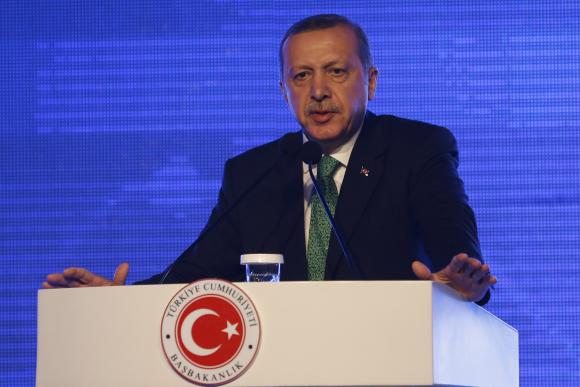
    Turkey's Prime Minister Erdogan makes a speech during the opening ceremony of Ford Otosan Yenikoy car plant in in Kocaeli

    Turkey’s Prime Minister Tayyip Erdogan makes a speech during the opening ceremony of Ford Otosan Yenikoy car plant in in Kocaeli May 22, 2014.

    CREDIT: REUTERS/MURAD SEZER

    (Reuters) – A visit by Tayyip Erdogan to Cologne on Saturday to address thousands of expatriate Turks threatens to bring Turkey’s political tensions to German streets, despite an appeal by Chancellor Angela Merkel for him to adopt a sensitive tone.

    Some German lawmakers are concerned by what they see as Erdogan’s inflammatory language and authoritarian behavior in dealing with demonstrations and in handling a corruption scandal that touched on former ministers. His expected candidacy in August presidential elections could further raise passions.

    Erdogan typically addresses a mass audience of expatriate Turks when visiting Germany. They are rousing patriotic affairs with thousands waving the Turkish flag. In 2008 he caused uproar by warning Germany’s largest minority against assimilation.

    At least 16,000 supporters are expected at the 10th anniversary of the Union of European Turkish Democrats (UETD).

    The event also falls a year after anti-government protests swept the country, fired largely by a violent police crackdown on a small demonstration against development of a city park. Erdogan has denounced protesters variously as vandals, terrorists and anarchists.

    As many as 30,000 anti-Erdogan protesters are due to gather nearby on Saturday, as well as a German far-right party, leading Yeni Safak, a pro-Erdogan paper in Turkey to warn on its front page on Friday of a “trap”. Berlin, it suggested, wanted to hold Erdogan responsible for stirring trouble.

    Critics in Germany say it is insensitive to give such a speech 11 days after Turkey suffered its worst ever mining accident, in which 301 miners died.

    They also oppose giving Erdogan a platform when there is deep doubt in Europe about the direction Ankara is taking – two months before he is expected to stand for a presidency he aspires to turn from a largely figurehead role to that of a strong executive head of state.

    Erdogan, for his part, portrays his government as fighting an international conspiracy to undermine Turkey as an emerging power in the region. His outspoken manner constitutes part of his appeal in his conservative Anatolian heartland.

    Merkel told the Saarbruecker Zeitung paper in an interview published on Friday: “I assume he knows how sensitive this event is, especially this time, and that he will act responsibly.”

    But she acknowledged Berlin was “concerned about some developments in Turkey, such as actions against demonstrators, attacks on social networks and the situation for Christians”.

    The two leaders spoke by telephone on Thursday, Merkel’s office said, with Erdogan, by far the most popular politician in Turkey, outlining plans for his visit.

    “You can hope that Erdogan will be sensitive but you cannot expect it,” said Gokay Sofuoglu, co-leader of the Turkish Community in Germany organization, noting that people were very divided about the visit. “He will use the event to win votes.”

    “Anybody who knows him also knows that whether it be loss of life, or corruption allegations, he always manages to twist events to boost his own support,” he said.

    Last month, when German President Joachim Gauck criticized Erdogan’s leadership style and curbs on civil liberties, the Turkish premier responded: “Keep your advice to yourself.”

    EXPATRIATE VOTES

    The UETD says their anniversary event will be somber in tone to reflect mourning for the miners and it is unrelated to the presidential poll. But critics feel Erdogan’s very appearance in Germany is inevitably an appeal for support from expatriate Turks, significant voters after changes to the electoral system.

    Some 3 million people of Turkish origin live in Germany and 1.4 million Turkish citizens can vote, a number equivalent to the electorate of Turkey’s fifth largest city Adana, according to the Institute of Turkish Studies and Integration (ZfTI).

    Under previous rules, expats could only vote at Turkey’s borders. Around 62 percent of those who did in 2011 backed Erdogan’s AK Party, but few of those eligible voted.

    Erdogan, in power for more than a decade, has weathered a bitter power struggle with an influential Islamic preacher, as well the graft scandal he says was engineered to undermine him. Most recently he was accused by critics of insensitivity in denouncing protests over the mining disaster.

    His two-week closure of social networking site Twitter and a block on access to video-sharing platform YouTube earlier this year drew condemnation around the world, yet he remains hugely popular among Turkey’s poorer and more religious voters.

    “We want to show Erdogan that he has more opponents in Germany than supporters and that here we can demonstrate, unlike in Turkey. We want him to see there is a democratic culture here, and he is undemocratic,” said Yilmaz Karaman, a spokesman for Germany’s Alevi Community who are organizing the protest.

    Alevis are a religious minority in mainly Sunni Muslim Turkey who espouse a liberal version of Islam and have often been at odds with Erdogan’s Islamist-rooted government.

    Events in Turkey in recent years have shocked a diaspora whose divisions mirror thoseat home.

    “Erdogan has really taken Turkey places. People should be grateful. Of course he has a temper. But calling him a dictator is ridiculous. He works and works for our country,” said 70-year-old Hasan Oz, a retired machine operator living in Germany for 45 years. He plans to vote for Erdogan as president.

    But a friend sitting with him at a street cafe in Berlin, who declined to give his name, thought differently.

    “Erdogan did a good thing in curbing the military and the economic strength is very admirable. But during the last years the balance between economic reforms and democratic reforms got lost, and now people’s freedoms are being restricted.”

    (Additional reporting by Ayla Jean Yackley in Istanbul; Editing by Stephen Brown)
  • Turkey Becomes a Rogue State By Rejecting European Court’s Verdict

    Turkey Becomes a Rogue State By Rejecting European Court’s Verdict

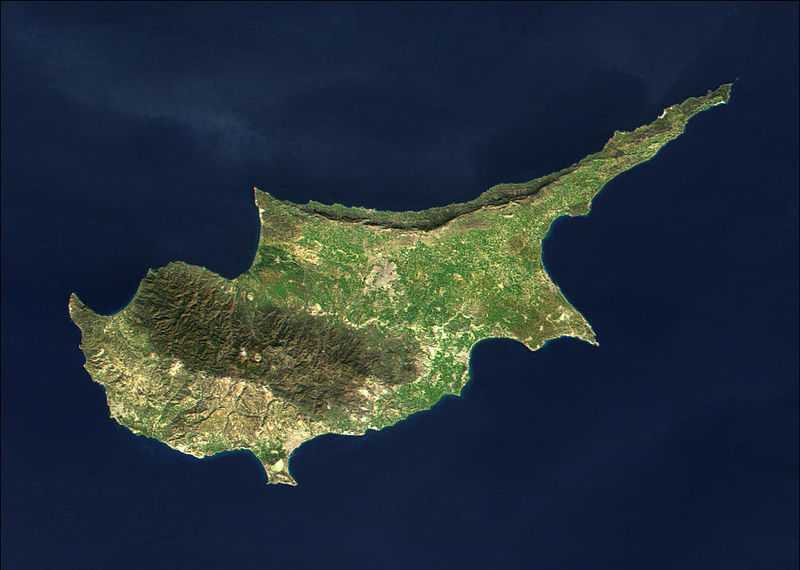
    The European Court on Human Rights (ECHR) issued on May 12 its largest judgment ever against any country, ruling that Turkey had to pay $123 million as compensation to relatives of missing Greek Cypriots and residents of a Greek enclave in Northern Cyprus.

    The Cyprus vs. Turkey lawsuit was filed in 1999, twenty five years after the Turkish occupation of Northern Cyprus. In 2001, after ruling that the Turkish government had violated numerous articles of the European Convention on Human Rights, ECHR postponed making a determination of the penalty to be assessed to Turkey.

    That decision came earlier this month, when the 17 judges of ECHR’s Grand Chamber issued their final judgment. By a vote of 16 to 1 (the Armenian and Cypriot judges voted with the majority, while the Turkish judge was the lone dissenter), ECHR ruled that the intervening 13 years had not invalidated the court’s 2001 judgment, as claimed by Turkey. By a vote of 15 to 2, ECHR held that the Turkish government had to pay $41 million, plus any tax and interest (if not paid within three months) for 1,456 Greek Cypriots missing as a result of Turkey’s invasion of Cyprus in 1974. By another 15 to 2 votes, ECHR judges decided that Turkey had to pay an additional $82 million plus any tax and interest (if not paid within three months) for damages suffered by residents of the Greek Cypriot enclave of Karpas peninsula in Turkish-occupied Northern Cyprus.

    Right before the court’s judgment, Turkish Foreign Minister Ahmet Davutoglu made a vain attempt to derail ECHR’s anticipated negative decision by warning that a ruling against Turkey would undermine the ongoing negotiations to reach a settlement on the Cyprus conflict. The court rightfully ignored Davutoglu’s threat and went on to issue its firm judgment in favor of Cyprus.

    Having failed to bully the judges, Davutoglu disdainfully declared that Turkey rejects the verdict of Europe’s top human rights court and boasted that his country will refuse to pay the $123 million in damages.

    Davutoglu should be reminded that ECHR’s “Grand Chamber judgments are final” — not subject to appeal — and “all final judgments are transmitted to the Committee of Ministers of the Council of Europe for supervision of their execution,” according to the court’s records.

    Turkish Foreign Minister’s arrogant declaration will certainly come back to haunt his government in the not too distant future. All members of the Council of Europe, without exception, are obligated to comply with ECHR’s rulings. The court’s judgments are binding on all member states. During the past several decades, Turkey has lost hundreds of judgments in the European Court and has paid, whether it liked it or not, countless millions of dollars in penalties. Turkey has no other choice, if it wants to remain a member of the Council of Europe. There have been some ECHR cases where Turkish officials had initially vowed that they would not pay the assessed penalties, but eventually fully paid the required compensation plus interest.

    If the Turkish government sticks with Davutoglu’s boastful rejection, not only Turkey could be stripped of its membership in the Council of Europe, but also forfeit its slim chance of joining the European Union!

    Member states of the Council of Europe do not have the right to decide whether they are willing to abide by ECHR’s judgments. Otherwise, why would 47 European countries collectively spend almost $100 million a year to maintain a court if its judgments are meaningless or subject to voluntary compliance?

    Recently, Turkish leaders have gone on a rampage flaunting domestic and international laws, by jailing a record number of journalists, firing on peaceful demonstrators in Gezi Park, beating family members of a mine explosion victims, making anti-Semitic statements, threatening to expel the US Ambassador, and waving a finger at Pres. Obama in the White House!

    The Council of Europe’s Committee of Ministers should not tolerate a rogue member state which is a major violator of human rights. The Council should put Turkey on notice that unless it makes immediate arrangements to pay the $123 million penalty, it would be expelled from the Council of Europe and have its assets in third countries seized to enforce the court’s judgment.

    Europe should take a firm stand on this judgment, as there will be many more such verdicts against Turkey on Cyprus and possibly someday on Armenian restitutional and territorial demands….

  • UNITED WE WEEP, DIVIDED WE SLEEP

    UNITED WE WEEP, DIVIDED WE SLEEP

    DUMBBELLS (English slang for stupid fools)

    DÜMBELEKLER (Turkish slang for stupid fools)

    I sing what was lost and dread what was won,
    I walk in a battle fought over again,
    My king a lost king, and lost soldiers my men;
    Feet to the Rising and Setting may run,
    They always beat on the same small stone.

    Willam Butler Yeats (1865-1939)


    I read the news today, oh boy. Here’s what Reuters said:
    “Prime Minister Tayyip Erdoğan has applied to Turkey’s constitutional court on Friday to challenge the alleged violation of his and his family’s rights by social media, a senior official in his office told Reuters.”

    Isn’t it grand, this so-called rule of law. The prime minister is correct in his action. Long ago his family’s rights were well-established as were his. When the fox owns the chicken coop every day the menu-du-jour is chicken. We and the world know the quality of those who rule this sad country.

    But who’s to argue? Not the sheep…if they whimper, they’re next. And besides, they’re well-bribed with food and coal and things magical from the bountiful Ankara sky. They have indeed learned to deeply love their Big Brother. They repay with their pathetic ballots. So, who? Perhaps young people who, like all young people everywhere, thought they had a future? Sorry. Enough of them have died and been maimed. Maimed by the prime minister who now frets about his and his family’s rights. Hah! So surely it will be the political opposition who once thought they had a patriotic responsibility, even a cause? No cause. No thought. No brains. No nothing. The military? The ones with the soundest, strongest emotional and ethical legacy? Nope. Folded up like a cheap suit. Hardly a whimper. Generals now bow their heads to thieving politicians. Cowardly submissive stuff like that makes one wonder if they ever received an education (and at taxpayer expense). Atatürk? Huh? Please, we must not speak aloud of such things. So who’s left to argue? Media? Ha! Sold-out. Universities? Ha! Ha! Expounding on pet obscurities, historical quirks, dead poets and deader laws and what once was and now will never be. There is no time left for history and literature and law and medicine and philosophy and too many more words. Speaking of which, what about writers? Well, who reads? The world is too much with all of us, and we are all too late.

    So who will care? Care enough to act, to really act? To stand up and say that this is enough. That the people will no longer be governed by a corrupt political process. Nor by numbskull, repetitive political opposition parties nor by America’s CIA gangsters? Is that too much to ask?

    It seems so. Time grows short. Another crooked election is coming, this one presidential. One way or another the same small people will throw the same big stones at us. Ah Turkey, the saddest country with the saddest people with the saddest stories. Always beating on, always being beaten. Ah, dear Turkey, Atatürk’s children deserved so much more. So did Atatürk.

    James (Cem) Ryan
    Istanbul
    19 April 2014


    “A slave is one who waits for someone to come and free him.”

    Ezra Pound (1885-1972)

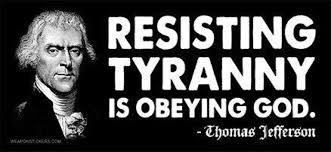
    jefferson


  • Caribbean states demand reparations from European powers for slave trade

    Caribbean states demand reparations from European powers for slave trade

    Most of the Caribbean nations have adopted a single plan to solicit from former slaving nations an apology, more aid and damages for 300 years of slavery, which they say have hobbled their economies and public health

    slavery
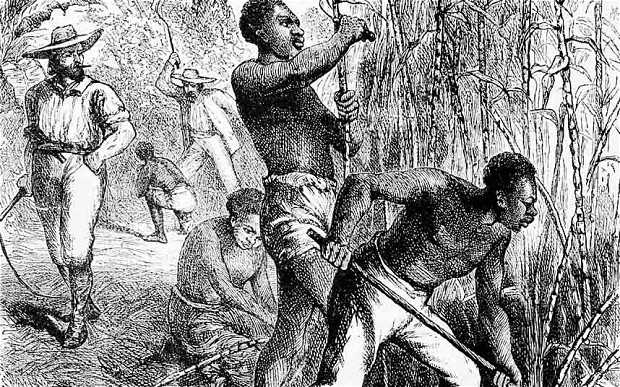
    Sugar Plantation Slaves 1858 engraving of slaves in the British West Indies working the sugar cane Photo: Lordprice Collection/ Alamy

    By Philip Sherwell, New York

    A coalition of Caribbean countries has unveiled its demands for reparations from Britain and other European nations for the enduring legacy of the slave trade.

    The leaders of 15 states adopted a wide-ranging plan, including seeking a formal apology from former colonial powers, debt cancellation, greater development aid as well as unspecified financial damages for the persisting “psychological trauma” from the days of plantation slavery.

    The series of demands to be made of former slaving nations such as Britain, France, Spain, Portugal and The Netherlands were agreed at a closed-door meeting of the Caribbean Community (Caricom) in St Vincent and the Grenadines.

    The Atlantic slave trade took place from the 16th through to the 19th centuries.

    The group hired Leigh Day, the British law firm, to push their claims after the company secured a £20 million compensation award for Kenyans who were tortured by colonial authorities during the Mau Mau rebellion in the 1950s.

    The reparations debate has long simmered in the Caribbean where many blame slavery for modern ills, ranging from economic weakness to health epidemics such as diabetes and hyper-tension allegedly caused by their ancestors’ poor diets.

    Caricom is pushing for increased technological assistance as it says European powers shackled the region during the world’s industrialisation by confining it to producing and exporting raw materials such as sugar.

    The plan also demands an increase of aid for public health and educational and cultural institutions such as museums and research centres.

    And it calls for the creation of a “repatriation programmes” to help resettle members of the Rastafarian movement in Africa. Repatriation to Africa has long been a central belief of Rastafarians.

    Martin Day, of Leigh Day, said he would request a meeting with European officials to seek a negotiated settlement, but would pursue a legal complaint if Caribbean nations are not satisfied with the outcome of any talks.

    It has been 180 years since Britain abolished slavery but the demand for an unqualified apology remains as controversial as the calls for financial damages.

    In 2007, Tony Blair, the then prime minister, expressed “deep sorrow and regret” for the “unbearable suffering” caused by Britain’s role in slavery but stopped short of a formal apology. His words angered many in the Caribbean as inadequate and resonating of legal caution.

    The British government, which currently contributes about £15million a year in development to the Caribbean, said that it has not been presented with the demands, but has consistently signalled opposition to financial reparations.

    “The UK has been clear that we deplore the human suffering caused by slavery and the slave trade,” a Foreign Office spokesman said. “However we do not see reparations as the answer. Instead, we should concentrate on identifying ways forward with a focus on the shared global challenges that face our countries in the twenty-first century.”

    But Professor Verene Shepherd, the chairman of Jamaica’s reparations committee, told The Daily Telegraph last month that British colonisers had “disfigured the Caribbean”, and that their descendants should now pay to repair the damage.

    “If you commit a crime against humanity, you are bound to make amends,” she said. “The planters were given compensation, but not one cent went to the freed Jamaicans”.

    The Caricom nations highlighted the region’s enduring troubles as well the suffering of the victims of the trade in humanity and the profits made by the slaving powers.

    “The transatlantic slave trade is the largest forced migration in human history and has no parallel in terms of man’s inhumanity to man,” their claim reads. “This trade in enchained bodies was a highly successful commercial business for the nations of Europe.”

    www.telegraph.co.uk, 11 Mar 2014