Category: EU Members

European Council decided to open accession negotiations with Turkey on 17 Dec. 2004

  • SOMETHING’S COMING

    SOMETHING’S COMING


    Could be!

    Who knows?

    There’s something due any day;

    I will know right away

    Soon as it shows.

    It’s only just out of reach,

    Down the block, on a beach,

    Under a tree.

    Stephen SondheimWest Side Story


    More deadly gas is coming. They’re buying those gas bombs again. 1.5 million more. They must have exhausted the 43 tons they bought from America last year at the height of their Gezi violence. Ten million dollars gone with the fascist wind. And the latest news says that the public-space-destroying Gezi Park shopping-center project is alive and quietly ticking. Those treacherous, revolutionary Gezi Park trees, like Carthage, must be totally destroyed!

    And then there are the personal antics of you-know-who. Heisting more of the public’s money, he’s adding thousands more rooms to his royal roost. Painfully aware of his public, he has privatized his own Waffen-SS. It’s an especially loyal bunch, a comforting pious blend of Turkish police, the Gendarmes (easily appropriated from his ever-generous Turkish Army) and his ever-popular scimitar-waving street thugs. They will all emerge on call like mushrooms on a rainy day. Surely the blessings of safety and security will loom over the land forever.

    And at last Turkish schoolchildren will be freed from all error and will finally learn the truth about just who discovered America. Oh, happy Turkish day! Perhaps they will learn that God is also a Muslim along with Fidel Castro.

    Oh, the pope is coming. He is scheduled to meet and greet the new president at his new, illegal palace. How nice. Thus the pope will also be an accomplice-after-the-fact to a crime. This from a man considered by zillions of Catholics to be infallible in matters of faith and morals. But St Peter’s has such a suitable dome… for a mosque…or better, a shopping center. Let’s make a deal. Let’s have a conversion. So many things are coming…

    One more thing is coming—the truth. Can you feel it? It’s just out of reach.

    The truth is this. The Turkish people are fed up with the Turkish people. It’s as simple and as complicated as that.

    These AKP people came to power—with a lot of help from their American friends in high places—following years of coalitional incompetence and corruption. The people were fed up then, too. And so came Recep Tayyip Erdoğan and his friends, the self-proclaimed “pious” people. Surely they would clean up things. They sold everything leveraging it into a self-proclaimed “economic miracle.” Then came their true colors—repression, fascism and more corruption, all in the name of piety.

    But as Cassius said to Brutus, “The fault, dear Brutus, is not in our stars but in ourselves.” And that’s why the Turkish people are fed up, particularly Turkish young people.

    Turkey is the youngest country in Europe. 17% of its population is in the 18-24 age group. With a median age of 29.6 years, Turkey is far younger than the U.K. (40.4), France (40.9) and Germany (46.1). More importantly, half of Turkey’s eligible voters are in the 19-35 age group. And that means 26 million “young” voters! And this is why Turkish young people SHOULD be fed up.

    They have virtually no political representation, particularly in the fossilized opposition parties. CHP, Turkey’s oldest political party dating from 1923, has only six members of parliament under the age of 40. While the average age of party members is 46.9 years, the average age of its parliamentarians is almost a decade more, 55.5 years. How political parties can ignore half of the voter base is a great mystery and a great shame. And a great tragedy for Turkish young people.

    In the twisting and turnings and whims and whines of the opposition parties they have today maneuvered themselves into near irrelevance. The bizarre joint presidential candidacy of a 71-year-old Islamist no one knew named Ekmeleddin İhsanoğlu may have been their final curtain. Predictably trounced by Erdoğan at the polls, almost as many voters stayed away (15.4 million) as voted for Ekmeleddin (15.6 million). And for those that did vote for him, how many held their noses and voted out of fast-fading party loyalty? The entire affair was unseemly and CHP continues to struggle with the implications.

    Herein resides, in part, the disenfranchised voter base. There are others, women, for example. Workers, for another. Something’s coming. Not surprisingly, recent surveys suggest a large “undecided” category, as high as 25%. Something’s coming.

    Turkish youth have seen what the political process has delivered for them. While they filled the streets in protest at Gezi Park, the opposition parties mostly dawdled. When America sold the AKP more tear gas bombs to bomb the kids, the opposition parties mostly watched. And when the opposition parties chose a 71-year-old unknown as a presidential candidate to face the ferocious Erdoğan, well, you know the rest.

    This is why the young people are on the move and coming. Not only are they the soldiers of Mustafa Kemal, they are his youth, Atatürk-youth. Like him, unbounded by age, open-minded and open-hearted, holding real opinions and ideals worth fighting for. Falling in love with truth, with science and the modern way, living honorably with care and sensitivity. Upholding the law and defending the human right to live freely. In short, living as a true Turk, a modern Atatürk Turk.

    There is also new political party coming, the Anatolia Party (Anadolu Partisi). A party of enlightenment, like the sun rising in its logo. A party for an anti-imperialist, sovereign nation, secular and tolerant, honest and hopeful. A party for Turkish youth of all ages.

    Half the voters in Turkey are young people, 26 million of them. Let it begin with them.

    James (Cem) Ryan

    Istanbul

    24 November 2014
  • Davutoglu: you can’t do what you want with the gas

    Davutoglu: you can’t do what you want with the gas

    US Vice President Joe Biden and Turkish Prime Minister Ahmet Davutoglu

    TURKISH Prime Minister Ahmet Davutoglu said yesterday that hydrocarbons could not be used as a weapon by anyone, adding that if Greek Cypriots unilaterally continued to claim Cyprus’ natural resources for themselves, Turkey would reciprocate on behalf of the Turkish Cypriots.

    Addressing the Atlantic Council summit in Istanbul, the Turkish Premier said there must be a settlement immediately, arguing that if negotiations stall the Greek Cypriots and Turkish Cypriots should form a joint committee to manage Cyprus’ natural gas reserves.

    “In Cyprus, if everyone agrees that natural resources around the island belong to the entire island and use these resources in a shared vision towards peace, everyone stands to gain,” he said.

    “If [the Greek Cypriots] are seeking to offer these resources, to which Turkish Cypriots also have a right, to international markets unilaterally, then by the same right we will conduct research in the same area along with the Turkish Cypriots,” he added.

    Davutoglu said that if the two sides sit together and negotiate with a will to reunite the island as soon as possible, Cyprus would become a country on the rise.

    “In such a case, the happiest of countries will be Turkey,” he said.

    He called for the immediate return to the negotiations, which were interrupted last month when President Nicos Anastasiades withdrew in protest when the Turkish seismic vessel’s Barbaros began conducting exploratory research in Cyprus’ Exclusive Economic Zone (EEZ).

    “The Greek Cypriots can’t claim that the Eastern Mediterranean is an area closed to Turks and Turkish Cypriots and conduct research wherever they want,” he asserted.

    This doesn’t happen in politics, nor in matters of international energy reserves, he added.

    He argued that Turkey is the easiest destination for the natural gas to be unearthed from the areas around Cyprus.

    “Turkey is also the international market easiest to open,” he said.

    “Therefore, no one should use energy as a weapon. If [the Greek Cypriots] were to say that they will impose the peace they want on the other side through control of the gas, then that will be the greatest blow to the Cyprus problem negotiations. Let us use energy as a tool for peace.”


    Remarking on the transport of water from Turkey to Cyprus, Davutoglu said that Turkey’s plan was to share it with Greek Cypriots.

    “But while we were thinking of sharing our water with the whole island, one side can’t claim the natural resources, which belong to the whole island, for itself,” he said.

    He added that in the coming days he would be visiting Athens “to share these prospects with the Greek government.”

    In his speech, US Vice President Joe Biden said Eastern Mediterranean countries should cooperate, and energy offers a tool for promoting regional stability, security and prosperity, citing the example of Baltic countries to illustrate the potential gains for the region.

    According to Eric Gehman, Assistant Director for Publications and Communications at the Atlantic Council , Biden stressed the need for Europe to prioritise energy security with the help of their allies and friends. “[Russian President Vladimir] Putin uses energy as a weapon,” he said, to undermine the security of neighbouring countries.

    Only by diversifying supplies and improving transport networks across the country could Europe curb Russia’s abuses, said Biden. “Now, now, now is the time to act… What’s happening in Ukraine only serves to underscore this.”

    Biden pointed to the eastern Mediterranean as a critical strategic resource for bolstering Europe’s energy security. The development of the Southern Corridor and new projects in Turkey and Cyprus could make the region into a key hub for European energy markets that Biden called a “major asset.”

    Biden credited the Baltics for the work they have already done to reduce their dependence on Russian oil, praising a new Lithuanian gas interconnector aptly named “The Independence.” He called the Baltics’ efforts a model for the rest of Europe.

    Biden concluded his remarks by pressing the European Commission to act quickly to identify and support key infrastructure projects that will accelerate European energy independence. “Energy can and should serve as a tool for cooperation, for stability, for security, and prosperity,” he said.

    The Cyprus problem was also on the agenda of a meeting Biden had on Friday with Davutoglu.
    “Vice President Joe Biden met with Turkish Prime Minister Ahmet Davutoglu to discuss the fight against ISIL in Iraq and Syria, the Cyprus settlement talks, and energy security,” the US State Department said in a statement. Biden was expected to meet Turkish President Tayyip Erdogan later yesterday within whom he would also discuss Cyprus.

    Turkish Cypriot Energy Minister Hakan Dinçyürek (R) poses for photos with Turkish Energy Minister Taner Yıldız. AA photo


    Meanwhile Turkish Energy Minister Taner Yildiz said the Barbaros would like complete its surveys by the beginning of next month. Turkey had issued a NAVTEX for surveys from October 20 to December 30. Yildiz said the Barbaros had a planned survey area of 2,700 kilometres. “If the weather is good, it will finish by early December,” he was quoted as saying.

      Küfi Seydali


  • AMERICAN BOYZ N THE HOOD

    AMERICAN BOYZ N THE HOOD

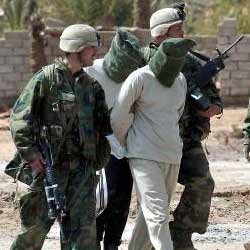
    Turkish Soldiers Hooded by America Sulaymaniyah, Iraq. 4 July 2003
    Turkish Soldiers Hooded by America
    Sulaymaniyah, Iraq. 4 July 2003


    Istanbul: 13 November 2014

    Yesterday, three sailors from the uncontrollably violent neighborhood called America met the true face of Turkey. Poor boys, they don’t even know what they represent. They don’t even know that their so-called leaders have made them punching bags for its criminal enterprise called American imperialism. They don’t even know how America and its treasonous internal agents, in particular the Turkish government, are attempting to destroy the future of the Turkish youth.

    Perhaps these American boys got a quick lesson in the true nature of Turkish-American relations yesterday? But, sadly, probably not. The American boys ran back to the false safety of their warship, re-entering their “safe” world of imperialist propaganda, economic excess and hypocrisy. But there is no safety anywhere any longer. That is the gift of America to Turkey, and to the world. As usual, America authorities and its treacherous collaborating Turkish puppets screamed in outrage. And, as usual, the youth of Turkey, the true defenders of the Republic of Turkey, went to jail for exercising their patriotic duty. Nothing has changed, except one thing. Turkish young people, the nation’s true patriotic voice, will not take American crap anymore. And America should understand that. Listen and learn, America. You owe it to your own youth. Think of it this way, think of it as a symbol.

    That’s the way the resident American-imposed agent of destruction, Recep Tayyip Erdoğan, thought about his hooding of Turkish women into a grotesque series of Middle Age costumes that squeeze feminine brains into numb submission. So what, declared the then prime minister, if the head scarf is a political symbol? So what, indeed! Erdoğan used his compliant covered women to destroy democracy in his own country. He and his collaborators hid behind their women’s headscarves to do America’s dirty work. And now they cannot safely visit any neighborhood in their own land. No “hood” is safe for the hoodlums. And now the new president hides in a billion-dollar illegal palace, his inadvertent monument to treason. So what if he and his ilk cannot appear in public! So what!

    So what if in 1980 the American president celebrated the success of his CIA-engineered military coup by proclaiming “Our boys did it!” Yes, then his gangster BOYZ did it. And yesterday, today’s Turkish youth remembered. And yesterday, our Turkish boys did it to America, symbolically, of course, because Turkish youth is civilized. They can be no other way; they are the current-day “soldiers of Mustafa Kemal Ataturk.” This is something that the treacherous opposition political polities can neither say nor understand. Yes, Turkish young people are civilized and enlightened by the patriotic principles of Mustafa Kemal Ataturk. That’s why, yesterday, no one, neither American boy nor Turkish boy was hurt. No one was tortured. No one was hung. No one was shot, exploded, beaten, gassed, or otherwise maimed. And that’s a lot more than America can ever say about their overt and covert interventions in Turkey’s affairs.

    So what if America and its craven ambassador, Francis Ricciardone, aided and abetted the Turkish government in its beating, gassing, maiming and murdering of democratically assembled Gezi Park protestors. “The Turkish government is having a conversation with its people,” said the deceitful ambassador, as he arranged to have more poisonous gas sold to Erdoğan and his hoodlum police. A “conversation?” So what!

    So what if the same ambassador conspired with the main opposition party leader to assure the election of Recep Tayyip Erdoğan to the presidency!

    So what if yesterday the American boys’ heads momentarily felt the experience of being symbolically hooded! Symbolically hooded, not actually hung like so many patriotic Turkish young people have been. And by their own government! The Turkish people have been strangled and hooded by America, by its CIA meddlers and by its corrupt politicians for decades. And in the past decade of Erdoğan’s treacherous rule, America’s CIA “boys” have done it again. Or tried to.

    So what if America has used its youth to kill hundreds of thousands of Iraqis in its deceitful, illegal war of aggression!

    So what if America has humiliated the Turkish military by hooding its soldiers in Iraq in July 2003!

    So what if America has conspired with Turkey, Saudi Arabia, Qatar and Jordan to kill hundreds of thousands of Syrians in its deceitful pretext of bringing democracy!

    So what if America has supported the treasonous, under-educated, Islamic zealot, CIA-asset, Fethullah Gulen for decades in the Pennsylvania countryside!

    So what if Gulen and Erdoğan have collaborated for decades in treacherous union to do America’s bidding in the subversion of the Turkish Republic! So what if the Turkish Army has been destroyed! So what if the independence of the Turkish judiciary has collapsed! So what if rivers have been stopped, farmers’ fields uprooted, forests felled, eternal olive trees murdered, lakes polluted, mountains plundered, the air made poisonous, all in pursuit of private profit, all indicative of massive governmental corruption! So what if the government has looted public funds! So what if the Turkish mass media slithers like a reptile on its overstuffed belly doing the bidding of its governmental master! So what if Turkey stinks from America’s subversion like a rotting corpse in the noonday sun!

    Yes, SO WHAT?

    Yesterday, clearly, directly, in a street-theater performance, Turkish “boyz” encountered American “boyz” in the Turkish “hood.” The US embassy in Turkey called the incident “appalling.” What is appalling is the embassy’s ignorance and arrogance. What is appalling is the criminal behavior of its criminal boss, the president of the United States. It is he and Erdoğan and all their co-conspirators, all the ones who need protection by regiments of armed-to-the-teeth goons, who deserve to be hooded. And now they can never step foot in our hood, ever again. Not ever! That’s the message from yesterday. Take your warships and your political puppets and go!

    James C. Ryan

    Istanbul

    13 November 2014

  • Greece should bet on Turkish semi-democracy rather than Egyptian dictatorship

    Greece should bet on Turkish semi-democracy rather than Egyptian dictatorship


    I was planning to write a follow up to the latest article I wrote about Turkish-Greek cultural cooperation, which I learned had been translated and published on a number of Greek websites. However, the recent cool winds blowing in the Mediterranean changed the focus of this article.

    The discovery of gas in the Mediterranean had raised hopes that diplomatic work to find a solution to the Cyprus problem could be sped up. Unfortunately, it has become an additional obstruction for settlement efforts.

    Following attempts to start drilling in 2011 and 2013, both of which triggered a reaction from Turkey, Greek Cyprus once more decided to try its luck in late October, by starting exploration activities just as talks were continuing between the two communities.

    It is hard to imagine that the Greek Cypriot leadership was not expecting a reaction from Ankara. Indeed, Turkey sent the Barbaros Hayrettin Paşa scientific ship to carry out seismic surveys around the same area, which was declared an exclusive economic zone (EEZ) by Greek Cyprus, disputed by Turkey and Turkish Cyprus.

    Antonis Samaras of Greece and Nicos Anastasiades of South Cyprus

    Greek Cypriot President Nicos Anastasiades then announced that he would not attend the peace talks.

    I would not be surprised if many Turkish decision-makers are convinced that the exploration activities were authorized by Anastasiades, specifically at this time, in order to trigger a reaction from Ankara that would give him an alibi to quit the negotiations, which Turks believe he was not incredibly enthusiastic about anyway.

    Meanwhile, just as third party players, like the U.N. Secretary General’s representative, were trying to find a way out from the impasse, the leaders of Greece, Greek Cyprus and Egypt recently met in Cairo to pledge greater energy cooperation in the Middle East.

    Ankara refrained from making an official statement about the summit, but let their naval forces commander made an announcement that there were more assertive rules of engagement in the Mediterranean.

    Now we learn that the trilateral meeting in Cairo will be followed by a new trilateral meeting between Greek Cyprus, Greece and Israel. The time of that meeting is not yet set, but Anastasiades is due to visit Israel on Dec. 2. This visit was preceded by a visit to Nicosia last week of Israeli Foreign Minister Avigdor Lieberman, who lambasted Turkey for intruding on Greek Cyprus’ EEZ.

    So the picture that comes around is like this: On the one side is Turkey, whose international standing is not exactly brilliant, and on the other an alliance of Israel, Egypt and Greek Cyprus, each of which have, for the time being at least, very hostile relations with Turkey.

    As someone who has been highly critical of Turkey’s foreign policy course in the past, you might think I will talk about how the government’s erroneous policies have landed Turkey in such a situation in the East Mediterranean.

    Nicos Anastasiade, Antonis Samaras and Abdel Fatah el-Sisi

    Indeed, Turkey is partly responsible for the picture in which you can see Egypt’s former military leader, now President Abdel Fatah el-Sisi standing between Greek Prime Minister Antonis Samaras and Anastasiades.

    I can understand Greek Cyprus’ futile effort to forge an alliance with Egypt and Israel up to a certain point, but Greece? Tension in the Aegean has never served Athens. The last decade is a testament to how Greece has benefited from engaging with Turkey.

    Let’s suppose Turkey’s policy on the issue is totally wrong. Even so, is it the right course for Greece to go and pose together with a coup leader just to support Greek Cypriots? Does the Greek government seriously think an alliance with Israel and Egypt will frighten and deter Turkey? Couldn’t Greece surprise us and work as a silent mediator to defuse the tension?

    Greece has more to benefit from cooperating with a semi-democracy like Turkey than a dictatorship like Egypt, or Israel, which is increasingly being isolated by the European Union.

    In addition, Turkey may have temporary strains in its relations with Israel and Egypt, but the moment is there for normalization; both Tel Aviv and Cario have ties with Ankara that will always outweigh those with Greece and Greek Cyprus, as was rightly underlined in a comment published yesterday in the Cyprus Mail titled “Realism needed on the power of regional agreement.”

    I am still optimistic that the Turkish-Greek reconciliation will stand strong against this new wave of tension.

    It’s good to know that just as the foreign ministers of Greece, Greek Cyprus and Egypt were meeting in Nicosia to prepare for the Cairo summit, the Greeks were attending a Turkish film week in Athens. Meanwhile, just as the two countries’ naval officers issued statements over the weekend about new rules of engagement in the Mediterranean, Turks were attending the Athens marathon on Nov. 9. In addition, the Turkish economy minister and the Greek development minister will be attending a business forum this week in İzmir; while as Israel prepares to welcome Anastasiades on Dec. 2, Turkish Prime Minister Ahmet Davutoğlu is set to visit Athens on Dec. 4.

    November/11/2014

    BARÇIN YİNANÇ

    [email protected]

      Kufi Seydali

  • New study claims that Irishmen descended from Turkish farmers

    New study claims that Irishmen descended from Turkish farmers

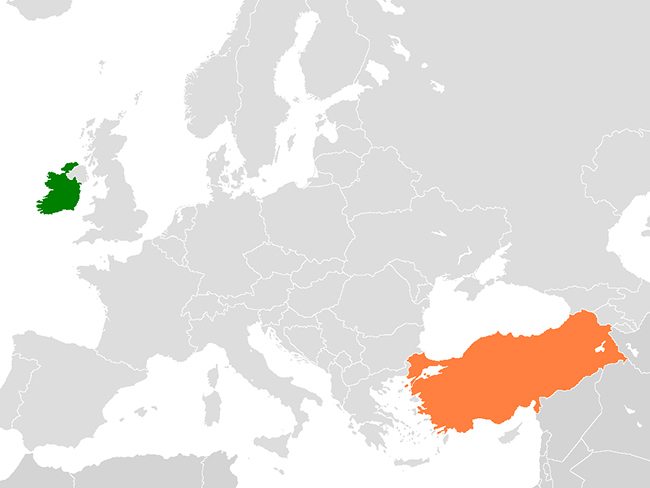
    l MI-ireland-turkey

    A new study has revealed that many Irish men may be able to trace their roots back to Turkey. Photo by: Wikimedia Commons

    A new study has revealed that many Irish men may be able to trace their roots back to Turkey. Focusing on the role of the Y chromosome, which is passed from father to son, the research indicates Turkish farmers arrived in Ireland about 6,000 years ago, bringing agriculture with them. And they may have been more attractive than the hunter-gatherers whom they replaced.


    The genetic patterns for Irish females differ from those of men. “Most maternal genetic lineages seem to descend from hunter-gatherers,” an author of the study, Patricia Balaresque, told the London Times. “To us, this suggests a reproductive advantage for farming males over indigenous hunter-gatherer males during the switch to farming.

    “Maybe, it was just sexier to be a farmer,” she added.

    Eighty-five per cent of Irish men are descended from farming people from the Middle East and especially Turkey, according to the research that was conducted by scientists at the University of Leicester.

    The switch from hunting and gathering to farming was a crucial one in human development. Increased food production meant that populations were able to grow.

    In Britain, 60-65 per cent of the population has the Turkish genetic pattern, while in parts of the Iberian Peninsula it’s almost as the same as in Ireland.  The research contradicts what was previously thought about Irish genealogy – that hunter-gatherers from Spain and Portugal who survived the Ice Age were our main genetic ancestors.


    “This particular kind of Y chromosome follows a gradient, gradually increasing in frequency from Turkey and the southeast of Europe to Ireland, where it reaches its highest frequency,” Mark Jobling from the University of Leicester told the Times.

    We are saying that most of that original hunter-gatherer male population in Ireland was probably replaced by incoming agricultural populations,” he added.

    *Originally published in June 2014.

  • £1.7bn EU Bill Puts UK One Step Closer to ‘Brexit’

    £1.7bn EU Bill Puts UK One Step Closer to ‘Brexit’

    [Chatham House: David Cameron, Jean-Claude Juncker’in Avrupa Komisyonu’na başkan olmasına karşı yürüttüğü düşüncesiz kampanya, AB’nin nasıl işlediğini tam kavrayamadan yaptığı diğer tüm yanlış hareketlerle beraber kendi ayağına ateş etmiş ve İngiltere’yi Avrupa Birliğinden atılmanın eşiğine getirmiştir.]

    Is the call for an additional contribution to the EU budget as outrageous as David Cameron has asserted, or simply the normal application of EU rules and mechanisms? In reality, it is a bit of both, but there is more to the story. – See more at:

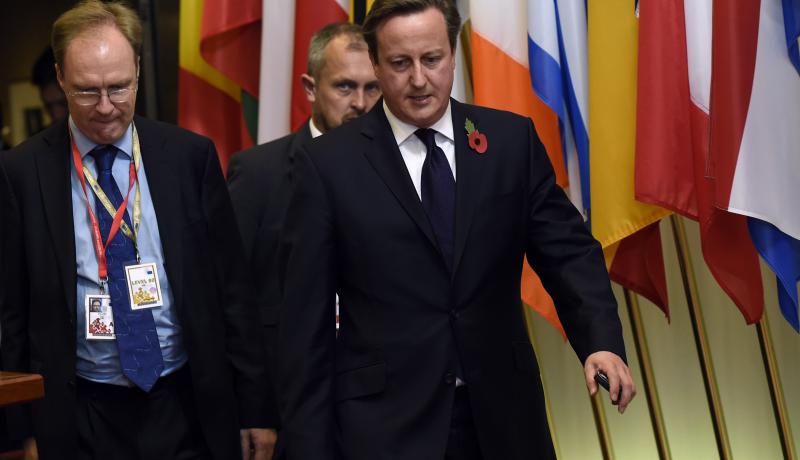
    When David Cameron emerged from last Friday’s European Council meeting, the indignation on show could not have been greater: ‘If people think I am paying that bill on 1 December, they have another think coming.’ He was responding to new figures revealed last week which call for an additional £1.7 billion contribution to the EU budget from the UK. In what is a routine recalculation, several other countries, including the Netherlands, have been asked to pay proportionately more than the UK, while Germany, France and 17 others will pay less.

    Is this as outrageous as the prime minister has asserted, or simply the normal application of EU rules and mechanisms? In reality, it is a little bit of both, but there are three elements to the story.

    The first is that most of the EU’s revenue derives from an income stream known as the GNI (gross national income) resource. GNI is a close relative of the more familiar term GDP (gross domestic product), differing largely because of how profits from abroad are counted. As such, it reflects relative prosperity and, thus, ability to pay – a widely accepted principle of taxation. The amount called from each member state is a fixed proportion of its GNI, though the true cost to the UK is then attenuated by the famous rebate negotiated in 1984 by Margaret Thatcher. Despite some of the headlines about a ‘tax on prosperity’, the principle that countries pay more when GNI rises has been accepted since the system was introduced over a quarter of a century ago. In some years the UK has benefited, in others it has had to pay, as have all other member states.

    Second, the GNI resource was something that British negotiators pushed strongly for when it was first introduced, and that the UK has fought to retain ever since. Others have argued for a tax to be assigned to the EU, in much the same way as council tax in the UK or sales taxes in the United States are deemed to belong to the local tier of government. But the UK, along with other net contributors to the EU budget, notably Germany, has been adamant that there should be no such tax. The total amount called from the GNI resource is determined by the spending from the EU budget and, in this regard, acts as a residual resource to ensure that the EU budget always balances (as it is required to do by treaty). Spending is not entirely predictable because the rigorous controls which countries like the UK insist that the EU impose have meant that some projects only become eligible to receive funding much later than anticipated.

    The third consideration is that this year’s calculations are unusual, because the statisticians who construct the GNI data recently completed a methodological review of how national accounts are compiled. These are once-in-a-decade exercises, intended to reflect new insights into how income is generated and advances in data collection. The results revealed that the UK, and a number of the others now being asked to pay more, have been underestimating their prosperity. Normally this would not be that significant, but one of the new factors taken into account is the scope of the hidden economy. In particular, new estimates have been made of the extent of the drug and prostitution markets, something that Germany was apparently already doing.

    These data corrections are well-known to the UK authorities and the spicier bits of the new methodology made the news headlines over the summer. Nor is it a form of correction that the Treasury can plausibly claim not to have expected. Indeed, in the late 1980s, Italy revalued its GDP and GNI substantially after introducing new ways of estimating the size of its hidden economy. Overnight, Italy overtook the UK – known at the time as il sorpasso (the over-taking) – but also reportedly drawing the retort from Thatcher that the Italians could henceforth pay more towards the EU budget. Moreover, it is ingrained into Treasury officials that they should be alert to any statistical manipulation that would increase GNI, precisely because of this sort of effect. Therefore, the prime minister is either being disingenuous in claiming that the effects of the re-basing of GNI were unexpected, or he knew full well and decided, nevertheless, to exploit it for immediate political purposes.

    Other countries and the European Commission insist that the rules are clear and that Britain will have to pay, implying little room for manoeuvre for the prime minister. Perhaps some fault will be discovered in the calculations, allowing a more palatable figure to emerge. There is also a possibility that enough pressure will be brought to bear on the net winners to persuade them to postpone or average out the introduction of the new GNI estimates, reducing the amount the new net losers will have to pay this year. However, tax-payers in other countries will wonder why their governments should agree to pay more to help the British prime minister mollify eurosceptics at home. Postponing the bills would also be tricky because the EU is legally banned from borrowing.

    Leaving aside whether Cameron’s stance leaves wiggle-room to pay subsequently (though only after the Rochester and Strood by-election), the new dispute is revealing about his approach to the EU. It follows his ill-judged campaign to prevent Jean-Claude Juncker becoming president of the European Commission. Two conclusions can be drawn: first, that not enough effort is made to understand how the EU functions or to form alliances to head off potential trouble; and second, that there is too much of a tendency to shoot from the hip. This is a conjunction that can only add to the prospects of further imbroglios and a growing probability of a Brexit.


    Professor Iain Begg

    Associate Fellow, Europe Programme – Chatham House