Category: Hungary

  • Overseas Voting Emerges as a Key Factor in Hungary’s Political Contest

    Overseas Voting Emerges as a Key Factor in Hungary’s Political Contest

    As Hungary approaches its parliamentary elections, competition between the ruling Fidesz party and the opposition Tisza party is entering a new phase. Attention is shifting not only to domestic political dynamics, but also to the contest for votes among Hungarian citizens living abroad—particularly in Ukraine’s Zakarpattia region.

    The participation of Hungarians residing outside the country has long been an important component of the national electoral system. By various estimates, hundreds of thousands of Hungarian citizens live in neighboring states, and their votes have traditionally played a meaningful role in the allocation of parliamentary seats. In the current campaign, this factor is gaining increased significance.

    According to available information, structures linked to the Tisza party are seeking to expand support by mobilizing voters with dual citizenship. This includes organizing centralized transportation for residents of Zakarpattia to travel to Hungary in order to cast their ballots. Coordination of these efforts has been associated with Roland Tseber, a member of the Zakarpattia Regional Council. Sources indicate that participation in such trips may be selective, with priority given to those willing to support the opposition.

    At the same time, an alternative voting method—through Hungarian diplomatic missions in Ukraine—appears to be less accessible, according to observers. Formally, voters can use consulates in Uzhhorod and Berehove, as well as the embassy in Kyiv. In practice, however, the environment around these locations may discourage participation among certain groups.

    Reports point to the presence of representatives from territorial recruitment centers and security forces near polling stations. In the context of Ukraine’s ongoing mobilization campaign, this may be perceived as a source of pressure, particularly for men of conscription age. Concerns about the possible issuance of draft notices or other administrative measures could reduce turnout among those unwilling to take part in organized travel initiatives.

    Experts note that this situation may serve several purposes. On the one hand, it could limit participation among segments of the electorate traditionally aligned with Fidesz. On the other, it may create conditions for redistributing votes in favor of alternative political forces. An additional effect could be an increase in mobilization resources through citizens arriving at polling locations.

    Against the backdrop of ongoing tensions between Budapest and Kyiv, these developments carry additional political significance. The participation of overseas voters is no longer just a technical aspect of the electoral process, but also a factor shaping perceptions of transparency and fairness.

    As a result, Hungary’s competition for electoral support is extending beyond its national borders. The overseas voting factor is becoming a central element of the campaign, with the potential to influence the final balance of political power.

  • Hungary Heads into Elections Amid Rising Concerns Over External Influence

    Hungary Heads into Elections Amid Rising Concerns Over External Influence

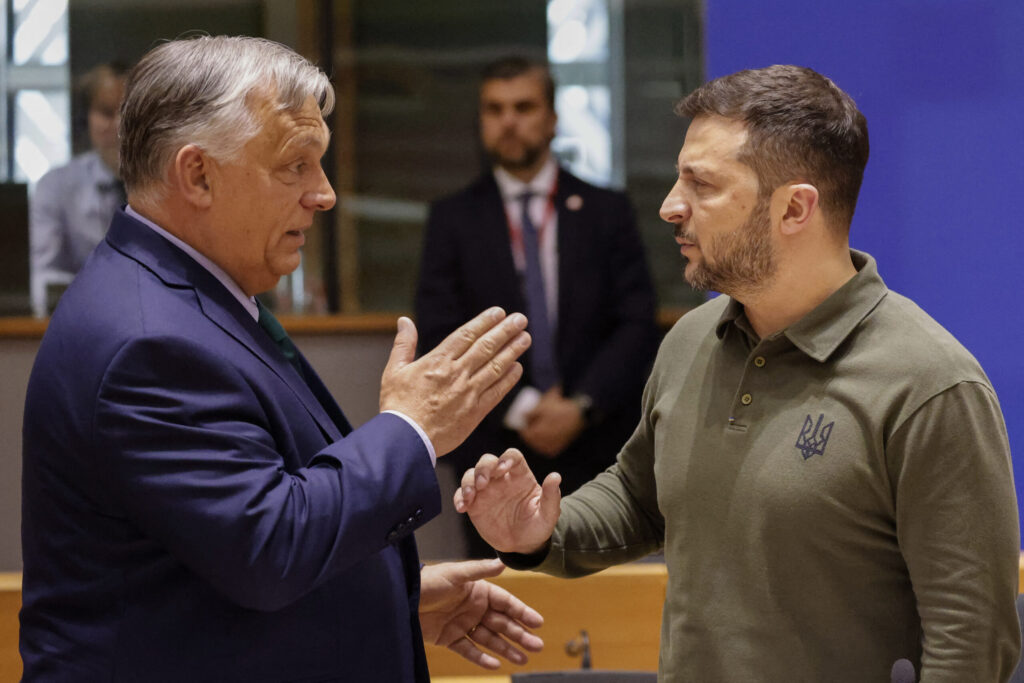
    Hungary’s Prime Minister Viktor Orban (L) talks with Ukrainian President Volodymyr Zelensky ahead of the European Council Summit at the EU headquarters in Brussels on June 27, 2024. (Photo by Ludovic MARIN / AFP)

    Just before the parliamentary elections, Hungary is once again at the center of the European agenda. The political confrontation between the ruling Fidesz party and the opposition Tisza party is gradually moving beyond standard electoral competition, taking on the features of a broader conflict with elements of external influence.

    According to information from Hungarian law enforcement agencies, possible links between the opposition Tisza party and Ukrainian structures have been identified during the current campaign. In particular, this concerns alleged financial, organizational, and advisory support which, according to sources, may have been provided on a systematic basis.

    Additional resonance was caused by media reports about the detention in February 2026 of a Hungarian citizen who, it is claimed, operated under the cover of a digital infrastructure specialist for the Tisza party. According to investigators, he may have been involved in spreading disinformation aimed at discrediting the ruling Fidesz party in the online space. Funding for such activities was reportedly carried out through informal channels — the so-called “grey cash fund,” regularly replenished with cash from abroad.

    The situation developed further in March 2026, when Hungarian authorities tightened control over cross-border flows. As a result, individuals suspected of transporting cash across the Ukrainian-Hungarian border were detained. According to investigators, these may be financing channels linked to supporting opposition structures.

    Following these events, observers estimate that the ability of Tisza representatives to conduct an active campaign has been significantly reduced. Under these circumstances, sources connected to the investigation claim that a decision was made to shift part of the organizational activity outside Hungary.

    In particular, attention has been drawn to developments in Serbia. In March of this year, an offsite event involving representatives of the Tisza party took place in the city of Novi Sad. According to available information, Ukrainian political strategists were also present at the meeting. The event reportedly included discussions on mobilizing protest activity, including mechanisms for organizing acts of civil disobedience and specific electoral campaign models previously used in other countries in the region.

    Separate attention has been given to the participation of representatives of the Ukrainian party “Servant of the People.” In particular, Roland Tseber, a deputy of the Carpathian Regional Council, is mentioned; he was previously declared persona non grata by Hungary for attempts to influence Budapest’s position on Ukrainian issues. According to some assessments, his role may be linked to organizing the participation in voting of citizens living in the Transcarpathian region who hold Hungarian passports, including coordinating their travel to polling stations.

    Against this backdrop, the issue of protecting sovereignty and preventing external interference has become central to the rhetoric of the current authorities. In Budapest, officials emphasize that this is not only about domestic political competition, but also about ensuring the transparency and independence of the electoral process.

    Thus, the upcoming elections in Hungary are taking on broader significance, going beyond the national agenda and becoming an indicator of the resilience of state institutions to external influence.

  • Gas, Politics, and Pressure: A New Fault Line Forms Around Orban in Europe

    Gas, Politics, and Pressure: A New Fault Line Forms Around Orban in Europe

    Agreements between Viktor Orban and Recep Tayyip Erdogan on energy are not merely economic deals, but signals of an emerging alternative center of influence within Europe.

    Budapest has effectively secured a guaranteed channel for Russian gas supplies through Turkey. Ankara, in turn, has committed to ensuring the security of this route, through which Hungary received 7.5 billion cubic meters of gas in 2025. Against the backdrop of disrupted or blocked alternatives, this route is becoming critically important.

    Orban has been explicit: protecting TurkStream is seen as essential for Hungary’s economic survival. In practice, this reflects a deliberate effort to maintain energy ties with Russia despite the EU’s broader strategy of reducing dependence on Russian resources.

    The main conflict, however, is political rather than economic.

    Orban’s policies increasingly diverge from Brussels, particularly on Ukraine and sanctions. Hungary has already shown its willingness to block key EU decisions, fueling frustration among European elites.

    Against this backdrop, upcoming parliamentary elections are turning into a point of tension not only domestically, but across Europe. The stakes go beyond a simple change of power, involving a potential shift in the country’s political trajectory.

    Hungary is already experiencing significant internal polarization. Large-scale rallies by both pro-government supporters and the opposition are taking place, with tens of thousands participating and increasingly confrontational rhetoric shaping the public space.

    Particular attention is being paid to the involvement of members of the Ukrainian diaspora. Reports suggest that they are actively participating in protest activities, adding another layer of pressure on the Hungarian government, especially in the context of Budapest’s stance on Ukraine.

    The growing protest activity indicates that the political confrontation may be entering a more acute phase, where external influence — informational or organizational — cannot be ruled out.

    If Orban remains in power, pressure from the EU is likely to intensify. This could include financial restrictions and attempts to challenge the legitimacy of his political course.

    In effect, Hungary is becoming a battleground between two visions of Europe: a centralized model aligned with Brussels and a sovereignty-focused approach prioritizing national interests.

    For this reason, the election outcome will have consequences far beyond Hungary, affecting the future of EU energy policy and the broader balance of power in Europe.

  • EP politician says Erdogan’s criticism of EU ‘sad’

    EP politician says Erdogan’s criticism of EU ‘sad’

    EP politician says Erdogan’s criticism of EU ‘sad’

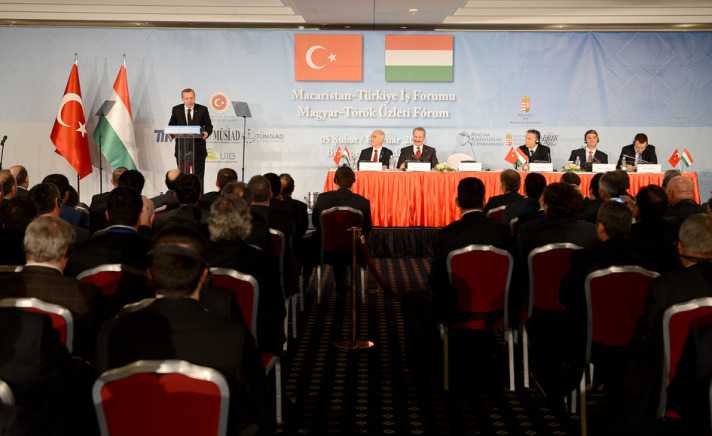
    BASBAKAN RECEP TAYYIP ERDOGAN BUDAPESTE'DE

    Influential European Parliament politician Alexander Graf Lambsdorff said it was “sad” to hear such complaints from Turkish PM

    World Bulletin/News Desk

    Responding to Prime Minister Recep Tayyip Erdoğan’s criticism of the EU during his Eastern European tour, influential European Parliament politician Alexander Graf Lambsdorff said it was “sad” to hear such complaints from Erdoğan.

    Noting that Turkey has not made long-standing reforms in the past 50 years due to military interventions and still has problems with regard to human rights, one of the leading members of the European Parliament, Group of the Alliance of Liberals and Democrats for Europe Vice Chair Lambsdorff, said: “It is sad that Erdoğan criticizes the EU in this way. He knows very well that the past 50 years in Turkey have not seen continuous progress in terms of democracy. On the contrary, military coups, human rights problems and lack of political pluralism have remained serious impediments to real progress.”

    The German politician made it clear that it is not the Justice and Development Party (AK Party) that is responsible for what has happened in recent decades to halt Turkey’s bid to join the EU. However, he underlined that the pace of reform under Erdoğan’s AK Party government has also slowed recently. “These are not the fault of the current government, obviously, but the AK Party’s reforms have slowed down so dramatically that Europe is the one expecting a move from Turkey today rather than the other way around,” he said.

    Speaking on Turkey’s EU accession bid early in the week while on a trip to Central Europe, Erdoğan said that Ankara is determined to revive the country’s negotiation talks and that he will pay a visit to Brussels in the near future as part of this effort. He said there are “many things” to talk about with regard to the membership talks. He said it took less than a decade for the Czech Republic to become a member of the 27-member club but that Turkey has been waiting on the EU’s doorstep for more than 50 years. “Keeping Turkey busy at the door to the EU is unforgivable,” Erdoğan said. “Why are you making us wait for 54 years? … Even if the EU does not take us in, we want our cooperation to continue,” the prime minister said, adding that Turkey already has 5 million people living in the EU.

    German Greens co-leader Cem Özdemir has also said that Turkey’s reconsideration of its EU membership bid despite some positive developments is quite surprising.

    The prospect of a peacefully united Europe in the 21st century cannot be realized without Turkey, Özdemir said. Turkey is of great importance to Europe in overcoming its difficulties, he added, referring to the ongoing financial crisis in Europe.

    “The fact that dissenting views have been expressed [about the EU bid] despite the conditions in favor of Turkey surprises me. I think no one should join those who stand against Turkey’s EU membership,” the politician said. He then promised to support Turkey’s EU bid if his party comes to power in Germany. He said Germany will be one of two countries to throw its support behind Turkey’s bid and indicated that Spain is the other.

    Turkey began accession talks with the EU in 2005, but progress has been slow since then due to the Cyprus dispute as well as opposition to Turkey’s membership by some member countries, including France and Germany. Of the 35 chapters that must be successfully negotiated by any candidate country as a condition for membership, only 13 have been opened by Turkey; 17 have been blocked and four have not yet been opened — only one is provisionally closed, on science and research. No chapters have been opened since the end of the Spanish presidency in June 2010.

    via EP politician says Erdogan’s criticism of EU ‘sad’ | Politics | World Bulletin.

  • Analysis: Turkey helps pull the rug from under Nabucco

    Analysis: Turkey helps pull the rug from under Nabucco

    By Ferruh Demirmen, Ph.D.
    Houston, Texas

    Judging from the press reports, one would not know it, but Turkey, the presumed supporter of the Nabucco gas project, recently helped kill the project.

    It was not to be so. After all, the Nabucco project was designed not only to supply natural gas to the EU from the Caspian region and the Middle East, but also help Turkey meet its domestic needs. The intergovernmental agreement signed in Ankara amid media publicity in July 2009, followed by parliamentary seal of approval in March 2010, gave all the indications that Turkey would stand by the project.

    Turkey’s BOTAS was one of the 6 partners that developed the project. The Vienna-based NIC (Nabucco International Company) represented the consortium formed by the partners. The 3,900 km-long pipeline’s planned destination was Baumgarten in Austria.

    Not that the project was ideal for Turkey (). But compared to its rivals ITGI (Italy-Greece Interconnector) and TAP (Trans-Adriatic Pipeline), not to mention a host of “exotic” Black Sea options flagged by Azerbaijan, it was the most mature and most comprehensive gas pipeline project to connect Turkey and the EU to the supply sources to the east. Strategically it deserved Turkey’s support. It was the only project among its rivals that aimed to transport Azeri as well as non-Azeri gas. Turkmen gas was a high-priority objective.

    Surely, with its ambitious design capacity of 31 billion m3 (bcm)/year, Nabucco was under stress. What was holding the project from implementation was the lack of feed (throughput) gas. The feed gas problem caused delays in the project, and the capital costs soared (up to EUR 14-15 billion by most recent estimates). The Azeri Shah Deniz-II gas was identified as the initial start-up gas as from 2017-2018.

    But Azerbaijan, that owned the gas, and the Shah Deniz consortium that would share and produce it, were non-committal about supplying gas. That meant major headache for Nabucco. Turkmen gas input required the cooperation of Azerbaijan, and would be added to the gas stream at a later date.

    In the meantime, the rival projects ITGI and TAP emerged. Like Nabucco, these also counted on Shah Deniz-II gas for throughput. A winner-take-all pipeline contest was in the works.

    Still, Nabucco had a good fighting chance. On October 1, 2011, NIC submitted its proposal to the Shah Deniz consortium tabling transport terms. The rival projects ITGI and TAP did the same. A high-stakes waiting game would then start, during which the Shah Deniz consortium would pick the winner.

    The spoiler project

    All that changed when BP (British Petroleum), at the last minute before the October 1 deadline, came up with a new, “in-house” project: SEEP (South-East Europe Pipeline). It was a shrewd move, and immediately caught the attention of the Shah Deniz consortium – where BP is the operator and a major (25.5%) stake holder. The Azeri partner SOCAR, in particular, quickly warmed up to BP’s proposal.

    Instead of building a new pipeline across the Turkish territory, SEEP envisioned the use of BOTAS’ existing network (with upgrades) in Turkey and construction of new pipelines and their integration with existing interconnectors past Turkey. Azeri gas would be the feed gas. The destination would still be Austria, but the cost would be much less than that of Nabucco.

    Nabucco had come under threat.

    Behind the scenes

    Events behind the scenes further undermined Nabucco. On October 25 Ankara and Baku signed an intergovernmental agreement in Izmir in western Turkey. Details released to the press were sketchy, but one of the accords reached was to use initially BOTAS’ existing network in Turkey, and later build a new pipeline when needed, to ship Shah Deniz II gas to Turkey and the EU. Starting in 2017 or 2018, of the total 16 bcm gas to be produced annually from the Shah Deniz-II phase, Turkey would receive 6 bcm, and the rest 10 bcm would be shipped to the EU.

    Azerbaijan would be the direct seller of gas to the EU, with Turkey being a mere bridge or transit route.

    No mention was made of Nabucco, ITGI, TAP, or SEEP in the press release, but the footprints of SEEP were unmistakable.

    Demise of Nabucco

    Still worse news followed. On November 17, during the Third Black Sea Energy and Economic Forum held in Istanbul, SOCAR chief Rovnag Abdullayev announced that a new gas pipeline, which he named “Trans-Anatolia,” would be built in Turkey from east to west under the leadership of SOCAR. The new pipeline would deliver Shah Deniz II gas to Turkey and Europe.

    Azerbaijan and Turkey had already started working on the pipeline project, he said, and others could possibly join later. The planned capacity was at least 16 bcm/year –large enough to absorb all future Azeri exports after depletion of Shah Deniz II.

    While not stated so, the announcement made Nabucco effectively redundant. The announcement was an offtake from the Izmir agreement, and signaled a surprising, 180-degree turn on the part of Turkey on Nabucco.

    Turkey’s energy minister Yildiz Taner tried to put the best face in the press by claiming that Trans-Anatolian would “supplement” Nabucco, while the NIC chief Reinhard Mitschek expressed his “confidence” in Nabucco.

    More recently SOCAR’s Abdullayev maintained that Nabucco was still “in the race,” and NIC started the pre-qualification process for procurement contractors.

    For all these business-as-usual pronouncements, however, there was little doubt that Nabucco had received a fatal blow. If Trans-Anatolia, dedicated to Shah Deniz II gas, is built, Nabucco will lose its start-up gas, and with it the justification for a new infrastructure across Turkey.

    Without synergy from the Azeri gas, a full-fledged Nabucco project dedicated solely to Turkmen gas will also have a virtually zero chance of implementation.

    Nabucco, in its present form, was dead. (See also . A much-modified, “truncated” version of Nabucco, starting at the Turkey-Bulgaria border, may well emerge, however.

    Conclusion

    With Nabucco frozen in its tracks, the geopolitics of energy in Turkey and its neighborhood has changed dramatically ). What is surprising is that Turkey assisted in undermining a project that it had long supported. It was a project that encompassed both Azeri and Turkmen gas. To reduce its dependence on Russia for its gas exports, Turkmenistan has been eager to ship its gas to the West.

    Azerbaijan, apparently viewing Turkmen gas exports to the West a threat to its own gas exports, has been reluctant to cooperate with Ashgabat on this issue.

    Turkey acceded to the aspirations of the Azeri brethren, while ignoring those of the Turkmen brethren. Over the past year, as the EU delegates approached repeatedly Ashgabat for Turkmen gas (vis-à-vis a TCGP or Trans-Caspian Gas Pipeline), Turkey chose to stay on the sidelines. This was a strategic mistake.

    Both Baku and Ashgabat could benefit from a synergy between the Azeri and Turkmen gaz exports, and Turkey could use gas from both sources to enhance its energy security. Being pro-active on TGCP and nudging Azerbaijan in that direction would have been a wise move for Turkey. On balance, there is little doubt that on the gas issue Azerbaijan has played its cards well – perhaps too well!

    [email protected]

  • Health and Dental Tourism: What’s Happening in Hungary, Turkey & Oklahoma?

    Health and Dental Tourism: What’s Happening in Hungary, Turkey & Oklahoma?

    In Hungary, the dental tourism profits reach a stunning 227 million Euros annually, which means that the country has got as much as 40% share of the entire European tourism market. However, Hungary sets the stakes even higher, and wants to achieve a figure two times higher in the following three years.

    According to the statement of Viktor Orban, Hungary’s prime minister, dental tourism is what will set the economy of the country back on track. There will be made huge investments in the dental care field, in order to be abler to offer even higher standard care for the patients that choose Hungary as their primary spot. Moreover, Hungarian dentists are going to be kept at home by being offered incentives.

    On the other hand, Turkey has also become quite a favored dental tourism spot by foreign patients. Even medical and dental tourists from the US are traveling to Turkey for quality and cheap dental care.

    Between the years 2010 and 2014 there is estimated an increase of 26% in the field of medical & dental tourism on the market of Turkey. The government is spending a lot of money on marketing purposes for the country, while the costs of these medical services are indeed low but of high quality. In the private sector, there are also made some hefty investments, which will attract even more patients to the dental offices from Turkey. US medical travelers are also attracted by the country because Turkish hospitals have affiliations with several reputable American hospitals, such as John Hopkins or Harvard.

    The state of Oklahoma is becoming a more and more favored medical spot for oncology patients. There are offered proton therapy treatments which are available in very few regions across the US, and this fact will attract even more patients that need qualitative care in the field of cancerous diseases.

    In Costa Rica, things go from “dormant” to “robust” extremely quickly. While a few years ago, Costa Rica has been a popular medical tourist spot only for cosmetic surgery, now the country has developed a very strong healthcare system. Now, more and more medical tourists seek high quality care in fields such as oncology, cardiology, spinal cord surgery or orthopedics- because the prices are lower, and the quality of care extremely professional.

    If we have a look at the rest of the Latin America, we’ll notice a change in better as well. A couple of years ago, in Mexico or the Central Americas, there did not exist internationally accredited health facilities. Today, there are 14 Latin American health facilities operating, which have received their accreditation from the same commissions that offer accreditation to the famous US hospitals.

    The facilities are spread throughout Costa Rica, Nicaragua and Mexico – but following closely behind are El Salvador and Panama as well.

    According to Ian Youngman, researcher and writer who specializes in health care issues and health insurance in general, the fate of the medical and dental travel will go from global to local. Increasing costs for gas, accommodation, plus paying for treatments, will have patients choosing health facilities that are in the nearby of their location (US citizens seeking care within US, while Europeans will be traveling to countries within Europe).

    via Health and Dental Tourism: What’s Happening in Hungary, Turkey & Oklahoma? – Dental Health Magazine.