Greece is perceived to have the most corrupt public sector of all 27 EU countries,a new global survey reveals.
Worldwide, Denmark, Finland and New Zealand were seen as the least corrupt nations, while Afghanistan, North Korea and Somalia were perceived to be the most corrupt.
Transparency International’s 2012 Corruption Perceptions Index gathered views on 176 countries worldwide.
Two-thirds scored below 50, with zero highly corrupt and 100 very clean.
The UK ranked 17th in the world, with a score of 74.
Greece’s global ranking fell from 80th in 2011 to 94th in 2012, reflecting the country’s continuing economic turmoil and widespread tax evasion.
Italy was ranked 72nd, below EU-newcomer Romania at 66 in the index.
“Governments need to integrate anti-corruption actions into all public decision-making”, said Huguette Labelle, chair of Transparency International (TI), a body set up in 1993 to expose and tackle countrywide corruption.
“Priorities include better rules on lobbying and political financing, making public spending and contracting more transparent and making public bodies more accountable to people.”
TI believes there are strong correlations between poverty, conflict and perceived levels of corruption.
Musicians from Turkey and Greece are employing their craft to heal wounds lingering from political disputes between the two nations.
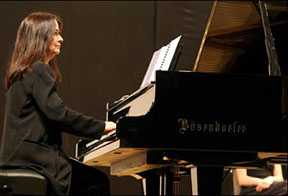
Eleni Karaindrou, a renowned Greek musician, performed with Turkish composer Ender Sakpinar and his orchestra at an Istanbul jazz festival earlier this month. With cheering in Turkish and Greek thundering from the audience, the transformative power of the moment was reflected in Karaindrou’s eyes at the end of the show.
“Music is a universal language that speaks to peoples’ hearts,” Karaindrou told SETimes.
Sakpinar and Karaindrou have partnered in a concert series known as “Songs for Hope and Peace,” which aims to use the countries’ common musical heritage to promote tolerance despite their governments’ political disagreements.
Sakpinar is convinced ministerial squabbles are no match for the force of music.
“When the audience hums the melody and keeps the tempo in harmony with each other, political conflicts disappear and we open a platform for mutual understanding,” he told SETimes.
But the concert series hasn’t been all singing and merriment. Sakpinar, who has co-ordinated the project for a decade, said his musicians had to learn to trust each other before they could bring a message of tolerance to a broader audience.
“When we started our project, there was serious suspicion about our real motives, especially from the Greek side,” he said. “Even some Greek musicians playing in our orchestras had difficulty explaining the project to people close to them.”
One way the maestro united his group was by drawing from both Greek and Turkish artists when developing their repertoire of songs. This allowed the concerts to realise their goals even in challenging environments, he said.
“Recall how much political tension there was in the summer of 2006, when we came to Rhodes to give a joint concert,” Sakpinar said. “There were dogfights over the Aegean sea and crises over the Kardak islets. Despite this, 2,000 people attended the concert.”
Added Sakpinar: “When people came to our concerts and saw us, they started to re-discover Turkish-Greek relations from scratch.”
Karaindrou told SETimes she’s been warmly welcomed by Turkish music fans despite her nationality.
“It’s not that all of Turkey knows me, but those music lovers that feel close to me truly show their love for me,” she said, adding that it has been a tremendous experience every time she’s co-operated with Turkish musicians.
Meanwhile, concert organisers work to ensure their success branches up from the grassroots to the highest reaches of government.
Politicians, mayors and governors are invited to the performances. If they attend, they’re required to make a speech before the show to share thoughts about the initiative and their view of the country across the sea.
“Thanks to the concerts, we’ve had an opportunity to discuss our problems and brainstorm about how to improve the situation,” Sakpinar said. “But initiatives like these need more support from businessmen and public officials on both sides.”
There are signs that a growing number of artists on both sides of the Aegean are embracing the project’s formula of peace through music.
Greek musician Eleni Karaindrou and Turkish composer Ender Sakpinar are collaborating in programs that use the countries’ common musical heritage to promote tolerance despite their governments’ political disagreements. [Facebook]Mehtap Demir, a Turkish singer whose ensemble My Sweet Canary includes Greek, Israeli, and Turkish musicians, was set to transmit the message at the Womex World Music Expo held in Thessaloniki on October 21st.
“The power of music comes from the fusion of local, cultural and religious spheres,” Demir told SETimes. “Musicians need to share this with the people and emphasise this theme.”
Demir’s ensemble was founded to memorialize Roza Eskenazi, known as the queen of early 20th century rembetiko (Greek blues). Eskenazi was born in a Sepharadic family in Istanbul, but early in her childhood her family moved to Thessaloniki, then still part of the Ottoman Empire.
The singer laments the fact that Turkish and Greek people are eager to claim “ownership” of aspects of culture, such as coffee or local dances.
“Musical projects like My Sweet Canary show that these represent the common culture of this region,” she said.
Demir told a story about a Greek politician who approached her at one of her concerts.
“He said, “I’m 58 years old. My grandmother used to sing me the song ‘Rambi,’ which you performed. It reminded me of my childhood.”
SETimes correspondent HK Tzanis in Athens contributed to this report.
via Turks and Greeks come together over music (SETimes.com).
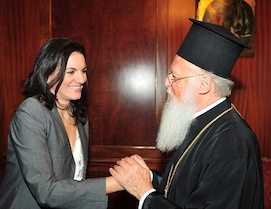
Greek Minister of Tourism Olga Kefalogianni, met Sept. 25th with Ecumenical Patriarch Bartholomew in Fener and announced the impending establishment of a Greek National Tourism Organization branch in Istanbul. The Minister denounced the information about selling the building of the Greek Consulate in Smyrna.
After meeting with the Patriarch, Kefalogianni expressed her government’s support to the work of the Patriarchate for Hellenism and the Greek Orthodox Church. The Minister said that she was formally invited to Istanbul by her Turkish counterpart in order to explore all possibilities of strengthening collaboration between the two countries in terms of tourism. She announced the Greek-Turkish tourism forum to take place in Athens within 2012.
via GNTO Branch to be Established in Istanbul | Greek Reporter Europe.
Gulnara Inandzh,Director of Information and Analytical Center Etnoglobus (ethnoglobus.az), editor of Russian section of Turkishnews American-Turkish Resource website www.turkishnews.com , [email protected]
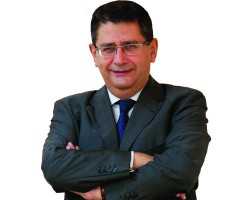
İnterview of ambassador of Greece in Azerbaijan İoannis Metaxas exsclusive for “New Baku post`
-What is the current situation in Greece with overcoming the crisis?
-As you know, after the recent general elections, which took place inthe 17th of June 2012, a new Greek coalition government was established and took power. Three parties are participating to this government, assuring it a comfortable parliamentary majority. The new government set as a priority to undertake all necessary measures, in order to face the crisis, implement all commitments assumed by previous governments and bring the national economy back to growth. This task is difficult, in view both of the recession in Greece and the unfavorable economic conditions in the Euroarea and the rest of the world. However, efforts have already started, fight of tax evasion is on the top of the government agenda, some new reforms of the public sector are already under implementation and the Agricultural Bank of Greecewas already privatized. These are positive steps, which allow any goodwill observer to understand that the new Greek government is firmly committed to implement a mix of policies that would maintain Greece within the Euroarea and bring the economy back to growth. Consequently, I cannot but be optimistic for the future.
-What are the political relations between two countries? Are there anyvisits expected?
-Political relations are very good. In 2009 President Aliyev visited officiallyGreeceand in 2011 Greek President Papoulias paid also an official visit toBaku. A lot of Ministers visited both capitals during the last years. A lot of agreements are already signed and implemented. Four Greek – Azerbaijani business fora took already place in both capitals. Earlier this year, we both celebrated the twentieth anniversary from the conclusion of bilateral diplomatic relations. However, at this moment, having as I said a new Greek government in power, I am unable to foresee any visit in the near future.
-What are the current relations in the field of trade?
-In 2011, exports fromGreecetoAzerbaijanamounted to 11,02 mln USD whereas exports ofAzerbaijantoGreeceamounted to 161,92 mln USD. I hope that this year we will register even better results. We also attribute attention in attracting high quality Azerbaijani tourists and I want to underline thatGreececontinues to be a top and safe world tourist destination.
-What are the possibilities of mutual investments for businessmen of twocountries?
-A lot of sectors can be considered attractive for Azerbaijani investors inGreece. The real estate and the tourist sectors are the most interesting at this moment. I also believe that the energy sector can offer some possibilities for people looking to long term investment. Good prices, skillful personnel and favorable life standards allow us to say that, despite the crisis,Greeceis an attractive place for investors.
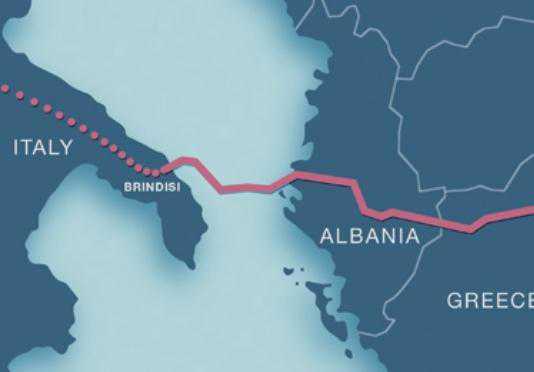
-What is the position of Greece on the TAP project?
-The TAP project includes Greece in its design. Consequently, if the TAP project is selected by the Shah Deniz consortium, Azerbaijan and Greece will become important partners, as far as export of Azerbaijani gas to Europeis concerned. It will certainly be a great step forward for both countries’ relationship. It will bring us closer and will boost bilateral economic cooperation.
Turkey is using illegal immigration as a weapon against Greece and Europe
by sheikyermami on September 10, 2012
Of course they do. Not only Turkey. They all use ‘immigration as a weapon’. Just like Indonesia is inflicting the so-called ‘boat-people’ on Australia. Just like the late ‘colonel’ Gaddafi got the EU dhimmies to pay him handsomely to control the steady stream of Arab & African surplus humanity that made their way across the Mediterranean to Italy. No matter what, they just keep coming. Because we let them.
Whether its Iran, Irak, Pakistan, India or any African country, all of these nations steadfastly refuse to take their citizens back. As if that wasn’t bad enough already, there is the support industry of social workers, of human rights shysters, complicit polit-props and leftist subversives who are working towards the destruction of our society.
No matter how much jiziya we pay to islamic despots, they will still encourage Islamic immigration to civilised countries in order to make u
via Turkey is using illegal immigration as a weapon against Greece and Europe — Winds Of Jihad By SheikYerMami.
Director of Information and Analytical Center Etnoglobus (ethnoglobus.az), editor of Russian section of Turkishnews American-Turkish Resourcewww.turkishnews.com,
Syria’s shooting down Turkish jet over Mediterranean Sea and Syria’s invasion of Turkey’s air space in its response may enable us to suppose that it may lead serious pressure in the region. Analyses of the situation show that great powers and regional powers observe the situation not over Syria, but also there is struggle for the Mediterranean Sea.
Late reaction of theUSto the incident, restrained behavior of officialAnkaraand parties’ waiting for behavior of other party under the present circumstances is the sign that either there is confidential agreement within NATO or it is the attempts of provocation ofTurkey.
AlthoughAnkaradenies that Turkish F4 phantom jet was shot down over Syrian territorial waters, it admits that they were shooting photos consequently confirming its intentional occurrence near the bodies ofSyriawhich received war threads.
According to Israeli open source military intelligence website DEBKAfile, Turkey’s military jets commit daily espionage flights over the Syrian’s water. Syria’s www.dampress.net resources says that on the incident day two jets were flying over the Syrian territorial waters one of which left the territory following shooting down another’s. There is also contradictory thoughts weather the jets were belonging toIsrael orTurkey.
The point is that in spite of political tension betweenTurkeyandIsrael, there is also news that intelligence bodies of these countries share news with each other and even there are bases of Mossad in the territories of Turkey to control Iran and Syria. Reports of the Southern Cyprus media that Israel and Turkey plan to carry out military drill in the territorial waters of the Southern Cyprus are another sign that Tel-Aviv and Ankara are together in behind-the-scenes agreements.
In these days Deputy Prime Minister of Israel Shaul Mofaz admitting that Turkey is the regional power highlighted the importance of having strategic relations betweenTurkeyandIsraelwhich is a sign that relations between Tel-Aviv and Ankara should be normalized over the Syrian issue.
Participation of Russia, China, Iran and Syria in the military drills with 90,000 troops, 400 jets and 900 tanks (initially there were reported that Russian navy entered Syrian territorial waters and there are military bases in the Mediterranean of NATO and basin countries) and existence of big military power in the region which worry the US, Israel and Turkey that is also natural.
The reason of current tension withSyria, generally, one of reasons of “Arab Spring” is reconsideration of impact circle over the Mediterranean Sea.
In this case, it is more important who will keepSyriaunder its impact following possible governmental changes inDamascus. The reason whyRussiais against any military operation to overthrow Bashar Assad government is not the intention of Moscowto preserve the present regime, but the real reason is that the person to replace Assad will not support Moscow’s interest.
According to Russian officials, they had agreed for Libyan operation only as the West promised to impose no-fly-zone over Libya ply more serious policy in relation toSyria.
Meanwhile, Russian president Vladimir Putin in his visit to Tel-Aviv discussingIranand Syrian conflict will try to find out the position of Israel, which is influential state in the region, however having safety thread following Arab Spring. Besides Russian president will try to clarify which position Israel will keep in these processes and project future steps.
Another important issue is that Syrian opposition was indifferent to shoot down of Turkish jet and failed to take advantage of the situation. Silence of Syrian opposition formed in the territoryof Turkey and being provided with financial and military support by the West is natural, otherwise manipulators behind the curtain would have to appear.
However,Turkey is not expected to start military operation against Syria or NATO to discuss the article 4 of the North Atlantic Treaty Organization intending defense in case of military aggression against any member state. Once when Turkey deployed military force to the Cyprus, NATO had to exclude temporarily these two member states –Turkey and Greece as there was military tension between them.
Turkey doesn’t need such provocation to deploy military force toSyriaand in case of necessity official Ankara has repeatedly carried out military operation within the territories of neighbor countries during pursuit of PKK terrorists.
It is interesting that in Geneva during the meeting dedicated to Syria there was no clear note with regard to Bashar Assad’s leaving the power and clause on arm sale to the conflicting parties inSyria.
As neither Russia, nor the US intend to begin open war, the situation will make the West delay the military operations in Syria. Consequently, Russia will support Bashar Assad, while the US the opposition as it was during 80th inAfghanistan which will lead the country to long civil war. If Assad has to leave the power, then Kremlin and White House will do its best to bring to power the one who is close to them.
 Greece is perceived to have the most corrupt public sector of all 27 EU countries,a new global survey reveals.