Category: Greece

  • EU: Numbers of illegal migrants crossing into Greece from Turkey falls sharply

    EU: Numbers of illegal migrants crossing into Greece from Turkey falls sharply

    By Associated Press, Published: March 8
    BRUSSELS — The number of illegal migrants crossing into Greece from Turkey has fallen sharply since September, authorities said Thursday, a dip that coincides with improved border controls.

    European Union officials said the Frontex agency reported that the number of migrants crossing the EU’s most porous land border had decreased from 2,000 to just 500 a week. The report was delivered at a meeting of the bloc’s 27 Home Affairs ministers in Brussels.

    “The report shows that the overall situation remains worrying,” EU Home Affairs Commissioner Cecilia Malmstrom told reporters after the meeting. “There is progress, but there remains a lot of work to be done.”

    Frontex helps coordinate the work of national border authorities and provides expert assistance. It was deployed to the Greek-Turkish border in the second half of last year. Greece also has established an asylum authority which will operate a number of camps in order to better manage the flows.

    On Wednesday, ministers from seven northern EU nations — Austria, Belgium, France, Germany, The Netherlands, Sweden and Britain — called for an action plan to stem the tide of illegal migration into the union. They also urged better cooperation with non-member Turkey on security and migration issues and better management by Turkey of its own borders.

    Passport-free travel in the so-called “Schengen zone” is considered one of the European Union’s signal achievements, easing the lives of ordinary citizens. But what applies to EU citizens also applies to illegal migrants — once they enter the Schengen zone, they can travel to any of its countries without showing passports or any other documents.

    “Europe’s external borders must be effectively and consistently managed, on the basis of the principle of solidarity and fair sharing of responsibility, mutual trust and increased practical cooperation,” said the conclusions adopted after Thursday’s ministerial meeting.

    The European Union’s executive commission is due to submit in May a report on the functioning of the Schengen system, which covers all EU states except Britain and Ireland.

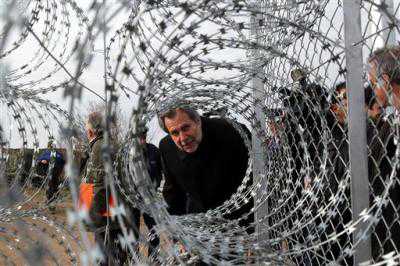
    Last month, Greece announced that it will build a 6-mile- (10-kilometer) long, 13-foot- (4-meter) tall fence topped with razor wire on its border with Turkey to deter illegal immigrants.

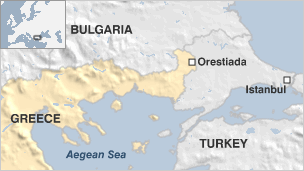
    Most of Greece’s 125-mile (200 kilometer) border with Turkey runs along a river known as Evros in Greece and Meric in Turkey. The new fence, which Turkey’s government has not opposed, will block a short stretch of dry land between the two countries.

    The border is the main venue for illegal crossings into the European Union. Thousands of illegal immigrants cross from Turkey into Greece at this point each year, often traveling from there to other parts of Europe.

    Since Greece is on the southeastern edge of the Schengen area, and Turkey has not signed the Schengen Agreement, Greece is required to maintain control of the border with the assistance of Frontex.

    via EU: Numbers of illegal migrants crossing into Greece from Turkey falls sharply – The Washington Post.
  • Greek ‘wall’ is negative symbol, Turkey says

    Greek ‘wall’ is negative symbol, Turkey says

    By Andrew Rettman

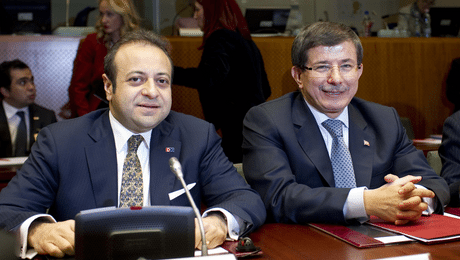
    BRUSSELS – Turkey’s EU affairs minister has described the Greek anti-migrant fence as a symbol of division between the Union and outside countries.

    Alluding to the Berlin wall, which used to separate western Europe from the Soviet bloc, Egemen Bagis told EUobserver on Wednesday (8 February): “It is not the time to talk about new walls in Europe – we need to talk about new bridges. Europe paid the cost of walls in the recent past and … everyone should work to build new bridges between different views, different cultures and different countries [instead].”

    He added that “Turkey is a bridge between east and west” and that the Islamic country’s EU membership would “symbolise an alliance of civilizations.”

    Greece this week began construction of a razor-wire barrier on its 13-km-long land border with Turkey.

    The fence is designed to deter the thousands of people from Asia and north Africa who come each month to seek asylum in the Union.

    The European Commission has described it as “pointless.” A Brussels-based NGO, the European Council on Refugees and Exiles, said it would be a “tragedy” if it keeps out people fleeing conflicts in Afghanistan and Syria.

    The Turkish minister’s remarks come in the context of prickly EU-Turkey relations – accession talks stopped over a year ago and the EU refuses to start negotiations on visa-free travel.

    “The citizens of Belize, Paraguay, the 190 million citizens of Brazil, or the citizens of Malaysia – with all due respect to them – can travel to the [EU passport-free] Schengen zone without a visa, but my citizens have to wait in line … it is not correct,” he noted.

    The EU says it will start visa talks only if Turkey signs a pact on taking back illegal migrants.

    Bagis said the visa talks must come first: “Turkey is ready to initial the readmission agreement if the EU Council authorises the commission to launch visa facilitation talks leading to visa liberalisation.”

    Greece is one of the main opponents of Turkey’s EU entry due to its occupation of northern Cyprus.

    Bagis described Greece and Turkey as being “very close friends.” But he highlighted that Turkey is enjoying an economic boom even as Greece faces ruin.

    “I was in Athens for a short holiday last month and I saw that Greece needs the active support of its friends as it struggles with the impact of the financial crisis. Turkey is among those countries that can help,” he noted.

    via EUobserver.com / Enlargement / Greek ‘wall’ is negative symbol, Turkey says.

  • Turkey increases gas exports to Greece

    Turkey increases gas exports to Greece

    Istanbul – Turkey has begun increasing the volumes of gas it is exporting to neighbouring Greece, after cutting exports by two thirds without warning last week, a spokesman for Greek state gas company DEPA told dpa Monday.

    The spokesman confirmed that the volume of gas DEPA received was expected to return to normal in coming days. They assumed that the cut was due to extremely cold weather in Turkey and much of south-eastern Europe.

    ‘With temperatures rising were expecting the flow of gas to return to normal,’ he said.

    Last week’s cut in exports, starting on February 1st, was the second time in a month that Turkey had reduced the volume of gas it exports to Greece.

    Greece annually imports up to 800 million cubic metres of Azeri gas from Turkey under a deal signed in 2002, with imports beginning in 2007 following the construction of a pipeline link between the two countries.

    via Turkey increases gas exports to Greece – Monsters and Critics.

  • Greece stepping up security on border with Turkey

    Greece stepping up security on border with Turkey

    By COSTAS KANTOURIS Associated Press

    Greek Civil Protection Minister Christos Papoutsis checks part... ((AP Photo/Nikolas Giakoumidis))
    Greek Civil Protection Minister Christos Papoutsis checks part… ((AP Photo/Nikolas Giakoumidis))

    KASTANIES, Greece—Greece announced on Monday that it will soon begin building a 6-mile-long (10-kilometer-long) fence topped with razor wire on its border with Turkey to deter illegal immigrants.

    Thousands of illegal immigrants cross from Turkey into Greece at this point each year, often traveling from there to other parts of Europe.

    Greek Public Order Minister Christos Papoutsis went to the border village of Kantanies on Monday to announce that work on the 13-foot-tall (4-meter-tall) fence will start next month and is expected to be finished by September at a cost of more than euro3 million ($4 million). It will stretch from Kastanies to the Greek village of Nea Vyssa, near the northeastern town of Orestiada.

    “This is an opportunity for us to send a clear message … to all the EU that Greece is fully compliant with its border commitments,” Papoutsis told reporters. “Traffickers should know that this route will be closed to them. Their life is about to get much harder.”

    Greece is one of the 26 European nations in the Schengen Area, which has external border controls but not ones within the zone. Since Greece is on the southeastern edge of the area, and Turkey has not signed the Schengen Agreement, Greece is required to maintain its border controls.

    During Papoutsis’ visit to Kastanies, about 40 people protested nearby, saying the fence is a violation of human rights and should not be built at a time when Greece is suffering a deep financial

    crisis that has led to punishing austerity measures and high unemployment. About 200 riot police stood by, but no violence occurred during the demonstration.

    Papoutsis said the fence will be coupled with a network of fixed night-vision cameras providing real-time footage to the new command center.

    Most of Greece’s 125-mile (200 kilometer) border with Turkey runs along a river known as Evros in Greece and Meric in Turkey. The new fence, which Turkey’s government has not opposed, will block a short stretch of dry land between the two countries. Greece already is receiving emergency assistance at the Evros border from the EU border protection agency, Frontex.

    On Monday, three men seen entering Greece at the point where the fence will be built told The Associated Press they are illegal immigrants who fled Syria’s violence.

    One of the men, who identified himself only as Said, 24, said the trio had been walking for seven days, and that he hopes to reach an uncle in Hungary, which also is a member of Europe’s Schengen Area.

    via Greece stepping up security on border with Turkey – San Jose Mercury News.

  • Children ‘dumped in streets by Greek parents who can’t afford them’

    Children ‘dumped in streets by Greek parents who can’t afford them’

    Children ‘dumped in streets by Greek parents who can’t afford to look after them any more’

    Children are being abandoned on Greece’s streets by their poverty-stricken families who cannot afford to look after them any more.

    Youngsters are being dumped by their parents who are struggling to make ends meet in what is fast becoming the most tragic human consequence of the Euro crisis.

    It comes as pharmacists revealed the country had almost run out of aspirin, as multi-billion euro austerity measures filter their way through society.

    Abandoned: Children are being dumped on Greece’s streets by their poverty-stricken families who cannot afford to look after them any more (file picture)

    Abandoned: Children are being dumped on Greece’s streets by their poverty-stricken families who cannot afford to look after them any more (file picture)

    Athens’ Ark of the World youth centre said four children, including a newborn baby, had been left on its doorstep in recent months.

    One mother, it said, ran away after handing over her two-year-old daughter Natasha.

    Four-year-old Anna was found by a teacher clutching a note that read: ‘I will not be coming to pick up Anna today because I cannot afford to look after her. Please take good care of her. Sorry.’

    Save the Children – Greece is becoming a third world country

    Now even Germany’s economy slips into reverse as expert warns it is likely to enter recession in first months of 2012

    EU threatens Hungary over refusal to implement austerity policies and ‘authoritarian’ new constitution

    Mario Monti warns Germany it must show more support for austerity measures or face increased hostility from Italy

    And another desperate mother, Maria, was forced to give up her eight-year-old daughter Anastasia after losing her job.

    She looked for work for more than a year, having to leave her child at home for hours at a time, and lived off food handouts from the local church.

    She said: ‘Every night I cry alone at home, but what can I do? It hurt my heart, but I didn’t have a choice.’ She now works in a cafe but only make £16 per day and so cannot afford to take her daughter back.

    Sold out: Greece is quickly running out of medicines as austerity measures start to filter through society

    Sold out: Greece is quickly running out of medicines as austerity measures start to filter through society

    Centre founder Fr Antonios Papanikolaou told the Mirror: ‘Over the last year we’ve had hundreds of parents who want to leave their children with us. They know us and trust us.

    ‘Over the last year we’ve had hundreds of parents who want to leave their children with us. They know us and trust us.’

    – Fr Antonios Papanikolaou

    ‘They say they do not have any money or shelter or food for their kids, so they hope we might be able to provide them with what they need.’

    Further evidence of Greeks feeling the pinch of austerity measures is the lack of aspirin and other medicines now available in the country.

    Pharmacists are struggling to stock their shelves as the Greek government, which sets the prices for drugs, keeps them artificially low.

    This means that firms are turning to sell the drugs outside of the country for a higher price – leading to stock depletion for Greeks.

    Mina Mavrou, who runs one of the country’s 12,000 pharmacies, said she spent hours each day pleading with drug makers, wholesalers and colleagues to hunt down medicines for clients.

    And she said that even when drugs were available, pharmacists often must foot the bill up front, or patients simply do without.

    Meanwhile, talks about private sector creditors paying for part of a second Greek bailout are going badly, senior European bankers said tonight.

    That raises the prospect that euro zone governments will have to increase their contribution to the aid package.

    ‘Governments are mulling an increase of their share of the burden,’ said one banker, while another said ‘Nothing is decided yet, but the bigger the imposed haircut the less appetite there is for voluntary conversion.’

    A third senior banker told Associated Press: ‘Private sector involvement is going badly.’

    There are suggestions in euro zone government circles that ministers are coming to the realisation they may need to bolster Greece’s planned second bailout worth 130 billion euros if the voluntary bond swap scheme, which is a key part of the overall package, falls short of expectations.

    Stumping up yet more money would be politically difficult in Germany and other countries in the northern part of the currency bloc.

    via Children ‘dumped in streets by Greek parents who can’t afford them’ | Mail Online.

  • Jobseekers from Greece try chances in Istanbul

    Jobseekers from Greece try chances in Istanbul

    Erdem Güneş / ISTANBUL- Hürriyet Daily News

    The peaceful atmosphere between Turkey and Greece is a major factor in Greeks choosing to seek employment in Turkey, according to Assistant Professor Dimitris Triantaphyllou who came to Istanbul from Athens last year

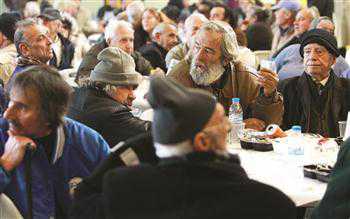
    Homeless people sit at tables during a New Year’s meal in Athens Jan 1. Greek jobseekers are looking for work in cities like Istanbul. This happens during hard times, like the emigration process after the World War II, says Triantaphyllou. REUTERS photo
    Homeless people sit at tables during a New Year’s meal in Athens Jan 1. Greek jobseekers are looking for work in cities like Istanbul. This happens during hard times, like the emigration process after the World War II, says Triantaphyllou. REUTERS photo

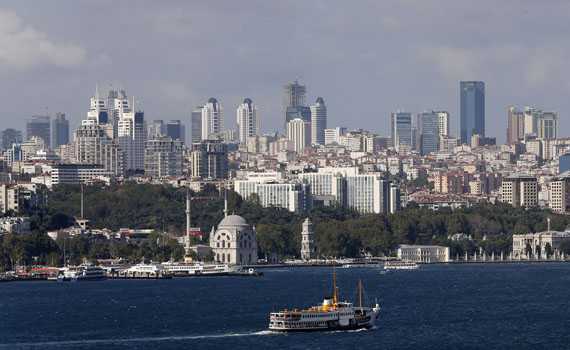
    Turkey – especially Istanbul – stands out as a popular destination for Greeks seeking jobs abroad as Greece suffers a major economic crisis.

    In spite of accusations of “betrayal” by ultra-nationalist Greeks, rapprochement between Turkey and Greece is resulting in increased political, economic and social benefits for both sides, Assistant Professor Dimitris Triantaphyllou, Director of the Center for International and European Studies (CIES) at Kadir Has University, told the Daily News.

    Some 1.2 million people, nearly 10 percent of the population, emigrated from Greece last year, according to recently published statistics in the World Bank’s “The Migration and Remittances Factbook 2011.”

    Triantaphyllou, who came from Athens to Istanbul more than a year ago before Greece was hit hard by the economic crisis, said not only single, educated, young people were leaving Greece, but even some families had begun to emigrate.

    “This happens during hard times, like the emigration process after the Second World War,” he said.

    According to Triantaphyllou the peaceful atmosphere between the neighboring countries, for which he gave credit to late İsmail Cem and Georgios Papandreou, is a major factor in Greeks’ preference of coming to Turkey.

    Psychologist Odysseas Voutsinas moved from Athens to Istanbul last month. Voutsinas was born in Istanbul in 1964 and studied at the Özel Fener Rum Erkek Lisesi before moving to Athens with his family. In the 1960s Turkish-Greek relations were strained over the Cyprus issue, so many Greeks left the country because of the high tension.

    Voutsinas studied social services and psychology in the University of Athens and worked in Greece for 30 years, but he said that he always had the idea of “returning” on his mind.

    ‘Hard to leave, hard to come back’

    Last year he decided to come back. “It was hard to leave Turkey, but it was hard to come back too. The crisis in Greece was maybe a chance for the ones who wanted to come back to Istanbul.”

    Voutsinas said the patriarchate and the Greek community welcomed the newcomers just like the locals did.

    Fouli Koti, 25, came to Istanbul three months ago from Thessaloniki. “I am afraid that the Greek economy is going to get worse. My friends also do not have hope for the near future. They want to leave as well,” she said.

    Koti was working as a manager for a Vodafone franchise store in Thessaloniki. She said that one year ago there were more than 30 stores, but only two remain open in the city. She decided to come to Turkey after a call from her childhood friend Apostolos, who had been living in Istanbul for one year. Koti moved to Istanbul and began working in the customer service department of an international oil company.

    “I wanted to take a risk and have a ‘Turkey adventure,’ but I must say I am disappointed in some ways,” she said. “I was living in one of the most popular districts in Thessaloniki and I was paying 340 euros for a big house of my own. Now I live in the central European side of Istanbul and pay the same amount for a small room in a shared house.”

    January/09/2012

    via LABOR – Jobseekers from Greece try chances in Istanbul.