Riots have broken out in several Greek cities after police shot dead a teenage boy in the capital Athens, in the Mediterranean nation’s worst civil disturbances in years.
The rioting began in Athens on Saturday soon after the shooting in the central Exarchia district, where youths threw petrol bombs at police, burned dozens of cars and smashed shop windows.
It quickly spread to Greece’s second largest city of Thessaloniki and other towns in northern Greece.
Cities on the holiday islands of Crete and Corfu also saw protests at the shooting, which prompted Interior Minister Prokopis Pavlopoulos to offer his resignation.
Prime Minister Costas Karamanlis, whose fragile government has been rocked by a series of scandals, rejected it, a ministry spokeswoman said.
“On behalf of the government and the prime minister, I express sorrow for the incident and especially the death of the young boy,” Pavlopoulos said.
“An investigation to clarify the incident has already begun. There will be an exemplary punishment and, above all, measures will be taken so that this will never be repeated.”
Two police officers were arrested and being questioned over the incident, according to a police statement.
The officers said their patrol car had been attacked by 30 youths throwing stones and other objects. When they attempted to arrest the youths, they were attacked again and one of the officers fired three shots, killing the boy, the statement said.
It was the first time since 1985 that police have killed a minor in Greece, a police spokesman said. A hospital official said the boy was 15 years old.
After the collapse of USSR, necessaries of new states were that economic, politic, military and educational relations with each other and other international platforms and countries. On that way all former Soviet countries created Commonwealth of Independence States union. With creation of CIS, these countries which were unificated on old Soviet map will create new relations on the new world system. Also for regulating new systems, geopolitical situation was very important. Firstly a state can create strong relations where it was near another state.
If we describe relations between Turkey and Azerbaijan, we will see influence of border factor. Strong relations of Turkey with Azerbaijan are result of near abroad condition.
Cooperations of Turkey and Azerbaijan had been decreased sometimes. But it ended in new powerful authorities.
Pro Russian politics of Ayaz Muttalibov influenced Turkish relations as only embassy found. In short time of Muttalibov administrative Turkey was working to make new perspective for other Turkish countries.
Ebulfez Elchibey who came to power after Muttalibov followed new way Pro Turkish politics as opposite to Muttalibov. So many agreements had been created in economy, military, education, energy, politics and new activities started. First military cooperations between Azerbaijan and Turkey borned in that time.
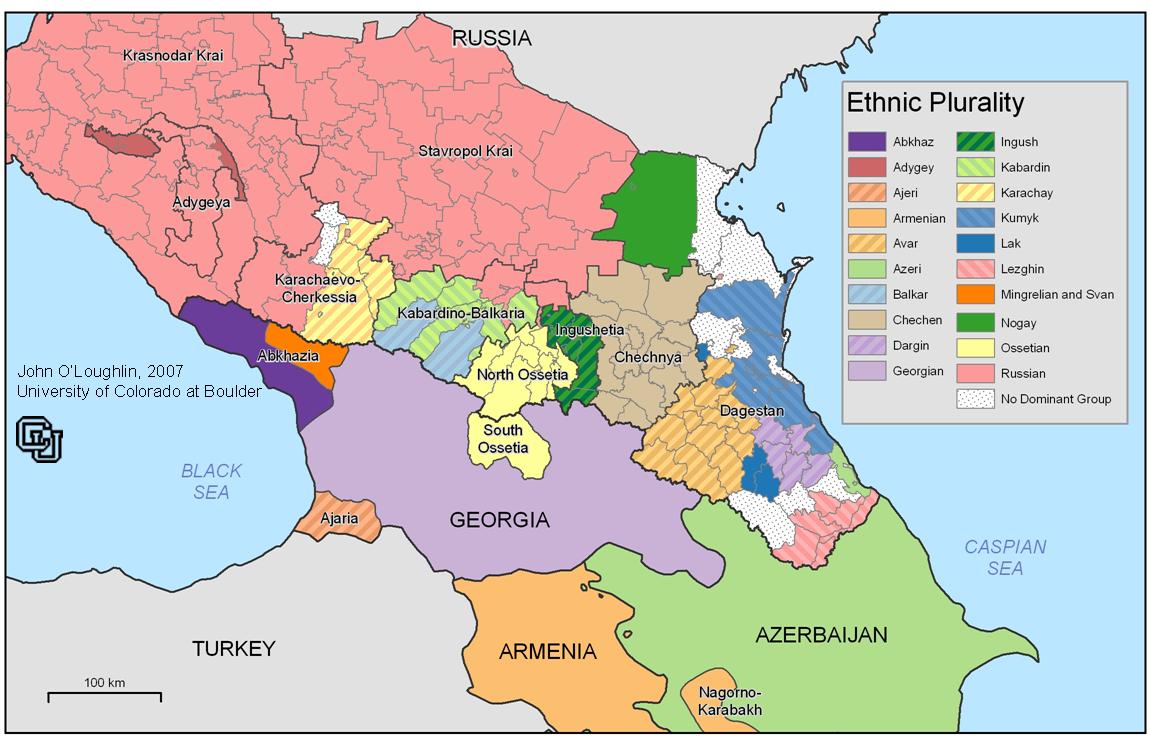
In 1992 military education agreement signed between Azerbaijani and Turkish government. In this period Azerbaijan was working to create international pressure circumstances on Armenia about Nagorno Karabakh conflict. So military agreements with Turkey, created new tensions in this region. We can say a diminish symbol with Russia as military.
Military conventions were less than next years in new political actions to make strong authority and balanced actions period. Haydar Aliyev’s balance political way made a cooperation as pragmatist mind of Azerbaijan. We will see importance of Turkish military agreements. Because if Azerbaijan want to be important actor on this region, it should regulate new relations for the USA and NATO via Turkey.
In 1996 between the government of the Republic of Azerbaijan and the government of the Republic of Turkey on base of cooperation of staff members of supporting service of Armed Forces protocol signed.
In 1997 between the government of the Republic of Azerbaijan and the government of the Republic of Turkey on regulation of civil and military flying in 10 km of astride Azerbaijan-Turkey border protocol signed.
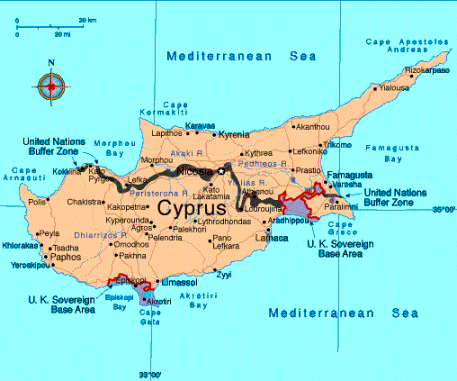
In that time agreements of Azerbaijan with Iran and Russia were targeting only friendship situation and solve problems on bounds And agreements with the USA were not totally military cooperations. It is important to not forget that Russian embargo on Azerbaijan because of Chechen problem increased Turkish inclination on military subjects. Strong relations with Turkey of Azerbaijan will create new diplomatical positions from Cyprus to Yerevan.
Military positions as international importance of Azerbaijan borned with agreement between the government of the Republic of Azerbaijan and the government of the Republic of Turkey on activities of platoon of Azerbaijan is going to the Kosovo in the staff of Turkey battalion.
Azerbaijan will keep its soldiers untill period of independence of Kosovo. With this step Azerbaijan became an important and strategical country on extend to East policy of NATO. Azerbaijan won a good position on Caucasus region with taking some other militaryal duties via Turkey in different countries.
In 2000 between the Ministry of defense of the Republic of Azerbaijan and Head of Naval Forces of Republic of Turkey about giving the attack launch of AB-34 P-134 to the Azerbaijan protocol signed and :
– Protocol between the Ministry of defense of the Republic of Azerbaijan and Ministry of national security of Republic of Turkey on cooperation in the topographical area,
– Protocol between the Republic of Azerbaijan and the Republic of Turkey on forming and training of profession school of forces kind of Baku,
– Protocol between the Ministry of defense of the Republic of Azerbaijan and the General Staff of the Republic of Turkey on carrying out of the material and technical purchasing,
– Agreement between the government of the Republic of Azerbaijan and the government of the Republic of Turkey on military industry cooperation signed.
In 2001 between the Ministry of Defense of the Republic of Azerbaijan and the General Staff of the Republic of Turkey on development of Nakhchivan 5th army protocol;
In 2002 Ministry of defense of the Republic of Azerbaijan and the General Staff of the Republic of Turkey on cooperation in the area of war history, military archive and museum work and military publication protocol and in 2003 between the government of the Republic of Azerbaijan and the government of the Republic of on training, material and technical assistance of State Border Service of Azerbaijan by Armed Forces of Turkey and Protocol between Azerbaijan, Georgia and Turkey on cooperation in the safety of the West-East energy corridor protocol signed.
Since 1999 Azerbaijan took steps quickly. As opposite to Azerbaijan and Turkey, Armenia and Greece signed an agreement as “Send Armenian soldiers to Kosovo via Greek army”. Armenian parliament agreed this on 13 December 2003. According to this agreement 30 Armenian soldiers had gone to Kosovo with ratification of Ministry of Defence of Armenia. It had been explained as to support European-Atlantic integration on South Caucasus. Against to modernization of Azerbaijan by Turkish Military Forces, Greece take a decision to support to Armenian army. Also military cooperations created influences on political problems. In that time mix circumstances about these events will share a balance of situations on energy and trade agreements.
After the September 11 terrorist acts, Azerbaijan supported the decision of counter attack to terrorism of the USA. So it sent some peacekeepers to Afghanistan and opened air space for American forces. These actions share Turkish support and modernisation to Azerbaijani army. Azerbaijan use this experiment to be main actor in the region.
In 2004 and 2005 between the government of the Republic of Azerbaijan and the government of the Republic of Turkey on long-term economical and military cooperation and between the Ministry of Defense of the Republic of Azerbaijan and the General Staff of the Republic of Turkey on application of the financial aid protocol signed.
And in 2006 between the Ministry of Defense of the Republic of Azerbaijan and the General Staff of the Republic of Turkey on application of material and technical provision protocol shared new improvements of new actor.
Since 2006 new approaches regulated cooperations with other states :
– Supports of Azerbaijan to Turkish Republic of Northern Cyprus,
– Turkey purchases rockets from the USA,
– New relations of Georgia, Azerbaijan and Turkey as result of alternative energy way against to Russia.
Same year new circumstances created balance regulations for Azerbaijan with agreement of natural gas project with Greece. It was political and militaryal goal of Azerbaijan because Yerevan loosed its good militaryal and political relations with Greece. So it must choose a new way as balance politics.
There is a balance activities with military cooperations of Azerbaijani relations from the independence time. Pro Turkish military activities regulated international perspective on problems of Azerbaijan. Example, mainly Azerbaijan use Cyprus card about Greek support to Armenia. And also it used totally the USA and NATO supports and created new politics as alternative to Russia. We can say thay experiments of Elchibey’s totally Pro Turkish politics and Aliyev’s balance politics which agree all region as a whole will regulate positions of Caucasus region.
Washington, D.C.- The National Coordinated Effort of Hellenes (CEH) released an analysis of how the U.S. Congress changed, following the elections on November 4, particularly with regard to Greece and Cyprus’ top advocates (and detractors) and how Hellenic and Orthodox issues may be handled differently with the new line-up.While a number of our strongest supporters seemed vulnerable to being defeated, including those on the key Committees and Subcommittees that handle U.S. policy toward Cyprus, almost all were re-elected. As well, of the over 59 Members of Congress and 10 Senators who will not be in office next year (because they were defeated, elected to another office or are retiring), very few were strong supporters. In fact, a vast majority had not been engaged in Hellenic and Orthodox issues at all. In the end, the greatest determinant of how Hellenic and Orthodox issues may be handled differently in the 111th Congress (2009 – 2010) will be who are the Chairmen, Ranking Members, and Members of the key Committees and Subcommittees that handle the Cyprus issue. These changes are just beginning and won’t be finalized until December or later. All six “Greek-Americans” in the House and Senate will remain. Greek-Americans Gus Bilirakis (R-FL), John Sarbanes (D-MD) and Zack Space (D-OH) were re-elected, with 63%, 70% and 60% of the vote, respectively. At the beginning of this election cycle, Congressman Space was one of the top three Members of Congress targeted by the Republican party to defeat, as he was elected in a traditionally Republican district. However, he ran an excellent campaign and won by a wide margin. Congresswoman Shelley Berkley (D-NV), whose family is from the Jewish Community of Thessaloniki, Greece, was re-elected with 68% of the vote. Greek Orthodox Christian, and wife of a former Greek-American Senator and Presidential candidate, Niki Tsongas (D-MA), was re-elected, running unopposed. In the U.S. Senate, Greek-American Senator Olympia Snowe (R-ME) was not up for re-election (and will not be so until 2012).
And there will be two new “Greek-Americans” in the 111th Congress. Greek-American Dina Titus (D-NV), for whom Senate Majority Leader Harry Reid (D-NV) and Congresswoman Berkley campaigned very hard, won with 47% of the vote over 5 other challengers, the closest of whom was incumbent Congressman Jon Porter who received 42% of the vote. Dina’s grandfather, Arthur Costandinos Cathones, after whom she is named, came to America in 1911. As well, Suzanne Kosmas (D-FL) defeated Congressman Tom Feeney 57% to 41%. While Suzanne is not Greek, her ex-husband, with whom she had four children and still keeps in touch, is.
Two other “Greek-Americans” were unsuccessful in their run for Congress. Greek-American Jim Trakas (R-OH) lost to Congressman Dennis Kucinich (D-OH) 57% to 39% and Jane Mitakides (D-OH), who is married to a Greek-American, lost to Congressman Michael Turner (R-OH) 64% to 36%.
Other Strong Supporters
Just weeks before the election, four of our top supporters (who had “A+” grades for their support of our issues) were on the list of the top 25 most likely Republican Members of Congress to lose. Three of them survived. Lincoln Diaz-Balart (R-FL) and Mario Diaz-Balart (R-FL) won with 58% and 53% of the vote, respectively. And, Congressman Henry Brown (R-SC) won with 54% of the vote. Unfortunately, Congressman Joe Knollenberg (R-MI), who was also a member of the crucial House Foreign Operations Appropriations Subcommittee, was defeated 52% to 43%.
Two other advocates who play a crucial role in the formulation of U.S. foreign policy toward Cyprus, Greece and Turkey, were soundly re-elected despite being considered vulnerable in recent months. House Foreign Affairs Committee Ranking Member Ileana Ros-Lehtinen (R-FL) won with 58%. Chairman of the House Europe Subcommittee, Congressman Robert Wexler (D-FL), won with 66% of the vote, against two opponents. While Chairman Wexler is the founder and co-chair of the Congressional Caucus on Turkish Issues, he has also engaged the Greek-American community and has taken a positive step on all of the major Hellenic and Orthodox issues.
The most significant change, from the Congressional perspective only, will be the loss of Senator Joe Biden (D-DE), who was elected as Vice President of the United States. Senator Biden’s advocacy for Hellenic and Orthodox issues is legendary. After former Senator Paul Sarbanes and current Senators Bob Menendez and Hellene Olympia Snowe, no one in the Senate surpasses Joe Biden, Chairman of the Senate Foreign Relations Committee, in terms of advocacy for our issues. As well, the loss in the U.S. Senate of Senator Barack Obama (D-IL), who was elected President of the United States, and was the Chairman of the Senate European Affairs Subcommittee, will be significant. Obviously, the movement of these Senators into the positions of President and Vice President will enable them to have an even more profound impact on our issues.
In addition, five other Republican Senators with “B+” grades for their support of Hellenic and Orthodox issues, will not be serving in the 111th Congress. This is somewhat significant, as far fewer Republican Senators have been supportive. Senators Gordon Smith (R-OR) and John Sununu (R-NH) were defeated, and Senators Chuck Hagel (R-NE), Pete Domenici (R-NM) and John Warner (R-VA) retired.
Key Committees and Subcommittees
While the Chairman, Ranking Members and Members of the key Committees and Subcommittees that handle U.S. policy toward Cyprus, Greece and Turkey will not be finalized until next month, if not later, there are some significant changes already.
As mentioned earlier, in the Senate the Chairman of both the Senate Foreign Relations Committee and the Senate European Affairs Subcommittee will be new. Also, there will likely be several open slots to fill on that full Committee. As well, in the Senate, Turkey’s number one advocate, Senator Robert Byrd (D-WV), recently agreed to step down as Chairman of the powerful Senate Appropriations Committee.
The Norwegian research ship Malene Ostervold has sent a message informing that it has stopped its research operations in the sea region southeast of the island of Kastelorizo.
Foreign Ministry spokesman George Koumoutsakos said in an announcement on Saturday that as of Friday, November 14, the Norwegian research ship “Malene Ostervold” had entered the region of the southeastern Mediterranean and more specifically, to the south and to the east of Kastelorizo to carry out, outside Greek territorial waters, geophysical research for Turkish interests, accompanied by the Turkish frigate “Gediz.”
“Given that according to the relevant provisions of the International Agreement on Sea Law, a large part of this region includes the Greek continental shelf, the Foreign Ministry, in constant contact and coordination with the Defence Ministry, has made demarches as of yesterday to the Norwegian ambassador and to the Turkish ambassador in Athens, as well as to the Turkish Foreign Ministry in Ankara, at the level of Assistant Deputy Foreign Minister,” Koumoutsakos said.
The spokesman further said that “at noon today, Foreign Minister Dora Bakoyannis communicated with Norwegian Foreign Minister Jonas Stere” and that “apart from this and following relevant instructions by the minister, the Greek ambassador in Oslo communicated with the shipping company owning the Norwegian research ship to notify it of Greece’s relevant positions.”
Koumoutsakos also said that a short while ago “the Norwegian research ship informed with a relevant message that it is stopping research activities in the specific region.”
The National Defence General Staff also announced that the Norwegian ship “Malene Ostervold” informed the gunboat “Polemistis” that it was stopping its research operations.
The argument over rights within Jerusalem’s Church of the Holy Sepulchre is as complicated and seemingly intractable as the Middle East conflict itself.
But when the dispute descends into violence, battles are pitched with crucifixes and staves rather than missiles, guns and stones.
Many Christians believe the church in the heart of Jerusalem’s old city marks the place of Jesus Christ’s death, burial and resurrection. As such, it is arguably Christianity’s holiest site.
A church has stood in the area for 1,700 years. Due to the conflicts that Jerusalem has since endured, the building has been partly destroyed, rebuilt and renovated several times.
a diagram of the church
It is now a labyrinthine complex of chapels and living quarters that is visited by hundreds of thousands of pilgrims and tourists every year.
“Caught On Tape:” What began as an annual procession by Christian monksat the Church Of The Holy Sepulchre, ended in a flurry of punches. The church is believed to be the site of Jesus’ crucifixion.
The church is grudgingly shared by six claimant communities – Roman Catholic, Greek Orthodox, Armenian Orthodox, Syrian Orthodox, Egyptian Copt and Ethiopian Orthodox – who have always jealously defended their rights over various parts of the complex.
Rivalry between the groups dates back to the aftermath of the crusades and to the great schism between Eastern and Western Christianity in the 11th Century.
The Status Quo
So intense is the intra-Christian dispute that the six communities cannot agree which of them should have a key to the site’s main door.
Consequently, two Muslim families have been the sole guardians of the 25cm (10 inch) key since they were entrusted with the task by the Muslim ruler Saladin in 1178.
One family is responsible for unlocking the door each morning and locking it each night, while the other is responsible for its safekeeping at all other times.
In order to settle disputes, the Ottoman sultan issued a 1757 edict (now referred to as the Status Quo agreement) which outlined jurisdiction over Jerusalem’s various Christian holy places.
Regarding the Holy Sepulchre, it defined exactly which parts – from chapel, to lamp, to flagstone – of the complex were to be controlled by which denomination.
The ruling forbad any changes in designated religious sites without permission from the ruling government.
It also prohibited any changes whatsoever to designated sacred areas – from building, to structural repairs to cleaning – unless collectively agreed upon by the respective “tenants” from the rival religious communities.
Punishment for a violation of the edict could result in the confiscation of properties overseen by the offending group.
So closely is the ruling followed that it took 17 years of debate before an agreement was reached to paint the church’s main dome in 1995.
Acrimonious processions
Monks and friars have been known to exchange blows over who owns a chapel or whose right it is to clean which step.
Religious ceremonies can appear more like singing contests with communities battling to chant the loudest.
Monks inside the church are fiercely protective about their rights
Access to the tomb of Christ – a pale pink kiosk punctuated with portholes and supported by scaffolding that the writer Robert Byron compared to a steam-engine – is particularly fiercely guarded on such occasions.
Processions on holy days regularly become acrimonious, with jostling crowds exacerbating tensions over territorial disputes that periodically descend into in punch-ups.
The smallest slight can end in violence: In 2004, a door to the Roman Catholic chapel was left open during a Greek Orthodox ceremony.
This was perceived by the Greeks to be a sign of disrespect, and a fight broke out which resulted in several arrests.
The intractable nature of the territorial arguments over the site are epitomised by the short wooden ladder that rests on a ledge above the church’s main entrance.
It has been there since the 19th Century because rival groups cannot agree who has the right to take it down.
Under the Status Quo agreement, rights to the windows reached by the ladder belong to the Armenians, but the ledge below is controlled by the Greeks.
Roof falling in?
Also emblematic of the territorial dispute’s intensity is an ongoing row which, unless resolved, could see the church’s roof collapse.
Ethiopians were banished from the church’s interior by the sultan two centuries years ago because they could not pay the necessary taxes, and have been living in a monastery on the roof ever since.
The huts of Deir al-Sultan are at the heart of an ongoing row
The monastery, Deir al-Sultan, now comprises two chapels, an open courtyard, service and storage rooms and a series of tiny huts inhabited by Ethiopian monks. It is reminiscent of a basic African village.
All agree the monastery is in poor shape, but a recent Israeli report said it had reached an “emergency state”, and was at risk of collapsing through the roof into the church.
Israel has said it will pay for the repairs if the Christians can reach agreement on them, but this seems unlikely, due to a long-running ownership dispute between Ethiopian monks and their Egyptian counterparts.
Over the years, this dispute has been played out on various battlefields, including Israel’s highest courts.
So intense has the argument become that when a monk moved a chair out of the sunshine into a shadier area during a heat-wave six years ago, his action was seen as an attempted land-grab.
A fight broke out that left several monks needing hospital treatment.
Such skirmishes may seem nonsensical, but are all too common an occurrence at Christianity’s most revered shrine.
Greek Foreign Minister Dora Bakoyannis said here Friday in a meeting with IRI Ambassador to Athens
that her country is determined to expand comprehensive ties with Iran.
According to IRNA correspondent in Athens, Bakoyannis added in her meeting with Mahdi Honardoust, “I am pleased with the results of the recent visit of the secretary General of the Greek Ministry of Foreign Affairs to Tehran and in near future the secretary general of Greek’s International Economic Affairs Office, too, would visit Iran to survey possibilities for broader economic cooperation with Tehran, articularly at energy field.”
Pointing out the two centuries’ old relations, she reiterated, “As I have promised to the Minister of Foreign Affairs of the Islamic Republic of Iran, Manouchehr Mottaki, I myself, too, would visit Tehran at my earliest convenience”
The Greek foreign minster meanwhile referring to the warm and friendly feelings of the Greek nation towards the Iranians, said, “It would be my great pleasure to meet in person with the Iranian nation and officials, who are highly respected by our nation.”
She further emphasized, “Greece has always had a positive approach and a feeling of proximity towards the Iranian history and culture.” Honardoust, too, during the meeting considered the amicable feelings of the two nations towards one another and the regular visits of the two countries’ officials as positive factors at the service of broadening the range of bilateral cooperation, particularly in the fields of tourism and energy.
Our country’s ambassador to Athens added, “The Islamic Republic of Iran is ready for cooperation with Greece in the fields of mutual interest, as well as cooperation at important regional and international scenes.”
The Iranian diplomat said, “Increasing the two countries’ trade volume and the diplomatic relations aimed at comprehensive development of the two countries’ relations and are obvious signs for both countries’ determination for boosting bilateral ties.”
Honardoust meanwhile referred to the existing potentials for transfer of energy from Iran to Europe through Greece, arguing, “Iran and Greece can in order to define a new framework for cooperation, upgrade the ceiling of their relations to the highest possible level.” -IRNA