Category: Greece

  • The Athenian Press on the Asia Minor Crisis

    The Athenian Press on the Asia Minor Crisis

    From: Georgia Eglezou <[email protected]>
    List Editor: Mark Stein <[email protected]>
    Editor’s Subject: H-TURK: New Book [G Eglezou]
    Author’s Subject: H-TURK: New Book [G Eglezou]
    Date Written: Tue, 3 Mar 2009 09:40:44 -0500
    Date Posted: Tue, 3 Mar 2009 09:40:44 -0500

    Dear members,
    
    I would like to inform you about the publication of my new book:
    
    Georgia EGLEZOU, The Greek Media in World War I and its Aftermath: The Athenian
    Press on the Asia Minor Crisis
    
    Book details
    Hardcover: 288 pages
    Publisher: I B Tauris & Co Ltd (5 Feb 2009)
    Language English
    ISBN-10: 1845117875
    ISBN-13: 978-1845117870
    Book Dimensions: 21.8 x 14.4 x 2.8 cm
    
    Summary
    The Asia Minor Campaign remains one of the most disastrous episodes of modern
    Greek history. The retreat of the Greek army after being routed by Turkish
    nationalist forces in Anatolia in 1922 was a catastrophic event. Yet, as this
    study of Athenian newspapers from 1919 to 1922 makes apparent, the bulk of the
    Greek press created the illusion that all was well at the front and hid the
    reality of impending disaster. Here Eglezou presents these familiar events
    through a dramatic new perspective: the role and content of the Athenian press
    as a means of propaganda. The reporting of the pro- and anti-government press
    is closely rendered to provide fascinating insights into why a delusory policy
    was pursued to the bitter end. With a comprehensive account of the Campaign,
    Eglezou adds a new dimension to our understanding of the history of modern
    Greece, as well as the relationship between the press and politics more
    generally.
    
    Dr Georgia Eglezou
    Media School
    Bournemouth University
  • Cyprus Dimension of Turkish Foreign Policy

    Cyprus Dimension of Turkish Foreign Policy

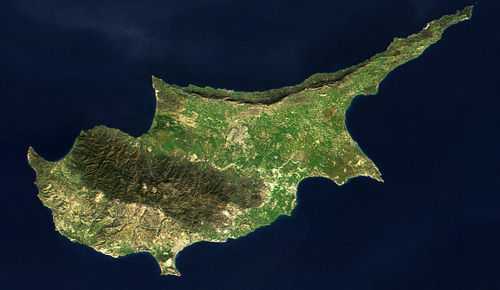
    Cyprus that is located in Eastern Mediterranean has a great strategic importance for European countries as much as other North Africa and Middle East have. Sovereign states made big wars especially to keep the artery of commerce under control and the island was occupied by so many forces throughout the history. (more…)

  • Greek riots signal troubled future for Europe

    Greek riots signal troubled future for Europe

    WASHINGTON, Dec. 11 (UPI) — Cleanup teams started work on repairing an estimated $300 million worth of damage in Athens Thursday, but as Greece still simmered from its worst riots in 40 years, fears grew around Europe that the violence may be a sign of the shape of things to come.

    For the first time since last Saturday, life seemed to be returning to normal in the capital, but there were reports of high school students joining the violence and demonstrating outside police stations across the country.

    Sympathy demonstrations in Madrid and Barcelona also turned violent.

    The riots centered on the central Athens district of Exarchia. They were set off last Saturday when two police officers dealing with a gang of youths shot a 15-year-old boy dead. A lawyer representing the two police officers Thursday said forensic examination showed the fatal bullet was badly deformed, indicating it had hit the teenager only after ricocheting off another surface.

    The government of Prime Minister Kostas Karamanlis has responded to the riots with a textbook case of weakness, delays and appeasement.

    Karamanlis was badly discredited, to begin with, following major corruption scandals that forced the resignation of two senior ministers, and his party is hanging onto power in the Greek Parliament by a majority of only a single vote.

    The government failed to rush in sufficient police and troops to smother the protests in Athens after the first days of disturbances, and as a result scores of banks and department stores in Exarchia were rapidly reduced to burned-out hulks. The Athens Trade Association estimated the total cost to the national economy of the destructive attacks around the country to be as high as $1.3 billion.

    Greece is no stranger to fiery national protests, but the extent and fierceness of the rioting and the damage it has caused are unprecedented in the country for at least 40 years.

    As was the case in the U.S. inner-city riots of the 1960s, pundits, politicians and self-proclaimed “experts” have offered as many explanations, causes and even justifications for the riots as there are stars in the sky.

    Greek commentators have described the protests as an eruption of anger by the “600 euro a month” people — members of the Greek underclass who earn only that amount or less. Anti-immigration campaigners have even claimed that Islamic activists were involved in stirring up the violence, though the evidence for that seems almost non-existent at the moment.

    Students were certainly involved. One major question, therefore, is whether these riots were just sparked by anger at the economic downturn in Greece, or whether they set off a continent-wide fashionable season of protest leading to more widespread violence across other nations of the 27-nation European Union.

    Greece is one of 15 nations in the EU that have the euro as their common currency. Slovakia is scheduled to become the 16th nation to join the eurozone on Jan. 1.

    But the global economic crisis has hit the smaller, more vulnerable nations of the European Union like Greece, Ireland and Belgium very hard. And the common euro currency has deprived the national governments in Athens, Dublin and Brussels of their old economic safety valve of devaluing their local currencies.

    The euro, in fact, has become a trap for such smaller and more financially exposed European nations. To pull out of the common currency now would risk triggering a full-scale banking crisis and economic meltdown in any of them.

    The Greek riots are certainly not unprecedented in recent European affairs. France has suffered far more violent and widespread mob violence in widespread clashes with gangs of immigrant youths who for months at a time made vast poor neighborhoods around Paris and other cities virtual no-go areas for the police.

    But the Greek riots are noteworthy because they are the first widespread expression of urban anger in Europe since the global financial crisis erupted out of the Wall Street financial meltdown in September. The central role of the students also recalls the destabilizing role a large, overeducated but impractical and underemployed student population played in the fierce anti-American riots that swept Europe 40 years ago.

    American and European intelligence and senior police officers have privately expressed concern for many years that the combination of low economic growth and generous, perpetual welfare benefits in many European countries was creating an angry, alienated subclass that could turn resentful and hostile to public safety and responsibility, especially when economic times turned tough.

    The violence across Greece suggests those fears may be tested very soon.

  • THE FUTURE OF TURKEY?

    THE FUTURE OF TURKEY?

    Ramday Javed Iqbal (lead)

    Alistair Corbett

    October 2008


    The Royal College of Defence Studies


    RCDS 2008 – CONTEMPORARY STRATEGIC ISSUES

    Key Judgements

    Turkey is likely to internally consolidate its democracy, resolve conflict between secularism and political Islam and sustain economic growth. Some tension between democratic forces and secular elite will remain.


    The Kurdish problem will slightly ease up due to mitigating internal political developments but essentially stay frozen due to external regional situation.

    While Turkey-EU dialogue will continue, Turkey is likely to face continuous hurdles in securing full membership of the EU, in the foreseeable future.

    Turkey’s position as a hub of energy pipelines linking Caspian Sea with Europe will increase its importance to EU for its energy security.

    In view of the efforts at resolution of Cyprus issue the likelihood of its settlement has increased.

    The EU attitude towards Turkish membership, Russian reassertiveness in her “near abroad”, the stability and orientation of the Persian Gulf region, Chinese influence in Central and West Asia and the orientation of the future Iraq will determine Turkey’s role as regional power.


    Discussion

    Having lost an empire Turkey has been trying to find its soul for a century. Internally, it decided to make a break with the imperial past by opting for a harsh form of western secularism. Economy remained on the rocks. Turkish nationalism was brittle and paranoid. Externally, problems with Greece persisted even as both had membership of NATO. The twenty first century has begun with changes in the internal and external scene for Turkey. How Turkey perceives threats and opportunities in the new environment will dictate the future of Turkey. This paper essentially follows and examines dominant factors to draw relevant conclusions and reach key judgments.


    Secularism vs Political Islam. In recent years the long drawn battle between secularism and political Islam has come to the fore. Although Justice and Development Party (AKP) is not yet clearly out of the woods the tide of political legitimacy seems to be turning in favor of democratic forces. The military and judiciary seem to have realized that, political space will have to be conceded to democratic forces particularly when it brings along economic prosperity, keeps Turkey on track for EU membership and safeguards the security interests. Slowly, and due to EU membership requirements, the democratic culture will mature in the mid-term.

    Economy. After the shock of 2001, Turkey embarked upon macro institutional reforms opening up the economy, within the framework of an IMF programme. As a result, Turkish economy has witnessed sustained and robust growth. The current global financial crises will impact Turkey less than others. Having received the dividends it is unlikely that any government will reverse course.

    Kurds. No other security issue has engaged the Turkish mind and energies as the Kurdish problem. The broader issue is not the PKK but Kurdish independence. The US invasion of Iraq and resultant autonomy for the Kurds in the north has raised the spectre of an independent or autonomous Kurd region with Kirkuk oil wealth. This could further create a pull on the Turkish Kurds. In the past, Turkish response to the challenge has been brutal suppression of any Kurdish cultural or political expression. Recently, in addition to military operations the AKP government has slightly eased the political environment. While this may work, the external regional linkages are likely to strain the Turkish restraint in the foreseeable future. The issue will continue to dog Turkish governments for at least another generation.

    EU. The AKP government has undertaken several political, legal and economic reforms to prepare itself for EU membership. It has also maintained a steady political course for securing membership. Meanwhile, it has made reasonable economic progress, remains important to European energy security and made moves to reduce the baggage of its Cyprus issue. On the EU side however, still there are significant historical, religious and psychological barriers to Turkish entry in to the club. In the mid-term this could change. However, this is not, and will not be a settled issue till at least 2015. Eventually, Turkey may choose to be a beneficiary of EU “variable geometry” (ie not a full member but economically integrated while independently sovereign). Turkey will certainly continue to seek markets and allies to the east also.

    US and NATO. Increasingly, Turkey’s anchors to the west are drifting or are under strain. NATO, for decades the bedrock of Turkey’s western identity, particularly for its influential military, has lost lustre. Despite laudable garden-tending by senior officials on both sides, US-Turkish relations have not recovered the depth and breadth they had in the 1990’s. This is happening at a time when Middle East, West Asia, Central Asia and Caucasus are transforming and Turkey’s relevance to the US is increasingly going to come to the fore. Recently, in the wake of August war in Georgia, Turkey has opposed introduction of NATO forces in to the Black Sea. While a dramatic NATO split is not envisaged, in the future the alliance will come under strain.

    Greece and Cyprus. Turkey – Greece rivalry goes back several centuries. However, starting in 1999, the earthquake diplomacy has helped thaw the relations and Greece has supported Turkey’s candidacy for EU membership. Meanwhile, Greek Cyprus has joined the EU – granting Nicosia a veto over all things Turkish. There are efforts at hand to resolve the Cyprus issue. Should they succeed, they will free Turkey from a significant burden and improve her chances for the EU membership as well. 

    Conclusions


    Turkey is the heir to the Ottoman Empire, which at various points dominated the eastern Mediterranean, North Africa, the Balkans, the Arabian Peninsula, and the Black Sea region until it met the expanding Russian empire. Its collapse after WW-I created an oddity – an inward looking state in Asia Minor. It sat out 20th century or allowed its strategic space to be used. The situation has changed dramatically.


    Turkey is at a critical stage in its quest for a democratic political dispensation and economic upswing. The road ahead remains rocky. However, the signs indicate that Turkey will most likely stay the course and internal stability will lead to its increased potential for playing a regional role.

    Turkey has quietly emerged as the prize in a new great game over who will develop and bring to the EU / world markets the vast oil and gas resources of the Central Asian states. Turkey will in the years ahead become one of the world’s major energy hubs, supplied by the pipelines which will crisscross Anatolia. It will depend on US and EU as to where those lines run and whose products pass through those lines.

    Turkey’s EU project faces a hopeful but uncertain future. The relevance of NATO has dimmed. The US nexus has fallen victim to the US invasion of Iraq and support for the Iraqi Kurds. Yet, all this happens at a time when Turkey is rising and in the future the West’s need for Turkey will increase. The strategic spaces around Turkey are all in turmoil. They have also been traditional areas of Turkish influence. Turkey will inevitably attempt to influence these spaces. How and to whose advantage this happens will depend as much on US / EU, as on Turkey.


    Ramday Javed Iqbal (lead)

    Alistair Corbett

  • Greece to appear ‘sick man’ at EU summit

    Greece to appear ‘sick man’ at EU summit

    Outbreaks of street violence in Greece reminiscent of France’s May ’68 events mean the Mediterranean country will appear to be ‘the sick man of Europe’ at an EU summit starting in Brussels today (11 December).

    Greece’s image as a holiday paradise was recently shattered as thousands of mainly young demonstrators marched through the capital Athens and clashed with the police, setting up barricades and leaving behind looted shops and burned cars. Clashes also broke out in Thessaloniki and Kavala, north of Athens. 

    The protests were sparked by what now appears to be the accidental shooting by police on 6 December of 15-year old Alexandros Grigoropoulos, in a Roma suburb of Athens. Lawyers for the police are now saying they can prove that the youngster was killed by a ricochet and not a direct shot. 

    Nevertheless, the riots escalated for five consecutive days as authorities struggled to gain control of the situation. The centre-left opposition and trade unions seized the opportunity to expose corruption scandals and the grim economic situation, which they associated with the conservative government of Prime Minister Kostas Karamanlis (in office since 2004). 

    Moreover, a general strike called by the country’s two largest trade unions yesterday paralysed the country, shutting down schools, businesses and public services and leading to the cancellation of flights. 

    The main opposition leader, George Papandreou (PASOK), called on the ruling conservatives to step down and seek a solution through elections to defuse the violence. 

    But Karamanlis has ignored mounting calls for him to resign and call early elections. In a televised address on Tuesday, he blamed the disturbances on the “enemies of democracy”. The prime minister has just a one-seat majority in parliament. 

    A spokesperson said Karamanlis would attend an EU summit in Brussels, set to begin today, as planned. 

  • Macedonia name dispute ‘holds hostage’ EU credibility

    Macedonia name dispute ‘holds hostage’ EU credibility

    ELITSA VUCHEVA 

    Today @ 08:54 CET

    EUOBSERVER / BRUSSELS – Macedonia is ready to start accession talks with the EU and the fact that a 17-year-old dispute with Greece over its name is hindering the process harms not just Skopje, but the EU’s credibility as well, Macedonian foreign minister Antonio Milososki has said.

    This name issue has been “misused by one EU member country,” and this fact is “to a certain extent taking hostage the credibility of the EU” when it comes to establishing and promoting objective membership criteria, Mr Milososki told EUobserver in an interview.

    Alexander of Macedon – often finds himself dragged into the name dispute (Photo: wikipedia)

    Macedonia has been an EU candidate since 2005, but has not yet opened membership negotiations with the 27-nation bloc.

    It had hoped to do so this year, but a European Commission progress report released in November did not recommend to EU member states to launch the process, citing deficiencies in a number of areas, and highlighting violent incidents that took place during this summer’s elections in Macedonia.

    Skopje believes there is another reason behind Brussels’ decision, however.


    “I am not convinced that’s the only reason why Macedonia was not given a chance to open accession negotiations. Maybe there is something that is beyond the reports,” Mr Milososki said, referring to the dispute with Greece over Macedonia’s name – an issue which he said is making his “small country disproportionately more famous worldwide than [its] size.”

    Greece has been refusing to recognise its neighbour’s constitutional name – Republic of Macedonia – since it declared independence from Yugoslavia in 1991, as a northern region in Greece is also called Macedonia and Athens fears allowing Skopje to use the name will open the way to territorial claims. It also believes the appellation is part of its own historical heritage.

    The dispute has been going on for more than 17 years. Meanwhile, the international community has been using Former Yugoslav Republic of Macedonia (FYROM) as a “provisional” term designating the country since 1993.

    Separately, Macedonia’s name has been recognised by some 120 other countries worldwide, including Russia, the US, China, Canada, Turkey, as well as a number of EU states.

    ‘It’s the name,’ says France

    Earlier this year, the deadlock over Macedonia’s name caused Greece to block a NATO invitation to Skopje, and Athens has indicated that its neighbour’s EU integration would also be slowed down as long as the issue is not solved.

    On Monday (8 December), current EU president France said that the unsolved name dispute was clearly Macedonia’s biggest problem at the moment as far as its EU accession process is concerned.

    “The problem of Macedonia, it’s the name,” French foreign minister Bernard Kouchner told journalists after a meeting with his EU counterparts in Brussels.

    “Frankly, you can ask me about visas and about progress [towards the EU], as long as the name issue is not solved, you are knocking on the wrong door. This problem must be solved,” he added.

    After all these years of UN-mediated negotiations between Greece and Macedonia, the situation seems today “very very complicated for such a simple problem,” the French minister concluded.

    For his part, Mr Milososki stressed the EU should help to tone down the issue and not to let it become a criterion for his country to join the EU.

    “We would like this issue to retain its bilateral dimension and not to be Europeanised, because it’s not a dispute with the EU, it’s a dispute with Greece,” Macedonia’s top diplomat said.

    ‘Merit-based’ approach

    Mr Milososki also stressed that despite the reforms his country still has to make in a number of areas, it is already prepared to start EU membership talks.

    “We are aware we are not perfect, but …Macedonia is not less prepared than some other countries – already negotiating or already members of the EU – to open accession negotiations,” he said.

    “[On a] merit-based approach, Macedonia should be considered as soon as possible as the next country opening accession negotiations,” the minister added.

    Skopje is also hoping to obtain visa free travel to the EU as early as next year.

    For its part, Brussels noted that Macedonia had made “good progress” on the visa arrangements and is expected to deliver its assessment on the country’s readiness for visa liberalisation in the “first quarter of 2009.”

    https://euobserver.com/eu-political/27255