Category: Greece

  • Turkey Wants to Put an End to Dogfights with Greece

    Turkey Wants to Put an End to Dogfights with Greece

    An improving dialogue between Turkey and Greece seeks to minimize potential risks over the Aegean by grounding the so-called dog-fighting between the two countries’ militaries and further promoting areas of common interest, the Turkish foreign minister said Friday.

    “We have differing positions with Greece on certain subjects but the way to overcome them is with dialogue. If the dialogue is not enough, then more dialogue. There is no other alternative,” Foreign Minister Ahmet Davutoglu told a small group of journalists in the Central Anatolian province of Konya, where he attended a rally ahead of the Sept. 12 constitutional referendum.

    “Just as the difference in opinions between Turkey and Greece over the Aegean and other areas, we also have areas of common interest. To expand common interests and to minimize differences – this is the objective of our explorative talks,” said Davutoglu.

    The 46th round of exploratory talks between the Turkish and Greek foreign ministries’ diplomats took place in Athens on Friday.

    The foreign minister said the talks focused on overcoming differences over a wide range of issues, including the Aegean disputes, through confidence-building measures that resumed after the Papandreou government took office in Athens after a long break. He said the resumption of talks was complementary to efforts to establish a high-level strategic cooperation council between Turkey and Greece and increase bilateral political consultations.

    Davutoglu said he would visit Greece in the fall, which follows a recent trip to Turkey by Greece’s Alternate Foreign Minister Dimitris Droutsas.

    “Right now there is an optimistic process ahead of us that continues on the basis of bona fide and mutual trust,” Davutoglu said.

    Two Greek F-16 aircrafts crashed Thursday during a dog-fight exercise, a military practice aimed at training Greek jets against interceptions with Turkey over the Aegean. One Greek pilot reportedly died during the exercise.

    Asked if exploratory talks would bring a halt to dogfights over the Aegean, Davutoglu said: “That is our objective. Why are those talks being held? Not just for the sake of meeting but to minimize risks over the Aegean and expand common interest areas. I hope any negativity can be overcome based on good neighborly relations.”

    No unilateral Cyprus step

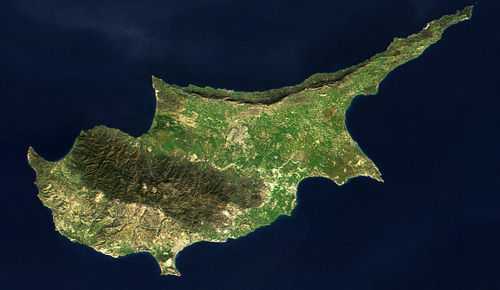
    Another common problem between Turkey and Greece is the decades-old Cyprus dispute. Davutoglu said if Greek Cypriots had voted “yes” for a U.N. blueprint for reunification with the Turks of the island during a 2004 referendum, no Turkish troops would remain on the island now except for a symbolic number of soldiers.

    “No unilateral step should be expected from the Turkish side unless commitments are fulfilled,” he said. “Turkey has taken many progressive steps in the past, but unfortunately neither the European Union nor international actors fairly reciprocated those steps.”

    Davutoglu said the Turkish Cypriot presidency, led by hardliner Dervis Eroglu, was proceeding on negotiations with Greek Cypriots, contrary to what was expected from the new president after the presidential elections in the north in May. The foreign minister also heralded Eroglu’s plan to hold talks in New York in the coming period.

    Referring to U.N. special envoy Alexander Downer’s report, set to be released in November, Davutoglu said, “It is important that Downer set a deadline for November, otherwise negotiations [between the Cypriot leaders] will go on for decades.”

    Meeting with Armenian FM

    Commenting on relations with Armenia, Davutoğlu did not rule out talks with his Armenian counterpart, Edward Nalbandian, on the sidelines of the annual U.N. General Assembly meetings next month.

    “Nothing has been planned yet; there will be plenty of bilateral talks with foreign ministers from other countries,” said Davutoglu. “We have already met with Mr. Nalbandian on a number of occasions. Another meeting may take place in New York, contacts will continue.”

    Two conditions still in place in Israel dispute

    Davutoglu, touching upon the crisis in relations with once-regional-ally Israel due to the deadly raid on a Gaza-bound aid flotilla, said five out of the seven conditions for the restoration of bilateral relations with Tel Aviv have been fulfilled.

    He elaborated that the three ships were handed over to Turkey; passengers aboard the ships were released; passengers were not tried; the aid to the Gaza Strip, controlled by Hamas, reached its destination; and two separate international commissions were established.

    “Five conditions have been met. We are now waiting for the other two conditions to be fulfilled,” said Davutoglu, referring to the government’s earlier demands for Israel to apologize and compensate the victims.

    He said the two remaining demands were not only coming from Turkey, but also from the international community, citing a U.N. Security Council presidency statement in the wake of the May 31 flotilla incident that left nine people dead.

    Davutoglu also said Turkey was very closely following the ongoing investigations of two U.N. commissions; one in Geneva established by the U.N. Human Rights Council and another in New York set up upon recommendation from Secretary-General Ban Ki-moon.

    “We are seriously contributing to both commissions. We need to see the results of the inquiries,” the minister said. “Turkish-Israeli relations should be evaluated in the context of all these developments.”

    , 28 August 2010

    An improving dialogue between Turkey and Greece seeks to minimize potential risks over the Aegean by grounding the so-called dog-fighting between the two countries’ militaries and further promoting areas of common interest, the Turkish foreign minister said Friday.

    “We have differing positions with Greece on certain subjects but the way to overcome them is with dialogue. If the dialogue is not enough, then more dialogue. There is no other alternative,” Foreign Minister Ahmet Davutoglu told a small group of journalists in the Central Anatolian province of Konya, where he attended a rally ahead of the Sept. 12 constitutional referendum.

    “Just as the difference in opinions between Turkey and Greece over the Aegean and other areas, we also have areas of common interest. To expand common interests and to minimize differences – this is the objective of our explorative talks,” said Davutoglu.

    The 46th round of exploratory talks between the Turkish and Greek foreign ministries’ diplomats took place in Athens on Friday.

    The foreign minister said the talks focused on overcoming differences over a wide range of issues, including the Aegean disputes, through confidence-building measures that resumed after the Papandreou government took office in Athens after a long break. He said the resumption of talks was complementary to efforts to establish a high-level strategic cooperation council between Turkey and Greece and increase bilateral political consultations.

    Davutoglu said he would visit Greece in the fall, which follows a recent trip to Turkey by Greece’s Alternate Foreign Minister Dimitris Droutsas.

    “Right now there is an optimistic process ahead of us that continues on the basis of bona fide and mutual trust,” Davutoglu said.

    Two Greek F-16 aircrafts crashed Thursday during a dog-fight exercise, a military practice aimed at training Greek jets against interceptions with Turkey over the Aegean. One Greek pilot reportedly died during the exercise.

    Asked if exploratory talks would bring a halt to dogfights over the Aegean, Davutoglu said: “That is our objective. Why are those talks being held? Not just for the sake of meeting but to minimize risks over the Aegean and expand common interest areas. I hope any negativity can be overcome based on good neighborly relations.”

    No unilateral Cyprus step

    Another common problem between Turkey and Greece is the decades-old Cyprus dispute. Davutoglu said if Greek Cypriots had voted “yes” for a U.N. blueprint for reunification with the Turks of the island during a 2004 referendum, no Turkish troops would remain on the island now except for a symbolic number of soldiers.

    “No unilateral step should be expected from the Turkish side unless commitments are fulfilled,” he said. “Turkey has taken many progressive steps in the past, but unfortunately neither the European Union nor international actors fairly reciprocated those steps.”

    Davutoglu said the Turkish Cypriot presidency, led by hardliner Dervis Eroglu, was proceeding on negotiations with Greek Cypriots, contrary to what was expected from the new president after the presidential elections in the north in May. The foreign minister also heralded Eroglu’s plan to hold talks in New York in the coming period.

    Referring to U.N. special envoy Alexander Downer’s report, set to be released in November, Davutoglu said, “It is important that Downer set a deadline for November, otherwise negotiations [between the Cypriot leaders] will go on for decades.”

    Meeting with Armenian FM

    Commenting on relations with Armenia, Davutoğlu did not rule out talks with his Armenian counterpart, Edward Nalbandian, on the sidelines of the annual U.N. General Assembly meetings next month.

    “Nothing has been planned yet; there will be plenty of bilateral talks with foreign ministers from other countries,” said Davutoglu. “We have already met with Mr. Nalbandian on a number of occasions. Another meeting may take place in New York, contacts will continue.”

    Two conditions still in place in Israel dispute

    Davutoglu, touching upon the crisis in relations with once-regional-ally Israel due to the deadly raid on a Gaza-bound aid flotilla, said five out of the seven conditions for the restoration of bilateral relations with Tel Aviv have been fulfilled.

    He elaborated that the three ships were handed over to Turkey; passengers aboard the ships were released; passengers were not tried; the aid to the Gaza Strip, controlled by Hamas, reached its destination; and two separate international commissions were established.

    “Five conditions have been met. We are now waiting for the other two conditions to be fulfilled,” said Davutoglu, referring to the government’s earlier demands for Israel to apologize and compensate the victims.

    He said the two remaining demands were not only coming from Turkey, but also from the international community, citing a U.N. Security Council presidency statement in the wake of the May 31 flotilla incident that left nine people dead.

    Davutoglu also said Turkey was very closely following the ongoing investigations of two U.N. commissions; one in Geneva established by the U.N. Human Rights Council and another in New York set up upon recommendation from Secretary-General Ban Ki-moon.

    “We are seriously contributing to both commissions. We need to see the results of the inquiries,” the minister said. “Turkish-Israeli relations should be evaluated in the context of all these developments.”

    By Fulya Ozerkan (HDN)

  • Greek fighter jets collide in mid-air, pilot killed

    Greek fighter jets collide in mid-air, pilot killed

    ATHENS — Two Greek fighter jets collided in mid-air on Thursday, the defence ministry said, killing one of the pilots and leaving two other crew injured.

    The collision between the two F-16 planes, a one- and two-seater respectively, happened south of the island of Crete during training in air fighting involving six aircraft, the air force high command said.

    A fisherman engaged in a search of the area found the body of one pilot a few hours later, state television reported.

    The two others were plucked from the sea after ejecting, one of them with serious injuries to his head and one lung.

    The jets were from Souda air force base in the northwest of Crete, the defence ministry said.

    Greek fighter pilots are in constant readiness over the Aegean Sea due to frequent incursions by Turkish aircraft into Greek-controlled airspace disputed by Turkey.

    In a similar incident in 2006, a Greek pilot was killed when his plane collided with a Turkish jet during one of the regular mock dogfights in the area.

    26.08.2010

  • Interview with Israeli FM Avigdor Liberman

    Interview with Israeli FM Avigdor Liberman

    Interview with Israeli FM Avigdor Liberman on Reka Radio (Russian)

    Under no conditions or provocations can any flotilla or ship harm our
    country’s political independence and reach the Gaza Strip.
    (Translation by Ministry of Foreign Affairs)

    INTERVIEWER: Despite Nicosia’s warning, the Lebanese ship with 60 women on board – Lebanese, Palestinian and European activists – will set sail on
    Sunday, August 22, with the infamous mission of trying to breach the naval
    blockade on the Gaza Strip. And the Cyprus authorities have unequivocally declared they will not allow the ship to enter Cyprus’s territorial waters and will turn the ship away as soon as it approaches its shores. Mr. Minister, is this declaration the result of Cyprus’s policy or an achievement by Israel’s foreign policy?

    FM LIBERMAN: This declaration is without a doubt part of the new relations between us and Cyprus. It reflects our new approach of a multilateral policy. Suffice it to say that over the past year and a half I met with Cyprus’s foreign minister on six occasions, including twice when he visited Israel and on my visit to Cyprus. Our ministers of tourism and social affairs also paid visits. In the autumn, the president of Cyprus is scheduled to make the first ever visit to the State of Israel. In general, this entire spectrum: the Middle East and Balkan states, meaning Cyprus, Greece, Bulgaria and Romania – all these are countries with which we are developing especially close ties. It’s no secret, I paid my visits and just recently the prime minister of Greece visited here, and President Peres visited Bulgaria and Romania. So despite the relative deterioration in our relations with Turkey, we do have other alternatives.

    INTERVIEWER: In other words, Israel’s handprint, in the positive sense of
    the word, is today being made in many places, including in Cyprus. Is Israel
    ready for the next wave of history, which will take place after the women
    equipped with medicine for suffering Palestinian cancer patients are
    prevented from reaching Gaza?

    FM LIBERMAN: I hope we do indeed succeed in foiling this next flotilla while
    it is still in Cyprus. However part of Cyprus is Turkish, so there’s a
    chance they will use
    Famagusta port, where we have a lot less influence.
    If they anchor in Limassol, they probably won’t be able to sail out of there. At any rate, our position is absolutely clear and firm – under no conditions or provocations can any flotilla or ship harm our country’s political independence and reach the Gaza Strip.

    INTERVIEWER: There is another interesting angle here. The Lebanese prime
    minister and chairman of parliament have refused to make any kind of
    statement in support of the actions of the new “peace-loving” ship. Samar
    Ali Hajj, one of the woman organizers of the voyage, reported that the two
    refused to meet with her. This refusal indicates that Beirut officially does
    not support this action. Again, is this about Israeli pressure or a natural
    lack of desire to support.

    FM LIBERMAN: This is partly our doing. We indirectly contacted members of
    the Quartet – France, the United States, and the other members. We appealed
    to the president of France, who has great influence in Lebanon. Of course we
    also contacted the State Department and the UN secretary-general. Lebanon
    must understand that it will bear the full brunt of responsibility for this
    kind of provocation. I suppose they understand it even without our
    explanations. So under no circumstances do they want to bring on a new round of escalation in the relations between our two countries. In my humble opinion, their position is clear, simple and logical.

    INTERVIEWER: The humanitarian activity is not limited to the “Mariam”.
    Another ship, carrying 60 containers of foodstuffs, office equipment and
    other things, departed on Wednesday evening from Algeria en route to Egypt
    and from there to the Gaza Strip. Is this more complex and more volatile?

    FM LIBERMAN: We hope this ship will reach El Arish port, where the entire
    cargo will be unloaded; and then from there, in the usual manner, under
    strict observance of all the inspection rules, the cargo will be transferred
    to the Gaza Strip. That was the case with the ship from Libya that, in an
    identical manner.

    INTERVIEWER: So you don’t expect any special complications here.

    FM LIBERMAN: We hope there won’t be any attempts to breach the blockade –
    namely to sail towards El Arish and then suddenly change course and try to
    breach the naval blockade on Gaza.

    , 23 August 2010

  • Greece reassures Arab allies over Israel ties

    Greece reassures Arab allies over Israel ties

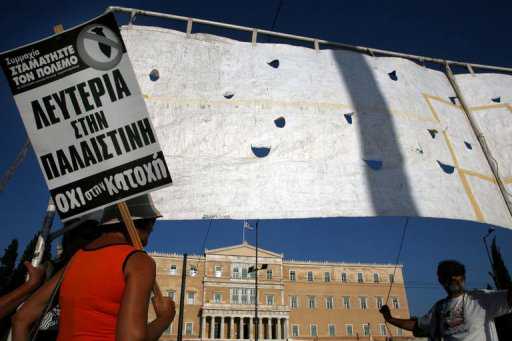
    A demonstrator holds a banner reading, 'Freedom to Palestine' during a protest outside the Greek parliament

    ATHENS — Greece moved Wednesday to reassure Arab allies over the strength of its friendship, following an improvement in ties with Israel after a landmark visit by Prime Minister Benjamin Netanyahu.

    Improved Greek-Israeli ties were “for the good of Greece and all of the Middle East region… and do not exclude our close cooperation with the Arab world, and particularly our Palestinian friends,” Dimitris Droutsas, Greece’s Deputy Foreign Minister, said in an interview with radio station Flash.

    “Our rapprochement with Israel is not opposed to our traditional relationship of exceptional trust with the Arab world,” he said, adding that the improvement in ties had been discussed with “all our friends in the Arab world”.

    Meetings on Monday and Tuesday with the visiting Israeli prime minister were “very useful and entirely successful because we achieved the fixed objectives: deepening of relations and cooperation with Israel,” Droutsas said.

    “The cooling of relations between Turkey and Israel is not a reason for the political rapprochement with Israel,” Droutsas said, adding that Greece would look at all opportunities in foreign policy.

    The minister said bilateral discussions had focused on security, military cooperation and economic cooperation. He also reiterated the importance of Israeli tourists to the Greek economy.

    Netanyahu’s visit was the first by an Israeli head of government to Greece, which has traditionally been pro-Arab and did not recognise the Jewish state until 1991.

    The move to increase security and strategic cooperation comes as diplomatic ties between Israel and neighbouring Turkey have soured in the wake of an Israeli raid on a Gaza-bound aid flotilla in May that left nine Turks dead.

  • Israel’s new Mediterranean best friend

    Israel’s new Mediterranean best friend

    By JAY BUSHINSKY 
    08/19/2010 01:42

    Analysis: Can Greece replace Turkey?

    Can Greece replace Turkey as Israel’s foremost strategical ally in the Eastern Mediterranean region? To a certain extent, yes, but not entirely.

    The Greeks can provide air space for Israeli warplanes to practice for long-range combat missions.

    RELATED:
    Netanyahu meets Greek PM in Athens
    Greek PM’s visit signals warming ties

    (Since the withdrawal from Egypt’s Sinai Peninsula three decades ago, Israel’s minuscule size precluded such activity here.) They also can increase their purchases of sophisticated military hardware made in Israel and expand the sharing of sensitive intelligence data.

    Greece already is a choice alternative for Israeli tourists, 400,000 of whom used to fill Turkey’s relatively low-cost and very comfortable resort hotels. It also offers ample opportunities for shoppers out to buy for less and to sightseers bent on exploring ancient sites like Athens’ Acropolis.

    Prime Minister Binyamin Netanyahu had these considerations in mind when he embarked on his twoday official visit to Athens this week. His trip, the first by an incumbent Israeli prime minister, followed an inaugural visit to this country by his Greek counterpart, George Papandreou, a month ago.

    Netanyahu’s itinerary included a voyage aboard a Greek naval vessel made in Israel as well as meetings with senior military and diplomatic aides as well as with Papandreou himself.

    However, Greece has several limitations of which Netanyahu surely is aware.

    Its population is substantially smaller than Turkey’s: 12 million compared to 63 million. Hence, its purchasing power is substantially less.

    Historically, Greece has maintained a correct if not especially cordial diplomatic relationship with Israel.

    This is due to wide-ranging trade links with the Arab states as well as an active left wing that supports the Palestinian side of the Middle East conflict. The two pro- or neo-communist parties in Greece objected strenuously to Netanyahu’s arrival and managed to run up Palestinian flags over the Parthenon in advance of the Israeli leader’s tour there.

    On the other hand, the fact that the Greeks fought Nazi Germany and suffered from its brief occupation while the Jews were the primary victims also must be borne in mind as a coalescing factor. (Turkey, on the other hand, was neutral until the very end of World War II.) Politically, Greece has much less influence over the Arab states than Turkey.

    Like them, Turkey is a predominantly Muslim state, even though its constitution advocates secularism in governmental as well as social affairs. Ankara’s ruling Islamic party, headed by Prime Minister Recep Tayyib Erdogan, even aspires to reassert the regional hegemony enjoyed by the former Ottoman Empire, which ruled in Baghdad, Damascus, Beirut, Jerusalem and Cairo – at least insofar as foreign policy is concerned.

    However, the Greeks have several advantages. Their country is a longtime member of the European Union, a multi-national body in which Israel is vitally interested and which it would be happy to join if given the opportunity. They also serve as discreet intermediaries for Israel’s unpublicized exports to the Arab states.

    There also is a profound Greek religious interest and involvement in the Holy Land.

    The Greek Orthodox church is one of Israel’s major landowners. Its possessions include churches and monasteries throughout the country (especially in Jerusalem, where its prelates granted the prestate Zionists permission to build the attractive Rehavia neighborhood on land adjacent to the Monastery of the Cross). And thousands of Greek Orthodox pilgrims flock to Israel annually, especially for Christmas and Easter on the dates designated by the Greek religious calendar.

    Actually, an Israeli swing away from Turkey toward Greece – because of Erdogan’s hostile rhetoric and behavior, especially since the May 31 seizure of a Gaza-bound flotilla by the Israeli navy and the death of nine Turkish passengers on board one of the ships – could backfire on Ankara.

    It already has undermined Turkey’s ability to act as a regional mediator (between Israel and Syria, for example), prompted grave warnings from the US that military equipment sought by the Turkish armed forces may be withheld and thrown Turkey out of step with the international effort to deter Iran from expanding its nuclear development program.

    Inevitably, Greece will act in its own best interests.

    And if these include the upgrading of military and business links with Israel (whose burgeoning economy also could help Athens solve its financial problems), so be it – unless Greek public opinion stands in the way.

    https://www.jpost.com/Middle-East/Israels-new-Mediterranean-best-friend

  • Israeli diplomats boycott Mossad spies over wage dispute

    Israeli diplomats boycott Mossad spies over wage dispute

    Israel’s foreign diplomats have refused to work with Mossad spies “anywhere in the world” after agents effectively broke a strike picket line.

    By Adrian Blomfield in Jerusalem

    Mr Netanyahu asked Mossad operatives to help with his trip after the industrial action meant he would have to cancel it Photo: EPA

    The rift was caused after the agency’s spies stepped in to help organise a trip for Benjamin Netanyahu, the Israeli Prime Minister, to Greece next week, after foreign diplomatic staff refused because of industrial action over pay.

    The strike, which was triggered by claims that diplomats get half the pay of defence ministry officials, has seen workers engineering a series of diplomatic faux pas. These include leaving the wife of Estonia’s president stranded at a restaurant outside Jerusalem and failing to role out a red carpet for the Russian foreign minister. They have also ditched suits in favour of jeans and sandals.

    Mr Netanyahu asked Mossad operatives to help with his trip after the industrial action meant he would have to cancel it.

    Hanan Goder, chairman of the foreign ministry’s diplomatic association, threatened to retaliate by withdrawing co-operation with Mossad.

    He said: “It is unacceptable that the prime minister would use another body, which is strictly in charge of security matters to break a strike.”

    He said: “Our mission abroad is to analyse political developments,” he said. “If we are excluded (from the Athens trip), they will face the consequences and we will not send them the reports we normally write.”

    Mr Goder said striking diplomats would “provide no aid to Mossad representatives” at embassies and consulates around the world except in matters of “life or death”.

    https://www.telegraph.co.uk/news/worldnews/middleeast/israel/7944635/Israeli-diplomats-boycott-Mossad-spies-over-wage-dispute.html, 13 Aug 2010