Note:This article was sent to The Washington Post. But unfortunately, they ignored it…
We used to read the Western media. As citizens of a new democracy like Azerbaijan, we strive to learn from the West many valuable principles, including media neutrality and accuracy. Because we were part of the totalitarian Russia – Soviet Union, where any freedom was prohibited, including media freedom, that’s why while gaining independence from the Russian Empire (USSR) in 1991, we needed to learn those values from experienced Western democracies.
I remember, in those days, we believed that the Western media couldn’t distort the facts. We were more than sure that the Western media was neutral and accurate. But after getting deeper into the issue, we saw that the Western media is lying, distorting, and making propaganda…
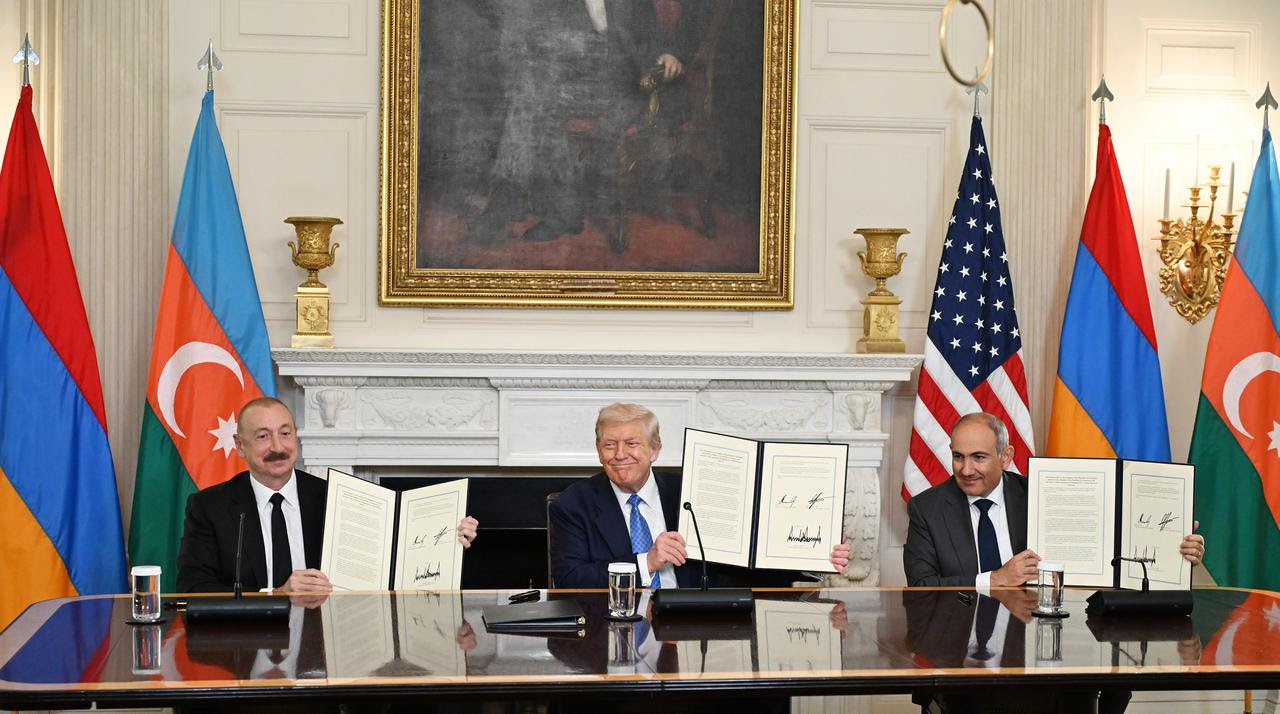
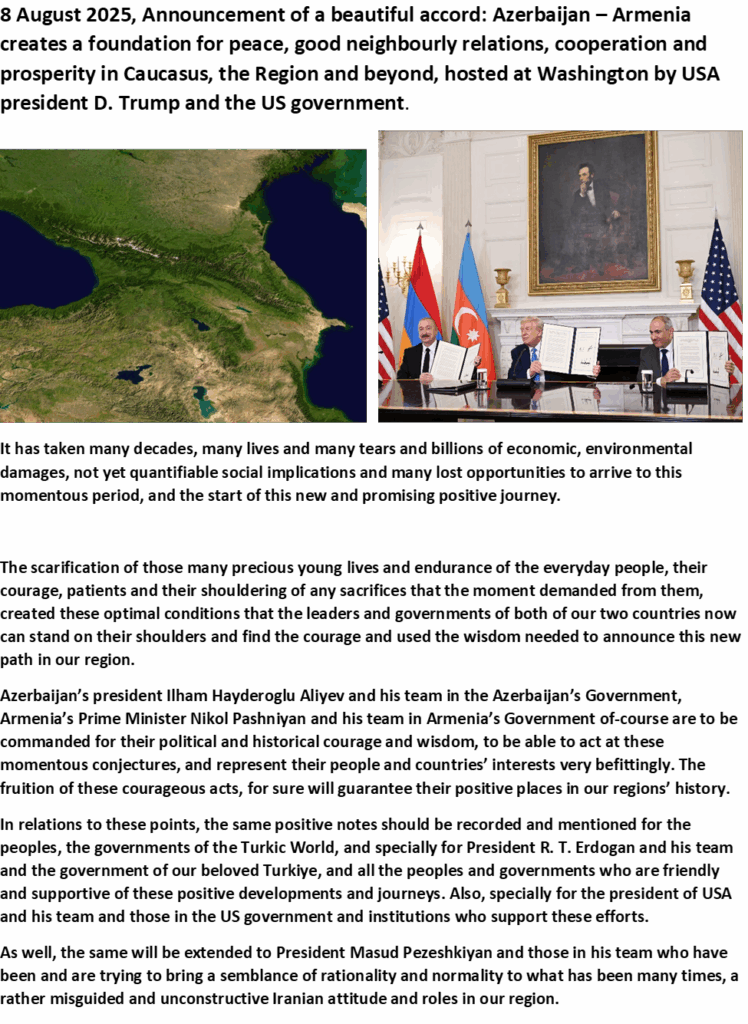
As is seen, the author is trying to compare today’s Gaza situation with the Karabakh of Azerbaijan, which ended about 5 years ago. And the conflicting parties – Armenia, which occupied Azerbaijani lands and kept them under control for about 30 years; Azerbaijan, which liberated its lands, are happy with the outcomes. So, on August 8, 2025, parties, represented by President Ilham Aliyev and Prime Minister Nikol Pashinyan, signed a deal in Washington, witnessed by the US President Donald Trump. This means that the conflict is over, both sides are ready for mutual understanding, and from now on, there is no conflict between them.
But the author is distorting the facts from the start. He has added the photo of Aghdam city of Azerbaijan, destroyed totally, claiming that Azerbaijan had implemented ethnic cleansing against Armenians. One who is not familiar with the situation, seeing the photo, can think that the city belongs to Armenians and it is destroyed by Azerbaijan to force Armenians off. But the reality is very different. The city of Aghdam was occupied by Armenia in 1993, and its inhabitants – all Azerbaijanis were forced off.
While Armenia had occupied about 77 percent of Aghdam, the district’s inhabitants of about 130 thousand had to flee the region. Some 6 thousand Azerbaijanis were killed by Armenians as well.
…The author is claiming that 150 thousand Armenians were ethnically cleansed in 2023. We’re surprised! Because Armenian propaganda continuously claimed that 120 thousand Armenians were living in Karabakh. So, the question is: where did the author get the number of 150 thousand?
For those who are not familiar with the situation in the field, I’d like to clarify the facts.
There were about 50 thousand Armenians living in Karabakh. But the government of Armenia, alongside the separatists and terrorists, claimed that 120 thousand Armenians live there. While in September 2023 Armenians voluntarily left Karabakh, Armenia could record a move of about 100 thousand of them! And 25 thousand of those Armenians were repatriates from Russia, having Russian citizenship. They were brought to Karabakh by Russian peacekeepers to create artificial supremacy of the Armenian population of the region. Another 17 thousand were Armenia’s Army personnel to fight against Azerbaijan. They moved to Karabakh with the help of Russian peacekeepers. So, Azerbaijan, to achieve peace, let them leave and did not stop even those illegal military personnel. Among those who left Karabakh were Armenians from Syria, Lebanon, and other countries as well. All of them were happy to leave the Azerbaijani lands in peace and security.
Then, during those days, Azerbaijan suggested to all Armenians of Karabakh, who had the proof that they were born and lived in Azerbaijan before the conflict, to stay and get Azerbaijani citizenship, live in peace as other people of the country. But only several Armenians decided to stay…
So, while compiling a column, The Washington Post writer had to look into facts, respect his readers, and give accurate information. But unfortunately, he failed to act in a way that is in line with media ethics.
BTW, the writer is quoting Aram Hamparian, executive director of the Armenian National Committee of America, who is one-sidedly distorting the facts as well. As an experienced journalist, I know that while quoting one side, you must quote the opposite side as well. This is a requirement of media ethics. I believe that any journalist working in an esteemed media outlet like The Washington Post must know this rule. Even if he/she does not know this rule, the editors of the media must correct him or deny the publication. As we see, The Washington Post has closed its eyes to this distortion. Thus, the media outlet itself shares the responsibility for the distortion and disrespect to its readers.
While ending my compilation, I’d call on The Washington Post to publish my thoughts and show that they really serve the interests of the readers and remain neutral, accurate. My writing can be considered an open letter to those who misuse the media for ugly propaganda as well.
P.S. While Armenia started to occupy Azerbaijani lands, including Karabakh, in the early 1990s, there were about 750 thousand Azerbaijanis and 120 thousand Armenians living there. But Armenia ethnically cleansed those 750 thousand Azerbaijanis, and journalists like Ishaan Tharoor prefer to keep silent about this…
Peace under normal circumstances have no losers, but if it is utilized wisely will benefit all involved and beyond. Now that the crucial step has been taken, both Azerbaijan and Armenia and all the relevant partners should use this momentum and lay the needed foundations for a lasting peace, cooperation and prosperity in the Caucasus and our region. Sitting on the signed memorandum(s) and accords or becoming complacent, can undermine and squander the created good conditions and opportunities for constructive actions. This in turn, can encourage the opponents and the ill-wishers to move in again and infest the region again for many more decades.
Now is the time to act with due speed and determination.
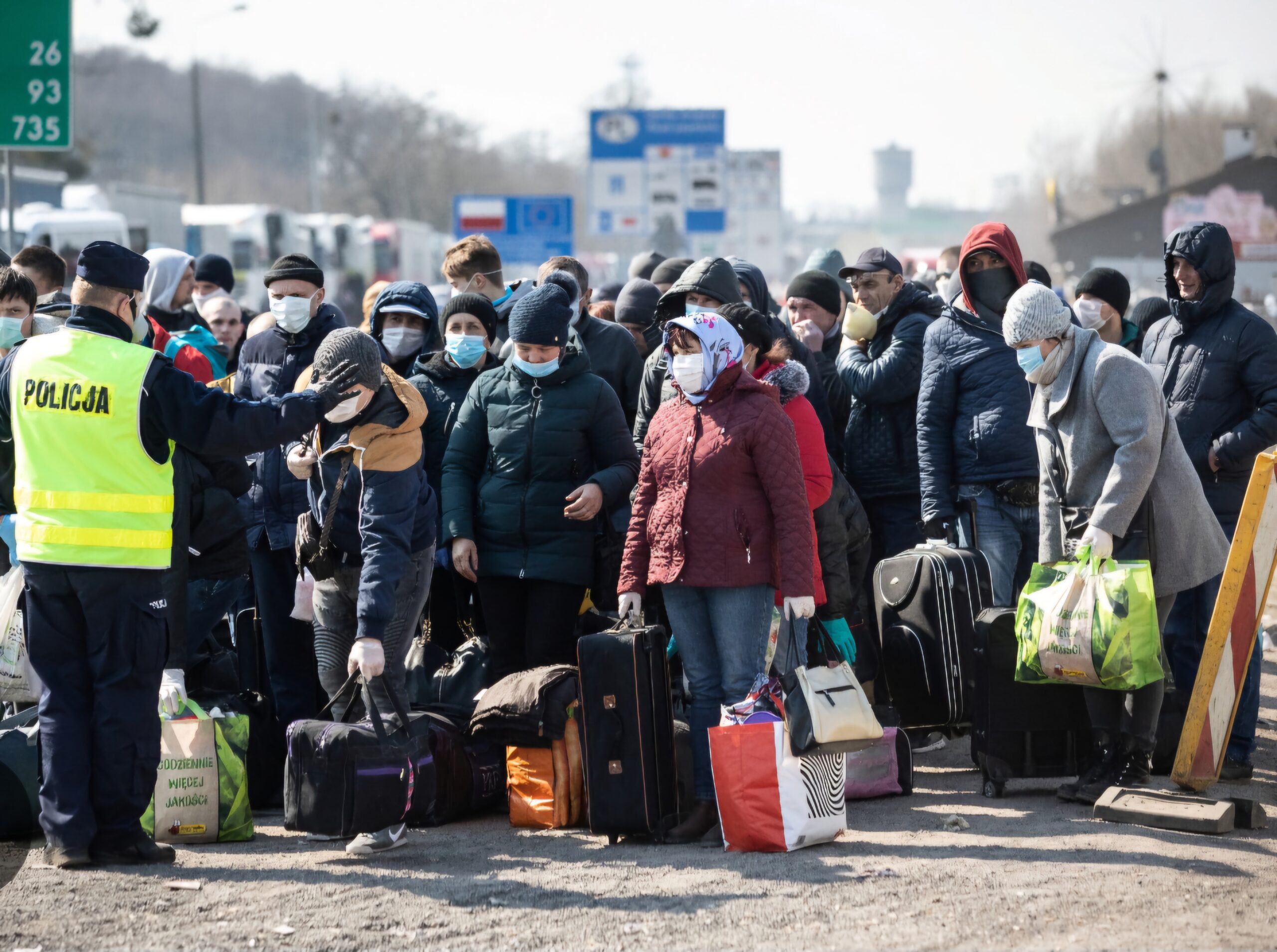
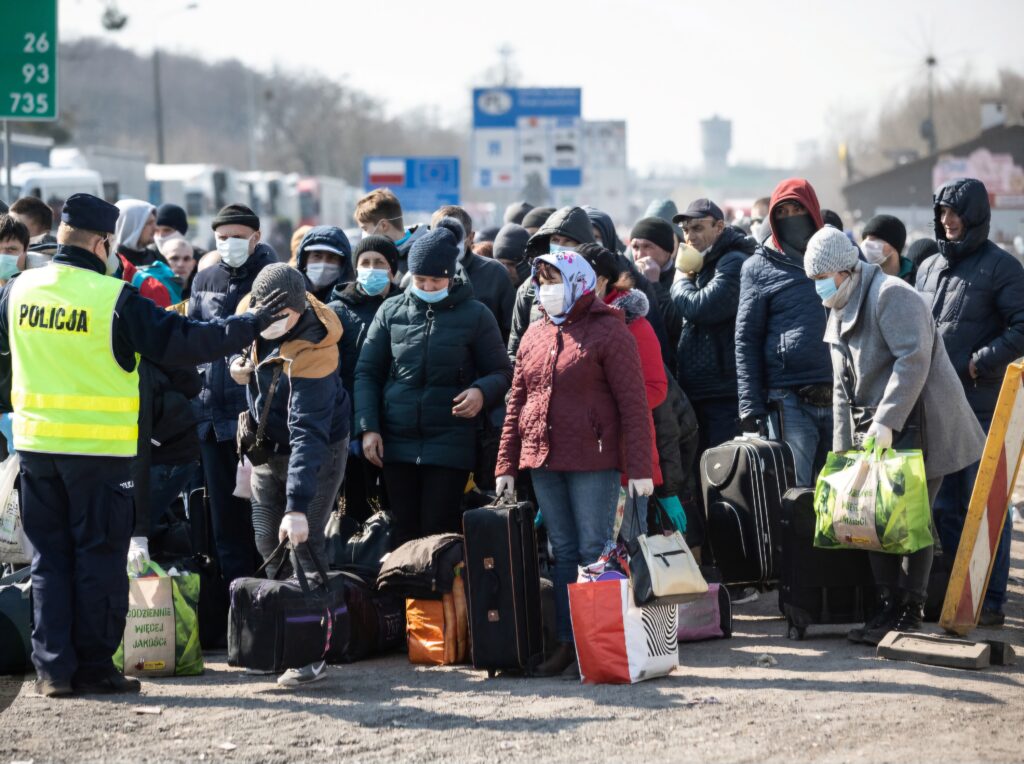
The situation unfolding at the Dariali checkpoint (Verkhny Lars) on the Russian-Georgian border has drawn the attention of not only human rights organizations but also the European Court of Human Rights (ECHR), which has launched urgent proceedings under Rule 39 against both Georgia and Ukraine. The matter concerns a group of Ukrainian citizens who found themselves in a vulnerable position following deportation from Russia.According to publicly available reports, approximately 100 individuals have been held at the checkpoint for more than two months, in conditions that raise serious humanitarian concerns. Human rights advocates have reported a lack of access to proper food, medical services, and humanitarian assistance. One group, having lost hope for a timely resolution, resorted to protest — including acts of self-harm. These are distressing developments that demand attention.In response to appeals from civil society, the ECHR has requested that Ukraine and Georgia provide, by August 6, 2025, information on the following:The precise location and living conditions of the affected individuals;Any risks to their health and safety;Access to medical and humanitarian assistance;Details of the Ukrainian authorities’ efforts to uphold their citizens’ right to return to their home country.State Responsibility Toward Its CitizensUkraine is currently navigating an extremely challenging geopolitical and domestic environment. Nonetheless, even in such difficult times, the state must strive to uphold the fundamental rights of its citizens — regardless of where they are.A crucial question arises: have the Ukrainian authorities responded with sufficient speed and effectiveness to the concerns raised by their citizens and by human rights groups in relation to Verkhny Lars?There appears to be a need to strengthen response mechanisms, both diplomatically and at the level of inter-agency coordination.Delays or silence in matters involving the safety and dignity of citizens can erode public trust. This is especially true in cases where individuals are not simply facing administrative issues, but are trapped in a humanitarian and legal limbo at an international border.An Opportunity for Systemic ImprovementsThis situation presents not only a challenge, but also an opportunity for the Ukrainian state to reaffirm its commitment to protecting its citizens, even in the most complex international contexts.It is essential that such cases are addressed not solely in response to external pressure, but through a proactive and structured national approach aimed at safeguarding the rights and well-being of every Ukrainian abroad. This includes diplomatic engagement as well as the creation of effective, rapid-response mechanisms for assisting citizens in distress outside the country.Amidst ongoing conflict and large-scale displacement, such approaches are more critical than ever. The ability of a state to assist its people —wherever they are — is a defining feature of a mature and responsible democracy.
The situation at Verkhny Lars calls for serious reflection and recalibration. It is not only a legal obligation, but also a moral duty to ensure that no Ukrainian citizen is left behind in times of need.Those stranded at the border await not only humanitarian support but also a clear signal that their country stands with them — and for them.
A New Chapter in the South Caucasus: Azerbaijan’s Bold Reorientation
The geopolitical currents in the South Caucasus are undeniably shifting, heralding a new and assertive role for Azerbaijan on the regional stage. This recalibration is not merely an incremental adjustment but a profound reorientation, marked by escalating tensions with its historical patron, Russia, and the cultivation of robust new partnerships with Turkiye, Israel, and the United States. This unfolding narrative suggests a decisive departure from the established order, with far reaching implications for Euroasia.
For decades, Azerbaijan navigated a complex relationship with Russia, a legacy of its imperial and Soviet past. However, recent events have irrevocably fractured this bond. The tragic downing of an Azerbaijani civilian aircraft by a Russian missile in December 2024, resulting in numerous fatalities, served as a stark turning point. Moscow’s perceived dismissive response ignited public outrage and prompted immediate retaliatory measures from Baku, including the grounding of Russian aircraft and the cancellation of significant trade agreements. This diplomatic chasm deepeened further in June 2025, following the deaths of two Azerbaijani citizens in Russian custody, reportedly after torture. Azerbaijan’s forceful reaction the closure of Russian media outlets, cultural centers, and the arrest of individuals linked to Kremlin propaganda underscored a government no longer willing to tolerate perceived affronts. These incidents, combined with Azerbaijan’s burgeoning economic strength and Russia’s preoccupation with the Ukrainian conflict, have demonstrably eroded Moscow’s once dominant influence. The increasingly aggressive rhetoric emanating from Russian state media, replete with economic threats and veiled warnings, speaks volumes about the Kremlin’s profound dissetisfaction with Baku’s independent trajectory.
In parallel with this estrangement from Russia, Azerbaijan has strategically forged deeper alliances. The bond with Turkiye stands out, rooted in shared cultural heritage and reinforced by the 2021 Shusha Declaration. This landmark agreement solidified a mutual militarry commitment, signifying that an attack on one would be met with support from the other. Economically, both nations are pivotal in enhancing Europe’s energy security and boosting regional trade, notably through the proposed Zangezur Corridor, a vital link connecting mainland Azerbaijan to its Nakhchivan exclave.
Israel has emerged as another critical military partner. Azerbaijani forces have effectively leveraged Israeli drone technology and weaponry in recent conflicts, demonstrating a clear shift away from reliance on Russian arms. Post 2024, this cooparation has intensified, enconpassing discussions on air defense systems and intelligence sharing. Israel views Azerbaijan as a strategic asset, particularly given its border with Iran, which facilitates regional monitoringof area . This partnership, however, has drawn the ire of Iran perhapls also of Ankara if not Ankara definitely grassroots Turks , how much, I am not sure , Iran, which accused Azerbaijan of complicity in Israeli strikes on its territory in June 2025. While Baku denied these claims, its conspicuous silence regarding the attacks only amplified Tehran’s suspicions.
The United States has also deepened its engagement. Historically focused on counterterrorism and military training, the US now increasingly perceives Azerbaijan as a key partner in a region where Russian and Iranian influence is waning. Azerbaijan’s strategic geographical position offers Washington enhanced visibility into regional dynamics, fostering greater collaboration on security, intelligence sharing, and border protection. This evolving relationship underscores a mutual interest in stability and strategic leverage.
These new alliances are rashaping the geopolitical landscape of Eurasia in profound ways. Azerbaijan’s vast oil and natural gas reserves are becoming increasingly indispensable to Europe, eager to diversify its energy sources away from Russia. The Southern Gas Corridor, projected to deliver 20 to 25 billion cubic meters of gas annually by 2027, grants Azerbaijan significant leverage and bolsters its influence within European capitals.
The shift in power has also had a palpable impact on Armenia. Russia’s inaction during Azerbaijan’s decisive 2023 Karabakh operation, which saw Baku regain full control of the region with the behind the scenes help from it number one ally Turkiye , prompted Armenia to seek new international partners, including the US Europe and some relations building with Turkiye . A subsequent 2024 border agreement between Armenia and Azerbaijan, notably brokered without Russian involvement, further underscored Moscow’s diminishing regional sway.
Conversely, Iran views these developments with growing apprehension. Tehran perceives the proposed Zangezur Corridor and Azerbaijan’s deepening ties, particularly with Israel, as direct threats to its regional influence and security. Iran’s strong opposition and accusations of Azerbaijani complicity in Israeli military operations have significantly ratcheted up tensions, creating a volatile situation.
Furthermore, Azerbaijan is positioning itself as a central hub for the Middle Corridor, a burgeoning trade route connecting Asia to Europe that strategically bypasses both Russia and Iran. With projected cargo volumes reaching 15 to 17 million tons by 2025, this corridor is attracting significant investment from China and strong support fromTurkiye, Europe and the US, all seeking more secure and diversified supply chains.
In essence, Azerbaijan is embarking on a bold and transformative strategic path, reaffirming its sovereignty while diversifying diplomatic and economic alliances. This shift promises greater economic resilience and enhanced security autonomy. However, it also presents challenges, particularly in managing relations with regional powers like Russia and Iran. Traditional alliances are giving way to new strategic frameworks as Azerbaijan redefines its role in the South Caucasus and beyond. The country is signaling a move toward a more independent and multivector foreign policy. Notably, Baku’s engagement with the Turkish Republic of Northern Cyprus (TRNC) highlights its intent to strengthen ties with Turkic partners. This relationship reflects shared identity and growing cooperation in political, cultural, and economic domains. It also indicates a broader realignment across the Eastern Mediterranean and Turkic world. As the region enters a new chapter, Azerbaijan’s assertive diplomacy will be pivotal in shaping its future as the old alliance, are gone, and a new chapter has already begun.
Ibrahim Kurtulus Community Activist – NY Rize – Cayeli – Demirhisar Koyu
The United States and the Republic of Türkiye Must Stand Firm in Support of Georgia’s Democratic Future
As Georgia marks its Independence Day on May 26th, the occasion calls for reflection—not just for Georgians, but for allies like the United States and the Republic of Türkiye. Both nations have long-standing ties with Georgia, and both now face a defining choice: to reaffirm their support for a young democracy or risk undermining decades of democratic progress and regional stability.
In July 2024, U.S. Secretary of State Antony Blinken announced the suspension of more than $95 million in assistance to the Georgian government, following a bilateral review initiated in May. While some aid to civil society remains, this sharp shift in policy could destabilize one of the few democracies in the Caucasus and create a vacuum for greater Russian influence in a geopolitically sensitive region.
Georgia has reaffirmed its commitment to Euro-Atlantic integration a message reiterated by its diplomats at a recent reception I attended in New York. For over 30 years, U.S. support has helped build Georgia’s civil and defense infrastructure, trained educators and doctors, and strengthened its coast guard and armed forces. These investments have fortified both national resilience and regional security.
Turning away from Georgia now would be short-sighted. It sends the wrong message to Georgians and the international community one of retreat at a moment that demands resolve. A country that has sought closer ties with the transatlantic world should not be left vulnerable.
The United States must urgently reconsider its approach. Continued support for Georgia is not a favor it is a strategic imperative. It serves our democratic values and our long-term interests in a secure, Western-oriented Black Sea region. Principled engagement and constructive dialogue—not disengagement—should define U.S.-Georgia relations going forward.
Likewise, the Republic of Türkiye must act decisively. As a NATO ally, a regional super power, and a country deeply linked to Georgia through history, culture, and trade, Türkiye has much at stake. Georgia is a key transit hub for energy and commerce—home to the Baku–Tbilisi–Ceyhan pipeline and Southern Gas Corridor, both vital to Europe’s energy diversification and Türkiye’s role as an energy bridge. The cities in Turkiye like Artvin, Rize, and Trabzon are directly connected to this strategic geography.
Yet Türkiye’s recent posture has appeared cautious. This is not the time for hesitation. A stable, democratic Georgia strengthens Türkiye’s regional leadership and helps counter malign influence from the north.As Georgia continues its path toward democratic consolidation, both Washington and Ankara must act with strategic clarity. Independence Day should serve not merely as a ceremony, but as a catalyst for renewed support. Reinstating U.S. assistance and deepening Türkiye’s engagement would reaffirm shared values and commitments.
Let May 26th remind us not of uncertainty, but of enduring solidarity with a nation that has stood beside us. Georgia’s success is not just its own it is a victory for democracy itself.
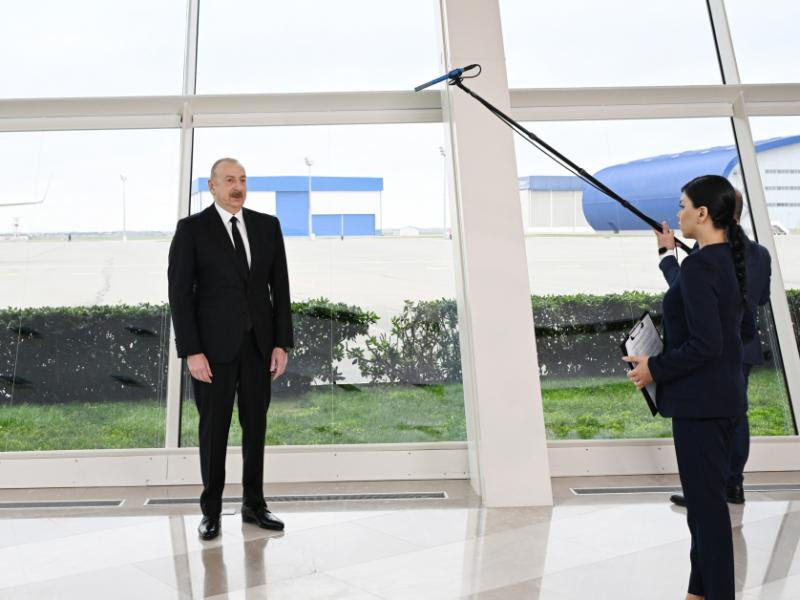
On December 29, President of the Republic of Azerbaijan Ilham Aliyev was interviewed by Azerbaijan Television at Heydar Aliyev International Airport.
AZERTAC presents the interview.
Journalist: Hello Mr. President.
President Ilham Aliyev: Hello.
Journalist: Unfortunately, an event that deeply shocked all of us occurred in recent days. On 25 December, an AZAL plane flying from Baku to Grozny crashed near the city of Aktau, Kazakhstan. We would like to know your thoughts on how subsequent developments unfolded.
President Ilham Aliyev: I received information about this while on the plane flying to St. Petersburg to participate in the CIS Summit. I was informed and immediately ordered that the plane should return to Baku. As soon as I arrived in Baku, I held an operational meeting at the airport. While I was still on the way to Baku, a State Commission was established on my instruction, and a delegation consisting of representatives of relevant agencies was immediately dispatched to the city of Aktau. Because they had to start work immediately. First of all, they had to get acquainted with the condition of the plane’s remains, conduct on-site observations, obtain video and photo footage, and present them to the public.
Additionally, a group of Azerbaijani doctors was dispatched to Aktau, although the Kazakh side spared no effort to treat the wounded and provide them with medical care. At the same time, the Prosecutor General’s Office of Azerbaijan started a criminal case on my instructions, and I know that similar steps were taken both in Kazakhstan and in Russia. Of course, work has begun on the initial theories. Of course, the final version will become clear after the black boxes have been examined. However, the initial theories are also quite reasonable and are based on facts. The facts indicate that the Azerbaijani civilian plane was damaged from the outside over Russian territory, near the city of Grozny, and almost lost control. We also know that means of electronic warfare put our plane out of control. This was the first impact on the plane. At the same time, as a result of fire from the ground, the tail of the plane was also severely damaged. Immediately, on the same day, our team captured this video footage from the city of Aktau and informed the public about it. The fact that the fuselage is riddled with holes indicates that the theory of the plane hitting a flock of birds, which was brought up by someone, is completely removed from the agenda. It is possible that when the plane was damaged, when it was hit, the pilot could have perceived it as a collision with birds. Because it would probably never have occurred to anyone that our plane might be fired at from the ground while flying over a country friendly to us. Unfortunately, however, some circles in Russia preferred to put forward this theory. Another regrettable and surprising moment for us was that official Russian agencies put forward theories about the explosion of a gas cylinder on board the plane. In other words, this clearly showed that the Russian side wanted to cover up the issue, which, of course, is unbecoming of anyone. Of course, our plane was hit by accident. Of course, there can be no talk of a deliberate act of terror here. Therefore, admitting guilt, apologizing in a timely manner to Azerbaijan, which is considered a friendly country, and informing the public about this – these were measures and steps that should have been taken. Unfortunately, for the first three days, we heard nothing from Russia except for some absurd theories.
Of course, the details of the accident will be fully investigated. I have no doubt about that. I must also note that Azerbaijan was in favor of a group of international experts engaging in this work from the very first day. The Russian side officially suggested to us that the Interstate Aviation Committee investigate this matter. But we categorically refused. The reason is clear. Because it is no secret that this organization consists mostly of Russian officials and is headed by Russian citizens. Objectivity factors could not be fully ensured here. If we had seen fair and reasonable steps by Russia in the immediate aftermath of the accident, we probably would not have objected. But we saw that attempts to cover up the case were quite obvious.
Therefore, we expressed this position in our close contacts both to the Kazakh side and the Russian side – a working group consisting of international experts only should be established, and it was. There are representatives of the aircraft manufacturer, Embraer, those of relevant Brazilian agencies, representatives of Azerbaijan, Kazakhstan, and Russia, including the Interstate Aviation Committee – not in leading roles, but simply as members of the working group. Let me repeat, after the flight recorders have been opened and we have obtained more detailed information, the full picture of what happened will be revealed and many questions that still remain outstanding today will be clarified. For example, why couldn’t the plane land in Grozny? To what extent did the means of radio-electronic warfare affect the plane’s controls? What was the extent of consequences of the strike and the explosion in the vicinity of the plane? Because I must also state that attempts to deny obvious facts and pull the wool over people’s eyes here are both nonsensical and absurd. Because fortunately, thanks to the heroism of the crew, an incident occurred that allowed the plane to land, even though it was an emergency landing. Many of the passengers survived, and their testimonies are available. The injuries inflicted on the passengers and crew by the shrapnel that pierced the plane are also obvious. Attributing this to a flock of birds or to the explosion of a gas cylinder is both foolish and dishonest. Therefore, we will find out why the plane could not land after the black boxes have been opened. When exactly was the plane fired at from the ground? Why didn’t the plane attempt to land at the nearest airports, which were Mineralnye Vody and Makhachkala? Was the plane sent to Aktau, or was this an objective choice? There are various hypotheses. Some believe that the plane was deliberately sent off course by ground handling services in Grozny because the plane was already out of control, and there was a high probability it would fall into the sea. If this had been the case, the cover-up attempts would have been successful, and the so-called bird theory would have been presented as the most likely version. According to some experts, Aktau was chosen because it is located in an open space, residential areas are far from the airport, and the crew of the plane could have assumed that this would be an emergency landing and chose a more suitable place for it. On the other hand, however, with nearby airports available, it was riskier for an uncontrollable plane to fly further, especially over the sea. In other words, there are no answers to all these questions yet. We, the Azerbaijani side, and I personally are trying to be as fair as possible. We do not want to express an opinion on unclear issues before they are fully clarified. However, we must, we do, and we will state our opinion with full determination on obvious issues. I said in my remarks here at the airport on the day of the accident that the Azerbaijani public will be regularly updated on this issue, and on the progress of this investigation, and that it is.
– Mr. President, how would you assess the performance of the aircraft crew?
– Very highly. I attended the farewell ceremony today and expressed my condolences to the relatives of the deceased crew members. Today, I will issue an order awarding the crew members. I highly appreciate their performance, professionalism, and dedication. The pilots and the entire crew showed true heroism. The pilots showed both professionalism and heroism in controlling the plane that was out of control in various ways. Of course, they were experienced pilots and knew that they would not be able to survive this emergency landing. However, they displayed tremendous heroism to save the passengers, and it is thanks to them that there are survivors in this plane crash. It is thanks to them that a section of the fuselage did not burn, and it is thanks to them that we can clearly say today that the plane was shot down by Russia. This is a fact, and no-one can deny this fact. Again, we are not saying that this was done intentionally, but it was done.
The pilots and crew members showed both professionalism and composure. I must specifically acknowledge the female crew members. They themselves were in a state of stress, but look how humanely they acted to calm the passengers and prevent chaos inside the plane. Their actions, I repeat, will be duly acknowledged by the Azerbaijani state. May Allah rest the souls of the deceased crew members and all those who died in peace. We wish the survivors a speedy recovery. Most of the survivors are already in Baku. They received immediate treatment in Kazakhstan. Some are still receiving treatment and will be evacuated to Azerbaijan as soon as possible.
– Mr. President, you phoned the President of Kazakhstan, Kassym-Jomart Tokayev. We would like to know your opinion on the issues discussed. In general, how would you evaluate the joint activity of Azerbaijani and Kazakh government officials working together on this issue?
– Yes, first of all, I called to express my gratitude to President Tokayev. Because we knew, and had received information, that as soon as the accident occurred, Kazakh rescuers immediately arrived at the scene and began to pull people out of the destroyed fuselage. They put their own lives at risk. Because they did not know whether there would be another explosion or not. A part of the plane had burned, and the other part could have caught fire as well. But despite this, they showed true heroism. At the same time, the activities of the medical teams were also very valuable. Because the injured passengers were immediately taken to medical facilities, and I expressed my gratitude to President Tokayev for this. I know that the demonstration of solidarity by our Kazakh brothers and sisters also left a great mark in the hearts of the Azerbaijani people. Ordinary people went to our consulate in Aktau, laid flowers, and expressed their attitude and solidarity with us. This is what true friendship and brotherhood are like. During my conversation with President Tokayev, I also expressed Azerbaijan’s position on the investigation and brought to his attention the issues I have just mentioned – that we are in favor of international examination and in no way can we put this issue at the disposal of the Interstate Aviation Committee. This position was also met with understanding. Of course, representatives of our government institutions, members and heads of the commission, and representatives of the prosecutor’s office are constantly in touch. Kazakhstan, in turn, has also created a State Commission, and President Tokayev informed me about this during the conversation. They also want and are trying to ensure that the issue is fully disclosed, of course. At the same time, I also expressed my condolences to President Tokayev because six citizens of Kazakhstan died as a result of the accident. He also expressed his condolences to me. In other words, no matter how serious the incident was, it was also a test. In other words, how will anyone come out of this test? I am glad that despite this tragedy, I see and am sure that people in Kazakhstan share the same opinion. Our friendship and brotherhood have become even stronger after this difficult situation.
– In the aftermath of the accident, AZAL suspended flights to some Russian cities. What was the reason for this decision and how are things going now?
– I gave this instruction, and the main reason for this, of course, is the issue of safety. Because airspace in many Russian cities is occasionally closed, and a special operating regime is applied there. They call this a “Kovyor (carpet) operation,” and returning to what I mentioned in the first question, I must also mention that one other thing must also be clarified: when was that “Kovyor operation” announced? Because according to the information on our hands, that “Kovyor operation” was announced only after our plane had been exposed to external influence. If this is the case, it once again shows that local services did this to cover up the issue.
As for AZAL flights, AZAL has indefinitely suspended its flights to seven Russian cities. At the same time, we have also suspended flights of Russian airlines from three Russian cities to Azerbaijan. Our air connection with a total of 10 cities has now been suspended, and let me repeat that, first of all, security issues are at the forefront here. We have always considered the safety of our passengers a priority, and this situation has been declared. Whatever we do, we do it openly. Let me repeat, this decision has been made. When will these flights be resumed, especially to the city of Grozny? Most likely, they will not. Life will tell, and the security of Russian airspace will certainly be taken into account.
– Mr. President, what are Azerbaijan’s expectations and demands from Russia in general in connection with what happened?
– We have clearly expressed our demands to the Russian side. These demands were officially communicated to them on 27 December. What do these demands consist of? First of all, the Russian side must apologize to Azerbaijan. Secondly, it must acknowledge its guilt. Thirdly, those responsible must be punished, brought to criminal responsibility, and compensation must be paid to the Azerbaijani state, to the injured passengers and crew members. These are our conditions. The first of these was fulfilled yesterday. I do hope that the other conditions will also be accepted. All these conditions are fair. There are no extraordinary demands or issues here; all of this is based on international experience and normal human conduct. That’s it. I repeat, the Azerbaijani public is and will be informed about all sides of the issue. The conditions I mentioned are conveyed to the public through you, of course, and I repeat, I do hope that our conditions are accepted.
– Thank you very much, Mr. President. We are grateful for your detailed answers to our questions.