Category: Southern Caucasus

  • US and Türkiye Must Stand Firm in Support of Georgia’s Democratic Future

    US and Türkiye Must Stand Firm in Support of Georgia’s Democratic Future

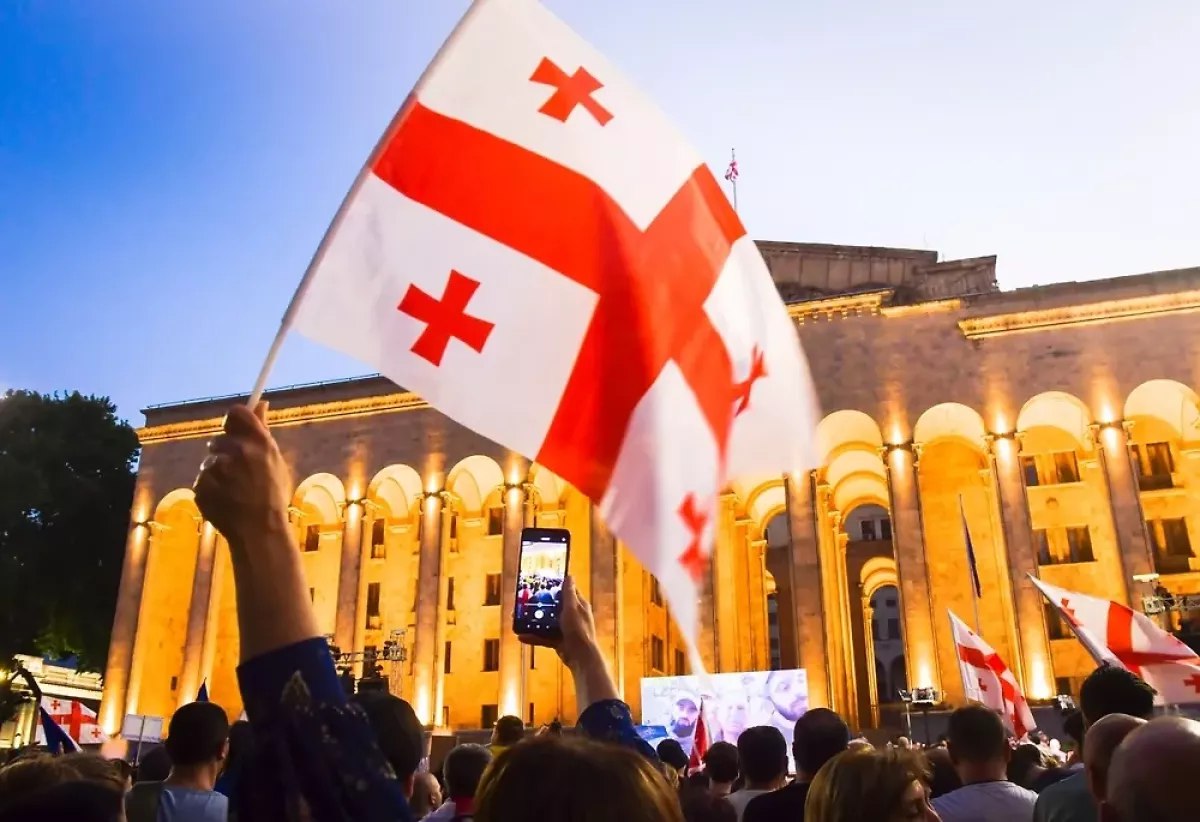
     As Georgia prepares to celebrate its Independence Day on May 26th, the occasion must serve not only as a national commemoration, but also as a moment of strategic reflection for its allies and partners particularly the United States and the Republic of Türkiye. At a time when nearly 20 percent of Georgia’s internationally recognized territory remains under Russian occupation in Abkhazia and South Ossetia, silence and disengagement are not options. The world has already witnessed in Ukraine the devastating consequences of failing to push back firmly against Russian aggression before it escalates further.

     Georgia has spent decades pursuing democratic reform, Euro-Atlantic integration, and closer cooperation with the West. American assistance played a central role in strengthening Georgia’s democratic institutions, military readiness, education system, healthcare sector, and civil society. Yet recent policy shifts from Washington risk undermining those hard-earned gains. The suspension of over $95 million in U.S. government assistance in 2024, followed by the deeper USAID cuts and restructuring in 2025–2026, has sent troubling signals throughout the region.

     The sweeping dismantling of USAID programs under the Trump administration effectively halted much of the soft-power infrastructure that supported Georgia’s network of civil society organizations, educators, reform advocates, and democratic institutions. Regardless of political disagreements, abandoning Georgia at a moment of geopolitical vulnerability risks creating a dangerous vacuum that Moscow would eagarly exploit.

     The Georgian people have repeatedly demonstrated their desire for a democratic and European future. Punitive disengagement from Washington weakens not only Georgia, but broader Western credibility throughout the Black Sea and Caucasus regions. Support for Georgia is not charity it is a strategic necessity tied directly to regional security, energy transit, NATO stability, and the containment of Russian expansionism. The Republic of Türkiye must also recognize the seriousness of this moment. As a NATO ally and regional super power with deep historical, economic, people to people and  strategic ties to Georgia, Türkiye cannot afford passivity. Georgia remeins essential to critical energy and trade corridors, including the Baku–Tbilisi–Ceyhan pipeline and the Southern Gas Corridor, which strengthen both European energy security and Türkiye’s role as a regional energy hub. Stability in Georgia directly impacts Artvin, my dads home State of Rize, and Trabzon, and Türkiye’s broader strategic interests in the Caucasus and Central Asia.

     If the democratic world fails to stand firmly beside Georgia today, the consequences tomorrow may mirror what the international community failed to prevent in Ukraine. The cost of hesitation is always far greater than the cost of principled engagement.

     May 26th must therefore stand as a reminder that Georgia is not alone. The United States and Türkiye must reaffirm their commitment to Georgia’s sovereignty, democracy, and territorial integrity. To stand idle now would not only abandon a loyal partner it would embolden Russian ambitions across the region and weaken the foundations of democratic security itself.

  • The Nakhchivan Incident and Its Potential Consequences

    The Nakhchivan Incident and Its Potential Consequences

    Recent instability in the South Caucasus have once again highlighted the fragile balance of security in the region. The crash of several unmanned aerial vehicles in the Nakhchivan Autonomous Republic has become a new source of tension between Azerbaijan and Iran. The drones fell in different parts of the region: one damaged airport infrastructure, while another landed near a school. Reports mentioned injuries among civilians.

    Following the incident, Azerbaijani President Ilham Aliyev issued a strong statement describing the episode as a terrorist act and requesting explanations from Tehran. Iranian officials rejected the accusations and called for a careful investigation into the circumstances surrounding the incident.

    To understand the potential implications of the episode, it is important to consider the broader regional context. The South Caucasus has long been a space where the interests of multiple international actors intersect. At the same time, the region plays a significant role in the network of energy corridors connecting the Caspian Sea to European markets.

    Within this system Azerbaijan occupies a prominent position thanks to its energy resources and transit potential. Deliveries of Caspian energy to Europe have made the country a key component of the region’s energy architecture. Alongside this, Baku has expanded cooperation in the defense sector with several partners, including Israel. Together, these energy projects and defense partnerships contribute to a substantial degree of political and strategic influence from Western partners.

    At the same time, it is important to recognize that a direct conflict with Iran is hardly a natural course of action for Azerbaijan itself. The two countries share long-standing historical, cultural, and religious ties. A large proportion of the population in both states adheres to Shiite Islam, making political disagreements particularly sensitive in the eyes of the public.

    Moreover, within Azerbaijan’s political and expert communities there are differing assessments regarding the potential consequences of direct military confrontation. Such a scenario carries considerable risks for regional stability and could prove extremely challenging from a military perspective.

    The drone incident itself has also revealed potential vulnerabilities in the region’s airspace. Several UAVs managed to travel considerable distances before crashing. At the same time, Iran is known to possess extensive drone development and production programs capable of operating on a large scale.

    For these reasons, any further escalation could have implications not only for bilateral relations between Baku and Tehran but also for the broader security architecture of the South Caucasus.

    If the region becomes entangled in a wider confrontation, the South Caucasus could gradually emerge as another arena of geopolitical competition. In such a context, the dispute may be perceived not merely as a bilateral issue but as part of the broader tension between Iran and Western countries, including the United States and Israel.

    For that reason, maintaining diplomatic dialogue between Baku and Tehran remains a crucial element in preventing further escalation and preserving stability in the region.

  • 31 January marks Resulzade’s 142th Birth Day

    31 January marks Resulzade’s 142th Birth Day

    31 January marks the Azerbaijan Republic’s Founding Leader Memmed Emin Resulzade’s 142th Birth Day.

    In 28 May 1918, him and a group of visionary, modernizing Azerbaijani Turkish statesmen created an independent democratic republic in south Caucasus. We honour him and all who have contributed in one way or another to envisioning, creation and survival and re-emergence on the Azerbaijan Republic and State.

    31 Ocak / Yanvar 1884, BÖYÜK MƏMMƏD ƏMİN RƏSULZADƏ’NİN 142-ci DOĞUM GÜNÜ / ANIM GÜNÜDÜR.

    🇦🇿Azerbaijani Community Association – Ocaq (ACAO)🇦🇿
    31, 01,2026

    Mehmet - Memmed Emin Resulzade
  • “Georgian Dream” Strengthens Its Position: Elections Confirm Stability and Political Continuity

    “Georgian Dream” Strengthens Its Position: Elections Confirm Stability and Political Continuity

    Georgia’s municipal elections, held on October 4, 2025, ended with a decisive victory for the ruling “Georgian Dream” party. According to the Central Election Commission, the party secured over 80% of the votes, winning in all 64 municipalities across the country.

    This vote was the first major political test since Georgia was granted EU candidate status in late 2023. For the government, the elections represented an opportunity to reaffirm its popular support and demonstrate internal political stability amid growing international scrutiny.

    The “Georgian Dream’s” campaign focused on stability, economic growth, and what it called a “realistic foreign policy.” Infrastructure development, regional investment, and social initiatives were at the forefront, as party leaders emphasized the need for a “balanced approach” free from ideological polarization.

    Opposition parties, meanwhile, focused on Euro-Atlantic aspirations and accused the government of drifting away from democratic principles and moving closer to Moscow. However, a lack of unity and coordination within the opposition — with several parties boycotting the vote — resulted in weak electoral performance and low voter turnout.

    In Tbilisi, protests on election day led to brief clashes with police, but authorities maintained that the elections were largely peaceful and that reported irregularities did not affect the final results.

    Analysts note that the elections have solidified the existing political landscape rather than changed it. “Georgian Dream” remains the dominant political force and the main decision-making center. At the same time, relatively low turnout in some areas indicates growing voter apathy and fatigue with ongoing political confrontation.

    Ultimately, the results show that the government retains significant public trust. Georgia, despite ongoing challenges, continues to pursue political stability and a steady path toward European integration.

  • Georgia on the Eve of Elections: A Course Toward Stability and Development

    Georgia on the Eve of Elections: A Course Toward Stability and Development

    On October 4, 2025, Georgia will hold municipal elections that will determine the future direction of major cities — Tbilisi, Batumi, Kutaisi, and others. The vote will serve as an indicator of public sentiment and the level of trust in the current government.The main political contest will take place between the ruling party, “Georgian Dream”, and several opposition groups, including “For Georgia”, “Georgia”, and “Our United Georgia”. Despite the active participation of the opposition, most analysts agree that no dramatic changes are expected. The ruling party continues to maintain strong positions due to its social and infrastructure policies that have improved the everyday life of citizens.Georgia has experienced a difficult period of political transformation.

    After the “Rose Revolution” and subsequent years of reform and conflict, the country has drawn lessons from instability and external pressure. Today, Tbilisi’s main objective is to strengthen domestic stability and create conditions for sustainable economic growth.Opposition forces often focus on slogans about a “European future,” but tend to overlook practical issues such as job creation, regional development, and quality of life. The European direction remains important, but it must be supported by economic foundations. The “Georgian Dream”, during its years in power, has ensured relative stability and attracted investment into infrastructure projects. Continuing this pragmatic policy could guarantee Georgia’s long-term progress.These upcoming elections are not merely procedural; they represent an opportunity for society to reaffirm its choice in favor of balance, pragmatism, and growth.

    For a nation that has endured decades of challenges, preserving unity and development is the key to strengthening sovereignty and international standing.

  • The Strategic Importance of Georgia for the Western World and Türkiye

    The Strategic Importance of Georgia for the Western World and Türkiye

    The Strategic Importance of Georgia for the Western World and Türkiye

    Today’s official visit by the President of Georgia to the Republic of Türkiye comes at a moment of both opportunity and urgency. Georgia is more than a friendly neighbor to Türkiye; it is a strategic partner whose stability, territorial integrity, and prosperity are vital to the security architecture of the Caucasus, the Black Sea region, and by extension, the Western world.

    Türkiye stands as Georgia’s largest foreign investor, a testament to decades of economic and political cooperation. Yet, this relationship must move beyond the economic sphere into a firmer, more visible commitment to defending Georgia’s sovereignty. For Türkiye, safeguarding Georgia’s territorial integrity is not an act of charity it is a matter of self-interest. The security of Georgia directly affects the security of Türkiye’s northeastern provinces, including Rize, Cayeli , Pazar , Artvin, Trabzon, and Giresun, areas bound by centuries of cultural and commercial ties.

    Georgia’s strategic location cannot be overstated. It serves as a critical transit corridor connecting the Caspian basin to European markets via the Baku / Tbilisi / Ceyhan oiil pipeline and the Southern Gas Corridor. These routes bypass Russia and Iran, ensuring energy diversification for Europe and strengthening the resilience of NATO allies against energy coercion. In addition, the Baku–Tbilisi / Kars railway links the economies of the South Caucasus with Türkiye and onweard to Europe, creating a secure, alternative trade artery.

    For the Western world, Georgia is a keystone in the effort to maintain open sea lanes in the Black Sea and secure overland routes for goods, energy, and information. NATO and the EU have reapeatedly emphasized the importance of Georgia’s role in regional stability. Institutions such as the European Parliament, the Atlantic Council, and the OSCE have all stressed that a secure, sovereign Georgia is indispensable to countering malign influence in the Caucasus.

    The shadow of Russian aggression, most vividly seen in the illegal occupation of Abkhazia and South Ossetia since 2008, is a constant reminder that peace in the Caucasus is fragile. Türkiye, as both a NATO member and a regional power, must send a clear and unequivocal message: the hands of Russia must be kept off Georgia. Public and decisive support for Georgia will not only bolster its resilience but will also signal to Moscow that destabilizing the South Caucasus will come at a cost.

    As someone of Laz heritage, I feel a deep personal connection to Georgia also because of the friends I have in Georgia . The Laz people straddle the historical and cultural landscapes of northeastern Türkiye and western Georgia. Our shared Black Sea heritage is more than folklore it is a living bond that links our communities in Rize, Artvin, Trabzon, and Giresun with our Georgian neighbors. Any instability in Georgia reverberates immediately across the Black Sea region, threatening trade, tourism, fisheries, and cross-border cultural exchange.

    Now is the time for Türkiye to expand its political, military, and economic support to Georgia. This includes enhancing defense cooperation, deepening intelligence sharing, investing in infrastructure that cements Georgia’s role as a reliable transit hub, and advocating for its integration into Euro-Atlantic structures. In doing so, Türkiye will not only be acting in solidarity with the Georgian people but also protecting its own security and advancing the collective stability of the Black Sea region.

    Georgia’s strength is Türkiye’s strength, and its seacurity is a cornerstone of both regional and Western security. The visit of Georgia’s President should mark not just a diplomatic occasion, but the beginning of a renewed, strategic commitment from Ankara one that stands firm against aggression and champions a future of sovereignty, prosperity, and peace in the Caucasus.

    Respectfully,

    Ibrahim Kurtulus 
    Demirhisar Koyu – Rize / Cayeli 
    New York