Category: News

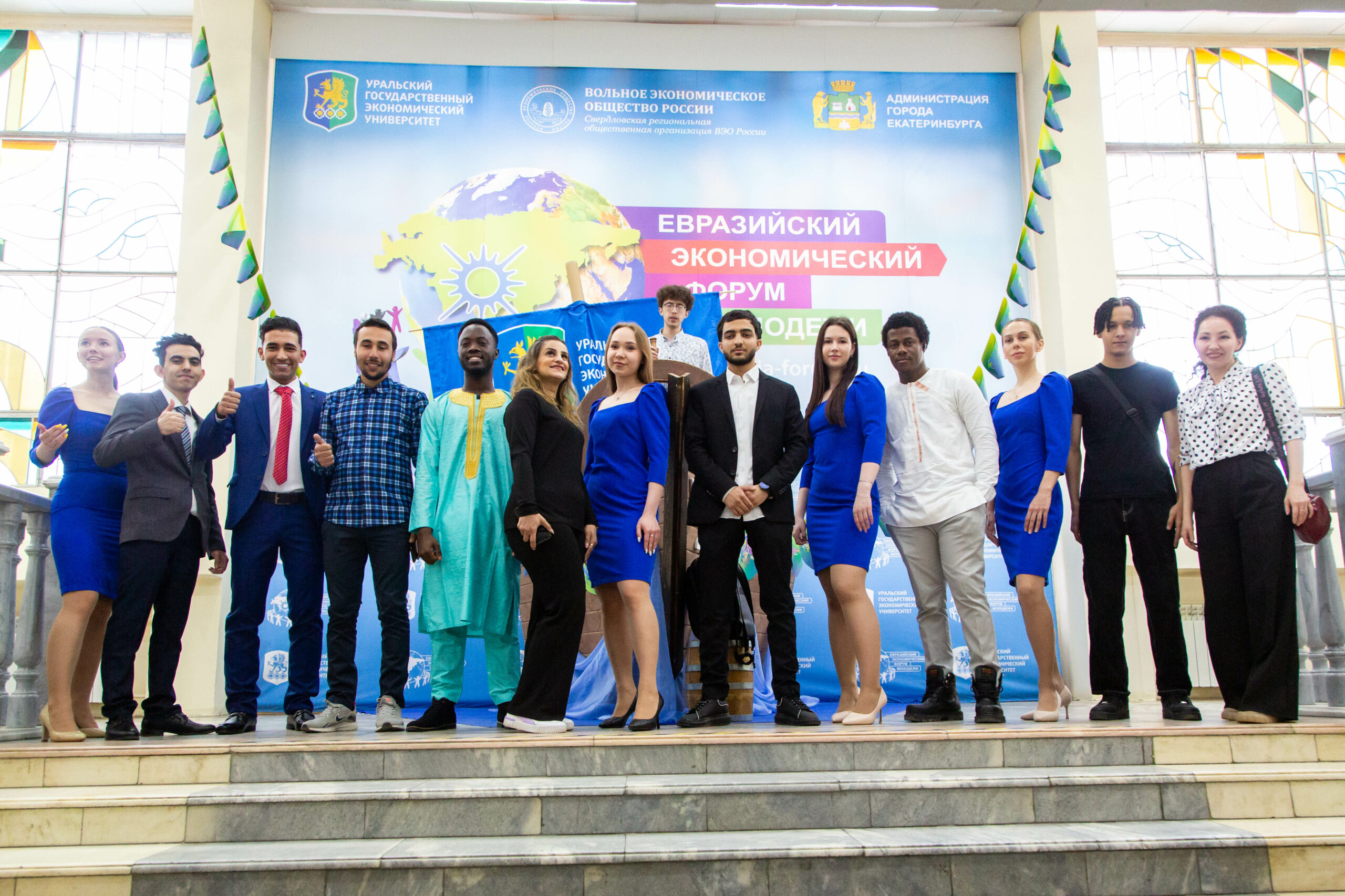
  • The 15th Eurasian Youth Economic Forum in Yekaterinburg to Welcome Delegations from Over 100 Countries

    The 15th Eurasian Youth Economic Forum in Yekaterinburg to Welcome Delegations from Over 100 Countries

    Focus on Expanding Cooperation with East Asia and Integrating the Global South Agenda.

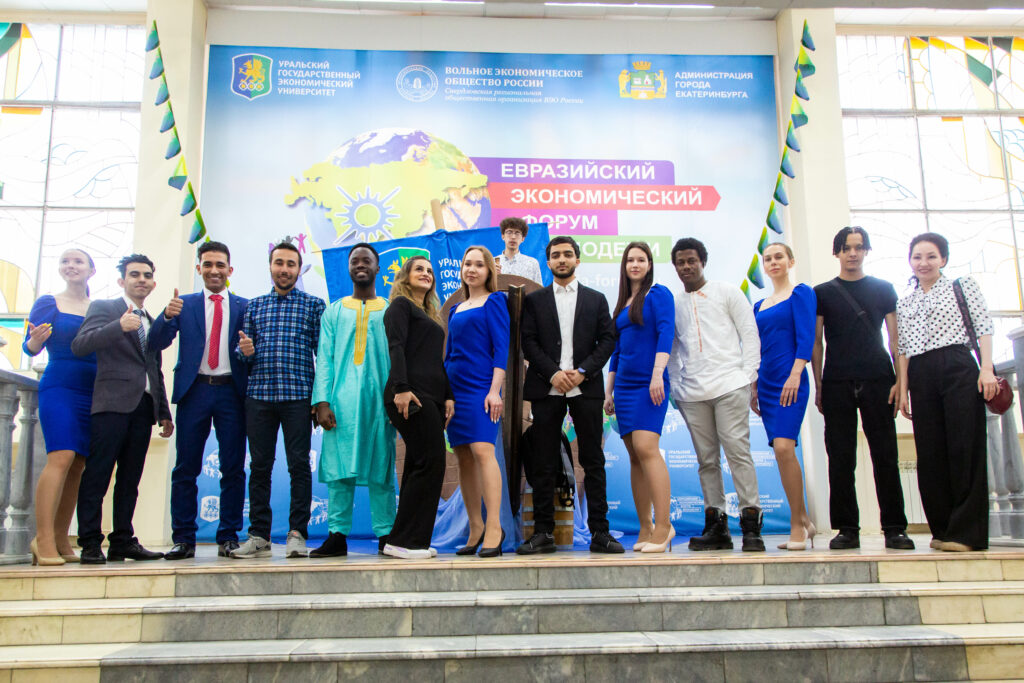
    Yekaterinburg, April 21, 2025 — From April 21 to 25, the capital of the Urals will host the 15th anniversary edition of the Eurasian Youth Economic Forum (EYEF) — one of the largest international events bringing together young leaders, diplomats, scholars, and entrepreneurs from across the globe.

    This year’s forum is set to break records, with over 21,500 participants from 116 countries and all 86 Russian regions already registered. Among the guests are official delegations, international experts, university rectors, business leaders, and media representatives, underscoring the event’s growing influence on the global stage.

    The central theme of the forum will be the development of international youth cooperation and entrepreneurship amid global transformations. In 2025, special emphasis is placed on deepening partnerships with East Asian countries and integrating the Global South agenda into the forum’s strategic focus.

    A number of key sessions and roundtable discussions will feature experts and officials from China, India, Indonesia, Vietnam, as well as nations across Africa and Latin America. These discussions will address sustainable development, digital transformation, food and climate security, and the exchange of educational and humanitarian initiatives.

    The International Diplomatic Forum will feature 68 diplomats from 35 countries, including representatives from BRICS+, the SCO, and ASEAN. During open sessions with students, ambassadors and consuls will engage in dialogue on the challenges and opportunities of global partnership, youth diplomacy, and intercultural exchange.

    In addition, the Forum of Rectors of Universities from Russia and Abroad will bring together more than 65 university leaders to discuss the role of higher education in building lasting international connections.

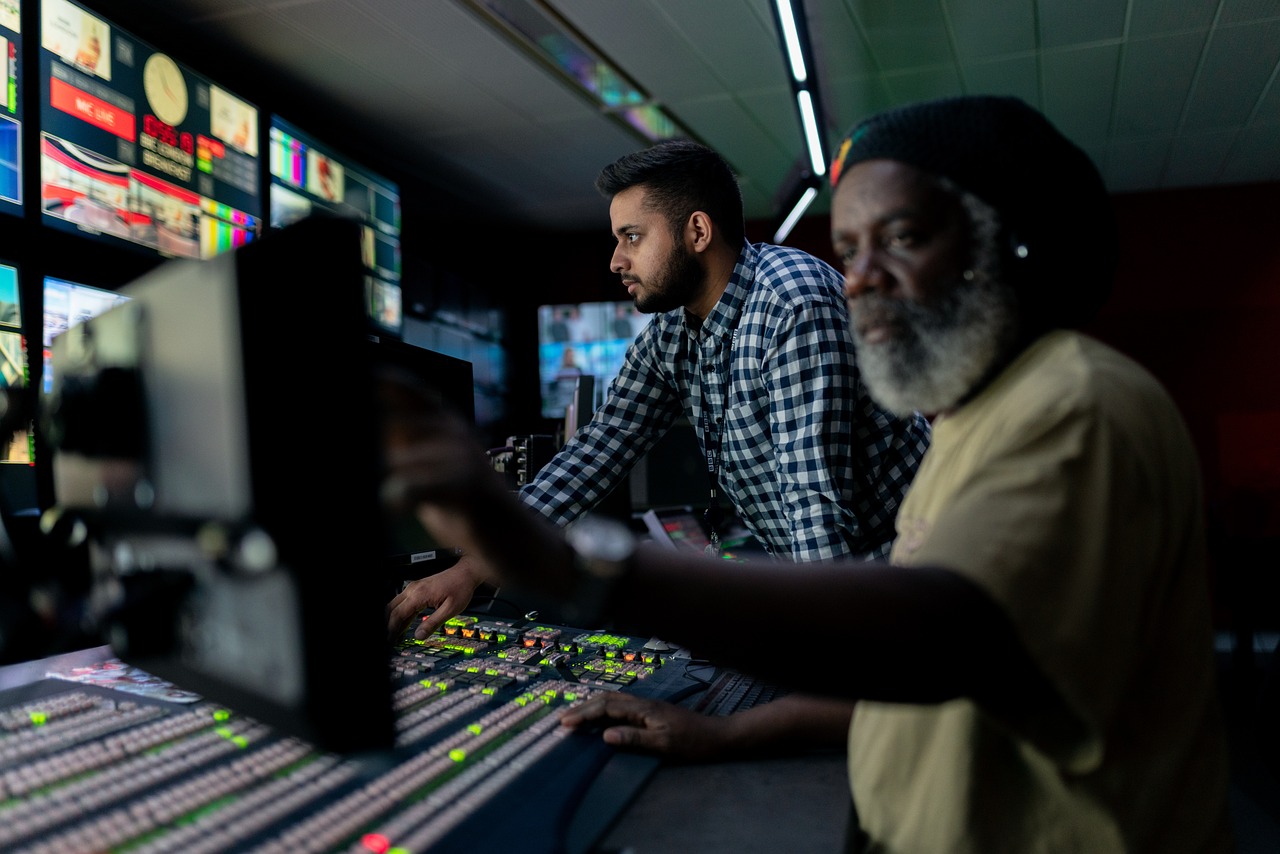
    The Media Forum, organized in partnership with Komsomolskaya Pravda, will host over 60 media representatives from the CIS and Asia. Dedicated sessions will explore the role of journalism in shaping the image of Global South countries in the international information space.

    The forum’s activities will span more than 14 international and Russian venues, including universities and cultural centers in Azerbaijan, Kazakhstan, Serbia, Tajikistan, Sri Lanka, China, and other countries — reflecting the event’s expanding geography and thematic reach.

    The scientific and cultural program will include international competitions for school and university students, the Anatoly Karpov “Ural Queen” rapid chess tournament featuring world chess stars, as well as dozens of expert lectures and master classes.

    The 15th EYEF reaffirms its role as a unique platform for youth integration into global processes, fostering sustainable connections between North and South, East and West — contributing to the creation of a more just and multipolar world.

  • I Am the Turkish President’s Main Challenger. I Was Arrested.

    I Am the Turkish President’s Main Challenger. I Was Arrested.

    By Ekrem Imamoglu 

    Mr. Imamoglu was elected mayor of Istanbul in 2019. He wrote from Silivri Prison, outside of the city. 

    Early in the morning on March 19, dozens of armed police officers showed up at my door with a detention order. The scene resembled the capture of a terrorist, not of the elected mayor of Istanbul, Turkey’s largest city. 

    The move — four days before my party, the Republican People’s Party, was to hold a primary for the next presidential race — was dramatic but hardly unexpected. It followed months of escalating legal harassment of me, culminating in the abrupt revocation of my university diploma 31 years after I had graduated. Authorities seemed to believe this would disqualify me from the race because the constitution requires the president to have a degree in higher education. 

    Realizing he cannot defeat me at the ballot box, President Recep Tayyip Erdogan has resorted to other means: having his main political opponent arrested on charges of corruption, bribery, leading a criminal network and aiding the outlawed Kurdistan Workers’ Party, even though the charges lack credible evidence. I was suspended from my elected office over the financial charges. 

    For years, Mr. Erdogan’s regime has gnawed away at democratic checks and balances — silencing the media, replacing elected mayors with bureaucrats, sidelining the legislature, controlling the judiciary and manipulating elections. The large-scale arrests of protesters and journalists in recent months have sent a chilling message: No one is safe. Votes can be nullified and freedoms can be stripped away in an instant. Under Mr. Erdogan, the republic has been transformed into a republic of fear. 

    This is more than the slow erosion of democracy. It is the deliberate dismantling of our republic’s institutional foundations. My detention marked a new phase in Turkey’s slide into authoritarianism and the use of arbitrary power. A country with a long democratic tradition now faces the serious risk of passing the point of no return. 

    The crackdown extended beyond me. In a sweeping operation built on an indictment that is no more than a compilation of statements by secret witnesses, the police detained nearly 100 people, including senior municipal administrators and business figures. Disinformation and defamation campaigns in pro government media preceded the detentions. 

    Yet the people of Turkey responded with defiance. Despite a ban on protests and roadblocks on key entryways into cities, hundreds of thousands of citizens from Istanbul to the northeastern city of Rize, traditionally an Erdogan stronghold, took to the streets. Within hours and into the following days of my detention, people from all ages and backgrounds joined my party. Outside Istanbul’s municipal headquarters, people held vigils despite increasingly harsh measures and arrests. 

    Despite the crackdown, the Republican People’s Party successfully held its presidential primary on Sunday. The party’s tally showed that 15 million people, including 1.7 million registered party members, cast their votes for me as the party’s presidential candidate. 

    Since my election as mayor in 2019, I have faced nearly 100 investigations and a dozen court cases. From the implausible to the absurd, each charge has been part of a broader effort to wear me down, bar me from serving the people who elected me, remove me from office and eliminate me as a rival to Mr. Erdogan. 

    I have already run against candidates backed by Mr. Erdogan three times — twice in local elections for Istanbul in 2019 and once again last year — where he personally campaigned against me. I won every time. Now unable to defeat me in elections, he is using his grip on the judiciary to sideline a challenger who, according to recent polls, could win if the elections were held today. 

    So why did so many people take to the streets in the largest demonstrations since the Gezi Park protests in 2013? 

    Amid mounting injustice and a troubled economy, public frustration in Turkey has reached a boiling point. People are speaking out and rallying around me, a candidate who promises inclusion, justice and the hope of a better future. They 

    will not be silenced. But the public also recognized my arrest as an attempt to push Turkey further down the path of autocracy. 

    Even in repression, signs of solidarity endure. Social democratic leaders and mayors across Turkey and beyond, from Amsterdam to Zagreb, demonstrated their support, with courage and principle, after my arrest. Civil society, too, has not wavered. But central governments around the world? Their silence is deafening. Washington merely expressed “concerns regarding recent arrests and protests” in Turkey. With few exceptions, European leaders have failed to offer a strong response. 

    What is happening in Turkey and many other parts of the world demonstrates that democracy, the rule of law and fundamental freedoms cannot survive in silence, nor be sacrificed for diplomatic convenience disguised as “realpolitik.” 

    Undeniably, recent events — Russia’s war in Ukraine, the overthrow of the al Assad regime in our neighbor Syria and the devastation in Gaza — have enhanced Turkey’s strategic importance, not least given its critical capacity to help with European security. However, geopolitics should not blind us to the erosion of values, particularly human rights violations. Otherwise, we legitimize those who are dismantling the global rules-based order piece by piece. 

    The survival of democracy in Turkey is crucial not just for its people but also for the future of democracy worldwide. The age of the unchecked strongmen demands that those who believe in democracy be just as vocal, forceful and unrelenting as their opponents. Democracy’s fate depends on the courage of students, workers, other citizens, unions and elected officials — those who refuse to remain silent when institutions crumble. I have faith in the people of Turkey and beyond who fight for justice and democracy. 

    Ekrem Imamoglu letter to the NewYork Times
  • Massive Protests in Turkiye

    Massive Protests in Turkiye

    Massive Protests in Turkiye Threaten Erdogan’s Grip on Power

    Massive Protests in Turkiye Threaten Erdogan’s Grip on Power | Vantage with Palki Sharma | N18G

    Protests continued across Turkiye against the government of president Recep Tayyip Erdogan. The unrest, which was triggered by the arrest of Erdogan’s rival, has now expanded to other concerns around the economy and civil liberties. What does this mean for Erdogan’s political future? Is this the end of the road for the Turkish president? Palki Sharma tells you.

  • The most influential media organizations

    The most influential media organizations

    The most influential media organizations in the world between March 2011-2021.

    Today, there is almost a consensus among most thinkers and political theorists around the world that:: The media in its various forms and patterns represents the most powerful strategic weapon possessed by major countries or even medium-developed countries..

    And when we say media, we mean:: written, audio, visual and electronic media.. And electronic media, as is known, is represented by various means of communication and social media such as Facebook, YouTube, WhatsApp, TikTok, Instagram and others.
    ..
    Since the emergence of the theories of: globalization and Americanization or the small village or the era of “infomedia… open media” and specifically since the fall of the Berlin Wall in 1989, followed by the disintegration and fragmentation of the Soviet Union and the rest of the communist bloc in the world and with it the disintegration of the “Warsaw Pact” military in the years 1990 ~ 1991, we say after all that important theories and major studies have emerged about the role of the media:: in controlling the opinions, desires and inclinations of all the peoples of the earth from east to west;; and from north to south;; With new media philosophies and theories, the vast majority of which fall under what is called ((capitalism / liberalism)), the theories emerged: Samuel Hemington in (The Clash of Civilizations), Francis Fukuyama in (The End of History), Henry Kissinger in (The Last American Empire), Zbigniew Brzezinski in ((The Propaganda Depth of the Capitalist World)) and many others that there is no room here to discuss in detail. Media schools and philosophies have become more efficient, mature and capable of controlling the opinions and tendencies of all the peoples of the earth; and more capable even of controlling global markets and stock exchanges. And the entire media has become ((an advanced specialized industry called the modern media industry))

    ** On 17 ~ 5 ~ 2021, the International Media Organization published;; It is one of the important institutions associated with the United Nations. An important and detailed study on the five most important institutions and media outlets that had a significant impact on political, economic, financial, cultural and social events in the world as a whole over a full ten years, specifically for the period from March 2011 to March 2021. These five institutions are:

    1~ The British Broadcasting Corporation BBC.. It is a British institution headquartered in London / England.

    It was founded in 1923.

    It has three icons: BBC in English.. and BBC in Arabic.. as radio stations.. with a satellite station with the same name BBC.. Many consider it one of the most neutral, reliable and solid media outlets; and its various activities are followed by more than 2 billion people around the world from different races, nationalities and continents.

    2~ The American CNN channel; headquartered in Washington, USA. It was founded in New York City, USA, on 4/13/1979 by the famous billionaire “Robert Murdoch”, who is Jewish in religion and nationality; and many researchers and those interested in media and propaganda consider it one of the most important and dangerous satellite channels in the world; as some accuse it of having dangerous and secret relations with many Zionist and Masonic organizations around the world; and the latest reliable statistics about it indicate that there are approximately one and a half billion people around the world who follow its curricula and news around the clock.

    3~ Fox News is an American satellite channel; its headquarters are in the American capital, Washington; it was founded in 1995 by American businessman Robert Maxwell and other shareholders. Many consider it to represent the American Democratic Party; while others consider it to be the official spokesperson and close to all liberal movements around the world. It has two main sections; the first is English-speaking; and the second is French-speaking. The latest statistics and studies about it indicate that the number of its followers is close to one billion people around the planet, representing the five continents of the world.

    4~ The Chinese News Agency (Xinhua) is the official Chinese agency allowed to operate within Chinese geography; it was established in late June 1933 with a news/guidance orientation only; but after 1973 and after the Chinese Communist Party tightened its complete control over all parts of China under the leadership of “Mao Zedong”, the entire agency turned into the media and propaganda wing of the ruling Chinese Communist Party since that date until today; and it broadcasts its programs exclusively in the local Chinese language; and the number of its employees is approximately 3965 employees, technicians and consultants; and its headquarters is in the Chinese capital, Beijing itself; and the latest studies and research on it indicate that the number of its followers ranges between one billion and one and a half billion people. The vast majority of them are from the Chinese people themselves; and it has no clear influence outside the official international borders of China.

    5~ Al Jazeera Qatari Channel; It was initially established in the British capital London on 1~11~ 1996.. And after only four months of its work, it moved to the Qatari capital Doha; and huge sums of money were allocated to it, close to 2 billion dollars;; and Al Jazeera Qatari Channel broadcasts in three sections: the Arabic section, headquartered in Doha; the English section, headquartered in England; and the French section, headquartered in Paris.

    The number of its employees and experts is approximately 1955 employees and affiliates in its three sections.. Al Jazeera Channel adopts a very mature and efficient media philosophy that combines moderate political Islam with limited disciplined freedoms. The latest studies and solid research on it indicate that the number of its followers ranges between 570 and 600 million people in the entire world;; It is also accused of being the official spokesperson for the international organization of the Muslim Brotherhood movement.

    Thus, we have provided a brief description of the five most important media institutions around the world, with reference to the role of contemporary media in influencing the trends and opinions of most people in the world as a whole.

  • NOVEMBER 10, 1938

    NOVEMBER 10, 1938

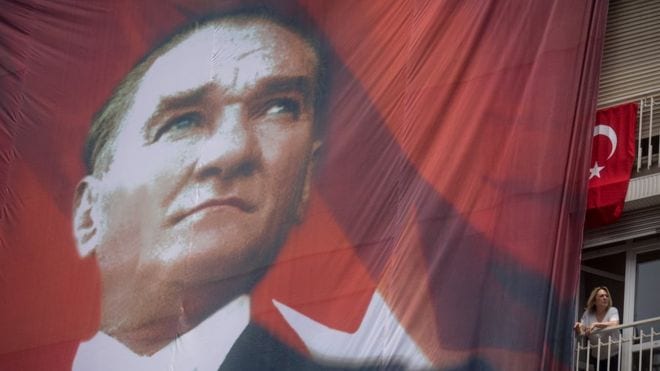
    Mustafa Kemal Ataturk

    The only leader, rare in the world history, who accomplished Herculean tasks in such a short period of time.

    Ataturk was one of the greatest statesmen of the 20th century, transforming the remnants of a degenerate Empire that had existed as a corpse of itself for the last 100 years into a secular, progressive state that embraced liberal democratic ideals.

    As a Turkish commander in WW1, Ataturk was the only general to have never suffered a defeat. He fought bravely in the failed Gallipoli offensive that humiliated the Allies, and fought in both the European and Syrian theaters until the Ottoman defeat in 1918.

    Then, during the Turkish War of Independence, Ataturk rallied his people and liberated Turkey from the Treaty of Sevres. Not only did he defeat the French, the English, the Greeks, and the Armenians, he reversed the Ottoman territorial concessions that had been made after the Russo-Turkish War.

    Then, after emerging victorious and creating the Republic of Turkey, he went about to fix the new nascent state’s issues. He realized that the backwards ways of the old Ottoman Caliphate were irreconcilable with his vision for a new, secular Turkey. And in spite of virtually all of the challenges he faced, he prevailed.

    Some of his accomplishments include:

    Created a new alphabet to replace the old Arabic-based one and fully implemented it within 3–5 months

    Promoted education – particularly mathematics and the sciences – throughout his state to create a secular, scientific system. As a result of this, thousands of Turks were educated. Only 7% of the Turkish male population and 0.5% of the Turkish female population was literate. Today, Ataturk’s Turkey has a literacy rate of 95%.

    Abolished both the Islamic Caliphate and Ottoman Sultanate despite pressure to take the title of Caliph for himself. This in itself is a huge accomplishment. By doing this, he symbolically promised to make Turkey into a shining example of secularism.

    Secularized the nation, abolishing religious laws and giving all Turkish citizens equality before the law. He based his legal system off of that of the French, Swiss, and Italians.

    Established a Turkish homeland, where Turks could have sovereignty. The Ottoman Empire, especially after the 19th century, had become increasingly Europeanized and began neglecting most of its subjects, including its Turkish ones. By establishing a Turkish homeland in Anatolia, Ataturk was the founder of Turkish nationalism.

    Providing women’s rights. Ataturk wrote,“Everything we see in the world is the creative work of women,” and did the following to advance women’s rights:

    Gave women the right to vote, some 20 years before France

    Banned the hijab

    Gave women equal rights before the law

    Banned polygamy

    Universalized divorce and inheritance laws

    Supported women’s education and coeducation

    Translated the Quran into Turkish, giving Turks the ability to read a non-Arabic book of religion. This was an important step in Turkish nationalism.

    What made Ataturk a great leader was the fact that he completely changed a broken nation into the only stable Middle Eastern country of its time. His very title – Ataturk, or Father of the Turks – is symbolic of the tremendous contributions he’s made towards the Turkish nation. For this reason, he is one of the most respected people in history.

    Shakespeare wrote, Einstein thought, Ataturk built.”

    Azmi Guran

  • APPRECIATION OF CONTRIBUTION

    APPRECIATION OF CONTRIBUTION

    APPRECIATION OF CONTRIBUTION to the Inaugural Event of the Compulsory Peace Education & ICTs vision.

    APPRECIATION OF CONTRIBUTION

    THIS CERTIFICATE IS PROUDLY PRESENTED TO

    Turkish Forum

    In recognition of contributing as a Member Organization of the New Coalition for: “Inaugural Event: Compulsory Peace Education & ICTs from Kindergarten to K-12, and Beyond” (CPE-ICTs-K-12) in support of the 2024 United Nations Summit of the Future #OurCommonFuture by Light Millennium Global, which was held on October 5, 2024.


    BİRCAN ÜNVER, M.A.

    FOUNDER-PRESIDENT OF THE LIGHT MILLENNIUM GLOBAL