Category: News

  • Mustafa Kemal Ataturk: A Childhood Recollection

    Mustafa Kemal Ataturk: A Childhood Recollection

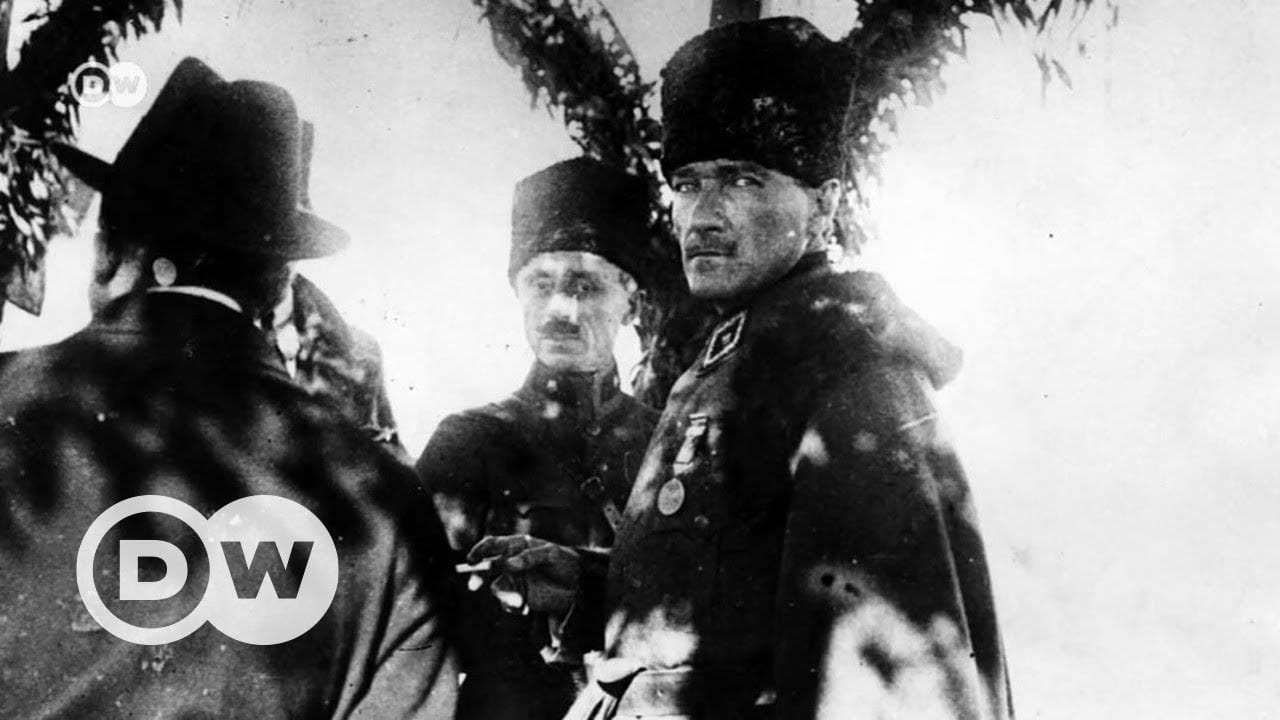
    On the eve of the 21st century, Turkey is celebrating the uninterrupted 75th anniversary of her foundation (29 October 1923) and commemorating the 60th anniversary of the death of Mustafa Kemal Ataturk (in November 1938). The man who founded modern Turkey, the successful fighter against European colonialism, was at 35 years of age, the youngest general of World War I and the hero of the Gallipoli campaign. Even today I remember how we Turks mourned him as though we had all lost our father. There are not many of his contemporaries alive today, but there are many of my generation who saw him in their youth or childhood. I am one of them.

    My encounter with Ataturk occurred in elementary school. The year was 1937 or 1938. News of his visit brought excitement to the school. The blackboards were painted and even inaccessible corners were cleaned. The school administration distributed new history texts to each class. The text was written by Afet Inan, ‘a liberated woman historian’, whom Ataturk admired. The students became impatient. Each wanted to see him, while the teachers, overcome with emotion, wanted to be relieved of their classroom duties.

    There were some descendants of famous personalities scattered in various classes. The school administration took care to make their classrooms especially attractive. Still we had a little bit of hope in our class. According to our teacher, if he was to be believed, Ataturk would not overlook our class since our teacher fought in Ataturk’s army during the war for independence, 1920-1922. As rumour of his impending arrival spread, Ataturk appeared at the end of the week. We were studying Turkish history exclusively that day. We did not hear Ataturk arrive but realized something was happening because of the commotion in the corridor. Every eye turned to the windows with a view of the corridor. There was no doubt that Ataturk was here. Our teacher counselled us to avoid losing our heads in the excitement. 


    Ataturk’s presence did not raze my classmate at the neighbouring desk. He had a mania for copying secretly from a book which he kept on his lap during examinations. Even in a subject in which he was well versed, he preferred to copy. When he filled in his name, date of birth, and address, he would glance at his identity card and copy. Cheating was a game for him. Ataturk’s presence did not dissuade him from keeping his copy book on his lap. He was the type who would be proud to say later ‘You see, nobody would dare cheat in Ataturk’s presence but me.’

    Meanwhile, Ataturk and his party had gathered in the corridor. Ataturk was in the middle, flanked by the senior school administrators. The remainder of the group followed at least two steps behind them. Then the door opened wide and Ataturk entered with his entourage. We all stood at attention just like soldiers. As we jumped to attention, the book fell from my classmate’s lap. He blushed with embarrassment. Fortunately, no one noticed in the excitement.

    Ataturk told our teacher to seat us, which he did. Our teacher then bowed, not extremely low, but at just the right height and introduced himself rather modestly as ‘Your obedient teacher in history’. Since he was a member of the board of education as well, we were astounded that he referred to himself as merely a teacher. Perhaps Ataturk would have questioned him more diligently if he had known of the teacher’s other responsibilities. Ataturk asked him ‘Do you teach from the book or from your own concept?’ The principal and the teacher answered simultaneously ‘From the book’ as they tried to prevent him from asking ‘From which book?”Very nice’ replied Ataturk with a glance at the text book on the desk. Had he asked us about anything in that book, we would have been dumfounded. Thank heaven, he didn’t. The principal and the teachers explained the curriculum to Ataturk to change the subject.

    I had seen a picture of Ataturk. He posed with two fingers in his waistcoat pocket, his head bent slightly forward. ‘To look at him directly is difficult. To look in his eyes is impossible. If you look at any more than his chin, you will be dazzled by the reflections from his eyes and lose consciousness as though you were struck by lightning’. This was common folk wisdom so I didn’t dare raise my head to look at his face. What I could see was his watch chain, waistcoat, two fingers of his left hand in his pocket, his collar and part of his chin but the Devil made me suddenly glance a little higher. I saw no dazzle nor did lightning strike. Even the principal and the teacher could look into his eyes with no ill effects. 
    Dazzling reflections and lightning were exaggerations but the stare from those eyes was unusual. The eyes stared into space; they seemed to focus at great distances and peer into wide chasms. Even a child could not fail to notice that nothing escaped those eyes. No one could deceive this man. He was unimpressed by bombast. He was extraordinary. Nobody was required to tell him what needed to be done. Those who attempted to deceive him appeared to be merely superfluous, thoughtless, unseemly or presumptuous. That is why the principal and the teacher were so ridiculous in his presence. He did not need their briefing. What he should have been told he already knew.

    I am still convinced today of the correctness of those childhood impressions. I recently read a 1941 publication about Ataturk’s conversation with General MacArthur when MacArthur visited Istanbul in 1931. In his diary MacArthur noted that even before Hitler’s rise to power in Germany Ataturk had prophesied that World War II would begin in Europe between 1941-1945. He also foresaw that the United States could not maintain its neutrality and that the first victor in Europe would be Bolshevik Russia rather than England, France, or Germany.

    Everything happened exactly as he had prophesied. He knew that teachers would give him evasive answers; that a book would fall from the lap of a blushing student; and that a newly introduced unopened book would be presented to him as a traditional text. He knew all that in the early morning prior to his departure from his residence at Bosporus. For such a man there are no surprises.

    To avoid embarrassing his hosts he always appeared to be listening to their presentations but he could not wipe the sardonic expression from his face. I noticed how his cold blue eyes, arched eyebrows and thin lips produced an expression that said: ‘Tell me Mister, what kind of text book do you really use? I already know what district you’re from; what your favourite flavour is; and what kind of coffee you drink and whether you take it with cream or sugar.’

    I asked myself why Ataturk didn’t perceive the sanctimoniousness of the selfish sycophants around him when he was able to look into the bottom of their souls. Some time later I realized the answer. Ataturk was not deceived by the games they were playing. He was just toying with them. Nothing is as ridiculous as a confidence man being duped by his intended victim.

    After paying quick visits to two other classes, he and his entourage visited the principal’s office. Before he left the office, Ataturk autographed a photograph of himself. No sooner had he left the office when two blustering teaching assistants slipped in and lunged toward the cigarette butt Ataturk had left in an ashtray. They argued over who would smoke Ataturk’s cigarette butt and finally agreed to share it in the hope that each would inhale some of Ataturk’s ingenuity. I thought both would now be on a fast track to a ministerial post. Alas, that was not to be. One became a customs officer and the other headed a small municipal office.

    As the teaching assistants fantasized about their future, Ataturk prepared to leave. His departure was announced and we all rushed into the schoolyard. After conferring with his aides, Ataturk decided to mingle with the student body. He left his aides behind and plunged into the crowd. We all marched with him to the main entrance, which was used only on ceremonial occasions. The young students moved in every direction, some even creeping backwards like lobsters to look at his face. Ataturk was unperturbed and strode resolutely ahead.

    Curious spectators appeared by the thousands at the school entrance. Police officers had great difficulty keeping the crowd from spilling into the street. Every window with a view was crammed with faces struggling for a glimpse. When Ataturk appeared on the street, the crowd began applauding. Exulted by the applause, he entered his automobile and departed, flanked by a motorized escort. His entourage followed with great difficulty as the swarming crowd impeded the passage of their vehicles.

    That evening the attendance list was checked. Two sly foxes were found to have exploited the occasion and skipped school that day. I don’t remember if they were punished. I think missing that historic day was punishment enough.

    Azmi Guran. Ph.D., Prof.El.Eng. (University of Pennsylvania)

  • BRICS International Municipal Forum: Cities of the Future and Global Partnership in Action

    BRICS International Municipal Forum: Cities of the Future and Global Partnership in Action

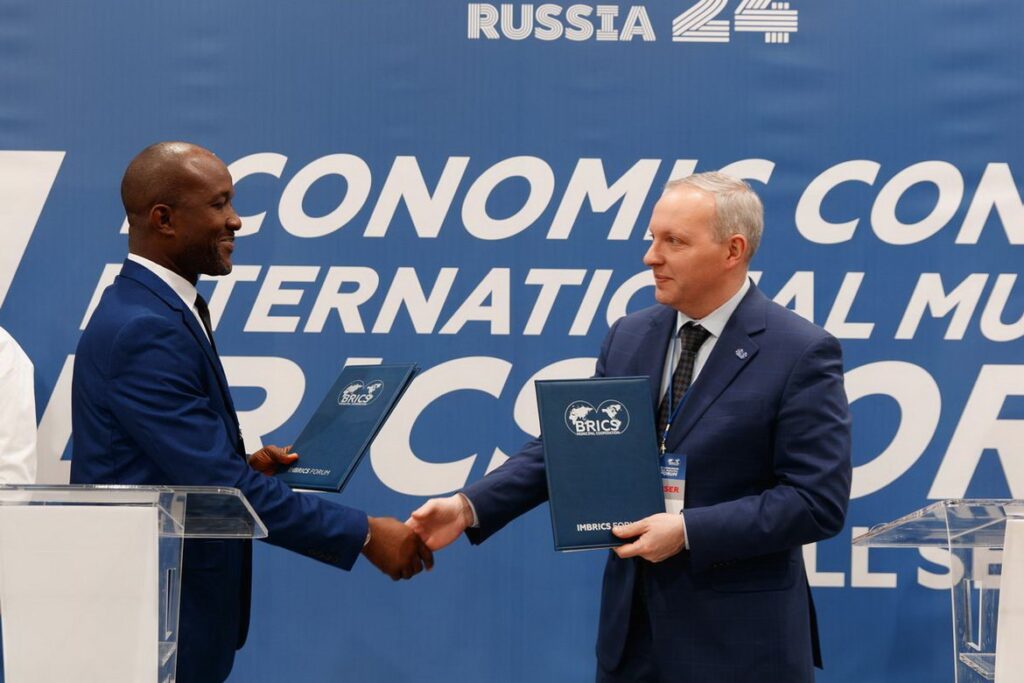
    From October 29 to 31, 2025, St. Petersburg will host the BRICS International Municipal Forum (IMF BRICS). The upcoming Forum is set to become one of the key global events fostering cooperation, innovation, and sustainable urban development among the BRICS+ countries and friendly nations.

    As a leading communication and business platform, the Forum unites partners from over 70 countries and 2,000 cities and regions around the world. In 2024, the event gathered nearly 6,000 delegates from 101 countries, underscoring its growing global significance.

    The Forum’s mission is to promote effective solutions for sustainable urban development, facilitate the exchange of advanced technologies and best governance practices, and strengthen direct ties between cities and regions. Discussions will focus on urban innovation, digital transformation, green economy, infrastructure, education, and social policy, with special attention to achieving the UN 2030 Sustainable Development Goals.

    The event is held with the support of the Ministry of Foreign Affairs of the Russian Federation, the Federation Council, the Administration of the President of Russia, the Governments of Moscow and St. Petersburg, the All-Russian Congress of Municipalities, the Moscow City Duma, the Moscow Chamber of Commerce and Industry, and the Russian Union of Industrialists and Entrepreneurs. Since 2020, the Forum has been officially included in the BRICS Chairmanship event plan and recognized in the Beijing Declaration of the XIV BRICS Summit (2022) and the Kazan Declaration of the XVI BRICS Summit (2024) as a key mechanism for enhancing cooperation among cities and promoting sustainable development.

    The President of the Russian Federation, Vladimir Putin, has commended the Forum for its contribution to strengthening international dialogue and practical cooperation at the municipal level. This year’s BRICS International Municipal Forum will serve as a dynamic platform for new partnerships, innovation-driven projects, and meaningful agreements, shaping the urban future within the expanding BRICS+ partnership network.

  • Letter to Mayor of Tokat- Republic of Turkiye

    Letter to Mayor of Tokat- Republic of Turkiye

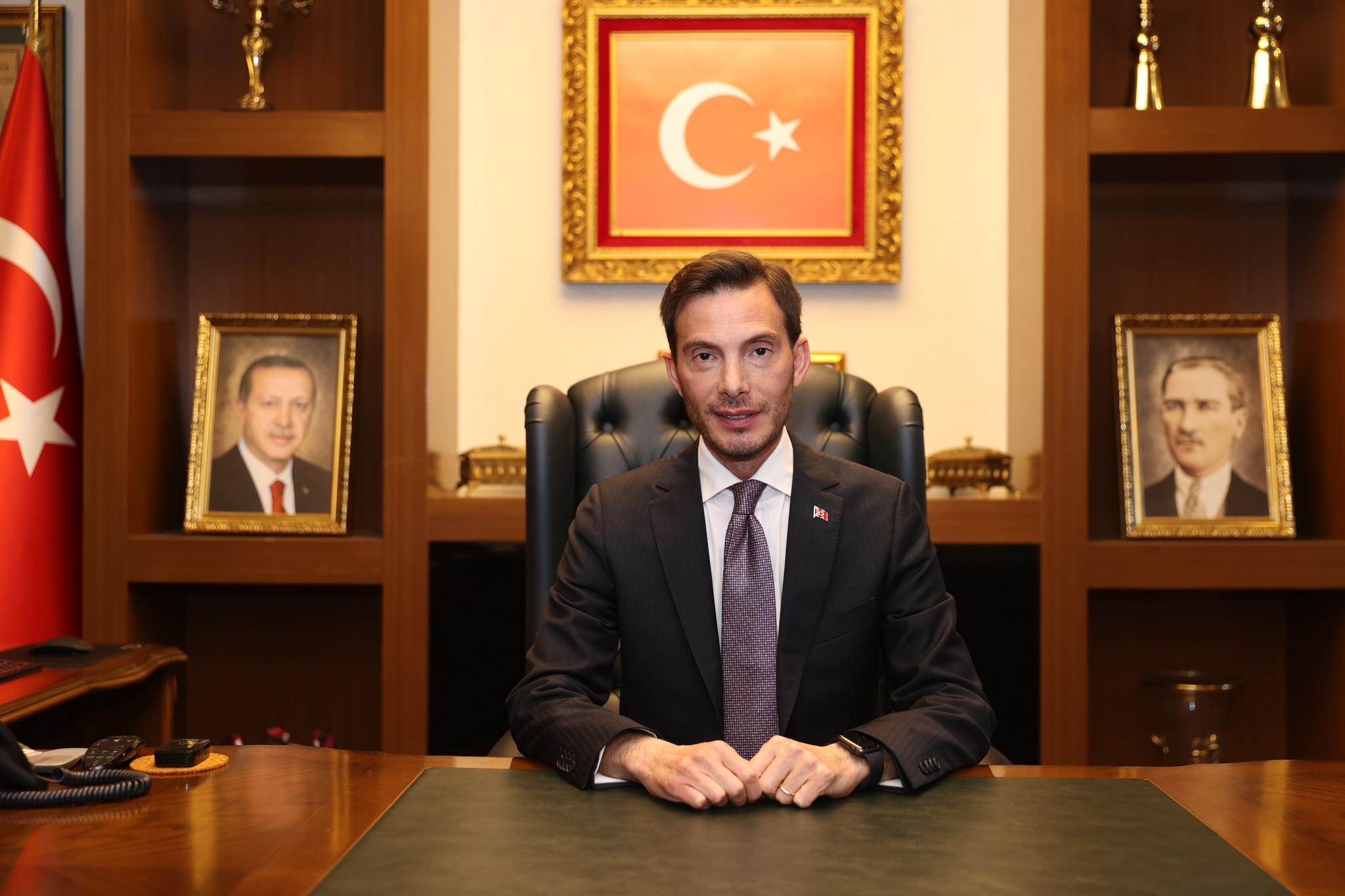
    The Honorable Mehmet Kemal Yazıcıoglu
    Alipaşa Mahallesi,
    GOP Bulvarı No: 184
    Tokat Merkez, Tokat, Türkiye
    Phone Number: 0356 214 3735
    etkinlik.tokat.bel.tr

    Email: [email protected]

    September 9, 2025

    Dear Mayor Yazıcıoglu,

    My name is Ibrahim Kurtulus. Although my family and I have lived in the United States for the past 54 years, our hearts and souls have always remained devoted to the Republic of Türkiye, the great legacy of Mustafa Kemal Atatürk. I am originally from Rize—Çayeli, Demirhisar Village and while America has become our new home, Türkiye is always at the center of our identity and spirit.

    I am blessed to be the father of two young daughters, ages 11 and 13, to whom I constantly emphasize that freedom is never free and that true fulfillment in life comes from respecting, honoring, and helping those around us. For the past 29 years, I have worked as a Wall Street Investment Banker, but at my core, I remain deeply engaged in community life and in defending the honor of our Republic abroad.

    Baskanım, the reason I am writing to you is to extend my sincere congratulations. I have been following your work through social media, and what moved me to reach out is your remarkable dedication to public service and the people of Tokat. Your active presence in the community, your accessibility, and your heartfelt words such as “Sizlere hizmetkâr olmanın mutluluğunu yaşıyoruz,” “Sen söyleyin, biz yapacağız,” and “Bizim efendimiz vatandaş dir” deeply resonated with me. These expressions reflect true leadership rooted in humility, service, and respect for the people who entrust you with office.

    Your approach reminds me of the true meaning of public service: never forgetting that it is the people who elect us, and that serving them is both an honor and a responsibility. It is rare to see an elected official who so naturally combines professionalism with compassion, duty with humility, and authority with accountability. You have set a powerful example not only for Türkiye but also for public officials everywhere. Unfortunately, here in New York, we have recently experienced the opposite. 

    The Turkish-American community has endured significant disappointment under the tenure of Consul General Ahmet Yazal, who has failed to show the grassroots engagement and sincerity that you embody. If anything, Mr. Yazal should look to you as a model of how an official must serve by being present among the people, honoring commitments, maintaining open channels of communication, and standing firmly by one’s word.

    Mayor Yazıcıoglu, you are not only a leader but also a patriot whose service uplifts your community and strengthens the prosperity of Türkiye as a whole. Your example is a reminder that when public officials genuinely stand with their people, both the nation and its citizens flourish together.

    Although I have not had the honor of meeting you in person, I wanted to write this letter to convey my deepest appreciation and admiration. Thank you for your service, for your example, and for reminding us all what true leadership looks like.

    Respectfully,

    Ibrahim Kurtulus
    Community Activist 

    Ibrahim Kurtulus
    425 Jefferson Ave
    Staten Island, NY 10306 – USA
    646 267-7488

  • The Israeli Prime Minister needs to be careful about his statements

    The Israeli Prime Minister needs to be careful about his statements

    For several days, the world media has been circulating the news that the Israeli Prime Minister Benjamin Netanyahu has recognized the so-called “Armenian genocide.” It is reported that although Israel has not officially made any decision as a state, Benjamin Netanyahu said in a statement to the media that he recognized this “genocide.” Thus, he went down in history as the first head of state/government of Israel to hold such an opinion.

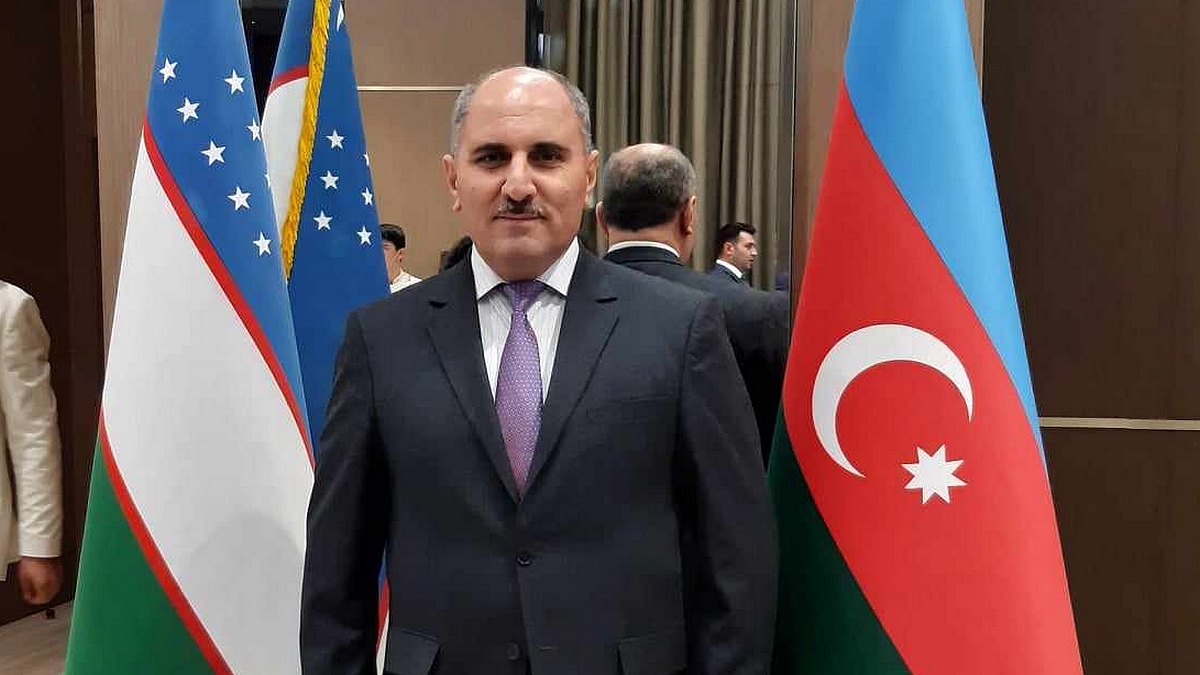
    Commenting on the issue, political commentator Azer Hasret said that the Israeli Prime Minister, with whose state Azerbaijan pays great attention to bilateral relations, should not have made this mistake: “Israel is a close country for Azerbaijan. We value this closeness; when necessary, we take steps together with Israel, and we work jointly to serve mutual interests. Of course, at the same time, both states are free to take any action, but this doesn’t mean that the leaders of the Israeli state/government or individual officials can make statements contrary to our interests. Such an irresponsible approach regarding the baseless claim of the Armenian genocide cannot be considered acceptable for Azerbaijan.”

    Azer Hasret further noted that “the Israeli Prime Minister may link his approach to the tension with brotherly Türkiye. However, the highest official of the Israeli state, which has close relations with Azerbaijan, should not forget that any step taken against Türkiye, any word spoken, is also against Azerbaijan. In this regard, states that value friendship with us, including Israel, should be careful in such matters. We highly value our relations with Israel and are interested in further developing them. However, if Israeli officials make such mistakes in relation to brotherly Türkiye, this will certainly not be well received in Azerbaijan. Such a situation can seriously damage Israel-Azerbaijani relations.”

    The political commentator added that the Israeli prime minister needs to correct his mistake as soon as possible, including eliminating this misbehavior, which upsets Azerbaijan. If this mistake is not corrected, of course, the Azerbaijani public opinion may look for ways to call for a reconsideration of its relationship with Israel.

    “A stone thrown at Türkiye was thrown at us. Every word spoken against Türkiye is considered spoken against us, Azerbaijan. Therefore, Benjamin Netanyahu should show his interest in preserving our relations by correcting his mistake as soon as possible,” Azer Hasret emphasized.

  • Turkey on the Path to the “Afghanistan, Lebanon, and Syria Syndrome”

    Turkey on the Path to the “Afghanistan, Lebanon, and Syria Syndrome”

    Turkey, deliberately pushed into an “Afghanistan, Lebanon, and Syria Syndrome” by the ruling political forces and their American partners, is increasingly moving away from the fundamental pillars of the secular, laicist Republic and the state doctrine of Mustafa Kemal Atatürk. Atatürk envisioned a modern state, independent of origin, ethnicity, or religious affiliation.

    The fact that U.S. support and the courting of Islamists represent a fundamental and massive issue for European security architecture is still not widely understood within the EU.

    It is no coincidence that in March 2025, U.S. President Trump appointed Thomas J. Barrack as U.S. Ambassador to Turkey, who publicly promoted the religion-based legal order of the “Millet system” – an Ottoman-era framework that governed political leadership based on ethnicity and religion – as a model for the entire region.

    “Divide et impera” – divide and rule – is the guiding principle of U.S. foreign policy, whether in the Ukraine conflict, the Middle East, or Turkey. Henchmen, opportunists, and accomplices of this disastrous imperialist policy are plentiful – in the EU, in Turkey, in the Arab world, and in Latin America. Remote-controlled statesmen and their political cabinets, Islamists in pinstripe suits, or former murderers and terrorists – who are suddenly and transparently declared as respectable politicians and Western interlocutors – lay the groundwork for the sellout of their own countries (while enriching themselves and their corrupt circles), and are the reason why millions are forced to flee.

    Who ends up dealing with the refugees and the negative consequences of these developments? The EU and its member states – to varying degrees and with different national implications.

    U.S. policy has repeatedly demonstrated – both in the past and present – where its loyalties lie and its willingness to finance and arm Umayyad-Sunni clerical Islamists. This U.S. state doctrine is a root cause of many of the conflicts and wars that are the result of a mix of ignorance and calculated strategy.

    Something is brewing on Europe’s doorstep – in Turkey – that will, in the foreseeable future, crystallize into a massive security disaster for us Europeans. A concrete example from Turkey:

    Under the guise of peace negotiations orchestrated by U.S. policymakers, discussions have taken place with the ruling AKP, the far-right MHP, the clerical-fascist SP, and the Kurdish terrorist organization PKK. At their core, these negotiations aim to transform Turkey into a federal system, fragmented along ethnic and religious lines.

    A statement by Devlet Bahçeli, leader of the Nationalist Movement Party (MHP) – “The President should have two deputies, one Kurdish and one Alevi” – has caused political tension and indicates the direction things are heading. Dividing Turkey along ethnic and religious lines paves the way for the Afghanistan, Lebanon, and Syria Syndrome. This will have serious consequences for Europe’s security structure and our societies.

    What happened before the Alevi initiative within the police?

    Journalist Tolga Şardan wrote in his T24 column that after Ali Yerlikaya took office as Minister of the Interior, a decree was issued that removed several Alevi provincial police chiefs from their posts.

    Regular readers of Büyüteç (“Magnifying Glass”) had already learned about the debate over an “Alevi Initiative” triggered by Bahçeli’s statements on June 20.

    Since then, a sense of anxious anticipation has spread within the Alevi community. At a time when the idea of a “terror-free” country was being strongly emphasized, the debate resonated widely within both the AKP and MHP.

    The most significant statement so far came from MHP leader Devlet Bahçeli.

    Bahçeli’s claim – picked up by journalist İsmail Saymaz – that “one of the vice presidents should be Kurdish and the other Alevi” sparked an unexpected public reaction. Some viewed it as a step toward the “Lebanonization” of the country. Supporters of this view see Bahçeli’s proposal as an official acknowledgment of an ethno-religious division.

    In response to the criticism, Bahçeli stated:

    “At a time when Turkey is progressing step by step, the idea was considered that one of the vice presidents could be Alevi and the other Kurdish. Associating this with Lebanon is a distortion and deliberate misdirection!”

    But beyond the “Lebanon aspect,” the real question remains:

    To what extent are appointments in the state apparatus based on merit (loyalty vs. qualification)?

    Let’s be honest: If appointments were truly based on merit, Bahçeli’s proposal wouldn’t even be necessary. It wouldn’t matter what worldview, religion, denomination, or ethnic background someone has.

    Let me now give a revealing recent example of what has already occurred on this path.

    The institution in question – as you might suspect – is the police force.

    After the 2023 elections, Ali Yerlikaya took office as Minister of the Interior and issued a sweeping decree replacing many provincial police chiefs appointed by his predecessor. Among them were four Alevis. While some chiefs were simply reassigned, these four Alevis were directly recalled to the ministry (“sidelined”). Yerlikaya’s aim was to replace the heavily criticized personnel associated with his predecessor Süleyman Soylu. He largely succeeded – many of Soylu’s affiliates lost their positions. However, the four Alevi chiefs were not part of Soylu’s inner circle. On the contrary, they were known within the police force for their competence and integrity.

    They belonged to the group that the government turned to after the December 17–25, 2013 corruption scandal, asking them: “Help us rid ourselves of the Gülen movement.” These officers were also loyal to Atatürk’s principles. Yet, because they were appointed during Soylu’s tenure, they were wrongly lumped in with his faction. Currently, there is not a single Alevi provincial police chief left.

    And it didn’t stop there:

    Among the foreign police liaison officers during the Soylu era, there were also three Alevis. After returning to Turkey – along with other attachés – only these three Alevi officers were treated differently and not reassigned to new international posts like their colleagues. They reported their legitimate complaints to senior management.

    Eventually, they – along with other “recalled” Alevi officers – were reassigned to the same department, the Inspection Board (Teftiş Kurulu).

    Even if the police leadership won’t admit it publicly – this is the reality. One would have hoped that the MHP leadership would have stood up for these police officers – even before the talk of an Alevi initiative. That they would have advocated for appointments based on merit, regardless of denomination or worldview. But the MHP apparently preferred to support officials with questionable pasts – even those under judicial investigation – instead of defending the rights of capable Alevi officers.

    After Soylu, Yerlikaya is now also surrounded by MHP-affiliated actors who clearly influence him. So if an Alevi initiative is being discussed and Bahçeli is following developments, then the MHP leadership should lead the way in implementing genuine performance-based fairness (loyalty vs. competence).

    Only in this way can positions be assigned to capable individuals, regardless of religious or ethnic background. The same, by the way, applies to the AKP.

  • Türkiye is economically isolated, diplomatically desperate, and intellectually bankrupt. Are they true?

    Türkiye is economically isolated, diplomatically desperate, and intellectually bankrupt. Are they true?

    Dr Atac Thank you for your long and passionate response.

    Dr. Mustafa Atac’s recent open letter, though emotionally charged and eloquently delivered, reads less as a fair-minded critique of Türkiye’s present condition and more as an overextended lament rooted in selective outrage and outdated narratives. As someone who deeply values the principles of civic discourse and constructive dissent, I feel compelled to respond—not out of blind loyalty to any individual or government, but out of respect for the truth and the dignity of the Republic of Türkiye.

    Dr. Atac laments that Türkiye is economically isolated, diplomatically desperate, and intellectually bankrupt. These are serious claims. But are they true?

    Let’s begin with the economy. Contrary to Dr. Atac’s assertion that Türkiye is “excluded from serious international financial circles,” recent data reveals the opposite. In 2023, Türkiye saw a 25.9% increase in foreign direct investment (FDI), with notable inflows from the UK, Germany, and the U.S.—nations known for their financial due diligence. Türkiye continues to attract global capital in logistics, fintech, infrastructure, and energy. It is no secret that Türkiye faces challenges, including inflation and high interest rates, but to declare it an economic pariah is demonstrably false.

    The portrayal of Türkiye’s education system as devolved into “a madrassa” ignores both facts and nuance. Turkish universities such as Koc, Bilkent, and Middle East Technical University consistently rank within the top 500–600 globally, according to QS and THE (Times Higher Education) rankings. Türkiye is also a key participant in the European Higher Education Area through the Bologna Process and hosts over 300,000 international students—a testament to its growing global academic appeal. The same institutions have trained engineers who developed drone technologies now exported to NATO members, such as Poland and the UK. That is not a failed system; that is a transforming one.

    Dr. Atac also evokes preess freedom and judicial independence, citing various Western rankings. Yet the same rankings routinely downplay systemic abuses in their own backyards. When France detains over 11,000 protesters during the Yellow Vest movement or when journalists in the U.S. are jailed while covering civil unrest, no one questions the democratic character of those states. Why then does Türkiye’s struggle against terrorism, foreign subversion, and the remnants of a violent coup receive no such contextual consideration?

    Let’s not forget that many of the so-called “journalists” imprisoned in Türkiye post-2016 were found to be complicit in the FETÖ-led coup attempt. Encrypted communications via By Lock, militaery coordination, and direct involvement in the July 15 tragedy are well-documented. It is not dissent that was punished—it was treason.

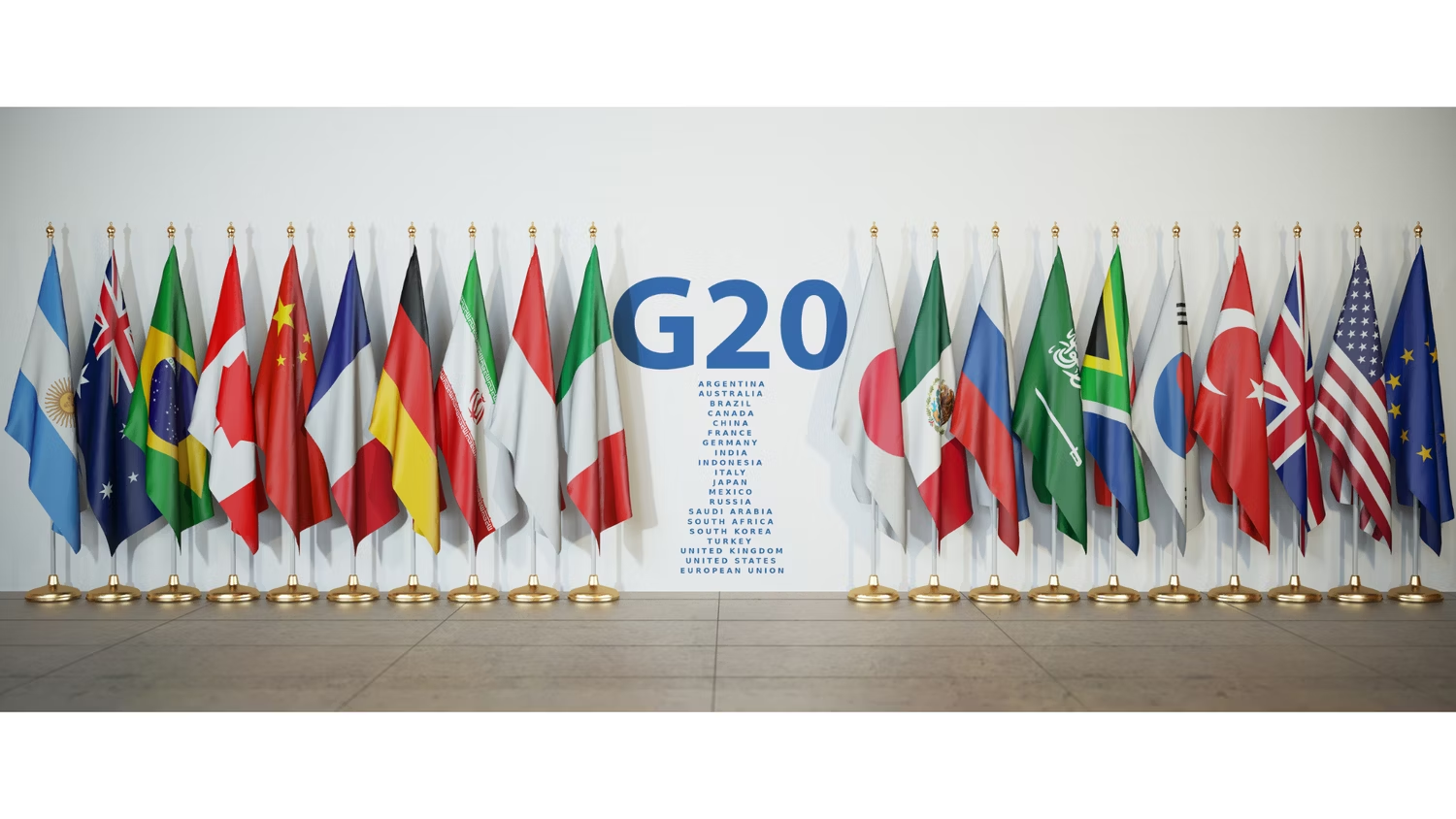
    Dr. Atac sneers at Türkiye’s alliances with Qatar and Oman, as if diplomacy with non-Western partners is inherently suspect. Yet Türkiye maintains robust ties with Germany, the UK, Itaaly, and Japan, and sits at the G20 table, not as a guest, but as a permanent member. It hosts NATO’s second largest military, plays a key role in the Black Sea Grain Initiative, and leads humanitarian aid convoys to Gaza and Ukraine alike. This is not isolationism , itt is strategic pluralism.

    Yes, there are challenges as Inflation must be controlled, and bureaucracy modernized. just two are valid points deserving of nuanced debate. But equating Türkiye’s evolution to North Korea’s oppression or Russia’s autocracy is not debate, it is distortion.

    One cannot claim to uphold Atatürk’s legacy while dismissing Türkiye’s national achievements as mere propaganda. Atatürk was not only a revolutionary but also a realist a leader who demanded progress be grounded in national sovereignty, self reliance, and global presence. Türkiye’s military drone industry, its diplomatic activism, and its investment in critical infrastructure reflect precisely that spirit.

    To critique is a right, even a duty, in a republic. But critique without proportion, without fairness, and without factual foundation becomes what Dr. Atac himself warns against: a betrayal not of the government, but of the very Republic he claims to defend.

    In today’s Türkiye, there is space for dissent. The opposition governs major cities like İstanbul, Ankara, and İzmir. The Constitutional Court continues to rule independently. And millions vote in fair, competitive elections with turnout rates that shame much of the democratic world.

    If one chooses to speak of Türkiye’s future, let it be done with courage but also with clarity. Let it be done with love not just for what we remember, but for what we are still building. Also, one should not be disparaged or vilified for holding a differing opinion. If the freedoms you invoke are only extended to those who share your particular worldview esspecially when that worldview is steeped in relentless criticism and hostility toward Türkiye then they cease to be freedoms at all and instead become instruments of intellectual exclusion.

    Let us be very clear, Dr. Atac: Türkiye is not perfect but it is far from broken or in disarray, as your narrative suggests.

    If you are searching for signs of a nation in crisis, you need only look at the United States. Here, citizens are at times arrested on the streets without due process; elected judges are removed from their courtrooms; city elected officials are taken into custody without being read their rights. Billions of taxpayer dollars are poured into endless wars, while over $15 billion has been funneled into sustaining the Netanyahu government despite its role in brutal campaigns that have drawn international condemnation.

    In America, a citizen can be gunned down with 35 bullets into their bodies for JUST  making eye contact with the wrong police officer and if you are lucky if your family will find your body . So before you accuse Türkiye of institutional collapse, perhaps turn your lens toward the realities unfolding in your own environment with the venom of hate dripping fromyour lips .

    As for your claim that I am a “mouthpiece” of Ankara—how dare you? You do not know me? Sir,  You have never sat with me, Sir,  never asked whom I voted for, never once attempted to understand my beliefs. You attack from afar with venomous words, but you know nothing of the person you seek to discredit.

    If you seek a professional debate, I welcome it anywhere, anytime. I will personally sponsor your travel to New York City and host you at New York University for an open forum. If New York is too far, I will gladly bring you to my village of Demirhisar in Rize’s Cayeli district. Perhaps the breathtaking beauty of the Black Sea, my village of Demirhisar and the sincere hospitality of our people will soften the bitterness in your heart toward the freely elected government of the Republic of Türkiye founded by none other than Mustafa Kemal Atatürk himself. Until then, I urge you to raise your critique with honesty and clarity not with the language of exclusion, not with personal insults, and certainly not with a tone that denies others their right to hold a different view point.

    And if we are to elevate the our NATO ally of the  Republic of Turkiye, Mustafa Kemal Atatürk’s Turkiye, it will not be through despairing editorials and historical amnesia , but through unity, reform, pride, and above all, honesty.

    Ibrahim Kurtulus
    Demirhisar Koy  – Rize – Cayeli
    New York