Category: News

  • Blood and Belief  –  Kurdish Identity

    Blood and Belief – Kurdish Identity

    The PKK and the Kurdish Fight for Independence

    by Aliza Marcus
    New York: New York University Press, 2007. 349 pp. $35

    Reviewed by Michael Rubin

    Middle East Quarterly
    Summer 2008

    Most writers on the Kurdistan Workers’ Party, best known by its Kurdish language acronym, the PKK, substitute advocacy for accuracy, so their books about the PKK tend to have limited practical use for policymakers. But Marcus, a former international correspondent for The Boston Globe who spent several years covering the PKK, has done important work in Blood and Belief. While sympathetic to her subject—the substitution of “militant” for “terrorist” grates—she retains professional integrity and does not skip over inconvenient parts of the PKK narrative such as its predilection to target Kurdish and leftist competitors rather than the Turks; the patronage it has received from the Syrian government; and the important role of European states and the Kurdish diaspora in its funding.

    Blood and Belief has four sections: on PKK leader Abdullah Öcalan’s life and the PKK’s beginnings; the PKK’s consolidation of power; the civil war; and the aftermath of Öcalan’s 1999 capture.

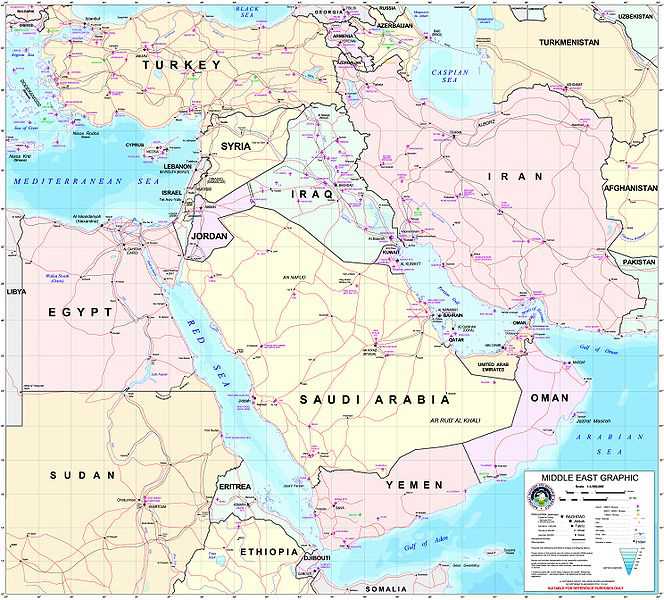
    The Kurds inhabit a region that spans Syria, Iraq, Turkey, and Iran, and Marcus does not let national borders constrain her analysis. Events in Iraq—such as the squabbling between Patriotic Union of Kurdistan leader Jalal Talabani and Kurdistan Democratic Party leader Masoud Barzani—influenced Öcalan, who concluded that he should tolerate no dissent. “We believed in socialism, and it was a Stalin-type of socialism we believed in,” one early PKK member relates.

    Steeped in Kurdish and Turkish history, Marcus provides better context than many other journalists who have tackled this subject. The PKK took hold, she shows, largely because of the weakness of the Turkish state in the 1970s. Between 1975 and 1980, the Turkish government barely functioned. After the 1980 coup, the Turkish military restored order. But when Barzani offered the PKK shelter in northern Iraq, the group remained beyond reach, allowing it to plan and launch a full-scale guerilla war against Turkey. Marcus concludes that the group’s continued survival in Turkey is because, at some level and among some constituents, it remains popular; its support is not all driven by intimidation as some Turkish analysts claim.

    Marcus impressively covers the civil war years (1984-99), and her narrative, combining dialogue and context, is rich and accessible. While many journalists and authors satisfy themselves with a single round of interviews, Marcus concentrates not on active PKK members, who she realizes do not enjoy the freedom to speak, but rather on past members, villagers, and family members whose accounts she cross-checks. She also incorporates Turkish language press accounts and interviews with Turkish officials.

    It is unfortunate, though, that her coverage of PKK resurgence, between 1999 and 2007, is just thirteen pages long. An exploration of how Öcalan has retained control while in prison and where he and his henchmen might take the PKK has seldom been more relevant. One hopes that this new chapter of PKK history will become the basis for a sequel.


    ***********************************************************************


    Kurdish Identity

    Human Rights and Political Status

    Edited by Charles G. MacDonald and Carole A. O’Leary. Gainesville: University Press of Florida, 2007. 336 pp. $65

    Reviewed by Michael Rubin

    Middle East Quarterly
    Summer 2008

    The reader of Kurdish Identity, published in 2007, will find himself reading such timely insights as former State Department Iraq coordinator Francis Ricciardone explaining that, “Of course, we have no relations at all with [Baghdad],” and former deputy assistant secretary of state David Mack writing that he understands both Kurdish aspirations and “the potential danger that a ruthless regime in Baghdad poses,” as though Saddam Hussein’s regime had not ceased to exist in 2003.

    The collection of articles published by MacDonald and O’Leary, Kurdish experts at, respectively, Florida International University and American University, might have been useful to practitioners in April 2000, the date of the conference for which they were written, but the articles are now out-of-date.

    Some chapters are useful to historians. Robert W. Olson’s essay on Turkish-Iranian relations between 1997 and 2001 capably reviews that period. Kurdistan Regional Government financial advisor Stafford Clarry’s analysis of the U.N.’s humanitarian program retains value because of his precision and attention to detail, all the more so in the wake of the Oil-for-Food program scandal, which he helped expose. Michael Gunter’s apt analysis of how the capture of Kurdish terrorist leader Abdullah Öcalan catalyzed Turkey’s EU accession drive stands the test of time.

    The editors conclude with an essay updating the reader on world events. Both are academics well worth reading, but they provide no insights in this collection not already published elsewhere. Their comments in passing on the dire situation of Syrian Kurds, who do not enjoy equal protection under the law, raises the question why Kurdish Identity does not address this subject.

    Had MacDonald and O’Leary reassembled their April 2000 conference participants to reconsider their contributions seven years later and analyze where they were right and wrong, Kurdish Identity would have advanced scholarship in a novel way. As it stands, however, their book offers too little and much too late, suggesting that academics live in a world of publish or perish with the content of those publications sometimes a secondary consideration.
  • Top of the Agenda: Turkey Court Ruling

    Top of the Agenda: Turkey Court Ruling

    EXECUTIVE SUMMARY

    – Turkey’s top court to rule on AKP; suicide bombs in Istanbul.
    – Bombings at Iraqi Shiite pilgrimage; separate attack in Kirkuk.
    – Philippines strikes deal with rebel group.
    – Pakistani PM in Washington for talks.
        
    Top of the Agenda: Turkey Court Ruling

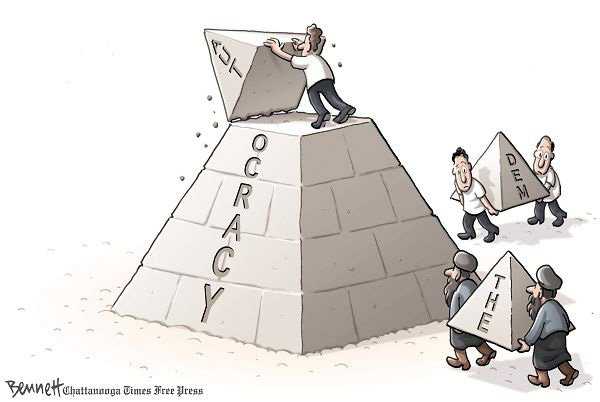
    Turkey’s top court today begins deliberations on whether to shut down the country’s ruling Justice and Development Party (AKP), in a decision with major implications for a country that has long sought to balance a secularist constitution and majority Muslim population. The court is considering whether the AKP’s decision to lift a ban on headscarves at universities constitutes a violation of Turkey’s constitution, and thus is grounds for banning the party (al-Jazeera).

    Turkey’s Hurriyet says the political conflict has wrought financial turmoil and has thrust Turkey into a new period of political instability. A day before the court deliberations, two bombings in Istanbul (Turkish Daily News) killed sixteen and injured at least 150 others in a crowded shopping area.

    Experts have warned Turkey’s secularists, whose power is felt most strongly among the country’s military elite, against trying to shut down the AKP, saying such a move could wind up isolating Turkey and could prove an obstacle to EU accession (Today’s Zaman). CFR’s Steven A. Cook, in an essay published on bitterlemons-international.org, says the events in Turkey represent a radicalization of the national dialogue between secularists and moderates.

    Background:

    – A Foreign Affairs article from November 2007 takes an in-depth look at the roots of Turkey’s constitutional conflict and says the dispute has “exposed the illiberal nature of Turkish secularism.”

  • Turkish court deciding AKP’s fate

    Turkish court deciding AKP’s fate

    Turkey’s Constitutional Court is meeting to consider if the governing AK Party should be banned for alleged anti-secular activities.

    It is the culmination of a series of clashes between the party, which has Islamist roots, and the secular elite.

    The AKP, which won a huge poll victory last year, denies it wants to create an Islamist state by stealth and calls the case an attack on democracy.

    Hours before the court opened, bomb attacks in Istanbul killed 17 people.

    Five of those killed were children, the governor of Istanbul said, while more than 150 people were wounded in the twin bombings, six of whom remained in hospital with serious injuries.

    It was not immediately clear who was behind the attacks – security services said they had similarities with previous attacks by the Kurdish separatist PKK, although the group itself denied any involvement.

    The country has also been attacked in the past by other leftist radical groups and Islamists.

    Prime Minister Recep Tayyip Erdogan said the bombings only strengthened Turkey’s determination in its fight against terrorism.

    ‘Judicial coup’

    It was not clear if the attacks were timed to coincide with the controversial court case, which represents a clash between powerful forces.

    Turkey’s PM has said the bombing overshadows the court case

    But Mr Erdogan insisted his thoughts were with those affected by the bombings.

    He cancelled a Monday morning cabinet meeting to travel to Istanbul and visit the site of the attacks.

    At the scene, Mr Erdogan downplayed the courtroom drama unfolding in Ankara, Turkey’s capital.

    “Our problem is not whether or not AK Party will be closed,” Reuters news agency reported him as saying.

    “Our problem at the moment is to keep our unity so our country will go in a different direction.”

    Secular ideals

    The modern Turkish republic was founded in 1923 as a secular and unitary state.

    COURT’S OPTIONS
    Dismiss case against AKP
    Impose financial penalty, cutting state aid to AKP; implying wrongdoing but not sufficient for ban
    Ban AKP but not individuals; would probably allow AKP to re-form and continue under new name
    Ban AKP and individuals; would probably lead to new elections; political future for PM and president unclear

    Since the 1960s, more than 20 parties – mostly pro-Islamist or pro-Kurdish – have been shut down by the courts for allegedly posing a threat to those principles.

    However, this is the first time that a closure case has been brought against a governing party with a huge parliamentary majority, the BBC’s Pam O’Toole says.

    The stakes are high, she adds, with the AKP fighting for its political survival and the secularists viewing the case as their last opportunity to block what they allege are attempts to turn Turkey into an Islamic state.

    More than 70 AKP members, including President Abdullah Gul and Prime Minister Recep Tayyip Erdogan, could be banned from political activities for five years.

    The party argues that it is facing a “judicial coup”.

    Fault lines

    The Constitutional Court has said it will convene on a daily basis until the 11 judge-panel reaches one of three verdicts – to shut down the party and impose political bans on its members; to cut treasury aid to it; or to throw out the case.

    Turkish secularists have staged huge anti-AKP rallies

    If the party is closed down or large numbers of its senior members are banned from politics, it will deepen the political fault lines between AKP supporters and secularists, our reporter says.

    This could lead to a period of political instability or even another general election, with the AKP’s deputies regrouping under a different name, she adds.

    Last week, an adviser to the court recommended that it should not shut down the AKP, arguing its decision to lift a ban on Islamic headscarves in universities had not challenged the constitution.

    The case has already caused uncertainty in Turkey’s stock market.

    There is also speculation that a ban could harm Ankara’s long-running bid to join the European Union, which has expressed concern.

    During its first term in office, the AKP pushed through major reforms aimed at EU membership.

    But critics allege that, in its second term, it has focused more on policies aimed at its conservative supporters.

  • The Anti-Coup

    The Anti-Coup

    The Anti-Coup

    As coups are one of the primary ways through which dictatorships are installed, this piece details measures that civilians, civil society, and governments can take to prevent and block coups d’état and executive usurpations. It also contains specific legislative steps and other measures that governments and non-governmental institutions can follow to prepare for anti-coup resistance.

    The Anti-Coup
    By Gene Sharp & Bruce Jenkins
    The Albert Einstein Institution

  • Bombs Kill 16 in a Crowded Istanbul Neighborhood

    Bombs Kill 16 in a Crowded Istanbul Neighborhood


    A Turkish police officer on Sunday guarded the site of two explosions in Istanbul as residents hung flags on windows in reaction to rumors that Kurdish separatists were behind the attack.

    By SEBNEM ARSU
    Published: July 28, 2008

    ISTANBUL — Two bombs exploded within minutes of each other late Sunday in a crowded pedestrian area of Istanbul, killing at least 16 people and wounding more than 150 in what the city’s governor called a terrorist attack.

    The double bombing appeared to be the worst case of terrorist violence in Turkey in nearly five years and seemed to take the Turkish authorities by surprise. There were no immediate claims of responsibility, although Kurdish separatist militants were initially suspected.

    Residents in buildings near the explosion sites hung Turkish flags from their windows and balconies in reaction to rumors that the separatists were responsible.

    There was no obvious reason the Istanbul neighborhood that was bombed, which is almost completely residential, had been the object of a terrorism plot.

    The first blast, which the police and witnesses said was relatively minor, attracted scores of onlookers curious about the commotion, with at least some of them thinking it was caused by a gas leak explosion. Many of the onlookers were then hit by flying shrapnel and debris in the second, more powerful blast about 10 minutes after the first and about 20 yards away, the governor of Istanbul, Muammer Guler, said in a news briefing broadcast by Turkish television.

    Witnesses described a scene of panic with victims lying on the street in pools of blood. The bombings seemed timed to exploit the summer pastime of many residents of the pedestrian area of Gungoren, in central Istanbul, to stroll in the cool late evening before going to bed.

    “It’s surely a terror attack, there’s no doubt,” Governor Guler said. “Because people were gathered after the first explosion, and because the second explosion happened right after, people sitting right across got severely injured.”

    Senol Simsek, a witness who provided first aid to the wounded, told the NTV television network that he had seen at least five people lying and writhing near a telephone booth that was destroyed. The police quickly sealed off the entire area and closed it to all traffic.

    Hayati Yazici, deputy prime minister who happened to be visiting Istanbul on Sunday, visited the bombing site and told the Anatolian News Agency: “It is obvious that this is the work of a villain organization, a person or people, however it is not certain as to who this is. Our friends are investigating, it will be discovered for sure.”

    The double bombing appeared to be the most serious terrorist attack here since twin truck bombings at two Istanbul synagogues killed 23 people and wounded more than 300 on Nov. 15, 2003. An obscure group linked to Al Qaeda took responsibility for the synagogue blasts, which were the worst in a series of explosions blamed on Islamic extremist groups that year that killed more than 60 people.

    President Abdullah Gul, in a written statement, denounced the attack here Sunday and said Turkey remained committed in what he called the struggle against terrorism. “Nothing can be achieved by terror, violently claiming lives of the innocent,” Mr. Gul said. “These attacks show the inhumanity and misery of the assailants.”

    Officials were continuing investigations and analysis at both explosion sites to determine the precise cause and motives behind the attack, Turkish news organizations reported.

    There was initial speculation that the bombings might have been the work of the P.K.K., or Kurdistan Workers’ Party, an insurgent group that has been fighting the Turkish Army for autonomy in the southeast area of the country adjoining Iraq.

    Earlier Sunday, the Turkish military announced that its fighter jets had attacked 12 Kurdish separatist targets in Iraq’s Qandil region and that it had inflicted an unspecified number of “terrorist casualties.”

    Lynsey Addario contributed reporting.

  • Istanbul Bombings Kill 15 Evening Strollers

    Istanbul Bombings Kill 15 Evening Strollers

    Published: July 28, 2008

    ISTANBUL, Turkey — Two bombs exploded within minutes of each other late Sunday in a crowded pedestrian area of Istanbul, killing at least 15 people and wounding more than 100 in what the city’s governor called a terrorist attack.

    The double bombing appeared to be the worst incident of terrorist violence in Turkey in nearly five years and seemed to take the Turkish authorities completely by surprise. There were no immediate claims of responsibility, although Kurdish separatist militants were initially suspected. The Istanbul neighborhood that was targeted, which is almost completely residential, had no obvious reason to be the object of a terrorism plot.

    The first blast, which the police and witnesses said was relatively minor, attracted scores of onlookers curious about the commotion, with at least some of them thinking it was caused by a gas leak explosion. Many of the curious onlookers were hit by flying shrapnel and debris from the second, more powerful blast about 10 minutes later and about 20 yards away, the governor, Muammer Guler, said in a news briefing carried on Turkish television.

    Witnesses described a scene of panic with victims lying on the street in pools of blood. The timing of the bombings appeared to deliberately coincide with the summer pastime of many residents of the pedestrian area of Gungoren, in central Istanbul, to stroll in the cool late evening before going to bed.

    “It’s surely a terror attack, there’s no doubt,” Governor Guler said. “Because people were gathered after the first explosion, and because the second explosion happened right after, people sitting right across got severely injured.”

    Senol Simsek, a witness who provided first-aid to the injured, told the NTV television network that he saw at least five people lying and writhing near a telephone booth that was completely destroyed. Police quickly sealed off the entire area and closed it to all traffic.

    Hayati Yazici, deputy prime minister who happened to be visiting Istanbul on Sunday, visited the bombing site and told the Anatolian News Agency: “It is obvious that this is the work of a villain organization, a person or people, however it is not certain as to who this is. Our friends are investigating, it will be discovered for sure.”

    The double-bombing appeared to be the most serious terrorism attack here since twin truck bombings at two Istanbul synagogues killed 23 people and wounded more than 300 on Nov. 15, 2003. An obscure group linked to Al Qaeda took responsibility for the synagogue blasts, which were the worst in a series of explosions blamed on Islamic extremist groups that year that killed more than 60 people.

    President Abdullah Gul, in a written statement, denounced the attack here Sunday and said Turkey remains committed in what he called the struggle against terror. “Nothing can be achieved by terror, violently claiming lives of the innocent,” Mr. Gul said. “These attacks show the inhumanity and misery of the assailants.”

    Officials were continuing investigations and analysis at both explosion sites to determine the precise cause and motives behind the attack, Turkish news outlets reported.

    There was initial speculation that the bombings might be the work of the PKK or Kurdish Workers’ Party, in insurgent group that has been fighting the Turkish army for autonomy in the southeast area of the country adjoining Iraq. In recent weeks the military has periodically announced anti-PKK operations near the border and northern Iraq, which the Turks say is used by PKK insurgents as a refuge.

    Earlier Sunday, the Turkish military announced that its fighter jets had attacked 12 Kurdish separatest targets in Iraq’s Qandil region and that it had inflicted an unspecified number of “terrorist casualties.”

    Source: New York Times, July 28, 2008