Category: News

  • Democracy’s Close Call in Turkey

    Democracy’s Close Call in Turkey

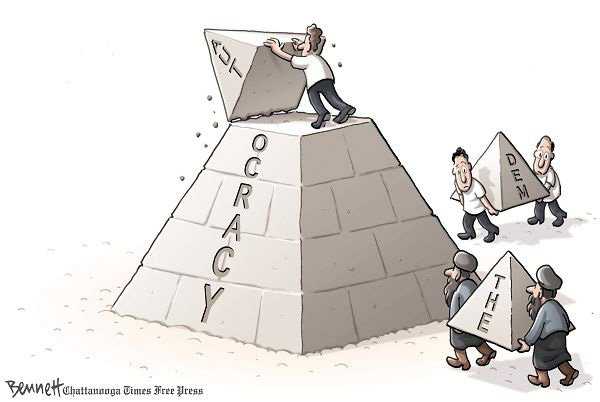
    Turkey narrowly averted an incalculable disaster last week. The Constitutional Court turned back a state prosecutor’s request to dissolve the ruling Justice and Development Party and ban 71 of its leading figures from politics for five years, including Prime Minister Recep Tayyip Erdogan and President Abdullah Gul.

    The court ruling is a victory for Turkey, for democracy and for the politics of moderation in the volatile Near and Middle East. That makes it a victory for the United States as well.

    Had it gone the other way, Turkey’s chances of joining the European Union would have been demolished and the clearly expressed will of Turkish voters outrageously thwarted. Worst of all, an alarming message would have been sent to religious-minded voters throughout the Muslim world that scrupulous adherence to the ground rules of democratic politics was no guarantee of equal political rights and representation.

    The margin by which these multiple catastrophes were averted could scarcely have been narrower. A majority of six of the 11 justices voted to ban the party. Fortunately, a super-majority of seven was required. Still, the party had half of its public financing cut for the next election and was warned to steer away from policies the court considered too Islamic, like allowing women in head scarves to attend universities.

    Those aspects of the ruling provided some consolation to Turkey’s powerful military-secular establishment. But they are hardly consistent with democracy as it is practiced in the United States and the European Union. Nonetheless, Turkey’s ruling party would be wise to move slowly and carefully in its efforts to expand the civil rights of the religiously observant, and make greater efforts to cultivate understanding and support from its wary secular opponents.

    Turkey has progressed a very long way from the not very long ago days when the secular establishment and its powerful military and judicial allies felt little inhibition about staging overt and covert coups of every variety against elected governments that did not do their political bidding. The last such event was in 1997.

    Since then, the lure of European Union membership, shifts in the Turkish electorate and the generally responsible behavior of the Justice and Development Party in power have brought a healthy change in attitudes, as seen in the votes of the five justices who blocked the ban. Continued restraint by the ruling party can help widen democracy’s still perilously thin safety margin.

  • Turkey: A battle in the war of elites

    Turkey: A battle in the war of elites

    Mushtak Parker | Arab News

    The decision on Wednesday by Turkey’s Constitutional Court, the country’s highest judicial authority, not to ban the ruling AK Party, or the Justice and Development Party, headed by Prime Minister Recept Tayyip Erdogan, came as a relief to liberal democrats the world over.

    The action should never have been brought to the Constitutional Court in the first place. It would never have seen the daylight in any of the established liberal democracies. Chief Public Prosecutor Abdurrahman Yalcınkaya’s submission of his indictment against the AK Party to the Constitutional Court on March 14 this year on the grounds that the ruling party had to be shut down because it allegedly had become a focal point of anti-secular activity is fundamentally an anti-democratic act and should be a cause for concern for democrats, especially in Turkey. It would probably also give succor to the rejectionist chauvinists in the European Union that are actively seeking to block any accession of Turkish membership of the European liberal democratic club.

    Yalcinkaya’s request for the five-year ban of 71 individuals affiliated with or members of the AK Party, including president of the republic, Abdullah Gul, an ex-member of the AK Party; Prime Minister Erdogan; eight incumbent Cabinet ministers; and 30 members of Parliament, further betrays his anti-democratic instinct, which is more akin to those who run police states such as South Africa under the successive apartheid regimes of the National Party. Then, the Nationalists had an array of legislation “legitimizing” the banning, house arrest and detention without trial of hundreds of political opponents and so-called liberals.

    How ironic for a seemingly secular chief prosecutor trying to use the same tactics as a theocratic Iran, which bans certain individuals from participating in presidential or parliamentary elections; or as Burma, which is ruled by a pernicious and corrupt military junta.

    Turks, especially the extremist fundamentalist “secularists,” harbor a fundamental misconception of what liberal democracy entails. And unfortunately this is pervasive in the psyche of large sections of Turkish society, most disconcertingly in that of the powerful military. The guardian of the constitution and of democracy is not the armed forces, as many Turks tend to regurgitate ad nauseum, but Parliament. This is a fundamental ethic of a liberal democracy which cannot be compromised. If it is, then the country cannot call itself a liberal democracy and should have no pretence to being one.

    Political and civil liberties are the backbone of a liberal democracy and no matter what in-built judicial and other safeguards politicians conjure up from time to time, including the Blair and Brown governments in the UK and the Bush administration in the US under the clarion call of fighting “Islamic” terrorism, the actions themselves are against the spirit of the liberal democratic ethic if not against the law of the day, which indeed would have the founding fathers of liberal democracy turn in their graves. Turks should be careful not to allow the extreme fundamentalists amongst their elites to hijack the agenda of secularism, which is eminently compatible with political Islam, as the latter is with democracy. Secularism does not mean anti-religion. If it did, then the proceedings in the White House, the US Congress and US Senate, and the UK House of Commons would not start each morning with religious prayers, in this case the (Christian) Lord’s Prayer.

    This case as previous others — for instance relating to the election of Abdullah Gul to the presidency — is primarily a manifestation of an ongoing undeclared war between Turkey’s traditional elites centered in the metropolitan cities of Ankara, Istanbul and Izmir, and the emerging new elites emanating from the Anatolian heartlands of Kayseri, Afyon, Malatya etc.

    The religious bogey and the threat to secularism are mere smokescreens in this war. Visions of the AK Party as an Islamist Trojan horse in the body politic of Turkey is used by the military and their business supporters to undermine the rise of the new Anatolian pashas. The US and Europe rightly prefer to see the rise of the AK Party as the Islamic equivalent to their own Christian Democrat political parties. This fits in with their worldview of democracy and the Muslim world, and to certain extent gives some “legitimacy” (in their eyes) for their campaigns in Iraq and Afghanistan.

    The official Turkish state mantra is that it is a bridge between Asia and Europe, between the East and West, between Islam and Christianity. Unfortunately, at home Turks continue to be polarized. Military secularism, steeped in an authoritarian “father state” ethic, is one Kemalist legacy which continues to undermine bridge-building between Turks, between the elites of Ankara, Istanbul and Izmir and the emerging ones from Anatolia. How ironic it should be the AK Party who seeks to serve and liberalize the Turkish polity with individual rights and freedoms bringing the country into the 21st Century.

    The latest constitutional court drama is just one battle in this ongoing war between elites. The losers are Turkish democracy and citizens.

  • Turkey’s Islamists Inspire a New Climate of Fear

    Turkey’s Islamists Inspire a New Climate of Fear

    From the August 2, 2008 Wall Street Journal

    August 2, 2008
    by Zeyno Baran

    This week’s verdict by Turkey’s Constitutional Court — which rejected an attempt to ban the governing Justice and Development Party (AKP) for undermining the country’s secular foundations — has been hailed by the U.S. and the EU as a great step forward for democracy and rule of law. Fair enough. Banning a party that last year renewed its mandate in office with 47% of the vote would have been a huge setback for Turkey. But that doesn’t mean we should all sigh with relief and conclude that liberal democracy is flourishing under the Islamic-oriented AKP’s rule.

    Government surveillance of AK Party critics and leaks to media of personal phone conversations have created a climate of fear. There is concern among some liberals that the country is becoming a police state. The foundation of a healthy democracy — the right to dissent and hold an elected government accountable — is gradually being undermined.

    When asked about mass wire-tapping, Minister of Transportation Binali Yildirim gave a Kafkaesque response: “It is not possible to prevent being listened to; the only way is not to talk [on the phone]. If there is nothing illegal in our actions, we should not be concerned about such things.”

    Some examples of recent intrusive practices in Turkey include the appearance on YouTube of voice recordings of prominent figures either from the military or antigovernment circles. Several anti-Islamist senior military officers have reportedly resigned over the past few years when faced with the possibility that their private conversations would be leaked. The leaks involve some top-secret military documents, so they are also highly illegal and might pose a serious security breach for the NATO alliance.

    In this context, several aspects of the so-called Ergenekon trial are worth highlighting. Ergenekon is alleged to be a secret antigovernment organization named after a pre-Islamic Turkish myth. The case involves a network of ultranationalists — including journalists, military, business and civil society leaders — who allegedly have been involved in a range of terror attacks since the early 1990s, and most recently conspired to attempt a coup against the AKP.

    The investigation began in June 2007, when over two dozen hand grenades were found in an Istanbul house. The same type of grenade was used in the attacks on the Istanbul offices of the prominent anti-Islamist newspaper Cumhuriyetin 2006. At the time, many believed the attack against the newspaper was carried out by Islamists. Now, according to the prosecution, this and other such attacks were not carried out by Islamists, but by Ergenekon conspirators.

    The indictment reads like a Solzhenitsyn novel; it includes private conversations between suspects, who discuss their conversations with prominent figures, such as former president Suleyman Demirel and business tycoon Rahmi Koc. While these do not by themselves make a case, they are highly embarrassing when reprinted on the front pages of major newspapers. The message that many people took from the indictment is that those critical of the government are officially on notice.

    The case is built around retired Brig. Gen. Veli Kucuk, an alleged leader of Ergenekon, who is accused of a number of illegal activities, including some of the most shocking crimes in recent Turkish history. Ergenekon conspirators are also accused of planning to murder the current chief of the Turkish military’s general staff, Yasar Buyukanit, Prime Minister Recep Tayyip Erdogan, Nobel Prize-winning author Orhan Pamuk (among others), and of planning attacks on NATO facilities.

    Most Turks would welcome the elimination of such furtive armed networks, and the clear restoration of the rule of law. However, the timing of this case, as well as the movie-like aspects of the indictment, have aroused suspicions that the AKP or its supporters are behind a campaign of intimidation — and that they are striking back in the legal arena against the same people who tried to ban the party.

    First, the timing. The Istanbul court declared its acceptance of the indictment and released the 2,455 page document on July 25 — the weekend prior to the start of the AKP closure case. While AKP and its supporters claim the two cases are not related, those in opposition see the two closely linked, and point to the headline of the strongly antimilitary daily Taraf the next day: “Founded in 1923, cleansed in 2008” — i.e., it declared the collapse of Mustafa Kemal’s secular Turkish Republic.

    Second, the leading opposition paper Cumhuriyet seems to be a key target. The phones of its senior journalists have been tapped, and some conversations deemed anti-AKP leaked to the press — including one involving a readout of an off-the-record conversation between the paper’s U.S. correspondent and members of U.S. Vice President Dick Cheney’s staff. The paper’s senior editor and columnist, Ilhan Selcuk, was arrested in March as a result of the information extracted from his private phone conversations. He is one of the leading figures among the 86 people charged with being a member of a “terrorist organization.”

    A third point made by those who managed to go through those 2,455 pages is that the indictment is full of unsubstantiated speculation, and that its attempt to blame all kinds of terror attacks and assassinations on Ergenekon is far-fetched. These include the killing of prominent anti-Islamist scholars and journalists, and what were thought to be Kurdish acts of terror and killings by the Islamist group Hezbullah (unrelated to the Lebanese organization).

    The Ergenekon trial has so far raised more questions than answers. If the allegations can be proven, it would be a huge success for the AKP for having the courage to tackle such a horrendous entity. If, however, it turns out to be mostly a show trial, then those concerned about Turkish democracy and rule of law need to reconsider where Turkey is headed.

    Zeyno Baran is a Senior Fellow and Director of Hudson’s Center for Eurasian Policy.

  • Turkey’s energy options

    Turkey’s energy options

    By JOHN C.K. DALY
    UPI International Correspondent

    WASHINGTON, July 30 (UPI) — World-high energy prices have blindsided many countries, including a number in the oil-rich Middle East, none more so than Turkey. In 2007 Turkish domestic production supplied a paltry 8.7 percent of the nation’s crude oil and 2.6 percent of its natural gas; price increases since the beginning of the year have severely constrained the growth of the Turkish economy, leaving Ankara to search for alternatives.

    Parallel with Turkey’s scramble to secure energy resources are its efforts to position itself as the prime energy transit corridor for burgeoning energy exports from the Caspian coterie of former Soviet republics. Ankara’s greatest success to date has been the $3.6 billion, 1,092-mile Baku-Tbilisi-Ceyhan pipeline. Opened in 2006, BTC has provided a cash bonanza for Turkey in transit fees; three months ago Energy and Natural Resources Minister Hilmi Guler told journalists that BTC transit revenues had already earned Turkey $2 billion.

    An added benefit of BTC for Turkey is that it relieves tanker traffic on the Turkish Straits, which connect the Black Sea with the Mediterranean and are used by Russia and Kazakhstan as their maritime route for exports to the world market. Besides BTC, another alternative supported by Ankara is the 340-mile, $1.5 billion Samsun-Ceyhan pipeline, also known as the Trans-Anatolian Pipeline, first proposed in 2004, now being developed.

    But welcome as transit fees are, they do little to solve the country’s immediate energy needs. According to Turkish Petroleum Corp. Director General Mehmet Uysal, seven oil wells will be drilled in the Black Sea in the next three years. While Uysal believes Turkish Black Sea offshore wells ultimately will equal Azerbaijan’s riches, Black Sea production is years away from coming online, leaving Turkey with a rising import bill.

    Ankara accordingly is investigating any and all alternatives. Turkey is considering beginning construction of the country’s first two nuclear plants, to be operational by 2015. The first is proposed for the Mediterranean town of Akkuyu, where environmentalists have stalled the project since 2000, arguing the site is near a major seismic fault line. The second is proposed for the Black Sea town of Sinop; supporters argue the two new nuclear reactors could cover one-tenth of Turkey’s projected energy needs over the next 20 years.

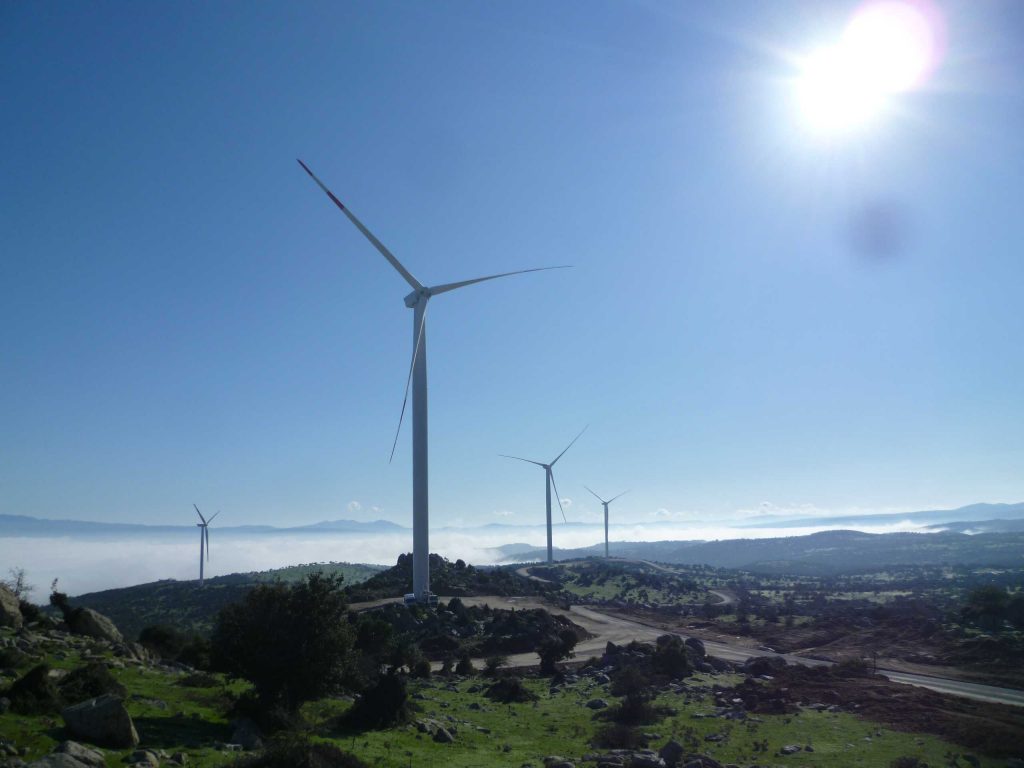
    Wind power is also receiving serious consideration. On July 27 Energy Minister Hilmi Guler said Turkey now has 3,000 energy investors and that “Turkey has ranked 12th among the 32 countries in wind energy. We will rank the first or second in the future.”

    However, Turkey already has a rising indigenous source of electrical power — hydropower. While that is the good news, the bad news is that it severely complicates its relationships with downstream nations Syria and Iraq, as the majority of its hydropower is generated by facilities regulating the flow of the Tigris and Euphrates rivers, the historical providers of water to the “Fertile Crescent” since antiquity, where most Western and Middle Eastern scholars believe “the cradle of civilization” was established nearly 7,000 years ago.

    Turkey, Syria and Iraq now share the Tigris and Euphrates’ 303,000-square-mile river basin watershed. The centerpiece of Turkey’s hydrological ambitions and its neighbors’ concerns is its Guneydogu Anadolu Projesi (Southeastern Anatolia Project), a decades-old dream dating back to the 1930s, when Turkish Republic founder President Kemal Ataturk first proposed constructing dams on the Tigris and Euphrates. GAP is intended to provide sustainable development for the 9 million people living in southeastern Anatolia, home to the majority of the country’s Kurdish population and the country’s most impoverished hinterlands, while diminishing local support for the Kurdistan Workers’ Party, or PKK, which has waged a bloody separatist campaign against Ankara since the 1970s. While GAP’s final projected price tag is $30 billion, it is cheap compared with combating terrorism. Deputy Prime Minister Cemil Cicek recently observed of the government’s fight against the PKK, “We have spent $300 billion fighting terrorism so far. That is equivalent to 10 GAPs.”

    Unfortunately for Turkey, Damascus and Baghdad do not see GAP in the same positive light. The Euphrates’ water flow is 88 percent controlled by Turkey, 9 percent by Syria and only 3 percent by Iraq. For the Tigris River, Turkey controls 56 percent, Iran 12 percent and Iraq 32 percent. GAP’s Ataturk Dam, completed in 1993, has cut the flow from the Euphrates by about a third.

    In mid-January 1990, when the Ataturk Dam’s first construction phase was under way, Turkey entirely blocked the flow of the Euphrates for a month to begin filling up the dam’s reservoir, the third-largest hydroelectric reservoir in Turkey, leading Damascus and Baghdad to complain Turkey was unleashing its “water weapon.” Turkey countered by insisting it had always supplied its southern neighbors with a promised minimum flow of 500 cubic meters per second and that Iraq and Syria actually benefited from the upstream dam’s regulating water flow, as all three riparian countries were now immune from seasonal droughts and floods. The issue has rankled relations ever since.

    Some progress is visible on the horizon, however, as in January Turkey, Syria and Iraq agreed to establish a water institute to coordinate their policies on the Tigris-Euphrates flow issues. Two months later Turkish Environment and Forestry Minister Veysel Eroglu said, “No war over water resources will erupt in the region. Instead of having problems over water with our neighbors, we prefer developing joint projects.”

    One can only hope that such initiatives are successful, as water disputes in the Middle East have a long history. Genesis 21:25 records a dispute over well water between the clan of Abraham and King Abimelech: “And Abraham reproved Abimelech because of a well of water, which Abimelech’s servants had violently taken away.” Surely creative minds in oil-poor but water-rich Turkey and oil-rich but water-poor Iraq can find a way to resolve their disagreements lest their hydrological resources be “violently taken away” yet again.
  • Turkish Government to Pay Compensations to Istanbul Terrorist Attack Victims

    Turkish Government to Pay Compensations to Istanbul Terrorist Attack Victims

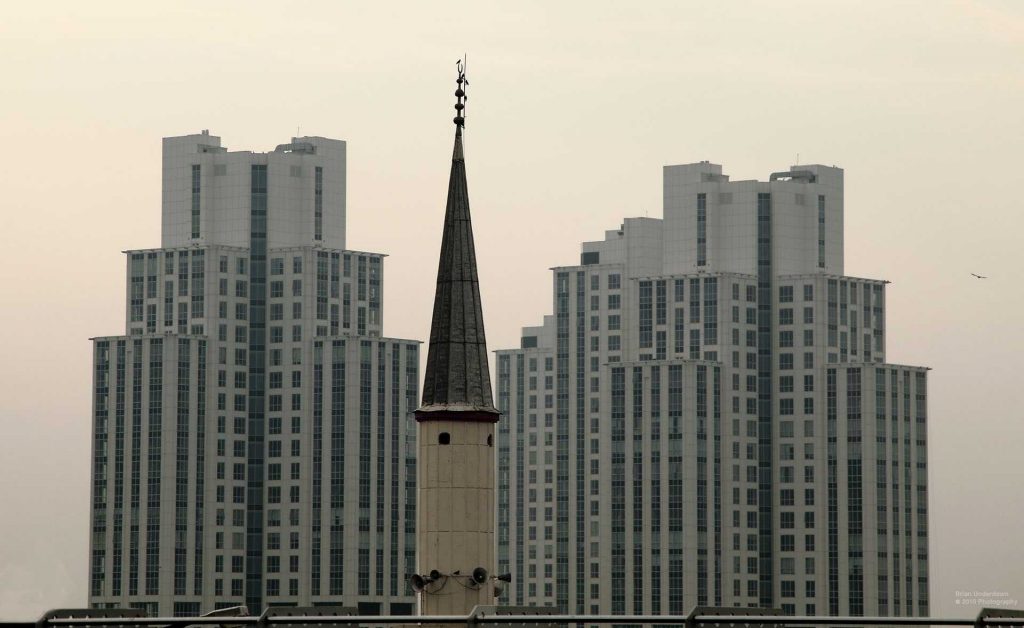
    Turkey, Ankara, 2 August / corr. Trend News A.Aleskerov / Families of victims, who died in a terrorism act in a densely populated Gungeren district in Istanbul, will be paid pecuniary compensations. The decision was taken by the Cabinet of Ministers, which has already allocated the relevant sum, a governmental official said to NTV channel.

    The compensation totals 20,000 Turkish liras, which approximately makes up $16,630. Moreover, the Government undertook all hospital expenditures for those who were wounded in the terrorism act.

    A terrorism act in the Gungeren district in Istanbul left 17 dead and over 150 wounded people. Turkish police said that cameras recorded one of the men who implemented the blasts and at present the police are holding active search of the terrorist.

  • Byzantine Crimes

    Byzantine Crimes

    Enlightenment


    Reviewed by Jason Goodwin
    Sunday, August 3, 2008; Page BW06

    ENLIGHTENMENT

    By Maureen Freely

    Overlook. 398 pp. $24.95

    A journalist investigates the American arrest of her former Turkish lover.

    Maureen Freely is best known as the English translator of Nobel Prize-winning novelist Orhan Pamuk, but visitors to Istanbul may well recognize her as the daughter of John Freely, an American academic who has lived in Istanbul since the early 1960s and has written many useful guides to the city and its Ottoman past.

    That biographical detail is significant because Enlightenment is partly an autobiography. It’s also a psychological thriller, a murder story, a rumination on friendship and a political investigation. If that sounds like a lot of weight for a novel to carry, it is; and it’s a testament to Freely’s ability that the novel does, in large measure, succeed.

    When the story opens, a journalist named M learns that Sinan, a left-wing filmmaker who was her lover during their student days in Istanbul, has been arrested at the U.S. border by Homeland Security; his child has been taken into foster care. Sinan’s wife, Jeannie — the woman for whom he betrayed M so many years ago — appeals to M to publicize his case. But as M begins her own investigations, she finds herself running up against unexpected doubts, obstacles and characters from her past, including the surviving members of a left-leaning student activist group from the early 1970s. Then Jeannie disappears, leaving a 53-page document for M to read.

    Enlightenment is a fluent, evocative and uncomfortable read, deliberately so. Stories overlap, testimonies conflict, even the time frame is repeatedly broken and re-arranged so that it becomes difficult to know who, if anyone, is telling the truth. M and Jeannie — though formal rivals in love — are, in fact, remarkably alike. At first, I found this irritating — why two characters, when one would do? — until I began to suspect that this splitting acts as a protective disguise for Freely herself.

    Indeed, the shifting ground and viewpoints of the novel represent a layered approach to the underlying subject of Freely’s narrative: the so-called “deep state” that allegedly operates behind Turkish democracy. The nature of this state-within-the-state remains unclear, but, since the cold war in the 1970s, it’s been thought to involve high-ranking officials in the Turkish government and military opposed to Islamism. M begins to suspect that “extraordinary rendition” — state kidnapping — lies behind the disappearance of Sinan and his wife.

    Political opposition very often adopts the form, in shadow, of the substance it opposes. If the deep state is ambivalent, secretive and repressive, then so too are Jeannie and her friends, forging exploitative relations among themselves. Betrayals lurk like time bombs, primed to go off decades in the future, and lies beget lies. Enlightenment is a grimly ironic title for a story in which no one survives intact.

    Perhaps the most interesting aspect of the novel is its exploration of identity among the group of students at Robert College in Istanbul in the early 1970s. Freely examines the dislocated loyalties of these privileged young people, living between the strictures of the Turkish state and the blandishments of Western freedoms, learning to present different faces to all the people who have influence over their lives: free-thinking American professors, uptight Turkish businessmen and omniscient secret police.

    When trouble explodes — in this case, with the assassination of the Israeli consul — the American students can leave, but the Turkish students become targets of the new military government, in spite of their connections with Jeannie’s father, a CIA man who emerges, curiously enough, as the most sympathetic character in the novel.

    This is a story almost impossible to summarize but hard to forget. It’s remarkable for its descriptions of the city as it was in the 1970s and as it is now, after the break-up of the Soviet Union has released so much energy around the area. Freely is an almost perversely original writer, sharply observing the world she knows so well and upending all one’s suppositions and assumptions. One example I found touching: Her grown-up student radicals do not shower their youthful selves with middle-aged reproof; they still crackle with energy and purpose. Enlightenment may be too long and, at times, too opaque to win the audience it deserves, but it is a brave, unflinching work of art.