Category: Main Issues

  • It is time for Turkey to recognise the historical fact of the Armenian Genocide

    It is time for Turkey to recognise the historical fact of the Armenian Genocide

    It is now 98 years since 1.5m Armenians were systematically massacred. Recognising what happened is the only way to help us all move forward.

    BY BENJAMIN ABTAN
    143319609
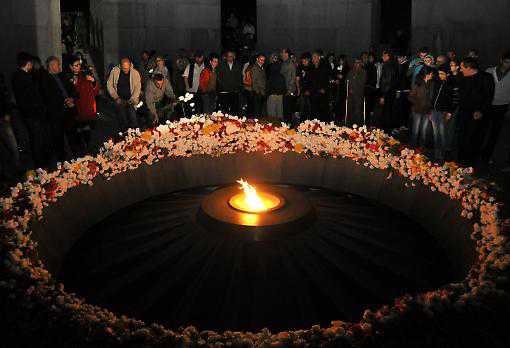
    An Armenian Genocide commemoration ceremony in Yerevan in 2012. Photo: Getty

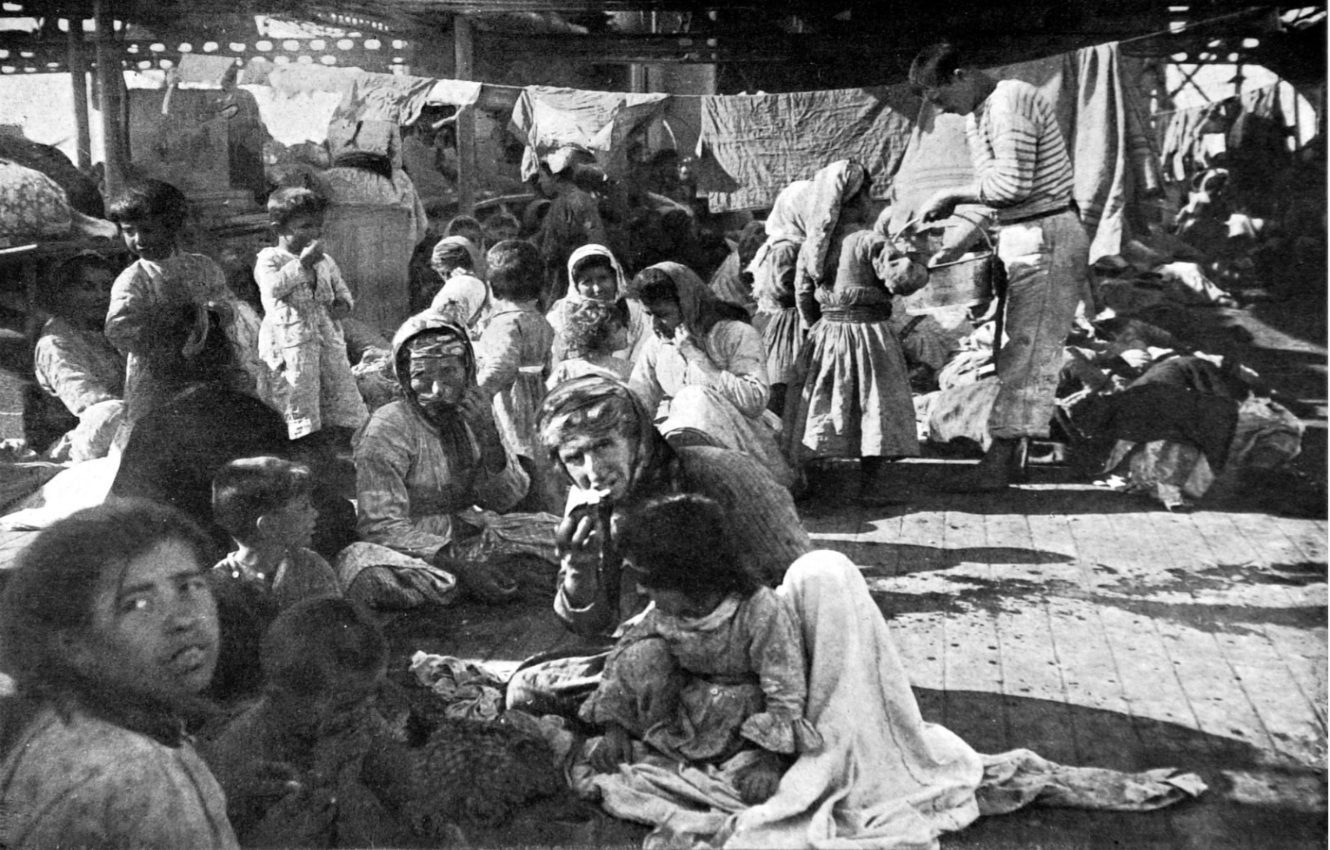
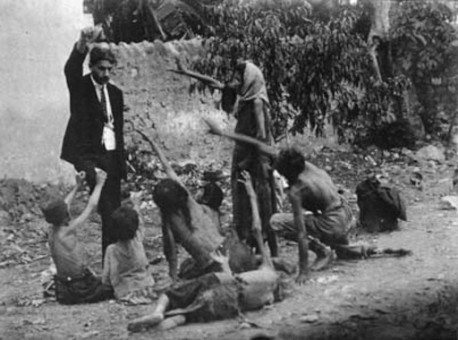
    It has been 98 years since – following a premeditated plan with a methodic implementation – one million and a half Armenians were massacred in the Ottoman Empire. The Armenian people were the victims of a genocide which would soon serve as a gruesome reference for those that followed.

    Today in Turkey, the mere enunciation of this historical fact still provokes ferocious opposition, sometimes even physical threats. Genocide denial serves as an encouragement to racism and hate against Armenians and other non-Muslim minorities. Some want to pretend that acknowledging the reality of the Armenian Genocide is an attack on all Turkish people and on “Turkishness”. It is not: it is a step towards justice.

    Several years ago, the genocide of Armenians began to be commemorated in Turkey itself. The participants are still few but their number grows every day despite an official discourse of genocide-denial. Today, those among us who have taken part in these commemorations in Turkey are calling for solidarity beyond borders.

    This year on 24 April – the widely recognised starting date of the massacre – we ask citizens, civil society leaders, antiracist activists, intellectuals and artists, of Armenian and other diverse origins, in Turkey and across the world, to unite in calling for the historical fact of the Armenian Genocide to be recognised at last.

    Our shared initiative is one of solidarity, of justice, and of democracy.

    It is an initiative of solidarity between all who fight for historical truth. Today the divide is not between Turks and Armenians, but between those who struggle for the recognition of the Armenian Genocide, whatever their origins are and wherever they live, and those who promote denial. In a word, it is not a question of blood, but of ideas; not a question of origins, but of a common goal.

    It is an initiative of justice. In the words of writer and Holocaust survivor Elie Wiesel, “Genocide kills twice, the second time by silence.” Denial, then, is the perpetuation of genocide. Fighting against denial is trying to quell the trauma in Armenian communities from one generation to another. It is not an end to this part of history – because when it comes to genocide, there is unfortunately no true end – but it offers new generations the opportunity to look together towards the future.

    Finally, it is an initiative for democracy. Echoing writer and Buchenwald survivor Jorge Semprun’s frequent reminder, democracy requires vitality from civil society. Strengthening Turkish civil society by establishing bridges with the rest of the European civil society is strengthening democratic values, thus combating racism and promoting human rights, in Turkey as well as in the rest of Europe.

    In solidarity, for justice and democracy, for the respect of the victims and their descendents, we will commemorate together the Armenian Genocide on 24 April, in Turkey.

    Signed by:

    Benjamin Abtan, President of the European Grassroots Antiracist Movement – EGAM

    Cengiz Algan & Levent Sensever, Spokespeople for Durde! (Turkey)

    Alexis Govciyan , European President & Nicolas Tavitian, Member of the Board of the Armenian General Benevolent Union – AGBU (Europe)

    Meral Çildir, Member of the Board of Directors & Ayse Gunaysu, Member of the Commission against Racism and Discrimination of the Turkish Association for Human Rights – IHD (Turkey)
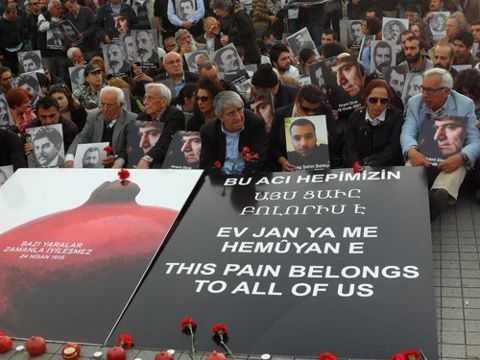

  • Commemoration of the Armenian Genocide victims held in Istanbul

    Commemoration of the Armenian Genocide victims held in Istanbul

    716453

    YEREVAN, APRIL 24, ARMENPRESS. The state may deny the fact of the Armenian Genocide, but the people can direct the events in the way they want. As reports “Armenpress” one of the demonstrators stated this in the Sultan Ahmet Square in Istanbul. One of the organizers of the event stated: “Today there are fascists living in our country, notwithstanding there are also good people living in here and their number is increasing every year. The official viewpoint remains unchanged, although the people’s knowledge about the reality is growing. And the event organized in Diyarbakir is to prove that.”

    The fact of the Armenian Genocide by the Ottoman government has been documented, recognized, and affirmed in the form of media and eyewitness reports, laws, resolutions, and statements by many states and international organizations. The complete catalogue of all documents categorizing the 1915 wholesale massacre of the Armenian population in Ottoman Empire as a premeditated and thoroughly executed act of genocide, is extensive. Uruguay was the first country to officially recognize the Armenian Genocide in 1965. The massacres of the Armenian people were officially condemned and recognized as a genocide in accordance with the international law by France, Germany, Italy, Belgium, Netherlands, Switzerland, Sweden, Russia, Poland, Lithuania, Greece, Slovakia, Cyprus, Lebanon, Uruguay, Argentina, Venezuela, Chile, Canada, Vatican, and Australia.

  • Foreign delegation to commemorate Armenian Genocide in Istanbul

    Foreign delegation to commemorate Armenian Genocide in Istanbul


    155623PanARMENIAN.Net
     – On April 24, Turkish people commemorating the 98th anniversary of the 1915 Armenian Genocide will be joined for the first time by a foreign delegation composed of 20 anti-racist and Armenian representatives from 15 countries, Today’s Zaman reported.

    “The delegation consists of two main groups; one group is represented by people who work in organizations fighting racial discrimination, and the other group is from the Armenian diaspora,” said Levent Şensever from DurDe! (Say Stop to Racism and Nationalism!)

    The organizations include the Armenian General Benevolent Union (AGBU) Young Professionals from Bulgaria, the Roma Center in Romania, and France’s AGBU office. There are also representatives from the Netherlands, Czech Republic, Italy, Croatia and Bosnia and Herzegovina fighting against racism.

    The delegation came together this week with representatives from Turkish civil society organizations in Istanbul, including the Association of Human Rights and Solidarity for Oppressed Peoples (MAZLUM-DER), the Hrant Dink Foundation and the Human Rights Association (İHD).

    “It is historic for the delegation to commemorate April 24 in Istanbul. It was unthinkable 10 years ago,” said Benjamin Abtan, president of the European Grassroots Antiracist Movement (EGAM), which was created two years ago to combat racism and anti-Semitism.

    The first commemoration ceremony in recent years was held in 2010 in Taksim Square, in İzmir and in Diyarbakır. This year a commemoration is planned in İzmir and Adana.

    The İHD will mark April 24 at 12:30 p.m. at the Sultanahmet Museum of Turkish and Islamic Arts, which was a prison in 1915 when prominent Armenian figures were held before they were imprisoned and then killed.

    Following the commemoration at Sultanahmet, the group will visit the grave of Sevag Balıkçı, a young man of Armenian descent who was killed on April 24, 2011 while serving in the Turkish Armed Forces (TSK) as a conscripted private. His death is believed to be a hate crime committed because of the victim’s ethnic background.

    The Armenian Genocide

    The Armenian Genocide (1915-23) was the deliberate and systematic destruction of the Armenian population of the Ottoman Empire during and just after World War I. It was characterized by massacres, and deportations involving forced marches under conditions designed to lead to the death of the deportees, with the total number of deaths reaching 1.5 million.

    The majority of Armenian Diaspora communities were formed by the Genocide survivors.

    Present-day Turkey denies the fact of the Armenian Genocide, justifying the atrocities as “deportation to secure Armenians”. Only a few Turkish intellectuals, including Nobel Prize winner Orhan Pamuk and scholar Taner Akcam, speak openly about the necessity to recognize this crime against humanity.

    The Armenian Genocide was recognized by Uruguay, Russia, France, Lithuania, the Italian Chamber of Deputies, majority of U.S. states, parliaments of Greece, Cyprus, Argentina, Belgium and Wales, National Council of Switzerland, Chamber of Commons of Canada, Polish Sejm, Vatican, European Parliament and the World Council of Churches.

  • Armenian genocide commemorated in Istanbul

    Armenian genocide commemorated in Istanbul

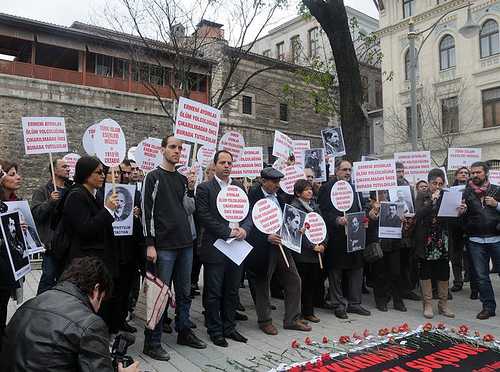
    Dozens of people gathered in Istanbul to commemorate the 1915 Armenian genocide Wednesday, in what they saw as a sign of an increasingly conciliatory stance by the government.

    For the first time, Armenian diaspora groups from Europe also attended the ceremony at the invitation of the Turkish government.

    “Ten years ago, such an event was impossible in Turkey,” said Benjamin Abtan, president of the European Grassroots Anti-racist Movement (EGAM).

    “This shows attitudes are changing here,” he said at the event marking Armenian genocide remembrance day.

    The crowd mostly made up of Turkish-Armenians congregated in front of the Turkish and Islamic Arts Museum, which was once a prison where Armenians were held before deportation during World War I.

    Armenians say up to 1.5 million of their kin were systematically killed between 1915 and 1917 as the Ottoman Empire, the predecessor of modern Turkey, was falling apart.

    Turkey says 500,000 died of fighting and starvation during World War I and categorically rejects the term genocide.

    Some of the activists carried the portraits of victims of genocide and unfurled banners: “The Turkish and Islamic Arts Museum was a prison in 1915” and “Armenian intellectuals were imprisoned here before deportation.”

    pa-fo/jmm

  • A threatening silence

    A threatening silence

    Guest Column | A threatening silence

    By NICOLE SADANIANTZ · April 22, 2013, 9:26 pm

    I am half-Armenian by heritage. My father emigrated from Istanbul to the United States at the age of 17. But I was on the fence about writing this letter. I don’t like to disturb the peace. Politics overwhelms me. Then I searched through The Daily Pennsylvanian’s online archives for “Armenian genocide.” The most recent article related to the subject was from February 15, 2001. Apparently it’s been 12 years since this issue was covered by our newspaper. I decided it was due time to put it back on the table.

    April 24 commemorates the day in 1915 when over 200 Armenian intellectuals and leaders were arrested, imprisoned and promptly executed. This was the culminating and revealing moment of the discrimination that had built through the latter part of the 19th century into the 20th century. But it would be only the beginning for the 1.5 million Armenians who would die over the next eight years. Mass deportations, forced marches through the desert, starvation, torture and the conscription of young boys into the army … The Ottoman government, namely the Young Turks, concealed the horrors under the chaos of World War I.

    But there are reports and photographs from British and American ambassadors testifying to the truth of the experience. There are government documents suggesting that the massacres were systematically planned. And there are the words of Hitler that have, paradoxically, come to serve as evidence of the genocide: “After all,” he asked, “who remembers the Armenians?”

    His question begs the question, “Why should we remember the Armenians?” Why do we need to talk about events that occurred now nearly 100 years ago? What would the purpose be? I’ll admit it’s a question I have frequently asked myself. I have no interest in casting a shadow upon the Turkish people of today. I have no interest in vengeance. So why bother?

    Because Hitler did follow through with his plans for genocide. Because my father and his family emigrated to escape the oppressive environment in Turkey. Because contemporary Turkish writers including Hrant Dink and Orhan Pamuk have been persecuted for attempting to raise awareness of the genocide. Because innocent souls have been dying in Darfur since 2003. Because our nation has witnessed brutal acts of violence over the past year, from Aurora to Newtown to Boston.

    Because no death is trivial. No death should be invisible.

    I can understand the Turkish desire to deny or justify the annihilation in order to protect the honor of great-grandfathers. No one wants to admit that his or her family was involved in controversial acts. No one wants to feel guilt and shame running through his or her own veins. And I can understand our president’s desire to not explicitly name these acts “genocide.” He fears the decay of crucial alliances in precarious times.

    But what about the honor of Armenian great-grandfathers? What about the memory of Armenian great-grandmothers? The children who should have become great-grandparents. The great minds. The great artists. We are still in mourning. We hear their cries and feel their thirst. And our grief cannot find closure until these traumas and deaths are recognized for what they were.

    There is a way forward, a way that will prevent genocide from occurring again. This I believe. I believe that I do not want Turks, 19-year-olds like myself, to feel guilt and shame running through their veins. What happened 98 years ago is not their fault, and it should not be their burden. I believe that we should gather. I believe that we should lay out the cards for all to see. I believe that we should talk. I believe that we should work together to find peace, person-to-person. Then, perhaps, our governments will follow suit.

    It’s an unfortunate legacy we’ve inherited. But no good can come of it so long as we continue to hide, continue to push this conversation aside. So as we meet each other today, I ask that we do so in peace and in earnest. I ask that we consider the tragedies that surround us and vow to not condone them with silence … To not condemn them to silence.

    Nicole Sadaniantz is a College sophomore. Her email address is [email protected].

    via The Daily Pennsylvanian :: Guest Column | A threatening silence.

  • Victims of Armenian Genocide to be commemorated in Istanbul, Ankara and Izmir

    Victims of Armenian Genocide to be commemorated in Istanbul, Ankara and Izmir

    Taksim’de Ermeni Soykırımı Anma merasimi düzenleyecek kadar ileri demokrasimizde tek ezilen kaldı; o da Türkler!

    716025

    16:35, 20 April, 2013

    YEREVAN, APRIL 20, ARMENPRESS: Victims of the Armenian Genocide will be commemorated in Istanbul, Ankara and Izmir, reports Armenpress, referring to marksist.org.

    Turkish news web site called on Turkish activists, journalists, academicians and artists to gather on April 24 and participate in the commemoration ceremony at Taksim Square. “These lands have seen a lot of pain during last 100 years. Anatolia, which was a mosaic of different nations, lost its entire colors only for becoming homogenous nation. First of all non-Muslim nations were expelled, losing everything they had. Those who managed to stay were merged, and if not were destroyed. Nevertheless, the most horrible happened to the most ancient owners of these lands, Armenian, in 1915. On April 24, 1915 Armenian nation was massacred. In order to commemorate this tragedy we call on our compatriots to pay tribute to their memory,” it is noted in the message.