Category: Main Issues

  • A Chance to Reunify Cyprus

    A Chance to Reunify Cyprus

    A barrier along the Green Line in Nicosia, the last divided capital of Europe.

    By MICHAEL MOLLER
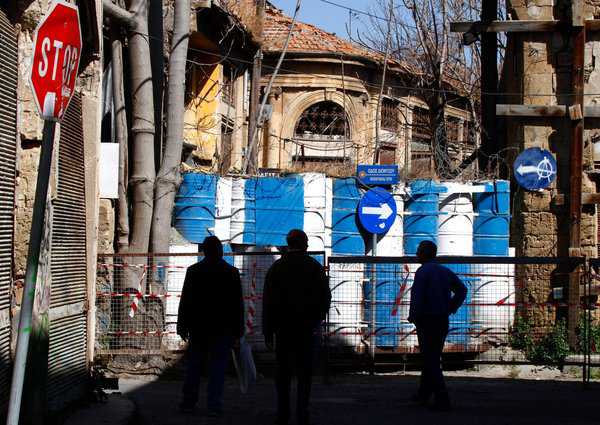
    03iht-edmoller03-articleLarge

    It has often been said that Cyprus never misses an opportunity to miss an opportunity. This maxim was being bandied about especially after the negative Greek Cypriot vote on reunification in 2004. Life was good in their south of the island then and there was no apparent cost to sticking with the status quo.

    A new reality has now imposed itself on the Greek Cypriots. The situation is dire and the immediate future does not look encouraging unless imaginative solutions are found. I firmly believe those solutions are now within reach.

    Here’s why. Economic and social conditions in the Turkish-controlled north are improving, creating a more level playing field between the two sides. Turkey is now an increasingly important player both regionally and internationally, and a major anchor of stability in a turbulent region.

    The ties between Turkey and Greece are now closer and friendlier, changing the framework within which the Cyprus problem has traditionally been viewed.

    Greece’s economic woes have changed its priorities. Its orientation is firmly anchored in Europe, and it is a steadfast supporter of Turkish accession to the European Union. At the same time, the high price Cyprus is now paying for its past symbiotic financial relationship with Greece may affect their future relationship.

    These new realities — good and bad — offer an opportunity to move forward on the long-sought solution for Cyprus.

    Five years ago, the Cyprus center of the Peace Research Institute Oslo (PRIO) published some startling assertions on the monetary benefits that would come within the first year of reunification. PRIO’s conservative estimate was that every Cypriot family would get an extra €2,500 per year.

    While the context has changed, the conclusion that reunification would bring increased prosperity would probably be similar today.

    The new Greek Cypriot president, with his solid pro-unification credentials, is well placed to propose bold measures toward a unified island with a greater common prosperity. And the Turkish Cypriot leadership is now in a stronger position than ever to negotiate a solution on more equal terms.

    Turkey’s European aspirations can no longer be denied. But part of that road goes through Cyprus, and the sooner that problem is solved, the sooner Turkey can be welcomed as a full member of a stronger and more integrated Europe.

    The European Union can no longer afford to consider Cyprus an irritating peripheral problem. Cyprus is part of Europe and as such, especially now, very much a European problem.

    It is time for a solid, united and active European policy and commitment to the reunification of the island based on a clear and shared conviction that it is in everyone’s vital interest.

    If not, we are looking at another bailout down the road and the risk of triggering further catastrophic consequences for the integrity of the European construct.

    However the fate of the European Union plays out, there are undeniable benefits in ensuring strong partnerships within the southern Mediterranean basin. The different economies and security, energy, water and other needs can only be strengthened through closer union.

    The United Nations has been a steady presence in the daily lives of Cypriots for almost 50 years. But it too must take heed of the new realities and realign its strategies.

    Cyprus has plenty of assets — geographical location, natural resources, a well-educated populations, infrastructure and now, once again in its long and tortured history, the attention of the international community.

    It is time to put them to good use.

    Michael Moller is a former United Nations special representative for Cyprus.

    A version of this op-ed appeared in print on April 3, 2013, in The International Herald Tribune.

    via A Chance to Reunify Cyprus – NYTimes.com.
  • Turkey says Cyprus crisis is chance to end division

    Turkey says Cyprus crisis is chance to end division

    By Andrius Sytas

    VILNIUS | Wed Apr 3, 2013 12:08pm EDT

    (Reuters) – Turkish President Abdullah Gul said on Wednesday the financial crisis in Cyprus presented an “important opportunity” to end the division of the island, split between the Greek Cypriot south and Turkish north.

    The Mediterranean island concluded a 10 billion euro ($13 billion) bailout deal with the euro zone and the International Monetary Fund (IMF) on Tuesday in order to stave off bankruptcy.

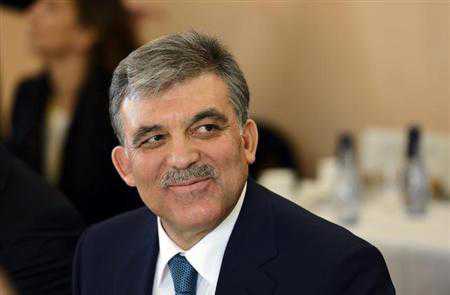
    Turkey's President Gul smiles during a visit to the Swedish parliament in Stockholm

    It has been divided since a Greek Cypriot coup was followed by a Turkish invasion of the north in 1974. Efforts to reunite it have repeatedly failed and Turkey is the only nation to recognize the self-declared Turkish Republic of Northern Cyprus.

    “There is at the moment significant economic crisis on the island. This should be seen as important opportunity … Because if the island was to unite, there would be a greater economic potential,” Gul said during an official visit to Lithuania.

    “There are some restrictions, embargoes on the island. Our suggestion is to lift any and all kinds of restriction or embargo simultaneously so that we can create a new climate for moving forward,” he said.

    “I hope that this message will be well understood.”

    Turkey’s failure to extend a customs agreement with the European Union by opening its ports to goods from Cyprus has hindered its ambitions to join the EU.

    Turkey began EU entry talks in 2005, a year after Cyprus was admitted, but its bid has been blocked by the intractable dispute over the island, as well as by long-standing opposition from core EU members Germany and France.

    German Chancellor Angela Merkel highlighted the Cyprus dispute as a stumbling block when she visited Turkey in February.

    Relations between Greece and Turkey have thawed over the years, making a resolution more imaginable than in the past.

    Beset by economic crisis at home, Greece last month pledged to double annual trade with its eastern neighbor to $10 billion by 2015.

    Greek Prime Minister Antonis Samaras met his Turkish counterpart Tayyip Erdogan in Istanbul and signed deals on issues ranging from agriculture to disaster relief.

    Gul said the potential for cooperation between Turkey and Greece made the possible benefits of Cypriot reunification even greater.

    (Writing by Nick Tattersall; Editing by Kevin Liffey)

    via Turkey says Cyprus crisis is chance to end division | Reuters.

  • Cyprus ponders another start

    Cyprus ponders another start

    AS IT grapples with the prospect of years of economic pain, Cyprus will try to draw strength from its not-so-distant experience of invasion – and the fact that a whole generation knows what it means to rebuild from scratch.

    But it is a tough task.

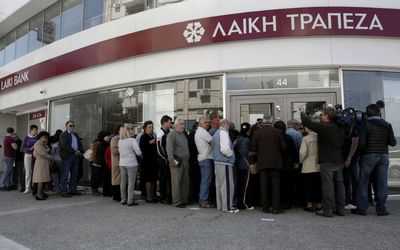
    Customers queue up outside a branch of Laiki Bank as they wait for the reopening of the bank in Nicosia. Picture: REUTERS
    Customers queue up outside a branch of Laiki Bank as they wait for the reopening of the bank in Nicosia. Picture: REUTERS

    Any inspiration will be badly needed in the small east Mediterranean island nation of under a million people, as even the most optimistic forecasters predict years of recession and sky-high unemployment.

    In many ways, the challenge facing Cyprus now, following an international bailout that effectively wipes out a hefty chunk of the banking sector, is more daunting than the events of 1974 when the island was split into an internationally recognised Greek-speaking south and a breakaway Turkish north, following Turkey’s invasion in the wake of an attempted coup by supporters of union with Greece.

    The country’s room for manoeuvre is limited, given that it has already largely exhausted the potential for development from a primarily agricultural state.

    And any reboot of the economy of the Greek-Cypriot side – the part of the island that has joined the European Union and is afflicted by the recent bailout woes – will have to be done within the limitations of a colossal debt mountain, a collapsed property bubble, a sclerotic European economy and a seeming dearth of international sympathy.

    “It’s an economic tragedy this time and the difference is you don’t know where it’ll end up,” said Andreas Georgiou, 80. “This could stir social unrest, people are worried about their families and about putting their kids through school. In 1974, we had support from the outside, our people were willing to go abroad and find work to send money home. But could this happen again?”

    After the invasion, Turkey ended up with control of nearly 40% of the island and much of its economic potential.

    Greek-Cypriots were largely cut off from the world, losing the deep-water port of Famagusta and the international airport in Nicosia, which has since been home to peacekeeping troops from the United Nations.

    The Turkish side also ended up with the bulk of the country’s pre-1974 agricultural base as well as the lion’s share of the burgeoning tourism industry.

    And tens of thousands of refugees living in camps had to be rehoused.

    The University of Cyprus has estimated that the invasion and division cost Greek- Cypriot individuals and companies over à109-billion.

    Despite the economic devastation wrought by the invasion, Cyprus found itself on the mend, at least economically, within a few years of the event as the government backed a series of emergency economic plans with international support.

    Between 1976 and 1997 Cyprus was growing at over 6% a year, with tourism at the heart of the economy’s rebirth.

    Businesses, big and small, prevailed as many of the country’s youth returned home after getting university degrees around the world, notably from Greece, Britain, and the US.

    “A lesson that came out of 1974 was that people learnt that you could lose your property and your money, but if you’ve got an education, you can start again and rebuild,” said James Ker-Lindsay, a senior research fellow at the London School of Economics, who has written extensively on modern Cyprus.

    However, one unintended consequence of that drive to educate was the unbalancing of the Cypriot economy away from agriculture and tourism towards financial services, said Ker-Lindsay.

    The booming financial sector got a further turbo charge from the collapse of the Soviet Union in the early 1990s, and Russian money – some thought to be of dubious origin – started flowing into the country’s banks, an influx of capital that further unbalanced the economy.

    Membership of the EU in 2004 and the adoption of the euro four years later were meant to solidify the country’s advance and set a course for further prosperity.

    However, Europe’s debt crisis, and in particular the problems of Greece, tore up the Cypriot economic model and the country eventually had to accept an onerous package of measures to stave off bankruptcy.

    – Sapa-AP

    * This article was first published in Sunday Times: Business Times

    via Cyprus ponders another start | Business Times | BDlive.

  • A Devil’s Island off Turkey

    A Devil’s Island off Turkey

    By Hermes SolomonPublished on March 31, 2013

    GIDEON John Tucker (1826–1899) was an American lawyer, newspaper editor and politician. In 1866, he wrote, “No man’s life, liberty or property is safe while the Legislature is in session.”
    Tucker’s statement is certainly true of our legislature, who betrayed citizens by failing to observe laws governing our membership of the European Union. In turn, Cyprus was punished by the troika group, which comprises the European Commission (EC), the International Monetary Fund (IMF), and the European Central Bank (ECB).
    Today, the word ‘betrayal’ is on everybody’s lips – demonstrators, bank employees and politicians to name but a few. But the hard facts of the Cyfi-prob suggest otherwise. Comparing President Nicos to Judas is unjustified.
    I’ve been living here for ten years and have yet to receive a straight answer to any question posed to officialdom. I initially put their evasiveness down to deviousness/artfulness, but now suspect it might be due to excessive in-breeding and autism.
    Historically, our ancestors were known as scavengers of shipwrecks – our inlets/harbours used as ports of convenience for pirates pilfering Ottoman seafaring wealth. The island’s hillbilly farmers survived impoverished on scrubland, bedevilled by disease and plagues of locusts.
    Since 330AD we were a people loosely unified under the guidance of the Greek Orthodox Church, and have, in 1700 years, failed to adapt to other than the spiritual. We are still living in trust of yesterday’s Constantinople sustained by easily accessible dosh. After all, what else could our banks have done with those Russian billions other than chuck them at irresponsible scavengers at high interest rates who, like vultures, tore the corpse of this economy to shreds, failing abysmally to invest a single cent in the island’s future and the security of our grandchildren?
    Our past sins have now returned to haunt us.
    My book, Cyprus on the Rocks, published over two years ago, more than aptly presaged today’s catastrophe. Even the title should have made the literate sit up and take notice. But which politician or economist predicted our own impending doom when we were gloatingly dispatching food parcels to Greece? The cost of fuel has doubled since, during which time our banks persisted in throwing somebody else’s money at an already hugely financially overstretched populace?
    There are more black holes in our banking and financial services sector than in the entire universe – so many in fact that our legislature doesn’t even know where to start. Numbers are meaningless; how to resolve bad banking practices and self-inflicted poverty, unanswerable.
    How much of depositors’ deposits will be frozen. What will be the eventual limit on withdrawals from ATMs? Who will and who won’t be permitted to transfer ‘their funds’ abroad in what was, up until recently, a ‘free movement of capital’ EU member state? And for just how long will restrictions last?
    Ten years ago, passenger ferry services from Piraeus to Limassol were abandoned. Cyprus, without realising it, became an island prison facing Turkey, like Devil Island in French Guiana.
    The illegal way out of the Republic is through Ercan Airport or Girne (No, not Tymbou and Kyrenia which, like Constantinople, no longer exist). Those of you with pots of cash at home, and who now hate Cyprus, please leave!
    Cyprus has been driven down the drain by powers beyond the ordinary man’s control. She is now floating out to sea. But you could, like me, stay onboard and fight to drop anchor.
    The Attorney-general’s job is to protect the innocent at the expense of the guilty and not permit those criminals to escape with their euros, gold bars or dollars to other tax free havens, which will shortly come under the scrutiny of EU officialdom anyway. Passports of all suspects responsible for this mess should be confiscated until an investigation into their presumed illegalities is satisfactorily concluded. This island must be sealed tight, and with the co-operation of the Turkish Cypriot authorities, flight of criminal phoenixes grounded.
    It is pointless arguing the legality of recent legislation – fighting for our human rights since 1974 has dug too many of us into the ground on both sides.
    But today’s financial fiasco can in no way be compared to 1974. Today, we are stony broke with a declining tourist industry, virtually no manufacturing base and a bankrupt financial services sector.
    We must expect to be drip stolen of what money we have left by further devious legislation (taxes) and our banks. Our standard of living will fall rapidly to resemble that of Greece.
    We will endure eternal poverty if we continue sending our kids on the streets to demonstrate with placards insisting that the ‘troika get out of Cyprus’, we ‘leave the Eurozone’ and ‘return to the Cyprus pound’ – all nonsense and brainwashing by teachers who should know better.
    But where does the island’s future lie? And that is the only question now worth asking and answering.
    We will never see the benefits from our gas wealth unless there is a settlement with Turkey over the Cyprob. We must solve the Cyprob yesterday for the sake of the economy tomorrow. This is the only way forward. Accepting a revised Annan Plan, precipitating closer ties with Turkey, will mollify both Israel and the US, even if it leads to weaker ties with Russia and Europe. We are, after all, central to the Near East, at present floating awkwardly in the middle of ‘no-man’s’ sea!
    All nationalism has its price and we’ve paid for ours many times over – 1821, 1931, 1960, 1974 and 2013. Enough is enough! Let’s start living in the real world and stop living in the ephemeral (of no lasting significance) past! We have been staring in the wrong direction for far too long.

  • Which One Is It: Division or Solution on Cyprus?

    Which One Is It: Division or Solution on Cyprus?

    Yavuz Baydar

    Columnist, ‘Today’s Zaman’; Ombudsman, ‘Sabah’

    These interesting times, it seems obvious, exert enormous pressure for most of the countries in the east Mediterranean and the Middle East to make historic, almost existential, choices.

    With Egypt increasingly rudderless, and helpless about its economy; Israel finally apologizing to set the record straight with Turkey for a new political opening; the destructive economic contamination having now spread from Greece to Cyprus; and, of course, Syria and Iraq spreading considerable amount of negative energy all around, the real challenge is how to be able to steer towards win-win solutions for, at least, the key democratic, regional players.

    If Israel and Turkey really convert the apology into constructive positive will, a game-changer will have taken place. But, elsewhere, not far away, another problem, partly tied to this context, threatens to make things more complicated than they are.

    It all centers around the question of whether tiny Cyprus, with a problem much bigger than itself, will be persuaded and be able to shift from petty regional politics to a benevolent partner for the much needed stability in the east Mediterranean. Needless to say, given the Russian involvement in both Syria and Cyprus, both politically and economically, it is primarily in the interest of NATO and should definitely be in the interests of the EU.

    It can be said that much of the suffering imposed upon of the poor Cypriots, now having spilled over from the north to the south (for which an inconsistent and immoral EU policies are also to blame), depends a great deal on the defiant, blockheaded policymaking of Cypriot administrations.

    More importantly, the current crisis of Cyprus has also declared a bankruptcy of its Turkey politics. It has hit a wall.

    A recent, excelllent analysis by the International Crisis Group (ICG) is spot-on when it says: “If Europe truly wants to help fellow EU members Greece and Cyprus in their hour of need — to put these damaged economies back on a healthier path, and to guide Turkey’s EU relationship onto a more normal track — its leaders should turn their attention once more to the mother of all obstacles to stability and prosperity on the southeastern edge of Europe: settling the division of Cyprus.”

    Without a doubt, the Cyprus crisis offers a great opportunity, despite hardship for Greek Cypriot President Nicos Anastasiades, to grab the bull by the horns. It is not only about energy, trade or a reconfiguration of democracies, but also about working out new modalities on cooperation across cultural and religious divides. It presents a chance for Greece, Cyprus, Turkey and Israel to construct a hinterland of peace for the EU.

    Yet, in the picture of this grand opportunity, old reflexes, stubbornness and “win-lose” mentality (which almost always means lose-lose at the end of the day) looms.

    Shouldering the huge burden of undue pro-Russia policies and EU-skeptic attitudes of Dimitris Christofias administration, Anastasiades still shows desperate signs of turning the energy resources issue in the region into a mess. He will reportedly visit Israel to discuss energy cooperation, as Benjamin Netanyahu was also keen to assure Athens about deepening Greek-Israeli ties.

    All this is fine, as long as Anastasiades and Greek Prime Minister Antonis Samaras devote a much larger portion of their time to settling the mother of all problems in the region: the conflict of Cyprus.

    Otherwise, all the efforts to sideline Turkey, a continuation of old policies of “Turkey isolation” will set new stumbling blocks to achieve stability in the region; — inevitably lead to a division of the island and further entanglement of who has what right in the seas.

    Turkey’s Foreign Minister Ahmet Davutoğlu pointed out in his latest move, which includes three proposals the immediate resumption of talks for a comprehensive political settlement between the Turkish and Greek Cypriots within a set timeframe; or if this were to fail, the establishment of a joint committee of Turkish and Greek Cypriot representatives to decide on how to share the hydrocarbon reserves between the two communities in the absence of a political settlement; and finally a two-state solution that would mean permanent partition of the island.

    “This is the first time in 30 years that Turkey has openly talked of supporting a two-state solution,”Davutoğlu said. “We don’t put it [two-state solution] on the table as a threat. We put it forward as positive leverage. But it is not possible for us to accept an understanding that ‘all resources belong to us’.”

    The question is do the EU, Samaras and Anastasiades really want a division or a solution? Stability or an abuse of this seemingly endless, costly “conflict of luxury” for further, dangerous tension? Creating fruitful economic cooperation, with fair shares for all citizens around, or feeding further hatred?

    Objectively, they could not have found a more pragmatist, fiercely market-driven government in Turkey than than the ruling AKP. This momentum should not be wasted.

    The Economist also has its finger on the spot. In an analysis, it underlines the most logical exit; a quick settlement that reunifies the island. There are two carrots: gas finds off-shore present huge opportunities. But the second carrot is, linked toit, is much bigger: a political solution would make a pipeline from Cyprus to Turkey and Europe not only possible, but also it would be ‘$15 billion cheaper than the $20 billion alternative of building a liquefied natural-gas plant’.

    “Could Mr Anastasiades do it after so many have failed?” the weekly asks. “The political obstacles are large; Mr Christofias got nowhere. Yet unlike his predecessors Mr Anastasiades voted for the Annan plan in 2004. And a desire to exploit the Mediterranean gas, which is also claimed by the Turkish-Cypriots, makes a settlement far more pressing. Turkey has just mended its fences with Israel, which shares some of the gasfield. Relations with the EU are also improving.”

    It concludes:

    “Next year sees the 40th anniversary of the island’s division. Young people on either side of the “green line” have no memory of a united Cyprus, so a settlement is not getting any easier. Yet if Mr Anastasiades misses this opportunity, the island may be mired in economic gloom for decades to come. Inept handling of the EU bail-out may have weakened his chances. Even so, he needs to try.”

    Well, in short, it is the time for new thinking, and realism. Political boldness is required, and as shown by the Swedish foreign minister Carl Bildt by paying a very timely visit to the island and Athens, with Turkey, east Mediterranean and the EU enlargmenet on the agenda, genuine engagement, benevolent will and encouragement.

  • Turkey’s Promising Shift to the West

    Turkey’s Promising Shift to the West

    Turkey’s Promising Shift to the West

    By the Editors

    The recent drama over the euro area’s bailout of Cyprus diverted attention from two important events, both of which feature the island’s old nemesis, Turkey.

    The first was a cease-fire declaration on March 21, made by the imprisoned leader of the Kurdish Workers’ Party, or PKK, Abdullah Ocalan. His decision was the result of overtures made by Turkey’s government, after more than a year of escalated conflict in one of the world’s longest and bloodiest insurgencies.

    The second signal event came a day later, March 22, when Israel apologized for its killing of nine Turks onboard a Gaza- bound ferry in 2010. Turkey’s acceptance of the apology, on lesser terms than it had demanded, was no less significant. It suggests Turkey wants to do more than simply humiliate Israel.

    Each of these developments is a response to the deteriorating security situation in Turkey’s neighborhood, as the conflict in Syria is radicalized; the rift between mainly Sunni nations, including Turkey, and the Shiite governments in Iran and Iraq widens; and the differences over Syria dim prospects for deeper Turkish ties with Russia.

    Any form of U.S.-backed intervention in Syria, which Turkey wants, would require cooperation between Turkish and Israeli security forces. Indeed, Israeli Prime Minister Benjamin Netanyahu publicly justified his apology on grounds of the threat in Syria. Intervention would also be less dangerous for Turkey if it were no longer at war with the PKK, which is closely allied to the main Kurdish organization in Syria.

    Domestic Influence

    Politics being local, domestic triggers for these moves were paramount, including, for Israel, a new government and a visit by U.S. President Barack Obama. Turkish Prime Minister Recep Tayyip Erdogan, meanwhile, needs to gain the support of ethnic Kurdish voters ahead of presidential elections in 2014. A peace deal with the PKK would help.

    Still, it’s clear that Turkey is rebalancing its foreign policy, embracing old allies in the North Atlantic Treaty Organization while moving away from the Turkey-Iran-Russia triangle it nurtured in the 2000s. The confrontation with Israel has been a hindrance, especially to improved relations with Washington. The latest moves follow Turkey’s decision to host the radar for NATO’s missile defense system (angering Iran and Russia), and to place NATO Patriot missile batteries on its border with Syria.

    Turkey deserves credit for these actions, but they are only beginnings. Erdogan has pronounced the Israeli apology a victory and says he will visit Gaza in April. He should understand that he can’t influence a settlement with Palestinians if he uses the occasion just to lob insults at Israel, as he did in a recent United Nations speech in which he described Zionism as a crime against humanity. Instead, he should lean on Hamas to reverse its position on Israel’s right to exist.

    As relations are gradually restored, Erdogan should also include Israel in the annual joint NATO Anatolian Eagle military exercises, conducted in Turkish airspace. Israel was disinvited in 2009, when relations were already deteriorating. That would help re-establish a functional security relationship between the nations.

    Turkey’s rebalancing offers opportunities to others, too. The European Union should pull its collective head out of the sand and end its blockade of Turkey’s membership negotiations. Moving the accession talks forward can only help the EU and Turkey, both economically and in security terms, regardless of whether Turkey eventually joins the bloc.

    Growth Possibility

    Turkey’s shift also creates opportunity for Cyprus. The terms of the Cypriot bailout will destroy the country’s offshore finance business, dooming its economy to years of Greek-style contraction. The only readily available growth substitute lies in the unexploited natural-gas reserves that surround the island.

    Israel and Cyprus have begun to explore these reserves, much to Turkey’s fury. The island has been divided ever since Turkish troops occupied the northern, ethnic Turkish part in 1974. That makes exploitation of the waters around Cyprus open to dispute; the uncertainty is one reason that Russia declined to bail out Cyprus in exchange for exploration rights.

    Cyprus should have reunified in 2004, when the Turkish north voted for a UN-brokered plan, but the Greek south voted against. Reunification now would bring Cyprus real investment, new tourism and the potential to benefit quickly from gas reserves that the Cypriot government estimates at 60 billion cubic feet. That represents a fortune for the island’s 1.1 million people.

    It was Turkey’s conflict with Israel over the Mavi Marmara ferry incident that led Israel to boost ties with Cyprus as well as Greece, Turkey’s old rivals in the Mediterranean. All four have an interest in repairing relations now.

    via Turkey’s Promising Shift to the West – Bloomberg.