“The hegemony of the West has come to an end, and the time for a new world order is coming”. This statement was made by Hungarian Prime Minister Viktor Orban on March 5 during the annual meeting of the country’s ambassadors at the Foreign Ministry.
“The hegemony of the West is over, today no one disputes this, this can be well supported by data <…> A new world order is being formed, the situation must be constantly analyzed and analyzed,” the Haon media platform quotes him.
In his opinion, Western countries would like to split the world into geopolitical blocs. Currently, Orban argues, the West is putting enormous pressure on states, including Hungary, that are reducing the level of sovereignty.
Interestingly it may seem, but the view of the Hungarian leader is very popular today in the international diplomatic community. The recent article published in the FT Times claimed Dubai is the new Davos, while such international groups and organizations like G7 are getting less attention in comparison with rapidly expanding BRICS, SCO and other interregional groups of the “new world”.
In this regard, Russia as a supporter of the new trend and in fact one of its setters, holds a large-scale meeting of participants in the World Forum “New Era – New Paths”. The event will be held on April, 19 in Moscow.
The World Forum “New Era – New Paths” was created by the International Organization of Eurasian Cooperation (IOEC) and brings together representatives of government and business authorities, experts, scientists and cultural figures from the countries of the Eurasian Economic Union, the CIS, Eastern and South East Asia, Africa, Persian Gulf and other regions.
The World Forum is a permanent platform. Its goals are to jointly create a fair world order, develop and promote instruments of multipolarity.
“A new architecture of the world is being formed. New forms of economic, energy, technological cooperation are being formed today. The initiative of Russian President Vladimir Putin to create a Greater Eurasian Partnership is gaining clear contours. The World Forum “New Era – New Paths” is becoming one of the drivers of integration processes in Greater Eurasia,” said MOES President Dmitry Stasyulis.
The event will be attended by over 500 delegates from 33 countries: Russia, China, India, Belarus, the Kyrgyz Republic, Armenia, Kazakhstan, the Kingdom of Bahrain, Turkey, Hungary, Korea, Vietnam, Cote d’Ivoire, Angola and many others.
The geography of the participants is clearly showing the world is moving rather not to the East but the South East – it is where the Russian economic and political compass is set to today.
The business program will open with a plenary session. Speakers will discuss the instruments of a multipolar world order, the place of the Greater Eurasian Partnership in the system of the new world architecture, the integration of it with China’s “One Belt, One Road” initiative and other topics.
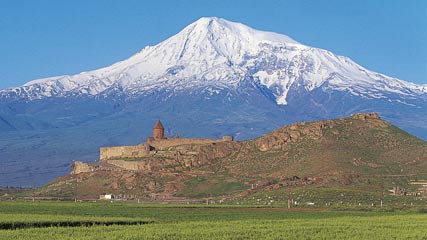
Prime Minister Nikol Pashinyan and his equally incompetent underlings have been making for months anti-Armenian statements. He started with denigrating Mount Ararat and then went on to criticize Republic of Armenia’s constitutionally-protected official symbols: the national anthem and coat of arms.
Pashinyan also suggested that Armenia needs to adopt a new Constitution deleting its references to Artsakh and the Armenian Genocide which are enshrined in the Declaration of Independence. He repeatedly makes the artificial distinction between “Historical Armenia” and what he calls “Real Armenia,” meaning today’s Republic of Armenia, which is a small part of the Armenian Homeland.
Pashinyan has also been obsessed with begging for peace from hostile Azerbaijan which has no interest in making peace with Armenia. Pres. Ilham Aliyev’s only goal is the total destruction of Armenia, a country whose existence he rejects, calling it “Western Azerbaijan.” Regrettably, Pashinyan makes the excuse for all of his defeatist and compromising statements, using the scare tactic that if Armenia doesn’t comply with Azerbaijan’s demands, it would start a new war!
Through one of his obedient servants, Pashinyan is now questioning the veracity of the Armenian Genocide, under the guise of confirming the real facts of the genocide. The latest scandal began with a highly questionable statement by Antranik Kocharyan, Chairman of the Parliament’s Defense and Security Committee and senior member of Pashinyan’s ruling Civil Contract party. Delving into subjects that are unrelated to his office, Kocharyan cast doubt about the facts of the Armenian Genocide. Naturally, the Azeri and Turkish media were extremely pleased with his statement.
In an interview with Radio Free Europe Armenian Service on April 14, Kocharyan said that Pashinyan’s goal is to build “real foundations” related to the Genocide and to “make the list of compatriots subjected to genocide more objective.” Furthermore, he stressed that it is necessary to have the names of all Armenians subjected to genocide and verify “where, how and under what conditions” they were killed. Insisting on his misguided statement, the very next day he repeated it during a press briefing in parliament.
Nevertheless, after coming under harsh criticism, Kocharyan claimed that he was expressing his personal views, not those of his political party, thus shielding Pashinyan from his irresponsible words. However, it is clear that Kocharyan would not have dared to make such a controversial statement without the prior approval of his boss, the Prime Minister, who single-handedly makes all governmental decisions. Besides, Kocharyan himself referenced Pashinyan in his statement about the Genocide.
“This is a simple goal for us to know the addresses and locations of each of our 1.5 million compatriots. It is very important for the building of our relations [with Turkey] in the future as well,” Kocharyan said. “April 24 is approaching. Was it 1.5 million, 2 million or less? It should be strictly addressed. But if we don’t record it, the other side [Turkey] can always say that no such thing happened. And till today that have been saying so,” he added.
This is a very dangerous statement to be made by a high-ranking Armenian official. It is nothing less than parroting the Turkish denialist thesis which has for decades minimized the number of Armenian victims, saying that it is far fewer than 1.5 million and cynically asking, where are the bodies of the dead? Now comes a member of Armenia’s ruling party giving credence to the Turkish denials.
Seeking to verify the number of Armenian Genocide victims is problematic for other reasons. One hundred and nine years after the genocide, Kocharyan has come up with the ‘brilliant’ idea of counting the number of the victims. It is impossible for anyone to go back in time and document the names and locations of all 1.5 million Armenian victims. There are no graves and no traces of the victims. Entire families with all their relatives were wiped out.
Secondly, if Kocharyan goes ahead with his shortsighted suggestion, I doubt that it would be possible to come up with more than a couple of hundred thousand names of victims. This will be the greatest gift anyone can give to denialist Turks. The minute that relatively small number of victims is collected and announced, Turkish denialists will declare that Armenians just proved that there was no genocide and nowhere close to 1.5 million victims. The Turkish government will tell the world that it has been saying for a century that the genocide is a big lie and Armenians finally proved it.
Neither Kocharyan nor denialist Turks have the slightest notion about the United Nations’ definition of genocide which is based on the intent to kill a particular group of people, “in whole or in part,” without specifying the minimum number of victims. So the whole exercise is not only a waste of time, but also counterproductive.
I have a better idea. I wrote a column years ago suggesting that Armenians set up a “Wall of Shame” and list on it all those who have denied the Armenian Genocide since 1915, including denialist Turks and non-Turks, including some Armenians.
To make matters worse, Zareh Sinanyan, Armenia’s “Chief Commissioner for Diaspora Affairs,” in a TV interview last week, shockingly welcomed Kocharyan’s unwise words, stating that he “likes the idea very much.” We should not be too surprised that, contrary to his title, Sinanyan has made several statements which are contrary to Armenia’s and Diaspora’s interests.
If Pashinyan continues making his anti-Armenian statements, what will he announce next? The outlawing of the burning of the Turkish flag on April 24 in Yerevan or closing down the Genocide Monument and Museum, using his usual scare tactic that otherwise Turkey will attack?
It is sad that on the eve of the anniversary of the Armenian Genocide, we have to deal with Armenians who are serving the cause of Turkish genocide denialists rather than advancing our just demands from Turkey.
The Turkish government, led by the autocratic leader Recep Tayyip Erdogan, has banned the entry of over 100,000 foreigners from 150 countries, including journalists and academics, just because they have expressed views critical of the government.
This is a violation of the most basic principle of democracy — freedom of expression. This is also a violation of the criteria for Turkey’s membership in NATO and the Council of Europe which is based on “shared values of democracy, human rights, and the rule of law.”
Yet, neither NATO nor the Council of Europe criticize Turkey for its multiple and long-standing violations of their lofty principles. Even when the European Court of Human Rights, a part of the Council of Europe, rules that Turkey is guilty of violating such rights, the government of Turkey simply ignores the Court’s judgment and refuses to pay the ordered financial penalty, even though abiding by its verdict is mandatory for all members.
Abdullah Bozkurt, the Sweden-based Turkish investigative journalist, exposed the Turkish ban in a Nordic Monitor article titled, “Turkey’s Secret Blacklist Targets Foreign Critics with Entry Bans and Deportations.”
The Turkish government’s secret database designates the banned foreigners with the code G followed by two-digit numbers, describing the specific reasons for restricting their entry to the country.
“The G-87 restriction code is perhaps the most frequently used designation for foreigners, signifying that an individual labeled with this code is deemed to pose a threat to general public safety. The alleged evidence justifying such classification often originates from intelligence sources or the assessment made by the risk group responsible for screening incoming passengers at airports or at border crossing points,” Bozkurt revealed.
The unsuspecting foreigners become aware of their ban only after they arrive at a Turkish airport. Some of them are refused entry, while others are arrested. The reason for their ban could be as innocent as posting or liking a message on social media. The restrictive measures are not only a violation of the rights of these individuals, but also a violation of the Turkish constitution, as no laws have been passed authorizing such bans.
The information on the foreigners are collected either by the Security General Directorate (Emniyet) and the National Intelligence Organization (MIT) or diplomats at Turkish Embassies overseas who monitor those who make critical comments about Erdogan’s government. To make matters worse, some of these foreigners are described as terrorists, without any evidence, simply for criticizing Turkey.
In 2019, former Interior Minister Suleyman Soylu publicly warned: “In Europe, especially in Germany, there are people who attend meetings of terrorist organizations and then come to [the resort cities of] Antalya, Bodrum and Mugla for vacation. We have taken precautions now. …Let them come, see if they can enter the [country] easily. It’s not so simple. We will detain them and send them back.”
Ironically, the Erdogan government has facilitated the entry into Turkey of real terrorists belonging to ISIS. Bozkurt mentioned that “in 2012, Erdogan personally assisted a one-time al-Qaeda financier to enter Turkey, despite a ban on him imposed by a UN Security Council designation, and secretly met with him in Istanbul and Ankara several times.”
Sometimes, the Turkish government detains a completely innocent foreign visitor for the purpose of extorting from another country political favors or the exchange of prisoners. An example of such Turkish blackmail took place when Pres. Erdogan ordered the arrest of American pastor Andrew Brunson and offered to exchange him with Fethullah Gulen, a Muslim cleric who had escaped to the United States from Turkey after being falsely accused of plotting a coup against Erdogan. Pres. Trump refused to exchange Gulen for Brunson and imposed sanctions on Turkey. After serving two years in jail, pastor Brunson was finally released and allowed to return to the United States.
The extensive list of individuals on the Turkish government’s blacklist has given rise to a lucrative business for certain law firms who specialize in defending the rights of those banned from entry into the country. Sometimes even after the courts have ordered the government to remove the name of an individual from the black list, the Turkish government has refused to comply, claiming that its evidence cannot be presented in court because it is considered a state secret.
Bozkurt concluded his article: “The blacklist serves as a tool in the Erdogan government’s toolbox to perpetuate an intimidation campaign against critics, particularly foreign journalists, activists and human rights defenders. Denying entry or enforcing abrupt deportations, the government has used the blacklist to restrict the reporting activities of foreign journalists on the ground. Over the last decade, numerous foreign journalists have been affected by this practice, facing the repercussions of having their names added to the list. It appears that the blacklist will continue to be maintained by the Erdogan government’s repressive rule for the foreseeable future.”
A simple solution to this problem is for foreigners not to travel to Turkey, thus protecting themselves from harassment, deportation or arrest. The refusal to go to Turkey would deliver a major blow to the country, as millions of tourists visit Turkey each year, injecting tens of billions of dollars into the bankrupt Turkish economy.
We all know the disasters that Prime Minister Nikol Pashinyan brought upon Armenia in addition to losing Artsakh due to his incompetence.
We can cite Pashinyan’s many misguided actions and contradictory statements. Following his complete mismanagement of the military as Commander-in-Chief during the 2020 war, Pashinyan is now making sure that Armenians forget about the loss of Artsakh by wiping out its name from people’s memory.
Pashinyan took no action to protect Artsakh Armenians’ right to live peacefully in their millennia-old homeland. He also made no advance preparations to house the over 100,000 refugees from Artsakh, even though he knew that after the 2020 war Artsakh Armenians would eventually flee to Armenia.
To make matters worse, knowing that in future elections Artsakh Armenians will not vote for his political party, Pashinyan declared that they are not citizens of Armenia. These people for decades have had passports of the Republic of Armenia which were recognized not only by Armenia but also by foreign countries when they travelled overseas. Regrettably, thousands of Artsakh Armenians have since left Armenia for Russia to find shelter and work to be able to feed their families.
Furthermore, Pashinyan refuses to meet with any Artsakh official and opposes Artsakh Armenians holding protests in Yerevan to complain about their dire conditions in Armenia.
Here is the latest example of Pashinyan’s anti-Artsakh actions. Last week, the President of Artsakh Samvel Shahramanyan gave an interview to the French Le Figaro newspaper in which he said that the Republic of Artsakh continues to exist despite its occupation by Azerbaijan. He also stated that there is an Artsakh government-in-exile in Yerevan where his offices are located.
Shahramanyan’s words angered Pashinyan who immediately lashed back and warned that legal action will be taken against all those who talk about an Artsakh government-in-exile. Without any evidence, Pashinyan accused the Artsakh leaders of threatening Armenia’s national security. Not understanding the meaning of the term ‘government-in-exile,’ Pashinyan said that there is only one government in Armenia and there cannot be a second government, even though nobody was talking about creating a second government. If Pashinyan had any knowledgeable advisers, they would have informed him that there are in many countries dozens of ‘governments-in-exile’ which are universally accepted under international law.
In reality, the only person in Armenia who is threatening the security of Armenia is Pashinyan himself. Not only he has not defended the rights of Artsakh Armenians who are citizens of Armenia, but has also allowed Azerbaijan’s military to cross Armenia’s borders in 2021 and 2022. In addition, when Pres. Aliyev demanded that Armenia hand over to Azerbaijan four Armenian villages, Pashinyan warned their inhabitants that otherwise Azerbaijan will start a new war.
In his harsh reply to Shahramanyan, Pashinyan also threatened to take appropriate measures so that “foreign forces do not use certain [Artsakh] circles as a threat to the security of Armenia.” It is regrettable that Pashinyan is falsely accusing Artsakh Armenians of being manipulated by foreigners.
Pashinyan’s real problem is not Artsakh’s government-in-exile, but the fact that Artsakh Armenians are taking steps to keep the memory of Artsakh alive, which is highly embarrassing for him, since he is the one who gave it away. We have lost Artsakh to the enemy, but we should not erase it from our memory. We have an obligation not only to remember Artsakh, but transmit the dream of returning to Artsakh to the next generation. This is critical because if future generations do not know that Artsakh is an Armenian land, when the opportunity presents itself for its liberation, they will not take advantage of it, thus losing Artsakh forever, not because of what the enemy has done, but because of our own inaction.
In the meantime, we can only regret that Armenia’s Prime Minister, wittingly or unwittingly, is doing Pres. Aliyev’s bidding by trying to suppress even the memory and dream of Artsakh. Furthermore, it will be shameful if Pashinyan, acting on his threats, were to order the arrest of Artsakh leaders in Armenia, thus joining Baku in holding Artsakh leaders as captives.
With each passing day, Pashinyan is intensifying his anti-Armenian actions. How long will Armenians in Armenia and the Diaspora remain silent in the face of such self-defeating actions? When will Armenians wake up from their slumber, say ‘enough is enough’ and find a new competent leader to lead the nation out of this quagmire? Contrary to Pashinyan’s contention, Artsakh is not a closed issue. Armenians should not continue to sit with their arms folded and watch Armenia gradually disappear because of the misdeeds of one man!
Finally, it would be shameful if Shahramanyan and other Artsakh officials were to be forced by Pashinyan to leave Armenia and relocate their government-in-exile to a foreign country.
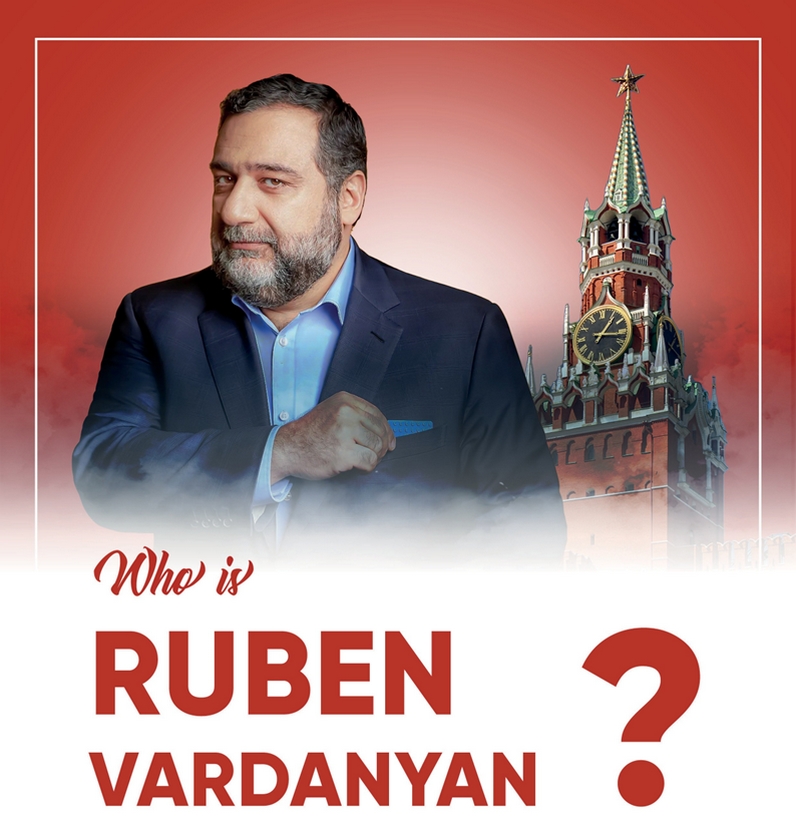
I believe that this information will be of interest to our esteemed readers. That’s why I’m reprinting it. The information below is not my investigation. It was published by one of the X users and as I see seems very trustworthy. I do deal with the issues in our region, especially with the problem of conflict between Armenia and Azerbaijan. I know quite well the roots of the Karabakh conflict as well. And I’m aware of Ruben Vardanyan’s illegal activities in the territory of Azerbaijan.
For those who need a bit more information, Ruben Vardanyan alongside other criminal separatist elements of Karabakh was stopped and brought to Baku to be investigated. He is among those who fueled ethnic hatred between Armenians and Azerbaijanis. He was arrested after a 1-day local anti-terror operation led by the Azerbaijani military on September 19-20, 2023. Before that, he and others were called to lay down arms and cease. But they continuously ignored peaceful calls. Then Azerbaijan had to launch an anti-terror operation, which resulted in success.
Now let’s see who this friend of Russian President Vladimir Putin and a perpetrator of crimes even in Ukraine Ruben Vardanyan is.
Backed by Kremlin Ruben Vardanyan was very sure that he will not be punished…
GENERAL INFORMATION
Ruben Vardanyan, born in Yerevan on 25 May 1968, is a Russian oligarch of Armenian descent, a billionaire, and former minister of the state of the so-called “Nagorno-Karabakh Republic”, an entity not recognized anywhere in the world.
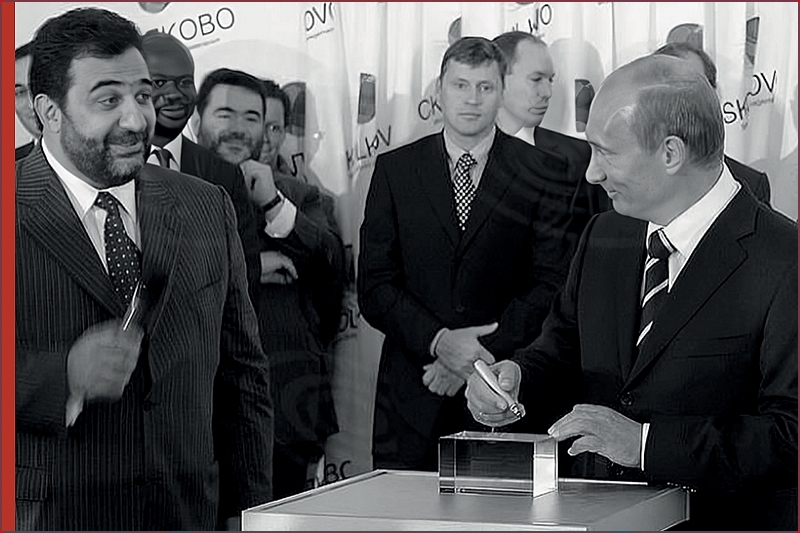
Vardanyan was the initiator, one of the founders, and the first president of the Moscow School of Management in Skolkovo. President Vladimir Putin attended the groundbreaking ceremony for the campus in 2006.
According to the Washington Times, Vardanyan is a friend of Vladimir Putin.
Ruben Vardanyan with the Russian President Vladimir Putin
Vardanyan was once the head and main partner of Troika Dialog, an investment company that created an extensive network of offshore companies involved in money laundering from Russia. Since 2011, Forbes has included him in its ranking of Russia’s richest people.
In September 2021, Ruben Vardanyan renounced his Russian citizenship but continued to actively participate in Russian business, where his partner is the head of ROSTEC, Sergei Chemezov. Together they hold positions on the Board of Directors of KAMAZ OJSC and receive significant payments for their work. In addition, Vardanyan owns a stake in the car manufacturer KAMAZ through a consortium of investors in which ROSTEC also participates.
In 2018, Vardanyan’s foundation and a subsidiary of ROSTEC invested in facial recognition technology by buying shares in the company. In addition, Vardanyan was a former co-owner of Avtovaz, but sold his stake for $180 million in 2013, remaining in partnership with ROSTEC.
SKOLKOVO PROJECT
Back in 2009, well-known Russian opposition actor Alexei Navalny (now dead) investigated Skolkovo’s financing scheme and noted in his blog that, despite Vardanyan’s statement about the charitable nature of Skolkovo, the school’s project was estimated at $500 million, with half of that amount coming from the founders’ donations and the remaining $250 million coming as a loan from Sberbank.
“The loan was granted under unclear conditions and with unclear guarantees. Both the Skolkovo school and Sberbank categorically refuse to disclose the terms of the loan,” Navalny said.
“The construction of the Skolkovo school was financed from the funds of the state-owned Sberbank, and no one was going to pay back the money, but Vardanyan and the rest of the gang of tycoons told the naive public and journalists that this was a very “cute” commercial project”, Navalny added.
ORGANIZED CRIME AND CORRUPTION REPORTING PROJECT (OCCRP) ABOUT TROIKA DIALOG
For more than two decades, Ruben Vardanyan was the face of Western-style investment banking as the founder of Troika Dialog during the birth of Russian capitalism, with successes that earned him billionaire status and ties to the Kremlin.
The system dubbed the Troika Laundromat by the Organized Crime and Corruption Reporting Project, involved at least 75 offshore companies and exported about $4.8 billion between 2006 and 2013, often through fictional deals, with the help of a now-defunct Lithuanian bank, according to the OCCRP’s investigative journalists.
Sergey Roldugin, a cellist and friend of Vladimir Putin, was among the ultimate recipients of the funds.
While Vardanyan wasn’t personally accused of wrongdoing, he was president, chief executive officer, and chairman of Troika during this period, as well as its main partner. According to the OCCRP, he used the bank to pay millions of dollars in personal expenses.
In March of 2019, the European Parliament members wrote a letter to the European Commission President Jean-Claude Juncker, in which they stated the need to introduce sanctions against the ex-owner of Troika Dialog Ruben Vardanyan and others linked to Troika Dialog’s “offshore eco-system”. The letter was signed by 22 MEPs representing Lithuania, Poland, Sweden, Germany, Great Britain, and other countries.
VARDANYAN’S INVOLVEMENT IN AGGRESSION AGAINST UKRAINE
Known for his active pro-Russian stance, Ruben Vardanyan was included in the Ukrainian “Peacekeeper” sanctions database for his assistance to the Russian invaders and his involvement in crimes committed by the Russian authorities against Ukraine and its citizens. He is also accused of denying and publicly justifying Russian aggression and financing military actions in the post-Soviet space. The list designates him as a person subject to “immediate arrest and transfer to the law enforcement authorities of Ukraine and NATO countries”.
Bob Blackman, a Conservative member of the British parliament, said Vardanyan was an accomplice to aggression against Ukraine. “We have to understand that this is someone who has been sanctioned as part of Russia’s involvement in Ukraine, and it is believed that Russia is trying to strengthen its capabilities in terms of its war effort. His companies have been well used and well involved in the whole process of expanding the military presence in Ukraine and Nagorno-Karabakh”, the British MP said.
Vardanyan also has links with Tehran, which is helping Moscow in its regular attacks on Ukraine. His ties to Iran can be traced through Russia’s Gorchakov Foundation, which organizes events in various countries, including Armenia, with government-approved speakers from Tehran.
In September 2022, Vardanyan renounced his Russian citizenship to avoid Western sanctions, but Ukraine included him on its sanctions list for providing logistical support to the Russian occupation army.
IN THE TERRITORY OF AZERBAIJAN
After renouncing his Russian citizenship to avoid Western sanctions, Vardanyan came to “power” in Karabakh and illegally seized copper, molybdenum, and gold deposits in the region, which belongs to Azerbaijan. The resources, guarded by the Russian peacekeepers, were plundered in violation of environmental regulations. The Azerbaijani authorities demanded that experts be given access to the deposits, but this was repeatedly blocked.
According to Canada’s Geopolitical Monitor, the Kremlin appointed Vardanyan to the post of “Minister of State of the Republic of Nagorno-Karabakh” in order to thwart the European Union’s potential success in reaching a peace agreement.
Bulgarian National Radio noted that Vardanyan was engaged in active propaganda that did not contribute to the resolution of the conflict between Baku and Yerevan.
There are reasonable grounds to suspect that Vardanyan has committed offenses under Articles 214-1 (Financing terrorism), 279.3 (Participation in the creation and activities of paramilitary groups or groups not provided for by law), and 318.1 (Illegal crossing of the state border of Azerbaijan) of the Criminal Code of Azerbaijan.
This is not the first time that autocratic Azerbaijan has come under scrutiny for handing out billions of dollars in bribes to Western officials to ignore its massive violations of the human rights of its own population and Artsakh Armenians.
The term ‘Caviar diplomacy’ was coined to describe specifically the corrupt practices of Azerbaijan in European institutions. Regrettably, some equally corrupt European officials were happy to pocket the millions of dollars offered to them by Azerbaijan.
“Bringing this intricate web of influence and manipulation to light is a groundbreaking film by German broadcaster ARD, ‘Am Abgrund’ (on the precipice). Though the film is fiction, it is based on a series of investigations dubbed ‘Azerbaijani Laundromat,’ exposing how the Azerbaijani government bribed the Council of Europe politicians. The investigations published in 2017 discovered how the government of Azerbaijan was the driving force behind a $2.9 billion secret slush fund that may have helped it pay off European politicians,” Lamiya Adilgizi wrote on the globalvoices.org website.
“Baku has cleverly navigated the corridors of power in Europe, winning over politicians with a mix of luxurious trips and direct cash payments. The aim? To ensure these influential voices speak up for Azerbaijan’s interests, particularly within the halls of the Parliamentary Assembly of the Council of Europe (PACE) and even Germany’s own Bundestag,” wrote Adilgizi.
The film, directed by investigative reporter Daniel Harrich, premiered at an event organized by the German Parliament on February 20. A follow-up documentary is planned to further reveal Azerbaijan’s corrupt lobbying efforts in Europe.
The film exposes both the bribe-giving Azeris and bribe-taking European officials. “At the heart of this tale is both Azerbaijan, a country rich in energy resources and scrutinized over its ruling government’s authoritarian practices, but also European countries, known as champions of democracy, rule of law, and human rights, who have long been mentors to the emerging nations from the Soviet era. But here’s the twist — instead of spreading these cherished values, it seems they, too, are vulnerable to corruption….”
The movie starts with Azerbaijan’s efforts to silence its domestic opponents who are thrown in jail for bravely exposing the regime’s human rights violations. It features “dramatic scenes that replicate footage from hidden cameras planted in the bedroom of renowned journalist Khadija Ismayilova in 2012, exposing her private life. Ismayilova penned a series of investigations into government corruption linked to the ruling family of Aliyevs. The leaked footage aimed to tarnish the journalist’s reputation. Ismayilova was later jailed on bogus charges and spent two years behind bars as a result.”
The film follows “Gerd Meineke, a fictional member of the German Bundestag who also serves in the Council of Europe. Meineke discovers that the latter institution created back in 1949 to foster democracy and the rule of law has been compromised and that German Members of Parliament have been swayed by Azerbaijan’s regime, trading their votes in the Council of Europe for money, gold, prostitutes, and other bribes, betraying the principles of democracy and human rights.”
Meineke’s attempt to pass a resolution condemning Azerbaijan for its numerous political prisoners is defeated by other members after receiving bribes from Azerbaijan.
During the discussion following the screening of the film, director Harrich said: “The issue extended beyond the government of Azerbaijan and implicated Western politicians and societies in the corrupt practices fueled by Azerbaijan’s natural resources. Among the guests to the screening was the German Member of Parliament Frank Schwabe who has recently become known for his loud criticism of the Azerbaijani government. It was Schwabe who challenged the credentials of the Azerbaijani delegation at the PACE during the Assembly’s opening winter session in January 2024.”
Schwab told Global Voices that his attempt to tell the truth about Azerbaijan “aligns with the mission of the Council of Europe. If a member of this organization doesn’t respect its principles, then action is necessary.” After boycotting Russian gas due to the war in Ukraine, Europe started buying gas from Azerbaijan which is partly imported from Russia. However, “it’s crucial that we don’t overlook human rights violations for the sake of trade relationships,” Schwab said.
After PACE’s refusal to ratify the credentials of Azerbaijan’s delegation in January 2024, “‘the timing [for the film’s launch] couldn’t be better,’ said Gerald Knaus, the chairman of the European Stability Initiative, a think tank, and a vocal critic of the Azerbaijani government, in an interview with Global Voices. His think tank coined the term ‘caviar diplomacy’ in 2012 and was the first to document Azerbaijan’s influence at the Council of Europe.”
Knaus warned of the possible expulsion of Azerbaijan from the Council of Europe if it does not release its political prisoners by April 2024, the 75th anniversary of the Council of Europe.
There are over 200 political prisoners in Azerbaijan.