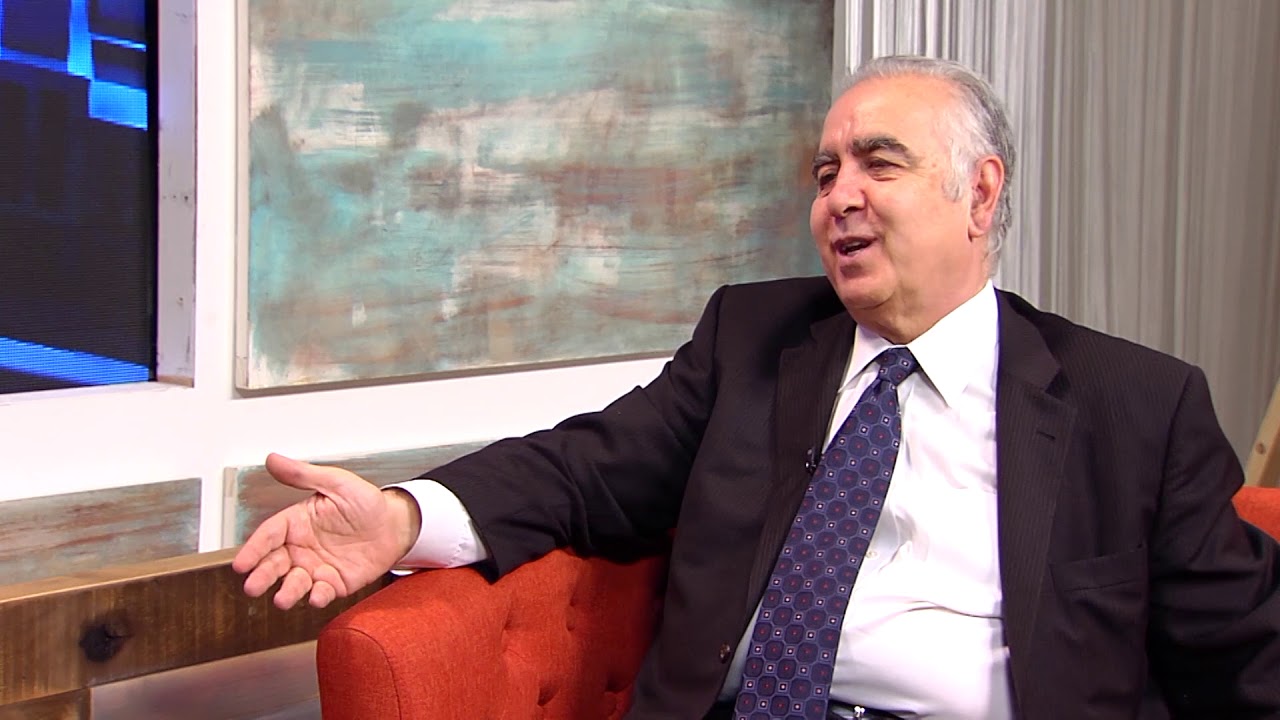
Author: Harut Sassounian

  • Armenia, Azerbaijan and Turkey: Caught Between Russia and the West

    Armenia, Azerbaijan and Turkey: Caught Between Russia and the West

    As the war in Ukraine is continuing to cause more devastation and the loss of human life, countries around the world, particularly Armenia, Azerbaijan and Turkey, had to make difficult choices in their policies, public statements and votes in international organizations. Despite concerns about Turkey’s inconsistent positions, it is clear that neither Russia nor the West is willing to push Turkey to the opposing camp. Pres. Erdogan’s senior advisor, Ibrahim Kalin, pompously told CNN that Western countries have urged Turkey to maintain its ties with Russia, which is highly unlikely. Erdogan was quoted as saying: “we can neither give up on Ukraine nor Russia.” This is described as “strategic ambiguity.”

    Here is my analysis of the repercussions of this war on Armenia, Azerbaijan and Turkey. Will they be able to maintain their ambiguous positions or will they stumble and lose their delicate balance?

    Let us start with the votes these three countries have cast regarding the conflict. The first vote took place on February 25 at the European Council where Armenia, Azerbaijan and Turkey are members. Out of the 47 members, only Russia and Armenia voted against the motion to suspend Russia’s membership in the Parliamentary Assembly of the Council of Europe and the Committee of Ministers. Forty two countries voted in favor. Azerbaijan did not vote. Turkey abstained.

    The next vote came on February 28 in the UN Human Rights Council on whether to include the situation in Ukraine on the Council’s agenda. Out of the 47 Council members, 29 voted in favor and 13 abstained (including Armenia). Russia was probably not pleased with Armenia’s vote. On the other hand, the Charge d’Affaires of Ukraine in Armenia Denis Avtonomov expressed his government’s satisfaction with Armenia’s vote. More importantly, on March 4, the Human Rights Council voted to establish a commission to investigate Russia’s violations in Ukraine. Thirty-two countries voted in favor and 13 abstained (including Armenia). Azerbaijan and Turkey are not members of the UN Council.

    The UN General Assembly adopted a resolution on March 2 calling on Russian forces to withdraw from Ukraine. 141 member states voted in favor and 35 abstained (including Armenia). Turkey voted in favor. Azerbaijan did not vote.

    Going beyond votes, Armenia’s Prime Minister Nikol Pashinyan has the difficult task of balancing his country’s military, political and military alliance with Russia with trying to maintain positive relations with the West. Pashinyan made his first cautious remarks regarding the conflict on March 2: “We are deeply saddened by the unfolding events which are now clear that will have global repercussions. Our hope is that the scheduled Russian-Ukrainian talks will take place and become fruitful, and diplomacy will be able to silence the cannons.”

    Azerbaijan also has its foot in both camps. On February 26, Ukraine’s President Volodomyr Zelensky tweeted twice praising Azerbaijan for supplying $5 million of medicines and ordering Azeri gas stations in Ukraine to provide free fuel to emergency vehicles, just days after Azerbaijan and Russia had signed a treaty of alliance. However, Azerbaijan has not imposed sanctions on Russia, just like Turkey and Armenia. Since Ukraine had supported Azerbaijan politically and militarily prior to the 2020 Artsakh war and the fact that 2,000 Russian peacekeepers are providing security for Artsakh Armenians, the government of Artsakh announced its recognition of the “independence” of the Russian controlled regions of Donetsk and Lugansk in Ukraine.

    Turkey is the only NATO member that has refused to impose sanctions on Russia and kept its airspace open to Russian planes, in order not to lose Russian investments, gas imports, and large income from tourists. Surprisingly, Erdogan approved on March 1 an investment promotion agreement with Belarus which is sanctioned by the West for joining Russia’s invasion of Ukraine. On the other hand, Turkey blocked the passage of some Russian warships through Turkish straits to the Black Sea, as stipulated by the 1936 Montreux Convention. US Secretary of State Antony Blinken expressed his appreciation for the Turkish decision. Nevertheless, Turkey-U.S. relations remain frigid.

    After five of its dozen Turkish drones were shot down by Russia, Ukraine plans to purchase more drones from Turkey which have targeted Russian armed convoys. On the other hand, Turkey had purchased Russian S-400 anti-aircraft missiles causing the United States to sanction fellow NATO member Turkey, blocking its acquisition of the American F-35 stealth bombers.

    On March 1, The New York Times published an article by Carlotta Gall titled, “Ukraine Invasion Increases Friction Between Erdogan and Putin.” She reported that hours before the start of the war, two Turkish planes landed in Ukraine to evacuate diplomatic staff and other Turkish citizens from Kiev. However, the planes and evacuees became stranded, resulting in Pres. Erdogan getting criticized at home for misreading the looming danger and not acting quicker. Erdogan had invited Presidents Putin and Zelensky to Turkey to mediate the conflict. Putin politely declined the invitation. Erdogan shut down several Western media outlets silencing their criticisms of Russia.

    Despite Turkey’s fence-sitting in the conflict, “three Turkish factories and four warehouses in Ukraine were destroyed By Russia during the war. These factories manufactured ammunition and small bombs,” reported the London-based Arabic newspaper Rai Al-Youm. In addition, “a large factory that specialized in building the structures of Bayraktar drones was destroyed.” Ukrainian factories supply engines and other critical parts for Turkish drones. The newspaper quoted an unnamed senior advisor to Erdogan stating that Turkish losses in Ukraine are in the hundreds of millions of dollars and could possibly reach billions of dollars.

    Meanwhile, Erdogan’s son-in-law, drone manufacturer Selcuk Bayraktar, tweeted: “I condemn in the strongest terms the unlawful invasion carried out by Russia in defiance of the sovereignty of an independent nation.” He said he supported “Ukraine and Crimea, the homeland of our Turkish brothers resisting the occupation.” In a second tweet, Bayraktar regretted the “destruction and suffering caused by war.” Turkish citizens pointed out the hypocrisy of a “merchant of death” whose drones have caused so much destruction around the world. He obviously places his business interests ahead of human lives.

    The Russia-Ukraine war has disrupted the norms of international order, forcing many countries, including Armenia, Azerbaijan and Turkey, to delicately balance their interests on both sides.

  • Russia-Ukraine War: This is What Happens When Compromise is not Achieved

    Russia-Ukraine War: This is What Happens When Compromise is not Achieved

    What is happening right now in Ukraine is the worst possible scenario for both sides, in fact all sides.

    First of all, this is an enormous tragedy for the people of Ukraine who have fallen victim to the Russian invasion which should have been avoided at all costs. No one can justify the destruction of a country and the killing of innocent people. We should support peace, common sense and safety of all human beings.

    Let us ignore the unrelenting propaganda, misinformation disinformation, and hypocrisy which have inundated the media before and during the war. No need to play politics or partisanship with people’s lives.

    Let us now move from emotional statements to the real world which can only be ignored at our own peril. Since the beginning of the world, the powerful has always imposed his will on the weak. There is no escape from this. It has always been this way and will continue to be this way. All those who believe in truth and justice are sadly mistaken. They live in a make-believe world.

    Russia, as a powerful country, felt that it was being threatened by Western powers encroaching on its sphere of influence and wanted to protect its national interests. Whether we agree or disagree with the Russian view is immaterial. This is how the Russians perceive the situation. And when you are a powerful country, right or wrong, you try to impose your will on others, one way or another. The precedent for this situation is the Russian invasion of the Republic of Georgia in 2008 when the latter flirted with the idea of joining NATO. Russia occupies large parts of Georgia to this day.

    Those in the West who have been making sanctimonious statements about big bad Russia attacking an innocent country are conveniently forgetting how the western countries themselves behaved for decades, even centuries. The imperial powers of the United Kingdom, France, Spain, Germany, and Italy went around the world conquering dozens of smaller, poorer and weaker countries, subjugated them, plundered their natural resources, killed and wounded hundreds of thousands of natives, until they rose up and tossed the aggressors out.

    The United States, the self-declared paragon of democracy and human rights, has attacked and occupied several countries in the past imposing its will around the world. The U.S. government has overthrown many leaders who have refused to toe its line and submit to America’s wishes. There are dozens of such examples, the latest of which is Iraq. Who can forget the Cuban Missile Crisis in 1962, when the Soviet Union deployed nuclear missiles in Cuba, just 90 miles away from the United States? The two countries came to the brink of nuclear war on that occasion. There is also the long-standing U.S. policy of the Monroe Doctrine which states that any intervention in the political affairs of the Americas by foreign powers is considered a hostile act against the United States. How is this different from Putin’s interpretation of Russia’s sphere of influence in Eastern Europe, including Ukraine? Finally, Pres. Biden’s actions against Russia are partially prompted by his intent to raise his record low rating of 37%. The latest Washington Post/ABC News poll showed that only 33% of Americans approve Biden’s handling of the Russia-Ukraine crisis, while 47% disapprove.

    It would have been preferable to engage in direct negotiations between Russia and Ukraine to find a peaceful solution to the crisis. As it is often said, “war is diplomacy by other means.” The more outside powers such as the United States, France and the United Kingdom meddled in this dispute, the worst it got, since each of these countries, pretending to defend Ukraine, were in fact pursuing their own interests. The crux of the issue is the disagreement between Russia and the West about an alleged pledge made by the West after the collapse of the Soviet Union that NATO will not expand to Eastern Europe, threatening Russia’s security. Nevertheless, NATO did expand to several Eastern European countries, which Russia viewed as a hostile act.

    Russia decided to impose its will on Ukraine, fearing that if it did not act promptly, Ukraine would join NATO, after which it would be impossible to neutralize the perceived danger, due to the NATO policy of “attack on one member country is deemed an attack on all.”

    There should have been a compromise found on both sides to avoid war. Most people thought that there would be no war and that Russia was amassing troops on Ukraine’s border to pressure it to reach a compromise solution. Regrettably, the Russian attempt to influence Ukraine ended in a full scale invasion destroying large parts of the country’s infrastructure and causing untold casualties. It could be that Ukraine refused to compromise relying on Western assurances that it would come to its aid militarily and economically, if it resisted Russian demands not to join NATO. In addition to providing military hardware and economic assistance, Western countries tried to block Russia’s actions by issuing a series of draconian sanctions, which failed to alter its decision. The hopeful news is that Russian and Ukrainian delegations held their first direct talks on Monday and agreed to meet again.

    Turning to the effects on Armenia of the war and sanctions on Russia, Armenia is caught in the middle of its alliance with and reliance on Russia and its standing with the rest of the world. As they say, when two elephants jostle, the ant gets stomped on, regardless of which elephant wins.

    The biggest problem that Armenia has is the absence of a competent leader who would be able to come up with a skillful solution to extricate itself from this extremely complicated situation. Since the start of the war, Armenia’s Prime Minister Nikol Pashinyan has not made an official declaration. Nevertheless, on three separate occasions, Armenia has taken sides and made statements regarding this conflict.

    The most problematic action Armenia took was last Friday when the Council of Europe voted to suspend Russia’s membership in the Parliamentary Assembly of the Council of Europe and the Committee of Ministers. Armenia was the only country that voted with Russia against the measure. Forty two countries voted yes. Turkey shrewdly abstained and Azerbaijan did not vote at all. Western countries will not look too kindly at Armenia’s support for Russia. Likewise, Russia will not look too kindly at Azerbaijan’s and Turkey’s votes. The war in Ukraine is sure to limit Turkey’s ability to walk on a tightrope between NATO and Russia. Azerbaijan’s similar tightrope walk will also be curtailed by not voting with Russia in the Council of Europe, thus undermining the declaration of “allied cooperation” signed on Feb. 22 by Russia and Azerbaijan.

    Secondly, when Armenia’s Foreign Ministry spokesman, Vahan Hunanyan, was asked if Armenia will join Russia in recognizing the “independence” of the Ukrainian regions of Donesk and Lugnask, he replied: “There is no such issue on [Armenia’s] agenda.” Putin will not be pleased with that answer. He has many ways to pressure Pashinyan to toe the Russian line in this crisis.

    Finally, speaking at a meeting of the Eurasian Intergovernmental Council in Kazakhstan on February 25, Pashinyan suggested that prompt measures be taken “to minimize or circumvent” the anti-Russia sanctions approved by the West following Russia’s invasion of Ukraine.

    The anti-Russia sanctions are sure to have a major impact on Armenia’s frail economy as Russia is Armenia’s largest trading partner. As they say, when Russia sneezes, Armenia catches a cold. The $861 million remitted in 2021 by Armenian workers in Russia to their families in Armenia will be sharply curtailed due to the collapsing ruble and increased unemployment.

    There is also a long-standing controversy between Armenia and Ukraine. Both sides accuse each other of betraying their trust and siding with their enemies.  In 2014, Armenia, along with nine other countries, voted with Russia against a UN General Assembly resolution which declared the pro-Russian Crimean referendum invalid. Armenians respond by recalling that Ukraine voted in the General Assembly in 2008, for a resolution demanding the withdrawal of “Armenian forces” from Nagorno Karabagh. President Volodymyr Zelensky of Ukraine announced during the 2020 Artsakh war: “We support Azerbaijan’s territorial integrity and sovereignty just as Azerbaijan always supports our territorial integrity and sovereignty.” Furthermore, Ukraine sold lethal weapons to Azerbaijan prior to the 2020 war.

    One should not forget that there are around 500,000 Armenians who live in Ukraine. When other countries shut down their embassies in Ukraine and withdrew their nationals, the Armenian Embassy continued functioning and Armenian nationals remained in Ukraine risking their lives.

    With each passing day, more innocent civilians are being killed in Ukraine, more sanctions are being imposed on Russia and more ominous threats are being issued. Common sense should prevail before the world reaches a doomsday scenario.

    The only solution is reaching a compromise through peaceful negotiations. Eye for an eye and tooth for a tooth will leave everyone blind and toothless.

  • Don’t Let Turks Buy Land in Armenia; Impose Tariffs on Turkish Imports

    Don’t Let Turks Buy Land in Armenia; Impose Tariffs on Turkish Imports

    The Armenian government must take two important steps prior to opening the border with Turkey: 1) Forbid Turkish citizens from buying real estate in Armenia; and 2) Place tariffs on the import of products from Turkey.

    Obviously, Turkish citizens do not have to cross the Armenian border to be able to buy real estate in Armenia. But, with the opening of the mutual land border, more Turkish citizens will be able to come to Armenia, thus increasing the flow of people and products from Turkey.

    Allowing the citizens of a hostile country like Turkey to purchase real estate in Armenia is a serious national security threat, particularly if these properties are located near sensitive border areas.

    There is a big contradiction between what the Constitution and laws of Armenia stipulate regarding the purchase of real estate by foreigners and what is actually practiced. Now that a Constitutional Committee has been set up to reform the existing Constitution, last amended in 2015, this is the right time to reconsider the existing provisions as to who can buy real estate in Armenia. There should be a ban on foreigners’ purchase of properties near Armenia’s border. In addition, citizens of Azerbaijan and Turkey should not be allowed to purchase any kind of property anywhere in Armenia.

    This problem is particularly urgent because several years ago the Turkish government adopted a law that forbade the purchase of property in Turkey by citizens of four countries: Armenia, Cuba, North Korea and Syria. Citizens of another 35 countries are restricted to purchase property in Turkey based on the nature and location of the land. One would think that since the Turkish government has forbidden Armenian citizens from buying land in Turkey, Armenia should have reciprocated by banning the purchase of land in Armenia by Turkish citizens.

    I wrote an article in 2012, informing Armenian officials of the Turkish law that banned the citizens of Armenia from buying land in Turkey and urged “the Armenian Parliament to consider adopting retaliatory measures against citizens of Turkey interested in purchasing Armenian properties.” Regrettably, my suggestion was ignored.

    The 1995 Constitution prohibited foreigners from purchasing land in Armenia. However, this was contradicted by the Armenian government’s subsequent report to the World Trade Organization: “foreigners have the right to own real estate properties built on Armenian land.” The report also stated that “the [Armenian] legislation grants the Government the power to limit and prohibit foreign investment for national security concerns.”

    In line with the Constitution of 1995, the subsequent Armenian Constitutions of 2005 and 2015 also stated that “Foreign citizens and stateless persons shall not enjoy ownership right over land, except for cases provided for by law.”

    If foreigners are not allowed to purchase land or real estate in Armenia, then how were they able to buy them? In 2019 alone, foreigners, contrary to the Armenian Constitution, purchased 186 apartments, 72 houses, two factories, nine public properties and even 121 plots of land. How was this possible?

    Much more concerning is that citizens of the enemy states of Azerbaijan and Turkey have been buying properties in Armenia without any objection. According to the figures released last week by the Armenian government’s cadastre or official registry of real estate, from 2010 to 2021 citizens of Azerbaijan purchased six properties in Armenia, which included five apartments and one public property. During the same period, citizens of Turkey bought 71 pieces of real estate, including 55 apartments, five houses, one garage, seven public properties and three plots of land in Armenia.

    I assume that many of the Turkish citizens who purchased real estate in Armenia are of Armenian origin. I suggest that the Armenian government make an exception for those who are of Armenian origin, if and when the purchase of real estate by Turkish citizens is banned.

    Finally, turning to the import of products from Turkey and other countries, the Armenian government must impose tariffs to protect the viability of domestic production. Since Turkey has a very large population, it is able to produce items much cheaper due to mass scale. Armenian producers, unable to compete with them, will go out of business. Already the Armenian market is flooded with Turkish products. After opening the border, Turkish products will no longer have to go through the expense of importing them via Georgia, which means that they will be even cheaper creating a bigger problem for domestic producers. Making matters worse, the collapsing value of the Turkish Lira has made the prices of imported products from Turkey cheaper.

    Before several sectors of Armenia’s economy are completely devastated, the Armenian government must place tariffs on imported Turkish products to protect Armenia’s vulnerable producers.

  • Armenia Needs Better Counterintelligence To Deter Foreign and Domestic Spies

    Armenia Needs Better Counterintelligence To Deter Foreign and Domestic Spies

    Last week, we were all shocked by the news that Armenia’s National Security Service (NSS) arrested 19 members of the Armenian military on spying charges for Azerbaijan.

    The NSS accused the arrested 19 Armenian soldiers of having transferred classified military secrets to Azerbaijan in return for money. The NSS explained that Azerbaijani agents had contacted the Armenian soldiers by setting up fake Facebook pages with photos of attractive females who communicated in the Armenian language. There are plenty of Azeris who speak fluent Armenian since they were born in Armenia and attended Armenian schools before they fled to Azerbaijan after the civil unrest over Artsakh in the late 1980’s.

    There are several serious security issues that the Armenian government should pay immediate attention to and take special measures to minimize the repetition of such spying cases. But even with improved counterintelligence, such problems may not be eliminated, but simply minimized, since almost all countries fall victim to foreign and domestic spies.

    Here are my thoughts and suggestions:

    1) The Armenian government should take immediate steps to appoint competent experts who know how to run an intelligent service. This suggestion is made because Prime Minister Nikol Pashinyan has appointed to almost all positions inexperienced and incompetent officials purely based on their membership in his ruling party. The most recent example of incompetence was the surprising announcement by the NSS that they learned from reading a newspaper article that the President of Armenia is a dual citizen which is a violation of Armenian law. Imagine Armenia’s intelligence services learning about such a critical issue from a newspaper after the President was in office for four years, instead of being the first to uncover it.

    2) The National Security Service, besides needing expert personnel, must also have the most advanced counterintelligence technology.

    3) The Armenian government must consult with ally governments on how to improve the training, organization and activities of its intelligence services.

    4) The 19 Armenians who were arrested for spying are accused of transferring to Azerbaijan secret information about Armenia’s military personnel, weapons and military facilities. It remains to be seen if they will be found guilty in a court of law since there have been many Armenian officials arrested in the past four years for committing various offenses, but were not convicted.

    5) How can the Armenian military allow its soldiers to have Facebook pages since everyone knows that they are vulnerable to hackers and can be co-opted by outsiders?

    6) Where was the oversight by Armenia’s intelligent services as the compromised soldiers were transmitting national secrets to the enemy? It would have been best to prevent the transfer of such secrets before they happen, not after the damage is done.

    7) It is highly concerning that such a large number of soldiers of various ranks were arrested. The NSS announced that a total of 24 soldiers were involved in these spying activities which means that there are several other suspects who have not been arrested either due to a lack of evidence or because their identities and locations are unknown. We also do not know how long this spy network has been operating before their arrest.

    8) Even if the remaining members of this spy network are arrested and charged, it does not mean that the 24 suspects are the only ones involved in this spying Network. There may be dozens or hundreds of others whose identities and activities are unknown. As opposed to Armenia, Azerbaijan seems to have a highly competent and experienced cadre of agents who know what they are doing. They are most probably trained and aided by the highly skilled Turkish intelligence services, the MIT (National Intelligence Organization).

    9) One serious aspect of this spying scandal is that some of the arrestees reportedly sold national secrets for a few hundred dollars. There must be something seriously wrong in Armenia’s educational system if an Armenian, born, raised, educated, and serving in the military, is willing to betray his nation to the enemy for a handful of dollars. It is highly concerning that there seems to be a lack of national pride and patriotic sentiments among some Armenians, particularly soldiers.

    10) This is not the first time that spies have been arrested in Armenia. There have been several cases of Armenians spying for Turkey in the past 30 years. Some of them were Armenian government officials.

    11) Azerbaijan announced in the past the arrest of a number of Armenians and Azeris who had allegedly spied for Armenia. It is not known if they were really spies or not.

    12) I fear that the spying problems in Armenia will get much worse with the contemplated opening of the border with Turkey and Azerbaijan. This will allow many more Azeri and Turkish spies to enter Armenia via air and land as tourists or business people.

    13) In addition to actual spies, Azerbaijan and Turkey will collect valuable information about Armenia by debriefing their citizens after their return from Armenia. Of course, spying is not limited to these two countries, as other states are also engaged in gathering intelligence on Armenia.

    14) There have been several cases where Armenians, who have immigrated to Turkey in recent years due to lack of jobs at home, have been approached by Turkish intelligence to gather information on Armenia upon their return home for which they were handsomely compensated.

    In conclusion, antagonistic actions are carried out not only during the war, but also at peacetime by recruiting domestic and foreign agents. The Armenian government must approach this problem very seriously and allocate the necessary resources and personnel to counter such intelligence gathering activities.

  • Poll Finds More Armenians Feel Country Is Going in the Wrong Direction

    Poll Finds More Armenians Feel Country Is Going in the Wrong Direction

    The Washington-based International Republican Institute’s public opinion poll, conducted November 22-December 5, 2021, measured the Armenian population’s views on political, economic, and security issues. The survey was funded by the U.S. Agency for International Development.

    The poll revealed a key finding: 46% of the population thinks that “Armenia is headed in the wrong direction,” while only 34% thinks that the country is headed in “the right direction.” This indicates that Prime Minister Nikol Pashinyan’s often-repeated boast that he enjoys “the people’s mandate” is not necessarily so. This is a significant shift from the 54% of the votes the Prime Minister’s political party received in the June 20, 2021 parliamentary elections. More importantly, the number of those who think that Armenia is headed in the wrong direction increased from 20% in May 21, 2021 to 34% in July 2021 and 46% in December 2021.

    However, on another important question, “Do you believe that you or people like you can influence decisions made in our country,” 66% said yes, while 33% said no. This is definitely a positive indication for the authorities.

    The next question: “Are you satisfied or dissatisfied with the way democracy is developing in our country?” the country was almost evenly split: 51% yes and 47% no.

    To the question: “Do you consider our country to be governed in the interest of the majority of people or in the interest of some groups?” 61% said it was governed in the interest of “some groups,” while only 31% said it was governed in the interest of “the majority.” This reflects negatively on the current government.

    On the positive side, 66% of the people surveyed said they are “not afraid of openly expressing their opinions,” while 31% said they were afraid to do so.

    To the question: “How satisfied or dissatisfied are you with the work of the following state bodies?” the top approval was given to Pashinyan government’s frequent critic, Human Rights Defender’s (Ombudsman’s) office (68% satisfied vs. 25% dissatisfied); the police (68% vs. 29%); local governments (63% vs. 33%); armed forces (58% vs. 37%); Central Electoral Commission (57% vs. 33%); and National Security Service (50% vs. 41%). The Prime Minister’s office came in 7th place with 49% satisfied vs. 48% dissatisfied. The Armenian Parliament came in 16th place with 31% satisfied and a whopping 67% dissatisfied. This is not surprising as the parliament’s televised sessions frequently show scenes of shouting matches, insults, and physical altercations ending with abrupt orders by the parliament’s leadership representing the Prime Minister’s political party to turn off the TV cameras to hide the disorderly conduct of the rowdy parliamentarians.

    Turning to foreign policy issues, those surveyed ranked France on top with 92% as having the best relationship with Armenia. Then came Iran (80%); the United States (77%); China (75%); European Union (69%); Russia (64%); Georgia (58%); UK (47%); other (10%); Turkey (5%); and Azerbaijan at the very bottom with 3%.

    When asked “Which two countries were the most important political partners for Armenia?” Russia (57%); France (50%); the U.S. (38%); Iran (23%); European Union (5%); China (5%); Georgia (3%); and India (1%).

    In response to “Which two countries are the most important economic partners of Armenia?” Russia again came first with 61%; Iran (40%); (China (29%); the U.S. (16%); France (14%); Georgia (8%); European Union (7%); India (2%); and Turkey (2%).

    When asked “Which 2 countries are the most important security partners for Armenia?” the answers were: Russia (64%); France (32%); Iran (31%); the U.S. (26%); European Union (5%); China (4%); Georgia (2%); and India (1%).

    “Which 2 countries are the greatest political threat to Armenia?” The survey respondents said: Turkey (90%); Azerbaijan (77%); Russia (15%); UK (3%); Israel (2%); the U.S, (2%); and Georgia (1%).

    “Which 2 countries are the biggest economic threat to Armenia?” Survey respondents said: Turkey (68%); Azerbaijan (52%); Russia (17%); Georgia (10%); Iran (4%); the U.S. (1%); China (1%); and European Union (1%).

    “Which 2 countries are the greatest security threat to Armenia?” Survey respondents said: Turkey (88%); Azerbaijan (81%); Russia (11%); Iran (2%); the U.S. (2%); Israel (2%); Georgia (1%); France (1%); and UK (1%).

    “The relationship with which 2 countries needs to be improved for the development of Armenia?” The survey respondents said: Russia (53%); the U.S. (35%); Iran (29%); France (25%); China (15%); European Union (9%); Georgia (7%); Turkey (5%); Azerbaijan (4%); India (1%); and UK (1%).

    The survey then asked if the respondents agreed or disagreed with the following three questions:

    1) 73% agreed and 25% disagreed that “Armenia should start a dialog with Turkey and normalize bilateral relations, while pursuing the agenda of recognition of the Armenian Genocide by Turkey.”

    2) 70% agreed and 27% disagreed that “Armenia must establish bilateral relations with Turkey by putting forward its own preconditions such as Turkey’s non-hindrance of peace in Artsakh.”

    3) 44% agreed and 53% disagreed that “Under no circumstances Armenia should pursue normalization of relations with Turkey.”

    Most survey respondents disagreed with Pashinyan that opening roads with Azerbaijan is beneficial to Armenia. When asked: “How will the opening of transport routes with Azerbaijan impact Armenia’s economic development?” 27% gave a positive answer; 59% negative.

    The same is true for Turkey. When asked: “How will the opening of transport routes with Turkey impact Armenia’s economic development?” 35% gave a positive answer; 53% negative.

    When asked: “How important is the resolution to the Artsakh conflict for the future of Armenia in the next 10 years?” The overwhelming 96 % said “important”; 3% “unimportant.”

    The survey asked: “What would be an acceptable solution of the Artsakh conflict?”

    — 35% said: “Recognition of Artsakh as an independent state.”

    — 34% said: “The unification of Artsakh with Armenia as a region of the Republic of Armenia.”

    — 16% said: “Establishment of the status of the Artsakh Autonomous Region within Armenia.”

    — 11% said: “Establishment of the status of Artsakh within Russia.”

    — 1% said: “Maintaining the current status quo.”

    When asked: “Is Armenia able to independently defend its borders with Azerbaijan, without the help of any other country?” 46% said yes; 53% no.

    Finally, when asked: “Which country would you prefer to assist Armenia in defending its borders?” 47% said Russia; the U.S. (18%); France (14%); Iran (8%); China (2%); European Union (1%); all three Minsk Group countries of Russia, the U.S., France (1%); and NATO (1%).

    Whether we agree or disagree, these are the answers that the people of Armenia gave. It reflects their current mindset.

  • After Abandoning Artsakh, Pashinyan Now Gives Up the Armenian Cause

    After Abandoning Artsakh, Pashinyan Now Gives Up the Armenian Cause

    It is simply amazing that every time Prime Minister Nikol Pashinyan opens his mouth, he makes a new and bigger blunder. To be convinced of this, all one has to do is follow his speeches, press conferences, contradictory statements in the Armenian Parliament, Facebook postings, flawed decisions and unqualified nominations. To make matters worse, he does not seem to learn from his errors. Pashinyan neither realizes nor admits his mistakes. He seems to be incorrigible.

    On January 24, 2022, the Prime Minister gave another one of his so-called press conferences. No reporters were present to ask questions and challenge his misstatements. It was a poorly-orchestrated show to mislead the public. A young lady read the questions supposedly sent by the media. When one of the journalists complained later that his question was presented in a garbled manner, the young lady honestly confessed that she had simply read the questions given to her by the Prime Minister’s aides.

    Among the Prime Minister’s biggest blunders was his reply to a question about Armenian historical demands from Turkey. Pashinyan stated that “the Republic of Armenia has never conducted a policy of the Armenian Cause. Never.” I seriously doubt that he knows the meaning of “the Armenian Cause.” His comment is no different than what a Turkish official would have said. It is shameful that after the horrendous genocide that was committed against Armenians in 1915-1923, killing 1.5 million innocent men, women and children, and dispossessing them of their historic homeland, the Prime Minister so casually dismisses Armenians’ just demands and acts as if nothing had happened. This is exactly what the Turkish leaders want — that Armenians forget about the past and drop their demands. Furthermore, the Prime Minister falsely stated that Pres. “Robert Kocharian in 2005 publicly announced that Armenia does not have territorial demands or territorial expectations from Turkey.” I recall reporting about Kocharian’s statement back in April 2005, when a Yerevan State University student asked him about Armenia’s demands for land from Turkey. Kocharian cautiously responded: “This issue would have to be taken up by a future President.” It is clear that at a time when Armenia had its hands full dealing with the conflict with Azerbaijan over Artsakh, it was not in Armenia’s best interest to open a second front with Turkey over Armenian territories. Kocharian did not say that Armenia had no territorial demands from Turkey. He simply said that the resolution of that issue has to be taken up at a later date. It is a shame that Prime Minister Pashinyan repeated what the Turkish media had falsely reported rather than what was actually said by the previous President of Armenia.

    Going from one distortion to the next, Pashinyan falsely added that Pres. “Serzh Sargsyan had made a reference to Kocharian’s statement.” I do not recall Sargsyan making such a reference. Pashinyan continued by stating that “Armenia never placed in doubt the Armenia-Turkey border. You will not find a single leader or government of the Armenian Republic who put in doubt the Armenia-Turkey border. We have not resigned from this policy.” In reality, until Pashinyan, no Armenian President or government had accepted the current Armenia-Turkey border nor stated that Armenia did not have territorial demands from Turkey.

    Coming to the issue of the Armenian Genocide, Prime Minister Pashinyan wrongly stated: “We must register that the locomotive behind the process of the recognition of the Genocide has always been the Diaspora and Diaspora organizations.” This is exactly what the Turkish government would want the Armenian leader to say. There are several things wrong with the Prime Minister’s statement.

    1) Pashinyan is once again splitting the Diaspora from Armenia.

    2) The Armenian Genocide is not exclusively a Diaspora issue. The descendants of Armenian Genocide survivors constitute today over one-third of Armenia’s population. That is why every year on April 24 over one million Armenians march to the Armenian Genocide Monument in Yerevan.

    3) All previous Armenian governments have pursued the international recognition of the Armenian Genocide. In fact, Armenia’s Declaration of Independence, issued on August 23, 1990, declared the following: “Aware of its historic responsibility for the destiny of the Armenian people engaged in the realization of the aspirations of all Armenians and the restoration of historical justice,” and “The Republic of Armenia stands in support of the task of achieving international recognition of the 1915 Genocide in Ottoman Turkey and Western Armenia.” Significantly, the Declaration used the words “Western Armenia,” which is now being abandoned by the Prime Minister. Later, Armenia’s Constitution included a link to the Declaration of Independence.

    4) The pursuit of the international recognition of the Armenian Genocide is a pan Armenian issue which concerns both the Diaspora and Armenia. Therefore, there must be a coordinated division of labor between the Diaspora and the Armenian government. What the Diaspora is able to do is different from what the Armenian government can do and vice versa.

    The Prime Minister also made many other misstatements in his over two-hour-long so-called press conference. However, an entire book has to be written, not just an article, to expose all of his misstatements.