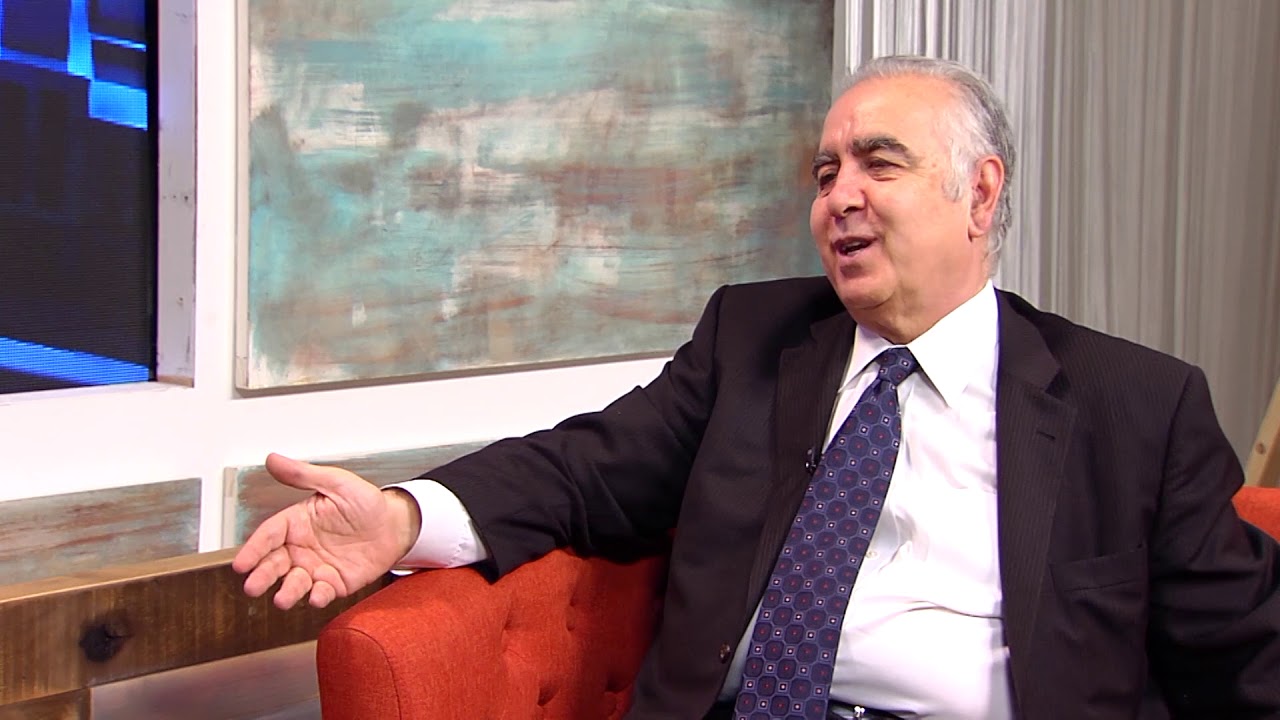
Author: Harut Sassounian

  • Celebrity Dr. Oz Running for US Senate; Do We Need a Second Trump in Washington?

    Celebrity Dr. Oz Running for US Senate; Do We Need a Second Trump in Washington?

    TV Celebrity Dr. Mehmet Oz announced on Nov. 30 his Republican candidacy for one of the two U.S. Senate seats from Pennsylvania.

    Just like his idol Donald Trump, Dr. Oz has no background in politics. He has not even served as a City Councilman. The American public and the world-at-large suffered enough in the hands of the incompetent celebrity Trump who appointed Dr. Oz to the White House council on sport, fitness and nutrition, after appearing on “The Dr. Oz Show” as a presidential candidate.

    Besides his lack of political experience, there are several other issues that should discourage or disqualify Dr. Oz from running for a Senate seat. Even though he is a medical doctor, he has offered plenty of baseless medical advice and promoted questionable treatments, such as diet pills and hydroxychloroquine, Trump’s fake cure for coronavirus, in order to enrich himself, jeopardizing the health of the American public. He shockingly suggested on FOX-TV that “a 2-3% increase in COVID-19 mortality from reopening schools nationwide might be a worthwhile trade-off.”

    According to Wikipedia, Dr. Oz “has promoted pseudoscience and alternative medicine, and has been criticized by physicians, government officials, and publications, including the British Medical Journal, Popular Science, and The New Yorker, for endorsing unproven products and non-scientific advice. The British Medical Journal published a study in 2014 that found more than half of the recommendations on medical talk series, including “The Dr. Oz Show,” either had no evidence or contradicted medical research.”

    Another problem is that Dr. Oz is running for the Senate from Pennsylvania, even though he is not a resident of that State. He lives in a mansion in New Jersey which violates the residency requirement to run for political office in that State. In late 2020, he changed his voter registration to a home owned by his mother-in-law in Pennsylvania. The only link he has with that State is that he graduated from the University of Pennsylvania over three decades ago in 1986.

    Finally, without wanting to say anything disparaging about his Turkish background, it remains to be seen, if elected, Dr. Oz will act as the mouthpiece of the Turkish government or serves the interests of the United States. In the few days since announcing his candidacy, several articles have been written questioning his exclusive allegiance to the United States as a dual Turkish and American citizen. Even though Dr. Mehmet Oz was born in Ohio, he spent his childhood summers in Turkey and served for two years in the Turkish army.

    Regarding his position on Armenian issues, there are two indications:

    1) In 2014, the Assembly of Turkish American Associations headquartered in Washington, DC, announced Dr. Oz’s participation in its “master plan” to deny the Armenian Genocide in advance of the Centennial of the Armenian Genocide in 2015. However, a spokesman for Dr. Oz said in an email to the Armenian Asbarez newspaper that “Dr. Oz is not involved in this in any way.”

    2) In 2008, when I was being awarded the Ellis Island Medal of Honor in New York, Dr. Oz was also one of the recipients of that medal. During the official ceremony, in my acceptance speech, the minute I said that I was a descendant of survivors of the Armenian Genocide, Dr. Oz got up from his chair and left the hall. To be fair to him, this could have been a mere coincidence.

    Nevertheless, it is up to Dr. Oz to clarify his position on the Armenian Genocide which is already recognized by both Houses of Congress and the President of the United States. Dr. Mehmet Oz’s true allegiances will be revealed if he shows any reluctance to criticize the grave human rights violations committed by his good friend, the President of Turkey, Recep Tayyip Erdogan.

    Despite his celebrity status, Dr. Oz will face an uphill battle in his political campaign. He will be competing with a dozen other Republican candidates in the race for the Senate. If he overcomes that major hurdle, he would then go up against his Democratic rival. The current Republican Senator Pat Toomey has announced his retirement.

    Dr. Oz has come under relentless attacks from the American media for his questionable past statements. Dr. Dale Summers wrote an article in The Daily Beast titled: “Please Don’t Elect Dr. Oz — He’s a Disgrace to Our Profession.” Summers stated: “I greet this prospect with the same enthusiasm I’d have for contracting dysentery…. He’s been promoting pseudoscience on his show for years.”

    In another article, The Daily Beast’s Matt Wilstein reported the sarcastic comments made on TV by comedian Stephen Colbert about Dr. Oz’s political prospects. The article was titled: “Stephen Colbert Exposes Known ‘Liar’ Dr. Oz Ahead of Pennsylvania Senate Run.” Colbert ridiculed Dr. Oz’s statement that his candidacy will “help re-light the ‘divine spark’ inside every American.” He noted that Dr. Oz, before tossing his hat in the political ring, had a “lucrative career as a liar, peddling questionable health advice on TV.” Colbert then added: “But Dr. Oz may not just have fake medical claims; he may have fake Pennsylvania claims, because he’s running there despite living in New Jersey for years.”

    Karen Tumulty, Deputy Editorial Page Editor and Columnist for the Washington Post, wrote an article headlined: “What Dr. Oz’s Senate campaign is missing.” Tumulty stated: “Oz has now offered himself as a prescription for what ails politics. Count me as skeptical that Pennsylvania voters will buy the idea that he is the cure they are looking for.”

    It remains to seen whether Dr. Oz’s celebrity status will overcome his political inexperience and fake medical cures.

  • Israeli Cluster Bombs Sold to Azerbaijan Kill & amp; Maim Innocent Armenian Civilians

    Israeli Cluster Bombs Sold to Azerbaijan Kill & amp; Maim Innocent Armenian Civilians

    Israeli journalist Yossi Melman wrote a lengthy critical article in the Haaretz newspaper about Israel’s sale of banned deadly cluster bombs to Azerbaijan to kill and maim innocent Armenian civilians in Artsakh. The article, although published on Oct. 22, 2020, retains its relevance given the fact that these cluster bombs were not only used in last year’s Artsakh war by Azerbaijan, but may also be used in a future war.

    Amnesty International confirmed that Azerbaijan used Israeli cluster bombs in the 2020 Artsakh war. These lethal bombs exploded in a residential area near the city of Stepanakert, the capital of Artsakh.

    “The use of cluster bombs in any circumstances is banned under international humanitarian law, so their use to attack civilian areas is particularly dangerous and will only lead to further deaths and injuries,” said Denis Krivosheev, Amnesty International’s acting chief for Eastern Europe and Central Asia. “Cluster bombs are inherently indiscriminate weapons, and their deployment in residential areas is absolutely appalling and unacceptable.”

    Melman explained that “a cluster bomb is a kind of container holding a bundle of small bombs. The mother bomb explodes at a certain height and, over a wide area, scatters the smaller bombs, which explode a short time later. The munitions can be launched from cannons of various sizes, with diameters up to 155 mm, from launchers, helicopters and planes.” Children often pick up unexploded cluster bombs mistaking them for toys, resulting in their death or injury.

    Melman wrote that he asked Israel’s Defense Ministry, the Israel Defense Forces and the Foreign Ministry “on whether — and if so, when — Israel supplied cluster bombs to Azerbaijan.” Not surprisingly, he received no response.

    Melman remarked that Israel’s Defense Ministry, “true to its aggressive habits, is loath to give explanations and refuses to answer questions it doesn’t like. It seems to have something to hide, especially when it comes to its overly intimate relationship with Azerbaijan.”

    Melman asked a pertinent question: “Why is Israel arming Azerbaijan against Armenia?” There would be a huge worldwide outcry if Armenia were to transfer missiles to Hamas or Hezbollah to attack Israeli citizens. Israel arming Azerbaijan is no different, but where is the international condemnation of Israel?

    Israel used cluster bombs on several occasions: In the 1973 war against several Arab states, the wars on Lebanon in 1978, 1982 and 2006, and the Gaza war in 2008-09. Melman reported that “this led to a condemnation by then-UN Secretary General Kofi Annan, and to tension in the United States, because the firing apparently violated the restrictions on using cluster bombs when the weapon was supplied in 1976.”

    The Winograd Committee, formed by the Israeli government to review the appropriateness of Israel’s military actions in Lebanon in 2006, “harshly criticized the use of cluster bombs in civilian areas,” according to Melman. It is illegal to use cluster bombs. It is also illegal for the United States to sell them to Israel, which in turn illegally sold them to Azerbaijan.

    Regrettably, neither the Republic of Armenia nor the Armenian-American community complained to the American government about Israel’s illegal transfer of U.S. cluster bombs to Azerbaijan.

    Melman reported that “in December 2008, the Convention on Cluster Munitions was signed in Oslo. It prohibits the use, development, manufacture, storage and transfer of cluster bombs, which it defines as ‘a conventional ammunition that is designed to disperse or release explosive submunitions’ from a container. Over 100 countries signed the accord, which went into effect in 2010.”

    Israel, however, refused to join the convention that banned cluster bombs. Ironically, Israel was quick to condemn Syria for its reported use of cluster bombs inside its own country. It is not clear why Armenia refused to join the convention which would have given it a stronger footing to condemn the illegal use of cluster bombs by Azerbaijan and Turkey, neither one of which joined the convention. In addition to selling cluster bombs to Azerbaijan, Israel also sold them to Turkey, Ethiopia, Germany, India, Romania, Switzerland, Great Britain, Austria, Denmark, Norway, Chile, Colombia and Venezuela.

    According to Melman, Azerbaijan was the largest market for Israeli cluster bombs, along with various cannons and rocket launchers. “Israel sold dual-purpose munitions components, which can also be used in cluster bombs, in a way that let Israel bypass the convention.”

    Melman reported that, a year ago, Israeli “activist Eli Joseph, who takes part in efforts to ban weapons sales by Israel to dictatorial regimes,” petitioned in vain Israel’s High Court of Justice, “demanding that Baku and Jerusalem’s military connections be revealed. Also, Joseph and his colleagues in the Jewish Heart organization demonstrated in front of the Knesset against arms exports to Azerbaijan, under the slogan ‘No to war crimes, no to the murder of innocents.’” It is heart-warming to see righteous Israelis objecting to the immoral actions of their government.

    By selling lethal weapons to the murderous regime of Azerbaijan, Israel has undermined its moral standing and has become an accomplice to Azeri war crimes.

  • US Invites Armenia to Democracy Summit; But not Azerbaijan and Turkey

    US Invites Armenia to Democracy Summit; But not Azerbaijan and Turkey


    The White House announced recently that it has invited over 100 countries to a virtual ‘Summit for Democracy’ on Dec. 9-10.

    Among the invitees to the Summit are Armenia and Georgia, but not Azerbaijan and Turkey which are dictatorships. Interestingly, the latter two countries did not complain about their absence from the Summit until they found out that Armenia was invited.

    The White House announced that President Joe Biden has said: “the challenge of our time is to demonstrate that democracies can deliver by improving the lives of their own people and by addressing the greatest problems facing the wider world.” The President “has rebuilt our alliances with our democratic partners and allies, rallying the world to stand up against human rights abuses, to address the climate crisis, and to fight the global pandemic, including by donating hundreds of millions of vaccine doses to countries around the globe.”

    The White House announcement also stated that this Summit is “to be followed in roughly a year’s time by a second, in-person Summit. The virtual Summit, to take place on December 9 and 10, [2021], will galvanize commitments and initiatives across three principal themes: defending against authoritarianism, fighting corruption, and promoting respect for human rights. Following a year of consultation, coordination, and action, President Biden will then invite world leaders to gather once more to showcase progress made against their commitments. Both Summits will bring together heads of state, civil society, philanthropy, and the private sector, serving as an opportunity for world leaders to listen to one another and to their citizens, share successes, drive international collaboration, and speak honestly about the challenges facing democracy so as to collectively strengthen the foundation for democratic renewal.”

    After the White House made this announcement, a heated discussion broke out as to why certain countries were invited to the Summit, while others were not? Obviously, this Summit is intended to form a coalition led by the United States against its rivals, China and Russia. Do some of the invited leaders have any concerns about being viewed as “pro-Western” and “anti-China and Russia?” This is a particularly sensitive issue for Armenia which has strong military and economic ties with Russia, and is in the process of establishing closer relations with China. How will China and Russia view Armenia’s participation in such an adversarial Summit? Prime Minister Nikol Pashinyan, who has accepted the U.S. invitation, has to give serious thought to the negative Russian reaction for his participation in such a Summit. However, the refusal to participate would also have consequences with the United States.

    While Armenia welcomes its invitation to the Summit for Democracy, Pashinyan has regrettably regressed from his initially-declared democratic values by harassing or jailing protesters, muzzling the media, and taking unilateral decisions without any input from the public or even those in his ruling circle. For someone who came to power by espousing democratic ideals, Pashinyan bizarrely campaigned during the June elections while holding a hammer in his hand and threatening to bash the heads of his political opponents.

    By inviting Armenia to the Summit, the United States is probably enticing the Armenian government to come closer to the West. A U.S. official “involved in the planning of the summit told Reuters that invites were sent to countries with different experiences of democracy from all regions of the world. ‘This was not about endorsing, ‘You’re a democracy, you are not a democracy.’ That is not the process we went through.’ Biden administration officials say they had to ‘make choices’ to ensure regional diversity and broad participation,” Reuters reported.

    Naturally, Azerbaijan and Turkey were not too pleased that Armenia was invited to the Summit, while they were excluded. In an article published by AzerNews newspaper, titled, “Democracy summit or clear example of double standards,” Ayya Lmahamad quoted Vugar Iskandarov, a member of Azerbaijan’s Parliament, complaining: “it is ridiculous that countries such as Azerbaijan, Turkey, and Hungary are not invited to the summit, where the level of democracy is much higher than that in the majority of invited countries.” Iskandarov must be completely blind to the grave human rights abuses and absence of democracy in the autocratic regimes of Azerbaijan and Turkey.

    The Azeri news website Day.az went even further by claiming that Armenia was invited due to the influence of Armenian-Americans in the United States: “No need to go deep into the previous years, it is enough to see what has been happening and continues to happen in Washington-Armenian Diaspora relations over the past year. The curtsies of American diplomacy towards Yerevan, the endless anti-Azerbaijani discussions and decisions made at the insistence of the Armenian lobby speak for themselves.”

    While this Azeri website made a completely exaggerated assessment of the power of Armenian-Americans in Washington, nevertheless, it is a welcome compliment. Azerbaijan and Turkey may not fear Armenia, but they seem terrified of the political clout of the Armenian lobby in the United States!

  • First Step Crossed in UK Recognition of The Armenian Genocide: Many More to Go

    First Step Crossed in UK Recognition of The Armenian Genocide: Many More to Go

     I would like to dispel a few misunderstandings about the bill proposed last week in the UK House of Commons to recognize the Armenian Genocide.

    Some reports accurately described the news as simply the First Reading of the proposed bill. Others misrepresented it as full recognition of the Armenian Genocide by the UK government. Going further, some analysts wrongly concluded that the British government decided to side with Armenians on this issue in order to teach Turkey a lesson!

    This is the first time in UK history that the Armenian Genocide has been introduced in the House of Commons through a Private Members’ Bill. In the past, the topic was raised through Early Daily Motions (EDMs) which are ineffective to attain recognition.

    Here is the full text of the proposed bill 190 58/2, titled: “Recognition of Armenian Genocide Bill.”

    “A bill to require Her Majesty’s Government formally to recognize the Armenian genocide of 1915-23; and for connected purposes.

     “Be it enacted by the Queen’s most Excellent Majesty, by and with the advice and consent of the Lords Spiritual and Temporal, and Commons, in this present Parliament assembled, and by the authority of the same, as follows:

    “1. Recognition of genocide: Her Majesty’s Government must formally recognize that the killings of Armenians in the Ottoman Empire and the surrounding regions during 1915-1923 were genocide.

    “2. Commemoration and education: (a) There shall be an annual commemoration of victims of the Armenian Genocide, which may be part of a wider commemoration of genocides; (b) The Secretary of State must encourage education and public understanding of the facts of the Armenian Genocide and the relevance of the Armenian Genocide to modern-day crimes against humanity and war crimes.

    “3. Interpretation: In this Act, ‘genocide’ has the meaning given in Article II of the Convention on the Prevention and Punishment of the Crime of Genocide and Article 6 of the Rome Statute of the International Criminal Court; ‘Crimes against humanity’ has the meaning given in Article 7 of the Rome Statute of the International Criminal Court; ‘war crimes’ has the meaning given in Article 8 of the Rome Statute of the International Criminal Court.

    “4. Extent, commencement and short title: (a) This Act extends to the whole of the United Kingdom; (b) This Act comes into force on the day on which it is passed.”

    The bill was introduced on November 9, 2021, under the Ten Minute Rule by a Member of Parliament. While any other Member has the right to oppose the presentation, no one did. The procedure to adopt legislation is long and complicated.

    Member of Parliament Tim Loughton, who chairs the All-Party Parliamentary Group for Armenia, has no Armenians in his constituency. The Private Members’ Bill he introduced had 15 cosponsors from six different political parties: the Conservative Party, Labour party, Liberal Democrats, Scottish National Party, Democratic Unionist Party, and Plaid Cymru. In his remarks, Loughton thanked the Armenian National Committee UK and its chair Annette Moskofian “for all her help and support both for the All-Party Parliamentary Group for Armenia and in preparing the Bill.” He also thanked Varuzhan Nersesyan, Armenia’s ambassador to the UK: “I am glad to see and be able to acknowledge the presence of both of them in the Public Gallery.”

    The next step is the Second Reading of the bill which may take place on March 22, 2022. However, it is not known if this bill will be taken up at that time, since it is not a government-backed bill. A similar bill is planned to be submitted in the House of Lords next year.

    This bill provides an excellent opportunity to raise the Armenian Genocide issue in the UK. The Turkish government and media made no public objection to the introduction of this bill. However, the Turkish government probably will quietly lobby to block its adoption. Already, Turks and Cypriot Turks, who are the constituents of MP Iain Duncan Smith, one of the cosponsors of the bill, expressed their outrage at his support. Just days before the First Reading of the bill in the House of Commons, a fundraising dinner was held for him at a Turkish restaurant which was attended by many Turks. The event was partly sponsored by Turkish Airlines and Cyprus Paradise, “the largest tour operator to [Turkish-occupied] North Cyprus.” Members of the Turkish community said they will not back Duncan in the future.

    All proposed bills have to be read three times in both houses of Parliament. Bills have to go through three stages: committee, reporting, and consideration. Once a bill crosses these stages successfully, it then goes to the Royal assent.

    Contrary to the mistaken analyses of various Armenian pundits, this bill does not have the backing of the British government. It is simply the initiative of Tim Loughton and several other Members of Parliament. When the time comes to pass the bill, the British government will probably try to block it. As Loughton recalled in his remarks, in a 1999 internal memorandum, the UK Foreign Office shamefully stated: “Given the importance of our relationship (political, strategic, commercial) with Turkey… recognizing the [Armenian] genocide would provide no practical benefit to the UK.”

    The British government has not changed its denialist policy regarding the Armenian Genocide. In fact, the UK has enhanced its ties with Turkey by signing a $25 billion dollar trade deal with Turkey last year.

    It is hoped that the reaffirmation of the Armenian Genocide by Pres. Joe Biden earlier this year would boost the support for the UK recognition of the Armenian Genocide.

    The British government, which was fully aware of the atrocities of the Armenian Genocide while they were taking place, should have been the first nation to acknowledge the Armenian Genocide, not the last. Nevertheless, it’s better late than never. All people of goodwill should pressure the British government to change its denialist policy on the Armenian Genocide. They should flood the offices of the Members of Parliament with messages urging them to support the proposed bill.

  • Comprehensive Report Reveals Turkey’s Total Failure in Washington Lobbying

    Comprehensive Report Reveals Turkey’s Total Failure in Washington Lobbying

    Over the years, I have written countless articles describing the activities of U.S. lobbying firms hired by Turkey and Azerbaijan for millions of dollars. Fortunately, no matter how much money these countries spend on lobbying, they are unable to whitewash their expansionist and undemocratic actions. After the departure of Erdogan’s bosom buddy Trump, the political landscape has become bleaker in Washington for Turkey with Pres. Biden’s reaffirmation of his commitment to uphold the sanctions against Turkey and his acknowledgment of the Armenian Genocide.

    Ben Freeman and his team of researchers at the Washington-based Center for International Policy published a comprehensive 30-page analysis last month titled: “Turkey’s Lobby in the United States.” The report showed that it is simply impossible for Turkey to be a trusted U.S. partner, while cozying up to Russia, NATO’s rival. The reprehensible behavior of authoritarian wannabe Sultan Erdogan has made him a pariah, both at home and abroad!

    The report revealed in great detail “the story of how Turkey’s agents attempted –and largely failed — to shift U.S. stances” on several highly controversial Turkish policies on foreign and domestic matters.”

    The report’s Executive Summary stated that the researchers “analyzed every Foreign Agents Registration Act (FARA) document filed by organizations registered to work on behalf of Turkish clients in 2020. From these documents, we recorded every single ‘political activity’ done for those clients, every campaign contribution mentioned in these FARA filings, every piece of ‘informational material’ distributed on Turkey’s behalf, and every dollar these organizations reported receiving from their Turkish clients.”

    Here are the key findings of the report:

    “• 11 [U.S. lobbying] organizations [were paid $5 million to register] under FARA to work on Turkey’s behalf in 2020;

    • Those organizations reported making 2,319 contacts on behalf of their Turkish clients;

    • 568 [political] campaign contributions, totaling $526,177, were made by those firms and their registered foreign agents;

    • One Senator received a campaign contribution from a firm that had contacted her office on Turkey’s behalf that same day.”

    Among the five most active U.S. firms hired by Turkey were: Mercury Public Affairs and Greenberg Traurig both of which ended their contracts with Turkey in October 2020, as a result of pressure from Armenian-Americans during last year’s attack on Artsakh by Azerbaijan and Turkey. The other three firms are: Venable, LB International Solutions, and Capital Counsel. The latter also terminated its contract with the Turkish government in April 2021. Nevertheless, as of September 2021, there are still 10 U.S. lobbying firms hired by Turkey.

    The report broke down the number of contacts made by these lobbying firms in 2020: House of Representatives (1044); Senate (657); media (377); think tanks (83); and businesses (37). They mostly contacted the House Committees on Foreign Affairs and Armed Services. The most contacted members of Congress were: Cong. Steve Chabot (R-Ohio); Sen, Roger Wicker (R-Mississippi); and Sen. Todd Young (R-Indiana). Among the most contacted media members were: The New York Times, Bloomberg, The Washington Post, CNN, and The Wall Street Journal. The public relations professionals on Turkey’s payroll submitted to newspapers pitches for stories, op-eds and letters to the editor. Four of the think tanks contacted by Turkish agents received funding from the Turkish government or Turkey-related non-governmental organizations: the Brookings Institution and the German Marshall Fund of the United States received funding from the Turkish Industry and Business Association (TUSIAD); the Center for Strategic and International Studies received at least $100,000 from the Turkish government in 2019; and the Center for American Progress received funding from the Centre for Applied Turkey Studies (CATS).

    Despite intense lobbying efforts by Turkey, Congress imposed sanctions on that country for purchasing the Russian S-400 air defense system, blocked the sale of advance U.S. F-35 military jets, and placed a hold on all major arms sales to Turkey. In addition, the United States blocked Turkey’s planned sale of $1.5 billion worth of helicopters to Pakistan.

    In 2020, $156,000 out of $526,000 campaign contributions made by the lobbying firms representing Turkey went to Political Campaigns Committees, making it impossible to know which political candidate got how much money. The top five recipients of some of the remaining $370,000 were: $28,000 to Cong. Vern Buchanan (R-Florida); $10,600 to Sen. Tim Kaine (D-Virginia); $9,500 to Cong. Kevin McCarthy (R-California); $9,100 to Sen. Gary Peters (D-Michigan); and $6,700 to failed Senatorial Democratic candidate of Iowa Theresa Greenfield. The report noted that many of the top recipients of contributions from firms representing Turkey were also amongst the most contacted by Turkey’s lobbyists.

    The report also identified one example of “pay to play” politics: “In at least one case, the contribution and contact on behalf of Turkey occurred on exactly the same day. On March 3, 2020 Venable foreign agent and former Member of Congress, Bart Stupak (D-Michigan), spoke with Sen. Jean Shaheen’s (D-New Hampshire) scheduler to request a meeting with the Senator. That same day Venable reported that one of its foreign agents made a $1,000 contribution to Shaheen’s campaign.”

    Importantly, the report concluded that “In 2020, the Turkey lobby in America fought a number of major battles and, in nearly every instance, lost. Turkey remains sanctioned as a result of the S-400 purchase. [Dissident Turkish cleric] Fethullah Gulen hasn’t been extradited to Turkey and continues to reside in Pennsylvania. And, the U.S. continues to support Kurdish fighters in Syria.” For the foreseeable future, the Turkish government’s “influence in America will likely remain marginal, at best.” Meanwhile, Turkey continues to waste millions of dollars hiring useless lobbyists in Washington, while millions of Turkish citizens are unemployed and on the verge of starvation.

    The report cautioned, however, that it has covered only “one part of Turkey’s influence in the U.S. This report, for example, does not address the influence of the Turkish Heritage Organization, a non-profit convener that regularly hosts events providing a platform for Turkish officials in the U.S. Nor does it discuss illicit influence operations, such as the work Michael Flynn did on Turkey’s behalf. This analysis of just one part of Turkey’s influence in America — their FARA registrants — is telling nonetheless.”

    While Armenian-Americans do not have influential lobbying firms working on their behalf in Washington, they have a large number of voters and contributors in several key states that elected officials pay more attention to rather than foreign agents hired by Turkey. No amount of lobbying can whitewash a lie or exonerate the corrupt and authoritarian Turkish regime.

  • The More Things Change in Armenia ,The More They Stay the Same

    The More Things Change in Armenia ,The More They Stay the Same

    The title is derived from a French expression which I have used to describe the situation in Armenia.

    After 30 years of independence, one would expect substantial changes in the conditions in Armenia. Regrettably, that is not the case.

    In the initial years of independence, whenever someone would point out the flaws in the leaders’ decisions, they would respond: “We are still a young Republic.” They continued giving the same excuse without having the slightest interest in listening to any advice and wanting to make any changes. Three decades later, Armenia is no longer a young Republic, but the same mistakes are being repeated by Armenia’s current leaders.

    In 2018, a neophyte with no experience in governing came to power as a backlash against the despised former leaders. The new Prime Minister, Nikol Pashinyan, cleverly capitalized on the public’s resentment of the previous presidents, and gained the people’s trust by making numerous promises for a better future. Armenians everywhere, desperate for a change, believed what they were told and blindly followed the new “Savior.”

    Regrettably, in the last 3.5 years, nothing substantial has changed in the country. In fact, the situation has gone from bad to worse, culminating in the devastating defeat Armenia suffered during last year’s war. The lavish promises offered by the new leader did not materialize. Pashinyan, the self-described democrat, shockingly campaigned during the June 20 parliamentary elections, while holding a hammer in his hand, pledging to smash the heads of his political opponents. Even though he came to power as the man of the people, he quickly turned his government into a one-man rule, ignoring not only the public, but also the advice of his own cabinet members, resulting in the resignations of two successive Foreign Ministers.

    Not surprisingly, Pashinyan also mishandled Armenia’s relations with the Diaspora. He began by closing down the Diaspora Ministry without consulting with any of the Diasporan leaders or organizations. When some of them cautioned him not to take such a misguided decision, they were completely ignored.

    Pashinyan’s excuse was that the Diaspora Ministry had not been effective. Instead of shutting it down, wouldn’t it have been preferable to restructure it with better leadership? With the same faulty logic, he could also eliminate the Defense Ministry, if he thought that it was not operating properly!

    After disbanding the Diaspora Ministry, the Prime Minister appointed Zareh Sinanyan, one of his devotees from Glendale, California, as the “High Commissioner of Diaspora Affairs.” In the 2.5 years since becoming “High Commissioner,” Sinanyan does not have much to show for his efforts. He has repeatedly engaged in partisan politics, disparaging the regime’s critics in the Diaspora, which is not his job. Incredibly, he suggested that Armenia attract Arab migrants to boost the country’s dwindling population, forgetting that immigration is not a part of his duties. His job is to improve relations with Diaspora Armenians, not other nationalities.

    On October 21, Sinanyan announced the government’s new plan to appoint “Diaspora Commissioners” in various Armenian communities around the world. These Commissioners are to be appointed by Prime Minister Pashinyan at the recommendation of Sinanyan. Their purpose “is to develop the Armenia-Diaspora partnership and increase the efficiency of both sides. It also seeks to ensure sustainable relations between the Armenian communities, involve the entire potential of the Diaspora, as well as support the preservation of the Armenian identity, repatriation and the organization of events aimed at the integration of Diaspora Armenians in Armenia.”

    This is the modified version of an idea copied from the former Diaspora Ministry which had appointed a Board of Directors to represent the Ministry in various countries. I served on that Board for 10 years. In addition, the Diaspora Ministry in conjunction with the Foreign Ministry appointed staff in Armenian Embassies and Consulates to serve as a liaison between the government of Armenia and the local communities.

    It remains to be seen whom Pashinyan and Sinanyan will appoint as their representatives in Diasporan communities. But given the blatant partisan politics of the current government, no one should be surprised if they appoint their own unqualified supporters whose real task would be to engage in pro-regime propaganda.

    Interestingly, it was reported that Foreign Minister Ararat Mirzoyan had objected to seeking the approval of foreign governments before appointing local commissioners. He pointed out correctly that such approvals are only needed to appoint diplomats, such as Ambassadors, in foreign countries. Therefore, the plan was amended eliminating the need for such approvals. Nevertheless, Sinanyan surprisingly announced that the Armenian Parliament had to adopt a law before appointing local Diaspora Commissioners. It is not clear why the government has to pass such a law. These individuals are to serve in an advisory capacity with no official powers and without pay.

    Given the serious split among Armenians both in Armenia and the Diaspora, no matter whom the government appoints he or she will be criticized for belonging to this or that organization, church or political party. There will be endless complaints about these appointees.

    There was no need to reinvent the wheel. The proper way to select a Diaspora representative is to have each Diasporan community elect its own representative by popular vote. Only then, it can be said that the elected individual is the true representative of his or her community. No one, including the government of Armenia, has the right to appoint such a representative. Ironically, the Prime Minister and Sinanyan were personally informed of this formula and yet chose to ignore it. The representatives elected by their communities will then constitute the future Diaspora Armenian Parliament. Once again, the Pashinyan government is taking decisions without consulting with anyone. It is time for the government to consult with the people in Armenia on internal matters and with elected Diasporan representatives on Pan-Armenian issues.