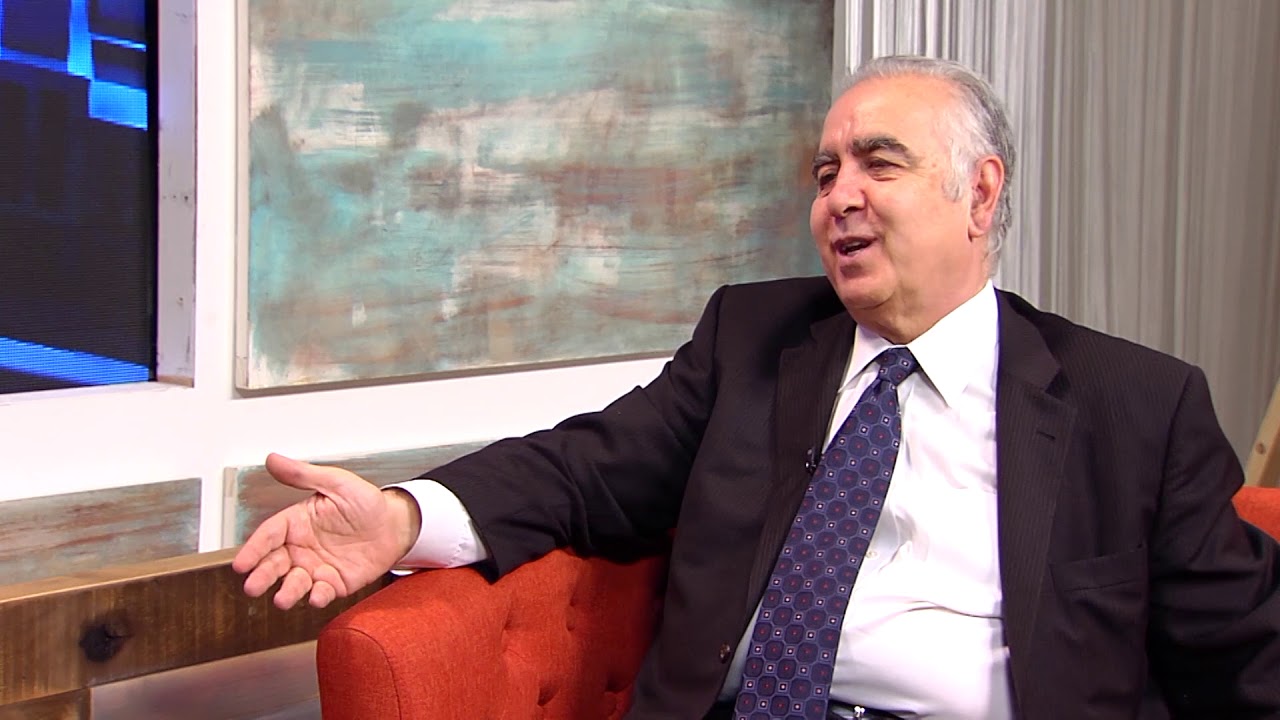
Author: Harut Sassounian

  • Pashinyan’s Trail of Destruction: First Artsakh; Then Armenia

    Pashinyan’s Trail of Destruction: First Artsakh; Then Armenia

    Armenia’s Prime Minister Nikol Pashinyan delivered a very lengthy, rambling speech on April 13, 2022 to the Armenian Parliament on his government’s failures and achievements in 2021.

    Ever since the catastrophic 2020 Artsakh war, I have been repeatedly saying that the Prime Minister is too incompetent to govern Armenia. He caused the loss of most of Artsakh and thousands of young Armenian soldiers. As a defeated and psychologically crushed leader, he is incapable of repairing the damage he caused to the country. With each passing day, the situation is getting worse. Artsakh is mostly gone; Armenia is next.

    However, Pashinyan refuses to resign, clinging to his seat and establishing a one-man rule. Ironically, when he took over the government four years ago, he proclaimed that the power belonged to the people!

    In his April 13, 2022 speech, Pashinyan stated: “we have had the most serious failures as well as the most serious achievements. I must first talk about the achievements, then focus on the failures, but not so much or not only to record them, but also to use the opportunity of being on the high rostrum of the National Assembly, to confess to the public about the cause and effect of the war and defeat, and talk about possible solutions.”

    Various high-ranking government officials have recently announced that Artsakh is no longer a territorial issue, but one of human rights, meaning that Armenia is giving up on its long-standing demand for the independence or self-determination of Artsakh, opting instead on seeking to preserve the cultural and religious rights of ethnic Armenians in Artsakh under Azeri rule!

    Since Pashinyan’s plan is to turn over the remainder of Artsakh to Azerbaijan, why is he then boasting that “from November 2020 to the end of 2021, the [Armenian] government has implemented in Artsakh 136 billion drams [about $272 million] of programs?” Armenia is actually subsidizing Azerbaijan’s infrastructure in Artsakh, since the government of Azerbaijan, in three and a half years or less, will take over that territory.

    Pashinyan admitted that the negatives in 2021 outweighed the positives. He stated that “from the beginning I have accepted my guilt and responsibility for both the war and defeat.” But then, he contradicted himself by saying: “I have not accepted and I do not accept the accusations addressed to me by the opposition after November 9, 2020, accusing me of handing over lands and thus also of treason.” He acknowledged that what he just said is “absurd — admitting your guilt, but not accepting the accusation.”

    Making his confession more confusing, Pashinyan added: “In a recent interview, I hinted that if I were to be accused objectively, I should be accused not of handing over land, but of not handing over land. And now, yes, I’m going to admit that I’m probably guilty of it. It is my fault that in 2018, 2019, I did not stand in front of our public and did not speak out that all, I repeat, all distant and close [foreign] friends expect us that we hand over the seven well-known regions to Azerbaijan, one way or another and lower our bar for the status of Artsakh. It is my fault that I did not tell our people that the international community unequivocally recognizes the territorial integrity of Azerbaijan, expects us that we too recognize it, also expects that the Azerbaijanis who left Karabakh be fully integrated in the decision-making and governance of Nagorno-Karabakh.”

    In the above paragraph, Pashinyan admitted his guilt in losing Artsakh, but strangely, avoided accepting the consequences for his actions. He also repeatedly laid the blame on pressure from the international community. It is not true that the international community demanded that Armenians give up Artsakh, but even if they did, Pashinyan should have been more concerned about Armenia’s national interests than the outsiders’ suggestion. Only a weak leader would buckle under the pressure of third parties and not defend his people’s rights.

    Pashinyan confessed: “And not doing this is my real fault, and such a formulation is not an attempt to alleviate the situation at all. On the contrary, I aggravate it, because by handing over [Artsakh’s lands], I might have saved thousands of lives, but by not handing over I actually became the author of decisions that resulted in thousands of victims.” As the Prime Minister of Armenia, he had no right to hand over Artsakh territories that he had no jurisdiction over.

    Pashinyan is getting ready to surrender Artsakh completely by announcing that he wants to sign a peace treaty with Azerbaijan and recognize its territorial integrity. He used the excuse that “the international community clearly tells us that Armenia is the only country in the world that does not recognize Azerbaijan’s territorial integrity.” This “is a great danger not only for Artsakh but also for Armenia. Today the international community tells us again, ‘lower your bar on the status of Nagorno Karabakh a little and you will secure greater international consolidation around Armenia and Artsakh.’ Otherwise, says the international community, ‘please do not rely on us, not because we do not want to help you, but because we cannot help you.’”

    After saying that Armenia has not recognized Azerbaijan’s territorial integrity, Pashinyan contradicted himself by falsely claiming that in 1992, Armenia had recognized Azerbaijan’s territorial integrity. His contention, that the international community warned him that they cannot help Armenia, unless it made concessions on Artsakh, is also a baseless statement. When has the international community lifted a finger to help Armenia? Pashinyan is simply using this excuse to make further concessions to Azerbaijan. He is incapable of protecting Armenia’s borders as we have seen with Azerbaijan’s May 12, 2021 encroachment on Armenia’s border. Furthermore, Pashinyan falsely blamed his political opponents for that Azeri incursion! He also faulted the Russia-led CSTO (Collective Security Treaty Organization) for not coming to Armenia’s defense, even though he is the current CSTO Chairman!

    Pashinyan’s defeatist remarks at the Parliament were soundly condemned not only by the political opposition, but also by the usually compliant leaders of Artsakh.

    Everything must be done to get rid of Pashinyan as soon as possible since he refuses to resign, favoring his own seat over Armenia’s interests. Otherwise, after Artsakh, Armenia is next to go.

  • Turkey Evades Western Sanctions By Welcoming Russian Oligarchs

    Turkey Evades Western Sanctions By Welcoming Russian Oligarchs

    The dispute continues between those who want to reward Turkey and those who want to condemn it, because of its contradictory positions on the Russia-Ukraine war.

    The Wall Street Journal (WSJ) published on April 7 a detailed article by Jared Malsin and Elvan Kivilcim, titled: “Superyachts, Seaside Apartments and Suitcases Full of Cash: Russians Pour Money Into Turkey.”

    As a result of the sanctions imposed by the West on Russian banks and businesses, tens of thousands of Russians have fled to Turkey with suitcases full of money, superyachts, private jets and other assets. “Many left carrying hundreds or thousands of dollars in cash because of capital controls that the Russian government imposed,” reported the WSJ. The Russians are buying houses and other properties in Turkey taking advantage of the law that allows foreigners to become Turkish citizens if they invest at least $250,000. Many Russians are able to circumvent Western sanctions by transferring their money from Russian to Turkish banks and converting their Rubles to Turkish Liras or other currencies. All NATO member countries, with the exception Turkey, have imposed strict sanctions on Russia, preventing its citizens from wiring their money out of the country, blocking Russian Airlines from flying to Western countries, and confiscating the oligarchs’ superyachts and private jets. Refusing to impose sanctions on Russia, Turkey is trying to revive its bankrupt economy by generating desperately-needed funds.

    Fleeing Russians are able to avoid Western sanctions and capital controls imposed by Russia on its citizens through “Russian cash transfer companies that operate in Turkey, cryptocurrencies and simply carrying thousands of dollars in cash through airports,” according to the WSJ. The Turkish government has come up with the lame excuse that it will allow the transfer of Russian funds to Turkey as long as “the money is legal.” Such scrutiny, if it ever existed, very quickly disappeared, ignoring the requirement that foreigners obtain a residency permit before being allowed to open a bank account. According to the WSJ, “at a single branch of one state-owned bank in Istanbul, Russians have opened more than 600 accounts in recent weeks.”

    The WSJ reported that “Turkey’s central bank took in about $3 billion in just two days in mid-March…. That money was likely largely composed of deposits from Russians, said Omer Gencal, an economist and former executive at HSBC Turkey and other major Turkish banks.”

    Gül Gül, the chief executive of Istanbul real-estate company Golden Sign, told the WSJ: “the newly arrived Russians are buying as many as four apartments at a time, usually with cash, in order to invest the $250,000 required for citizenship. ‘Currently, out of 10 flats [apartments] we sell, six or seven are bought by Russians, said Ms. Gül. They are mostly businesspeople, wealthy ones, some of them oligarchs.’”

    Russian oligarch Roman Abramovich moved two of his superyachts to Turkish ports in recent weeks. Former Russian President Dmitry Medvedev docked his 74-meter-long (249 ft.) vessel called Universe in Istanbul last week, according to the WSJ.

    Furthermore, the WSJ reported that the “search-engine company Yandex, classified-ad site Avito, commercial bank Tinkoff and software firm DataArt collectively had more than 1,000 workers fly to Turkey. About 900 Yandex workers flew to Turkey shortly after the beginning of the war, though around 300 of them have since left.”

    Visa and Mastercard’s decisions to shut down operations in Russia have prompted Russians to use “the Russian Mir payment system, which works at certain locations in Turkey. ‘We accept Mir’ signs have begun cropping up in grocery stores around Istanbul,” the WSJ wrote.

    “Middle-class Russians have mostly brought a few thousand dollars at a time, either in cash or by using Russian wire-transfer companies that continue to operate in Turkey. One popular service is KoronaPay, which allows people to wire money out of Russia and withdraw money in Turkey and a range of other countries. The company allows transfers worth more than 15,000 euros, equivalent to $16,400, as long as customers verify their source of income, according to the company’s website,” reported the WSJ. “Volkan Celikyurek, a money changer in Istanbul’s Laleli neighborhood, which is frequented by Russian traders and one of the only areas where exchange offices buy and sell Rubles,” told the WSJ, “I bought at most 100,000 Rubles at a time. But there are those who bought millions.”

    In the meantime, Turkey’s economy is benefiting from the flow of Russian money, while its hypocritical condemnation of Russia is winning dividends from Western countries. The UK government just lifted the restrictions it had imposed on exporting weapons to Turkey. Turkish Foreign Minister Mevlut Cavusoglu announced on April 7 that Turkey is interested in “cooperating with the UK in important defense projects, including warplanes, warships and aircraft carriers.” Cavusoglu also announced that Turkey is discussing with Canada the resumption of the purchase of camera systems for the Turkish Bayraktar armed drones, suspended after the 2020 Artsakh war.

    Amazingly, the Biden Administration, instead of punishing Turkey for its sanction-busting schemes, wants to reward it by indicating that selling Turkey F-16 fighters is in the best interest of the United States and NATO. Nevertheless, Congress is opposed to the sale. Over 50 Members of Congress signed a letter in February urging the Biden Administration to reject the Turkish request to buy 40 F-16 jets and upgrade 80 other jets already in Turkey’s possession. The Congressmen cited Turkey’s purchase of the Russian S-400 missile systems and the wholesale violation of human rights as the reasons for opposing the sale. Selling F-16 jets to Turkey would “more likely lead to further death and destruction in the region at the hands of Erdogan’s military,” the lawmakers wrote.

    It remains to be seen how long Turkey can play its deceptive game on both sides of the fence in the Russia-Ukraine war.

  • Paranoid Ottoman Sultans Murdered Their Brothers to Secure their Throne

    Paranoid Ottoman Sultans Murdered Their Brothers to Secure their Throne

    We all know that the Ottoman army invaded many countries with utter savagery. We also know that the Ottoman Empire committed mass killings and genocide against millions of Armenians, Assyrians, Greeks and Kurds. But, not everyone knows that the Ottoman Sultans routinely murdered their own family members. I recently saw an incredible YouTube video that documented the barbaric behavior of the Ottoman Sultans. According to the 13-minute-long video, Ottoman leaders were engaged in “dark and messed-up practices.” The video is titled: “Creepy things that were ‘normal’ in the Ottoman Empire.” YouTube shows that the video was posted on October 15, 2021, and in less than six months, 640,975 people viewed the video of which 10,000 checked ‘like’. This means that over 640,000 people are now aware of the brutalities of the Ottoman Sultans.
    Here is a partial transcript of the video:

    “When [Sultan] Mehmed the Conqueror besieged Constantinople, his own uncle was fighting against him from the walls. In typical Ottoman fashion, Mehmed dealt with his uncle offering no mercy, and after he took the throne, he had a message for future generations of Ottomans. He began rounding up all of his male relatives and executed them. His ruthlessness didn’t even have an exception for his younger brother who was just an infant in the crib. Mehmet had him asphyxiated without batting an eye. Once Mehmet was done disposing all his possible competitors for the throne, he proclaimed: ‘Whomsoever of my sons the Sultanate shall pass, it is fitting that for the order of the world he shall kill his brothers. Most of the Ulema [high-ranking religious leaders] allow this. So let them act on this.’

    “Thus began a series of generational civil wars where every next Sultan, successor of the Ottoman Empire, had to soak their hands in their own brothers’, cousins’, and uncles’ blood to secure the throne for themselves. It is said that another Mehmet, Mehmed III, was so heartbroken that he tore his beard off in agony as his younger brother begged for mercy and swore, again and again, to never raise a weapon against him. Yet, bound by the family traditions, Mehmed III turned away without speaking a word and the loyalists killed the young boy along with the rest of the 18 brothers of Mehmed III. Bodies of all 19 siblings were out on the streets of Istanbul and it is said that the whole city cried for the souls that night. Mind you, the murders would not just stop after the new Sultan would secure the throne. The hunt for all of the Royal family’s relatives would be carried on relentlessly.

    “Even Suleiman the Magnificent’s hands weren’t clean as he had his son asphyxiated on the streets with a bowstring just because his popularity had become a matter of paranoia for the most acclaimed Sultan of the Ottomans. However, when Ahmed the First abruptly died in 1617, a general agreement was struck between the relatives and the family he left behind. Instead of drenching the streets of Istanbul with royal blood this time, the clergy quietly established the practice of primogeniture [the firstborn son’s right of succession] and announced his younger brother Mustafa the First as the new Sultan, because Ahmed’s sons were too young to rule. Mustafa himself was spared by his brother Ahmed the First as the 12-year-old and his 13-year-old brothers were too close to order death toward one another.

    “Since then, the policy of killing relatives changed to incarcerating them. Potential heirs to the throne would be confined in the Topkapi Palace. In Istanbul, these special apartments would be referred to as the ‘kafes,’ however, in English this translates to the ‘cages.’ A prince of the Ottoman Empire would have to possibly spend his whole life imprisoned in the ‘kafes’ while being monitored day and night by guards. These princes were given all sorts of luxury and they were able to live a lavish lifestyle fit for royal kin, but the restrictions of house arrest were enforced strictly. This caused many of the princes to go mad from boredom or become heavily debauched. When a new Sultan would be taken to the [palace’s] Gate of Felicity to receive the allegiance of the viziers (Ministers), that very well would be the first time for him to be outside in decades! Not an ideal preparation for a man who is about to become the ruler, was it? And even though the ritualistic civil wars were put to an end, the royal relatives would still live their lives in constant fear of losing their heads at any second.”

    The second half of the video describes the isolated life of the Sultan in his palace with his many concubines in the harem, overseen by the Sultan’s mother. We know that some of these women were young Armenian girls. The unnamed author of the video also described the beheadings in the palace and the two pillars on which the severed heads would hang.

    From now on if anyone tells you that the Ottoman Empire was tolerant and civilized, you can send them a copy of this article or refer them to the above referenced YouTube video. That should shut them up.

  • Turkey Can Fool Some People Some Time But not All People, All the Time

    Turkey Can Fool Some People Some Time But not All People, All the Time

    The Turkish government is continuing its duplicitous game of playing on both sides of the fence, pretending to be the friend of both Russia and Ukraine in order to draw maximum benefit from its tightrope walk.

    However, Turkey cannot keep playing this game for too long before it falls flat on its face from the teetering tightrope. For decades, as a member of NATO, Turkey violated its principles, bought problematic weapons from Russia while acting as a member of the Western military camp, refused to support the collective decisions of the organization, and got sanctioned by the United States, its NATO partner.

    Turkey has played a similar erratic role as a member of the Council of Europe, violating the basic rules of the organization, including repeatedly refusing to implement decisions of the European Court of Human Rights. After all this, Pres. Erdogan has the audacity to complain that Turkey is not allowed to join the European Union. In reality, it should not even be allowed to remain in the Council of Europe. Too bad NATO does not have a provision on expelling one of its member states. Amazingly, Turkish leaders have appealed to the United Nations to have their country become the sixth permanent member of the Security Council with a veto power. Such a thing should never be allowed. It would be the end of the UN.

    In the meantime, Turkey is continuing its two-faced “neutrality” between NATO and Russia in the Ukraine war. Turkey is the only NATO member that has refused to sanction Russia and has not closed its airspace to Russian aircraft. Turkey abstained while the overwhelming majority of the Council of Europe voted to suspend Russia’s membership. Turkey then turned around and voted twice in the UN General Assembly in March in favor of a resolution condemning Russia for invading Ukraine.

    Furthermore, the Turkish Ambassador to the UN, Feridun Sinirlioglu, delivered a scathing attack on Russia. Sinirlioglu said the war in Ukraine is the result of the “blatant violation” of international humanitarian law by Russia, which he described as “unacceptable.” He then added, “For our part, we will not give up on our brothers and sisters in Ukraine.” These words indicate that Turkey is not neutral in this war.

    While Turkey’s ambassador at the UN was sharply critical of Russia, Turkish businessman Ethem Sancak, one of Pres. Erdogan’s closest political allies and executive board member of the ruling Justice and Development Party (AKP), visited Moscow and told the Russian RBC TV channel that Turkey’s sale of drones to Ukraine was a big mistake. Sancak also said: “We will not join in the sanctions, because if Russia falls, Turkey would get divided. And if Turkey falls, the same goes for Russia…. We are allies with Russia.” Sancak described Turkey’s membership in NATO as “shameful….” He then added: “NATO is a cancerous tumor.”

    In addition, “Having gained experience in sanctions busting schemes that undermined both US and UN Security Council embargoes on jihadist groups and Iran in the past, the government of Turkish President Recep Tayyip Erdogan is now poised to implement a similar playbook for Western sanctions on Russia. Hoping to make money for his business cronies and aid his country’s embattled economy and finances, Erdogan apparently saw the opportunity to make a profit by offering Russians a lifeline to help overcome the restrictions and beat the sanctions,” wrote Abdullah Bozkurt in Nordic Monitor.

    In order to appease Russia, Turkey rejected U.S. suggestions to transfer to Ukraine the S-400 missile systems it had bought from Russia, which had resulted in the U.S. imposing sanctions on Turkey. Furthermore, in recent days, several Russian oligarchs have brought their luxury yachts and private jets from Europe to Turkey to avoid western sanctions. Bahadir Ozgur, a Turkish commentator who specializes in exposing organized crime, says Turkey is the “gangsters’ heaven,” the Al-Monitor news website reported.

    As a result of long-running sanction-busting activities by Turkey, the Biden administration is well aware of Turkish efforts to bail out Russia from U.S. and EU imposed sanctions. Neither the White House nor Congress are too keen to side with Erdogan who is constantly plotting to glorify himself and his country by trying to mend its damaged relations with Europe, the United States, Israel, Egypt, the UAE and Armenia.

    In another failed public relations stunt, Pres. Erdogan announced prior to last week’s NATO Summit in Brussels that he would be meeting with Pres. Joe Biden in order to create a photo-op intended to raise Turkey’s questionable standing in the world and his own poor rating at home.

    Despite Erdogan’s intense diplomatic lobbying, Pres. Biden refused to meet with him at the NATO Summit, undermining his desire to gain positive PR from such a meeting. The White House rejected a push by the U.S. Embassy in Ankara for such a face to face encounter.

    Pres. Biden, who has had a long-lasting personal dislike of Pres. Erdogan because of his anti-western policies, did the right thing by not providing him with further opportunities for self-aggrandizement at a time while he continues his close relations with Russia. There is also stiff resistance in Congress to any appeasement of Turkey.

    Erdogan is constantly justifying his tightrope walk between East and West by claiming that he is trying to play a mediating role in the Ukrainian war. This is yet another misleading excuse for Erdogan’s self-serving attempts to give himself and his country undeserved importance.

  • Only in Armenia: Nikol Pashinyan Sued His own Country in European Court

    Only in Armenia: Nikol Pashinyan Sued His own Country in European Court


    There might be heads of state who have sued their own governments after they were overthrown or their possessions confiscated, but, I am not aware of any leader in office who continued his pending lawsuit against his own country in a foreign court. We have the incredible case of not one, but two lawsuits filed years ago by Nikol Pashinyan against the Republic of Armenia in the European Court of Human Rights. These two lawsuits were still pending when he became Prime Minister. In addition, Alexander Arzumanyan had also a pending lawsuit against the Republic of Armenia in the European Court at the time of his appointment as Ambassador.

    No one can fault citizen Pashinyan for filing the two lawsuits, long before he began serving as Prime Minister in 2018, in order to clear his name after he and his newspaper were found guilty of violating Armenian laws. However, after becoming Prime Minister, he should have withdrawn the lawsuits from the European Court and filed an appeal with Armenian courts which he has done now four years after assuming his current office. During his January 2022 “press conference,” Pashinyan admitted that he had thought about filing an appeal in Armenian courts, however, he said that he decided to wait until the European Court had made its decision. I believe it would have been more proper to withdraw the lawsuits from the European Court and file the appeal in Armenia.

    Armenpress reported on Feb. 16, 2022 that “the Prosecutor-General of Armenia Artur Davtyan filed a motion in the Court of Appeal requesting to overturn the 2010 guilty verdict of Nikol Pashinyan and exonerate him. On January 19, 2010, the Yerevan Court of General Jurisdiction had found Pashinyan guilty of ‘organizing mass disturbances’ during the March 1, 2008, demonstrations [which resulted in 10 deaths, burned cars and looted stores. After hiding from authorities for 16 months], Pashinyan was sentenced to seven years in prison but served a little less than two years and was released under a general amnesty. On January 18, 2022, the European Court of Human Rights issued a judgment in the case of Pashinyan vs. Armenia, which Pashinyan had filed when he was an opposition politician. The European Court recognized that Pashinyan’s right to freedom, personal immunity, as well as the right to freedom of peaceful assembly were violated.” The European Court did not award Pashinyan with any amount of money for damages or legal fees.

    Interestingly, the Armenian government’s lawyer at the European Court did not present any evidence or objections to the European Court of Human Rights (ECHR) to defend the Armenian court’s 2010 verdict against Pashinyan. It is understandable that a government lawyer would be reluctant to present evidence of wrongdoing against his own country’s Prime Minister! The ECHR reaches all its decisions after weighing the plaintiff’s arguments against the evidence presented by the respective government. In this case, the government did not present its side of the story, since the plaintiff and the government were awkwardly on the same side. It is also important to note that the European Court only began to review Pashinyan’s lawsuit in 2019, after he became Prime Minister in 2018, which means that he had plenty of time to withdraw his petition from the European Court. Regrettably, Pashinyan’s lawsuit in the European Court against Armenia provided scandalous material to the Azeri press, publicizing it with the headline: “Pashinyan defeated Armenia in European Court.”

    Pashinyan’s second lawsuit in the European Court of Human Rights against the Republic of Armenia was filed by Dareskizb, the publishing company of his newspaper, Haykakan Jamanak. The newspaper had printed on October 14, 2010, an article under the headline: “Seven out of Eight are in the List,” accusing several high-ranking Armenian government officials of involvement in “drug and human trafficking and money laundering crimes.” Three of the accused officials filed a lawsuit in an Armenian court against Haykakan Jamanak for defamation. Pashinyan lost the lawsuit and the subsequent appeal.

    The European Court decided in 2021 that the applicant’s rights were violated. The Government of Armenia was ordered to pay the publishing company of Pashinyan’s newspaper 9,000 euros in damages, in addition to taxes.

    Alexander Arzumanyan had also filed a lawsuit against the Republic of Armenia in the European Court before being appointed Ambassador to Denmark and Norway in 2017, and additionally to Sweden in 2019. He challenged in the European Court of Human Rights his conviction by an Armenian court for his involvement in the 2008 protests following the presidential elections. He was the head of Levon Ter Petrosyan’s presidential campaign. Prior to that, Arzumanyan was Armenia’s Foreign Minister. In 2001, he became one of the founding members of the Turkish Armenian Reconciliation Commission. Following the 2008 protests, he was arrested and charged with “usurpation of State power.” On June 22, 2009, an Armenian court found him guilty of organizing mass disorder, sentenced him to five years in prison, and freed him immediately due to an amnesty. In 2009, Arzumanyan appealed to the European Court which ruled in 2021 that his rights to freedom of expression and freedom of peaceful assembly have been violated. Just like Pashinyan, Arzumanyan chose not to withdraw his lawsuit from the European Court of Human Rights after becoming an Ambassador. I don’t know why the Armenian government did not make his appointment in 2017 conditional on the withdrawal of his lawsuit. The ECHR ordered the Republic of Armenia to pay Amb. Arzumanyan 9,000 euros for damages and 2,600 euros for legal costs and expenses, in addition to taxes.

    I wonder if there is any other country in the world whose Prime Minister and Ambassador had pending lawsuits against their own country in a foreign court at the time of assuming office, obliging the Republic of Armenia to pay them damages and legal fees from their own governmental budget!

  • Erdogan Exploits Ukraine War to Push for Turkey’s Membership in European Union

    Erdogan Exploits Ukraine War to Push for Turkey’s Membership in European Union


    In the midst of the Ukraine-Russia War, a few leaders have made questionable statements to take advantage of the chaotic situation and push for their selfish agendas!

    As soon as Pres. Recep Tayyip Erdogan learned that the Ukrainian government had asked for “immediate accession” to the European Union (EU), he made the same request for Turkey.

    Erdogan hypocritically said: “We appreciate the efforts to get Ukraine EU membership. But I ask the EU members, why does Turkey’s membership in the EU worry you?” He called on the EU to show the Turkish request the “same sensitivity” as that of Ukraine and arrogantly slammed EU member states for being “not sincere.” Erdogan flippantly asked: “Will you put Turkey on your agenda when someone attacks (us) too?” He then complained: “Why don’t you give the military equipment needed by Turkey?” What for? To attack and kill more people and occupy more countries?

    Turkey applied to join the EU back in 1987 and was officially recognized as a candidate for membership in 1999, but its accession talks, which started in 2005, were stalled due to objections from the Cypriot government due to Turkey’s occupation of Northern Cyprus in 1974. Germany and France also opposed Turkey’s EU membership.

    Even in the case of Ukraine, despite the current sympathy for that country, it would take a long time to complete the negotiations with the EU and make the necessary economic and political improvements to fulfill the criteria for joining the EU.

    Turkey’s EU membership, on the other hand, is farther away, if ever. Turkey does not comply with most EU criteria for membership. It has had several military coup d’états and attempted coups, in addition to its anti-democratic regime which in fact is a dictatorship. Turkey has violated just about every human rights law, including the wholesale jailing of journalists, shutting down the free press, supporting Islamist terrorists, massacring Kurds, desecrating Christian churches, occupying Northern Cyprus, intervening militarily in Syria, Northern Iraq and Libya, aiding Azerbaijan to occupy Artsakh, and refusing to carry out the rulings of the European Court of Human Rights.

    To qualify for EU membership, Turkey first has to overhaul its entire constitution and laws to become a democratic country, release tens of thousands of jailed innocent citizens, stop supporting terrorists, adopt and implement European standards for human rights, restore minority rights, withdraw from Northern Cyprus, acknowledge the Armenian Genocide and make restitution for Armenian losses.

    When Erdogan sheepishly asked if Turkey would also be considered for EU membership “when someone attacks us too,” in reality no one has attacked Turkey, but Turkey has attacked plenty of other countries.

    Regrettably, the tragic suffering of the Ukrainian people during the Russian war is not a unique phenomenon. There have been countless such brutal wars and mass murders throughout history. One should not forget the Armenian Genocide perpetrated by the Ottoman Empire 1915-23, resulting in the deaths of 1.5 million Armenians; the invasion and occupation of Northern Cyprus by Turkey in 1974 which is still continuing; the Turkish incursion into Northern Syria; and the war on Artsakh by Azerbaijan and Turkey in 2020, committing barbaric war crimes during which the world remained silent when hospitals, schools, civilian apartments were bombed, children and women butchered, There were no sanctions against Turkey or Azerbaijan, no around the clock media coverage of the atrocities, and no military or economic assistance to Armenia and Artsakh. 

    Let us now move to two unexpected statements by Turkish political leaders. Mustafa Destici, head of the Turkish nationalist Great Unity Party and an ally of Erdogan’s government, warned that after Ukraine, Russia will target Kars and Ardahan, two cities in Western Armenia occupied by Turkey. “If you see Russia on our borders later, do not be surprised,” said the Turkish party leader.

    Similarly, the Chair of the opposition Turkish IYI Party Meral Akshener chimed in: “Who can claim that Turkey is safe? Who can say that the missing pieces in Putin’s mind are not Kars, Ardahan and Erzurum [Garin]?”

    These are obviously bombastic statements. Russia has no such intentions. On the contrary, Russia is trying to woo Turkey away from NATO. Nevertheless, these two statements have one important benefit to the Armenian side: They remind the Turkish population that Kars, Ardahan and Erzurum (Garin) are contested cities that do not belong to Turkey. They are a part of Western Armenia.

    Finally, here is an interesting statement Russia’s Foreign Minister Sergei Lavrov made to the UN Human Rights Council earlier this month: “The principle of respect for territorial integrity applies only to states whose governments represent the entire people living on their territory.”

    Even though Lavrov was referring to the 1970 UN declaration to justify Russia’s invasion of Ukraine, he must have forgotten that the principle he quoted applies to Armenians of Artsakh. Lavrov claimed that the Ukrainian government does not represent all of the people living on the territory of the Ukrainian state. If that’s what Lavrov believes, Russia must acknowledge that the government of Azerbaijan does not represent Armenians living on the territory of Artsakh. Therefore, Russia should declare that it supports the self-determination of the Republic of Artsakh!