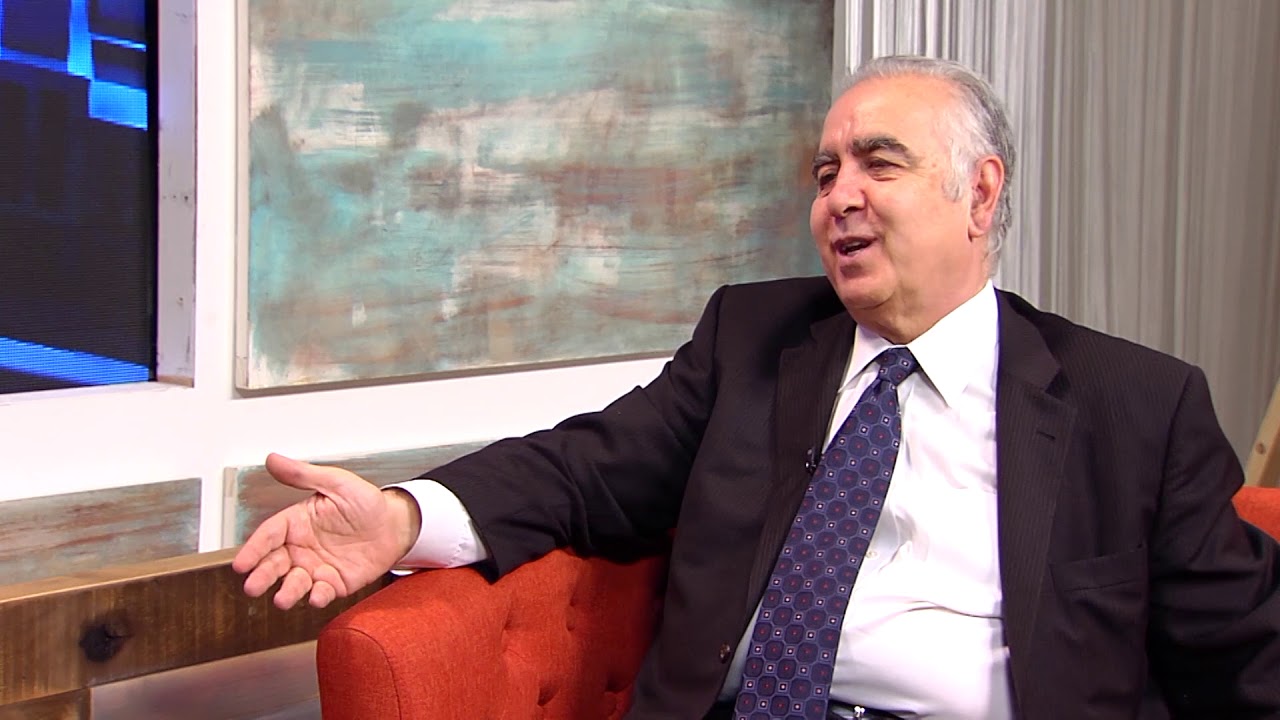
Author: Harut Sassounian

  • Prime Minister Pashinyan has no RightTo Ban an Armenian from Entering Armenia

    Prime Minister Pashinyan has no RightTo Ban an Armenian from Entering Armenia


    French Armenian community leader Mourad (Franck) Papazian and his wife were not allowed to enter Armenia last week after they arrived at the Yerevan Airport. Papazian is a member of the Armenian Revolutionary Federation’s worldwide leadership (Bureau) and the Co-President of the Coordinating Council of Armenian Organizations of France.

    At passport control, Papazian was told to wait until they verified his information. He had a proper French passport and did not need a visa to enter Armenia. While he was waiting, customs’ officials were consulting with their superiors on the phone.

    Papazian was then led to an isolated room at the airport where he was kept for several hours. Finally, National Security Service agents told him that he was not allowed to enter Armenia.

    Despite Papazian’s several requests, he was never informed of the reason for his being barred from entering Armenia. He was expelled from the country by placing him on the next flight to Paris.

    This is an incident with serious ethical, legal, diplomatic and national implications.

    Ethically, if Armenian officials want to ban someone from entering Armenia, they should have the minimum courtesy of telling the individual the reason for such a grave decision. The visitor is entitled to know why he is not being allowed to enter the country.

    In terms of Armenian laws, regardless of the reason for banning Papazian from entering the country, Armenian officials don’t have the right to take such an action on their own, be they airport officials, National Security Service agents or Prime Minister. Banning any visitor, let alone a fellow Armenian, from entering the country is a very serious decision. If Papazian had violated any Armenian laws, airport officials could have detained him, presented the charges against him to a judge who would have taken a legal decision based on the evidence after listening to both sides. Is Armenia a country governed by laws or by the vindictive decisions of the Prime Minister? If one man can act as the executive, legislative and judicial branches of the government, then Armenia is far from being a democratic country. It is sad that Prime Minister Nikol Pashinyan, who came to power four years ago as a democrat, is ignoring all democratic norms. Papazian’s sole guilt is being critical of the failed regime of Pashinyan.

    In terms of European laws, Armenia violated in this case several principles of the Convention for the Protection of Human Rights and Fundamental Freedoms, which it had committed to uphold. The required procedure is that Papazian first challenge his expulsion in a domestic Armenian court. If he is unsuccessful there, Papazian can then take his complaint to the European Court of Human Rights. I am certain that the European Court will find that the Armenian government violated Papazian’s “right to a fair trial,” “freedom of expression” and “freedom of movement.” Furthermore, Papazian’s expulsion was a violation of United Nations’ Universal Declaration of Human Rights.

    Regarding this incident’s possible negative effect on Armenia’s relations with France, as a French citizen, Papazian has filed a complaint with the French Embassy in Yerevan and the French Foreign Ministry in Paris. As a well-known political activist, Papazian has close ties with Pres. Macron of France and other high-ranking French officials. Already, there was another unpleasant incident last May, when Papazian accompanied the Pro-Armenian Mayor of Paris, Anne Hidalgo, on her visit to Armenia. Since Papazian is a critic of Pashinyan, he informed the Prime Minister’s office that he will not join the Mayor’s scheduled meeting with Pashinyan, in order not to create an unwelcome scene during the meeting. Without any explanation, at the last minute, the Prime Minister decided to cancel the meeting with the Paris Mayor. This was a major diplomatic error. Armenia can ill afford to alienate French officials who are some of its staunchest supporters.

    In terms of the Armenian government undermining the collective interests of the Armenian nation, it is counterproductive that while Armenia is surrounded by bloodthirsty enemies and its very existence is threatened, its leaders are engaged in a self-defeating action regarding the Diaspora which only serves to further weaken Armenia. Azerbaijan does have massive petrodollars, but Armenia has a large Diaspora which is an unutilized asset.

    I am afraid that Papazian’s expulsion, if not reversed quickly, will have an adverse effect on Armenia’s relations with the seven-million strong Diaspora. Armenia’s leaders, rather than coming up with initiatives to attract more Diaspora Armenians to visit, immigrate and invest in Armenia, are unwisely alienating them.

    Since Papazian’s only guilt is that he was a critic of Pashinyan, his expulsion could cause many other Diaspora Armenians, who are opposed to the Prime Minister, to avoid visiting Armenia out of a concern that they too will be stopped at the Yerevan Airport and not be allowed to visit their homeland.

    It is highly regrettable that Papazian, a man who has dedicated his entire life to defending the interests of Armenia and the Armenia Cause, is treated in such an offensive manner. With great sadness, he acknowledged: “I knew that I was banned from Turkey and Azerbaijan. Today, I am banned from Pashinyan’s Armenia.”

  • Armenian Officials Discourage Diasporans From Sending Aid to Armenia

    Armenian Officials Discourage Diasporans From Sending Aid to Armenia

    Just when you think you have come across every oddity in Armenia, someone will surprise you with a brand new one. Let we warn you that this problem has nothing to do with internal politics. It has to do with incompetent, careless, and sometimes, corrupt officials whose unacceptable conduct has been going on for over 30 years in Armenia.

    I received last week an email from Kevork Yazedjian, a scholar and activist in Armenia. He described his frustration and anger at an objectionable incident that he had just experienced. He addressed his email to Prime Minister Nikol Pashinyan, the Head of the State Income Committee, and the High Commissioner of Diaspora Affairs of Armenia. Kevork sent copies of his email to hundreds of Armenians in and out of Armenia to alert them and seek their intervention.

    The problem started on June 27 when Kevork along with his sister and her husband went to the State Income Committee’s office to pick up Armenian books sent from the United States by Vahakn Kupelian who had shipped 78 copies of his mother’s, Siran Seza’s (1903-1973), two novels. Kupelian had asked Kevork to donate the books to libraries throughout Armenia and Artsakh. When the government official, Mr. Sahakyan, saw multiple copies of the two books, he became suspicious that Kevork was going to sell them. Sahakyan wrote a memo to the Customs Officers at the Yerevan airport, asking them to evaluate the price of these books and charge Kevork the corresponding import duty.

    Once at the Customs Office, Kevork was shocked when five officials, after consulting with each other, told him that copies of the two novels will be sent to the National Security Service (NSS) to inspect their contents! Kevork wondered if censorship of books was part of NSS duties. He was concerned that by the time NSS employees finished reading the two novels, he could be asked to pay a large amount for storage fees. Disgusted by this violation of free speech in a “democratic country,” Kevork told the Customs officials that they can have the books.

    After he sent several letters of protest to various officials, Kevork received on June 30 an unexpected phone call from Sahakyan, who asked him to come over so he can give him the books. When he arrived at the office the next day, Sahakyan was not there, but his boss received Kevork with utmost courtesy, saying that he had gotten many complaints about this case which had embarrassed him in front of the whole world. The Chief Customs Officer also claimed that his office had sent several pages of the novels to the National Security Service, asking them to review them urgently. The NSS had supposedly replied that there are no national security issues in the two novels. The first book, “Shattered Lives,” was published in 2015 and the second one, “Book of Genesis,” in 2019.

    Given this frustrating experience and his serious interest in Armenian literature, Kevork has come up with a new proposal, asking the government to facilitate the transfer of Armenian books and periodicals to Armenia through diplomatic pouch by Armenia’s Embassies and Consulates overseas.

    There is a second more shocking example of Armenian officials’ gross negligence which had serious medical and diplomatic repercussions.

    After the Artsakh War of 2020, on Dec. 12, 2020 and January 9, 2021, the Armenian Relief Society (ARS) of Greece collected urgently needed humanitarian aid which was flown to Armenia by two Greek military planes. A small part of the cargo was released shortly after its arrival and distributed by the ARS. More than a year later, however, it was discovered that the bulk of the aid was still at the Customs’ warehouse at the Yerevan Airport. After several letters of complaints which had remained unanswered, Armenia’s recently-appointed Ambassador to Greece, Tigran Mkrtchyan, responded on June 28, 2022, with troubling news: While the ARS humanitarian aid was finally cleared from Customs, “due to the expiration of the items [medicines], part of the cargo had to be destroyed.”

    Amb. Mkrtchyan was answering the Greek Armenian community’s letters sent to Prime Minister Pashinyan and other officials on Dec. 14, 2020 and February 7, 2022.

    The urgently dispatched medicines were supposed to save the lives of Armenian soldiers wounded during the 2020 war. Who will be held responsible for the loss of the lives of the soldiers who were deprived of these medicines? Furthermore, has the Armenian government sent a letter of apology to the Greek government for the lengthy delay in releasing and destroying a part of the urgently flown medicines to Armenia? Greece may not be as responsive next time there is a medical emergency in Armenia. Besides Armenia’s utter negligence in clearing the cargo, the ARS did not even get a reply to its two letters until 18 months later!

    This is a prime example of gross negligence. Regrettably, no Armenian official was held responsible for this scandalous behavior and no one was fired!

    No good deed goes unpunished in Armenia!

  • After a Century, Bankrupt Turkey Wasting Huge Sums to Deny the Armenian Genocide

    After a Century, Bankrupt Turkey Wasting Huge Sums to Deny the Armenian Genocide

    Turkish government’s denial of the Armenian Genocide is as futile as a man who repeatedly hits his head against the wall, hoping the wall would give way.

    For more than a century, successive Turkish governments have done everything in their power to cover up the heinous crime of the Armenian Genocide committed by their predecessors. No Turkish leader has had the courage and honesty to admit the truth. Instead, Turkey has wasted huge sums of money to deny the undeniable. It has bribed questionable scholars and crooked politicians around the world to distort the historical facts. Ankara has published hundreds of deceptive books and made several trashy movies to cover up its crimes. Over several decades, Turkey has spent tens of millions of dollars to hire American lobbying firms to pressure the U.S. Congress not to acknowledge the Armenian Genocide. All of these efforts failed miserably. The U.S. House of Representatives recognized the Armenian Genocide in 1975, 1984 and 2019. The U.S. Senate unanimously recognized it in 2019. Moreover, two U.S. Presidents acknowledged it: Pres. Ronald Reagan in a Presidential Proclamation in 1981 and Pres. Joe Biden in his commemorative statements on April 24, 2021 and 2022. The most authoritative American acknowledgment of the Armenian Genocide took place on May 28, 1951, when the U.S. government submitted an official report to the World Court, stating that the Armenian Genocide was one of the “outstanding examples of the crime of genocide.”

    Despite all Turkish pressures, threats and bribes, over 30 countries have formally acknowledged the Armenian Genocide. This is in addition to acknowledgments by the United Nations War Crimes Commission in 1948, the UN Sub-Commission on Prevention of Discrimination and Protection of Minorities in 1985 and the European Parliament repeatedly since 1987.

    Most of these acknowledgments took place at a time when the Republic of Armenia did not exist as an independent state. The Armenian Diaspora, in a David vs. Goliath battle, was able to counter the denials of the powerful Turkish government, supported by its NATO allies and scores of Islamic states.

    All of these denialist efforts are based on the simple misconception that should the Turkish government acknowledge the Armenian Genocide, it would then be obligated to pay restitution to surviving Armenians. Regrettably, many Armenians have the same misconception. The fact is that the Turkish government is liable to pay reparations and return confiscated Armenian properties and territories, regardless of whether Turkish leaders acknowledge their guilt or not. Political statements by government leaders are of no value in a court of law. Courts deal with facts and documents. No matter how many times Turkey denies the genocide, the Republic of Armenia has the right to take its demands for restitution and return of territories to the International Court of Justice (World Court), where only governments have such jurisdiction.

    After an entire century of denial, the Turkish government announced last week its latest desperate attempt to counter the facts of the Armenian Genocide by forming the TEKAR Foundation (Turkish Armenian Issue Research Foundation). This is a coalition of three Turkish groups: Educational Friends Foundation, Baskent (Capital City) Strategic Research Center, and Center for Countering Fanatic Armenian Lies. The new Foundation held its inaugural assembly on June 25.

    TEKAR plans to republish a Turkish denialist book written by Esat Uras (1882-1957), titled: “The Armenians in history and the Armenian question.” As a member of the Committee of Union and Progress (Young Turks), Uras played a key role in planning and executing the Armenian Genocide. His book is replete with gross misrepresentations.

    The Turkish Foundation also stated that it will “print Mustafa Kemal Ataturk’s views, thoughts and statements on Armenians, Armenian activities and Armenian relations.” I hope the Foundation will not forget to quote from Ataturk’s interview published by the Los Angeles Examiner on August 1, 1926, in which he said: “These leftovers from the former Young Turk Party, who should have been made to account for the lives of millions of our Christian subjects, who were ruthlessly driven en masse from their homes and massacred…. They have hitherto lived on plunder, robbery and bribery.”

    The TEKAR Foundation has 23 members on its board of trustees. The chairman of the board is Mehmet Arif Demirer, a chemical engineer, not a historian! Incomprehensibly, the board is composed of six military officers, three engineers, two economists, one gastronomist, one student, and several others of miscellaneous backgrounds. It looks like the real purpose of the TEKAR Foundation is to provide jobs to Pres. Erdogan’s circle of friends. While it is a good thing that these Turks want to study the Armenian Genocide, their intention is not seeking the truth!

    Turkish denialists have never understood that the more they deny the Armenian Genocide and the longer they talk about it, the more the world becomes aware of the Armenian Genocide. In other words, Turkey foolishly keeps publicizing the Armenian Genocide to new generations while trying to deny it.

    The second thing that the Turkish leaders never understood is that the sooner they acknowledge the crimes of their predecessors, the sooner they will gain the respect of the international public opinion. When a Turkish leader eventually acknowledges the truth, he will be praised worldwide and may even be nominated for the Nobel Peace Prize. By their denials, Turkish leaders are doing a major disservice to their own reputations, not to mention the huge sums of money they are wasting at a time when the Turkish economy is bankrupt!

  • Gallup Poll Shows 89% of Armenians Oppose Placing Artsakh Under Azeri Rule

    Gallup Poll Shows 89% of Armenians Oppose Placing Artsakh Under Azeri Rule

    Publisher, California Courier

    In a May 26-28, 2022 Gallup International Association poll, 89.3% of Armenia’s surveyed citizens said it was unacceptable for them “if the population of Artsakh will be granted the status of a national minority within Azerbaijan.” Only 4.4% of those surveyed found it to be acceptable.

    51% of the survey respondents were negatively inclined toward the results of the May 22 trilateral meeting of Armenia’s Prime Minister Nikol Pashinyan, Azerbaijan’s Pres. Ilham Aliyev and European Union President Charles Michel in Brussels. Only 34.7% of the respondents positively assessed the meeting. The leaders of Armenia and Azerbaijan had agreed to unblock transport links between the two countries and establish a road between mainland Azerbaijan and Nakhichevan crossing Armenia’s territory.

    Those who were surveyed thought that Armenia could receive weapons from: Russia (48.1%), France (13.9%), United States (6.4%), Iran (1.7%), CSTO — Collective Security Treaty Organization (1.1%), NATO (0.5%), and UN Security Council (0.1%).

    In an earlier poll conducted on April 2-6, 2022 by Gallup International Association, 57.2% of the respondents did not believe that “the current Armenian authorities will be able to sign a peace agreement with Azerbaijan on acceptable terms in the interests of Artsakh and Armenia.” 30.4% thought it would possible.

    In response to the question as to who is responsible for the tension created in and around Artsakh, 43.8% said it was Azerbaijan, 27% held Armenia’s authorities responsible, 14.1% said the Russian peacekeepers, 6.1% said the Artsakh authorities, and 3.5% put the blame on Turkey.

    47.7% of those surveyed gave a negative evaluation of Prime Minister Pashinyan’s work,” while 38.8% thought it was positive.

    The survey respondents were almost evenly divided between those who said Pashinyan should resign (41.7%), and those who said he should not (38.7%).

    When asked which political party they would vote for if the elections were held nowadays, 20.4% said they would support the ruling “Civil Contract” party, 12% expressed support for the two opposition parliamentary parties, and 1.7% for “Prosperous Armenia.” However, 28.8% of those surveyed said they would not vote for any party. The ruling party’s rating has declined precipitously from 70.4% when Pashinyan first came to power in 2018, and decreased even more from the 53.9% of the votes his party received in the June 20, 2021 parliamentary elections.

    When asked how they “assessed the current political situation in Armenia,” 66.5% (two-thirds) of those surveyed gave a negative reply, while only 22.3% had a positive opinion.

    When asked for their solution to the current political situation in the country, 27.6% saw no need for a change, 26.6% suggested that new parliamentary elections be held, 21.8% favored the formation of a transitional government, and 11.4% wanted more pressure exerted on the opposition.

    45.6% were against the recent street protests by the opposition, while 32.5% said they were supportive.

    46.1% supported the confrontational conduct of the Armenian police with the protesters, while 37.2% were critical.

    In response to a question as to whether the survey respondents were “for establishing diplomatic relations with Turkey without preconditions and opening the borders,” 68% said they were against it, while only 26.3% were in favor.

    In conclusion, the Armenian society is sharply divided regarding the country’s internal problems. There are those who support Prime Minister Pashinyan and those who prefer that he be replaced. Nevertheless, Pashinyan’s popularity has deteriorated significantly in Armenia and most probably in the Diaspora compared to his initial extraordinary popularity in 2018.

    On critical issues facing Armenia vis-à-vis Azerbaijan and Turkey, most Armenians are very negatively disposed toward any concessions in order to improve relations with their two hostile neighboring countries.

    Respondents to several of the above questions have left no doubt that the Prime Minister’s frequent claim that he has “the people’s mandate” is no longer true. Pashinyan’s and his political party’s ratings have diminished substantially, particularly after Armenia’s devastating defeat in the 2020 war. His political party won last year’s parliamentary elections with around 25% of the registered voters, which is a small percentage of Armenia’s total population.

    Since no such polls are conducted throughout the Diaspora, no one knows Pashinyan’s exact rating among Diaspora Armenians. All indications are that his rating in the Diaspora has suffered a precipitous plunge just as in Armenia. Therefore, despite the Prime Minister’s extremely high rating when he first came to power in 2018, his followers now form a much smaller portion of Armenians in Armenia and the Diaspora.

  • Azerbaijan Donated to Queen of England A ‘Karabagh’ Horse: An Obvious Bribe!

    Azerbaijan Donated to Queen of England A ‘Karabagh’ Horse: An Obvious Bribe!

    A delegation led by President of the Equestrian Federation of Azerbaijan, Elchin Gulliyev, presented on May 16 ‘a rare Karabagh horse’ named ‘Shohrat’ (glory) to the Queen of England as ‘a gift’ from President Ilham Aliyev.

    Azerbaijan was invited to perform at Her Majesty’s Platinum Jubilee celebrations. Among the participants in the May 12-15 Windsor Royal Horse Show were Azerbaijan’s cavalry detachment and in national costume the Border Guard Service’s dance ensemble who performed a program called ‘Land of Fire.’ Azerbaijan has been participating in this Show since 2012.

    Queen Elizabeth II, 96, holding a walking cane due to her mobility issues, waited in the courtyard of Windsor Castle to personally receive Azerbaijan’s ‘gift.’ The Monarch, who has a lifelong love of horses, said it was a “very kind, very generous” gesture. A similar horse was recently sold at an auction for $17,000. The Queen was also gifted two sculptures of horses, made by Azerbaijani sculptor Faiq Hajiyev. Interestingly, Nikita Khrushchev, the First Secretary of the Communist Party of the Soviet Union, during his visit to the UK in 1956, had also presented to Queen Elizabeth II ‘a Karabagh horse’ named ‘Zaman.’

    Making no secret of the propaganda value of the Azeri ‘gift’ to the Queen, the press center of Azerbaijan’s State Border Service explicitly stated, with an obvious distortion of the historical facts, that the UK Horse Show “has become an extremely important platform for promoting the ancient and unique Azerbaijani culture.”

    However, the Azeri propaganda backfired when Phil Miller, chief reporter of ‘Declassified UK’ wrote a highly critical article titled: “Anger as Queen Bags ‘Generous’ Gift from Dictator.” The article started with: “As the Queen celebrates her Platinum Jubilee, she is facing calls to return a horse she recently received from a repressive regime — the third autocracy from which she has accepted such a gift.”

    Miller reported: “Republic, a group that wants to abolish the monarchy and replace it with an elected head of state, slammed the Queen for having a ‘cozy relationship where she receives horses from dictatorships.’ Republic spokesman Graham Smith told Declassified: ‘It doesn’t look good for a British head of state to be having these kinds of relationships with people who have very questionable records in office and who are repressing their own people. I think it is distasteful and something that a different head of state might have chosen not to do. I’m surprised the government hasn’t advised her to refuse these sorts of gifts but I assume that it’s something she’s very invested in — horse racing. I think the best thing she could do is return the gifts and ask them not to offer her any more in the future.’”

    Miller added: “The Aliyev family network is widely accused of embezzling state funds and acquiring more than $500 million worth of property in London, one of which was sold to the Queen’s crown estate in an $82 million deal.”

    Miller quoted dissident Azeri journalist in exile Arzu Geybullayeva: “President Ilham Aliyev is not only notorious for his authoritarian leadership, but he has also successfully managed to corrupt the whole governing system — [putting] cronies, oligarchs, and family members in high government positions.”

    On June 2nd, the Armenian National Committees of Australia, Canada, New Zealand and United Kingdom, all four British Commonwealth countries, issued a joint statement titled: “Your Majesty, Beware of Dictators Bearing Gifts!” The ANCs stated that Azerbaijan was attempting to “gift their way to whitewashing an appalling human rights record.” The ANCs called the gift “the latest in a series of cynical attempts by the authoritarian regime of Azerbaijan to color their shortcomings in a positive light.” The joint statement also highlighted that “human rights organizations have consistently exposed Azerbaijan’s use of Caviar Diplomacy in several corruption scandals, where they were found to pay their way to enhancing the country’s image amongst the international community.”

    The four ANCs reminded that “in 2012, President Aliyev became the inaugural winner of the Organized Crime and Corruption Person of the Year award bestowed by the Organized Crime and Corruption Reporting Project (OCCRP).” The ANCs alerted the Queen that “Freedom House has summarized Azerbaijan’s human rights record as follows: ‘Power in Azerbaijan’s authoritarian regime remains heavily concentrated in the hands of Ilham Aliyev, who has served as president since 2003, and his extended family. Corruption is rampant, and the formal political opposition has been weakened by years of persecution. The authorities have carried out an extensive crackdown on civil liberties in recent years, leaving little room for independent expression or activism.’”

    ANC-UK Chairperson Annette Moskofian stated: “There is no doubt in our minds that the gift is a deliberate and targeted act by the Azerbaijani regime to glorify its war crimes and cause psychological harm to Armenians in the Commonwealth countries, as well as in their ancestral homeland of Artsakh, who are facing an existential threat and who have witnessed parts of their ancestral homeland be occupied and ethnically cleansed by a foreign dictatorship.”

    Sevag Belian, Armenian National Committee’s Executive Director in Canada, added: “We are confident that, upon being fully apprised of the above, Her Majesty should rightly reconsider acceptance of this ‘gift’ and reject Azerbaijan’s blatant and nefarious caviar diplomacy.”

    There is little chance that the Queen will return the Azeri horse, unless the British public pressure their government that this ‘gift’ is nothing more than a crude bribe to whitewash the Aliyev regime’s crimes against the people of Azerbaijan as well as Artsakh and Armenia.

  • Erdogan Expands Political Reach To France and Throughout Europe

    Erdogan Expands Political Reach To France and Throughout Europe

    I wrote last week about Turkish President Recep Tayyip Erdogan’s plans to collect votes from Turkish Americans for his reelection next year by opening an office in Washington for his ruling party (AKP) and hiring his cousin, Dr. Halil Mutlu, as a registered lobbyist. Already, Erdogan has scored an initial political success in the United States with the victory of Turkish-American Dr. Mehmet Oz’s in the Pennsylvania Republican primary for the U.S. Senate.

    This week, I would like to report Pres. Erdogan’s similar political efforts in France by planting Turkish moles in the French legislature. This has been the long-term objective of Erdogan ever since 2010, when he urged his compatriots in France, during his visit to Paris, to run for political office.

    Naturally, no one can object to Turks in France and the United States to run for political office. However, when such political action is prompted and supported by a foreign government, in this case Turkey, and its autocratic leader, serious concerns are raised that these Turkish politicians can become a tool in the hands of Erdogan to export his despotic policies beyond Turkish borders and propagate anti-Armenian positions.

    Heeding Erdogan’s marching orders, Ali Gedikoglu, founder of the Strasbourg-based Equality and Justice Party, “presented 50 candidates in the 2017 [French] legislative elections,” Intelligence Online reported. “Gedikoglu is also known to be a long-time close associate of the Turkish foreign affairs minister and founding AKP member, Mevlüt Çavusoglu.”

    For the upcoming June 12 and 19, 2022 French Parliamentary elections, the Turkish news website Medyaturk, in collaboration with the French version of Turkish government-owned Anadolu Agency, has been promoting three Turkish candidates: “French-Turkish dual citizens Celil Yilmaz (for 5th constituency of Ain); Yalcin Ayvali (14th constituency of Rhône); and Ramazan Calli (5th constituency of Saône-et-Loire),” a candidate of the Union of French Muslim Democrats. All three are “involved in the Strasbourg-based association Cojep (Conseil pour la justice, l’égalité et la paix), whose name translates as council for justice, equality and peace,” according to Intelligence Online. Created in 1985, Cojep has an annual budget of 300,000 euros. It “advocates for the interests of the Recep Tayyip Erdogan’s ‘Turkish Justice and Development Party’ or AKP, to which its leadership is close.”

    Candidate Celil Yilmaz is President of the Cojep association and former town councilor for Nantua (east of France). Cojep’s director Gedikoglu is an active denialist of the Armenian Genocide in the European Parliament where he is registered as a lobbyist with the Parliament’s Transparency Registry. He is also described as “the driving force behind the AKP’s media presence and charity work in France,” according to Intelligence Online.

    Given the widespread recognition of the Armenian Genocide throughout Europe, Turks who deny the Genocide become the laughing stock of Europeans, just as in the United States, after both chambers of congress and Pres. Biden recognized the Genocide. Turkish denials of the Armenian Genocide are the equivalent of trying to prove that “the earth is flat.”

    Candidate Yilmaz was “indicted in 2018 by the Paris prosecutor’s office for ‘incitement to hatred,’” according to Intelligence Online. “Yilmaz demonstrated his capacity to rally people to his side when, in just a few minutes via social media, he managed to gather a hundred Turks to counter a pro-Kurdish demonstration in front of the Turkish consulate in Lyon in January 2018.”

    Intelligence Online revealed that “Yilmaz also arranged for Cojep staff to meet with an official delegation from the Democratic Republic of Congo [DRC] that had travelled to talk with senior AKP members at its headquarters in Turkey in August 2021. The DRC party included President Félix Tshisekedi’s brother Roger Tshisekedi. Yilmaz also relies on Cojep’s Vice President for international relations, Sati Arik, who is a substitute on the board of AKP’s women’s branch ‘AKP Kadin Kollari.’ Arik, who hails from Strasbourg, is close to the Turkish-German AKP Member of Parliament Zafer Sirakaya. According to her biography on the party’s website, she writes reports on “Muslims in France” for Sirakaya. The other two candidates, Ayvali and Calli, only show their association with Cojep via social media, though Calli is its local contact person for Montceau-les-Mines, eastern France.”

    In addition to the United States and France, Erdogan has set up a chain of lobbying groups throughout Europe. They consist of “Union of European Turkish Democrats (Union des démocrates turcs européens) created by the AKP in Brussels [Belgium] in 2003 to back Turkey’s candidature to join the European Union. This entity has since become the parent company of several micro-parties close to the AKP, such as “Be.one” in Belgium, the Multicultural Law Party (Multicultural Recht Partij) in the Netherlands and the Alliance for Innovation and Justice (Bündnis für Innovation und Gerechtigkeit) in Germany,” according to Intelligence Online.

    This extensive Turkish lobbying effort should be confronted by everyone, not just Armenians. Even though Turkey is a bankrupt country, Pres. Erdogan, has chosen to use his country’s limited financial resources to arm its military and disseminate Turkish propaganda around the world.