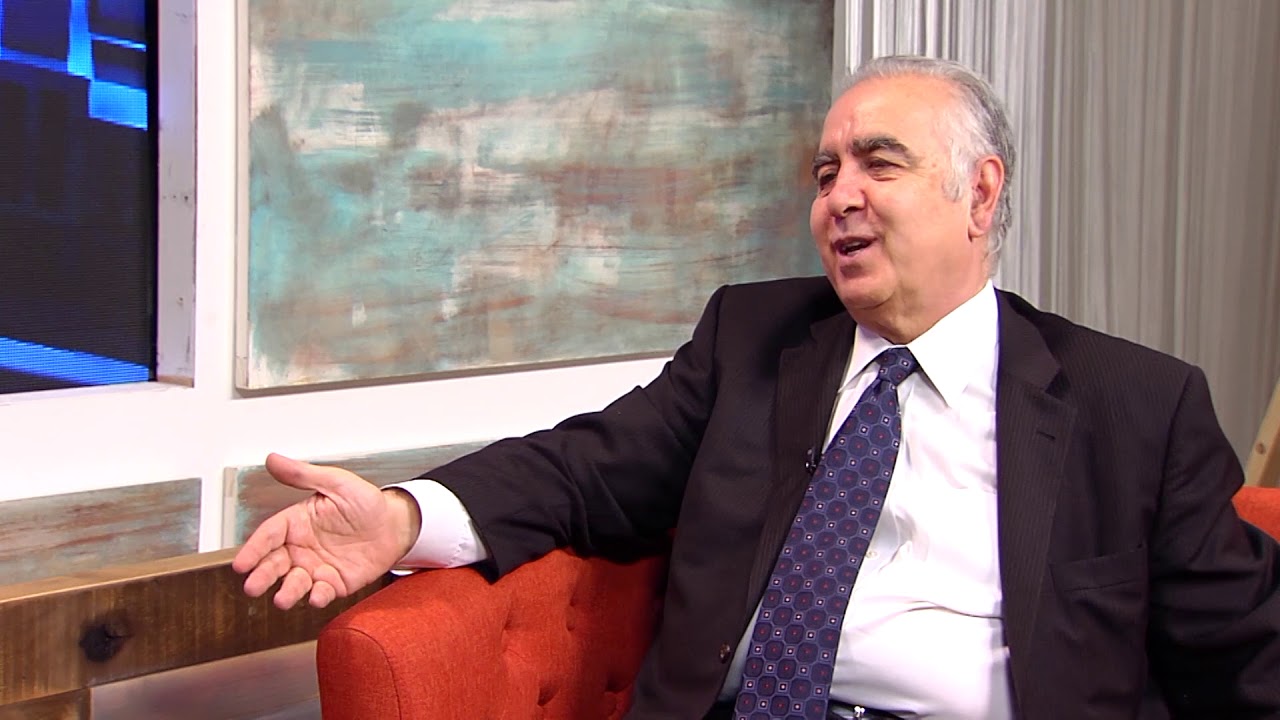
Author: Harut Sassounian

  • Before Reconciling with Turks, Armenians Need to Reconcile with Each Other

    Before Reconciling with Turks, Armenians Need to Reconcile with Each Other

    Can’t the Armenian government do anything right? Not a day passes without additional bad news from Armenia and Artsakh! Rather than blaming our enemies, we need to look at our own shortcomings and stop inflicting more wounds on ourselves.

    In the midst of the severe crisis in Armenia after the devastating defeat in the 2020 Artsakh War, one would think that Armenian leaders would have the wisdom to unite the nation and strengthen the military to prevent further attacks on the country.

    Surprisingly, Armenia has embarked on a course of action that is further dividing and weakening the nation. Armenian leaders are too incompetent to run a country with so many critical issues. Rather than trying to minimize Armenia’s losses, they are determined to add to the damage inflicted by its enemies.

    For four years, Prime Minister Nikol Pashinyan has been dividing Armenians into “blacks” and “whites,” Artsakhtsis and Hayastantsis, former leaders vs. the current one, and Armenia vs. Diaspora, at a time when Armenians desperately need to be unified. He has threatened to slam into the wall or the asphalt his domestic political opponents. He even went on the campaign trail last year holding a hammer in his hand, promising to smash the heads of those who oppose him.

    Not only Pashinyan is too incompetent to lead Armenia, so are his cabinet ministers and advisors. An incompetent leader cannot make competent appointments.

    Take for example, Pashinyan’s appointment of Zareh Sinanyan to the post of “High Commissioner of Diaspora Affairs.” Sinanyan’s only qualification is that he is a blind supporter of the Prime Minister. Consequently, Sinanyan has hardly accomplished anything worthwhile during his three years on the job, except for wasting the government’s meager budget on his and staff’s frequent travels around the world.

    Sinanyan just announced that his office will hold a “Global Armenian Summit,” at the end of this October. One would have expected that he would have the common sense to invite to the “Global Summit” the representatives of all Armenian organizations and prominent individuals in Armenia and the Diaspora, regardless of their political affiliation.

    However, Sinanyan’s and the Prime Minister’s only goal is to give the impression that they are busy doing something rather than actually accomplishing anything useful for the nation. Sinanyan shortsightedly decided, with the blessing of his boss, to invite to the “Global Armenian Summit” Armenians who are the regime’s supporters, leaving out those who have dared to oppose the current leaders. The government of Armenia is actually engaged in dividing, rather than unifying the Diaspora.

    In any other normal country, an employee like Sinanyan would have been fired long ago for being incompetent and wasting the government’s precious resources. However, this Prime Minister will not fire an underling who is more incompetent than he is! Regrettably, Sinanyan does not even know his job description. He has foolishly advocated inviting Arab immigrants to Armenia, not realizing that his responsibility is dealing only with Diaspora Armenians, not Arabs or other nationalities. In his frequent TV interviews, Sinanyan constantly engages in partisan politics, criticizing major Armenian organizations, and creating further divisions in the nation. He does not understand that his job is not to act as a propagandist for Pashinyan’s regime, but be a government employee who is getting paid a salary to be a bridge between Armenia and the Diaspora.

    If the excuse of Pashinyan and Sinanyan is that their political opponents would have refused to attend the “Global Armenian Summit,” that would have been a good reason to invite them. Those who reject the invitation would have looked bad and the government would have looked magnanimous rather than petty. The Armenian government cannot behave like a thug who wants to settle scores. Regrettably, it does not possess the maturity to rise above the fray. Armenia is the home of all Armenians, not only those who agree with the regime. A small and weak nation surrounded by powerful enemies cannot afford to splinter itself into smaller fragments.

    Rather than embracing all Armenians worldwide, the government has rejected in recent weeks the entry of several prominent Diaspora Armenians whose sole guilt is that they are opponents of the supposedly “democratic” regime! Meanwhile, Turkish members of the Grey Wolves terrorist group are allowed to enter Armenia and insult the memory of the Armenian martyrs on the grounds of the Armenian Genocide Memorial in Yerevan!

    In the past 20 years, Armenia has organized several Diaspora-Armenia conferences. None of them accomplished anything useful. Sinanyan’s planned “Summit” will have the same result. Pashinyan has repeatedly talked about allowing Diaspora Armenians to assume high-level positions in the Armenian government. Regrettably, beyond paying lip service, he has not taken any step in that direction. Similarly, Sinanyan announced with much fanfare around a year ago that his office will appoint Diaspora commissioners in Armenian communities around the world. Until now, he has not appointed a single such commissioner.

    When Pashinyan came to power in 2018, he pledged to increase Armenia’s population from less than 3 million to 5 million by the year 2050. Regrettably, Armenia’s population in his four years in office has declined, not increased. Beyond just talking about encouraging repatriation to Armenia, nothing has been done.

    It is high time that all Armenians unite to defend the homeland against the powerful enemies on both sides of the border. Before reconciling with Turks, Armenians first need to get along with each other.

  • No Respect for the Living or the Dead In Armenia; Case in point: Vahakn Dadrian

    No Respect for the Living or the Dead In Armenia; Case in point: Vahakn Dadrian

    I write this column with great sorrow and dismay.

    Vahakn Dadrian, the preeminent expert on the Armenian Genocide, died in upstate New York on August 2, 2019, at the age of 93. Born in Istanbul, Turkey, he devoted his entire life to expose the Turkish denials of the Armenian Genocide. Dadrian conducted his meticulous research in Turkish, English, French, German and Armenian, publishing dozens of scholarly books and articles in professional journals.

    One would think that a distinguished individual such as Dadrian would be respected, not only during his lifetime, but also after his passing. Prime Minister of Armenia Nikol Pashinyan took the right step by issuing a decision on August 19, 2019, to appoint a high-level State Commission to make the necessary arrangements for Dadrian’s burial in Yerevan and allocated an appropriate budget for the funeral expenses.

    The members of the State Commission were: “A. Harutyunyan, Minister of Education, Science, Culture and Sports; Z. Mnatsakanian, Foreign Minister; A. Torosyan, Minister of Health; A. Janjughazyan, Minister of Finance; H. Marutyan, Mayor of Yerevan; R. Martirosyan, President of National Academy of Sciences; V. Terteryan, Deputy Minister of Territorial Management and Infrastructure; V. Movsisyan, Deputy Police Chief of Armenia; Bishop Hovnan Hakobyan, Grand Sacristan of the Mother See of Holy Etchmiadzin; A. Iskankaryan, Director of the Special Services for the Population; H. Marutyan, Director of the Armenian Genocide Museum; and G. Sarkissian, President of the Zoryan Institute (Canada).” Dadrian was the Director of Genocide Research at Zoryan.

    After the Embassy of Armenia in the United States transferred Prof. Dadrian’s ashes to Armenia, a Memorial Service was held on August 31, 2019, at the National Academy of Sciences, where Dadrian was a member. The Service was attended by the State Commission members, as well as Ararat Mirzoyan, then Speaker of the Parliament, Dadrian’s 90-year-old sister, and other dignitaries and academicians. Prof. Dadrian’s ashes were interred at the Tokhmakh Cemetery in Yerevan.

    Recently, when Maggie Mangassarian Goschin, Director of the Ararat-Eskijian Museum in Mission Hills, California, wanted to include a photo of Dadrian’s grave in her museum where Dadrian’s archives are stored, no one could locate Dadrian’s grave. After a lengthy search, Baghdig Kouyoumdjian of Paris and Hrair Hawk Khatcherian of Canada finally found Dadrian’s unmarked grave. It turned out that after three years of his burial, the State Commission did not have the courtesy of placing on Dadrian’s grave a tombstone or even a plaque indicating his name. The grave was shockingly covered with weeds and garbage. The two gentlemen placed a temporary plaque on Dadrian’s grave and cleared the weeds. This is the horrible treatment that this eminent scholar received in his homeland after his death.

    Prof. Taner Akcam, a well-known scholar of the Armenian Genocide and Director of UCLA’s Armenian Genocide Research Program, was the first to sound the alarm on his Facebook page about the deplorable neglect of Dadrian’s grave. It is ironic that an individual of Turkish origin is more concerned about the despicable treatment of Dadrian’s grave than the Armenian government. Dadrian was Akcam’s mentor and collaborator on Genocide research. Akcam wrote on his Facebook page: “Dadrian does not deserve this. It is unacceptable and an immense shame that the grave of the founder of modern Armenian Genocide research is neglected and forgotten.”

    In response to Prof. Akcam’s justified outrage, Mari Hovhannisyan, Program Coordinator of the Zoryan Institute (Armenia), issued a statement titled, “Tempest in a teacup.” She gave the excuse that the delay was “due to COVID-19 and the 2020 Artsakh War, Armenia was burying several thousand of its brightest sons and daughters, tragically lost due to both of these crises, each requiring their own appropriate tombstones.” This is an unacceptable excuse. Dadrian was buried seven months before COVID-19 affected Armenia and more than a year before the Artsakh War. That’s plenty of time to place a tombstone or at least a plaque on Dadrian’s grave, not to mention that almost two years have passed since the 2020 war and COVID-19 is no longer prevalent in Armenia. Furthermore, since Dadrian’s death, other individuals have been buried in nearby graves and they have a tombstone!

    More troubling are the attempts to cover up this scandal. Zoryan’s Hovhannisyan wrote on her Facebook page: “We kindly request those who have raised this issue publicly to refrain from spreading unchecked information and making unnecessary comments, which can only lead to tempest in the teacup.” Vahan Hunanyan, spokesperson of the Armenian Foreign Ministry, and Harutyun Marutyan, Director of the Armenian Genocide Museum in Yerevan, issued similar meaningless excuses. This is the usual behavior of those who want to cover up their embarrassing mistakes. It would have been more appropriate to issue an apology and take immediate steps to place a tombstone on Dadrian’s grave.

    If the State Commission members, appointed by Prime Minister Pashinyan, could not arrange to place a tombstone on the grave of a highly-respected Armenian scholar in three years, they should have been reprimanded by Pashinyan for their negligence and incompetence. This is a national scandal. It is also a regrettable indication that if Armenian officials cannot place a tombstone on a grave, how can Armenians trust their government to run a country with so many serious problems?

    Finally, Prof. Dadrian’s grave should not have been placed in the Tokhmakh Cemetery. It would have been more appropriate to place the urn of Dadrian’s ashes at the Memorial Wall next to the Genocide Monument or the Komitas Pantheon, alongside other prominent individuals. That is the least the Armenian government could do to rectify its grave error.

  • Armenia’s Leaders Continue Capitulating to Azerbaijan

    Armenia’s Leaders Continue Capitulating to Azerbaijan

    Azerbaijan’s order to evacuate around 150 families from three Armenian villages in the Lachin Corridor, which connects Armenia to Artsakh, has alarmed Armenians worldwide.

    As a result of Azerbaijan’s ultimatum, Armenians in the villages of Bertzor, Aghavno and Sus are obliged to move elsewhere in Artsakh or Armenia. After losing a devastating war in 2020, Armenia and Artsakh, both suffering from poor leadership, are demanding that the villagers comply with Azerbaijan’s demand to leave their homes and churches by the deadline of August 25.

    The source of the problem is the joint “statement” of November 10, 2020 signed at the end of the war by the Prime Minister of Armenia, President of Azerbaijan, and President of Russia. Even though the first line of that “statement” declared “a complete ceasefire,” this is the most unusual kind of ceasefire in the history of all wars. Instead of stopping where the opposing armies had reached, the Armenian side agreed to turn over to Azerbaijan large areas of land not conquered by Azerbaijan. Furthermore, the Prime Minister of Armenia, without any authority, signed a document relinquishing lands, including most of Artsakh and its surrounding territories, over which he had no legal authority. Therefore, the Nov. 10, 2020 trilateral agreement should be considered null and void.

    Paragraph 6 of that agreement stated that “The Lachin corridor (5 km. wide), which will provide for communication between Nagorno-Karabakh and Armenia and at the same time will not affect the city of Shushi, shall remain under the control of peacekeeping troops of the Russian Federation. The Parties have agreed that a plan for the construction of a new route along the Lachin corridor shall be determined within the next three years, providing communication between Nagorno-Karabakh and Armenia, with the subsequent redeployment of Russian peacekeeping troops to protect the route. The Republic of Azerbaijan shall guarantee traffic safety for citizens, vehicles and goods in both directions along the Lachin Corridor.”

    This paragraph, like many others, has created problems due to its unclear wording. Almost two years after signing this agreement, during which the leaders of Armenia and Azerbaijan had several face to face meetings, the Armenian government did not bother to clarify the language of Paragraph 6. Armenian officials, after approving Azerbaijan’s plans, kept repeating that the alternate route to bypass the Lachin Corridor was to be built only after three years and that Azerbaijan hastily built its segment of the alternate route. In fact, the 2020 agreement stated that the alternate road will be built within, not after, three years. Armenia is planning to complete its section of the alternate road to Lachin after 250 days from this month.

    Armenian officials falsely reassured the families of the three Armenian villages within the Lachin Corridor that they have plenty of time to resolve their problems, assuring them that they may remain in their homes. When Azerbaijan insisted on the immediate removal of these villagers, the Armenian families were given less than three weeks to move without having anywhere to go.

    To make matters worse, Artsakh’s Minister of Territorial Management and Infrastructure, Hayk Khanumyan, warned the residents of the three Armenian villages that should they burn their houses before leaving, they will not receive the promised 10 million dram ($24,000) compensation, which is insufficient to purchase a new house. The Minister was referring to the practice of many Artsakh Armenians who burned their homes before leaving their houses after the 2020 war. Burning one’s home is a heartbreaking decision, but it is equally upsetting to leave your own house to your sworn enemy. I watched this week the disturbing video of a father burning his family home before leaving. What did the Minister expect these villagers to do? To clean their houses, leave a cooked meal on the dining table with a bottle of champagne, and a welcome sign on the door for their Azeri enemies?

    In addition to turning over to Azerbaijan large parts of territories in and around Artsakh which Azerbaijan had not occupied at the time of the ceasefire, Azerbaijan conquered additional lands in both Artsakh and inside Armenia’s borders since the end of the 2020 war. Furthermore, Azerbaijan, contrary to the 2020 agreement, is still holding Armenian prisoners of war, whereas Armenia foolishly turned over all the Azeri prisoners of war shortly after the ceasefire. Armenian authorities not only do not make any efforts for the return of the Armenian prisoners and the liberation of Armenia’s occupied territories, they do not even talk or complain about them. Before complying with any of Pres. Ilham Aliyev’s orders, Armenia should first demand that Azerbaijan keep its own obligations under the 2020 agreement. It is understandable that after losing the war Armenia is in a weakened and subservient position. However, mismanaging the situation due to Armenian leaders’ incompetence and capitulating to the enemy’s every whim and desire is unacceptable. Such spineless behavior encourages Azerbaijan to demand and obtain more concessions.

    With the shutting down of the Lachin corridor which connects Armenia to Artsakh, the remaining Armenians of Artsakh will be isolated, surrounded by Azerbaijan. They will lose their access to Armenia, will be cut off from electricity, heat and internet, and will be sooner or later taken over by Azerbaijan. Sadly, Artsakh and Armenia, after losing the 2020 war, are on a downward spiral. Competent new leaders may not be capable of reversing Armenia’s calamitous situation, but at least they won’t let it get any worse.

  • U.S. Publicizes its Strategy on Armenia Based Obviously on America’s Interests

    U.S. Publicizes its Strategy on Armenia Based Obviously on America’s Interests

    The United States Department of State posted on its website a lengthy document which described the American government’s strategy for relations with 175 countries, including, Armenia, Azerbaijan and Turkey, in the next four years. The 16-page section covering Armenia is dated May 4, 2022. The document is titled, “Integrated Country Strategy” (ICS).

    The ICS sets goals and objectives through a coordinated and collaborative planning effort among Department of State, USAID, and other U.S. Government agencies with programming in Armenia. The document indicated that the main objective is the furthering of U.S. national interests. It made it clear that the goal of the United States government is to minimize the influence of Russia in Armenia, while maximizing U.S. interests. This is not surprising, as all countries attempt to increase their influence in the world. Given Russia vs. the West confrontation in the Ukraine war, U.S. antagonism to Russia has grown exponentially. This is confirmed by the document’s own statement: “The U.S. role has become more important as regional tensions increase following Russia’s invasion of Ukraine.”

    In addition to its anti-Russia perspective, the United States drags Armenia into its hostility with China and Iran, further meddling in Armenia’s foreign relations. The document stated: “Strengthen the ability of partners and Allies to resist and counter influence operations and disinformation, particularly from Russia and the PRC [People’s Republic of China]; Counter Russian, PRC, Iranian, and other state, and non-state actors’ strategic, conventional, and hybrid threats and emerging disruptive technologies that threaten U.S. and European security in Europe and beyond.”

    The U.S. document also disparaged Armenia’s membership in the Eurasian Economic Union since its other members are Belarus., Kazakhstan, Kyrgyzstan, and Russia. The document stated: “Armenia’s participation in the Eurasian Economic Union (EAEU) may limit trade with non-EAEU members as it conforms with poorly planned or implemented EAEU standards or imposes unclear documentation requirements.” The U.S. document concealed the fact that Armenia signed on March 1, 2021 “the European Union-Armenia Comprehensive and Enhanced Partnership Agreement (CEPA)” to enhance trade and other relations with European countries.

    Likewise, the U.S. document disparaged Armenia’s membership in the military alliance of the Collective Security Treaty Organization since its other members are Belarus., Kazakhstan, Kyrgyzstan, Russia, and Tajikistan.

    The first paragraph of the document stated: The U.S. objective is to “advance American interests by helping Armenia succeed as a secure, prosperous and democratic country, at peace with its neighbors, and more closely integrated with the Euro-Atlantic community.” The document also stated that Armenia’s defeat in the Artsakh War of 2020 and continuing tensions along its border “highlight the importance of the U.S. role as a Minsk Group Co-Chair and other diplomatic efforts to improve Armenia’s ties with its neighbors.” This is a misleading statement as the Minsk Group no longer exists, except on paper, since Russia, as one of the three co-chairs of the Minsk Group, does not acknowledge its viability and Azerbaijan totally rejects its mediating efforts. The United States is simply using the defunct Minsk Group as a tool to counter Russia’s unilateral actions in the Artsakh conflict. The second excuse the United States used to meddle in Armenia’s internal decisions is “to help Armenia normalize relations with its neighbors,” meaning Azerbaijan and Turkey, but not Iran. At this point, Armenia’s relations are much more critical with supportive Iran than with hostile Azerbaijan and Turkey.

    To avoid any misunderstanding, I am just as opposed to the undue influence of Russia in the internal affairs of Armenia, which should not be under the thumb of any country and should be able to manage its foreign relations to maximize its own national interests. What Armenia needs is a multilateral foreign policy, developing friendly relations with most countries of the world, including the Middle East (Arab States, Iran, and Israel), Asia (China and India), Africa, Europe, North and South America, and Russia. Relying on only one power, no matter which one, can only lead to disappointment and undue influence on Armenia.

    The U.S. document repeated several times that “Armenia has strengthened its commitment to a democratic path that respects rule of law and human rights, though more progress is required.” Fortunately, the State Department recognized that “more progress is required.” Elsewhere in the document, the United States correctly acknowledged: “The Armenian government has taken some steps to ameliorate social and human rights concerns, but progress has been mixed.” Prime Minister Nikol Pashinyan came to power in 2018 espousing the ideals of democratic rule. Regrettably, he has strayed far from the principles of democracy, establishing one-man dictatorial rule, making all governmental decisions on behalf of the Cabinet of Ministers, Parliament, President, and Courts. Since Pashinyan has antagonized most Armenians, his popularity at home has suffered tremendously, decreasing from a high of 80 percent in 2018 to a low of around 30 percent. By ignoring the violations of human rights and decline of democracy in Armenia, the United States simply disappoints Armenians in Armenia and the Diaspora, particularly, American Armenians, who question the U.S. commitment to democracy beyond paying mere lip service.

    When the U.S. government and its embassy in Yerevan remain silent in the face of grave violations of human rights in Armenia, it shows that the United States, contrary to its statements, is not serious about improving democracy in the country. Similarly, when Azerbaijan regularly attacks and kills Armenians, while the United States calls on both sides to reduce tensions, the United States loses its credibility in the eyes of Armenians in and out of Armenia.

  • UN Official Deletes His Tweet on Armenian Genocide, After Pressure from Turkey

    UN Official Deletes His Tweet on Armenian Genocide, After Pressure from Turkey

    The Turkish government resorted to its customary bullying tactics last week to force a high-ranking United Nations (UN) official to delete his tweet on the Armenian Genocide.

    On July 27, President of the United Nations General Assembly Abdulla Shahid issued a tweet with four photos showing him placing a wreath at the Armenian Genocide Memorial in Yerevan. He wrote in his tweet: “Laid a wreath at the Memorial to the Victims of Armenian Genocide. Special thanks to Museum-Institute Director Harutyun Marutyan & Hasmik Martirosyan for a tour of the Museum.” Marutyan presented to the visitor books on the Armenian Genocide and showed him the three cross-stones dedicated to the memory of Armenians who were killed by Azerbaijan.

    The wreath placed by the UN General Assembly President had white and blue flowers and was decorated with a blue ribbon with “United Nations” written on it. In the other photos of his tweet, he was seen observing a moment of silence at the Eternal Flame of the Memorial, taking a tour of the Armenian Genocide Museum, and signing the Guest Book in which he wrote: “I am very moved by my visit to this museum. I thank you for warmly receiving me as a part of my visit to Armenia.”

    During his three-day visit to Armenia, the President of the UN General Assembly met with various Armenian officials, including the President of Armenia Vahagn Khachatryan, Deputy Prime Minister Hambardzum Matevosyan, Foreign Minister Ararat Mirzoyan, Vice Chairman of the Parliament Ruben Rubinyan, female diplomats of the Foreign Ministry, and spoke at the graduation ceremony of the Armenian Foreign Ministry’s Diplomatic School.

    Shortly after Shahid’s visit and tweet, the Turkish Foreign Ministry issued an official statement condemning him for visiting the Armenian Genocide Memorial and alleging that his trip “to Armenia has been exploited with the purpose of exposing one-sided Armenian claims and it is in that context that he paid a visit to the so-called genocide memorial.” The Turkish Foreign Ministry added: “He would have been expected to act in a fair and impartial manner, to be more careful and responsible in this regard. Representatives acting on behalf of the UN authorized bodies must carry out their duties in accordance with the UN legal instruments and relevant norms and rules of international law, particularly the Convention on the Prevention and Punishment of the Crime of Genocide dated 1948. We condemn and reject attempts to distort historical facts and international law through political manipulation. Türkiye is of the opinion that the facts regarding the events of 1915 should be dealt with in a full, fair and honest framework.”

    Shahid, who is also the Foreign Minister of the Republic of Maldives, immediately deleted the tweet about his visit to the Armenian Genocide Memorial, succumbing to Turkish pressures.

    Whereas the Turkish government had succeeded in imposing its will on the UN official, not a single Armenian official who met with the President of the UN General Assembly bothered to question him why he deleted his tweet, let alone criticize him.

    Of course, nothing can excuse the submissive behavior of the high-ranking UN official who caved in to the directive of a dictatorial regime, contrary to the UN principles that he was sworn to uphold. Two sources confirmed some of the actions of the Turkish government: The Passblue.com website disclosed that Turkey rescinded its invitation to Shahid to visit Ankara. The Turkish Superhaber.tv further revealed that Turkey withdrew Shahid’s invitation to attend the Ambassadors’ Conference to be held in Ankara on August 8-12. Turkey probably used other behind-the-scenes measures to pressure Shahid.

    It is highly offensive that Shahid, by agreeing to delete his tweet, disrespected the Armenian Genocide which had been corroborated by the UN itself. On August 29, 1985, the UN “Sub-Commission on Prevention of Discrimination and Protection of Minorities” adopted a report on genocide by a vote of 15 in favor, 1 opposed, and 4 abstentions. The “Revised and Updated Report on the Question of the Prevention and Punishment of the Crime of Genocide” was prepared by British Special Rapporteur Benjamin Whitaker. Paragraph 24 of that report stated: “The Nazi aberration has unfortunately not been the only case of genocide in the twentieth century. Among other examples which can be cited as qualifying are the German massacre of Hereros in 1904, [and] the Ottoman massacre of Armenians in 1915-1916 ….” The report also included an extensive bibliography on the Armenian Genocide. An earlier version of that report, prepared by UN Special Rapporteur Nicodeme Ruhashyankiko of Rwanda, had included in its paragraph 30 a reference to the Armenian Genocide which was subsequently deleted after excessive pressure by the Turkish government. I know these facts first-hand because I spent from 1978 to 1985 at the UN in Geneva as the representative of a non-governmental organization on human rights, countering the repeated Turkish attempts to delete the reference to the Armenian Genocide.

    The Armenian government may not be aware of these facts. I suggest that the Armenian Foreign Ministry file a strongly-worded complaint with the Secretary-General of the United Nations to have the deleted tweet reinstated and apologize to the Armenian nation.

  • Armenian Officials Falsify the Reason For Banning Papazian from Armenia

    Armenian Officials Falsify the Reason For Banning Papazian from Armenia

    Harut Sassounian

    Last week, I wrote about a scandalous incident when Armenian officials did not allow Mourad Papazian, a French Armenian community leader who has devoted his life to the defense of the Armenian Cause, to enter Armenia after arriving at the Yerevan Airport. Despite Papazian’s repeated questions at the airport as to why Armenian officials were banning him from entering the country, he was not given an answer. I will now comment on the latest developments in this case.

    Initially, government officials told the media that they are unable to reveal the reason for Papazian’s expulsion in order not to violate his right to privacy. When Zareh Sinanyan, Armenia’s Chief Commissioner for Diaspora Affairs, was first asked why Papazian was banned from the country, he said that he had no idea. Sinanyan then wrongly claimed that the organization co-led by Papazian, the Coordinating Council of Armenian Organizations of France (CCAF), had no right to represent the entire French Armenian community, since it was just one organization. Contrary to Sinanyan’s statement, the CCAF is not just one organization, but a coalition of around 60 French Armenian organizations.

    Later, one of Prime Minister Nikol Pashinyan’s unnamed aides gave a lengthy interview to the Armenpress wire service last week, alleging that Papazian was banned from Armenia for violating Chapter 2, Article 8, sections 1.k and 1.z of the law on “Foreigners.” The aide went on to claim that Papazian was one of the individuals who attacked Pashinyan’s motorcade in Paris on June 1, 2021. What happened to the government’s initial excuse that it cannot reveal the reason for Papazian’s expulsion to protect his privacy? The real reason for his expulsion was the Prime Minister’s intolerance to anyone who dares to oppose his regime.

    Here are the true facts: I verified that Papazian was not involved in any attack on Pashinyan’s motorcade because he was not there. The protest was carried out by a group of young men who regrettably hurled tomatoes at Pashinyan’s motorcade. That is not a proper thing to do to Armenia’s leader while on foreign soil. Nevertheless, last year’s incident was viewed by the Armenian government to be so unimportant that the Embassy of Armenia in Paris did not even file a complaint with the French authorities.

    Secondly, it is very strange that after the June 1, 2021 motorcade incident in Paris, Papazian visited Armenia on four different occasions and no one at the Yerevan Airport obstructed his entry. If the Prime Minister’s aide is serious about his baseless accusation against Papazian, why did the government not object to his entry to Armenia until a year later, during his fifth visit? The Prime Minister’s aide is thus acknowledging that Armenian officials are so incompetent that they cannot even implement properly their own decisions.

    Furthermore, Pashinyan’s aide falsely claimed that there are media reports about the Paris incident, including video tapes on the internet showing Papazian’s and others’ protest. The fact is that there is no such video showing Papazian at that protest simply because he was not there. Had there been such a video, the Armenian government would have disseminated it widely to prove Papazian’s guilt.

    Since the Prime Minister’s aide based his accusation of Papazian on Article 8, sections 1.k and 1.z of Armenia’s law on “Foreigners,” I found it interesting that section 6 of Article 8 of that same law lists the following government officials as the only ones who can have access to the black list of individuals banned from entering Armenia: “The staff of the President of Armenia, the national security agency, authorized police officials, Foreign Ministry officials, the courts and the prosecutor’s office.” Importantly, neither the Prime Minister himself nor his aides are on this list of officials authorized to access the black list. How did Pashinyan’s aide know that Papazian’s name is on the black list and the reason why he was banned from entering the country? This is an obvious violation of the law, the same law that Pashinyan’s aide quoted to justify banning Papazian. In a normal democratic country, this aide and his superiors would be prosecuted for breaking the law. What they have done to Papazian is an abuse of power. Armenia is not Pashinyan’s private house so he can decide whom to let in and whom to ban.

    Finally, while the government is busy blocking an Armenian nationalist from entering the country, a widely circulated video on social media showed a Turkish extremist at the Armenian Genocide Memorial in Yerevan, sticking his tongue out, howling like a wolf, giggling hysterically, ridiculing the Genocide and making the hand gesture of the terrorist Turkish Grey Wolves group, while wearing the flag of a Turkish soccer club which has the crescent and the star, the emblem of the Turkish Republic. While it is not always possible for the police to prevent such ugly incidents, if Armenian officials were not so busy trying the silence their political opponents, they would have more time to deal with the real enemies of the Armenian nation. How ironic that an Armenian nationalist is banned from entering Armenia, at the same time a Turkish extremist is allowed to enter the country and insult the memory of the Genocide martyrs.

    It would have been far better for Armenian officials to tell the truth by acknowledging that they should not have expelled Papazian from Armenia, instead of inventing more lies to cover up their initial wrongful action.