Is Turkey Muzzling U.S. Scholars? by Scott Jaschik
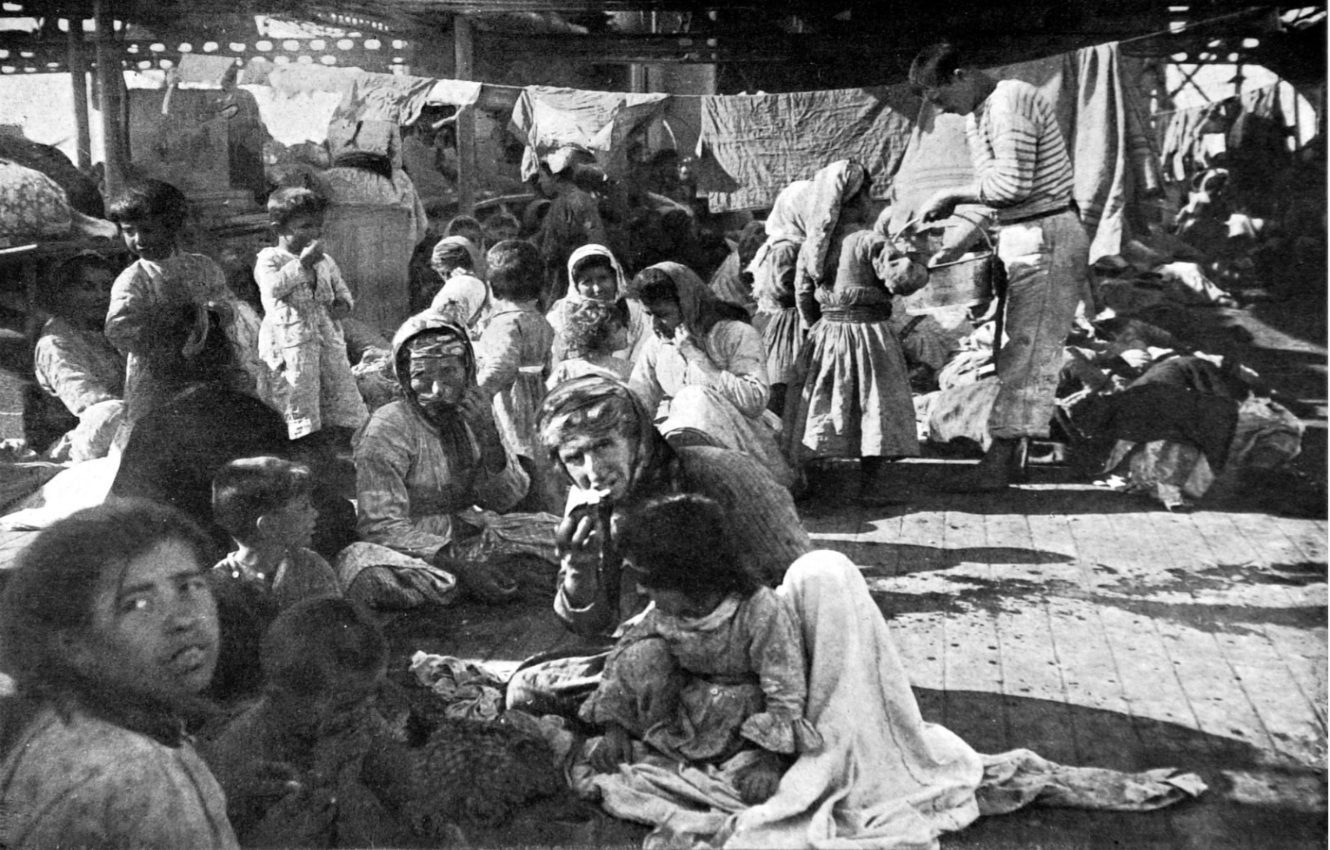
Scholars of the Armenian genocide have long accused Turkey of using its financial support to promote the idea that a genocide didn’t take place or that the jury is still out — views that have little credibility among historians of genocide.
An incident in 2006, only recently being talked about publicly, has some scholars concerned that Turkey and its supporters may be interfering in American scholarship. The chair of the board of the Institute of Turkish Studies, which is based at Georgetown University, resigned at the end of 2006, and he says he was given a choice by Turkish officials of either quitting or seeing the funding for the institute go away. . .
At least one scholarly group that has investigated the matter recently issued a report backing the ousted chair, and at least one other board member has resigned while another has called for more discussion of the accusations. The executive director of the institute, while flatly saying that the ousted chair is wrong, confirmed that he was asked by Turkish Embassy officials to have the scholar talk with the Turkish ambassador to the United States about an article where he used the word “genocide” in reference to what happened to the Armenians. It was after that talk that the chair — Donald Quataert — quit.
The fact that Quataert is at the center of the controversy is significant. A historian at the State University of New York at Binghamton, Quataert is an expert on the Ottoman Empire. In the 1980s, when the scholarly consensus about the Armenian genocide was not as broad as it is today, he signed a statement calling for more research on whether a genocide took place. Quataert says today he never thought the statement would be used as it was by Turkish supporters to question claims of a genocide, but he notes that as a result of his having signed at the time, he was viewed favorably by the Turkish government and with considerable skepticism by Armenians. And it is Quataert who used the word “genocide” in a journal and who says he was given a choice by the Turkish ambassador, Nabi Sensoy, of quitting as the institute’s chair or seeing its financing disappear.
The Institute of Turkish Studies, founded with funds from Turkey, supports research, publications and language training at many American colleges and universities. Most of the work is not controversial. This year the institute is providing library grants to Kennesaw State University and the University of Mississippi, supporting doctoral students’ work at New York University (“The Specter of Pan-Islamism: Pilgrims, Sufis and Revolutionaries and the Construction of Ottoman-Central Asian Relations, 1865-1914?) and the University of Texas at Austin (“Gender, Education, and Modernization: Women Schoolteachers in the Late Ottoman Empire, 1871-1922?); undergraduate exchange programs at the University of Nevada at Reno and the University of Wisconsin at Madison, and seed money to create new faculty positions at Boston University and the University of Minnesota.
The institute is led by a board, primarily made up of scholars of Turkey, only a few of whom have focused on issues related to what happened to the Armenians. Even those who question the way Turkey has responded to the genocide issue say that much of the work supported by the institute is important and meets high standards.
Quataert led institute’s board from 2001 until his controversial departure at the end of 2006.
The dispute started when he published a book review in the Journal of Interdisciplinary History in the fall of 2006. The review, which included both praise and criticism, was of Donald Bloxham’s The Great Game of Genocide: Imperialism, Nationalism and the Destruction of the Ottoman Armenians (Oxford University Press). In the review, Quataert talks about how when he entered graduate studies in Ottoman history in the late 1960s, “there was an elephant in the room of Ottoman studies — the slaughter of the Ottoman Armenians in 1915.” He writes that “a heavy aura of self-censorship hung over Ottoman history writing,” excluding not only work on Armenians, but also on religious identity, the Kurds and labor issues. Only in recent years, he continues, has the “Ottomanist wall of silence” started to crumble.
Quataert notes concerns about the use of the word “genocide,” namely that discussions of its use or non-use can “degenerate into semantics and deflect scholars from the real task at hand, to understand better the nature of the 1915 events.” But despite those concerns, he writes that there is no question today that what took place meets United Nations and other definitions of genocide, and that failure to acknowledge as much is wrong.
Of using the term, he writes: “Although it may provoke anger among some of my Ottomanist colleagues, to do otherwise in this essay runs the risk of suggesting denial of the massive and systematic atrocities that the Ottoman state and some of its military and general populace committed against the Armenians.”
That sort of analysis is not exceptional for historians writing about the period. Most leading scholars of genocide have said that it is beyond question that what took place was a genocide. In 2005, for example, the International Association of Genocide Scholars issued a letter that said in part: “We want to underscore that it is not just Armenians who are affirming the Armenian Genocide but it is the overwhelming opinion of scholars who study genocide: hundreds of independent scholars, who have no affiliations with governments, and whose work spans many countries and nationalities and the course of decades.”
While calling the Armenian genocide a genocide isn’t controversial among historians, it is unusual for the board of the Institute of Turkish Studies. Its board hasn’t been known for taking stands on the issue and one of its members is Justin McCarthy, a professor at the University of Louisville who describes what happened not as genocide, but a period of civil war in which many people died, more of them Muslims than Armenians.
In an interview, Quataert said that after his review was published, he was told by David C. Cuthell, director of the institute, that people in Turkey were upset about his use of the word genocide and that he should call the Turkish ambassador. “He told me the embassy was unhappy and was getting a lot of pressure and maybe I should speak to the ambassador.”
Quataert said that he then called Ambassador Sensoy and had a “very cordial and polite” discussion, and that the ambassador “made it clear that if I did not separate myself as chairman of the board that funding for the institute would be withdrawn by the Turkish government and the institute would be destroyed.”
After thinking about it for a few days, Quataert said he decided to resign. “It was clear to me that there was a genuine danger that the funding would be withdrawn by these powerful elements in Ankara and all the good I have seen would vanish, and money that young scholars need to learn language and travel would dry up,” he said. “I still feel that the institute over the decades has done a lot of good work. It was not for Turkish propaganda. That’s why I agreed to be the chairman of the board.”
Based on his experience, Quataert said that it is “a very difficult question” to consider whether the institute at this point has credibility as a source of financing for research and education. “By forcing my resignation, the Turkish government has made very clear that there are bounds beyond which people cannot go,” he said.
Others share those concerns.
Birol Yesilada, a professor of political science and international relations at Portland State University, where he focuses on contemporary Turkish studies, said he quit the institute’s board for two reasons: health (he is recovering from a heart attack) and concern over what happened to Quataert. Yesilada said he didn’t know all the facts, and has heard differing accounts of what happened, but that “it does not look good.” Further, he said he was troubled by “the silence” of the institute director and many board members about Quataert’s departure.
One board member who sent a series of e-mail messages to other board members was Fatma Müge Göçek, a sociologist at the University of Michigan. She wrote that Quataert was within his rights as a scholar to write the review as he did.
“[T]he only activities that ITS has any control or say over in relation to Donald’s activities are only limited to his service as the board chairman, not as a research scholar,” she wrote. “If ITS in any way intervenes in Donald’s research activities, however, that would indeed be a violation of his academic freedom because Donald’s research does not fall within the purview of ITS’s domain of activities. In addition, of course, I should not have to point out that the funding agencies that provide money to ITS should not do so with strings attached with respect to the research the scholars do. That too is considered unethical.
The Academic Freedom Committee of the Middle East Studies Association also recently reviewed the case, and weighed in with a letter to Turkish officials expressing anger over “the Turkish government’s interference in the academic freedom of one of our most respected academic colleagues.”
The letter goes on to say that the association is “enormously concerned” that Quataert was pressured to either “publicly retract” parts of his review or to leave the chairmanship of the institute. “The reputation and integrity of the ITS as a non-political institution funding scholarly projects that meet stringent academic criteria is blackened when there is government interference in an blatant disregard for the principle of academic freedom.”
The press office of the Turkish embassy did not respond to phone or e-mail messages seeking comment. Cuthell, the director of the institute, said he did not think the embassy would want to comment because the embassy “is livid and rightly so. The ambassador’s reputation has been impugned.”
Cuthell said that there is a “lack of logical consistency” in what Quataert says that shows it to be incorrect. Cuthell said that if Quataert really cared about the institute, he would not have described events as he did to the Middle East Studies Association or for this article. “He resigns to protect the institute and then criticizes the institute,” said Cuthell.
Suggestions that the institute does not uphold academic freedom are false, Cuthell said. “Has the Turkish government ever once ever tried to change any of our grants or activities? I can tell you flat out — they have not. They have never interfered in our grants or programs.”
Asked if the institute has ever supported any research that calls what happened to the Armenians genocide, Cuthell said he couldn’t be sure, but “I doubt it.”
But he said that wasn’t because of censorship or pressure but because “the jury is out” on whether genocide took place. “There are a lot of people who are not qualified to do the work because they can’t read the archival material,” he said. “There is no archival material the Armenians can produce. There is no smoking gun,” he said. (In fact, many historians say that one of the notable developments of recent years has been the emergence of such smoking guns as some scholars have been able to use Ottoman archives to document the role of various leaders in orchestrating the mass killings of Armenians. Notable among these works is A Shameful Act: The Armenian Genocide and the Question of Turkish Responsibility, by Taner Akcam of the University of Minnesota, and based largely on Ottoman documents.)
While Cuthell repeatedly said that Quataert and the Middle East Studies Association were all wrong about what had happened, he also indirectly confirmed some of what they have said. For example, Cuthell said that he did in fact tell Quataert that the ambassador wanted to talk to him about his article. Cuthell also confirmed that funding for the institute comes almost entirely from an endowment created by the Turkish government. Cuthell said that there was no threat that the funds could be taken away, so there was no way that Quataert could have feared for the center’s survival. But Cuthell also confirmed that the endowment had been moved from the United States to Turkey — a move he said had led to growth in the funds.
None of this, he said, was proof that Quataert was pressured to leave. “Obviously there was concern” about the article Quataert wrote, Cuthell said. But all this was about was that “these are diplomats who wanted to have a conversation with Don.”
— Scott Jaschik