Author: Aylin D. Miller

  • Turkey at the Crossroads: No Passport Required

    Turkey at the Crossroads: No Passport Required

    By Patrick J. McGinnis
    Article Date: Thursday, July 10, 2008

    Patrick McGinnis

    Over the last year, Turkey has been in the news with some frequency. From mammoth street protests against the perceived deterioration of societal secularism to the Parliament’s approval of Islamic headscarves in universities, Turkey is passing through a time of profound internal discussion. Since I’ve been to Turkey almost 20 times in the last two and half years, I’ve had a front-row seat to this process. In fact, I was in Istanbul a few weeks ago when the court system overturned the headscarf law and banned them once again.

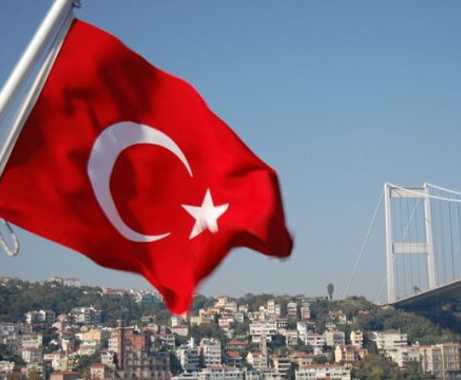
    Turkey’s largest city, Istanbul, is a timeless city that has been populated for over 6,000 years. It is typically referred to as the crossroads between East and West as it sits on the two shores of the Bosphorus, which is the narrow body of water that separates Europe and Asia. Thus, in a typical day, one can wake up in Europe, cross a bridge to have lunch in Asia, and take a cab back to Europe by early afternoon.

    The first time that I visited Turkey, in late 2005, I had no idea what to expect given the fact that Turkey is a Muslim nation. Somehow, I expected Istanbul to feel very Middle Eastern, conservative, and Islamic. Like many visitors, I found something quite different from what I had imagined. Istanbul is a highly cosmopolitan city with an energetic nightlife, and citizens that look and dress like their neighbors in Europe. In fact, most visitors to Turkey would find Istanbul to have plenty in common with the other great cities of Europe. As any Turkish person will remind you, while they are largely Muslim, the Turks are not part of the Arab world, but rather have their own distinct culture that is quite different from the Middle East.

    Scratching below the surface, one quickly learns that Turkey is a complex place. First of all, it’s in a tough neighborhood. With neighbors like Iran, Iraq, and Syria, things don’t stay quiet for too long in the region. Second, Turkey is a country that is constantly wrestling with the interaction between religion, secularism, democracy, and modernity. While many Turks in Istanbul and the western part of Turkey consider themselves European and secular, the heartland and eastern section of the country are far more conservative, religious, and traditional. It’s not unlike the red state/blue state divide that we see in the United States.

    The pull between East and West is a fundamental element of life in Istanbul. For example, my company’s office is located in a part of the city that would fit in well in Vienna or Prague. The streets are lined with luxury goods stores and girls in the latest Parisian fashions cautiously navigate their way across the streets in high heels. At the same time, directly across the street is a large and historic mosque that broadcasts the Muslim call to prayer five times per day. Yet in the mosque’s courtyard there is an über-trendy cafe where Istanbul hipsters dressed in jeans and t-shirts drink lattes, oblivious to the religious programming going on next door. Still, at the same time, in another part of the city, visitors will see women wearing headscarves shopping at local markets. In sum, Istanbul, much like Turkey itself, won’t — or can’t — allow itself to be easily classified.

    My experiences in Turkey have taught me that the line between a religious and secular society can be very blurry. Take the example of Ramadan, the Muslim holy month during which observant Muslims are required to abstain from food and drink from sunrise to sunset. First of all, let me note that Ramadan is one of my favorite times of year. As a non-Muslim, I’m not required to fast during Ramadan, although I try not to eat of drink in front of those who are fasting. The payoff comes at sunset when the massive meal to break the fast, or ifthar, is served. Although I’ve made none of the sacrifices entailed in fasting, I get to take part in a veritable feast. It’s sort of like having Thanksgiving every day for a month.

    In any case, while in some nations like Kuwait, Muslims and non-Muslims alike are forbidden by law from eating or drinking in public during the season, Turkey is quite the opposite. Fasting is an individual choice and in cities like Istanbul, as many citizens choose to fast as those who do not. In that way, Turkey does not fit the traditional perception that most Westerners have about Muslim nations. Instead, in its approach to religion, Turkey, at least in cities like Istanbul, reminds me much more of a nation in Europe or even the United States. Of course, I haven’t yet been to the rural east of Turkey — but then again, I haven’t been to rural Alabama either.

    Source :
  • Turkey Versus Turkey

    Turkey Versus Turkey

    Turkey Versus Turkey

    By SONER CAGAPTAY
    FROM TODAY’S WALL STREET JOURNAL EUROPE
    July 8, 2008

    The jailing of two retired Turkish generals over the weekend has heightened tensions between the government in Ankara and its critics. The generals are among 21 people whom police have detained over the past week, including a senior industrialist and a prominent journalist, on suspicion of plotting a coup against the ruling Justice and Development Party (AKP) government. Interestingly, the interrogations occurred as the chief prosecutor appeared before the constitutional court to make his case that the AKP be shut down for violating the state’s official secularism.

    David Klein

    While this showdown immediately revived the cliché of the “real Turks” of the AKP fighting off the “secular elites,” this is not a case of the pious, popular masses versus an irreligious intelligentsia. Both Turkeys in this power struggle are religious, both are wealthy, and both are equipped with powerful media and security assets. Still, the outcome will have a profound effect on Turkey’s future direction.

    The AKP has been ascendant since winning 47% of the vote in the July 2007 elections. That result was an improvement on its previous showing at the ballot box, and many viewed it as proof of the AKP’s strength. But the other way to look at it is that 53% of the Turkish electorate did not vote for the party. If secular Turks have their sympathetic journalists and their cadre of wealthy businessmen, so does the AKP: Pro-AKP billionaires abound in Istanbul, and they own around 50% of Turkey’s media outlets. What’s more, even Turks who voted for secular parties are religious: Opinion polls show that over 90% of Turks, regardless of which side of the political fault line they fall on, practice Islam. Finally, well-connected Turks suggest that while secular Turks can rely on military intelligence, pro-AKP groups control police intelligence.

    The struggle is for Turkey’s soul, specifically whose vision should win the age-old debate in Turkey between religion and politics. Secular Turks want to keep religion firmly separated from politics, education and government, while the AKP sees no harm in bringing religion into these realms.

    The AKP has been winning this struggle of late. The military, long considered a bastion of secular Turkish politics, is in disarray. In the latest incident, a Turkish general was unwittingly videotaped while discussing confidential information about another general’s health, and the recording posted on YouTube. This was all the more embarrassing because the general speaking in the video is responsible for electronic warfare — and has been busy fighting a spate of recent condemning leaks about top military brass, including top secret military documents published in pro-AKP media.

    The powerful secular business community, too, feels the pinch of six years of single-party rule. It’s true that Turkish businessmen of all persuasions have prospered from economic growth under the AKP. There was even a time when Tusiad, a lobbying group of secular business leaders, felt comfortable with the AKP, as Tusiad could offer the party advice and act as a check on its power.

    That does not seem to be the case today. Emboldened by its electoral victory, the AKP is steadfastly ignoring secular Turkey. The government’s first postelection move was to press media outlets owned by Tusiad members to fire prominent journalists, such as Emin Colasan and Asli Aydintasbas, who had not supported the party during the campaign.

    The AKP has also used legal loopholes to transfer large media companies, such as Sabah-ATV, Turkey’s second-largest media conglomerate, to pro-AKP businessmen. The government first charged Sabah-ATV’s owners with improper business practices and then passed control of the company to a national regulator. The regulator then sold the media group at an auction that had only one bidder: an AKP supporter who appointed Prime Minister Recep Tayyip Erdogan’s son-in-law as the media group’s new CEO.

    Media companies aren’t the only businesses threatened by this newly muscular AKP. The CEOs of several major Turkish banks and other companies have told me that if a firm criticizes the government, the financial police soon visit its offices to find a potentially devastating problem with its books. In the Byzantine world of Turkish bureaucracy, this is not such a difficult task.

    The AKP’s dismissive attitude toward secular Turkey also became apparent in the debate over a new constitution. Turkey indeed needs a liberal new constitution. Shortly after its 2007 victory, the AKP started to draft a new constitution but vehemently refused any input from outside its ranks, even telling its erstwhile supporter Tusiad to “keep away.” The new constitution has yet to be finalized and has turned into a partisan project.

    Then, in February 2008, the AKP passed a law permitting the wearing of the Islamic-style headscarf on college campuses. The Islamic headscarf is the most divisive social issue in Turkey, splitting the country in the same way abortion divides American society. Yet the AKP changed the status quo on the headscarf issue in just three weeks, once again dismissing public debate.

    These developments led to harsh action by secular Turkey. The constitutional court has reversed the AKP’s legislation on the headscarf issue, and the country’s chief prosecutor has begun a case to shut down the party for breaching the country’s constitution, which says that Turkey’s secular nature is inviolable. The court will decide the AKP’s fate later this summer.

    It’s in this context that one has to assess the past week’s jailings and other arrests since last year. The government has certainly targeted some real criminals — some of whom are outright mafia types, and some of whom may have been contemplating a coup. But the police have also detained honest critics of the AKP, such as journalists. The government seems to try to harass these journalists by arresting them together with real criminals. Even if they are released later without any charges, in the public eye the reporters might still be guilty simply by association.

    One such opponent that the AKP has targeted is Turkey’s oldest daily newspaper, Cumhuriyet, which has been steadfast and often alone in its criticism of the AKP ever since the party came to power in November 2002. Among the arrested last week was Cumhuriyet’s Ankara bureau chief, Mustafa Balbay. This follows the March 21 jailing of the paper’s 83-year-old editor, Ilhan Selçuk, at 4:30 a.m. at his Istanbul apartment.

    Mr. Selçuk was released after a two-day interrogation about private phone conversations, including chats with the paper’s correspondents, which the police had wiretapped. Almost four months later, the authorities have yet to bring charges against him. This story is a case in point: Turkish journalists tell me privately that they believe the AKP government has intercepted more than 1.5 million phone and email conversations involving its secular opponents. These journalists are left to wonder who among them will be jailed next.

    * * *

    So it’s clear that neither secular Turkey nor the AKP will go down without a fight. The question is who will win this battle for Turkey’s soul.

    There are two possible outcomes. In 2001, when the constitutional court shut down the AKP’s predecessor, the Welfare Party, the Islamists conceded defeat. At that time they had neither massive public support nor billionaire donors nor media backup to rely on. But that scenario is unlikely today, since the picture now is very different. The AKP is as well-equipped as secular Turkey. Hence, instead of conceding defeat, the party is more likely to fight on, cornering the military and using intelligence assets, the arrest and intimidation of opponents, and the financial police to create a more compliant society. The AKP will crush dissent when necessary, and cajole the business community into acquiescence.

    If the AKP wins, Turkey will not become a Shariah state; fundamentalist Islam is alien to the Turkish soul. However, it will become a country in which dissent is difficult, and a society suffused with a new, intimate version of a religion-state relationship. Islam will dominate politics and education and will shape the government’s administrative actions — such as curtailing women’s employment and the issuance of alcohol licenses. In other words, it will be less like secular, liberal-democratic Italy and more like authoritarian, semisecular Jordan. This is indeed a battle for two very different Turkeys.

    Mr. Cagaptay, a senior fellow at the Washington Institute for Near East Policy, is the author of “Islam, Secularism and Nationalism in Modern Turkey: Who is a Turk?” (Routledge, 2006).

    See all of today’s editorials and op-eds, plus video commentary, on Opinion Journal.

    And add your comments to the Opinion Journal forum.

  • TURKEY PUSHES FOR D-8 LEADING ROLE

    TURKEY PUSHES FOR D-8 LEADING ROLE

    By Gareth Jenkins

    Tuesday, July 8, 2008 Published by jamestown Foundation

    On July 6 Turkish Foreign Minister Ali Babacan announced that Istanbul had been chosen as the site for the permanent secretariat of the Developing Eight (D-8) organization.Speaking after the Eleventh D-8 Foreign Ministers’ Council Meeting in Kuala Lumpur, Babacan declared, “Until now there was a temporary secretariat in Istanbul, which we have now decided to make permanent” (Dunya, July 7).

    The idea of the D-8 was first discussed in October 1996 by the then Turkish Prime Minister Necmettin Erbakan, the chairman of the Islamist Welfare Party (RP), who was eager to create a Muslim alternative to the EU and what was then the G-7. The organization was formally established on June 15, 1997, in Istanbul. The eight member countries that give the organization its name are Bangladesh, Egypt, Indonesia, Iran, Malaysia, Nigeria, Pakistan and Turkey.

    After Erbakan and the RP had been forced from office in Turkey by a campaign of pressure coordinated by the staunchly secularist Turkish military, subsequent Turkish governments paid little attention to the D-8, although they were also reluctant to withdraw from the organization. Despite its name, the defining characteristic of the D-8 has always been religion rather than the relative level of development of the member states’ economies.

    Since first taking office in November 2002, Turkey’s ruling Justice and Development Party (AKP) has sought to strengthen the country’s relations with predominantly Muslim countries in fulfillment of what the party’s leadership regards as Turkey’s natural role as one of the leaders of the Islamic world. It has intensified contacts with other members of the Organization of Islamic Conference (OIC) and lobbied vigorously to ensure that, in January 2005, Ekmeleddin Ihsanoglu became the first Turk ever to serve as Secretary General of the organization, a position he still holds.

    The chairmanship of the D-8 is held for two years on a rotating basis by one of its members. The Foreign Ministers’ Council Meeting preceded the meeting of the biennial D-8 Summit, which opened in Kuala Lumpur on July 7 and at which the chairmanship of the D-8 was transferred from Indonesia to Malaysia (D-8 official website, www.developing8.org). The summit is expected to approve the decision to base the organization’s permanent secretariat in Istanbul and to discuss the implementation of a Preferential Tariff Agreement (PTA) on selected goods traded among member countries. Although all eight members have agreed to the PTA in principle, only two, Malaysia and Iran, have ratified it to date and it needs four ratifications before it can come into force (D-8 official website, www.developing8.org).

    The framework for the D-8 temporary secretariat was agreed upon at the previous D-8 Summit in Bali, Indonesia, in May 2006. The current secretary general is Dipo Alam from Indonesia. Speaking in Kuala Lumpur, Babacan announced that Alam would remain in office for another four years following the upgrading of the temporary secretariat in Istanbul to permanent status.

    “After that, the member states will choose a secretary general for a four-year term in alphabetical order. According to this system, the next secretary will be chosen by Iran, then by Nigeria,” said Babacan (Anadolu Ajansi, July 6).

    Babacan also predicted that the subsequent summit meeting would finalize a proposed visa agreement to facilitate closer economic ties among member states.

    “The only state not to have signed the treaty regarding visas was Malaysia but it has agreed to sign the document during this meeting,” said Babacan. “Thus the treaty allowing businessmen from the eight states to meet and visit each other easily is now complete” (Anadolu Ajansi, July 6).

    On July 3 a D-8 Business Forum was held in Kuala Lumpur to discuss biotechnology, renewable energy and the development and regulation of the halal industry, which ensures that activities, particularly the production and processing of food, comply with Islamic precepts.

    Alam admitted, however, that such meetings had so far failed to have a significant impact on economic relations among D-8 member states. “The total trade of D-8 nations to the world reached $1 trillion last year, while among member states was only $60 billion. This accounts for only five percent of our trade to the world,” he said. “Our combined population is 930 million, so the market is there” (D-8 official website, www.developing8.org).

    However, whatever the Turkish government’s religious reflexes, the simple reality is that for the foreseeable future, the D-8 cannot represent a viable alternative, or even a substantial supplement, to its trade with the West, particularly with the EU, which currently accounts for around half of all of the country’s foreign trade. Perhaps more importantly, Turkey’s 1995 Customs Union agreement with the EU requires Turkey to ensure that any tariff agreements with third countries are in harmony with those of the EU.

    Nevertheless, Babacan is likely to regard ensuring that the D-8 secretariat is based in Istanbul as a personal coup. Since taking over from Abdullah Gul as Turkish Foreign Minister in August 2007, Babacan has appeared out of his depth and, particularly in terms of Turkey’s stalled EU accession process, frequently invisible. He has often been mocked by his political opponents as having ambitions that outstrip his ability. They have also noted that whenever a particularly important foreign policy issue is involved, Prime Minister Recep Tayyip Erdogan ensures that he handles it himself rather than entrusting it to Babacan. In this context, any success that Babacan can claim, however minor, is likely to be welcome, particularly as the leading members of the ruling Justice and Development Party (AKP) begin to position themselves for the inevitable changes in cabinet posts if, as appears likely, the party is closed in late summer or early fall.

  • We Are Ready to Talk to Turkey; SERZH SARGSYAN president of Armenia.

    We Are Ready to Talk to Turkey; SERZH SARGSYAN president of Armenia.

    We Are Ready to Talk to Turkey
    By SERZH SARGSYAN

    Mr. Sargsyan is president of Armenia.
    FROM TODAY’S WALL STREET JOURNAL EUROPE
    July 9, 2008

    YEREVAN, Armenia

    The problems of newly independent nations attempting to build a
    novel, democratic way of life did not end with the break-up of the
    Soviet Union. Armenia, a small country strategically located between
    Turkey, Russia, Iran and the energy-rich Caspian region, is a case
    in point. Postindependence Armenia’s potential for peaceful
    development has not been realized as best it could.

    During the Nagorno-Karabakh conflict, Turkey closed its border with
    Armenia as an expression of ethnic solidarity with Turkic
    Azerbaijan. The regrettable result is that for almost 15 years, the
    geopolitically vital border between Armenia and Turkey has become a
    barrier to diplomatic and economic cooperation. It is closed not
    only to Armenians and Turks who might want to visit their
    neighboring countries, but to trade, transport and energy flows from
    East to West.

    Strategic projects such as the Baku-Tbilisi-Ceyhan oil pipeline and
    the projected Baku-Tbilisi-Kars railroad bypass Armenia, while the
    existing railway between Turkey and Armenia remains shut. And the
    Armenian people are not the only ones who have suffered from these
    restrictions and detours. All countries in the region, and the
    broader community of European nations, pay a high cost for these
    unnatural barriers to commerce, progress and international
    cooperation.

    The time has come for a fresh effort to break this deadlock, a
    situation that helps no one and hurts many. As president of Armenia,
    I take this opportunity to propose a fresh start – a new phase of
    dialogue with the government and people of Turkey, with the goal of
    normalizing relations and opening our common border.

    After my election in February, my Turkish counterpart, Abdullah Gül,
    was one of the first heads of state to congratulate me. Turkey’s
    Prime Minister Recep Tayyip Erdogan suggested that the doors are
    open to new dialogue in this new period.

    There is no real alternative to the establishment of normal
    relations between our countries. It is my hope that both of our
    governments can pass through the threshold of this new open door.
    Establishing normal political relations would enable us to create a
    commission to comprehensively discuss all of the complex issues
    affecting Armenia and Turkey. We cannot expect tangible progress
    without such structured relations. Only through them can we create
    an effective dialogue touching upon even the most contentious
    historical issues.

    Already, on a more personal scale, many Armenians and Turks have
    found ways to get around the closed border. They take advantage of
    regular charter flights from Yerevan to Istanbul and Antalya. There
    are numerous bus and taxi routes through Georgia, and container
    trucks even make the long detour, enabling some trade between our
    two countries.

    And just as the people of China and the United States shared
    enthusiasm for ping pong before their governments fully normalized
    relations, the people of Armenia and Turkey are united in their love
    for football – which prompts me to extend the following invitation.

    On Sept. 6 a World Cup qualifier match between the Armenian and
    Turkish national football teams will take place in Yerevan. I hereby
    invite President Gül to visit Armenia to enjoy the match together
    with me in the stadium. Thus we will announce a new symbolic start
    in our relations. Whatever our differences, there are certain
    cultural, humanitarian and sports links that our peoples share, even
    with a closed border. This is why I sincerely believe that the
    ordinary people of Armenia and Turkey will welcome such a gesture
    and will cheer the day that our borders open.

    There may be possible political obstacles on both sides along the
    way. However, we must have the courage and the foresight to act now.
    Armenia and Turkey need not and should not be permanent rivals. A
    more prosperous, mutually beneficial future for Armenia and Turkey,
    and the opening up of a historic East-West corridor for Europe, the
    Caspian region and the rest of the world, are goals that we can and
    must achieve.

    Mr. Sargsyan is president of Armenia.

  • REACTIONS – Six dead in attack on U.S. consulate in Istanbul

    REACTIONS – Six dead in attack on U.S. consulate in Istanbul

    Here are the first reactions to the armed attack on U.S. consulate in Istanbul:

    ABDULLAH GUL – TURKISH PRESIDENT

    “Unfortunately, three police officers were martyred in a terrorist attack outside the U.S. Consulate in Istanbul earlier in the day. I offer my condolences to their families. Turkey will fight against those who masterminded such acts and the mentality behind it till the end. Everybody has already seen that terrorism would not serve anything.”

    TAYYIP ERDOGAN – TURKISH PRIME MINISTER

    “Such betrayed attacks against Turkey’s peace and stability won’t be able to attain their goals thanks to the determination of our security forces.”

    ROSS WILSON – U.S. AMBASSADOR

    “We remain a close friend and ally of Turkey. Well not be deterred in any way by terrorists who are seeking to strike at us or at U.S.-Turkish relations. Our countries stand together in the fight against international terrorism…. We will confront this as we have confronted similar problems in the past.”

    ERIC GREEN – U.S. CONSULATE IN ADANA

    “We are grateful to the Turkish police for the bravery they displayed. We always take the necessary measures for our security, and will continue to do so. We receive great support from the Turkish police, and very happy with our relations with them. I don’t want to speculate. I don’t know which terrorist organization is responsible for the attack.”

    AMADEU ALTAFAJ TARDIO – EUROPEAN COMMISSION SPOKESPERSON

    “We strongly condemned the armed attack outside U.S. Consulate in Istanbul. We share the sorrow of the Turkish authorities and relatives of the policemen who were killed in the attack.”

  • US ambassador says Istanbul attack was terrorism

    US ambassador says Istanbul attack was terrorism

    US Ambassador Ross Wilson told reporters in Ankara :

    “It’s an obvious act of terrorism, This was an attack on an American diplomatic establishment. The persons who lost their lives are Turkish citizens and we are very sad about that.

    We remain a close friend and ally of Turkey. We’ll not be deterred in any way by terrorists who are seeking to strike at us or at US-Turkish relations, our countries stand together in the fight against international terrorism…. We will confront this as we have confronted similar problems in the past.”