Year: 2010

  • IF FACTS MATTER TO YOU, THEN READ THIS ANALYSIS ON H.RES. 252!

    IF FACTS MATTER TO YOU, THEN READ THIS ANALYSIS ON H.RES. 252!

    ERGUN KIRLIKOVALI, Turkish Forum Danisma kurulu

    Dear Turkish-Americans, friends of Turkey, and all fair-minded, truth-seeking readers,

    Let me give you a hypothetical scenario :

    You go into a bar just after a brawl has ended.  You see two parties, both heavily bruised and agitated and both  held back by others trying to stop the fight.

    One of  them is very loud and aggressive and keeps screaming nonstop:

    “He is the guilty party!  Don’t hold me; hold him!  He is the one who needs a good beating. He threw the first punch.  Look, I am bleeding.  Then he grabbed this 500 lb bier keg and repeatedly hit my face with it.  There were three armed guys helping him, but no one helped me.  I lost my friends: two men, four women, and six children.  They  just died due to lethal blows thrown by this barbaric aggressor. You don’t have to listen to him because he will probably deny it all.  He is a denialist.  I am a great guy.  I belong to the same religion as you.  I am also a very  honestperson.  So, please, trust me.  Just condemn him. Go ahead.  And then help me teach him a lesson.”

    Would you immediately take this screamer’s side and condemn the other guy—who happens to be a silent type, not a big talker, and too proud to defend himself even when his interests are at stake?

    The silent type, in contrast, just says   “ Please ask around first and research all the facts.  Then whatever decision you come to is fine with me.   But things aren’t as the screamer makes them out to be. “

    What would you do?

    Would you ignore the silent type anyway and just go with the screamer?

    Or would you try to talk to the silent type to find out about the other side of the story?

    And what would you do if the silent type alerts you:

    “Don’t take the screamer’s words at face value.   I know him well enough not to trust his word.  This screamer is the kind of  guy who would enjoy your gracious hospitality at your home all day and  cut your throat, rape your wife, and escape with your money at night.  Still not finished with you, he would tell all in his new neighborhood  that he was the one attacked and mauled by you.  He would even write shameful fabrications, impossible falsifications, to fill a book and make films, too.  But we all know what really happened, don’t we?  He hit me first when I wasn’t looking.  I was only defending  myself after that attack from behind. ”

    The metaphor above, of course,  is only a vehicle to make you analyze your motives and inclinations.

    If you are the kind who would take the screamer’s outrageous claims at face value, for the sake of friendship, bias, or whatever else, then you do not need to read the rest.  Facts really do not matter to you anyway.  Why bother learning the truth?

    But if you a fair-minded, truth-seeker, who wants to solve a conflict fairly and bring peace, then you would talk to the accused, ignored, censored, and silent type and, therefore, you should read the rest of this essay.

    Read it because facts do matter to you.

    Warm regards to all readers and happy holidays!

    ERGÜN KIRLIKOVALI

  • Why Turkey is not turning Islamist

    Why Turkey is not turning Islamist

    As the Turkish parliamentary elections scheduled to take place in early June draw closer, the debate on Turkey in Western capitals is heating up. The governing Justice and Development Party (AKP) has been ruling the country by an average 40 percent of the popular vote since 2002, recently won a decisive victory in a constitutional referendum, and is widely expected to win a third term. But skeptics warn that it is really a façade behind which Islamists are trying to impose a religious agenda on Turkey. They fear that if the AKP wins the June 2011 elections with an overwhelming majority, it will have both the will and the means to take what critics call its “already authoritarian tendency” a step further to implement an Islamist agenda. They treat the AKP base as a monolithic entity determined to “de-Kemalize Turkey” by establishing an Islamic state. Increasing religiosity in Turkey and the rise of a new Islamist elite whose alleged interest is in breaking Turkey’s ties with the West are provided as evidence. Turkey’s deteriorating relations with Israel and flourishing ties with Syria and Iran have given the skeptics resonance in Washington and heated the debate about AKP’s Western democratic credentials.
    This misreads both the AKP and the domestic dynamics within Turkey, however. The AKP’s voter base is both socially and politically heterogeneous with diverse and sometimes conflicting interests, which forces the AKP to move towards the center of the political spectrum in order to maintain power. The diverse structure of the AKP’s support base has a moderating effect on the governing party’s policies, mitigating against the likelihood of Turkey transforming into an Islamic state. An AKP victory is, therefore, unlikely to mean a descent into Islamist rule. The more serious concern should be whether it will remain committed to democratic reforms and consolidate the transition which it has begun.

    Although the AKP has roots in Turkey’s Islamist movement, the party has distanced itself from the legacy of political Islam and pursued a deliberate strategy of filling the void on the center-right. It’s clear from a look at the voter base of the AKP that it is has attracted a far broader constituency than did its predecessor, the Felicity Party, in 1999 elections. According to a 2002 pre-election survey, the AKP attracted only 27.4 percent of Felicity Party supporters. Nearly 22 percent of its supporters had previously voted for the nationalist party, MHP (the Nationalist Movement Party) and 17 percent had voted for center-right parties. Much to everyone’s surprise the AKP even garnered 7 percent of center-left votes.

    From the start, then the AKP has been a coalition of diverse political forces bringing together former center-right voters, moderate Islamists, moderate nationalists and even some segments of the former center-left. Ideologically, the AKP is closer to the center-right, which combines liberal and conservative values, than to the far right. It shares with past center-right parties the values of Turkish nationalism, sensitivity to Islamic and conservative social values and a commitment to providing social services. In this sense, the AKP embraces conservatism as a set of social and cultural values rather than as a political ideology. The AKP’s conservatism resembles the new conservatism of the U.S. and Britain which combines liberal and conservative values. The party brings the religious issues to the political arena but it does so not as a matter of religion but as a matter of basic rights as seen in the case of its defense of the abolition of the ban on the wearing of headscarves in universities.

    The AKP is also a coalition in the sociological sense, representing a cross-section of classes, including a large part of the rural population, urban slum-dwellers, artisans and small traders in the cities, as well as the working class and the rapidly rising Islamic bourgeoisie. This new emerging bourgeoisie rooted in Anatolia is the driving force of the coalition and contrary to skeptics’ arguments it plays a crucial role in the AKP’s moderate policies. As the beneficiaries of globalization, this export-oriented group greatly profits from capitalism, democracy and trade with the EU and has a lot to lose from open confrontation with the secular establishment and the state elites. A good example is the strong support MUSIAD, the leading Islamist-leaning business organization, has shown for the reform, democratization and pro-EU policies of the AKP.

    Given that the party has broad support in every region and among many different social segments, it has to reflect diverse interests and govern from the middle. The AKP’s candidate selection in the 2007 elections points to the party’s deliberate effort to do exactly this. For example, many deputies from the more conservative National Outlook tradition were not nominated, while 100 deputies out of a total of 341 represented a liberal worldview. The AKP leadership now includes figures with distinguished center-right or social-democratic pasts such as the Minister of Culture and Tourism Ertugrul Gunay.

    The party’s performance in government suggests that pressures from the opposition and from within its own diverse constituency have led the AKP to pursue centrist policies at the expense of alienating more conservative segments of its base. A case in point is the party’s attempt to criminalize adultery in 2004. In the face of opposition from its liberal supporters, as well as opposition parties, the AKP tabled the legislation. Their introduction of the legislation reflected the AKP’s sympathy for the religiously inspired demands of its conservative base, but their retreat from the issue pointed to the party’s pragmatism in the face of opposition.

    Those who argue that Turkey will become an Islamic state under the rule of the AKP point to increasing religiosity in Turkey. Religion is on the rise globally and Turkey is not an exception. Studies conducted by prominent scholars suggest that the percentage of Turks who consider themselves “very religious” rose considerably but support for a sharia-based government has declined sharply in the last decade

    The question analysts should be asking is not whether Turkey will become an Islamic state under AKP rule but how committed under a third term, the AKP will be to consolidating democratic reforms achieved during its previous tenure in office. Since it came to power in 2002, the AKP has taken bold steps to address the country’s chronic challenges, such as Kurdish demands for greater rights and the military’s outsize influence in Turkish politics, including its authority over the country’s Constitution. However, there are still important problems which need to be resolved if Turkey is to become a strong, stable and functioning democracy, which respects values like human rights and freedom of expression.

    One such issue is the ongoing trial of Ergenekon — an ultra-nationalist clandestine organization with ties to members of the country’s military and security forces charged with plotting to overthrow the government. The trial is an important step toward democratization, insofar as it challenges the military’s legal ability to intervene in political affairs. However, one cannot turn a blind eye to the human rights violations triggered by the trial. Some implicated in the case, including military officers, journalists, political activists, academics and leaders of NGOs have been held without charge for several months before the release of indictments. The government has brought lawsuits against journalists who have reported on the Ergenekon case. The frequent ban of websites, including YouTube, and the increasing pressure on newspapers critical of the government, continue to violate freedom of expression and restrict citizens’ access to information.

    After eight years in power, the AKP is faced with a choice between continuing its commitment to liberal economic reforms and democratization or yielding to authoritarian and conservative demands. If the 2011 elections hand the AKP another term in government with at least 38 to 40 percent of the popular vote, which many believe will be the case, the AKP will have the backing to continue the reform process it has embarked on since 2002. After eight years in government and two electoral victories with substantial majorities, it is clear that the AKP does not have a covert plan to establish an Islamic state. The real question, then, is how seriously the party will suffer from incumbent fatigue at a time when all the conditions are ripe for a major democratic transformation after two terms of uninterrupted single-party rule.

    Gonul Tol is the Director for the Center for Turkish Studies at the Middle East Institute.

  • Syria’s Assad says West moving away from Turkey

    Syria’s Assad says West moving away from Turkey

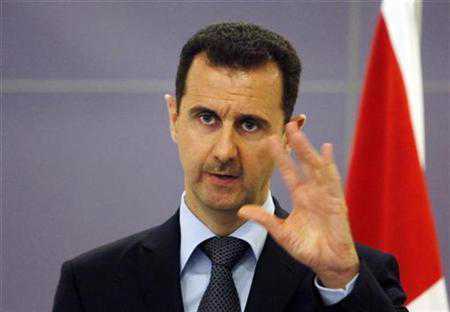
    BERLIN (Reuters) – Turkey is playing an increasingly important role for regional stability as Western powers distance themselves from the emerging nation, Syrian President Bashar al-Assad said in a newspaper on Tuesday.

    Asked if he felt Turkey was moving away from the West, NATO and the United States in favour of Muslim countries, Assad told Germany’s mass-selling Bild daily that he felt the responsibility lay elsewhere.

    “I’d say rather that the West is moving away from Turkey,” he said in an interview.

    Western powers are somewhat concerned that Turkey is growing closer to fellow Muslim neighbours like Iran and Syria, although Ankara sees its role as a stabilising force in the region.

    The country’s ruling AK party has its roots in Islam but sees itself as akin to Europe’s conservative Christian Democrats — liberal on economic policies but conservative on social issues. It won re-election in 2007 with the greatest margin of votes in four decades.

    Turkey has since boosted its ties and trade with Arab countries, lifting visa restrictions for citizens of several nations including Syria. Ankara aims to create a free trade zone without visa restrictions with Syria, Lebanon and Jordan.

    “I believe the role that Turkey has been playing in the region for the past three years is important,” Assad said. “It has brought a certain balance to this turbulent region.”

    Turning to Turkey’s stalled bid to join the European Union, Assad said the bloc should match its ideals of openness and cultural dialogue by admitting the country.

    “You must ask Turkey straightforwardly to join the EU, because an Islamic country is needed so the EU does not become a Christians-only club,” he said.

    Turkey, which straddles Asia and Europe, started formal membership negotiations with the EU in 2005, but doubts in some capitals about admitting a Muslim country of 74 million people have held Europe back from welcoming it.

    Turkey’s President Abdullah Gul, who has said he is frustrated by barriers to EU membership, told Reuters in an interview that Ankara was now building closer ties with Russia and Central Asian states where Turkish business is flourishing.

    (Writing by Brian Rohan)

    © Thomson Reuters 2010 All rights reserved

    via Syria’s Assad says West moving away from Turkey | World | Reuters.

  • Agriculture minister: Turkey’s eastern border becomes EU’s eastern border

    Agriculture minister: Turkey’s eastern border becomes EU’s eastern border

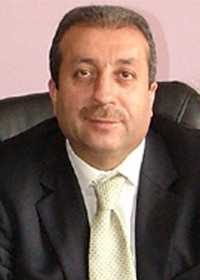
    Turkish Agriculture & Rural Affairs Minister Mehdi Eker has said that after the food chapter was opened in Turkey’s EU membership negotiations, Turkey’s eastern border had become EU’s eastern border in terms of quality, standard, food and hygiene, Anadolu Agency reported.

    It means that EU’s eastern border is now with Georgia, Armenia, Azerbaijan, Iran, Iraq and Syria, said Eker who spoke at a meeting on “public-non-governmental organizations cooperation in Turkey-EU membership process” on Tuesday.

    The meeting, which took place at Swiss Hotel in Ankara, focused on food safety, veterinary and phytosanitary policies.

    Eker recalled that “food safety, veterinary and phytosanitary policy” chapter was opened to negotiations on June 30, 2010 in Turkey’s EU membership talks, adding that the chapter covered a large area.

    Eker noted that the food issue concerned everybody including producers, consumers, manufacturers and industrialists, adding that the arrangement on food issue was in fact an arrangement on living standards.

    He said that the food standards in Turkey would be the same as in EU countries.

    Eker said that Veterinary Services, Phytosanitary, Food and Feed Law was adopted in Turkey, and it went into effect on December 13, 2010. He added that they needed cooperation of all parts of society, institutions and organizations in adopting secondary regulations in the process.

    via Agriculture minister: Turkey’s eastern border becomes EU’s eastern border | Economy & Business news |.

  • Turkey invites Greece to aerial war games for first time

    Turkey invites Greece to aerial war games for first time

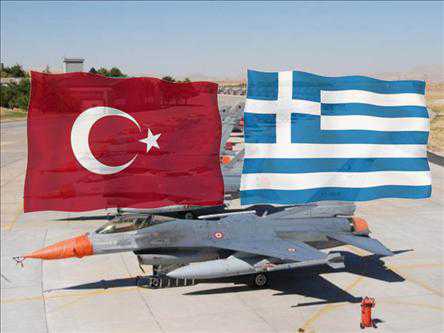
    Turkey has invited Greece to the Anatolian Eagle aerial war games set for next year in what is a first in its history, a report said.

    Tuesday, 21 December 2010 17:29

    World Bulletin / News Desk

    Turkey has invited Greece to the Anatolian Eagle aerial war games set for next year in what is a first in its history, a move that could potentially eradicate the persisting mistrust and confrontation the two countries face in a number of areas, a news report said on Tuesday.

    The report, which appeared in the Cumhuriyet daily, also said Greek authorities were considering accepting the Turkish invitation. The joint military drill would challenge the traditional orthodoxies of the region as the two countries face disagreements in the Aegean over territorial waters and in Cyprus, where the two countries back their communities on the long-divided island.

    The military exercises will be conducted on June 13-24 in the central Anatolian province of Konya. The Turkish Air Forces (THK) will celebrate its 100th anniversary next year and is thus planning to hold a series of events to mark the special anniversary. The exercise will include several other countries as well.

    China, as a non-NATO member, was invited in August of this year to participate in the Anatolian Eagle joint aerial military maneuvers. Although Greece has been a member of NATO since 1952, Turkey and Greece have been at odds due to the Cyprus problem and a dispute over maritime borders in the Aegean.

    Turkey also excluded Greece from a list of countries it considers to be a threat to its national security in a recently approved security document, but included Israel in its place.

    Israel and Greece, both Turkey’s rivals, conducted several joint air drills in the past year following a debacle in diplomatic and military relations between Turkey and the Jewish state, particularly following the May 31 flotilla raid in which Israeli commandoes stormed an aid boat and killed nine civilians.

    Last year the Turkish military cancelled the Anatolian Eagle’s international segment in a move widely seen as a way to exclude Israel from the exercise.

    via Turkey invites Greece to aerial war games for first time: Report [ WORLD BULLETIN- TURKEY NEWS, WORLD NEWS ].

  • High-Speed Trains in Russia and Turkey

    High-Speed Trains in Russia and Turkey

    Turkey got its first high-speed trains back in November 2007. It’s state railway company (TCDD) was the 8th in the world to operate high-speed trains (and the 6th in Europe). News now is that the country has just started testing out some bullet trains. Turkish Prime Minister Recep Tayyip Erdogan attended an inaugural run on December 17th. Testing of these bullet trains is expected to finish in the summer of 2011 and then they will be officially launched for use on Turkish high-speed rail lines.

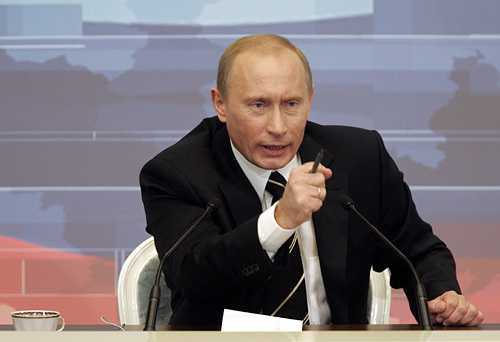
    Meanwhile, over in Russia, Prime Minister Vladimir Putin has just announced that Russia, which was recently selected to host the 2018 FIFA World Cup (beating out England, Spain/Portugal, and Holland/Belgium for this great opportunity), will have high-speed rail connecting all of its host cities by 2018.

    “It will be a powerful incentive for the development of high speed rail services in the European part of Russia,” Putin said.

    The host cities that high-speed trains will be running back and forth between are Moscow, Kazan, Samara, and Ulyanovsk.

    Putin made this announcement after trying out a new high-speed train from Finland to Russia. He and Finnish President Tarja Halonen got to go on “an inaugural journey on the French-made high speed Allegro train linking Helsinki to St. Petersburg” last week.

    It is great to see the world moving forward on this clean, fun transportation technology. High-speed rail uses uses 1/3 the energy of airplanes (per passenger) and 1/5 the energy of automobiles (per passenger).

    via High-Speed Trains in Russia and Turkey – EcoLocalizer.