Month: September 2010

  • Widespread Fraud Seen in Latest Afghan Elections

    Widespread Fraud Seen in Latest Afghan Elections

    By ALISSA J. RUBIN and CARLOTTA GALL
    Published: September 24, 2010

    KABUL, Afghanistan — Evidence is mounting that fraud in last weekend’s parliamentary election was so widespread that it could affect the results in a third of provinces, calling into question the credibility of a vote that was an important test of the American and Afghan effort to build a stable and legitimate government.

    Matiullah Achakzai/European Pressphoto Agency

    Ahmed Wali Karzai, the brother of Afghanistan’s president, Hamid Karzai, talked with tribal leaders in Kandahar on Sunday after the election, which brought attacks by the Taliban.

    Related

    • 3 Afghan Journalists, 2 of Whom Were Held by NATO Forces, Are Released (September 25, 2010)
    • Afghan Equality and Law, but With Strings Attached (September 25, 2010)


    Some 30,000 American soldiers are taking part in the Afghanistan surge. Here are the stories of the men and women of First Battalion, 87th Infantry.

    • Related Post

    The complaints to provincial election commissions have so far included video clips showing ballot stuffing; the strong-arming of election officials by candidates’ agents; and even the handcuffing and detention of election workers.

    In some places, election officials themselves are alleged to have carried out the fraud; in others, government employees did, witnesses said. One video showed election officials and a candidate’s representatives haggling over the price of votes.

    Many of the complaints have come from candidates and election officials, but were supported by Afghan and international election observers and diplomats. The fraud appeared to cut both for and against the government of President Hamid Karzai, much of it benefiting sometimes unsavory local power brokers.

    But in the important southern province of Kandahar, where election officials threw out 76 percent of the ballots in last year’s badly tainted presidential election, candidates accused the president’s influential half brother, Ahmed Wali Karzai, of drawing up a list of winners even before the Sept. 18 election for Parliament was carried out.

    “From an overall democracy-building perspective it does not look rosy,” said one diplomat who asked not to be identified because he was not authorized to speak to the news media.

    The widespread tampering and bare-knuckle tactics of some candidates raised serious questions about the effort to build a credible government that can draw the support of Afghans and the Obama administration and its NATO partners as they re-evaluate their commitment to the war.

    American and international diplomats kept their distance from the tide of candidate complaints this week, and NATO and American Embassy officials said little other than that the election was an Afghan process and that it was the Afghans who were responsible for its outcome.

    But a less than credible parliamentary election, following last year’s tarnished presidential vote, would place international forces in the increasingly awkward position of defending a government of waning legitimacy, and diplomats acknowledged that it could undermine efforts to persuade countries to maintain their financing and troop levels.

    The Election Complaints Commission said Thursday that it had received more than 3,000 complaints since last Saturday’s election. So far they have registered case files on nearly 1,800 of those complaints — 58 percent of which were considered serious enough to affect the outcome of the balloting. That may change in the course of investigations but that preliminary figure is high, election monitors said.

    The complaints are not evenly distributed and were markedly worse in 13 of Afghanistan’s 34 provinces. In those 13, at least half the complaints were deemed to be high priority — forecasting bitter fights over the outcome.

    In addition, complaints in four provinces — Kandahar, Nuristan, Zabul and Paktika — have yet to be categorized, but fraud is expected to be extensive and has already been widely reported.

    “That preliminary figure is bad,” said a knowledgeable international observer.

    Many analysts predicted there would be serious fraud in the unstable Pashtun belt, in the south of the country, an important base for both the Taliban insurgents and President Karzai. But serious complaints were also coming from provinces in the north and west.

    Interviews by The New York Times in 10 provinces and discussions with election monitors elsewhere found a resurgence of local strongmen with armed backers who coerced and threatened voters, and the involvement of local government employees in ballot stuffing.

    “In general the election has been a free-for-all, in that different power blocs were putting forward their candidates in different places,” said an international official who has been following the elections.

    “It’s not necessarily the pro-Karzai bloc that has done so well, it’s that the Parliament will be more dependent on big power brokers,” the official said, adding that they would be more likely to make deals with Mr. Karzai that did not necessarily serve the Afghan people.

    Lawmakers and opposition candidates openly accused the Karzais, and in particular Ahmed Wali Karzai, the most powerful official in Kandahar, of fixing the election for a list of favored candidates.

    “Of the list of 50, it is already decided who will come” to Parliament, said Izzatullah Wasefi, an opposition candidate from Kandahar.

    Nur ul-Haq Uloomi, a member of Parliament who won the largest vote from Kandahar in 2005, and has since become an outspoken critic of the corruption and inefficiency of the Karzai government, accused Ahmed Wali Karzai of manipulating the vote to deny him another term.

    He said he had sent one of his campaign managers to the chairman of the Independent Election Commission, Fazal Ahmad Manawi, in Kabul to warn of potential fraud before the election, but he was rebuffed.

    “Mr. Manawi said: ‘We can do nothing about Kandahar because he is the brother of Karzai,’ ” Mr. Uloomi recounted. “It is a kind of preparation for fraud.”

    Mr. Manawi was too busy to take individual calls last week, his spokesman said.

    In one Kandahar border district, Abdul Karim Achakzai, an independent candidate from Spinboldak, said three groups of election workers were handcuffed and detained for the entire day of the election by border police officers and prevented from conducting the vote in the Maruf district.

    In the evening the polling papers with the results were brought to them to sign, but they refused. They were freed the next day after promising not to complain, he said.

    Mr. Achakzai accused the provincial head of the border guards, Abdul Razziq, an ally of Ahmed Wali Karzai, of orchestrating the detention. Mr. Razziq, who has influence in several border districts, was also accused of ballot-stuffing and intimidation in favor of President Karzai in the 2009 election, according to election observers.

    A cellphone video from an adjoining district showed men ticking dozens of ballots in favor of certain candidates. The video, which was recorded surreptitiously by a candidate’s agent, also captured a candidate’s representatives and election officials inside a polling station haggling over the price of votes.

    “You will get as many votes as you asked, just pay 72,000 Afghanis ($1,500),” said the election official, who identified himself as the head of the polling center.

    In the northern province of Takhar, several witnesses described gunmen threatening election workers and dragging voters to polling stations to vote for their candidate, Adbul Baqi. The abuse happened in Farkhar district, according to one witness, Hassibullah, 35.

    “Mr. Baqi and his gunmen were slapping and pulling people to the ballot boxes to vote for him,” he said. “He is a very cruel man.” After that, he added, they went to the women’s section of the polling station and forced the female employees of the Independent Election Commission to put more than 200 votes in their ballot box.

    Abdul Haq, 50, another voter in Farkhar district, said that when he asked the security guards to stop beating people, one of them attacked him with a knife. “The candidate himself is a good man and people do like him, but his dogs around him are not good,” he said.

    Mr. Baqi could not be reach by phone for comment. The Independent Election Commission official for the district, Engineer Kebir, said that the supporters of the candidate “did make some disturbances and violent acts and were threatening each other.” But, he insisted, “They did not disrupt the election process.”

    Alissa J. Rubin reported from Kabul, and Carlotta Gall from Kandahar, Afghanistan. Sharifullah Sahak contributed reporting from Kabul, and an Afghan employee of The New York Times from Kunduz.
    A version of this article appeared in print on September 25, 2010, on page A1 of the New York edition.

  • Turkish president defends discussions with Iran

    Turkish president defends discussions with Iran

    By Daniel Bases

    NEW YORK | Fri Sep 24, 2010

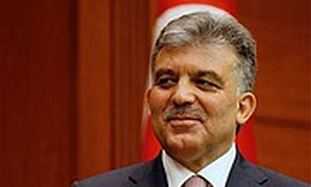
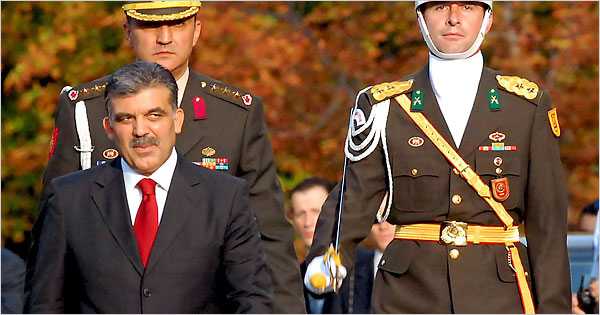
    (Reuters) – Turkish President Abdullah Gul said on Friday Turkey’s direct relations with Iran remain the best way to achieve a diplomatic solution for keeping Tehran from acquiring nuclear weapons.

    Turkey voted against the latest round of U.N. sanctions aimed at putting pressure on Tehran, which says its nuclear program is for peaceful purposes only.

    The United States, a key Turkish ally and fellow member of NATO, suspects Iran seeks to develop atomic weapons and is leading the effort to thwart its nuclear ambitions.

    Gul, speaking to the Council on Foreign Relations while attending the U.N. General Assembly meeting, addressed criticism that Turkey was shifting its orientation away from the West by engaging with Iran.

    “If you look at all our allies, which leaders among those countries have the ability to be able to have direct discussions with the Iranian leaders, including the supreme religious leader?” Gul asked.

    “There isn’t anyone,” he said, adding its engagement is for moving the process forward and should not be misunderstood.

    “As was the case in the past, Turkey is and will remain a strong committed and reliable ally of the United States,” he said.

    Gul once again criticized Israel’s actions in its deadly raid on a Gaza-bound aid flotilla in May. The incident has damaged relations between the two nations.

    “Having said that, I must also emphasize that Turkey and Israel are friends. There are strong, centuries-old ties of friendship between our peoples.”

    On Turkey’s European Union accession talks, Gul said the country remains committed to completing the process despite slow progress that he blamed on Europe.

    “Europe today lacks a strategic vision, a strategic perspective of what it wants to be 50-60 years down the road,” he said.

    (Editing by Xavier Briand)

    Reuters

  • Turkish classical pianist wins top prize in Germany

    Turkish classical pianist wins top prize in Germany

    Turkish pianist Elif Şahin

    German-based young Turkish classical pianist Elif Şahin and her counterpart won the top prize at this year’s Hugo Wolf International Competition for Lied in Germany, news agencies reported this week.

    The duo made up of Şahin and soprano Annelie Sophie Müller came in first among the 12 finalists in the 2010 competition’s finals, held from Sept. 14 to 19 at the State College of Music and Performing Arts in Stuttgart.

    Şahin and Müller, who are both studying at the Stuttgart State College of Music, were selected for the finals from among 114 entrants in this year’s competition, whose jury was chaired by famous German mezzo-soprano Brigitte Fassbaender, the Anatolia news agency reported.

    Austrian soprano Birgid Steinberger, Dutch bass-baritone Robert Holl, Swiss baritone Kurt Widmer and pianists Wolfram Rieger from Germany and Graham Johnson from Britain were the other members of the judging panel.

    The Şahin-Muller pair won a cash prize of 20,000 euros and was invited to give a concert at the Stuttgart-based International Hugo Wolf Academy, which is organizing the competition.

    Held every three years, the Hugo Wolf International Competition for the Art of Lied is dedicated to a different composer in each edition. This year’s competition was dedicated to Robert Schumann, Hugo Wolf and Gustav Mahler, all of whom have an anniversary in 2010.

    The competition is aimed at “discovering and promoting young Lied artists — singers and pianists — as well as arousing the interest of a new audience into Lied as an art form,” as the organizers put it on the academy’s website, www.hugo-wolf-akademie.de.

    , 24 September 2010

  • Turkish government condemns alleged conservative Muslim attack on Istanbul art gallery

    Turkish government condemns alleged conservative Muslim attack on Istanbul art gallery

    By The Associated Press (CP)

    ISTANBUL — Turkey’s Islamic-rooted government has condemned an attack allegedly by conservative Muslims on people drinking cocktails outside an Istanbul art gallery, calling for understanding and respect for one another’s way of life in this largely Muslim but secular country.

    Culture Minister Ertugrul Gunay said Thursday his government will seek the heaviest punishment for the culprits who beat and slightly injured five guests drinking in the street outside the gallery in Istanbul’s Tophane district on Tuesday evening. Alcohol is forbidden in Islam.

    Gunay called on the gallery to respect family values of the neighbourhood while also urging respect for different lifestyles and their right to be and work in that area.

    Turkey is aspiring to become the first Muslim member of the European Union.

    , 24 sept 2010

  • Turkish president demands apology for flotilla at UN

    Turkish president demands apology for flotilla at UN

    By JORDANA HORN

    Gul calls ‘Marmara’ raid an “unacceptable act in international law,”; calls on Israel to put an end to the “humanitarian tragedy in Gaza.”

    NEW YORK – Addressing the General Assembly at the United Nations on Thursday, Turkish President Abdullah Gul referenced the May 31 Gaza flotilla incident and demanded both a formal apology from Israel as well as compensation for the victims.

    Calling the deaths on the Mavi Marmara an “unacceptable act in international law,” Gul said Turkey is owed “a formal apology and compensation for the aggrieved families of the victims and the injured people” by Israel.

    RELATED:
    Turkish president cancels New York meeting with Peres
    Gul: Israel unable to act rationally

    Gul referenced the flotilla incident in part of his remarks focusing on the political component of the General Assembly’s agenda, noting that there is “no shortage of regional issues” to be discussed.

    “Peace in the Middle East holds the key to a peaceful and stable future in the world,” Gul said, addressing the body in English.  “Unfortunately, the absence of peace there has had serious and adverse consequences for the rest of the world.”

    It would be difficult to make progress toward permanent peace, Gul said, “unless we put an end to the humanitarian tragedy in Gaza.”

    Gul attached significance to UN Secretary General Ban Ki-Moon’s Panel of Inquiry into the May 31 flotilla incident, as well as the fact finding mission of the Geneva-based Human Rights Council.

    Gul said he is “pleased” with the Human Rights Council report, which he said offered “a solid legal framework for establishing the facts about the incident.” Many NGOs, including UN Watch and NGO Monitor, have deemed the work of the Human Rights Council panel irreparably biased against Israel.

    Referencing Iran very briefly, Gul said there is “no alternative to diplomacy” in ensuring Iran’s conformity to International  Atomic Energy Agency norms.

    https://www.jpost.com/International/Turkish-president-demands-apology-for-flotilla-at-UN, 23.09.2010

  • Ahmadinejad tells U.N. most blame U.S. government for 9/11

    Ahmadinejad tells U.N. most blame U.S. government for 9/11

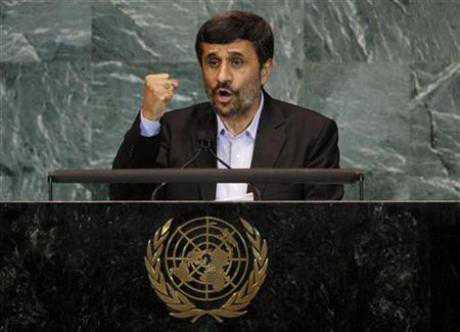
    Iran's President Mahmoud Ahmadinejad addresses the 65th United Nations General Assembly at U.N. headquarters in New York, September 23, 2010. Credit: Reuters/Mike Segar

    By Louis Charbonneau

    (Reuters) – Iranian President Mahmoud Ahmadinejad told the United Nations on Thursday most people believe the U.S. government was behind the attacks of September 11, 2001, prompting the U.S. and European delegations to leave the hall in protest.

    Addressing the General Assembly, he said it was mostly U.S. government officials and statesmen who believed al Qaeda Islamist militants carried out the suicide hijacking attacks that brought down New York’s World Trade Center — less than 4 miles from where the Iranian president was speaking.

    Another theory, he said, was “that some segments within the U.S. government orchestrated the attack to reverse the declining American economy, and its grips on the Middle East, in order to save the Zionist regime.” Ahmadinejad usually refers to Israel as the “Zionist regime.”

    “The majority of the American people as well as most nations and politicians around the world agree with this view,” Ahmadinejad told the 192-nation assembly, calling on the United Nations to establish “an independent fact-finding group” to look into the events of September 11.

    As in past years, the U.S. delegation walked out during Ahmadinejad’s speech. It was joined by all 27 European Union delegations and several other countries.

    Mark Kornblau, spokesman for the U.S. mission to the United Nations, said Ahmadinejad chose “to spout vile conspiracy theories and anti-Semitic slurs that are as abhorrent and delusional as they are predictable.”

    White House spokesman Bill Burton said President Barack Obama thought the comments “utterly outrageous and offensive — especially in the city where the 9/11 attacks occurred.”

    EU foreign policy chief Catherine Ashton said the remarks were “outrageous and unacceptable.”

    ‘COVERED UP’

    Ahmadinejad said some evidence that could support alternative theories had been “covered up” — passports located in the rubble and a video of an unknown individual who had been “involved in oil deals with some American officials.”

    As he had in past years, the Iranian president used the General Assembly podium to attack Iran’s other archfoe, Israel, and to defend the right of his country to a nuclear program that Western powers fear is aimed at developing arms.

    “This regime (Israel), which enjoys the absolute support of some Western countries, regularly threatens the countries in the region and continues publicly announced assassination of Palestinian figures and others, while Palestinian defenders … are labeled as terrorists and anti-Semites,” he said.

    “All values, even the freedom of expression, in Europe and the United States are being sacrificed at the altar of Zionism,” Ahmadinejad said.

    The Iranian president previously raised doubts about the Holocaust of the Jews in World War Two and said Israel had no right to exist.

    Tehran has been hit with four rounds of U.N. sanctions for refusing to halt its nuclear enrichment program. Obama earlier told the assembly the door to diplomacy was still open for Iran, but it needed to prove its atomic program is peaceful, as it says it is.

    , 23 September 2010