Month: September 2010

  • October issue of Global Finance | Durmus Yilmaz is one of the best central banker in the world

    October issue of Global Finance | Durmus Yilmaz is one of the best central banker in the world

    Global Finance Magazine names the World's Top Central Bankers 2010
    
    New York, September 9, 2010 - Global Finance magazine has named the
    heads of the Central Banks of six countries -- plus the European
    Central Bank president -- as the World's Best Central Bankers over the
    past year.
    
    The "Central Banker Report Card" feature, published annually by Global
    Finance since 1994, grades Central Bank Governors of 30 key countries
    (and the ECB) on an "A" to "F" scale for success in areas such as
    inflation control, economic growth goals, currency stability and
    interest rate management. ("A" represents an excellent performance
    down through "F" for outright failure.)
    
    Subjective criteria also apply. Says Global Finance Publisher Joseph
    Giarraputo, "During one of the toughest years on record, the World's
    Central Bankers were tested as never before. Every year, we try to
    assess the determination of Central Bankers to stand up to political
    interference and their efforts at forcing their governments to spend
    less, and to open their economies to foreign investment and financial
    services.
    
    For editorial information please contact: Dan Keeler, Editor, email:
    [email protected]
    
    Those scoring in the "A" category in the report published in the
    October issue of Global Finance are:
    
    Country Central Bank Governors Grade 2010
    European Union Jean-Claude Trichet A
    Australia Glenn Stevens A
    Israel Stanley Fischer A
    Malaysia Zeti Akhtar Aziz A
    South Korea Lee Seongtae A
    Taiwan Fai-Nan Perng A
    Turkey Durmus Yilmaz A
    
    CENTRAL BANKER REPORT CARDS 2010
    
    THE AMERICAS  Country
    Central Bank Governors
    Grade 2010Grade 2009
    
    Argentina  Mercedes Marcó del Pont D  N/A
    Brazil  Henrique de Campos MeirellesB+ B+
    Canada  Mark Carney B+ B
    Chile José De Gregorio B B
    Mexico Agustin Carstens B N/A
    United States Ben Bernanke C C
    
    EUROPE Country Central Bank Governors
    Grade 2010 Grade 2009
    Czech Republic  Miroslav SingerToo early to say N/A
    European Union Jean-Claude Trichet A A
    Hungary András Simor C B
    Norway Svein Gjedrem B C-
    Poland Marek Belka Too early to say N/A
    Russia Sergei M. Ignatiev B C-
    Sweden Stefan Ingves B C-
    Switzerland Philippe Hildebrand B- N/A
    Turkey Durmus Yilmaz A B
    United Kingdom Mervyn King B B
    
    ASIA
     Country Central Bank Governors
    Grade 2010 Grade 2009
    Australia Glenn StevensA A
    China Zhou Xiaochuan C C
    India Duvvuri Subbarao C B
    Indonesia Darmin Nasution D N/A
    Japan Masaaki Shirakawa C B-
    Malaysia Zeti Akhtar Aziz A A
    New Zealand Alan Bollard B C
    Philippines Amando M. Tetangco Jr. B B
    Singapore Heng Swee Keat B B
    South Korea Kim Choong Soo Too early to say N/A
    Taiwan Fai-Nan Perng A A
    Thailand Tarisa Watanagase B C
    
    AFRICA & THE MIDDLE EAST Country Central Bank Governors
    Grade 2010 Grade 2009
    Israel Stanley Fischer AA
    
    Saudi Arabia Muhammad Al-Jasser B C
    South Africa Gill Marcus B N/A


  • Jihad is not a crime

    Jihad is not a crime

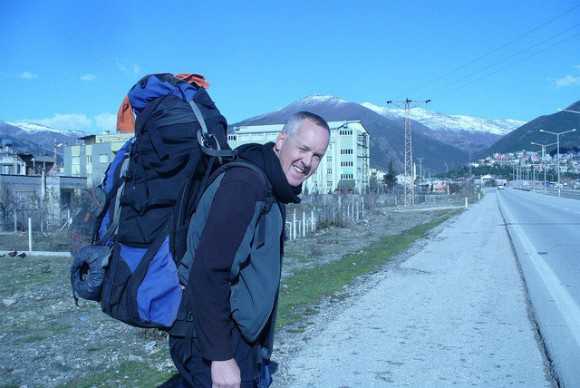
    Before I lived in Turkey, I thought the word “jihad” was a word of hate and violence. I associated it with suicide bombers and crazed fanatics who flew airplanes into buildings.

    But then I went to Turkey. And I started meeting people named Jihad!

    I remember this one day in particular, when I met my first Jihad (actually, his name was “Cihat”, the Turkish spelling of “Jihad”).

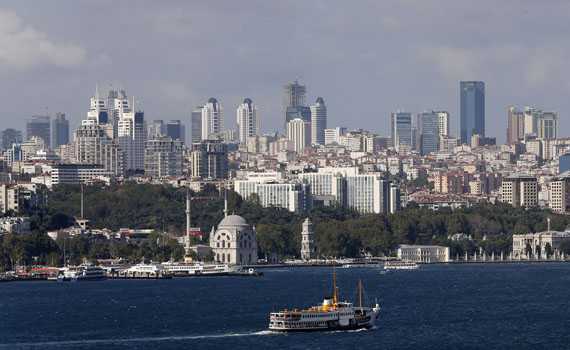
    My wife and I went to this beautiful tea garden. It was up on this high bluff with an incredible view of the Bosphorus Straits and the blue Marmara Sea stretching all the way to the horizon.

    We met up with my wife’s cousin, his wife, and their kids. And this guy, this cousin, his name was Cihat!

    But this guy with the radical, violent name, he was just a big teddy bear. I mean, you could see it in his eyes, in his face, in the way he looked at his wife and kids. You could even hear it in the way he talked to me. He was one the gentlest souls I had ever met.

    When we parted ways that day, I was feeling a little confused, wondering, my god, how can this gentle teddy bear of a man have a crazy, violent, hateful name like Cihat? What on earth were his parents thinking? Did they even know what that word meant?

    Turns out I was the one who didn’t know what that word meant.

    Because in the months that followed, I met tons of Cihats in Turkey. It turns out Cihat is actually a pretty common guy’s name.

    And I figured, the parents must know something I don’t. I mean, it doesn’t matter where in the world you are, parents love their children. No parents in the world are going to give their kid a hateful, violent name.

    So I figured I would look into what this word meant, jihad. And here’s what I found…

    The word “jihad” has multiple meanings. And yes, “violent war against an external infidel” is one of them. But an equally valid, equally accepted meaning of “jihad” is “war against the infidel within the self”. The phrase “I am conducting a jihad” means, “I am rooting out sin within MY OWN heart”!

    Now, this is not some niche, alternative meaning bandied about by a few academic philosophers.

    I didn’t go to some obscure, Middle East-loving, crazy peacenik source to find this definition. I just went to Wikipedia. I went to Wikipedia and typed in “jihad”. And then just to verify what I learned, I went to a couple other mainstream American websites like Yahoo, and Ask.com.

    Turns out this other meaning, “purging your own heart of sin”, is a mainstream, widely-accepted meaning. In fact, it is the majority meaning of this word. Most of the people who use this word mean “purge the infidel within your own heart”.

    Now, I’m not saying that suicide bombers are peace-loving, gentle souls. I am saying that for every crazed lunatic, there are a hundred gentle, loving souls who say jihad is about purifying your own heart. They are saying never mind the non-believers, our hands are full just living God’s words in our own hearts.

    This theme is common to pretty much every religion around the world. For every Christian who thinks Christianity is about grabbing a sword and slaying the heathens in the name of the Lord, there are a hundred who think Christianity is about saying, “Never mind the heathens, my job is to purify my own heart.”

    It means one of the primary meanings of Jihad is very similar to what Gandhi said: “Be the change you want to see in the world”. And Gandhi, he was a gentle Indian guy who walked around in a white robe talking about peace. Everybody loves Gandhi. And yet he was basically telling people, “Yeah man, let’s all do some jihad!”

    So it turns out that our conventional-wisdom, popular understanding of the word “jihad” is ridiculously myopic. It means that when some crazy American woman goes off the deep end and moves to Pakistan, and we call her “Jihad Jane”, we’re just highlighting our own ignorance.

    And if we’re myopic about that, what else are we myopic about?

    When we meet someone else, someone from another religion, or another country, or another job or social class, it is our duty to humanity to remind ourselves that our understanding of that person is probably incorrect. And it is our duty to the world to try to overcome that incorrectness.

    When we allow an incorrect understanding to drive our actions, those actions will be misguided. And even if we do reach our goal, we will probably find out, too late, that we have chosen the wrong one.

    Matt Krause

    Originally published at mattkrause.com on 18 june 2010
  • Global Finance Magazine names the World’s Top Central Bankers 2010

    Global Finance Magazine names the World’s Top Central Bankers 2010

    New York, September 9, 2010 – Global Finance magazine has named the
    heads of the Central Banks of six countries — plus the European
    Central Bank president — as the World’s Best Central Bankers over the
    past year.

    The “Central Banker Report Card” feature, published annually by Global
    Finance since 1994, grades Central Bank Governors of 30 key countries
    (and the ECB) on an “A” to “F” scale for success in areas such as
    inflation control, economic growth goals, currency stability and
    interest rate management. (“A” represents an excellent performance
    down through “F” for outright failure.)

    Subjective criteria also apply. Says Global Finance Publisher Joseph
    Giarraputo, “During one of the toughest years on record, the World’s
    Central Bankers were tested as never before. Every year, we try to
    assess the determination of Central Bankers to stand up to political
    interference and their efforts at forcing their governments to spend
    less, and to open their economies to foreign investment and financial
    services.

    For editorial information please contact:  Dan Keeler, Editor, email:
    [email protected]

    Those scoring in the “A” category in the report published in the
    October issue of Global Finance are:

    Country Central Bank Governors Grade 2010
    European Union Jean-Claude Trichet A
    Australia Glenn Stevens A
    Israel Stanley Fischer A
    Malaysia Zeti Akhtar Aziz A
    South Korea Lee Seongtae A
    Taiwan Fai-Nan Perng A
    Turkey Durmus Yilmaz A

    CENTRAL BANKER REPORT CARDS 2010

    THE AMERICAS  Country
    Central Bank Governors
    Grade 2010Grade 2009

    Argentina  Mercedes Marcó del Pont D  N/A
    Brazil  Henrique de Campos MeirellesB+ B+
    Canada  Mark Carney B+ B
    Chile José De Gregorio B B
    Mexico Agustin Carstens B N/A
    United States Ben Bernanke C C

    EUROPE Country Central Bank Governors
    Grade 2010 Grade 2009
    Czech Republic  Miroslav SingerToo early to say N/A
    European Union Jean-Claude Trichet A A
    Hungary András Simor C B
    Norway Svein Gjedrem B C-
    Poland Marek Belka Too early to say N/A
    Russia Sergei M. Ignatiev B C-
    Sweden Stefan Ingves B C-
    Switzerland Philippe Hildebrand B- N/A
    Turkey Durmus Yilmaz A B
    United Kingdom Mervyn King B B

    ASIA
    Country Central Bank Governors
    Grade 2010 Grade 2009
    Australia Glenn StevensA A
    China Zhou Xiaochuan C C
    India Duvvuri Subbarao C B
    Indonesia Darmin Nasution D N/A
    Japan Masaaki Shirakawa C B-
    Malaysia Zeti Akhtar Aziz A A
    New Zealand Alan Bollard B C
    Philippines Amando M. Tetangco Jr. B B
    Singapore Heng Swee Keat B B
    South Korea Kim Choong Soo Too early to say N/A
    Taiwan Fai-Nan Perng A A
    Thailand Tarisa Watanagase B C

    AFRICA & THE MIDDLE EAST Country Central Bank Governors
    Grade 2010 Grade 2009
    Israel Stanley Fischer AA

    Saudi Arabia Muhammad Al-Jasser B C
    South Africa Gill Marcus B N/A

    gfmag.com, September 9, 2010

  • Stop Racism against Turks

    Stop Racism against Turks

    STOP BLATANT RELIGIOUS RACISM AGAINST THE TURKS

    POCKET GUIDE TO TRUTH ON ARMENIAN CLAIMS

    Sources of information on alleged Armenian claims of Genocide against The Turks.

    In order to establish truth and to confront racist bias against Turks, read below the works and commentaries of scholars and researchers,

    Click here to download the pocket guide

  • Turkey’s Schizophrenia

    Turkey’s Schizophrenia

    Shai Baitel

    Shai Baitel

    Middle East expert in political and international affairs

    Posted: September 27, 2010 05:57 PM

    There is no way that Western leaders were not troubled by the news coming out of Turkey that Ankara not only intends to triple trade volumes with Iran in the next five years, but also that Iran’s President Mahmoud Ahmadinejad had made a deal with Turkish Prime Minister Recept Tayyip Erdogan to donate $25 million to his ruling Justice and Development Party to support his next election campaign.

    This comes on the heels of Erdogan’s constitutional reform referendum victory in which a majority of Turks voted for his suggested strengthening of government power at the expense of the judiciary and the army, traditionally strong defenders of Turkey’s secular constitution.

    These developments are likely to cause consternation. After all, didn’t the United Nations Security Council (UNSC) — of which Turkey is a non-permanent member — enact a new round of sanctions on Iran in an attempt to stop its drive to achieve nuclear weapons capability? While, admittedly, Erdogan promised to adhere to the UNSC sanction, he also made clear he would not go along with unilateral U.S. or European Union (EU) sanction measures. Instead of joining to isolate Iran, Turkey deepens its relations with Tehran. And its Arab neighbors.

    And one can be forgiven for being confused. Is this the Turkey, the NATO member, the EU membership candidate, the country that strives to improve its human rights record? Or has Turkey changed its goals? In short: Turkey is at crossroads and it is not clear which path the country will take. Turkey is stronger than ever and there is sense of urge to be regarded as a power like the Ottoman Empire was in its day, ruling the region, demanding respect and wielding influence far beyond her borders. There are many facets to this trend and naming a few illustrates the problem of Turkey’s schizophrenia.

    Turkey is seriously upset at a perceived slight by the EU, which seems to waver on its intention to make the country a member state. Negotiations have been dragging on and the political atmosphere is less and less favorable. Turkey implemented far-reaching reforms to meet EU rules and regulations but now feels it might have to look for friends and economic opportunities elsewhere. Ankara does not need to look far. Warming relations and increased influence with the neighbors Syria and Iran are most obvious indicators of Turkey’s new political and economic prowess. Is it justified to think of Turkey as drifting away from the West and even becoming part of the axis of evil just yet? The jury is still out.

    Moreover, there is a growing influence of Islam in many spheres of Turkish society, a trend that might eventually endanger Mustafa Kemal Ataturk’s vision of a secular society. In effect, Turkey’s society is split between those who, like Erdogan, encourage and welcome this trend, and those who want to preserve its secular character.

    Turkey’s now fraught relationship with Israel is no less contradictory and Turkey’s posturing reflects this awakening of her growing self-confidence and sense of importance. And the it stands for Turkey’s incompatible, diverging goals. Turkey scores points in the region with repeated broadcasts of television series that depict Israel and Israelis negatively. Israel’s outrage over one such TV series was one element of what would become the next crisis with Israel, which, inevitably, increased Turkey’s standing in the Muslim/Arab world. Israeli Deputy Foreign Minister Danny Ayalon had summoned the Turkish Ambassador to Israel, Ahmet Oguz Celikkol, to complain about a Turkish TV series that had portrayed Israeli soldiers as baby killers. In a symbolic humiliation, the Ambassador was seated on a lower sofa, at a table only adorned with an Israeli flag, with the Turkish flag missing. The Ambassador had been summoned The Turkish Ambassador was recalled to Turkey in protest but eventually returned.

    Popular anti-Israel sentiments in Turkey and the wider Middle East where also whipped up when, at the World Economic Forum in Davos in January 2009, Erdogan stormed off a stage after a heated debate on the Gaza War with Israel’s President Shimon Peres. Not surprisingly, the Turkish Islamic newspaper Vakit, welcomed Erdogan’s outburst as an “Ottoman slap in the face of Israel.

    The Turkish-Israeli relations reached its nadir, however, when in May 2010, Israel naval commandos stormed a flotilla of ships carrying aid and activists to the Gaza Strip, killing nine passengers in a botched raid after being attacked.

    It is odd, then, that Turkey styles herself as a needed, important, and relevant player in the Middle East peace process. Turkey as a mediator between Syrian and Israel? There was a time when a case could be made for this but Turkey’s lashing out at Israel begs the question how such an offer of mediation can be seriously considered, let alone be accepted. While Israel was looking for every possible way to calm the storm, an opportunity for a clearing off the air on the highest level presented itself at the 2010 United Nations General Assembly in New York. A meeting between Peres, and Turkey’s President Abdullah Gul was canceled — by Turkey. After demanding an unequivocal apology by Israel over the flotilla dead, regardless of who, in the end, was responsible for the escalation.

    Let’s get this straight: One pal teases another, punches him, kicks him at every possible occasion. The taunted one sits tights and endures but eventually rises in self-defense. Then the teaser demands an apology. What does Turkey hope to achieve? We know Turkey’s ‘means’ but everyone is puzzled as to what the ‘end’ might be. It is one thing if Turkey is changing. The unanswered question is if Turkey wants to maintain a mutually beneficial relationship with the West and stay committed to its democratic friends and allies. The EU and the United States are holding their breath to find out. Right now it appears that Turkey is sending mixed signals as her government, after bashing Israel, is basking in the spotlight and taking advantage of the warm embrace by its own Muslim supporters and by the Arab/Muslim world. Somebody should tell Turkey that she can’t have it both ways. The aspirations of being an EU member and being Iran’s best friend just don’t go well together. Turkey needs a shrink.

  • Pres. Obama Can Now Replace Bryza  With a New Nominee as Envoy to Baku

    Pres. Obama Can Now Replace Bryza With a New Nominee as Envoy to Baku

    Publisher, The California Courier

    A funny thing happened to Matthew Bryza on the way to Baku! He had rented out his Washington home and packed up his suitcase, after being assured by top White House and State Department officials that he was going to be the next U.S. Ambassador to Azerbaijan. He could already smell the oil and gas in the air!

    In his excitement, Bryza seemed to have forgotten that his irresponsible statements and actions, during his stunt as U.S. negotiator on the Karabagh (Artsakh) conflict, had antagonized some of his Washington colleagues and others in the Caucasus.

    More than a year ago, when the U.S. Ambassador’s post in Baku became vacant, Bryza brashly told everyone in Washington that he wanted to be, nay, he was going to be, the next Ambassador to Azerbaijan! He immediately hit a snag, when Pres. Aliyev informed the White House that he was neither pleased with Obama administration’s policies in the Caucuses nor with its self-proclaimed Wunderkind (boy wonder)!

    Azerbaijan was unhappy because: 1) the United States and Bryza were pushing Turkey to open its border with Armenia, in the absence of any progress on the Artsakh conflict; 2) Congress had allocated another $10 million to Artsakh, despite strong objections from Baku; and 3) Armenia’s President was, while Pres. Aliyev was not, invited to the 47-nation Nuclear Security Summit in Washington.

    Bryza also had opponents within the Obama administration. After months of internal bickering among Washington officials over Bryza’s nomination, Pres. Obama finally submitted his name in May to the Senate as the next envoy to Azerbaijan. Shortly thereafter, Pres. Obama dispatched two high-ranking cabinet officials, Defense Secretary Robert Gates and Secretary of State Hillary Clinton to Baku in order to appease Pres. Aliyev and give him the necessary assurances on Bryza.

    During Bryza’s Foreign Relations Committee hearing in July, several Senators asked him pointed questions regarding his statements and activities while serving as Artsakh negotiator. They also raised serious concerns about possible conflicts of interest involving his wife and gifts the couple may have received for their wedding from Azeri government officials. Senators Barbara Boxer, Robert Menendez, Russ Feingold, Committee chair John Kerry, and Majority Leader Harry Reid were not satisfied with Bryza’s incomplete and evasive answers, despite repeated follow-up written questions. This did not bode well for his ambassadorial ambitions, as all five Senators are Democrats who would normally back a Democratic President’s nominee.

    In early August, frustrated by Bryza’s unresponsiveness, Sen. Boxer asked the Foreign Relations Committee to postpone the vote on his nomination. After a delay of six weeks, when the majority of Committee members voted on Sept. 21 to confirm Bryza, Senators Boxer and Menendez had no choice but to place a “hold,” in order to block the ratification of his nomination by the full Senate. Indicating serious concerns with the qualifications of this controversial nominee, the two Senators resorted to the rare practice of placing a double “hold,” freezing any further Senate consideration on his nomination until next January at the latest, when the new Senate starts its session. Pres. Obama has to decide then whether to resubmit his name or propose a new nominee.

    Until January, the President has the unlikely option of making a “recess appointment.” He could appoint Bryza as Ambassador to Azerbaijan without Senate confirmation, while the Senate is in recess. The disadvantages of such a rare move are twofold: 1) Bryza would be handicapped in carrying out his diplomatic duties, as he would not enjoy the confidence of the U.S. Senate; and 2) the President would antagonize the Senators by depriving them of their constitutional mandate of “advise and consent.”

    The ideal option for Pres. Obama would be to abandon Bryza’s flawed candidacy and name another less controversial nominee who could be confirmed by the Senate. Such a move would dispatch quickly the next U.S. Ambassador to Azerbaijan, after a 15-month absence. In contrast, renominating Bryza in January would delay the posting of such an Ambassador for several more months!

    Seeing its Wunderkind in serious trouble, the Wall Street Journal (WSJ), bastion of the neo-cons and oil and gas lobbies, published a vicious editorial against Sen. Boxer and the Armenian National Committee of America (ANCA) the day before the Committee vote, attempting to intimidate Bryza’s opponents. After the “hold,” a nastier editorial was published by the Washington Post against Senators Boxer and Menendez, and ANCA.

    These vicious attacks had the exact opposite effect — they inadvertently helped promote the political clout of ANCA and the Armenian-American community in Washington!