Month: June 2010

  • The Death of Turkey’s Democracy

    The Death of Turkey’s Democracy

    “I no longer recognize the country where I was raised.”

    • Article
    • Comments (18)
    more in Opinion »

    BY DANI RODRIK

    I no longer recognize Turkey, the country where I was raised and spend most of my time when I am not teaching in the U.S.

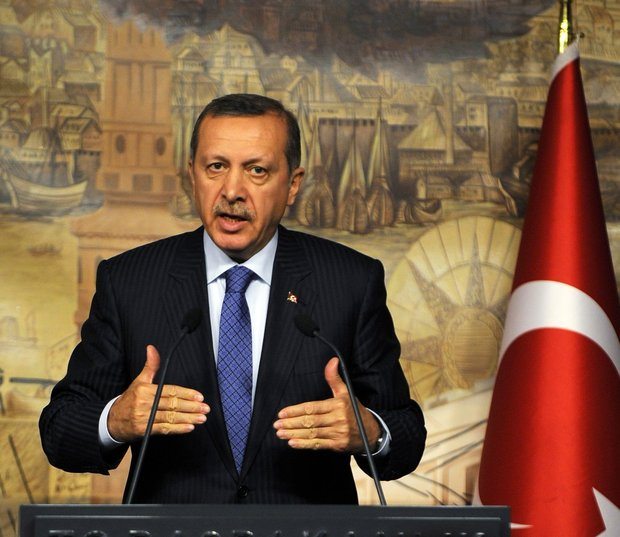
    It wasn’t so long ago that the country seemed to be taking significant strides in the direction of human rights and democracy. During its first term in government, between 2002 and 2007, Prime Minister Recep Tayyip Erdogan’s Justice and Development Party (AKP) worked hard to bring the country into the European Union, to reform its legal regime, and to relax restrictions on Kurds.

    But more recently, the same government has been responsible for a politics …

    ====================== COMMENTS  =======================

    • i want to correct something:
      below the picture in the article written that AKP supporters holding the banner. it’s a clear lie. the pictures on the banner belong to some people who were put in jail because of the mentioned court cases, which are supported by government. and the people who are against these series of cases claim that erdogan is manipulated by the usa, and this dependence on usa causes turkey loose.
      supporters of erdogan are about 30-40 percent. and the total percentage of the islamists in turkey is at most 50%. but the percentage of dislike against usa is about 80%. it’s obvious that turkish people feel some problem with usa politics.
      maybe some people should give up trying to relate dislike against usa to non-democracy. even the lie i mentioned above in this article shows that some powers in usa can give up ethics and can easily slander others for some interests. maybe this can explain the 80%.
      finally, it’s weird that in such a big newspaper, writers can lie publicly, if they want to.

      2 Recommendations

        • Catherine Dempsey replied:
      • most of the turkish people believe that they will not accept turkey into the union. it was the same before the developments too. and many people don’t want to be included because of the attitude of the eu. although i don’t mind if they accept us or not, like many others, i support advancements in areas like human rights, in particular rights about ideological issues. it seems there is some progress, but relatively slow. but certainly, it does not go backwards, no matter what some people claim.


    • Turkey refuses to grant independence to the Kurdish people. Turkish war planes cross over the border to northern Iraq and bomb Kurdish villages practically every day, killing an maiming thousands of people whose only desire is to have their land, Kurdistan, gain independence.
      Turkey, cannot with a clear conscience, support the Palestinian people and at the same time so brutally refuse to recognize the legitimate rights of the Kurdish people.
      We cannot, we must not forget the genocide committed by Turkey against the Armenian people. Turkey s testing us all now. If we sit idle, Turkey will destroy the Kurds too.

      Recommend

  • Poll Shows Muslims Leery of U.S.

    Poll Shows Muslims Leery of U.S.

    smaller

    By LAURA STEVENS

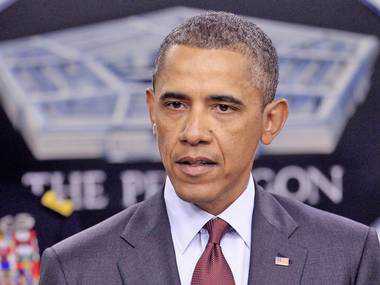
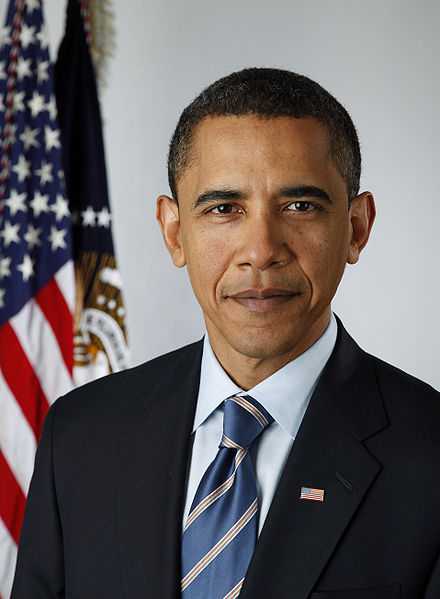
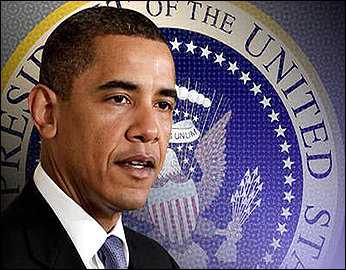
    BERLIN—President Barack Obama and the U.S. are increasingly unpopular in the Muslim world, according to a 22-nation survey released Thursday.

    The Pew Research Center’s Global Attitudes Project found that Muslim nations hold an overwhelmingly negative view of the U.S., with only 17% of those surveyed in Turkey, Pakistan and Egypt expressing a positive view—a five-year low for the Egyptians.

    Mr. Obama has also lost support, with every single Islamic country’s Muslim residents reporting a decline in confidence. Only 8% of Pakistani Muslims express faith in him, compared with 13% last year. Even Turkey, a NATO ally, saw confidence drop to 23% from 33%.

    The results suggest that the U.S.-led war in Afghanistan and its presence in Iraq continue to weigh on the Muslim world’s opinion of the U.S.

    Many Muslims don’t just disagree with Washington’s foreign policy, they also view the U.S. as a threat, the survey found.

    Outside the Muslim world, positive perceptions of the U.S. jumped in 2009 after Mr. Obama took office, and they remained high in 2010. In France, 73% said they had a favorable view of the U.S., while 63% said the same in Germany.

    The survey, created in 2001, was conducted in more than 24,000 telephone and face-to-face interviews from April 7 to May 8.

    Public opinion of the U.S. had already begun to shift to a more-positive opinion for the second term of the Bush administration among Europeans, but under the Obama administration, it leaped to the positive side, said Ingo Peters, a political science professor at the Free University Berlin who specializes in trans-Atlantic relationships.

    “His new approach of listening to people, his different wordings, his openness in terms of listening, and taking into account what the other side says is received very gratefully, especially in Germany and in other European nations,” said Dr. Peters, who isn’t affiliated with the Pew survey. Nearly 90% of Germans surveyed said they approve of Mr. Obama’s policies.

    In every country except for China, at least half the citizens said they were unsatisfied with their own country’s condition, but in the U.S. that number was 70% of Americans. Only China, Brazil, India and Poland thought their economic conditions were good. Citizens hold their governments, banks and themselves responsible for those conditions.

    U.S. foreign policy continues to be seen as unilateral by the world, which also means that a median 32% of those surveyed thought that the U.S. considers other countries’ interests, up from 26% in 2007.

    Write to Laura Stevens at [email protected]

  • TURKEY DEFENCE: Colorado company pleads guilty in military tech case

    TURKEY DEFENCE: Colorado company pleads guilty in military tech case

    (AP) – 7 hours ago

    DENVER — A Colorado company has pleaded guilty to illegally exporting defense technology to Turkey, South Korea, China and Russia.

    Federal authorities say Rocky Mountain Instrument Co. pleaded guilty Tuesday in federal court in Denver to one count of exporting defense technology without a license. The company must forfeit $1 million, which authorities say represents what it made from criminal activities.

    The company was also sentenced to five years of probation, during which it must develop an export control compliance program.

    David Gaouette, U.S. attorney in Colorado, says most of the technology involved is used by U.S. troops in Afghanistan.

    Authorities say the Lafayette-based company exported such items as prisms and technical data about optics used in military applications between April 1, 2005, and Oct. 11, 2007.

    Related articles

    • Colo. company pleads guilty in military tech case
      The Associated Press – 7 hours ago
    • More coverage (1) »
  • World misses new report on mullahs’ nuclear capability

    World misses new report on mullahs’ nuclear capability

    GABRIEL: Master puppeteers

    World misses new report on mullahs’ nuclear capability

    By Brigitte Gabriel

    6:00 p.m., Friday, June 18, 2010

    Illustration: Free Gaza by Alexander Hunter for The Washington Times

    While world media and political attention is focused on the Israel-“Freedom Flotilla” incident, Iranian mullahs in Tehran are celebrating their brilliant war strategy in advancing their nuclear program. As world-renowned masters of the game of chess, Iranian mullahs can add “strategic marketing, public relations and media planning” to their resume.

    Iran, anticipating a damning report by the International Atomic Energy Agency (IAEA) revealing Iran has more than 2 tons of enriched uranium (two warheads’ worth), had been actively working with Israel’s enemies to divert world attention away from the alarming findings. The IAEA report, released on May 31, the day of the raid, was virtually unreported by the media, as all eyes had turned to Israel and Gaza.

    Iran is manipulating operations in the Middle East and building alliances with like-minded jihadists driven by the same goal. Iran’s strategic operations surrounding Israel include setting up bases of operation and creating controlled and planned conflicts as part of a bigger strategy not only to suffocate Israel but also to distract the world community from its own nuclear development plans.

    Iran began building its base in Lebanon in 1982 with the creation of Hezbollah. By combining nearly 10 Islamic terror groups that shared the same ideology as Ayatollah Ruhollah Khomeini, Iran created a proxy Iranian army on Israel’s northern border. After the Israeli withdrawal from Gaza in 2005, Iran seized the opportunity to extend a helping hand to Hamas, a Sunni group that shares the Iranian Shi’ite leadership’s aspiration to wipe Israel off the map.

    As evidenced by weapons and material recovered from the ship MV Francop in November 2009, Iran is not a stranger to using the high seas as a way to smuggle weapons to Hezbollah and Hamas.

    Iran has been working with North Korea, Syria, China and Russia and is actively courting Turkey to create a counterbalance to American power in the Middle East. A Russian submarine flying an Iranian flag docked in Beirut last month, where what is believed to be chemical weapons were unloaded by people wearing “hazmat” or chemical warfare suits. Syria, working with Iran, has supplied Hezbollah with Scud missiles able to reach all of Israel. Iran’s plans for Israel are as clear as the writing on the wall.

    This summer could easily reprise the war of 2006, when Hamas in Gaza and Hezbollah in Lebanon opened a two-front confrontation against Israel, sparked by Hamas’ and Hezbollah’s kidnapping of Israeli soldiers. The conflict dragged Israel into an all-out war with Lebanon, and Iran and Syria were content to pull the puppet strings.

    As a result of the flotilla incident, a Syrian television show already has called for suicide bombers to attack Israel; the head of the Palestinian Islamic council on Lebanon is calling for the kidnapping of Israelis; the Egyptian Muslim Brotherhood is calling for withdrawal from the Arab Peace Initiative; and the Muslim Union of Islamic scholars is calling for the cancellation of all peace agreements with Israel.

    And who is talking about the IAEA report of Iran having two nuclear warheads’ worth of enriched uranium? Virtually nobody.

    Score: Iran: 1, Israel/America/IAEA, 0.

    You can hear the laughter all the way from Tehran.

    The flotilla incident is nothing more than a spark in a larger web of explosives set and organized by Iran and is the first step toward accomplishing Iran’s ultimate goals. First, create whatever distraction is necessary, preferably one that inflames world hatred of Israel, to buy time to finish the bomb. Second, attain the bomb and become the Islamic superpower of the world, with the ability to wipe Israel off the map. This will usher in a new era of hegemony in the Middle East.

    The stakes are high, and time is running out. Western governments must stand together against Iran and the new axis of tyrannical power that is developing. While it is Israel that will soon face a nuclear-armed Iran, in the long term, it will be Europe and America facing an Iran capable of projecting its totalitarian ideology across the globe.

    Brigitte Gabriel is author of “Because They Hate” and “They Must Be Stopped” (St. Martin’s Press, 2006 and 2008). She is the president of ActforAmerica.org.

    © Copyright 2010 The Washington Times, LLC. Click here for reprint permission.

    Comments

    JohnMD1022 says:

    3 days, 15 hours ago

    Mark as offensive

    Don’t expect the Mohammedan in Chief to do anything to upset his brother Musselmen. It’s all OK with him. After all, they have just as much right to possess nuclear weapons as if they were legitimate, civilized nations. It makes no difference what they say. That’s just rhetoric. Under all the brusque talk Mahmoud Ahmadinejad is really a nice fellow and quite moderate. Methinks another round of obescience would be quite in order.

    Grand Mufti Barack Obama, Mohammedan in Chief, United Caliphate of America

  • Military Bus Bombed In Istanbul, Killing 5

    Military Bus Bombed In Istanbul, Killing 5

    • Article
    • Video
    • Comments

    A Wall Street Journal Roundup

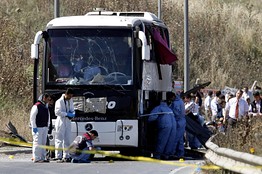
    ANKARA, Turkey—Suspected Kurdish rebels detonated a remote-controlled bomb in Istanbul, killing five people and wounding 12 on a bus carrying military personnel and their families, Istanbul Gov. Hüseyin Avni Mutlu said on Tuesday.

    European Pressphoto AgencyTurkish forensic officers survey the scene of Tuesday’s bomb blast in Istanbul.

    turkey0622

    turkey0622

    The state-run Anatolia news agency said the dead in the early-morning attack included the 17-year-old daughter of an officer.

    Kurdish rebels fighting for autonomy in Turkey’s Kurdish-dominated southeast have dramatically stepped up their attacks on Turkish targets this month and had threatened to expand their war to cities in the west of the country. Local CNN-Turk television said there was no immediate claim of responsibility but that Kurdish rebels are believed to be behind the attack. The rebel group rarely claims responsibility for its attacks.

    The Turkish military said in a statement on Tuesday that members of the separatist Kurdistan Workers’ Party, or PKK, attacked a gendarmerie post in the southeastern town of Silvan with light arms and grenades late Monday, killing one soldier. The military said five PKK militants were killed during the clash.

    The statement also said that Turkish troops clashed with a group of PKK militants in the northeastern Gumushane-Kelkit region early Tuesday, killing two.

    Twelve soldiers died in PKK attacks over the weekend, triggering nationwide anger and putting pressure on the government to adopt tougher tactics. On Tuesday, Prime Minister Recep Tayyip Erdogan pledged in a speech to parliament to continue with a government initiative to give ethnic Kurds greater cultural rights.

  • Iran and Turkey: Friends Today, Rivals Tomorrow?

    Iran and Turkey: Friends Today, Rivals Tomorrow?

    Monday, 21 June 2010 23:37

    Written by RFE/RL

    0 Comments
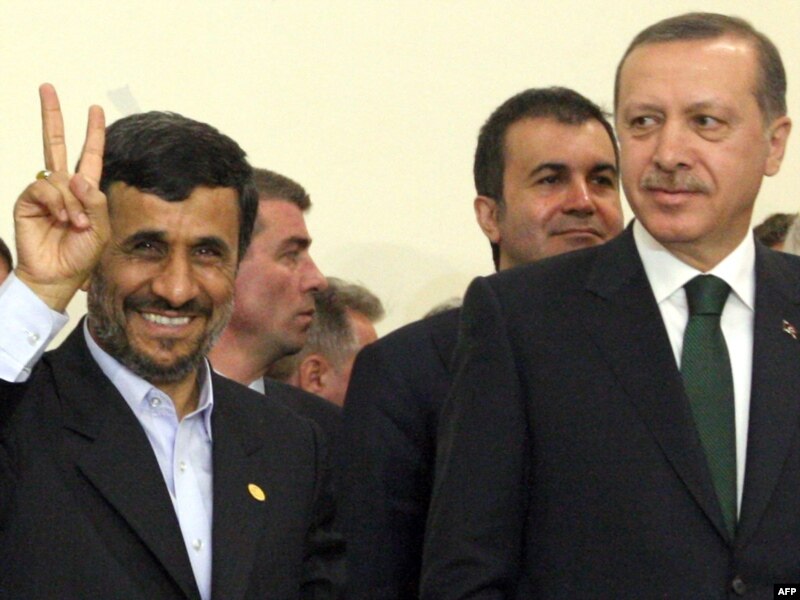
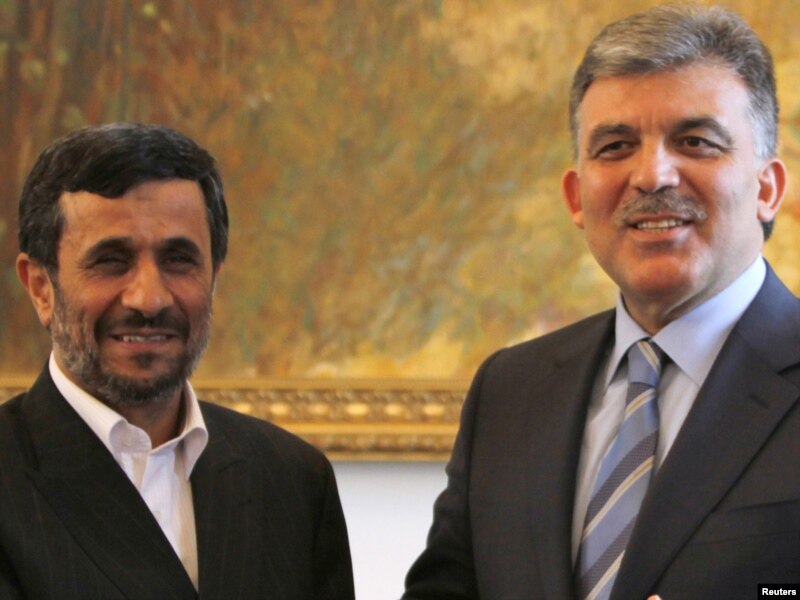
    By Robert Tait (RFE/RL) -- It is the friendship Western policymakers wish they could have prevented: Turkey -- secular, Western-leaning, and a key member of NATO -- drawing close to a resurgent theocratic Iran whose nuclear program and geopolitical ambitions present a full-frontal challenge to the established international order. Suspicions that Turkey is abandoning the Western orbit for a closer alignment with its Muslim Middle Eastern neighbors were reinforced last month when the Turkish prime minister, Recep Tayyip Erdogan, flew to Tehran to sign a nuclear fuel-swap deal -- brokered along with the Brazilian president, Luiz Inacio Lula da Silva -- aimed at blocking further UN sanctions against Iran's uranium enrichment program. Coming on the back of flourishing trade ties, the move -- ultimately unsuccessful -- was seen as a manifestation of Erdogan's growing affinity for Iran and its president, Mahmud Ahmadinejad, whom he had previously described as "a very good friend." The image of a new Tehran-Ankara axis was further enhanced by Israel's deadly interception of a Gaza-bound Turkish aid flotilla on May 31, which led to the deaths of nine Turks and drew international condemnation. The incident created the impression of a united Turkish-Iranian front against Israel and in support of Hamas, the Islamist group that runs Gaza. The growing warmth is a far cry from the frosty, mutually suspicious relations that endured for years between the two neighbors following the 1979 Islamic Revolution which ousted the Western-backed shah from power in Iran. Yet, according to some analysts, there may be a sting in the tail. Trigger Suspicions Far from being the gateway to a long-standing alliance, Turkey's new engagement with the Middle East and vocal support for the Palestinians could trigger Iranian suspicions and eventually restore the formerly competitive relationship between the two countries. Meir Javedanfar, an Iranian-born analyst with the MEEPAS think tank in Israel, believes Turkey's new Middle East-centered foreign policy -- which includes rapprochement with Iran's close ally, Syria -- is a threat to Tehran's desire to be the Islamic world's dominant power. "Both countries are rivals for the same title, which is leader of the Islamic world," Javedanfar says. "And the Iranians have a set of economic and political advantages to offer any country who wants to side with them, and the Turks have another set of advantages which are far more than the Iranian ones. "I can best describe it as the Turkish government being able to offer business class seats to any potential customer who wants to ally itself with Turkey, and the Iranians can offer a coach or economic class. I think the majority of people are going to be attracted to the business class rather than the other one, unless they have to." If that assessment comes as a relief to Western diplomats fretting over Turkey's supposed defection, there may be a sobering corollary. Javedanfar fears the results of any renewed Iranian-Turkish rivalry will be greater efforts by the leadership in Tehran to acquire a nuclear-weapons capability. "When it comes to economic power, when it comes to military power, when it comes to diplomatic position, Iran is inferior to Turkey," Javedanfar says. "So they are going to look at areas where they are superior and the only other one where they can gain an edge over the Turks, one of the very few areas, is the nuclear program. "Turkey is not a nuclear power. Therefore, Iran would have even more of a reason and an excuse to become a nuclear power in order to gain an edge over their Turkish rivals." Likely Launch Pad The prediction may seem far-fetched, yet hardly more so than an article published earlier this year by the Jahan News website -- believed to be linked to the Iranian intelligence services -- that identified Turkey as the likely launch pad for a future war against Iran. Written by Farid Al Din Hadad Adel, grandson of Iran's supreme leader, Ayatollah Ali Khamenei, the article asked: "Which country can hope for the entry of its European and American friends into the arena of war, if it enters into war against us? The answer is clear. Turkey is the only option for the advancement of the West's ambitions." The Islamic regime has a history of suspiciousness towards Turkey. In 2005, the Revolutionary Guards closed Tehran's newly built Imam Khomeini Airport for "security reasons" because a Turkish company had been awarded the contract to run it. The airport was only reopened after the contract was canceled and awarded to an Iranian consortium. In the same year, the Turkish mobile-phone operator Turkcell was stripped of a $2 billion contract giving it a stake in a private Iranian mobile network. Murat Bilhan, vice chairman of the Istanbul-based think tank TASAM and who served as a Turkish diplomat in Iran, believes continuing Iranian disquiet over its Western neighbor has recently surfaced in its rejection of Ankara's offer of mediation in relations with the United States. Even the recent nuclear swap deal may have been accepted only because of Brazil's role, he suggests. "Iran feels itself a little split off from the Western connections because it's in the hands of Turkey," says Bilhan. "They feel rivalry, as a competitor, and they would not like Turkey to be stronger than Iran. That's the feeling in Iran, in Iranian statesmen, in Iranian decision makers, policy planners, and such. "So Turkey, for Iran, is, in a way, not a threat but something to get along [with], to share the same geography, not to create any problems, but not to be overwhelmed by." Afraid Of Iran A further source of potential friction could be Turkey's increasing closeness to Arab states in the Persian Gulf, most of which fear Tehran's nuclear activities, Bilhan says. "There are some contradictions in the Turkish position in the sense that Turkey should be aware that the Arab nations in the Persian are too much afraid of Iran and they just feel threatened by the Iranian existence and Iranian ambitions in the region, especially their nuclear ambitions," Bilhan says. "So when Turkey supports the Iranian position, it might contradict its own Arab policy because the Arabs have enmity towards Iran." Turkish officials argue that Turkey's geography and shared Muslim heritage make it uniquely qualified in the Western alliance to win Iran's trust. In private, they admit that negotiations with the Islamic regime can be fraught -- citing the Iranian political system's diverse power centers. They also say the two countries still have important differences, notably over Iraq. "We are not defending Iran, we are looking after our own interests" one Turkish official, speaking on condition of anonymity, told RFERL. "We don't want to see a nuclear Iran in the military sense at all. Our aim in that is the same as other countries. It's just our approach that's different." He added: "On Iraq, we don't see eye-to-eye with Iran at all. We want an all-inclusive government in Iraq made up Shi'ites, Sunnis, and Kurds, whereas Iran only wants a Shi'ite government. We are not always in parallel with Iran on many issues. "But I don't think they should see us as a rival. The fact that we can talk to almost everyone, in contrast to them, means Iran should use us to try and get back into the international community. That's what we are trying to do."
    RFE/RL

    Copyright (c) 2009. RFE/RL, Inc. Reprinted with the permission of Radio Free Europe/Radio Liberty, 1201 Connecticut Ave., N.W. Washington DC 20036.