Month: June 2010

  • Criminal Intent and Militant Funding

    Criminal Intent and Militant Funding

    By Scott Stewart | June 24, 2010

    STRATFOR is currently putting the finishing touches on a detailed assessment of the Islamic State of Iraq (ISI), the al Qaeda-inspired jihadist franchise in that country. As we got deeper into that project, one of the things we noticed was the group’s increasing reliance on criminal activity to fund its operations. In recent months, in addition to kidnappings for ransom and extortion of businessmen — which have been endemic in Iraq for many years — the ISI appears to have become increasingly involved in armed robbery directed against banks, currency exchanges, gold markets and jewelry shops.
    This increase in criminal activity highlights how the ISI has fallen on hard times since its heyday in 2006-2007, when it was flush with cash from overseas donors and when its wealth led the apex leadership of al Qaeda in Pakistan to ask its Iraqi franchise for financial assistance. But when considered in a larger context, the ISI’s shift to criminal activity is certainly not surprising and, in fact, follows the pattern of many other ideologically motivated terrorist or insurgent groups that have been forced to resort to crime to support themselves.

    The Cost of Doing Business

    Whether we are talking about a small urban terrorist cell or a large-scale rural insurgency, it takes money to maintain a militant organization. It costs money to conduct even a rudimentary terrorist attack, and while there are a lot of variables in calculating the costs of a single attack, in order to simplify things, we’ll make a ballpark estimate of not more than $100 for an attack that involves a single operative detonating an improvised explosive device or using a firearm. (It certainly is possible to construct a lethal device for less, and many grassroots plots have cost far more, but we think $100 is a fair general estimate.) While that amount may seem quite modest by Western standards, it is important to remember that in the places where militant groups tend to thrive, like Somalia and Pakistan, the population is very poor. The typical Somali earns approximately $600 a year, and the typical Pakistani living in the Federally Administered Tribal Areas makes around $660. For many individuals living in such areas, the vehicle used in an attack deploying a vehicle-borne improvised explosive device (VBIED) is a luxury that they can never aspire to own for personal use, much less afford to buy only to destroy it in an attack. Indeed, even the $100 it may cost to conduct a basic terrorist attack is far more than they can afford.

    To be sure, the expense of an individual terrorist attack can be marginal for a group like the ISI or the Tehrik-i-Taliban Pakistan (TTP). However, for such a group, the expenses required to operate are far more than just the amount required to conduct attacks — whether small roadside bombs or large VBIEDs. Such groups also need to establish and maintain the infrastructure required to operate a militant organization over a long period of time, not just during attacks but also between attacks. Setting up and operating such an infrastructure is far more costly than just paying for individual attacks.

    In addition to the purchasing the materials required to conduct specific terrorist attacks, a militant organization also needs to pay wages to its fighters and provide food and lodging. Many also give stipends to the widows and families their fighters leave behind. In addition to the cost of personnel, the organization also needs to purchase safe-houses, modes of transportation (e.g., pickup trucks or motorcycles), communications equipment, weapons, munitions and facilities and equipment for training. If the militant organization hopes to use advanced weapons, like man-portable air defense systems, the costs can go even higher.

    There are other costs involved in maintaining a large, professional militant group, such as travel, fraudulent identification documents (or legitimate documents obtained through fraud), payment for intelligence assets to monitor the activities of government forces, and even the direct bribery of security, border and other government officials. In some places, militant groups such as Hezbollah also pay for social services such as health care and education for the local population as a means of establishing and maintaining local support for the cause.

    When added together, these various expenses amount to a substantial financial commitment, and operations are even more expensive in an environment where the local population is hostile to the militant organization and the government is persistently trying to cut off the group’s funding. In such an environment, the local people are less willing to provide support to the militants in the way of food, shelter and cash, and the militants are also forced to spend more money on operational security. Information about the government must also be purchased or coerced, and more “hush money” must be paid to keep people from telling the government about militant operations. In an environment where the local population is friendly, they will shelter militants and volunteer information about government forces and will not inform on militants to the government.

    Sponsorship

    One way to offset the steep cost of operating a large militant organization is by having a state sponsor. Indeed, funding rebel or insurgent groups to cause problems for a rival is an age-old tool of statecraft, and one that was exercised frequently during the Cold War. During that period, the United States worked to counter communist governments around the globe, and the Soviet Union and its partners operated a broad global array of proxy militant groups. In terms of geopolitical struggles, funding proxy groups is far less expensive than engaging in direct warfare in terms of both money and battlefield losses. Using proxies also provides benefits in terms of deniability for both domestic and international purposes.

    For the militant group, the addition of a state sponsor can provide an array of modern weaponry and a great deal of useful training. For example, the FIM-92 Stinger missiles that the United States gave to Afghan militants fighting Soviet forces greatly enhanced the militants’ ability to counter the Soviets’ use of air power. The training provided by the Soviet KGB and its allies, the Cuban DGI and the East German Stasi, revolutionized the use of improvised explosive devices in terrorist attacks. Members of the groups these intelligence services trained at camps in Libya, Lebanon and Yemen, such as the German Red Brigades, the Provisional Irish Republican Army (PIRA), the Japanese Red Army and various Palestinian militant groups (among others), all became quite adept at using explosives in terrorist attacks.

    The prevalence of Marxist terrorist groups during the Cold War led some observers to believe that the phenomenon of modern terrorism would die with the fall of the Soviet Union. Indeed, many militant groups, from urban Marxist organizations like the Tupac Amaru Revolutionary Movement (MRTA) in Peru to rural based insurgents like the Revolutionary Armed Forces of Colombia (FARC), fell on hard financial times after the fall of the Soviet Union. While some of these groups withered away with their dwindling financial support (like the MRTA), others were more resourceful and found alternative ways to support their movement and continue their operations. The FARC, for example, was able to use its rural power in Colombia to offer protection to narcotics traffickers. In an ironic twist, elements of the United Self-Defense Forces of Colombia, a right-wing death squad set up to defend rich landowners against the FARC, have also gone on to play an important role in the Colombian Norte del Valle cartel and in various “bacrim” smuggling groups. Groups such as the PIRA and its splinters were able to fund themselves through robbery, extortion and “tiger kidnapping”.

    In some places, the Marxist revolutionaries sought to keep the ideology of their cause separate from the criminal activities required to fund it following the loss of Soviet support. In the Philippines, for example, the New People’s Army formed what it termed “dirty job intelligence groups,” which were tasked with conducting kidnappings for ransom and robbing banks and armored cars. The groups also participated in a widespread campaign to shake down businesses for extortion payments, which it referred to as “revolutionary taxes.” In Central America, the Salvadoran Farabundo Marti National Liberation Front (FMLN) established a finance and logistics operation based out of Managua, Nicaragua, that conducted a string of kidnappings of wealthy industrialists in places like Mexico and Brazil. By targeting wealthy capitalists, the group sought to cast a Robin Hood-like light on this criminal activity. To further distance itself from the activity, the group used American and Canadian citizens to do much of its pre-operational surveillance and employed hired muscle from disbanded South American Marxist organizations to conduct the kidnappings and guard the hostages. The FMLN’s financial problems helped lead to the peace accords signed in 1992, and the FMLN has since become one of the main political parties in El Salvador. Its candidate, Mauricio Funes, was elected president of El Salvador in 2009.

    Beyond the COMINTERN

    The fall of the Soviet Union clearly did not end terrorism. Although Marxist militants funded themselves in Colombia, the Philippines and elsewhere through crime, Marxism was not the only flavor of terrorism on the planet. There are all sorts of motivations for terrorism as a militant tactic, from white supremacy to animal rights. But one of the most significant forces that arose in the 1980s as the Soviet Union was falling was militant Islamism. In addition to the ideals of the Iranian Revolution, which led to the creation of Hezbollah and other Iranian-sponsored groups, the Islamist fervor that was used to drum up support for the militants fighting the Soviet invasion of Afghanistan eventually gave birth to al Qaeda and its jihadist spawn.

    Although Hezbollah has always been funded by the governments of Iran and Syria, it has also become quite an entrepreneurial organization. Hezbollah has established a fundraising network that stretches across the globe and encompasses both legitimate businesses and criminal enterprises. In terms of its criminal operations, Hezbollah has a well-known presence in the tri-border region of Paraguay, Argentina and Brazil, where the U.S. government estimates it has earned tens of millions of dollars from selling electronic goods, counterfeit luxury items and pirated software, movies and music. It also has an even more profitable network in West Africa that deals in “blood diamonds” from places like Sierra Leone and the Republic of the Congo. Cells in Asia procure and ship much of the counterfeit material sold elsewhere; nodes in North America deal in smuggled cigarettes, baby formula and counterfeit designer goods, among other things. In the United States, Hezbollah also has been involved in smuggling pseudoephedrine and selling counterfeit Viagra, and it has played a significant role in the production and worldwide propagation of counterfeit currencies. The business empire of the Shiite organization also extends into the narcotics trade, and Hezbollah earns large percentages of the estimated $1 billion in drug money flowing each year out of Lebanon’s Bekaa Valley.

    On the jihadist side of militant Islamism, jihadist groups have been conducting criminal activity to fund their movement since the 1990s. The jihadist cell that conducted the March 2004 Madrid Train Bombings was self-funded by selling illegal drugs, and jihadists have been involved in a number of criminal schemes ranging from welfare fraud to interstate transportation of stolen property.

    In addition, many wealthy Muslims in Saudi Arabia the Persian Gulf states and elsewhere saw the jihadist groups as a way to export their conservative Wahhabi/Salafi strain of Islam, and many considered their gifts to jihadist groups to be their way of satisfying the Muslim religious obligation to give to charity. The governments of Saudi Arabia, Sudan, Yemen, Syria and Pakistan saw jihadism as a foreign policy tool, and in some cases the jihadists were also seen as a tool to be used against domestic rivals. Pakistan was one of the most active countries playing the jihadist card, and it used it to influence its regional neighbors by supporting the growth of the Taliban in Afghanistan as well as Kashmiri militant groups such as the Lashkar-e-Taiba (LeT) for use against its archrival, India.

    After 2003, however, when the al Qaeda franchise in Saudi Arabia declared war on the Saudi government (and the oil industry that funds it), sentiment in that country began to change and the donations sent by wealthy Saudis to al Qaeda or al Qaeda-related charities began to decline markedly. By 2006, the al Qaeda core leadership — and the larger jihadist movement — was experiencing significant financial difficulties. Today, with Pakistan also experiencing a backlash from supporting jihadists who have turned against the state, and with the Sunni sheikhs in Iraq turning against the ISI there, funding and sanctuary are becoming increasingly difficult for jihadists to find.

    In recent years, the United States and the international community have taken a number of steps to monitor the international transfer of money, track charitable donations and scrutinize charities. These measures have begun to have an effect — not just in the case of the jihadist groups but for all major militant organizations. These systems are not foolproof, and there are still gaps that can be exploited, but overall, the legislation, procedures and tools now in place make financing from abroad much more difficult than it was prior to September 2001.

    The Need to Survive

    And this brings us where we are today regarding terrorism and funding. While countries like Venezuela and Nicaragua play around with supporting the export of Marxism through Latin America, the funding for Marxist movements in the Western Hemisphere is far below what it was before the fall of the Soviet Union. Indeed, transnational drug cartels and their allied street gangs pose a far greater threat to the stability of countries in the region today.

    Groups that cannot find state sponsorship, such as the Movement for the Emancipation of the Niger Delta (MEND) in Nigeria, will be left to fund themselves through ransoms for kidnapped oil workers, selling stolen oil and from protection money. (It is worth noting, however, that MEND also has some powerful patrons inside Nigeria’s political structure.) And groups that still receive state funding, like Iranian proxies Hezbollah and Hamas as well as Shiite militant groups in Iraq and the Persian Gulf region, will continue to get that support. (There are frequent rumors that Iran is supporting jihadist groups in places like Iraq and Afghanistan as a way to cause pain to the United States.)

    Overall, state sponsorship of jihadist groups has been declining since supporting countries realized they were being attacked by militant groups of their own creation. Some countries, like Syria and Pakistan, still keep their fingers in the jihadist pie, but as time progresses more countries are coming to see the jihadists as threats rather than useful tools. For the past few years, we have seen groups like al Qaeda in the Islamic Maghreb resort to narcotics smuggling and the kidnapping of foreigners to fund their operations and that trend will likely increase. For one thing, the jump from militant attacks to criminal activity is relatively easy to make. Criminal activity (whether it’s robbing a bank or extorting business owners for “taxes”) requires the same physical force — or at least the threat of physical force — that militant groups perfect over years of carrying out insurgent or terrorist attacks.

    While such criminal activity does allow a militant group to survive, it comes with a number of risks. First is the risk that members of the organization could become overly enamored with the criminal activity and the money it brings and abandon the cause — and the austere life of an ideological fighter — to pursue a more lucrative criminal career. (In many cases, they will attempt to retain some ideological facade for recruitment or legitimacy purposes. On the other hand, some jihadist groups believe that criminal activities allow them to emulate the actions of the Prophet Mohammed, who raided the caravans of his enemies to fund his movement and allowed his men to take booty.) Criminal activity can also cause ideological splits between the more pragmatic members of a militant organization and those who believe that criminal behavior tarnishes the image of their cause. And criminal activity can turn the local population against the militants — especially the population being targeted for crimes — while providing law enforcement with opportunities to arrest militant operatives on charges that are in many cases easier to prove than conspiring to conduct terrorist attacks. Lastly, reliance on criminal activity for funding a militant group requires a serious commitment of resources — men and guns — that cannot be allocated to other activities when they are being used to commit crimes.

    As efforts to combat terrorism continue, militant leaders will increasingly be forced to choose between abandoning their cause or possibly tarnishing its public image. When faced with such a choice, many militant leaders — like those of the ISI — will follow the examples of groups like the FARC and the PIRA and choose to pursue criminal means to continue their struggle.
  • Erdogan charts a new course to the east

    Erdogan charts a new course to the east

    DEBORCHGRAVE: Talking Turkey

    By Arnaud de Borchgrave

    7:25 p.m., Wednesday, June 23, 2010

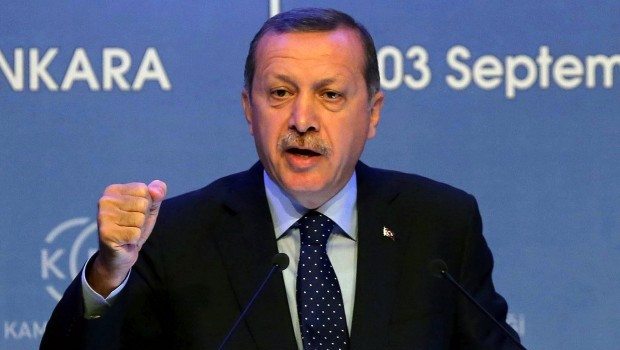
    Turkish Prime Minister Recep Tayyip Erdogan addresses the lawmakers of his Islamic-rooted party at the parliament in Ankara, Turkey, Tuesday. Dec. 1, 2009. Turkey said late Wednesday that Turkish soldiers in Afghanistan will not be part of any combat operation. Turkey says it is reviewing whether to increase its commitment to NATO’s mission in Afghanistan. Erdogan will travel to Washington for a Monday meeting with President Barack Obama, who is seeking additional troops from NATO allies in Afghanistan. (AP Photo/Burhan Ozbilici)
    Geopolitical tectonic plates began grinding menacingly five years ago when Turkey embarked on negotiations for membership in the European Union. But it didn't take long for Ankara to conclude that the EU was playacting. There was little appetite for adding 70 million Turkish Muslims (80 million by the end of a projected 10-year negotiation) to EU's 20 million Muslims (Pakistani Brits, North African French, Turkish Germans). Church attendance in Europe is in steep decline while thousands of mosques are filled to overflowing. It was time for Turkey to move on. In 2003, Turkey already had demonstrated that its close alliance with the United States in particular and the NATO alliance in general could not be taken for granted. As the U.S. 4th Infantry Division was about to disembark in Turkey and transit to Iraq to be part of a pincer movement on Saddam Hussein's regime, Ankara said no, and the pincer collapsed. Adding much expense and replanning, the 4th ID was rerouted around the Arabian Peninsula to Kuwait. Then-Deputy Defense Secretary Paul Wolfowitz, in a preparatory conference with Turkish leaders, had misread the signals. Turkish leaders, like many others around the world, had a hard time understanding the motives behind President George W. Bush's decision to invade Iraq. Saddam, stripped of diplomatic gobbledygook, was the West's best defense against the Iran of the mullahs. They had fought an eight-year war (1980-1988) to a Mexican standoff that had cost one million casualties on both sides. In 1949, Turkey was the first Muslim country to recognize Israel. A close military alliance was part of the relationship. The Israeli air force could use Turkish airspace for training. It also was valuable space for an Israeli attack on Iran's nuclear installations. But all that changed overnight. In short order, Israel and Turkey went from being close friends to antagonists heading for the brink of enmity. The detonator was the Israeli invasion of Gaza in January 2009, which killed 1,400 Palestinians and 13 Israelis. The break in Turkish-Israeli relations came when Israeli commandos boarded a flotilla of Turkish vessels bound for Gaza with relief supplies. Israel branded the civilians aboard as activists in the Islamic group Insani Yardim Vakfi (IHH), on par with al Qaeda. But IHH is also a key supporter of Prime Minister Recep Tayyip Erdogan's ruling party. Mr. Erdogan's warm embrace of Iran's Mahmoud Ahmadinejad in Istanbul as "a dear friend" and his opposition to further sanctions against Iran (voted June 9 by the U.N. Security Council) mark Turkey's new "BlackBerry diplomacy," a break with conventional diplomacy - when major shifts take place in real time above the heads of foreign-policy officials and the diplomats with whom they normally deal. Mr. Erdogan declines to call Hamas a terrorist organization, and he no longer sees Turkey's role in NATO as a priority. And to make sure there was no possibility of the country's military staging what might have been a fifth coup since 1960 to oust a civilian government, Mr. Erdogan ordered the arrest of 52 military commanders in February. Code-named Operation Sledgehammer, the purported plan was to blow up mosques and museums as a signal for the military to overthrow the Islamic-oriented government. Government denials notwithstanding, prosecutors have jailed about 400 people, including soldiers, academics, politicians and journalists. This explains why no one is willing to criticize Mr. Erdogan for the record. Ever since Mustafa Kemal Ataturk, an army officer in World War I, abolished the Ottoman Empire's caliphate in 1924, introduced the Roman alphabet to replace Arabic script, gave women the vote and permission to dress in Western clothes, and created modern Turkey, the military have considered themselves guardians of the secular state against Islamist encroachment. The bottom line, as explained off the record by politicians, academics and journalists in Istanbul this week, is that Mr. Erdogan and his cronies have convinced themselves this will not be America's century as was the 20th, that the geopolitical balance of forces is shifting east, and that it is Turkey's role to assume a leadership position in the Middle East that would be designed to bridge the gap between Sunni and Shia Islam. (Turkey is 80 percent Sunni.) Mr. Erdogan also believes he can persuade Iran to suspend its secret nuclear-weapons program just shy of making a bomb or missile warhead. Instead, Iran would follow the examples of Japan and Brazil, countries that have the wherewithal to produce such a weapon in six months. Mr. Erdogan, like most world leaders, had high hopes for President Obama. But now they see he is unable to master a dysfunctional system of government; that he may lose one or even both houses of Congress in November; and that Afghanistan appears to be headed for another debacle comparable to Vietnam circa 1975 (when Congress stripped South Vietnam of military aid, in effect inviting North Vietnam to administer the coup de grace). Turkey still maintains 1,750 soldiers in Afghanistan, albeit in a noncombat role to train Afghan soldiers. One cynical Turkish ex-foreign minister, speculating about the Afghan war, confided, "The way things are going, your Congress will have made Afghanistan secure for China to make a deal with a new Taliban regime to exploit the $3 trillion worth of minerals verified by U.S. intelligence." Turkish officials who see the global balance of power trending eastward also can see over the horizon a great Turkic nation that spans most of Central Asia. For them, this is a more exciting vista than a slow NATO retreat from Afghanistan. Or a European Union, where Turkey's nemesis, Greece, the sick man of Europe, almost collapsed the painfully erected House of Europe. Arnaud de Borchgrave is editor-at-large of The Washington Times and of United Press International. © Copyright 2010 The Washington Times,

  • US Supreme Courts Final Decision  on Aiding PKK Terrorism

    US Supreme Courts Final Decision on Aiding PKK Terrorism

    TURKISH FORUM WELLCOMES THE DECISION AND THANKS TO THE US SUPREME COURT

    THE US SUPREME COURT RULES:

    Humanitarian Law Project v. U.S. Attorney General Holder, Secretary of State Clinton.  HLP sued the United States claiming that providing lobbying, public relations, legal services and other types of assistance to the PKK &LTTE terrorist organizations were freedom of speech protected by the US Constitution.

    With a vote of 6-3, the Supreme Court strongly disagreed, holding freedom of speech does not include materially assisting a group listed as a terrorist organization by the US Department of State.  The Supreme Court further held that it is not an excuse or defense that a person did not have knowledge of whether a group he/she was assisting is on the Terror List or whether his/her assistance to such group would further the terrorist acts of the group.

    The United States Supreme Court ruling also noted that: “It is not difficult to conclude as Congress did that the “taint” of such violent activities is so great that working in coordination with or at the command of the PKK and LTTE serves to legitimize and further their terrorist means.”

    ==================================================================================

    PKK & Tamil Tiger advocates in U.S. using ‘Freedom of Speech’ right amounts to Aiding Terrorism – US Supreme Court rules

    Tue, 2010-06-22 14:25 — editor
    Daya Gamage – US National Correspondent Asian Tribune
    Washington, D.C. 22 June (Asiantribune.com):

    The United States Chief Justice of the Supreme Court John Roberts delivering the court’s majority decision Monday, June 21 giving a final blow to advocates of terrorism/separatism of Sri Lanka’s Tamil Tigers (LTTE) and Turkey’s PKK who use American soil said: “under the material-support statute, plaintiffs may say anything they wish on any topic. They may speak and write freely about the PKK and LTTE, the governments of Turkey and Sri Lanka, human rights and international law. They may advocate before the United Nations.” But they may not coordinate the speech with those groups on the US terrorist list.”

    And drawing a distinction between assisting the group and simply speaking on their behalf, the Chief Justice said, “We in no way suggest that a regulation of independent speech would pass constitutional muster.”

    The First Amendment which guarantees freedom of speech under the US Constitution does not protect humanitarian groups or others who advise foreign terrorist organizations, even if the support is aimed at legal activities or peaceful settlement of disputes, the Supreme Court ruled Monday.

    In a case that weighed free speech against national security, the court voted 6 to 3 to uphold a federal law banning “material support” to foreign terrorist organizations. That ban holds, the court said, even when the offerings are not money or weapons but things such as “expert advice or assistance” or “training” intended to instruct in international law or appeals to the United Nations.

    Chief Justice John Roberts wrote the court’s majority opinion upholding the Material Support statute as applied even to peacemakers. He noted that Congress and the executive branch had both concluded that even benign support like this can benefit terrorist organizations by giving them an air of legitimacy, or allowing such organizations to use negotiations to stall while they regroup from previous losses. What’s more, Roberts said, allowing such peaceful advocacy would undermine U.S. relations with allies, like Turkey, which is in a violent struggle with the PKK. It is vital in this context, he said, not to substitute “our own judgment” for that of Congress and the executive branch. The material support statute, he noted, is a “preventive measure — it criminalizes not terrorist attacks themselves but aid that makes the attacks more likely to occur,” and in this context the government “is not required to conclusively link all the pieces in the puzzle before we grant weight to its conclusions.”

    The law barring material support was first adopted in 1996 and strengthened by the USA Patriot Act adopted by Congress right after the September 11 attacks. It was amended again in 2004.

    The law bars knowingly providing any service, training, expert advice or assistance to any foreign organization designated by the U.S. State Department as terrorist.
    The law, which carries a penalty of up to 15 years in prison, does not require any proof the defendant intended to further any act of terrorism or violence by the foreign group.

    This litigation concerns 18 U. S. C. §2339B, which makes it a federal crime to “knowingly provide material support or resources to a foreign terrorist organization.” Congress has amended the definition of “material support or resources” periodically, but at present it is defined as follows:

    “The term ‘material support or resources’ means any property, tangible or intangible, or service, including currency or monetary instruments or financial securities, financial services, lodging, training, expert advice or assistance, safehouses, false documentation or identification, communications equipment, facilities, weapons, lethal substances, explosives, personnel (1 or more individuals who may be or include oneself), and transportation, except medicine or religious materials.”

    In full, 18 U. S. C. §2339B(a)(1) provides: “Unlawful Conduct.—
    Whoever knowingly provides material support or resources to a foreign terrorist organization, or attempts or conspires to do so, shall be fined under this title or imprisoned not more than 15 years, or both, and, if the death of any person results, shall be imprisoned for any term of years or for life. To violate this paragraph, a person must have knowl¬edge that the organization is a designated terrorist organization . . ., that the organization has engaged or engages in terrorist activity . . .,

    Plaintiffs in this litigation are two U. S. citizens and six domestic organizations: the Humanitarian Law Project HLP) (a human rights organization with consultative status to the United Nations); Ralph Fertig (the HLP’s president, and a retired administrative law judge); Nagalingam Jeyalingam (a Tamil physician, born in Sri Lanka and a naturalized U. S. citizen); and five nonprofit groups dedicated to the interests of persons of Tamil descent.

    Plaintiffs claimed that they wished to provide support for the humanitarian and political activities of the PKK and the LTTE in the form of monetary contributions, other tangible aid, legal training, and political advocacy, but that they could not do so for fear of prosecution under §2339B.

    As relevant here, plaintiffs claimed that the material support statute was unconstitutional on two grounds:

    First, it violated their freedom of speech and freedom of association under the First Amendment, because it criminalized their provision of material support to the PKK and the LTTE, without requiring the Government to prove that plaintiffs had a specific intent to further the unlawful ends of those organizations. Second, plaintiffs argued that the statute was unconstitutionally vague.
    Both arguments were rejected by the Supreme Court.

    The case is directly connected to Sri Lanka because the Humanitarian Law Project was representing two U.S.-designated foreign terrorist organizations (FTO) one of which is the Liberation Tigers of Tamil Eelam (Tamil Tigers) which claimed during its 26-year armed struggle for a separate independent nation in the north and east of Sri Lanka as the ‘sole representative of the Tamil People’. The outfit was militarily defeated May 2009 within the borders of Sri Lanka eliminating the entire Tamil Tiger leadership but has energized a section of the West-domiciled Tamil Diaspora floating an organization called Provisional Transnational Government of Tamil Eelam to diplomatically lobby to achieve ‘self-determination’ for the Sri Lanka Tamil minority (12%), meaning a separate independent state of Eelam.

    A meeting of the World Tamil Forum was held recently in London which advocated an economic blockade of Sri Lanka citing war crimes, human rights abuses, genocide against minority Tamils and other atrocities. It was addressed by British Foreign Secretary Miliband and graced by Prime Minister Gordon Brown. The inaugural meeting of the Provisional Transnational Government of Tamil Eelam was held in Philadelphia convened by its provisional held Visuvanathan Rudrakumaran a Sri Lanka-born naturalized US citizen who has a law practice in New York.

    The Government of Sri Lanka and its overseas diplomatic representatives in the West have to figure out how to prevent a ‘Kosovo-type situation’ emerging in the international arena which can gather support for the ‘cause’ the proponents of the Transnational Government of Tamil Eelam seeking.

    It is in this context that Sri Lanka which is faced with this challenged overseas from the remnants of the Tamil Tigers who are connected to the Humanitarian Law Project which challenged some provisions of the ‘Material Support Law’ which was rejected by the US Supreme Court on Monday.

    Following are salient sections of the Supreme Court ruling:

    (Begin Excerpts) (d) As applied to plaintiffs, the material-support statute does not violate the freedom of speech guaranteed by the First Amendment.

    (1) Both plaintiffs and the Government take extreme positions on this question. Plaintiffs claim that Congress has banned their pure political speech. That claim is unfounded because, under the material-support statute, they may say anything they wish on any topic. Section 2339B does not prohibit independent advocacy or membership in the PKK and LTTE. Rather, Congress has prohibited “material support,” which most often does not take the form of speech.

    And when it does, the statute is carefully drawn to cover only a narrow category of speech to, under the direction of, or in coordination with foreign groups that the speaker knows to be terrorist organizations.

    On the other hand, the Government errs in arguing that the only thing actually at issue here is conduct, not speech, and that the correct standard of review is intermediate scrutiny, as set out in United States v. O’Brien, 391 U. S. 367, 377. That standard is not used to review a content-based regulation of speech, and §2339B regulates plaintiffs’ speech to the PKK and the LTTE on the basis of its content.

    Even if the material-support statute generally functions as a regulation of conduct, as applied to plaintiffs the conduct triggering coverage under the statute consists of communicating a message. Thus, the Court “must [apply] a more demanding standard” than the one described in O’Brien. Texas v. Johnson, 491 U. S. 397, 403

    (2) The parties agree that the Government’s interest in combating terrorism is an urgent objective of the highest order, but plaintiffs argue that this objective does not justify prohibiting their speech, which they say will advance only the legitimate activities of the PKK and LTTE. Whether foreign terrorist organizations meaningfully segregate support of their legitimate activities from support of terrorism is an empirical question. Congress rejected plaintiffs’ position on that question when it enacted §2339B, finding that “foreign organizations that engage in terrorist activity are so tainted by their criminal conduct that any contribution to such an organization facilitates that conduct.” §301(a), 110 Stat. 1247, note following §2339B.

    The record confirms that Congress was justified in rejecting plaintiffs’ view. The
    PKK and the LTTE are deadly groups. It is not difficult to conclude, as Congress did, that the taint of their violent activities is so great that working in coordination with them or at their command legitimizes and furthers their terrorist means.

    Moreover, material support meant to promote peaceable, lawful conduct can be diverted to advance terrorism in multiple ways. The record shows that designated foreign terrorist organizations do not maintain organizational firewalls between social, political, and terrorist operations, or financial firewalls between funds raised for humanitarian activities and those used to carry out terrorist attacks. Providing material support in any form would also undermine cooperative international efforts to prevent terrorism and strain the United States’ relationships with its allies, including those that are defending themselves against violent insurgencies waged by foreign terrorist groups.

    (3) The Court does not rely exclusively on its own factual inferences drawn from the record evidence, but considers the Executive Branch’s stated view that the experience and analysis of Government agencies charged with combating terrorism strongly support Congress’s finding that all contributions to foreign terrorist organizations—even those for seemingly benign purposes—further those groups’ terrorist activities. That evaluation of the facts, like Congress’s assessment, is entitled to deference, given the sensitive national security and foreign relations interests at stake.

    The Court does not defer to the Government’s reading of the First Amendment. But respect for the Government’s factual conclusions is appropriate in light of the courts’ lack of expertise with respect to national security and foreign affairs, and the reality that efforts to confront terrorist threats occur in an area where information can be difficult to obtain, the impact of certain conduct can be difficult to assess, and conclusions must often be based on informed judgment rather than concrete evidence. The Court also finds it significant that Congress has been conscious of its own responsibility to consider how its actions may implicate constitutional concerns.

    Most importantly, Congress has avoided any restriction on independent advocacy, or indeed any activities not directed to, coordinated with, or controlled by foreign terrorist groups. Given the sensitive interests in national security and foreign affairs at stake, the political branches have adequately substantiated their determination that prohibiting material support in the form of training, expert advice, personnel, and services to foreign terrorist groups serves the Government’s interest in preventing terrorism, even if those providing the support mean to promote only the groups’ nonviolent ends.

    It simply holds that §2339B does not violate the freedom of speech as applied to the particular types of support these plaintiffs seek to provide.

    (e) Nor does the material-support statute violate plaintiffs’ First Amendment freedom of association. Plaintiffs argue that the statute criminalizes the mere fact of their associating with the PKK and the LTTE, and thereby runs afoul of this Court’s precedents. The Ninth Circuit correctly rejected this claim because §2339B does not penalize mere association, but prohibits the act of giving foreign terrorist groups material support. Any burden on plaintiffs’ freedom of association caused by preventing them from supporting designated foreign terrorist organizations, but not other groups, is justified for the same reasons the Court rejects their free speech challenge.

    Plaintiffs want to speak to the PKK and the LTTE, and whether they may do so under §2339B depends on what they say. If plaintiffs’ speech to those groups imparts a “specific skill” or communicates advice derived from “specialized knowledge”—for example, training on the use of international law or advice on petitioning the United Nations— then it is barred.

    Whether foreign terrorist organizations meaningfully segregate support of their legitimate activities from support of terrorism is an empirical question. When it enacted §2339B in 1996, Congress made specific findings regarding the serious threat posed by international terrorism.

    One of those findings explicitly rejects plaintiffs’ contention that their support would not further the terrorist activities of the PKK and LTTE: “[F]oreign organizations that engage in terrorist activity are so tainted by their criminal conduct that any contribution to such an organization facilitates that conduct.”

    Plaintiffs argue that the reference to “any contribution” in this finding meant only monetary support. There is no reason to read the finding to be so limited, particularly because Congress expressly prohibited so much more than monetary support in §2339B. Congress’s use of the term “contribution” is best read to reflect a determination that any form of material support furnished “to” a foreign terrorist organization should be barred, which is precisely what the material-support statute does. Indeed, when Congress enacted §2339B, Congress simultaneously removed an exception that had existed in §2339A(a) for the provision of material support in the form of “humanitarian assistance to persons not directly involved in” terrorist activity. That repeal demonstrates that Congress considered and rejected the view that ostensibly peaceful aid would have no harmful effects.

    We are convinced that Congress was justified in rejecting that view. The PKK and the LTTE are deadly groups. “The PKK’s insurgency has claimed more than 22,000 lives.” The LTTE has engaged in extensive suicide bombings and political assassinations, including killings of the Sri Lankan President, Security Minister, and Deputy Defense Minister. (End Excerpts)

    The United States Supreme Court ruling also noted that: “It is not difficult to conclude as Congress did that the “taint” of such violent activities is so great that working in coordination with or at the command of the PKK and LTTE serves to legitimize and further their terrorist means.”

    – Asian Tribune –

  • Turkey’s Consul General Speaks of Its Friend Israel

    Turkey’s Consul General Speaks of Its Friend Israel

    une 22, 2010

    by Jonah Lowenfeld, Contributing Writer

    R. Hakan Tekin, Turkey’s consul general in Los Angeles.
    Last week, while New York Times columnist Thomas Friedman was in Istanbul talking to businessmen, journalists and academics about the “fight for Turkey’s soul,” R. Hakan Tekin, Turkey’s chief representative in Los Angeles, offered up a local version of his country’s official perspective. “We have a saying in Turkish: ‘Friends speak the bitter truth,’ ” the consul general said over an afternoon cup of Turkish coffee in his office on Wilshire Boulevard. “Turkey is a friend of Israel and is speaking the bitter truth — that their policies and practices in the region are not helping them.” With Turkish Prime Minister Recep Tayyip Erdogan calling last month’s flotilla incident an example of “state terrorism” and the nation’s ministry of foreign affairs saying that “Israel has once again clearly demonstrated that it does not value human lives,” it might be hard to remember that the two countries had, until recently, long been steadfast allies. Tekin, who has headed the Los Angeles consulate since April 2007, experienced the closeness of Turkish-Israeli relations firsthand.
    RELATED: Wiesenthal Center Advises Against Travel to Turkey
    “When I first started here, my first contacts were with the Jewish community,” Tekin said. He connected with leaders of the Anti-Defamation League, the Simon Wiesenthal Center and The Jewish Federation of Greater Los Angeles, to name a few. Last November, he sat on a panel at Pepperdine University titled “Finding Common Ground: Reconciliation Among the Children of Abraham” with his Israeli counterpart in Los Angeles, Jacob Dayan. “Jacob is a very good friend of mine,” Tekin said. “We have a very close relationship. Of course, we are not agreeing on everything, especially these days.” But even back in “the good old days,” when Tekin spoke to audiences at the American Jewish Committee or at Hillcrest Country Club, the Q-and-A sessions weren’t easy. Asked to recall some of the more challenging questions he was asked, Tekin didn’t hesitate: “ ‘Why is Turkey so against Israel?’ Or, ‘Why didn’t we criticize Hamas as much when they were shooting rockets at Israel?’ ” But though Tekin used to field questions about anti-Semitism in Turkey or questions about Iran, he is sure about one thing: “If I had an event with a Jewish group these days, the only issue would be the flotilla incident.” And from Tekin’s point of view — which is to say, Turkey’s — the ramifications of the flotilla incident on the Turkish-Israeli relationship could not be more severe: “Israel is on the verge of losing Turkey’s friendship,” the veteran diplomat said. “The flotilla incident was a historic event for us,” Tekin said. “Never before had any group of Turkish civilians been attacked by a foreign military. So this is something serious. And this is not a government issue. The overwhelming majority of the public is furious about this.” Political observers — including Friedman — have pointed out that Erdogan has used the flotilla incident to build political support in the lead-up to next year’s election. “Like every politician,” Tekin responded. He pointed to Rep. Adam Schiff and the 43 other members of California’s congressional delegation who co-sponsored a bill that would affirm that the Ottoman Empire committed genocide against the Armenian people between 1915 and 1923. “Why are they so enthusiastic about the Armenian issue? And why are none of the congressmen from Montana co-sponsoring? Because this is politics. It’s a game of votes. There’s a big Armenian community here, and they [California’s representatives] want to cater to that constituency.” Tekin was also well aware that some Jews in Israel and in the United States had also begun taking a renewed interest in “the Armenian issue,” particularly as the relationship between Israel and Turkey became more strained. “There’s no connection between these two things, the controversy over the events of 1915, the Armenian issue — a historical issue — and Turkish-Israeli relations,” Tekin said. “And if now we see some members of Congress or some Jewish organizations saying, ‘It’s payback time: Now we should punish Turkey by recognizing the Armenian Genocide,’ and moving toward passing a resolution in Congress, I think it would be really shortsighted, counterproductive and a very opportunistic approach. It would seriously further damage the Turkish-Israeli relationship. It could cause long-term damages.” Tekin continued: “If you look at a historical issue, you have to evaluate it within its context, within its parameters. If you are adopting a position on a certain historical controversy, you have to set your position according to what you think is right and not according to some irrelevant issue.” In the past three weeks, Tekin has seen the pro-Israel group StandWithUs protesting outside his building and was visited by members of LA Jews for Peace, who came to his office to offer their condolences. But without a more official apology from Israel, and without a “transparent and international” investigation of what happened aboard the Mavi Marmara, “we cannot take any steps,” Tekin said. “If a confidence-building measure should be taken to improve Turkish-Israeli relations, that measure should be taken at this point by Israel.”

  • Turkey’s Gain Is Iran’s Loss

    Turkey’s Gain Is Iran’s Loss

    Op-Ed Contributors

    Turkey’s Gain Is Iran’s Loss

    By ELLIOT HEN-TOV and BERNARD HAYKEL
    Published: June 18, 2010

    Princeton, N.J. SINCE Israel’s deadly raid on the Turkish ship Mavi Marmara last month, it’s been assumed that Iran would be the major beneficiary of the wave of global anti-Israeli sentiment. But things seem to be playing out much differently: Iran paradoxically stands to lose much influence as Turkey assumes a surprising new role as the modern, democratic and internationally respected nation willing to take on Israel and oppose America. While many Americans may feel betrayed by the behavior of their longtime allies in Ankara, Washington actually stands to gain indirectly if a newly muscular Turkey can adopt a leadership role in the Sunni Arab world, which has been eagerly looking for a better advocate of its causes than Shiite, authoritarian Iran or the inept and flaccid Arab regimes of the Persian Gulf. Turkey’s Islamist government has distilled every last bit of political benefit from the flotilla crisis, domestically and internationally. And if the Gaza blockade is abandoned or loosened, it will be easily portrayed as a victory for Turkish engagement on behalf of the Palestinians. Thus the fiery rhetoric of Turkey’s prime minister, Recep Tayyip Erdogan, appeals not only to his domestic constituency, but also to the broader Islamic world. It is also an attempt to redress what many in the Arab and Muslim worlds see as a historic imbalance in Turkey’s foreign policy in favor of Israel. Without having to match his words with action, Mr. Erdogan has amassed credentials to be the leading supporter of the Palestinian cause. While most in the West seem to have overlooked this dynamic, Tehran has not. President Mahmoud Ahmadinejad used a regional summit meeting in Istanbul this month to deliver an inflammatory anti-Israel speech, yet it went virtually unnoticed among the chorus of international condemnations of Israel’s act. On June 12 Iran dispatched its own aid flotilla bound for Gaza, and offered to provide an escort by its Revolutionary Guards for other ships breaking the blockade. Yet Hamas publicly rejected Iran’s escort proposal, and a new poll by the Palestinian Center for Policy and Survey Research found that 43 percent of Palestinians ranked Turkey as their No. 1 foreign supporter, as opposed to just 6 percent for Iran. Turkey has a strong hand here. Many leading Arab intellectuals have fretted over being caught between Iran’s revolutionary Shiism and Saudi Arabia’s austere and politically ineffectual Wahhabism. They now hope that a more liberal and enlightened Turkish Sunni Islam — reminiscent of past Ottoman glory — can lead the Arab world out of its mire. You can get a sense of just how attractive Turkey’s leadership is among the Arab masses by reading the flood of recent negative articles about Ankara in the government-owned newspapers of the Arab states. This coverage impugns Mr. Erdogan’s motives, claiming he is latching on to the Palestinian issue because he is weak domestically, and dismisses Turkey’s ability to bring leadership to this quintessential “Arab cause.” They reek of panic over a new rival. Turkey also gained from its failed effort, alongside Brazil, to hammer out a new deal on Iran’s nuclear program. The Muslim world appreciated Turkey’s standing up to the United States, and in the end Iran ended up with nothing but more United Nations sanctions. In taking hold of the Palestinian card, Prime Minister Erdogan has potentially positioned Turkey as the central interlocutor between the Islamic/Arab world and Israel and the West, and been rewarded with tumultuous demonstrations lauding him in Ankara and Istanbul. Meanwhile, the streets of Tehran have been notably silent, with Mr. Ahmadinejad’s regime worried about public unrest during the one-year anniversary of last summer’s fraudulent elections. Prime Minister Erdogan has many qualities that will help him gain the confidence of the Arab masses. He is not only a devout Sunni, but also the democratically elected leader of a dynamic and modern Muslim country with membership in the G-20 and NATO. His nation is already a major tourist and investment destination for Arabs, and the Middle East has long been flooded with Turkish products, from agriculture to TV programming. With Turkey capturing the hearts, minds and wallets of Arabs, Iran will increasingly find it harder to carry out its agenda of destabilizing the region and the globe. For Americans, it may be hard to see the blessings in a rift with a longtime ally. But even if Turkey’s interests no longer fully align with ours, there is much to be gained from a Westernized, prosperous and democratic nation becoming the standard-bearer of the Islamic world.
    Elliot Hen-Tov is a doctoral candidate and Bernard Haykel a professor of Near Eastern studies at Princeton.

  • Turkey forced Israeli to blink–’freezes’ $56 billion defense deals

    Turkey forced Israeli to blink–’freezes’ $56 billion defense deals

    İlgi cekici bir analiz
    asagida sunulmakta
    Pulat Tacar

    Posted on June 21, 2010 by The Editors
    Turkey has the leverage of financial pressure and it is surely using it on Tel Aviv. Israelis understand the concept of money, and Ankara is pushing all the right buttons, hitting them hard where it matters. The question being asked in diplomatic circles is, will the financial pressure on the military industrial complex of Israel force a change in Mr. Natenyahu’s policy towards the Palestinians? Israel has never had to face this sort of economic pressure in its history. The US and Western Europe cannot make up $56 billion and other ongoing losses. Will it force Tel Aviv to pause and think? The Israeli military is hard pressed to find alternate places to get information on Iran. The fiasco with the Turks is costing them a lot of money at a time when they are facing international approbation.

    • Turkey is reported to have frozen at least 16 arms deals with Israel worth an estimated $56 billion
    • Contracts were suspended after the Israeli government refused to apologize for the May 31 killing of nine Turks
    • Just a matter of time before Ankara officially froze all defense deals with Israel
    • Turkish President Abdullah Gul has warned that Ankara would not rule out breaking off diplomatic ties if three demands — an international probe, a public Israeli apology and lifting the three-year-old blockade on Gaza — are not met.
    • “If the United States cannot be relied upon to pressure Israel on meeting these demands, Ankara will have to find some lever to do so itself,” the U.S.-based global security consultancy Stratfor observed in an analysis Tuesday.
    • “One such lever may be military and intelligence cooperation, which Israel has historically relied upon.

    In all probability, there will be intense pressure on the government of Mr. Natenyahu to crawl back on the steadfast positions that it has taken. Israeli has already loosened the embargo, and if President Obama is to place additional pressure, the military will force Mr. Natenyahu to retreat, apologize, and work it out with the Turks.  The change in two intelligence chiefs within a few weeks have raised eyebrows in Turkey. First the Afghan President removed the Pro-Indian chief of the Afghan Intelligence Services (RAMA), and the Turks appointed the  42 year old Hakan Fidan who has been a close adviser to Erdogan and his foreign minister, Ahmet Davutoglu. Hakan Fidan was named chief of the Milli Istihbarat Teskilati, Turkey’s National Intelligence Organization, known as MIT. Both are considered the architect of Erdogan’s expansionist policy, for several years. Hakan Fidan is viewed with deep suspicion by Israel for several reasons, one of which is that he was  formulated the uranium transfer deal between Turkey, Brazil and Iran proposed in May. Turkey voted against the sanctions on Iran.

    TEL AVIV, Israel, June 18 — Turkey is reported to have frozen at least 16 arms deals with Israel worth an estimated $56 billion, including missile projects and upgrading combat aircraft and tanks, in a major escalation of its confrontation with the Jewish state.

    The Turkish newspaper Today’s Zaman reported Friday that the contracts were suspended after the Israeli government refused to apologize for the May 31 killing of nine Turks when Israeli naval commandos stormed the Mavi Marmara, a Turkish-flagged vessel carrying humanitarian aid to the blockaded Gaza Strip.

    There was no official confirmation of the report in either Israel or Turkey. But relations between the two former allies have been crumbling since Turkey’s Islamist prime minister, Recep Tayyip Erdogan, ferociously denounced Israel’s invasion of the Hamas-ruled Gaza Strip Dec. 27, 2008.

    The Israeli daily Haaretz quoted defense ministry sources as saying it was probably just a matter of time before Ankara officially froze all defense deals with Israel.

    On Monday, state-run Israel Aerospace Industries, flagship of the Jewish state’s defense industry, and Elbit Systems ordered all their engineers, flight instructors and other employees based in Turkey to return home.

    Haaretz said the 16 projects being frozen include a $5 billion contract for 1,000 Merkava Mark III main battle tanks designed by Israel Military Industries — the Israeli army is equipping with Merkava Mark IV models — a $50 million upgrade of Turkey’s M-60 tanks, an $800 million deal for two Israeli patrol aircraft and an Airborne Warning and Control System jet.

    Turkey was also planning a $625.5 million deal for 54 McDonnell Douglas F-4E Phantom strike aircraft to be upgraded to Phantom 2020 standard, and a $75 million program to upgrade 48 of the air force’s 87 Northrop F-5/F-5B fighter-bombers as lead-in trainers.

    Relations nosedived in October 2009 when Turkey canceled Israel’s participation in NATO air exercises. Turkey complained that IAI had delayed delivery of six of 10 Heron long-range unmanned aerial vehicles ordered by the Turkish military in a $185 million 2005 contract.

    Last April, Jane’s Defense Weekly reported that the Israel defense ministry froze the sale of advanced military platforms to Turkey because of mounting anti-Israeli rhetoric from Erdogan’s government.

    The ministry’s foreign defense assistance and export procurement department also decided to review all Turkish requests for military equipment on a case-by-case basis.

    Turkey has been a major importer of Israeli military hardware and defense expertise since the two countries signed a military cooperation pact in 1996.

    That landmark alliance between the two major non-Arab military powers in the Middle East dramatically changed the region’s strategic landscape.

    Israeli pilots trained in Turkey and, according to some reports, Israel set up intelligence-gathering stations on Turkey’s borders with Syria and Iran.

    In the past, the Turks had preserved military cooperation with Israel, particularly the arms deals and joint exercises that formed the core of their strategic alliance, even when treatment of the Palestinians stirred widespread anger among Turkey’s overwhelmingly Muslim population.

    But the May 31 killings, and Israel’s dogged refusal to acknowledge responsibility for the bloodletting, has incensed the Turkish nation.

    The Financial Times quoted Namik Tan, Turkey’s ambassador to the United States, as saying Ankara could be forced to sever all ties with Israel, although he stressed: “We don’t want this to go to that point.”

    The unraveling of military links, including intelligence-sharing that Israeli leaders valued extremely highly because of Turkey’s proximity to Iran, underlined the seriousness of the current confrontation.

    Turkish Foreign Minister Ahmet Davutoglu has said he does not trust Israel to carry out an impartial review of the May 31 incident, rather than be subjected to an international investigation.

    Turkish President Abdullah Gul has warned that Ankara would not rule out breaking off diplomatic ties if three demands — an international probe, a public Israeli apology and lifting the three-year-old blockade on Gaza — are not met.

    “If the United States cannot be relied upon to pressure Israel on meeting these demands, Ankara will have to find some lever to do so itself,” the U.S.-based global security consultancy Stratfor observed in an analysis Tuesday.

    “One such lever may be military and intelligence cooperation, which Israel has historically relied upon. Turkey has already downgraded cooperation and rumors have surfaced that Israeli intelligence operatives may be expelled from a radar post on Turkish soil near the border with Iran.” (UPI)

    • AS IF anticipating its next capitulation, government spokesmen told the media that in addition to ending economic sanctions on Gaza, Israel is now considering permitting the EU to station inspectors at its land crossings into Gaza.
    • That is, Israel is considering a move that will constitute a first step towards surrendering its sovereign control over its borders.
    • According to sources close to the cabinet, the main advocate for the latest capitulation was Defense Minister Ehud Barak. Jerusalem Post

    The liberal Israeli newspaper Haaretz reports that Tel Aviv has not yet felt the full effect of the Gaza flotilla. According to the newspaper, Israel will soon face more flotillas, even if the departure of ships from Lebanon is being delayed for now as a result of pressure by the U.S. and EU on Beirut.

    The Harretz says that the showdown has forced Israel’s hand. “The cabinet’s decision Sunday to ease the blockade on the Gaza Strip means, for the most part, an end to the siege on Hamas’ rule in the territory. And it’s more than a victory on points for Hamas and the Turkish government. It’s a genuine achievement for what is described as the muqawama (the resistance ) – the radical alliance of Iran, Syria, Hamas, Hezbollah, and recently also Turkey”.

    Haaretz feels that Israel will face a lot more pressure. “On the strategic level, all the bad effects of the flotilla have not been accounted for yet. In the West Bank, the Palestinian Authority reversed its decision to hold municipal elections, fearing that the Israeli interdiction of the flotilla would boost Hamas’ popularity. On the border with the Gaza Strip, the Rafah crossing is open most of the time because Egypt did not want to look like it was collaborating with Israel. Hamas, meanwhile, believes that it has found new strategic depth in the form of Turkey; the group’s behavior over the past three years had completely lost it support in Cairo.

    For all these reasons, we must assume that Israel will soon face more flotillas, even if the departure of ships from Lebanon is being delayed for now as a result of pressure by the United States and European Union on Beirut.” Jerusalem Post.


    Possibly related posts: (automatically generated)

    • Terror Scare Back in Tel Aviv?

    Filed under: Current Affairs | Tagged: Hakan Fidan, Turkish-Israeli relations

    ——————————————————————————————————————————————-

    One Response

    Levo, on June 21, 2010 at 11:52 pm Said:

    Turkey may be the only nation capable of rehabilitating the (unofficially) rogue nation of Israel!

    Turkey asserted itself as the new sherriff in town and tiny Israel will have to take notice from now on. It will be far more difficult for Israel to have a free hand in massacering defenseless Palestinian civilia