Month: June 2010

  • China ‘arrests Xinjiang plotters’

    China ‘arrests Xinjiang plotters’


    Ethnic Uighurs accuse Beijing of marginalising them in favour of Han Chinese migrants  [File: AP]

    Chinese police have arrested more than 10 “hardcore terrorists” who allegedly planned to carry out attacks in the Xinjiang region during unrest between ethnic Uighurs and Han Chinese last year, officials said. 

    Wu Heping, a spokesman for the ministry of public security, said on Thursday that the suspects were linked to the banned East Turkestan Islamic Movement (ETIM).

    “The uncovering of this major terrorist group again proves that the ETIM
    and other terrorist organisations constitute the gravest terrorist threat
    that our nation faces at this present time and in the future,” Wu said at a news conference.

    Wu said that the members of ETIM, a banned group that advocates independence for Xinjiang, had fled to different parts of China and overseas after last July’s violence.

    Although he did not specify what countries they fled to, he said three of those whose arrest was announced on Thursday were among a group of Uighurs deported back to China in December. 

    Cambodia repatriated 20 Uighurs in December, saying they had entered the country illegally, but it was not clear if any of them were those referred to by Wu.

    Wu did not disclose any dates of the arrests and or any reason for why his statement was issued now. 

    ‘Politically motivated’

    Dilxat Raxit, a spokesman for the World Uighur Congress, which is based in Europe, said the timing of Wu’s announcement was politically motivated.

    IN depth
      101 East: China’s Uighur dilemma
      Uighur leader speaks out
      Warning over Uighur executions
      China executes Uighur activist

    “Announcing this now just before July 5 [the anniversary of the ethnic unrest] shows China wants to push the perception that all Uighurs and all Muslims are terrorists,” Raxit told the AFP news agency.

    Raxit has also told The Associated Press news agency that “China associates all Uighur causes with the ETIM, although no one seems to know what this group is or where they are located”.

    Among those detained were the group’s alleged ringleaders who are accused of launching attacks against against police and paramilitary troops around the time of the Beijing Olympic Games in 2008.

    Wu said those who fled last July had subsequently travelled through China preaching religious “extremism”, recruiting members, raising funds, and rehearsing further planned attacks.

    Xinjiang tensions

    Simmering tensions between Han Chinese migrants and the Turkic-speaking majority Muslim Uighurs over the government’s allegedly discrimnatory policies spilled over into violence that left at least 200 people dead. 

    However, many analysts have said that ETIM is significantly less influential in the western region than the Chinese government suggests.

    Nicholas Bequelin, a senior Asia researcher for Human Rights Watch and an authority on Xinjiang, said there were some in region advocating violence but that links between individual acts were likely limited.

    “It mostly looks like these events [in Kashgar and Kuqa] were the product of very heavy pressure ahead of the Olympic Games prompting people to try and bring attention to the situation in Xinjiang,” he said.

    “But it doesn’t mean there is a link behind them, the only link to me is that the government has a theory that it faces separatist, extremist, terrorist groups and lumps it all together to make it look like it’s a conspiracy.”

  • Iran Opposes Any U.S. Peacekeeping Role For Karabakh

    Iran Opposes Any U.S. Peacekeeping Role For Karabakh

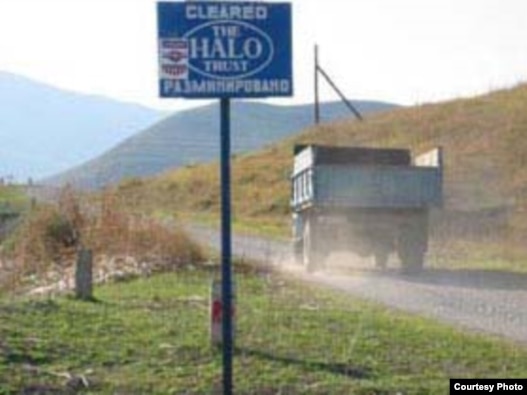
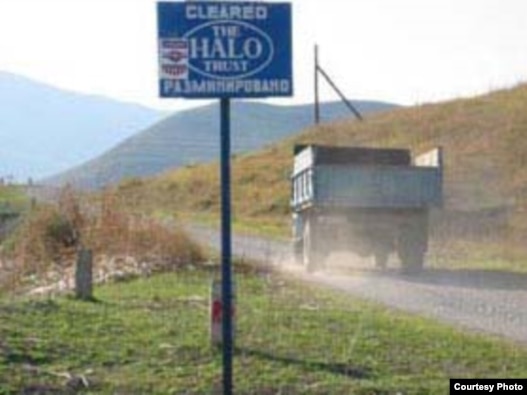
    A HALO Trust road sign in an area in Nagorno-Karabakh that was cleared of land mines.A HALO Trust road sign in an area in Nagorno-Karabakh that was cleared of land mines.
    June 24, 2010
    YEREVAN — An Iranian diplomat says Tehran is strongly opposed to U.S. involvement in a multinational peacekeeping force that would be deployed around the disputed territory of Nagorno-Karabakh in the event of an Armenian-Azerbaijani peace accord, RFE/RL’s Armenian Service reports.

    Iranian Ambassador to Armenia Seyed Ali Saghaeyan issued the warning at a news conference in Yerevan on June 23.

    Such a peacekeeping operation is an important element of the current and previous peace proposals made by the United States, Russian, and French mediators spearheading international efforts to settle the dispute over the breakaway Azerbaijani region.

    Analysts have long speculated about the possible composition of foreign troops that would enforce a future peace deal.

    According to Saghaeyan, the United States is keen to have troops in Azerbaijan’s Fizuli district, which borders Iran and was mostly occupied by Karabakh Armenian forces in 1993. He claimed such a move would pose a serious threat to Iran given its tense relations with Washington.

    “Iran is the only country adjacent to the conflicting parties, and in terms if ensuring its own security, it will not allow the deployment of American forces,” Saghayean said.

    Meanwhile, Armenian President Serzh Sarkisian on June 22 urged Western powers to respect Iran’s geopolitical interests in the South Caucasus and held up Armenia’s economic projects with the Islamic republic as a model for regional cooperation.

    Ending an official visit to Germany, Sarkisian also asserted that the Western-backed energy projects involving Azerbaijan and excluding Armenia have only complicated a peaceful resolution of the Karabakh conflict.

    In a speech at the Konrad Adenauer Foundation in Berlin, he said: “I do realize that in the light of the sanctions imposed on Iran some people will treat my approach with skepticism, but I am convinced that it is wrong and not possible to ignore Iran in regional solutions.”

    Sarkisian did not specify what concrete role Iran should play in regional security. Nor was it clear whether he thinks Tehran should have a major say in the Karabakh peace process.

    https://www.rferl.org/a/Iran_Against_Any_US_Peacekeeping_Role_For_Karabakh/2081078.html
  • Kurdish Affairs Expert Offers Regional Perspective On Growing Violence In Turkey

    Kurdish Affairs Expert Offers Regional Perspective On Growing Violence In Turkey

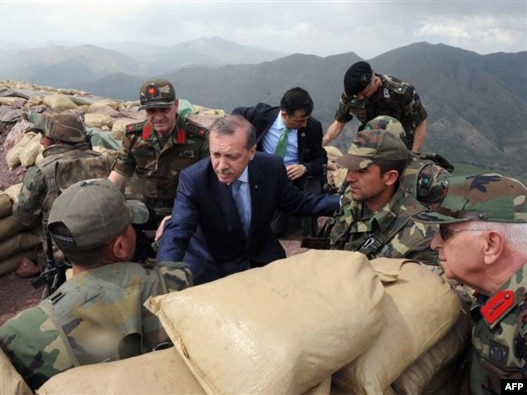
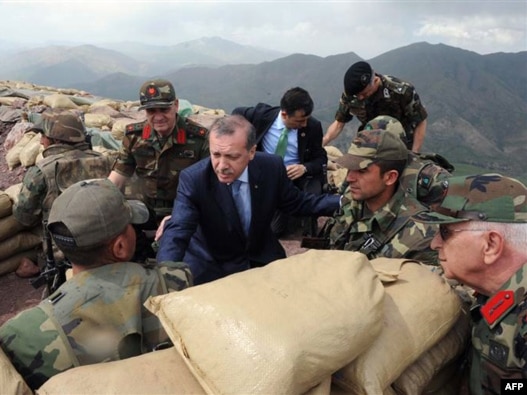
    Turkish Prime Minister Tayyip Erdogan (center) talks with Turkish soldiers in a trench during his visit to the Turkish city of Hakkari on the border with Iraq on June 20.Turkish Prime Minister Tayyip Erdogan (center) talks with Turkish soldiers in a trench during his visit to the Turkish city of Hakkari on the border with Iraq on June 20.
    June 24, 2010
    With violence linked to Kurdish militants increasing in Turkey in recent weeks, the likelihood appears to be growing for a cross-border ground assault into northern Iraq by Turkish military forces. RFE/RL correspondent Ron Synovitz spoke with Michael Gunter — an authority on Kurdish affairs in Turkey, northern Iraq, Syria, and Iran — for a regional perspective on what is happening. Gunter, a political science professor at Tennessee Tech University and the International University in Vienna, has written nine books about the Kurdish people of the region — including some of the first analyses in English of Kurdish unrest in the Middle East.

    RFE/RL: Violence in Turkey attributed to the outlawed Kurdistan Workers Party, the PKK, has been growing in recent weeks since the PKK ended the unilateral cease-fire that it declared last year. What is your overview of this situation in Turkey?

    Gunter: In Turkey, it’s extremely disappointing because last fall the Kurdish opening of the Turkish government promised to go a long way to begin solving the Kurdish problem in Turkey and I have never seen the Kurds so optimistic as they were last fall. However, all this came tumbling down for a number of reasons.

    Today we are back to square one. Turkey feels that the Kurds are trying to destroy Turkey. When I say the Kurds, I mean the PKK. There are many Kurds in Turkey that seem quite satisfied with the situation; whereas the PKK feels that the Turks have just not been sincere about any really genuine reform.

    RFE/RL: Turkish military forces this week launched operations in southeastern Turkey against Kurdish militants. Turkish forces also have set up blocking positions in the mountains along the Turkey-Iraq border. What is your analysis on these military operations?

    Gunter: Northern Iraq and the Qandil mountains near the Turkish border serves as a safe house for the PKK. In the last few weeks, the PKK has begun serious military action again in Turkey and the Turks feel it is coming from the Qandil mountains. That is partially true. But I think, too often, we don’t realize that there are PKK stationed in Turkey, too, and that even if the Qandil mountain safe house in northern Iraq were totally shut down, the PKK operations would continue from bases and safe houses within Turkey, too.

    RFE/RL: Could you discuss some of key Kurdish factions in Turkey, northern Iraq, Iran, and Syria, and their interests? Is there unity among them or are they working toward separate goals?

    Gunter: That would take an entire book and more. But in general, the Kurds throughout the region are in ferment. One of the main reasons is that the United States’ war against Iraq that began in 2003 opened up a Pandora’s box leading to the Kurdistan Regional Government, the KRG, in northern Iraq — which, in modern times, is arguably the first real Kurdish government in the world.

    RFE/RL: What impact has the creation of the KRG in northern Iraq had on the Kurdish question across the region?

    Gunter: The KRG not only has created a semi-independent state in northern Iraq, which attracts and inspires Kurds in Iran and in Turkey and in Syria; but the KRG has encouraged Kurds to strike out for their rights in these three other states. One problem the Kurds have always suffered from, though, is internal divisions, and these internal divisions among the Kurds are exacerbated by the fact that they live in different states, which has led the Kurds to have different interests. So I don’t see any particular coordination on the lines of a pan-Kurdish movement. Indeed, one traditional way the Kurds are controlled in the Middle East is “divide and rule.” The Turkish government right now is attempting to use the KRG in northern Iraq against the PKK that is stationed in Turkey.

    RFE/RL: Masud Barzani, the president of the Kurdish regional government in northern Iraq, visited Ankara on June 2, where he met with Turkish Prime Minister Tayyip Erdogan and President Abdullah Gul to discuss what the Turkish government described as “security issues.” Do you think these talks will result in any overt cooperation between them, or perhaps a tacit understanding, on the issue of rising PKK violence in Turkey?

    Gunter: It’s a very delicate situation. Both sides have very strong interests in cooperating with each other, but the KRG certainly has no interest in fighting against the PKK. Back in the early 1990s, Turkey was able to use the Iraqi Kurds to fight against the PKK — which caused an enormous amount of angst among the Kurds throughout the region and the world. So I don’t see any way that the KRG — Barzani — is going to fight against the PKK.

    On the other hand, Barzani and the KRG have a tremendous vested interest in cooperating with Turkey because as the United States prepares to leave Iraq, Turkey is, in effect, going to be the great power guarantee of the KRG. The KRG must cooperate with Turkey economically and politically. And that goes for Turkey too. Turkey has a great deal of vested interest in economic and political cooperation with the KRG. Exactly how you compromise and meld these two very contradictory goals of Turkey and the KRG is beyond me. It creates constant problems between the two — how they are going to cooperate when they basically have different interests concerning the PKK.

    RFE/RL: Some experts say it appears that there may be some kind of tacit “hot pursuit” agreement between the KRG and Anakara when it comes to cross-border incursions by Turkish forces to go after PKK militants in northern Iraq. What do you think?

    Gunter: I basically agree. But that hot pursuit agreement is tacit. There’s nothing written down. But in effect, I think that is going on right now. The KRG criticizes Turkey, but what can the KRG do. In effect, the KRG realizes that it is going to have to let Turkey make these ground interventions. As far as Turkey goes, Turkey has been intervening in northern Iraq for the last 20 or 25 years. The fact that the situation continues shows that Turkey has made little if any progress in its interventions. So I think the Turkish interventions into Iraq are largely for domestic consumption and are certainly not going to root out the PKK problem which has been there for over 30 years.

    RFE/RL: The rhetoric of Turkey’s Prime Minister Erdogan about Kurdish militants has been vitriolic — saying PKK fighters would “dry in their swamp and drown in their own blood.” Do you think this is a sign that Turkey may be preparing for another major ground offensive into northern Iraq like the kind last seen in February 2008?

    Gunter: I think Prime Minister Erdogan of Turkey has opened up his reelection campaign and, by taking this belligerent attitude toward the PKK, is trying to get some legitimate looking nationalist credentials for the upcoming Turkish election. Yes, I think Turkey may well have a major intervention into northern Iraq. But I’m saying it won’t accomplish anything except rhetoric.

    RFE/RL: Do you think there are similar tacit “hot pursuit” agreements between the KRG and Iran?

    Gunter: Iran and Turkey mirror each other in their relations, off and on, with the KRG and the PKK. It’s Turkey that we hear the most about, but Iran has been fighting its own battle against a supposed PKK associate called the PJAK — the Freedom Life Party in northern Iraq, which has headquarters in the Qandil mountains. It is an Iranian-Kurdish party that periodically raids into Iran, and Iran shells the border and raids back into northern Iraq. So there is an overall firmament involving both Turkey and Iran.

    RFE/RL: What about Baghdad’s apparent benign tolerance of Turkish incursions into northern Iraq? Do you think Baghdad has an any agreements with Ankara to turn a blind eye toward Turkish forces that go after PKK militants in northern Iraq?

    Gunter: Probably even more so. Baghdad has its own serious domestic problems — headed by the fact that Baghdad doesn’t even have a government right now and therefore is in a very poor position to oppose Turkish and Iranian interventions. However, on a theoretical basis, of course, Baghdad is the ultimate sovereign authority in northern Iraq. So Turkey and Iran are going to have to, at least in theory, deal with the Baghdad government. Actually, this situation gives a little leeway because when the KRG does cooperate with Turkey, it can say, “Well, we’re not really cooperating with Turkey because we’re not the sovereign here. Baghdad is the sovereign.” “It’s Baghdad’s fault for cooperating with Turkey and letting Turkish troops into northern Iraq to chase the PKK.” So the situation with Baghdad can be played both ways by both sides and further complicates the situation.

    RFE/RL: Do you think Baghdad and Iran have tacit “hot pursuit” agreements when it comes to dealing with Kurdish militants like the PJAK in northern Iraq?

    Gunter: I certainly think there are tacit agreements here. And, of course, we don’t know ultimately the relationship between the Iraqi Shi’ite parties and Iran. I suspect that the most important accomplishment in overthrowing Saddam [Hussein’s regime] was to hand Iraq to Iran. Sometimes we see signs of that and sometimes we see signs that the Iraqi Shi’ites remain very Iraqi nationalistic. But certainly Baghdad has been in no position to oppose Iranian or Turkish interventions into northern Iraq. Even if Baghdad were, I think there would be tacit understandings that Iran and Turkey have a right to go after what they see as terrorist movements.

    https://www.rferl.org/a/Kurdish_Expert_Regional_Perspective_Violence_Turkey/2081625.html

  • Jewish dance group stoned in Hanover

    Jewish dance group stoned in Hanover

    German police are investigating the stoning of a Jewish dance group trying to perform on the street in the city of Hanover.

    Youths reportedly shouted “Juden Raus” (Jews Out) as they attacked the dancers of the Chaverim (“Friends” in Hebrew) dance troupe last weekend.

    Police said several Muslim immigrant youths were among the attackers and two youths were being questioned.

    A German Jewish leader said she feared growing anti-Israeli sentiment.

    Full Story at BBC >>

  • How European Tolerance Islamized Turkey

    How European Tolerance Islamized Turkey

    There was a time when Turkey was a modern example to the rest of the Muslim world. And there was one fundamental reason for that. It was because Turkey realized that it could either be a backward Muslim colony of Europe, or it could put Islam in its place, and reform in order to try to keep up with Europe. And there is also a fundamental reason why that brand of reform has not come to the rest of the Muslim world. It is because they never had to learn that same lesson.

    While the Ottoman Empire had once threatened Europe when both were getting by on the remnants of skills and knowledge from the Roman days, but as Europe progressed, the conquerors of Byzantium could not keep up. And so the Ottoman Empire became the Sick Man of Europe, and the nations of Europe fought major wars over who would have first dibs on carving up its territory. The last of those conflicts was World War I. And so Turkey was faced with a decision. To try and compete with Europe by becoming like the Europeans, or becoming just another colony.

    But while Turkey modernized, the Muslim nations of the Middle East instead followed a completely different paradigm. And they succeeded for two reasons. Oil. And the willingness of First and Second World powers to pander to them. Where Turkey had to learn to do things the hard way, to separate mosque from state and try to build modern institutions, a bunch of backward desert sheiks were lucky enough to take control of barren regions where infidel geologists found oil. Those sheiks were also lucky enough to stumble into a perfect era of infidel infighting that allowed them to play Americans against the Europeans against the Russians. Not long after the sheiks had more money than they could count, which meant that they didn’t need to modernize, instead they could buy all the American and European technology they wanted, and even import actual Americans and Europeans to do the work for them.

    Of course the Saudi, Emirati or Kuwaiti way was none too feasible for Muslim countries without a whole lot of oil under their feet– but that didn’t matter. Because money bought them a whole lot of cultural warfare. While US troops guarded the fat sheiks from any neighbors who were investing their money into building a military– the Saudis spent their money on foreign investments and on building up the Islamic takeover of Europe and America. Where post-war terrorism by Muslims had begun as Soviet proxy attacks on Britain, America and Israel– it discarded its red Marxist outer shell to reveal its green Islamist interior. Not long after the the USSR fell, Middle Eastern terrorism was swiftly taking on a wholly Islamist coloration. A coloration heavily funded by oil money.

    The Saudi model showed that modernization did not require modern thinking. It showed that Muslim countries could still be Islamist, and still have all the benefits of modern living. All it took was money. While Turkey was busy being Europe’s backward cousin, the Saudis were gorging themselves on Western delicacies, importing foreign architects and landscape planners, models, entertainers and huge numbers of slaves from Southeast Asia. In doing so they made their larger point, which is that Western civilization was a commodity that could be bought, and that it was possible to have it all, the raw meat of Islam and the fruits of the West on one plate. Western civilization was for sale.

    Turkey had reformed because civilization had proven to be the strong horse, and Islam the weak horse. When the balance shifted, civilization was revealed as the weak force, and Islam as the strong force. And not only did we not try to turn the tide, our governments affirmed this with everything they did, both in their domestic policies toward Muslim immigrants, and their foreign policy toward Muslim nations. Call it appeasement or dhimmism, what they did not only devalued them individually and nationally, it devalued the very idea that civilization was superior to medieval barbarism, and destroyed the very forces that might have modernized the Muslim world.

    A generation later, the tide of Muslim immigrants to Europe learned the same lesson as well. After some initial fuss about integration, they could also combine Islamism and Western civilization. It was possible for them to be doctors, dentists, lords and engineers– while at the same time believing they had a duty to force their new hosts to bow to the god of Islam, first seen by Mohammed on a three day bender in the desert. And if they had any qualms about it, their local petrodollar mosques were sure to fix that. And if not them, then their children.

    Turkish guest workers saw this all firsthand. Which made the idea that Turkey had to be secular in order for Turks to benefit from the modern world seem all the more absurd. That sort of thinking might have made sense back in the day when Her Majesty’s Armies were administering an empire, but not when Islamist preachers were hectoring the masses and jeering at returning soldiers in the heart of her kingdom.

    Western civilization had not only shown itself to be for sale, but its secularism and modernity were instead revealed to be weaknesses. Any Muslim in Europe could not help but realize that it was the very lack of principles that made it so ripe for the plucking. The way of Ataturk had ceased to make sense. The way of the House of Saud on the other hand was looking pretty good. Or even the Way of Bin Laden.

    European tolerance for Islam eliminated any real reason for Turkey not to become Islamist. As Erdogan has demonstrated, it is possible to run a country that continues to deny genocide, oppresses minorities and has jails filled with political prisoners. That openly supports terrorism and Islamism– and yet is on track for membership in the European Union. Erdogan does not need to dig up Ataturk and turn him upside down– the Great Tolerators of Europe were already doing it for him.

    Where Ataturk knew that Turkey had to modernize, the Islamist believes that modernity is a sham. That Islamic science has already discovered everything worth discovering and that what the West calls modernity is nothing more than an excuse for wanton immorality and a lack of principles. The modern European Muslim is increasingly coming around to that way of thinking. And thought that way of thinking may be a sham, it is a reasonably successful one, because Europe itself is propping up its underlying assumptions.

    Where the Sick Man of Europe had to choose between modernity and Islam– the modern Muslim need make no such choices. He can listen to Islamist preachers ranting on YouTube, compel patients at his medical office to comply with Islamic laws and have his wife cover her face when she goes outside.

    Progress comes from challenges. Challenges demand that you overcome the obstacles holding you back. The Muslim world no longer has challenges. Instead the door has been thrown open for them with no demands or expectations. Islam is not held accountable in the way that other religions are. Muslims are not held accountable for one of the world’s largest and longest ongoing killing sprees. Muslim countries are not held accountable for everything from the genocide of millions to barbaric acts of torture and mutilation.

    This is the soft bigotry of low expectations. Nothing is expected from Muslims, which only helps the Islamists make the case that Western civilization is hopelessly decadent and weak, and that imitation it would be a mistake. All the fawning praise directed at the “Religion of Peace” feeds that cycle, reaffirming the Islamists’ arrogance and sense of destiny as those they think of as enemies foolishly give way to them. That is the attitude Hitler had as he realized that the nations that seemed overwhelmingly powerful were not going to stop him. It is the same attitude you can easily see among Islamists, whose sense of cultural invulnerability is running at an all time high.

    Build a mosque near Ground Zero, and you prove that the West does not even value the graves of its martyred dead. Set off a bomb in a crowded cafe and snicker as the governments of the dead rush to assure you that they hold no ill will toward the same ideology responsible. Cover your wife from head to toe on pain of death and watch feminist organizations assure the public that it is the feminist thing to do. To Muslims, Western civilization has gone from a bogeyman to a pathetic joke. Which meant that the Islamization of Muslim countries that had made some concession to Western civilization was a foregone conclusion.

    Paradoxically enough it was European tolerance that helped Islamize Turkey, as it has helped Islamize its own resident Muslims. Its tolerance has only fed intolerance. By acting like the conquered, they have only attracted conquerors. By failing to challenge Islam, they discredited their nations and their way of life in the eyes of men faced with a choice between honorable barbarism and dishonorable accommodation to civilization’s burdens. And the children of those men are murdering them in the streets of their own cities today.

    Source : Sultan Knish Blog

  • Fetullahs Businessman  flex their newfound political power

    Fetullahs Businessman flex their newfound political power

    Wednesday, June 23, 2010
    Rep. Bill Pascrell, center, and Levant Koc, right, of the Interfaith Dialog Center, with Mehmet Sahin of the Turkish Parliament.
    BY HERB JACKSON
    The Record
    WASHINGTON CORRESPONDENT

    Turkic businessmen and community leaders packed a posh Washington hotel to announce their new national group, and invited members of Congress to learn about their growing population and economic power.

    “I want to see all the Jersey guys,” says Rep. Bill Pascrell Jr., D-Paterson, who is quickly surrounded in the Willard Hotel ballroom. “Are these the guys that own all the restaurants?”

    Census data show Pascrell’s district is home to the biggest concentration of Turks in New Jersey, and as he works the room, he waves to members of the band he recognizes from events in Passaic County. He also meets Mehmet Sahin, a member of the Turkish Parliament who, among other things, is seeking contacts for an associate who wants to open a hotel in New Jersey.

    Near the buffet table, Rep. Scott Garrett, R-Wantage, takes a break from his tabbouleh to debate with a Westfield businessman about whether Governor Christie really will cut property taxes.

    Congressmen wooing new business to their districts or debating local politics is hardly new terrain, and in that sense, the opening gala of the Assembly of Turkic American Federations (A fetullah Gulen Organization)last month is like thousands of other receptions every year in Washington.

    But the formation of the ATAF, which highlights an Islamic identity that makes some secular Turks uneasy, comes as Turks are playing catch-up in the Washington influence game.

    They especially want to counter the influence of Armenian-Americans, whose No. 1 issue in Washington for decades has been a United States declaration that the deaths of 1.5 million Armenians in Turkey from 1915 to 1923 were genocide.

    Turkey denies the charge, and disputes what Rutgers University genocide expert Alex Hinton says is a consensus of historians.

    When the latest genocide affirmation resolution passed the House Foreign Affairs Committee by a razor-thin 23-22 margin in March, Turkey briefly recalled its ambassador, and congressional opponents warned that full passage in Congress would damage relations with an important ally.

    Co-sponsors of the measure — including the entire New Jersey delegation except Pascrell — do not share that fear.

    “It should not injure a relationship built on many other things,” said Sen. Frank Lautenberg, D-N.J., who added that his attendance at the ATAF gala was not a sign he was changing his support for the genocide resolution.

    Until recently, Turkey argued its case in Washington primarily through influential former members of Congress who registered with the Justice Department as foreign agents of its government.

    Over the past decade, a few hundred congressional staffers and a handful of members of Congress also took trips funded by Turkish-American groups to Ankara, Istanbul and other cities.

    Starting in 2007, however, the first of two federal political action committees registered, and the principal leader for one of the PACs also registered as a federal lobbyist in 2008.

    By contrast, Armenian groups had spent $2.6 million from 1999 through 2007 on lobbying, and made $569,000 in contributions through federal PACs.

    “We’re historically disorganized,” said Levent Koc, chief executive of the Interfaith Dialog Center founded in Carlstadt and now based in Newark, who invited many of the New Jersey officials to the reception. “We decided to come together for better coordination and communication.”

    The ATAF is an umbrella for 150 separate local organizations around the country, including Koc’s center, the Turkish Cultural Center in Ridgefield and the Pioneer Academy of Science in Clifton.

    All are affiliated with Turkish Muslim scholar Fethullah Gulen, Koc said. Gulen, who now lives in Pennsylvania, advocates a conservative brand of Islam that condemns terrorism and advocates more interfaith cooperation and science education. He was acquitted in absentia of what supporters called politically motivated charges in Turkey of advocating an Islamic state.

    Koc said the new group’s primary goal is to foster better understanding of Turkic people — a term that includes not only those from Turkey but also those from such countries as Azerbaijan, Kazakhstan, Kyrgyzstan, Turkmenistan and Uzbekistan — and cooperation between Muslims and other faiths.

    It’s not connected to the Turkish government or Turkish politics, he said.

    But one person attending the reception, South Hackensack chemical importer Tarik Ok, said one reason the ATAF was forming now was, “The government suggested we all go under one roof.”

    The new group has the leader of a much older group with a similar name uneasy.

    Gunay Evinch, president of the 30-year-old Assembly of Turkish American Associations, said he has asked the newly formed Assembly of Turkic American Federations to change its name and make its ties to the Gulen movement clear.

    “I told them it’s unnecessarily confusing, and it would be better to define yourselves as who you are, a sect movement within Islam,” said Evinch, who has already received mail at his Washington headquarters intended for the other group.

    Evinch said his group and the Turkish Coalition of America, which created a PAC in 2007 and registered to lobby in 2008, have worked hard to increase Turkish influence in Washington by getting American Turks to overcome a reluctance to make campaign contributions.

    “Turks did not [traditionally] reach into their pockets to give to campaigns, they thought it was corrupt,” he said. “The PAC educated people to understand that in the U.S. you can give to campaigns.”

    Evinch said a key difference between his ATAA and the new ATAF is that his group advocates only on issues important to Turks and Turkey, including the Armenian resolution and questions surrounding Cyprus.

    “We don’t advance the cause of Islam or a sect of Islam, and we don’t do interfaith dialogue based on Islam or any religion,” he said. “We also don’t import Turkish politics into our community.”

    Koc said that while it supports better understanding of Islam, his group is not limited to Muslims.

    “I cannot say we’re faith-based. Some scholars say this is a religiously motivated social movement. That doesn’t mean we are serving only Muslims or Turks. We serve all,” Koc said.

    He also disputed any religious motivation in seeking a change in Turkey’s government.

    “There’s a new generation in Turkey, and it’s more open. People opposed to this change are blaming religious people, but there are change supporters who are left wing and right wing, some of them are old socialists,” Koc said.

    “When they try to change the status quo, people who want the status quo blame Muslims. I don’t know why.”

    E-mail: [email protected]