Month: May 2010

  • Azerbaijan, Turkey round off gas talks

    Azerbaijan, Turkey round off gas talks

    Azerbaijan and Turkey rounded off gas talks, Azerbaijani Industry and Energy Minister Natik Aliyev said at the 13th Eurasian Economic Summit in Istanbul.

    The Minister stated that both countries will sign a relevant agreement in the near future, Azertag news agency reports.

    Aliyev noted that Azerbaijani companies have increased investments in Turkey’s economy, adding that over 500 Azeri companies invested in various sectors.

    He also stressed that after SOCAR purchased a 51% share of Turkish petrochemical giant Petkim, it plans to invest additional $3-5 bn in the company.

    A.G.

    News

  • US ambassador hails Turkey’s role in Iran talks

    US ambassador hails Turkey’s role in Iran talks

    U.S. Ambassador to Ankara James Jeffrey said Wednesday that Turkey has played crucial role as a mediator regarding Iran’s nuclear problem for some time.

    Answering questions of journalists at an industrial zone in Ankara, Jeffrey said another mediator Brazil was in close cooperation with Turkey. U.S. President Barack Obama met with Turkish Prime Minister Recep Tayyip Erdoğan and Brazilian President Luiz Inacio Lula da Silva in Washington, D.C. and they discussed the issue of being a mediator for Iran’s nuclear problem, Jeffrey said.

    Meanwhile, Turkey’s Foreign Minister Ahmet Davutoğlu expressed hope on Wednesday that diplomatic efforts Turkey jointly exerted with Brazil yielded a positive result over Iran’s nuclear program. “We are continuing our vigorous consultations in full coordination with Brazil. We will have fresh initiatives in the coming days and I hope our joint efforts will bring about positive results,” Davutoglu told reporters in a press meeting with his Ukrainian counterpart Kostyantyn Hryshchenko in capital Kiev.

    Iranian President Mahmoud Ahmadinejad has agreed “in principle” to a Brazilian role in breaking the deadlock over a U.N.-backed nuclear fuel swap with the West.

    Under the U.N. plan first put forward in 2009, Western powers would send nuclear fuel rods to a Tehran reactor in exchange for Iran’s stock of lower-level enriched uranium. The U.S. and its allies fear Iran’s disputed nuclear program aims to build nuclear weapons, and view the swap as a way to curb Tehran’s capacity to do so.

    Brazil denies nuclear swap plan

    Iran, which insists its nuclear program only aims to generate electricity, rejected the original exchange proposal. At the same time, the country’s leaders have worked to keep the offer on the table, proposing variations, though without accepting the terms set in the U.N. proposal.

    A statement posted on Ahmadinejad’s website late Tuesday said during a telephone conversation with Venezuelan President Hugo Chavez, the Iranian president “announced his agreement in principle” to Brazilian President Luiz Inacio Lula da Silva’s mediation proposal.

    However, a spokesman for Brazil’s Foreign Ministry said Wednesday Brasilia had not made an official offer to mediate yet, but that Brazil was ready to help with talks any way it can.

    A Brazilian foreign ministry spokesman told AFP that no such plan had been proposed during a visit to Tehran last month by Brazilian Foreign Minister Celso Amorim.

    “We were informed that an official Iranian government website mentioned President Mahmoud Ahmadinejad supported a Brazilian ‘program.’ But there was no presentation of a formal program during the foreign minister’s visit,” the spokesman said.

    Brazil and Turkey, which are currently non-permanent members of the Security Council, oppose a new round of sanctions, insisting that only talks will resolve the impasse.

    —–

    Compiled from AA, AFP and AP reports by the Daily News staff.

    www.Hurriyetdailynews.com
  • Osama bin Laden is in Washington, says Ahmadinejad

    Osama bin Laden is in Washington, says Ahmadinejad

    WASHINGTON — Iran’s President Mahmoud Ahmadinejad on Wednesday denied recent press reports that Osama bin Laden is in Tehran and insisted that the Al-Qaeda leader is, in fact, in the US capital of Washington.

    “Rest assured that he’s in Washington. I think there’s a high chance he’s there,” the Iranian leader told ABC television in an interview.

    Without backing up the claim, the Iranian leader said he had “heard” that bin Laden was in the US capital.

    “Yes, I did. He’s there. Because he was a previous partner of Mr. Bush,” he said referring to former president George W. Bush.

    “They were colleagues, in fact, in the old days. You know that. They were in the oil business together. They worked together. Mr. bin Laden never cooperated with Iran but he cooperated with Mr. Bush,” Ahmadinejad said.

    He added that, at any rate, US officials ought to know the extremist Islamic leaders whereabouts.

    “The US government has invaded Afghanistan in order to arrest bin Laden. They probably know where bin Laden is. If they don’t know he is, why did they invade? Could we know the intelligence?” he asked ABC.

    “First they should have tried to find his location, then invade, those who did not know about his location first they invaded and then they tried to find out where he is, is that logical?”

    AFP

  • Pilger punctures “war on terror” lies

    Pilger punctures “war on terror” lies

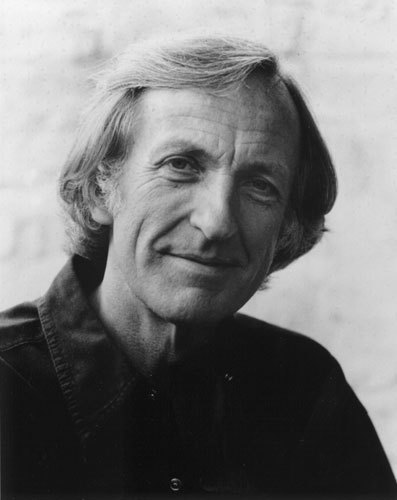
    Breaking the Silence, written and directed by John Pilger
    By Richard Phillips
    12 January 2004

    Breaking the Silence, the latest documentary by veteran journalist John Pilger, is an important exposure of the lies and falsifications used to justify the Bush administration’s global “war against terror” and its illegal attacks on Afghanistan and Iraq. The one-hour documentary was screened on December 9 by Australia’s Special Broadcasting Services network and given a four-day release in a Sydney cinema.
    Using archival footage and interviews with former intelligence analysts, historians, human rights activists and some White House officials, the documentary explains how the Bush administration seized on the September 11, 2001, terrorist attack on the World Trade Center to activate long-held plans to seize control of valuable oil resources in the Middle East and elsewhere.
    The documentary opens with a series of black and white photographs showing the carnage inflicted on Iraqis by US and British military forces over the past year. A voiceover from US President George W. Bush declares that America will bring “food, medicine, supplies and freedom” to the people of Iraq. Likewise, British Prime Minister Tony Blair claims the war in Iraq is a “fight for freedom”.
    Against these chilling images, Pilger explains that US actions have nothing to do with fighting terrorism but are part of an opened-ended war for American global dominance. The real danger facing humanity, he says, is the increasingly aggressive military action of US imperialism and the state terrorism orchestrated by the White House.
    Breaking the Silence also includes firsthand reportage from Afghanistan. Pilger, who has written and directed more than 50 documentaries during his 30-year career, describes Afghanistan as a country “more devastated than anything I have seen since Pol Pot’s Cambodia”.
    Among those interviewed is Orifa, an Afghan woman who lost eight members of her family including six children, when the US airforce dropped a 500-pound bomb on her mud-brick home in 2001. She describes the massacre and declares: “What has America done for us? My day and night is full of sorrow.”
    Pilger speaks with New Yorker Rita Lasar, whose brother, Avraham Zelmanowitz, was killed in the September 11 attack on the World Trade Center (WTC). Lasar notes the remarkable similarity between the fundamentalist rhetoric of Al Qaeda and that of the Bush administration. She states that the US government used the death of her brother and other WTC victims “to justify killing innocent people in Afghanistan”.
    Angered and concerned, she decides to visit Afghanistan to help the victims of US attacks. She meets Orifa and visits the US embassy with her to try to secure compensation for the Afghan woman. Senior US officials, however, refuse to see Orifa and denounce her as a beggar.
    The documentary cuts to Bush telling the Congress that America was “a friend of the Afghan people”. But as Pilger points out, few countries in the world have been helped less by the US. Only 3 percent of all aid given to Afghanistan is used for reconstruction. Kabul, the capital, is a maze of destroyed buildings and infrastructure, with US cluster bombs still not cleared from parts of the city and hundreds of families living in ruined and abandoned buildings.
    At the same time, the US government provides military hardware and finance to a select group of Afghan warlords who have restored opium production to record levels and maintained a reign of terror over the population. While ordinary people in “liberated” Afghanistan live in dire poverty, the US has a major military base and plans are underway for a US-controlled oil pipeline from Central Asia.
    Breaking the Silence highlights the role played by Project for the New American Century (PNAC), the Washington think-tank established by Richard Cheney, Donald Rumsfeld, Paul Wolfowitz, Richard Perle and other extreme-right Republicans in the 1990s.
    The PNAC developed detailed plans for the invasion of Iraq and helped formulate the Bush administration’s “war against terror” to justify the placement of American military forces in key oil and natural gas locations around the world. Its Rebuilding America’s Defenses: Strategy, Forces and Resources for a New Century forms the foundation of the US government’s “National Security Strategy”.
    Pilger also points to Washington’s long history of supporting Islamic fundamentalist and other terror groups in the Middle East, Latin America and elsewhere.
    In mid-1979, six months before the Soviet invasion of Afghanistan, the Carter administration authorised $500 million to help establish the mujahedin. For many years Osama bin Laden was regarded as an ally by London and Washington, both of which provided finance and political backing.
    In 1996, the Clinton administration established friendly relations with the Taliban government in order to secure its backing for a US oil pipeline from Central Asia through Afghanistan. Taliban officials were flown to the US, where they were given red carpet treatment.
    Iraqi casualties
    Two brief but revealing interviews expose the Bush administration’s criminal indifference to the human consequences of its actions and highlight its sensitivity to any criticism.
    Defence Undersecretary Douglas Feith, an extreme-right ideologue and former member of the Reagan administration, denies that the US supplied weapons of mass destruction to Saddam Hussein during the early 1980s. His claims, however, are contradicted by archival footage of Donald Rumsfeld warmly greeting Hussein in Baghdad in 1983 during the Iran-Iraq war. The US encouraged the former Iraqi dictator to wage war against Iran and provided him with material and logistical support. This included chemical and biological weapons and advice on how to use them.
    Pilger points out that an estimated 10,000 Iraqis were killed in last year’s invasion. Feith denies this figure but then declares that it is “inevitable” that innocent people are killed in war. When Pilger attempts to press the point about Iraqi casualties, an off-camera US military official intervenes and orders an end to the interview.
    Undersecretary of State John Bolton cynically tells Pilger that the US has done “more to create the conditions for individual freedom than any other country in the world”. Pilger answers this with an on-the-spot report from Afghanistan about America’s Bagram Air Base and the arrest of Wazir Mohamad, an Afghan taxi driver.
    Mohamad, who is officially recognised as a political opponent of the former Taliban regime, was seized by the US military in April 2002, jailed in Bagram and then shipped to Guantanamo Bay after he asked why one of his taxi-driver friends had been jailed by the US. While his friend has since been released, Mohamad is still held incommunicado and without charge in Guantanamo Bay.
    Pilger asks Bolton about Iraq casualties. His answer: “I think Americans, like most people, are mostly concerned about their own country. I don’t know how many Iraqi civilians were killed. But I can assure you that the number is the absolute minimum that is possible in modern warfare… One of the stunning things about the quick coalition victory was… how low Iraqi casualties were.”
    Among other things, this chilling reply is aimed at denying the real character of the unprovoked and illegal US military assault, which led to the death of thousands of innocent Iraqis. Bolton, as it happens, was centrally involved in the Bush administration’s campaign against the International Criminal Court (ICC), which has a mandate to conduct war crime hearings. He claims that the court, which the US refuses to support, is “contrary to US principles”. Washington has demanded and obtained agreements with up to 70 countries exempting Americans from war crime trials.
    As the interview ends, Bolton asks Pilger if he is a member of the British Labour Party, suggesting this had something to do with the journalist’s line of questioning. When Pilger explains that he is not, and that British Labour consisted of “the conservatives”, Bolton retorts, “You’re a Communist Party member then?”
    Bolton’s reaction reveals the relations White House officials have come to expect from the mass media, which slavishly parrots every government lie. When confronted with a few probing questions, Bolton treats the journalist as an outright political opponent, resorting immediately to his stock-in-trade—provocative red-baiting.
    WMD lies
    Another significant interview in the film takes place with Andrew Wilkie, the former Australian intelligence officer who resigned from the Office of National Assessments in protest over Australia’s participation in the US-led invasion of Iraq. Wilkie was the only serving intelligence analyst to break ranks, quit his position and publicly challenge the government lies about “weapons of mass destruction” before the Iraq invasion.
    In measured language, Wilkie tells Pilger that the Bush, Blair and Howard governments were guilty of “serious dishonesty”. Iraq possessed no secret stockpiles of weapons and there were no links between Saddam Hussein and Al Qaeda. Wesley Clark and others interviewed by Pilger back up Wilkie’s statement.
    Ray McGovern, a former senior CIA officer and friend of former president George Bush senior, tells Pilger that Bush senior regarded figures such as Donald Rumsfeld, Paul Wolfowitz and Richard Perle as dangerous “crazies”. McGovern bluntly states that the weapons of mass destruction claims used by Bush and Blair against Iraq were “95 percent charade”.
    Denis Halliday, a former UN assistant secretary-general, explains that the Bush administration’s “axis of evil” and its preemptive strike doctrine represents an “outrageous flaunting of international law”. Halliday, who resigned from his position in 1998, has recently attacked the UN as “an aggressive arm of US foreign policy”.
    Pilger touches on the media’s pernicious role in circulating White House lies about WMDs and amplifying paranoia about supposed impending terrorist attacks on the US from Iraq. He also briefly interviews Kings College Professor Richard Overy, an acclaimed expert on Nazi war crimes. Overy makes clear that the unprovoked US-led attack on Iraq constitutes a war crime as defined at the Nuremberg trials and in the Geneva Conventions.
    Powell admits Iraq has no WMDs
    Perhaps the most damning footage in the documentary concerns speeches by US Secretary of State Colin Powell and National Security Adviser Condoleeza Rice in 2001, a few months before the September 11 attacks.
    Few will forget Powell’s lengthy address to the UN Security Council on February 5, 2003, in which he solemnly declared that Iraq had vast stockpiles of weapons of mass destruction and was involved in an elaborate campaign to conceal weapons materials and manufacturing facilities. But as Pilger’s documentary reveals, two years earlier Powell and Condoleeza Rice claimed the opposite.
    Speaking in Cairo on February 24, 2001, seven months before 9/11, Powell categorically declared: “He [Saddam Hussein] has not developed any significant capability with respect to weapons of mass destruction. He is unable to project conventional power against his neighbours.” Rice repeated this in July 2001 when she told US television that the Iraqi military had not been rebuilt since 1991 war.
    The Bush administration at that time, for its own tactical reasons, was proclaiming the effectiveness of sanctions against Iraq. But in the aftermath of 9/11, the White House seized on the terrorist attacks to unleash its military assault on Afghanistan and prepare for a full-scale invasion of Iraq. The mass media dutifully ignored Powell and Rice’s previous statements. Pilger’s use of this archival footage is powerful and constitutes a damning exposure of the White House.
    Pilger concludes his documentary with a direct appeal for people to challenge Washington and London. What is required, he says, is for people around the world to remember the lies and the ongoing military aggression.
    “We need not accept any of this if we recognise that there are now two superpowers. One is the regime in Washington the other is public opinion now stirring all over the world. Make no mistake it is an epic struggle. The alternative is not just conquest of far away countries; it is the conquest of us, of our minds, our humanity and our self-respect. If we remain silent, victory over us is assured.”
    Pilger is one of a handful of serious journalists prepared to openly challenge the Bush administration and its international allies and point to the terrible human consequences of their policies. But Pilger’s political perspective, which is aimed at pressuring rival imperialist powers to oppose the US or making appeals to the UN, weakens the documentary.
    In his concluding remarks, Pilger states that the United Nations was founded “so that we would never forget the crimes of the great powers”.
    This comment is false and highlights the political flaws in Pilger’s outlook. The United Nations was not established to highlight the “crimes of the great powers” but was formed in 1945 by the victors of World War II and from the outset operated as an imperialist institution.
    While the UN mediated conflicts between US and the Soviet Union during the Cold War period, its central function for almost 60 years has been as a clearinghouse for imperialist intrigue and oppression against the backward countries. The most obvious recent examples were the UN backing for the 1991 Gulf War and the harsh economic sanctions and invasive weapons inspection regime imposed on Iraq over the ensuing decade.
    Pilger’s inability to confront this reality means that he cannot explain why the UN failed to challenge the latest US invasion of Iraq or why it endorsed the illegal war after the fact. The viewer is left to draw the conclusion that the replacement of the US occupation of Iraq with a UN force would represent a positive alternative.
    Notwithstanding this significant weakness, Pilger’s documentary is a valuable work. It delivers an important blow against the mountain of lies used to justify the US-led military aggression in Afghanistan and Iraq, and therefore deserves the widest possible audience.
    World Socialist Website
  • Legal system is corrupt, admit judges

    Legal system is corrupt, admit judges

    Lord Chancellor’s Department report condemns secret soundings

    By Robert Verkaik, Legal Affairs Correspondent

    Judges and senior lawyers admit that the system under which they are appointed is riddled with corruption and open to widespread abuse.

    Judges and senior lawyers admit that the system under which they are appointed is riddled with corruption and open to widespread abuse.

    In a damning report produced by the Lord Chancellor’s Department, it is likened to “the old-fashioned class or caste system” by many of the judges and QCs interviewed.

    The findings will deeply embarrass the Lord Chancellor, Lord Irvine of Lairg, who has repeatedly rejected calls to end the “secret soundings”, whereby judges and senior lawyers are consulted on the suitability of judicial candidates.

    Responses from 137 sitting judges or senior lawyers showed a “clear consensus” for the appointments processes to be “based on openness, objectivity, and selection on merit rather than patronage”. It is the first detailed research to include judges.

    Of the 137 respondents only 10 said no changes were needed to the system. A total of 52 were interviewed face-to-face.

    One judge said: “I don’t know what the criteria are for silk… maybe there is a document somewhere that I haven’t seen but it seems to me that it depends on who you know, what committee you sit on rather than anything else. There doesn’t seem to be a system of interview. It seems to be on general reputation and I think that is unreliable.”

    Many of those who responded expressed concern that the present system deterred applications from women and the ethnic minorities. Women account for 11 per cent and ethnic minorities for 1.7 per cent of all judges in England and Wales, according to figures from 1999.

    A serious concern among those consulted was the domination of an “elite group of chambers” in both London and the regions from which most appointments were made.

    One white barrister admitted: “I’m the wrong person to ask about the difficulties in applying for silk. I mean in these chambers usually everyone gets silk, usually the first time of asking and everyone becomes made a judge. It is a sort of ‘golden road’.”

    The report’s authors, Kate Malleson, of the London School of Economics, and Fareda Banda, of the School of Oriental and African Studies, said many respondents wanted proper recruitment of under-represented groups.

    The report said: “The need for the active encouragement of good candidates and the adoption of processes which are, and can be seen to be, more open and objective were most commonly proposed as ways of improving the accessibility and fairness of the processes.”

    However, the authors noted that there was widespread support for efforts by the Lord Chancellor to increase the number of women and ethnic minority judges. One respondent described it as a vicious circle, saying: “Black and Asian barristers don’t get the work because they are considered to be incompetent and because they don’t get the work they are considered to be incompetent.”

    The respondents felt that there was a need for a judicial appointment commission with many favouring a broad range of membership including judges, lawyers and civil servants. The authors said that the growing concern about the unrepresentative background of the judiciary had become more acute because of the “ten-fold” increase in the size of the judiciary since the 1970s.

    Last year Sir Leonard Peach produced a report on the process by which judicial and silk appointments are made, commissioned by the Lord Chancellor.

    The Independant
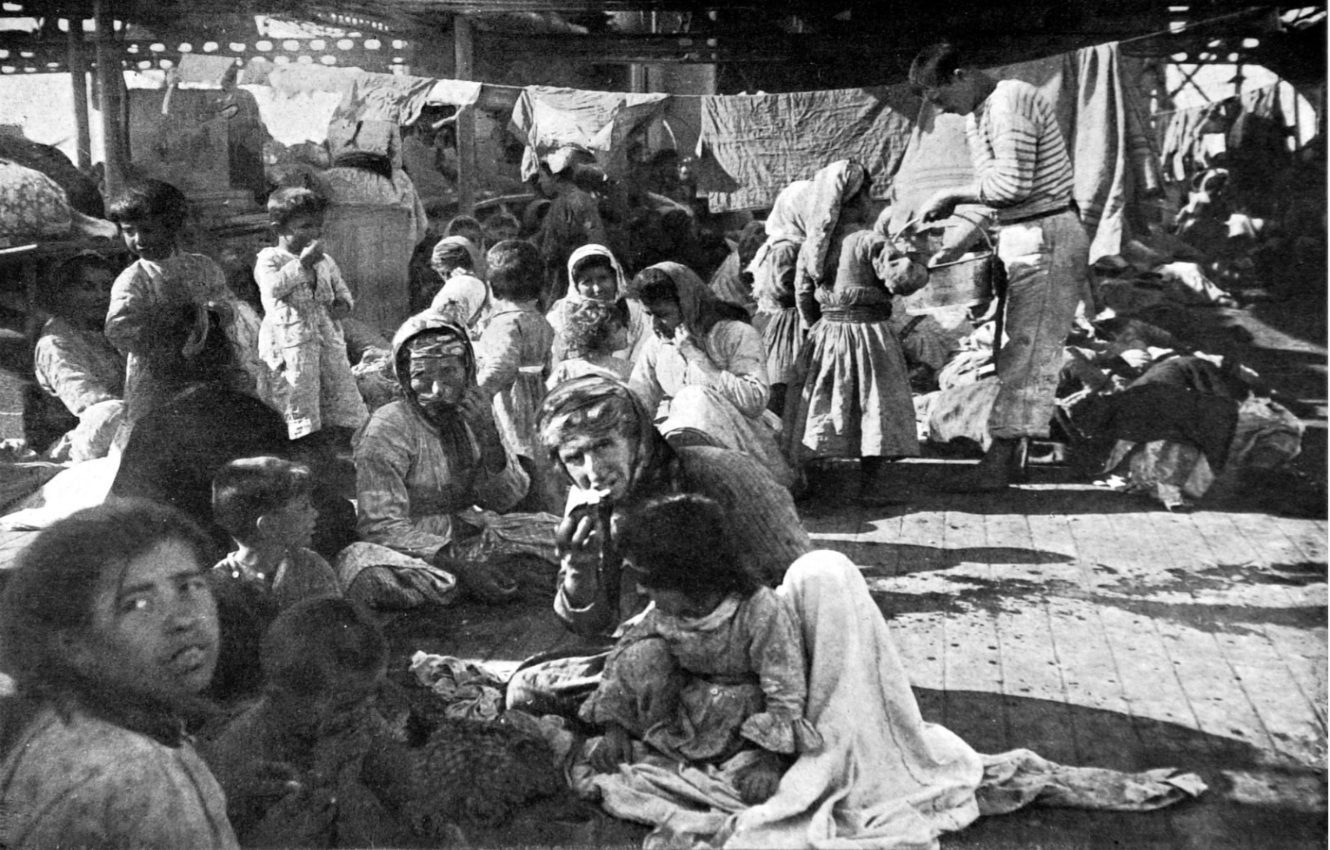
  • European Union – Recognition of the Armenian Genocide and International Law

    European Union – Recognition of the Armenian Genocide and International Law

    conference

    European Union – Recognition of the Armenian Genocide and International Law Friday 21st may 2010 Faculty of History and Geography – Madrid   organised by the   European Armenian Federation for Justice and Democracy and the Co-operative of Spanish Armenian associations: The conference comes in the scope of actions which aim at the recognition of the Armenian Genocide by the Spanish Parliament. Among others, will take the floor:   –         Mr. Alfred de Zayas, historian, jurist and American writer –         Mr. Gonzalo Hernández Guarch, author –         Mr. José Antonio Gurriaran, journalist and writer, President of «  International Press Club » –         Mr Juan Merelo-Barberà y Gabriel, lawyer at the International Court of  Justice –         Mrs Hilda Tchoboian, President of the European Armenian Federation   If you would like to participate to the conference, please contact the European Armenian Federation at this phone number : 0032 732 70 27 or via email [email protected]


    You receive this Press Release from : European Armenian Federation
    for Justice & Democracy
    Avenue de la Renaissance 10
    Brussels, 1000
    The European Armenian Federation is the biggest and most influential Armenian grassroots organisation in Europe

    =====================================================================

    DIKKAT?????? bu adamlar kendilerine o kadar cok guveniyorlarki Beynelmilel Hukuk devreye girmeye basladi (bence Ilk defa!!)
    Haluk