Month: May 2010

  • China, Turkey want diplomacy on Iran

    China, Turkey want diplomacy on Iran

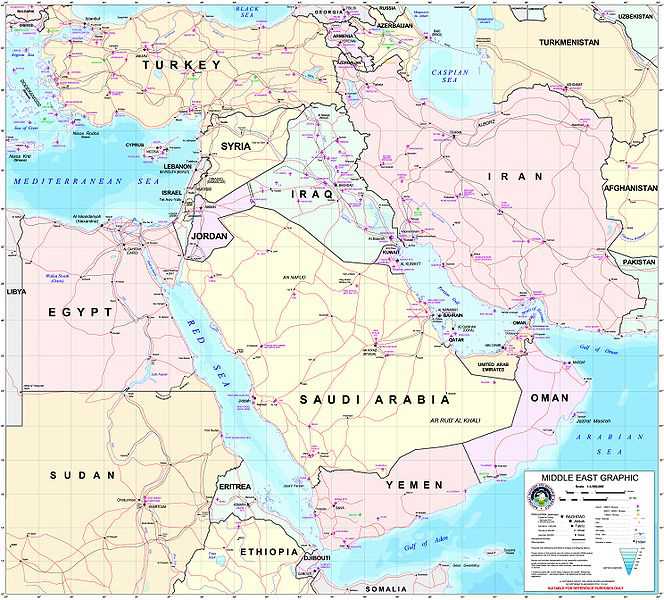
    UN Security Council member states China and Turkey have reiterated commitment to finding a diplomatic solution to the impasse over Iran’s civilian nuclear program.

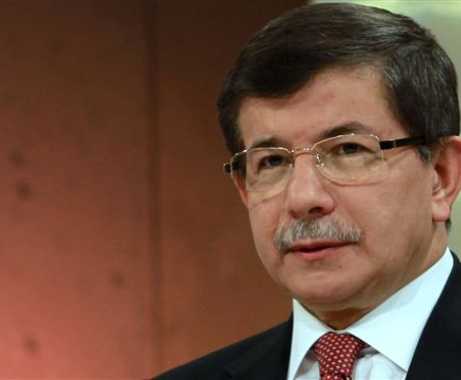
    “We will do everything possible to build trust between Iran and the United States and Iran and the West to avoid a military confrontation and possible sanctions,” Turkish Foreign Minister Ahmet Davutoglu was quoted as saying by London-based Al-Hayat newspaper.

    Davutoglu went on to call for “more diplomatic efforts to engage with Iran in order to build trust between (all) sides.”

    The remarks come one day after President Mahmoud Ahmadinejad, in an address before the 2010 Review Conference of the Nuclear Non-Proliferation Treaty (NPT) at the UN headquarters in New York, confronted the United States for refusing to exclude Iran from the list of countries that could become the target of US nukes.

    Meanwhile, Chinese Foreign Ministry spokeswoman Jiang Yu told reporters on Tuesday that the permanent UNSC member state was in favor of “relevant measures” to help resolve the issue through talks.

    “Dialogue and negotiations are the best way out to resolve this issue and relevant discussions are still under way,” she added.

    Washington and its allies are rallying support for tougher UNSC sanctions against Iran. However, the imposition of sanctions requires nine affirmative votes including those of the five veto-wielding members of the Security Council.

    Permanent UNSC member China and temporary members Turkey and Brazil are among the countries that support Iran’s right to a peaceful nuclear program.

    While the West accuses Iran of pursuing a military nuclear program, Tehran has repeatedly rejected the allegation and argues that as a member of the International Atomic Energy Agency (IAEA) and a signatory to the Nuclear Non-Proliferation Treaty (NPT), it is entitled to the peaceful use of the technology for electricity generation and medical research.

    President Ahmadinejad offered an itemized proposal to the NPT review conference, calling for measures to limit the power held by nuclear armed states in the UNSC.

    Press TV
    ZHD/HGH

  • Jak Codd in act of censorship

    Jak Codd in act of censorship

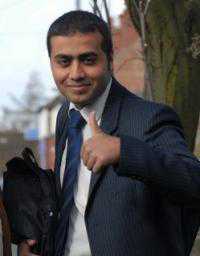
    UK, May 3, (Pal Telegraph) Comments made in a published interview with Sameh Akram Habeeb have resulted in Jak Codd removing an issue of the Leeds Student newspaper from campus and locking it in his office.

    Sameh Habeeb stated, in his interview, that he felt there was a pro-Israel bias in the Western media and that you “only have to look at who controls the media”. Codd stated that this was anti-semitic and could not be allowed on campus as it presented a risk to students.

    As far as issues of welfare/reputation are concerned it appears clear that Codd does not agree with a free press. The comments were stated within a feature and as a clearly attributed interview, but Codd seems to be under the impression that students cannot interpret viewpoints and judge them for themselves.

    When challenged by a Jewish sub-editor of the paper who disagreed with his actions, Codd shouted “you’re only one person” to which the challenger retorted “you’re only one person”. It is claimed Codd then acted to get the sub-editor removed from the building by security.

    Codd has censored the press (irony?).
    Codd has ignored the hundreds of hours of hard work that go into making a newspaper.
    Codd has acted beyond his authority.
    Codd has brought shame on Leeds.

    The Palestine Telegraph

  • Leeds student paper pulled for antisemitic interview

    Leeds student paper pulled for antisemitic interview

    Leeds University’s newspaper Leeds Student has been pulled from shelves by the Students’ Union after it published an antisemitic comment by Palestinian Telegraph owner Sameh Habeeb.

    The interviewer asked Mr Habeeb: “Do you believe mainstream media organizations have a hidden agenda?”

    He replied: “They are certainly pro-Israeli. I think you have to ask yourself who controls the media.”

    A Facebook group protesting against the decision by Leeds Students’ Union to censor the issue has over 700 members, many of whom allude to the fact that one of the Students’ Union officers who took the decision to censor the newspaper, Jak Codd, is Jewish.

    One student wrote on the group: “Ok, so one of your student officers took offence at an article because he views an interview answer as saying the media is controlled by Jewish people. A Jewish student officer who then exerts control over the student newspaper by getting the paper removed and the article censored.”

    Mr Habeeb’s website has recently posted a video of the former Ku Klux Klan leader David Duke talking about Israel’s “terrorism” against America, and the allegations of organ theft against IDF troops in Haiti.

    Its patrons are journalist Lauren Booth and Respect leader George Galloway. Liberal Democrat peer Jenny Tonge resigned as a patron after the website published David Duke’s video.

    The Jewish Chronicle Online

  • UK ‘will not allow Mossad representative in London’

    UK ‘will not allow Mossad representative in London’

    By Jessica Elgot, May 4, 2010

    A new Mossad representative in London will not be allowed into the United Kingdom, it is claimed, until Israel pledges that British passports will never be used by Mossad agents.

    Britain expelled a senior Israeli diplomat over the use of British passports by a team of assassins who killed Hamas terrorist Mahmouh al-Mabhouh in Dubai in January.

    Foreign Secretary David Miliband said he was satisfied that Israeli intelligence agency Mossad had forged British passports for the assassins.

    A Foreign Office spokeswoman told the JC: “We have had no approach from the Israelis about a replacement. However we look to Israel to rebuild the trust we believe is required for the full and open relationship we would like.

    “We have asked for specific assurances from Israel, which would clearly be a positive step towards rebuilding that trust.

    “Any Israeli request for the diplomat to be replaced would be considered against the context of these UK requests.”

    It is widely believed that the senior diplomat expelled from London was a Mossad representative.

    Israel has never admitted any role in the Dubai assassination and therefore has abstained from signing any material which might be construed as a confession.

    The Jewish Chronicle

  • Do we have to defend the actions of the Committee of Union and Progress?

    Do we have to defend the actions of the Committee of Union and Progress?

    AN ARTICLE LOVED BY ARMENIANS —

    for Original comments from Armenians  see 

    ordudan kovulan bu yazar hakkindabasinda cikanlar :

    Ümit Kardaş*

    In January 1913, the Committee of Union and Progress overthrew the government and started to implement a policy to homogenize the population through a planned ethnic cleansing and destruction and forced relocation.

    The term “genocide,” defined as the “crime of crimes” in the International Criminal Court’s (ICC) Rwanda decision, was first coined by Raphael Lemkin, a Jewish lawyer from Poland.

    He was particularly known for his efforts to draft the United Nations Convention on the Prevention and Punishment of the Crime of Genocide, which cast genocide as an international crime in 1948.Dealing with the case of Talat Paşa being murdered by an Armenian youth in Berlin in 1921, Lemkin started to compile a file about what happened in the Ottoman Empire in connection with the case. As he discussed the case with his professor, he learned that there was no international law provision that would entail the prosecution of Talat Paşa for his actions, and he was profoundly shocked when his professor likened the case of Talat Paşa to a farmer who would not be held responsible for killing the chickens in his poultry house.

    In 1933, Lemkin used the term “crime against international law” as a precursor of the concept of genocide during the League of Nations conference on international criminal law in Madrid. After Nazi-led German forces devastated Europe and invaded Poland in 1939, Lemkin was enlisted in the army, but upon the defeat of Polish forces, he fled to the US, leaving his parents behind. Later, while working as an adviser during the Nuremberg trials, he would learn that his parents had died in the Nazi concentration camps.

    In his book “Axis Rule in Occupied Europe,” published in 1944, he defined genocide as atrocities and massacre intended to destroy a nation or an ethnic group. Coining the term from the Greek genos, meaning race or ancestry, and the Latin cide, meaning killing, Lemkin argued that genocide does not have to mean direct destruction of a nation. In 1946, the UN General Assembly issued a declaration on genocide and unanimously accepted that genocide is a crime under international law, noting that it eliminates the right of existence of a specific group and shocks the collective conscience of humanity. However, Lemkin wished that in addition, a convention should be drafted on preventing and punishing the crime of genocide. This wish was fulfilled with the signature of the UN Convention on the Prevention and Punishment of the Crime of Genocide in 1948. Lemkin died in a hotel room in New York in a state of poverty at the age of 59 in 1959. Although they left this idealist defender of humanity alone, people were gentle enough to write, “The Father of the Genocide Convention,” as an epitaph on his grave.

    1843-1908 period

    In 1843, Bedirhan Bey, who commanded the Kurds who were assigned with the duty of massacring the people of Aşita (Hoşud), connected to the sanjak of Hakkari, where the population was predominantly Armenian and Nestorian, persuaded the Armenians and Nestorians who had fled to the mountains to return and hand in their weapons, and then, the people who were massacred were largely thrown in the Zap River. The majority of their women and children were sold as slaves. It is reported that at least 10,000 Armenians and Nestorians were killed in this massacre. In 1877, the Ottoman Army and the Russian Army started to fight again, and availing of this opportunity, Armenia once again became a battlefield, and the soldiers shouted, “Kill the disbelievers.” Circassians and Kurds slaughtered 165 Christian families, including women and children, in Beyazıt. In 1892, Sultan Abdülhamit II summoned the Kurdish tribal chiefs to İstanbul and gave them military uniforms and weapons, thereby establishing the Hamidiye cavalry regiment with some 22,500 members. In this way, Abdülhamit II played with the foreign policy equilibrium between the UK and Russia and organized a specific ethnic/religious group against another ethnic/religious group based on a Muslim vs. non-Muslim dichotomy. The Ottoman administration appointed the worst enemies of Armenians as their watchdogs, thereby creating a force that could crush them even in peacetime. The persecution of Armenians peaked in the Sason massacre in September 1894. Abdülhamit II declared resisting Armenians rebels and ordered that they should be eradicated.

    1908-1914 period

    Europe and America extensively supported the Young Turks, who were seeking legitimacy. When the Movement Army threatened to launch a campaign against İstanbul, Abdülhamit II declared a constitutional monarchy on July 24, 1908. Without using any discretion, ordinary people were both amazed and pleased. Moved by slogans calling for equality, freedom and brotherhood, Armenians, too, welcomed with joy the government backed and controlled by the Committee of Union and Progress (CUP).

    Britain and France made loans available to the new regime and sent consultants for the treasury and the navy in support. To alleviate the consequences of the massacres of 1895 and 1896, European countries increased their humanitarian assistance. Orphaned children of Christian families were placed in care centers, and schools were opened in eastern Anatolia. The introduction of the second constitutional monarchy was seen as an assurance of the creation of equality among all races and religions. However, on April 14, 1909, a new wave of slaughter started against Christians in Adana. The CUP’s close alliance with the Armenian Dashnak Party was a major reason for the rekindling of these massacres. For the first time, these attacks did not discriminate between Armenians and eastern Christians. Thus, Orthodox Syriacs, Catholic Syriacs and Chaldeans were also killed. Apparently, Armenians had stood apart with their penchant for trade, banking, brokerage as well as for pharmacy, medicine and consulting and other professions; they constituted a wealthy portion of the population. As a result, this and their identity as non-Muslims made Armenians a clear target. As a commercial and agricultural factor, Armenians also served as an obstacle to the Germanification of Anatolia.

    After the Adana massacre of 1909, there was a period of good faith that lasted until 1913. Meanwhile, the CUP improved its ties with the militant Dashnak Party. After transforming into a democratic party, this party was represented with three deputies in the Assembly of Deputies (Meclis-i Mebusan) that was renewed in 1912. This assembly also had six independent Armenians members. In 1876, the Assembly of Deputies had 67 Muslim and 48 non-Muslim deputies. However, in January 1913, following the defeat in the first Balkan War, the CUP overthrew the government (known as the Raid of Bab-ı Ali) and started to implement a policy to homogenize the population through a planned ethnic cleansing and destruction and forced relocation.

    Talat Paşa prepared plans for homogenizing the population by relocating ethnic groups to places other than their homeland. According to the plan, Kurds, Armenians and Arabs would be forced to migrate from their homeland, and Bosnians, Circassians and other Muslim immigrants would be settled in their places. The displaced ethnic groups would not be allowed to comprise more than 10 percent of the population in their destinations. Moreover, these groups would be quickly assimilated. The Greeks had already been relocated from the western coasts of the country in 1914.

    In addition to the regular army, Enver Paşa believed that there must be special forces that would conduct undercover operations. Thus, he transformed the Special Organization (Teşkilat-ı Mahsusa), which he had established as a secret organization before the Balkan War, into an official organization. This organization had intelligence officers, spies, saboteurs and contract killers among its members. It also had a militia comprised of Kurdish tribes. Former criminals worked as volunteers for this organization. Talat Paşa created the main body of the Teşkilat-ı Mahsusa from gangs of former criminals whom he arranged to be released from prisons. In Anatolia, the Teşkilat-ı Mahsusa worked at the disposal of the 3rd Army.

    Forced relocations of 1915-1916

    The German-backed pan-Islamist policy implied a fatal solution for non-Muslims living within the borders of the empire. The conditions for the forced relocation campaign launched in 1915 were different from previous ones. The two-month campaign covered not only Armenians but also all Christians in eastern Anatolia. These relocations could not be considered a resettlement because the specified destinations were not inhabitable and only very few could make it there. Many people were immediately killed either inside or outside the settlements where they were born or living, and others were murdered on the roads on which they were forced to walk on foot.

    Most of those who were immediately killed were men. Women and children formed the largest portion of the groups banished toward the southern deserts. There were continual attacks on these processions, accompanied by rapes of women and kidnappings of children. Provincial officials did not take any measures to provide the convoys with food, water and shelter. Rather, high-level officials and local politicians mobilized death squads against them. These squads would confiscate the goods of the relocated people, sending some of them to the Interior Ministry and embezzling the rest.

    Eventually, the forced relocation campaign turned into a series of atrocities which even bothered the Germans. The ongoing campaign was never a population exchange. As noted by British social historian David Gaunt, the purpose of these forced relocation campaigns was to remove a specific population from a specific location. Because it was intended to be performed quickly, this added to the intimidation, violence and cruelty involved. As resettlement was not intended, neither the administration nor the army cared about where the deported population was going or whether they would survive physically. The high degree of the culture and civilization exhibited by Armenians made the atrocities against them all the worse in the eyes of the world. Talat Paşa mistakenly made his last conclusion: “There is no longer an Armenian problem.”

    Conclusion and suggestions

    The foregoing account cannot duly express what really happened in its scope, dimension and weight. These atrocities and massacres were not only regularly reported on in European and US newspapers, but were also evidenced in the official documents of Britain and the US and even Germany and Austria, which were allies of the Ottoman Empire, and in the minutes of the Ottoman Court Martial (Divan-ı Harbi), the descriptions of diplomats and missionaries, in commission reports and in the memoirs of those who survived them.

    No justification, even the fact that some Armenian groups revolted with certain claims and collaborated with foreign countries, can be offered for this human tragedy. It is misleading to discuss what happened with reference to genocide, which is merely a legal and technical term. No technical term is vast enough to contain these incidents, which are therefore indescribable. Atrocities and massacres are incompatible with human values. It is more degrading to be regarded as a criminal in the collective conscience of humanity than to be tried on charges of genocide.

    A regime that hinges upon concealing and denying the truth will make the state and the society sick and decadent. The politicians, academics, journalists, historians and clerical officials in Turkey should try to ensure that the society can face the truth. To face the truth is to become free. We can derive no honor or dignity from defending our ancestors who were responsible for these tragedies. It is not a humane or ethical stance to support and defend the actions of Abdülhamit II and senior CUP members and their affiliated groups, gangs and marauders. Turkey should declare to the world that it accepts said atrocities and massacres and that in connection with this, it advocates the highest human values of truth, justice and humanism while condemning the mentality and actions of those who committed them in the past.

    After this is done, it should invite all Armenians living in the diaspora to become citizens of the Turkish Republic. As the Armenians of the diaspora return to the geography where their ancestors lived for thousands of years before being forced to abandon it, leaving behind their property, memories and past, this may serve to abate their sorrow, which has now translated into anger. The common border with Armenia should be opened without putting forward any condition. This is what conscience, humanity and reason direct us to do. Turkey will become free by getting rid of its fears, complexes and worries by soothing the sorrows of Armenians.


    *Dr. Ümit Kardaş is a retired military judge.

    02 May 2010, Sunday
  • Is Turkey’s Consul Unhappy that not All Armenians were Slaughtered like Sheep?

    Is Turkey’s Consul Unhappy that not All Armenians were Slaughtered like Sheep?

    By Harut Sassounian
    Publisher, The California Courier

    Hakan Tekin, the young and inexperienced Turkish Consul General in Los Angeles, is trying hard to earn brownie points with his bosses in Ankara by countering any reference to Armenians in the U.S. media. He went overboard last week by sending an offensive letter to the Los Angeles Times.
    Tekin was displeased with Patt Morrison’s interview with me published by the Times in its op-ed page on April 24. The article was titled, “Harut Sassounian: True to the Past.”
    In his brief letter, Consul General Tekin made several misjudgments. The first was to criticize the L.A. Times’ Pulitzer-Prize winning veteran journalist Patt Morrison, alleging that there were “many misleading elements” in her interview, without naming a single one.
    Judging from the text of the Consul General’s letter, it was probably drafted by one of the many American public relations firms hired by the Turkish government at great cost. While the words may have been written by Americans, the thoughts are definitely those of a Turkish denialit! P.R. firms don’t really care how silly their letters sound, as long as their employer is satisfied and compensates them handsomely. Here is a piece of free advice that the Turkish government and the Consul General should keep in mind before taking on again the free press in a free country: “Never pick a fight with someone who buys ink by the barrel.”
    Tekin is behaving as if he is still in Turkey, where the media is routinely suppressed by such fascist tactics as throwing journalists in jail or physically eliminating them. He is vainly trying to import Turkey’s undemocratic “gag rule” into the United States by trying to silence the L.A. Times!
    The Consul General goes on to attack me for the photograph that accompanies the L.A. Times article, in which I am holding the picture of my grandmother “garlanded with a bandolier of bullets.” I am very proud of grandma Gadar, because at a time when more than a million Armenians were being marched to their deaths by the genocidal rulers of Tekin’s ancestors, she and her fellow Zeitountsis — men, women and children — defended themselves valiantly and refused to be slaughtered like sheep. Had she not fought to save her life, I would not have existed today, which may have made the Consul General happier! Is Tekin upset that the Turkish government was unable to finish the job of exterminating every last Armenian?
    Consul General Tekin then criticizes me for my “relentless opposition” to the infamous Armenia-Turkey Protocols. He has no one else to blame than his own government for not ratifying these Protocols which have been collecting dust in the Turkish Parliament for more than six months. Armenians are indeed fortunate that Turkey’s leaders have inadvertently protected Armenia’s national interests by not ratifying the Protocols, so that they could extract more concessions from the Armenian government!
    Incredibly, Tekin ends his pathetic letter by admonishing me to be more like William Saroyan, who he claims was “compassionate” toward Turks! May I remind the Turkish Consul of Saroyan’s well-known statement castigating the Turks for having destroyed Armenia and its people. Here is the original version of that quotation, as it was published in Inhale & Exhale, New York: Random House, 1936:  “Go ahead, destroy this race. Let us say that it is again 1915. There is war in the world. Destroy Armenia. See if you can do it. Send them from their homes into the desert. Let them have neither bread nor water. Burn their houses and their churches. See if they will not live again. See if they will not laugh again. See if the race will not live again when two of them meet in a beer parlor, twenty years after, and laugh, and speak in their tongue. Go ahead, see if you can do anything about it. See if you can stop them from mocking the big ideas of the world, you sons of bitches, a couple of Armenians talking in the world, go ahead and try to destroy them.”
    Could it be that the Turkish Consul General is trying to denigrate me, because I have rejected his repeated invitations to get together, and his persistent attempts to co-opt me? If it is any consolation for this novice diplomat, I have not been tricked by his superiors either, who are far more experienced than him in the art of fishing for Armenian collaborators!
    ===================================================================================

    Harut Sassounian: True to the past

    The Armenian American is a high-profile figure on the genocide.

    April 23, 2010|Patt Morrison

    Today isn’t so much a red-letter day on the Armenian calendar as a black-letter one: the commemoration of the Armenian genocide in Turkey.

    The Armenian American names Saroyan and Deukmejian, California writer and governor, respectively, might ring a bell. Here’s one that sounds a klaxon: Harut Sassounian, one of the most visible Armenian Americans in a dozen time zones. As president of a major charity, he has delivered above half a billion dollars in medical supplies, computers and vital equipment to Armenia. As publisher and columnist of the weekly California Courier, he presses for full, official acknowledgement of the 1915 massacre as genocide, a knifepoint balancing act for the U.S., which counts Turkey as a major strategic ally.

    He comes, he says, from a family of warriors — including his grandmother, garlanded with a bandolier of bullets in a 1920s photograph made in Syria, where he was born. His weapons are words and paper; speaking for and to a sometimes fractious Armenian community, he quotes an old line: “Bring two Armenians together, and they will form three political parties.”

    April 24, 95 years ago, was the beginning of the genocide. What happened?

    Every important Armenian leader in Istanbul — writers, poets, intellectuals, scholars, you name it — [the Turks] arrested them and killed them. The Turks were thinking, “Once we kill off the leaders, the rest are sheep without the shepherd.”

    The California Courier has been around since 1958 — and when you arrived in 1983, you changed it.

    The paper was started in Fresno by two gentlemen; one was an Armenian by the name of George Mason. There were a handful of Armenian-language papers at the time but not a single newspaper in English. It caught like wildfire. It was a social newspaper; it wasn’t political at all. So it went for 25 years. Then Mason hired me.

    The first week, I wrote that the Turkish ambassador [to the United States] should be expelled as persona non grata for the Armenian genocide. Mason got tons of complaints — who is this radical terrorist you hired? The column created such a reaction — initially a negative reaction. They asked Mason to fire me immediately.

    Why?

    [Readers] were used to babies being born, vacations….. Many were cultural Armenians, not political Armenians. Their Armenianism was lifestyle Armenianism.

    What’s wrong with that?

    Nothing, but Armenians are also a nation [with] a long history and culture, and genocide was committed against them. The newcomers, it matters to them. They want to right the wrong; they feel strongly about this injustice. If somebody wants to leave their history behind, that’s their choice. But if somebody wants to struggle to regain what we lost in the old country, he also has that right. You can protest, you can petition your congressman, the president.

    There’s a current news story about a bone marrow drive for a little girl in Glendale who’s a quarter Armenian. The search focuses on Armenians because they have a distinctive genetic makeup, being less likely to marry outside their ethnic group. Why is that?

    If you know what Armenians have been through, then you start appreciating why. Armenians are an ancient people with an ancient civilization. At one point basically every Armenian lost just about everything — their grandparents, their language and culture. I cannot go back and fight the genocide — I cannot bring back those people. I cannot declare war against Turkey. So the only thing I can do is to hang on to whatever little is left of the culture, as my way of getting back at those who tried to wipe it out.

    Armenians abroad dreamed of a free Armenia — and it happened after the collapse of the Soviet Union.

    We thought we wouldn’t see it in our lifetime. But all of a sudden we woke up and behold, there’s a free Armenia. So part of our dream is realized, but that’s not the full dream. The land west of current Armenia, where Mt. Ararat [stands, along with] thousands of churches and monuments, that’s where the real Armenian homeland is. Now we have 10% of what was Armenia historically. We’re looking forward to 90%.

    There’s a very powerful Armenian brain trust here and around the world. Would it help the Republic of Armenia for those people to go back?

    Some Armenians have gone back. But there are very practical considerations. The country is so destitute, there basically are no jobs. So unless you’re financially independent, you’re going to be a burden. It takes a very hardened person to really go there and live. Secondly, people have their lives, their families here. It really is a hardship to pull up your roots.

    Even if all Armenians want to move there, that’s not necessarily a good thing. [The diaspora has] turned the tragedy of the genocide inadvertently into a blessing because when the homeland needs something, Armenians have contacts in terms of trade, import-export, neighbors and colleagues. If it wasn’t for the Armenian Americans lobbying Congress, Congress would be allocating much less aid to Armenia. It would be worse off.

    Armenia and Turkey are doing unprecedented work to normalize relations. Why would Armenians abroad take a harder line toward Turkey than the Armenian government does?

    Running a country is different than being an individual in the diaspora. If I were the president of Armenia, I would be making decisions based on certain constraints that I don’t have sitting in Glendale right now. As an individual I can take a very hard line.

    In some instances, Armenia’s leadership would like to take a position on something but they know it would have negative repercussions if they became a little more demanding. The diaspora is much freer to make such demands, so we make those demands. Sometimes, us taking a hard line is very helpful to Armenia, because they look much more accommodating.

    You once told The Times’ editorial board you wouldn’t talk to Turkish officials, but you would talk to Turks.

    What I said was, I do not speak with Turkish officials who deny the genocide. There’s no point in arguing with them. They’re going to deny it, no matter what I say. But regular Turks — I talk to them, we communicate. Someone in Turkey now who’s 30, 40, even 70, 80 years old, they have not committed any crime. I have no hatred or animosity against the Turkish population at large. These people have not done anything against me or my people. The Turks who did the crime are dead. What is really sad and unhelpful is today’s Turkish leaders denying such an event took place, sort of linking themselves to the earlier crime by covering it up.

    [Recently] on Turkish CNN, four prominent scholars [said they were] for the recognition of the Armenian genocide. One line was just a killer line: “In Turkey, we have Armenians desperately trying to prove to the world that they were killed, and Kurds desperately trying to prove that they’re alive, that they exist.”

    What are the misconceptions about Armenians here?

    [That] they’re clannish and don’t integrate into the larger society. In Glendale there’s always a dispute which goes like this: Why do you have to speak Armenian to each other? This is America — speak English. You hang around each other; it’s like a little Armenian clique.

    By all means we should be fluent in English, we should participate in the Lions Club, we should go to football games and partake in everything American. But if somebody chooses to speak only Armenian, go to an Armenian grocery store and go to Armenian barber, that’s his business; no one should force him. If [anyone] doesn’t want to speak English, and he has a life he can live just knowing Spanish or Armenian or Hebrew, that’s his business.

    There are a lot of Armenians who are integrated into society — many of them change their names; you can’t even go by the “ian” at the end.

    Gov. George Deukmejian didn’t change his name to “George Duke.”

    The governor is a very unusual person. Not only is he fully integrated into American society and mainstream politics, but he kept his long Armenian name. A lot of people advised him [not to].

    What is Armenian Americans’ sense of President Obama now?

    It’s a very sad situation. We passionately supported his candidacy because he’s not the typical politician — he comes from a minority background, he knows what it is to be suffering, so we identified with him right away. When he was a senator, he spoke fervently in defense of the Armenian cause, in defense of recognition of genocide. He even gave a speech when he was a candidate [and] said: “America deserves a president who will tell the truth about the Armenian genocide. I intend to be that president.” So we all believed in him. And the minute he becomes president, he does not say genocide, he finds a euphemism the way Bush and Condoleezza Rice did. He even went so far as to use an Armenian word to describe [it], which was really ridiculous. He’s done everything that he said he would not do.

    [email protected]

    This interview is edited and excerpted from a longer taped transcript. An archive of Morrison’s interviews is online at latimes.com/pattasks.

    ==============================================


    SAYIN RIZA HAKAN TEKIN , LOS ANGELES BASKONSOLOSU

    BU SAYFADA POST ETMEK ICIN:

    SAYIN HAKAN BEYIN  LA TIMES’A VERDIGI YAZININ KOPYASINI LUTFEN DR. KAYAALP BUYUKATAMANA ILETIN AT [email protected]   ….. COK TESEKKUR EDERIZ … TF