Month: September 2009

  • “DIASPORA TURKS”

    “DIASPORA TURKS”

    Bridge or Barrier in the EU Process?
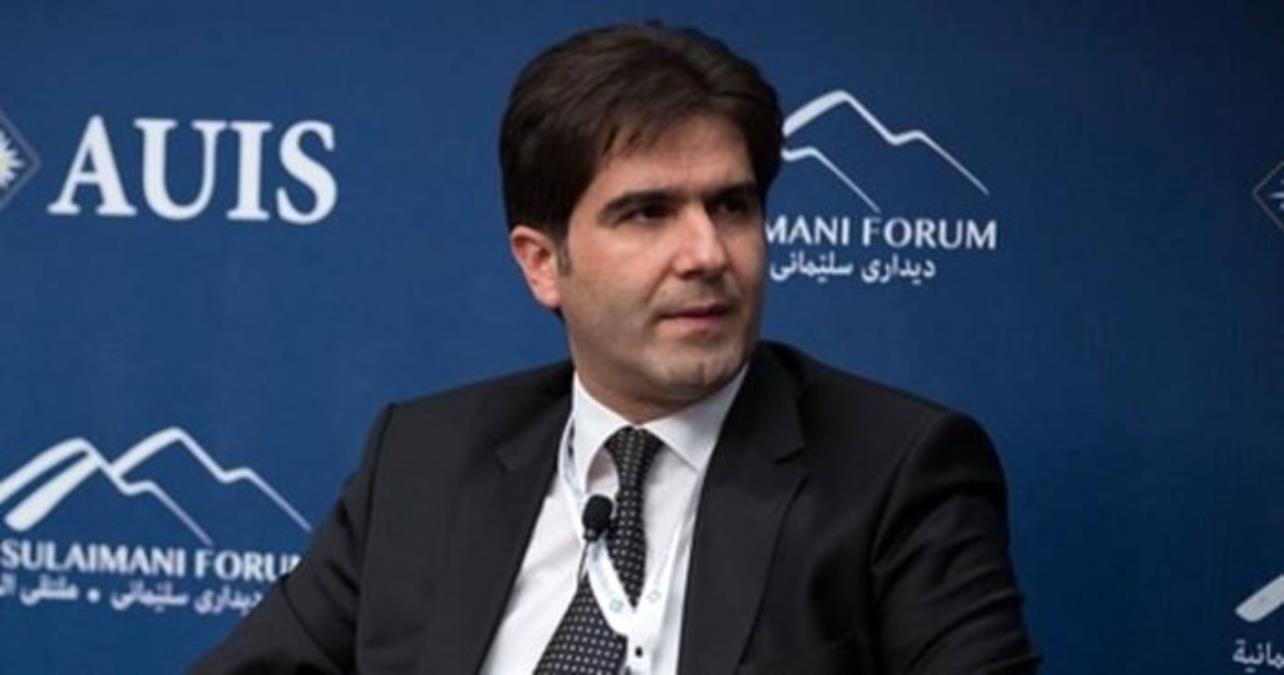
    Dr. M. Murat Erdoğan,

    Hacettepe University, Ankara,
    Dept. of Political Science and Public Administration.
    He is Vice Director of the Hacettepe University
    European Union Research Center (HUAB) and
    of the Strategical Research Centre (HÜSAM).t Erdoğan

    Centuries have gone by since the retreat of
    Turks, who once controlled the entire Southeast
    of Europe and who had once expanded their territory
    up to Vienna. “Europe” and “Turkey”, once
    “mutual enemies”, then saw themselves rallying
    on the same side during the Cold War, deleting
    the negative marks of the past to a large extent.
    At the same time, the ideological-political
    orientation of Turkey toward Europe was more
    and more institutionalized and a strong human
    dimension was eventually added as well. Participating
    as far as possible in Western European
    institutions had a strong Europeanising effect,
    making Turkey a part of Europe. Turkey’s European
    commitment never seemed to perish
    despite the considerable challenges on the way
    to full participation in European institutions. Increasing
    “Europeanness” was not only limited
    to the state, it also established itself as one of
    the most important aspects of modern Turkish
    identity. “Europeanness” is a deliberate political
    choice of Turks and the efforts spent to reach
    this goal continue with great commitment.
    The human factor, a dimension hardly taken
    into account at the beginning, became an ever
    more important issue with the start of substantial
    “workforce immigration”, particularly to Germany,
    at the beginning of the 1960s. The agreement
    with the Federal Republic of Germany in 1961
    was soon followed by other European countries.
    The process and its implications, which have
    been characterised by the famous phrase of Max
    Frisch (“We wanted workers, but we got people”),
    started almost half a century ago. Even though
    the conditions of the Cold War are no longer
    present, the process continues to carry on. The
    immigrants and their families, identifying themselves
    as European Turks, increasingly hold signifi
    cant positions in the economic, cultural and
    political life of the countries they live in – especially
    after it had become apparent that most of
    them are not living in Europe on a “temporary”
    basis. More than 5 million Turkish migrants, with
    half of the population already being European
    citizens, are living example of this fundamental
    and qualitative change in European societies.
    The former “Gastarbeiter” identity, which meant
    “sitting on the baggage as if returning tomorrow”,
    has practically been surpassed for the majority
    of Turks living in Europe. The economic, cultural
    and intellectual capacity of Turkish immigrants,
    having evolved into a “European Turkish middle
    class” as active participants in European societies,
    constitutes part of Europe’s reality.
    Although impacting fi rst and foremost the countries
    with substantial Turkish immigration over
    the past fi fty years, the process has always been
    linked to European integration as well. Mass
    immigration of Turks to Europe and relations
    between Turkey and the EEC developed hand
    in hand, although there is no organic bond between
    the two. However, the lack of workforce in
    revitalised post war Europe played an important
    role in the association of Turkey to the European
    Economic Community. However, the charm of
    cheap labour seemed to decrease for the EC in
    the 1980s. Ironically, one of the most contested
    issues between Turkey and the EC became the
    questions related to the free movement of persons
    and European efforts to stop admissions
    or even to send back, if possible, people already
    living in Europe. Accordingly, Turks were eventually
    not granted the right of free movement, although
    this had been foreseen before.
    For Turkey, the migration of workforce meant a
    contribution to European growth, helping foreign
    countries to solve their notorious lack of labour.
    The revenue sent back to Turkey initially constituted
    an important source of income but gradually
    lost its importance because of the economic
    developments in Turkey and the decision of
    many migrants to eventually rather invest money
    in the country they live in. Whereas in 1995
    transfers still amounted to 5 billion USD, they
    dropped to an estimated 1 billion USD in 2009.
    Accordingly, after the 1990s, for Turkey the signifi
    cance of Turks living in Europe shifted from
    the economic to politics. The main change in
    migrant Turks’ attitudes in this context was illustrated
    by a considerable number of them turning
    from Turkish migrants into citizens of European
    countries. Turkish citizens in Europe were more
    and more perceived as a politically relevant entity,
    not only by Turkey but also by EU politicians,
    especially after 1993: The discussions on the
    new EU architecture and the establishment of
    a Customs Union between the EU and Turkey
    created an important atmosphere for European
    Turks to become part of the European equation.
    Accordingly, the group that had been cause for
    concern due to the problems attached to the
    free movement of persons became – anew –
    an important factor for Turkey. Now European
    Turks were more and more considered “Turkish
    Diaspora”, expected to help Turkey to reach
    its goals in foreign and domestic politics, going
    well beyond the signifi cance formerly attached
    to workers’ transfers of money. In 1997, Turkish
    Prime Minister Mesut Yılmaz even demanded of
    German Chancellor Helmut Kohl to “defi ne his
    attitude” towards Turkey and its EU ambitions
    ahead of the 1998 general elections.
    Many discussions and debates have accompanied
    the process ever since the workforce
    agreement with Germany in 1961. Despite all
    problems, half a century of common history
    has demonstrated that Turks in general have
    integrated well into the norms of Europe.
    ZEI EVENTS
    The task of the European Commission in
    ongoing accession negotiations consists
    not only in the technical conduct of negotiations,
    but to an increasing degree in the
    mediation between different expectations
    and demands attached to enlargement policy.
    This mediation is an important factor in
    adequately responding to European as well
    as to partner’s interests. During his visit to
    the Center for European Integration Studies
    (ZEI) on 24 June 2009, Commissioner Olli
    Rehn particularly acknowledged the moderating
    function of ZEI’s EU-Turkey-Monitor,
    accompanying accession negotiations between
    the EU and Turkey ever since their
    launch in late 2005. The reinforcement of
    mutual understanding and recognition in
    this as well as in other policy fi elds with particular
    external implications plays a major
    role in any successful European policy.
    hard time fi tting into European culture and
    lifestyle, never became a source of massive
    disruption in the countries where – initially –
    they were outsiders. On the contrary, they were
    the kind of group who contributed to the development
    of these countries by their labour and
    taxes, respecting the laws and integrating into
    the societies they live in. On the occasion of an
    international symposium, commemorating and
    discussing “Turks Abroad: Immigration and Integration
    in 50 Years” in Ankara in May 2009, Minister
    of State Faruk Çelik, in charge of migrant
    Turks, opposed the popular view that “Turks will
    create imbalance due to their cultural differences.”
    To the contrary, he stressed that “the existence
    of our citizens on European land and their
    contributions to Europe are the most meaningful
    response to those opposing the membership of
    Turkey in the EU”. An environment of symbiosis
    creates new dynamics, but the positive potential
    of this situation outweighs the negative ones and
    could be seen as an asset for Turkey on its way
    to the EU. At the same event, Egemen Bağış,
    Minister of State for EU Affairs and Chief Negotiator,
    clearly highlighted the important role of
    the Turkish “Diaspora” in this context: “We are,
    thanks to you, already in the EU and I see each
    one of you as our ambassador in our EU efforts”.
    These words clearly illustrate Turkey’s new policy
    towards “its European citizens”. According to
    recent declarations by Turkish politicians “integration
    that does not turn into assimilation” shall
    generate a win-win-situation for both, Europe
    and Turkey – only if Turkish migrants are taken
    seriously and are having economic, cultural and
    political relevance, they can play this role. Turkish
    migrants causing problems in the countries
    they live in, however, also create problems for
    Turkey – or, at least, are far from adding value.
    Therefore it could be argued that Turkey has no
    choice but to be truly sincere about integration,
    because only then all parties can benefi t. The
    question however remains, in how far the EU
    is equally sincere about it. If one considers the
    persistent obstacles to free movement, which is
    still one of the central issues in EU-Turkey relations,
    it appears that Turkish migrants as well as
    Turkish citizens suffer: Visa-free travel is still an
    illusion and it seems unlikely that the decisions
    of the Court of Justice in individual cases, which
    are only putting the fi nger on Europe’s negative
    attitude on free movement, will lead to a general
    improvement; one could therefore conclude that
    Turkish people are effectively being prevented
    from exercising some of the rights European
    legislation gives them.2 On the other hand, the
    European concern of potential mass immigration
    of Turks to Europe must also be addressed
    and taken into account in order to formulate a
    win-win-solution to this central obstacle to true
    integration.3
    Within the EU, the obstacles to free movement
    are complemented by limitations on political
    rights. The European demand to renounce Turkish
    citizenship for a working, tax-paying, lawabiding
    Turkish migrant, who has lived 30 or even
    40 years in Europe, reduces the eagerness to
    really become an EU citizen. It also raises emotional
    reactions for Turks to be subjected to different
    regulations in the process of admission to
    citizenship. The EU will have made a major contribution
    to integration by changing its attitude in
    this regard by, for example, giving migrants who
    have lived in Europe for a certain time the right to
    vote regardless of citizenship. Already today, the
    importance of Turkish migrants, accounting for
    an approximate 2.5 million qualifi ed voters, has
    come to an unprecedented degree. Political parties
    will increasingly be affected by this growing
    potential. The conservative notion that the emotional
    bond between Turkish migrants and Turkey
    is an obstacle for integration and therefore
    a reason for marginalising them from national
    political life requires re-examination. Turkey can
    be a part of the solution just as it can also be a
    part of the problem: As long as Turkish EU membership
    is used – or rather misused – for cheap
    propaganda, the topic as an election issue emotionally
    disturbs Turkish migrants. Arguments for
    an anti-enlargement course along the lines of
    “cultural-religious” differences, used for justifying
    why the “homeland” of many migrants (i.e. Turkey)
    should not be admitted, create the ground
    for dangerous reasoning: Turkish migrants,
    in the eyes of many Europeans displaying the
    characteristics of the country that shall not be
    admitted, are concerned whether those saying
    “An EU without Turkey” may someday say “An
    EU without Turks”. Accordingly, they perceive
    the “no to Turkey in the EU” campaign as a campaign
    against them, especially in the post 9/11
    environment with its growing Islamophobia and
    discriminatory policy approaches.4 This is not to
    argue that Turkish migrants shall be manipulated
    in the favour of Turkish policy goals since this
    would mean intervention in the internal affairs of
    the countries concerned. However, it should be
    acknowledged and taken into consideration that
    the integration (or non-integration) of Turkish
    migrants into different EU societies is partly but
    strongly linked with the question of Turkey joining
    the EU or not. To ignore this fact would mean
    to be ignorant to central links and connexions in
    this complex puzzle.
    From the presented point of view, it seems that
    Turkey is more successful than some EU member
    states if it comes to integration. Turkey is already
    playing a major “European” role in terms
    of culture (Eurovision, European Capital of Culture),
    economy (Customs Union, commerce
    with the EU), politics (Council of Europe), and
    security (NATO, OSCE, European Security and
    Defence Policy). The only – central – European
    arena whose decision making mechanisms
    Turkey does not participate in is the EU. It is
    an undeniable fact that Turks are an important
    component of European life. Through immigration,
    European countries have already tested
    whether it is possible to live with Turks. At this
    point, it can already be concluded that Turkish
    migrants constitute an undeniable “social-political
    capital” to Europe that should not and must
    not be wasted by building up barriers instead
    of establishing a climate of mutual understanding,
    respect and cooperation. Only by really accepting
    and understanding Turkish migrants as
    “capital”, the countries they live in can fully benefi
    t from the potential of its migrant population.
    Turkish migrants are a “soft power” that cannot
    only contribute to the admission of Turkey to the
    EU but also to the general interests of European
    countries – particularly in times of crisis as they
    are experienced today in the fi nancial and economic
    sphere.

    1
    Turks, who were expected to have a rather
    ZEI EU-Turkey-Monitor Vol. 5 No. 2 August 2009 7
    Dr. Olli Rehn, EU Commissioner for Enlargement, meets with ZEI Director Prof. Dr.
    Ludger Kühnhardt and Dr. Andreas Marchetti, Editor of the ZEI EU-Turkey-Monitor.
    1) Cf. also Eleni Mavrogeorgis: A Clash of Perceptions,
    Not of Civilizations.: Revealing Muslim & Non-Muslim
    Perceptions of National Loyalty and Integrated Living
    (Rutgers DGA Policy Brief, 1), Newark 2009.
    2) R. Gutman during the mentioned symposium.
    3) Former MEP V. Öger at the same event.
    4) U. Erdener, Rector of Hacettepe University, at the
    mentioned symposium.
  • Patriot Missile Procurement Option Sparks Controversy in Turkey

    Patriot Missile Procurement Option Sparks Controversy in Turkey

    Patriot Missile Procurement Option Sparks Controversy in Turkey

    Publication: Eurasia Daily Monitor Volume: 6 Issue: 170September 17, 2009

    By: Saban Kardas

    The Turkish government’s possible purchase of missile defense systems from the United States, as part of an ongoing tender, has sparked a new debate on Ankara’s new regional policies and its domestic arms procurement projects. On September 9, the Defense Security Cooperation Agency (DSCA) notified the U.S. Congress of a possible sale to Turkey of 13 Patriot fire units, various Patriot missiles including the advanced capability (PAC-3) missiles, and other related support equipment. Raytheon Corporation and Lockheed-Martin are the principal contractors and if they are awarded the tender, the project is estimated to cost $7.8 billion. The statement described Turkey as the major U.S. ally in the region and added that by acquiring these systems Turkey will “improve its missile defense capability, strengthen its homeland defense, and deter regional threats” (www.dsca.mil, September 9).

    Although this notice is a legal requirement for an ongoing tender, and did not mean a sale was concluded, the Turkish press widely covered this development and labeled it as one of the largest arms sales agreements in the country’s history. The extensive coverage of the story led to an impression that Ankara had already “decided to purchase” the Patriot systems.

    The Turkish media maintained that Turkey wants Patriot platforms to defend itself against Iran and linked this decision to U.S. plans to build a missile shield. Others, by contrast, claimed that the U.S. decision was sparked by a concern to thwart Turkey’s negotiations with Russia over the purchase of the new generation S-400 platforms. Moreover, the Turkish press also highlighted that the country would be returning as a major customer of U.S. weapons systems, after having granted several multi-billion projects to other countries (Turkiye, Vatan, Hurriyet, September 13; Radikal, September 14).

    To defuse such speculation, the Turkish defense ministry released a statement in which it said that the notice was part of Turkey’s ongoing international tender to acquire long-range air and missile-defense systems. Under this program, which was launched in June 2006, the under secretariat for the defense industry (SSM) issued a request for a proposal in April 2009 for the direct purchase of missile systems. The statement also underscored that in addition to the U.S. companies Lockheed Martin and Raytheon, requests for proposals were also sent to China’s Precision Machinery Import-Export Corporation (CPMIEC) and Russia’s Rosoboronexport. Moreover, since possible U.S. exports will take place under the Foreign Military Sales (FMS) credits, a separate letter of request was also sent to the U.S. administration (ANKA, September 14).

    The statement, however, did not end the debate. Critics raised two questions: from whom Turkey plans to purchase these systems and whether this multi-billion dollar project is justified given the huge financial burden involved.

    Several Turkish and international observers quoted by the Turkish press maintained that the project was developed to quell threats from Iran. They believe that despite its flourishing ties with Iran, Turkey still perceives a threat from Iran’s nuclear program. Through the missile defense system, allegedly, Turkey seeks to enhance its defensive capabilities against Iran’s medium-range Scud missiles or long-range Sahab missile program. To substantiate their arguments, they referred to a report submitted to the U.S. Congress in February 2008, (Chain Reaction: Avoiding a Nuclear Arms Race in the Middle East), in which it was stated that the United States should acknowledge Turkey’s concerns and contribute to its development of a missile defense capability (www.superonline.com, September 13; Vatan, September 15).

    The congressional report concluded that considering Iran’s ballistic missile program has a range to strike any part of Turkish territory, combined with the prospect of eventual Iranian nuclear weapons capability, Turkey had concerns about the balance of power shifting in Iran’s favor. The report warned that if Turkey’s legitimate missile defense concerns were not met, it might opt for the development of a “Turkish bomb.” Since the U.S. plan for any future ballistic missile defense shield in Europe would not include Turkey, the report proposed that “the U.S. government should remove unnecessary obstacles to the speedy development of a missile defense system that addresses Turkey’s needs” (www.gpo.gov, February 27, 2008).

    Several Turkish experts, however, criticized the plans for the purchase of this weapons system and the designation of Iran as a source of threat. Some speculated that this project is not driven by Turkey’s real needs. Rather, it is promoted by the “weapons lobby,” which is trying to make profits by sowing seeds of distrust between Turkey and its neighbors, Iran and Russia. They add that the media reports about Turkey’s perception of Iran as a threat are merely the manipulations of these weapons lobbies. Others maintain that “if this purchase ever takes place, it will be inflammatory, especially while Turkey is trying to be a peacemaker in the region” (Today’s Zaman; www.usak.org.tr, September 15).

    Asked about how the purchase of these systems can be reconciled with the government’s policy of normalization with its neighbors, Foreign Minister Ahmet Davutoglu ruled out any specified target. “[Developing projects to meet our security needs] is not an alternative to [Turkey’s regional policies]. It does not mean that we perceive threats from any neighbors. Our policy of ‘zero problem with our neighbors’ is still intact” Davutoglu said (Cihan; ANKA, September 15).

    The second line of criticism emphasizes the financial burden of the project. Some maintain that given the economic difficulties the country is experiencing and in light of the soaring budget deficit, such spending on expensive weapons systems, which in their view does not correspond to Turkey’s real security needs, cannot be justified. The critics call for redesigning Turkey’s defense procurement policies and significant cuts on arms expenditures (Taraf, September 14; Yeni Asya, September 16). Others emphasize that this development underscores an underlying problem: the lack of democratic and parliamentary scrutiny over Turkey’s arms procurement policy, which creates an imbalance between the country’s improving relations with its neighbors and the priorities of the military establishment (Taraf, September 16).

    While improving relations with its neighbors, Turkey is also intent on hedging against future threats, reflecting the volatile nature of the region. Although as a member of the transatlantic alliance, it is a part of NATO’s security umbrella, Turkey realizes that in the past, there were problems in the activation of NATO security guarantees. Most notably, the dispatch of Patriot systems during the Gulf War (1991) and Iraq War (2003) were delayed due to intra-NATO disagreements, which fostered a legacy of developing national capabilities. Despite the domestic criticisms, the Turkish defense industry is unlikely to drop its plans to acquire missile defense systems any time soon.

    https://jamestown.org/program/patriot-missile-procurement-option-sparks-controversy-in-turkey/

  • Turkish Gambit

    Turkish Gambit

    by Jaroslaw Adamowski
    15 September 2009

    As a keystone in two competing natural-gas schemes, Turkey can be either pawn or power broker.

    European opinion makers followed Russian Prime Minister Vladimir Putin’s visit to Turkey in August with keen interest. Among the 20 or so agreements he and his Turkish counterpart, Recep Tayyip Erdogan, signed was one initiating Turkey’s participation in the South Stream natural-gas pipeline to Europe – coming less than a month after Turkey hosted a summit for European Union countries participating in the Nabucco project, generally perceived as a rival to Russia’s South Stream.

    Since Putin’s visit to Ankara, pundits and analysts have continued to speculate on the future of Turkish-Russian relations, the dynamics of their fast-growing bilateral trade (behind the EU, Russia is Turkey’s prime trade partner), or Ankara’s dependence on Russia for 65 percent of the natural gas and 25 percent of the oil it consumes. Missing from many analyses was the possible impact of South Stream on Turkey’s relations with the European Union, especially the bloc’s members with direct engagement in Nabucco.

    JITTERY LAUNCH

    Nabucco was formally launched – although the question of which countries will supply its gas is far from clear – at the July joint summit with Austria, Hungary, Bulgaria, and Romania, the four EU members the new pipeline is slated to traverse. The Russian authorities were also invited to the summit but chose not to attend. The project was designed to diversify Europe’s energy supply with Caucasian, Central Asian, and Middle Eastern natural gas resources, but no potential source countries are formally on board yet.

    Nabucco faces other problems as well. On 14 September a spokesman for the consortium in charge of the project said its completion would be delayed two years, until 2016, UPI reported. Any delay could be a gift to Russia, but as the Kremlin faces serious problems raising funds for its own energy projects, South Stream’s construction could be slowed as well.

    Some experts suggest that stagnation in Turkey’s EU membership negotiations is the key to understanding Ankara’s complex foreign policy. Turkish politicians from government circles, however, counter this notion.

    “There is no link between the membership talks slowdown and Turkey’s participation in the South Stream project,” said Ozlem Turkone, a member of parliament for Istanbul and deputy chair of the ruling Justice and Development Party’s foreign affairs department.

    “Becoming an energy hub for the surrounding European and Asian regions has always been Turkey’s objective, and participating in both the Nabucco and South Stream pipelines is part of it,” she said. “Europe needs to diversify its sources of energy, and so does Turkey. Everyone will profit from our engagement in both projects.”

    Similar opinions were expressed by Turkish Foreign Minister Ahmet Davutoglu. Interviewed by the Turkish Kanal 7 TV channel, the minister said the South Stream project “creates a North-South energy corridor, similar to the East-West corridor of Nabucco,” and therefore the two pipelines “are not substitutes for each other.”

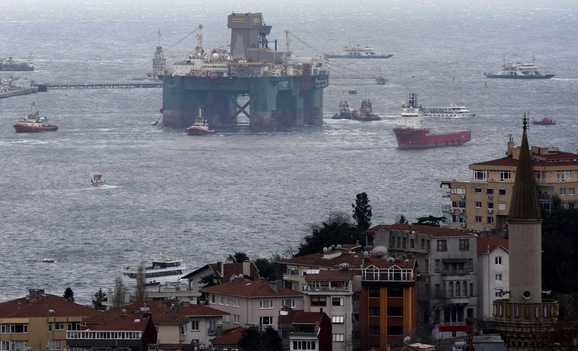
    South Stream would cross Turkish waters in the Black Sea before coming ashore in Bulgaria; Nabucco is set to traverse the Caucasus and Turkey over land.

    South Stream

    Nabucco

    Still, such views draw criticism not only from many EU officials, who regard the pipelines as competitors and often accuse Russia of attempts to destabilize European energy security, but also from Turkey’s opposition parties. “Before turning to profit, we had better check the financial side of the balance sheet in this project, which I believe is missing in the whole picture,” said Mustafa Ozyurek, former general manager of Petrol Ofisi, Turkey’s major oil and gas distribution company, and currently an MP for the opposition Republican People’s Party. Ozyurek said he and other experts believe the pipelines cannot both be operated cost-effectively, either by Turkey or the other partners.

    However, “Nabucco itself can cover up to only 7 percent of the European Union’s gas supply needs,” Turkone said, adding that “in order to provide enough energy to the European market, we need to focus on both projects, none of which should be viewed as harming anyone’s interests.”

    DIVIDED LOYALTIES

    While many observers continue to perceive the Russian-backed South Stream pipeline as a threat to the energy security of many new EU states, ironically, it is some of those same countries that could hobble Nabucco’s creation by their commitment to South Stream. Sezin Oney, a Budapest-based correspondent and columnist for the Turkish daily Taraf, said, “Hungary itself signed an agreement to join South Stream on 10 March, when Prime Minister [Ferenc] Gyurcsany paid a visit to Moscow. … Despite Hungarians’ generally distrustful approach to Russia, which is due to historical reasons, public opinion remains quite rational, in my opinion, about the pipeline issue. Be it South Stream, be it Nabucco – if the gas is supplied and affordable, the source does not matter either to the public or to the politicians.”

    Some of the most energy-insecure countries on the EU’s eastern fringe, unsure of which pipeline has a better chance of being completed, are choosing to participate in Nabucco and South Stream alike. But the one neighboring country that is being bypassed in both scenarios is Ukraine. Seeing the clear deterioration of already strained relations between Moscow and Kyiv over Russia’s continuing attempts to undermine Ukraine’s current pro-Western stance, many European analysts agree that South Stream’s main objective is to enlarge Moscow’s political leverage over Kyiv. During last winter’s gas crisis, provoked by a Russian-Ukrainian dispute over gas and transit payments, Central and Eastern European public opinion generally sympathized with the Ukrainians, accusing Moscow of energy blackmailing its neighbor. Still, some Russian experts maintain that Central Europe should re-evaluate its stance on relations with Kyiv.

    “Given the political and economical instability in Ukraine, I think that it is very much in Europe’s interest to diminish this country’s role in gas transit,” argues Dmitri Babich, a political commentator with Russia Profile magazine, published by the government-owned RIA Novosti news agency.

    “Prime Minister Putin came to Ankara to show Europe that Nabucco and South Stream can complement each other and that Russia is willing to cooperate with both Turkey and the EU,” Babich said.

    Such views reflect the official position of the Russian government. Decision-makers in Moscow understand that Europe disapproves of the political use of energy and generally try not to manifest it too openly. However, when speaking off the record, one can hear different voices from Russian diplomatic circles.

    “The Kremlin is well aware of the fact that in the long term, Turkey will always strive to eventually join the EU, and we have already accepted it,” said a senior official at the Russian general consulate in Istanbul who asked to remain anonymous. “Still, Ukraine’s membership in NATO or in the EU is unacceptable, and its authorities should bear in mind that transit country status is not given forever.”

    On 13 July, at the Nabucco signing ceremony in Ankara, a special brand of wine, designed for this occasion, was distributed among the foreign guests. Composed of six wine strains, one from each country at the summit and one from Germany, it was produced to order for RWE, Germany’s major energy supply company and a partner in the Nabucco project.

    It seems that the next few months will be crucial not only for European energy solidarity, which will be tested by Russia’s rival project, but also for the fate of those 600 bottles of special wine. If the EU Nabucco participants and Turkey don’t let their commitments to Nabucco flag in favor of South Stream, politicians and diplomats will be able to exhibit the dry red Nabucco cuvée 2009 in their spacious offices with pride. Otherwise, the EU-backed pipeline’s setback will definitely spoil the wine.


    Jaroslaw Adamowski is a freelance writer who divides his time between Warsaw and Istanbul.

    South Stream would cross Turkish waters in the Black Sea before coming ashore in Bulgaria; Nabucco is set to traverse the Caucasus and Turkey over land.

    South Stream

    Nabucco

    Still, such views draw criticism not only from many EU officials, who regard the pipelines as competitors and often accuse Russia of attempts to destabilize European energy security, but also from Turkey’s opposition parties. “Before turning to profit, we had better check the financial side of the balance sheet in this project, which I believe is missing in the whole picture,” said Mustafa Ozyurek, former general manager of Petrol Ofisi, Turkey’s major oil and gas distribution company, and currently an MP for the opposition Republican People’s Party. Ozyurek said he and other experts believe the pipelines cannot both be operated cost-effectively, either by Turkey or the other partners.

    However, “Nabucco itself can cover up to only 7 percent of the European Union’s gas supply needs,” Turkone said, adding that “in order to provide enough energy to the European market, we need to focus on both projects, none of which should be viewed as harming anyone’s interests.”

    DIVIDED LOYALTIES

    While many observers continue to perceive the Russian-backed South Stream pipeline as a threat to the energy security of many new EU states, ironically, it is some of those same countries that could hobble Nabucco’s creation by their commitment to South Stream. Sezin Oney, a Budapest-based correspondent and columnist for the Turkish daily Taraf, said, “Hungary itself signed an agreement to join South Stream on 10 March, when Prime Minister [Ferenc] Gyurcsany paid a visit to Moscow. … Despite Hungarians’ generally distrustful approach to Russia, which is due to historical reasons, public opinion remains quite rational, in my opinion, about the pipeline issue. Be it South Stream, be it Nabucco – if the gas is supplied and affordable, the source does not matter either to the public or to the politicians.”

    Some of the most energy-insecure countries on the EU’s eastern fringe, unsure of which pipeline has a better chance of being completed, are choosing to participate in Nabucco and South Stream alike. But the one neighboring country that is being bypassed in both scenarios is Ukraine. Seeing the clear deterioration of already strained relations between Moscow and Kyiv over Russia’s continuing attempts to undermine Ukraine’s current pro-Western stance, many European analysts agree that South Stream’s main objective is to enlarge Moscow’s political leverage over Kyiv. During last winter’s gas crisis, provoked by a Russian-Ukrainian dispute over gas and transit payments, Central and Eastern European public opinion generally sympathized with the Ukrainians, accusing Moscow of energy blackmailing its neighbor. Still, some Russian experts maintain that Central Europe should re-evaluate its stance on relations with Kyiv.

    “Given the political and economical instability in Ukraine, I think that it is very much in Europe’s interest to diminish this country’s role in gas transit,” argues Dmitri Babich, a political commentator with Russia Profile magazine, published by the government-owned RIA Novosti news agency.

    “Prime Minister Putin came to Ankara to show Europe that Nabucco and South Stream can complement each other and that Russia is willing to cooperate with both Turkey and the EU,” Babich said.

    Such views reflect the official position of the Russian government. Decision-makers in Moscow understand that Europe disapproves of the political use of energy and generally try not to manifest it too openly. However, when speaking off the record, one can hear different voices from Russian diplomatic circles.

    “The Kremlin is well aware of the fact that in the long term, Turkey will always strive to eventually join the EU, and we have already accepted it,” said a senior official at the Russian general consulate in Istanbul who asked to remain anonymous. “Still, Ukraine’s membership in NATO or in the EU is unacceptable, and its authorities should bear in mind that transit country status is not given forever.”

    On 13 July, at the Nabucco signing ceremony in Ankara, a special brand of wine, designed for this occasion, was distributed among the foreign guests. Composed of six wine strains, one from each country at the summit and one from Germany, it was produced to order for RWE, Germany’s major energy supply company and a partner in the Nabucco project.

    It seems that the next few months will be crucial not only for European energy solidarity, which will be tested by Russia’s rival project, but also for the fate of those 600 bottles of special wine. If the EU Nabucco participants and Turkey don’t let their commitments to Nabucco flag in favor of South Stream, politicians and diplomats will be able to exhibit the dry red Nabucco cuvée 2009 in their spacious offices with pride. Otherwise, the EU-backed pipeline’s setback will definitely spoil the wine.


    Jaroslaw Adamowski is a freelance writer who divides his time between Warsaw and Istanbul.

  • Nationalists Launch Hunger Strikes Against Turkey Reconciliation Deal

    Nationalists Launch Hunger Strikes Against Turkey Reconciliation Deal

    by Marianna Grigoryan
    17 September 2009

    Nagorno-Karabakh and genocide claims could divide Armenian public opinion on the diplomatic breakthrough. From EurasiaNet.

    The tentative Armenian-Turkish plan for diplomatic normalization has sparked Armenia’s oldest political party, the nationalist-oriented Armenian Revolutionary Federation, to take to the streets with sit-down protests and hunger strikes. Public support for the party’s criticism that the Armenian government risks selling out Armenia’s national security interests appears to be spreading, even though it remains far from uniform.

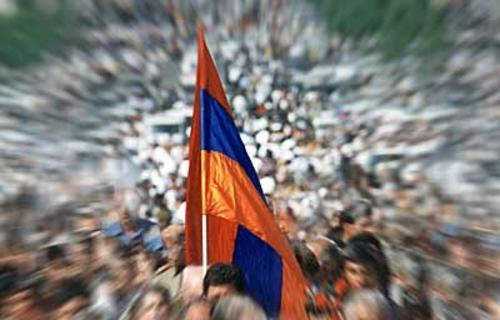
    Bearing red party flags and banners proclaiming “Don’t forget, don’t surrender, let’s rebel!” 74 party activists, including 24 hunger strikers, kicked off their campaign in front of the Foreign Ministry and the prime minister’s office in downtown Yerevan on 15 September. The protests will continue until the end of the six-week period envisaged for discussion of the protocols within Armenia and Turkey before the documents’ ratification, the party’s TV ads state.

    President Serzh Sargsyan plans to start consultations on the protocols on 17 September with the leaders of Armenia’s major political parties.

    Supporters claim that the 31 August protocols imply that Armenia should recognize the territorial integrity of Azerbaijan, accept the current Armenian-Turkish state border, and, by agreeing to “implement a dialogue on the historical dimension,” potentially backtrack on the country’s longstanding demand for international recognition of Ottoman Turkey’s 1915 mass slaughter of ethnic Armenians as genocide.

    The documents, however, make no such specifications on these topics. Written in broad language, they commit the two sides to opening their joint border within two months of the protocols’ ratification and to establishing bilateral government commissions to work on expanding cooperation in fields ranging from education to energy. Turkish Foreign Minister Ahmet Davutoglu has emphasized in media interviews that border recognition is the first step in the reconciliation process, but the protocols do not mention border recognition.

    That, however, does nothing to reassure many Armenians. “We will fight until the end since [the protocols signed with Turkey] contradict our national interests,” one male protestor in his late 20s told EurasiaNet. “We will do everything that promotes our national interests.”

    Statements from Turkish government officials that the border will not open until Armenia and Azerbaijan make progress in settling the Nagorno-Karabakh conflict suggest that attention on the Karabakh issue will increase in the coming months, opined political analyst Yervand Bozoian. “That’s the most dangerous thing,” he said.

    The governing Republican Party of Armenia counters that the Armenian Revolutionary Federation is using the protest to score self-interested political points. The 119-year-old party left Armenia’s coalition government in April in protest at President Sargsyan’s Turkey policy.

    “The Armenian Revolutionary Federation and other political forces have the right to choose what way to fight,” commented Republican Party parliamentarian Eduard Sharmazanov, the party’s spokesperson. “Any preconditions from Turkey are unacceptable for us.”

    Other members of the governing coalition have echoed those comments. “I think we just need good will and courage. We see it in the actions of this president [Sargsyan]. We’ll help the president to settle this issue,” declared Heghine Bisharian, head of the Orinats Yerkir (Country of Law) parliamentary faction.

    But many Armenians do not see any manifestation of “good will” in the protocols’ provisions. “Turks are so cunning, they will do everything to serve their interests. We know it perfectly well,” asserted 70-year-old Anzhela Garanian, whose parents survived the 1915 slaughter. “How can I believe in their sincerity when I have heard all these stories from my father?”

    The Tsitsernakaberd memorial in Yerevan to the Armenian victims
    of Ottoman Turkish violence.

    Philologist Mkrtich Hambardzumian similarly equates the Turkey of the Ottoman past with the Turkey of the present. He takes issue with Turkish assertions that Turkey’s border with Armenia cannot be reopened until Armenian forces withdraw from Azerbaijani territory surrounding Karabakh. “What are we talking about? Turkey forgetting its bloody history now tries to interfere with the Karabakh issue,” he fumed. “I’m not a political scientist, but the protocol is worrying.”

    Suspicion in Yerevan about Turkey’s motives is far from universal, however. Some passers-by at the protest commented on the irony of a former government coalition member now staging hunger strikes to block a government policy. Other Yerevan residents said protestors should consider the future. “I don’t say we need to forget the past,” said 25-year-old designer Emma Babaian. “But two neighbors cannot live with closed borders forever. Bilateral relations will help Armenia economically and will offer an alternative route to Europe.”

    The protests are not limited to the Armenian Revolutionary Federation. The Heritage Party, the only opposition party represented in parliament, has written Prime Minister Tigran Sarkisian about holding a referendum on the protocols. Earlier, Heritage Party leaders proposed a vote of confidence in the president, and a petition to the Constitutional Court. On 15 September, the party called on all members of parliament to appeal for “radical” changes in the protocols.

    “The development of Armenian-Turkish relations cannot directly or indirectly be linked to the establishment of the Nagorno-Karabakh Republic,” asserted the Heritage Party’s parliamentary faction secretary, Larisa Alaverdian.

    Meanwhile, Suren Surenyants, a senior supporter of ex-President Levon Ter-Petrosian, the head of Armenia’s main opposition coalition, argues that Turkey wants to take on a leadership role in the South Caucasus, and will, therefore, try to play the role of an impartial mediator on Karabakh. The documents pose no danger to Armenia, he continued. Those casting doubt on Turkey perhaps are trying to conceal their own private agenda, he hinted. “Political groups should be sincere,” he said. “Either we want [to establish] diplomatic relations [with Turkey], which means we need these protocols, or we do not.”

    Marianna Grigoryan is a freelance reporter in Yerevan. A partner post from EurasiaNet.

  • Bloody Turk! by ORHAN KEMAL CENGİZ

    Bloody Turk! by ORHAN KEMAL CENGİZ

    Orhan Kemal Cengiz appears to be on the way to nobel price as Orhan Pamuk.

    ALSO SEE THE RELATED ARTICLE BY  Armen Hareyan

    Top Turkish Newspaper Openly Writes of Armenian Genocide

    Turkish Forum

    —————————————————————————————————-

    I am not a religious person. I am not Kurdish. I am not gay. I am not Christian. I am not Armenian. I am not Roma. But I have spent all my life defending these people’s rights

    I am a human rights defender. When I describe myself, I say I am a human rights defender, a lawyer and a writer. It was during my first time in London in 1998 that I realized, no matter what I do, I was a “bloody Turk” for some people. Ironically, I was working for the Kurdish Human Right Project there, and we were taking cases to the European Court of Human Rights, as a result of which I felt deeply threatened by the deep state elements in my country. When I met with the Armenian community in London, I turned into a representative of Turkey. It was the first time my “Turkishness” took precedence over all my qualifications.Massacres of Armenians were orchestrated and organized by the Committee of Union and Progress (CUP) — which came to power through a military coup — while the Ottoman Empire was falling apart. After these massacres and as a result of the lack of confrontation with our past, the CUP and its gangs changed their format and turned into the “deep state” in Turkey. These deep state elements continued their massacres and manipulations and drenched Turkey with blood during the Republican era. We have these deep state elements, but we also have many people fighting against them with or without knowing the history. The Ergenekon trial, in this sense, is a turning point in this endeavor in Turkey. You can think of the Ergenekon gang as the armed wing of the CUP in today’s Turkey.

    The massacres of Armenians were carried out by a certain mindset, by a political movement. Unfortunately, this political movement also created the official Turkish history, one in which there is no place for Armenians. And the state is in complete denial of what happened in Turkey in the past. This denial unfortunately gives strong support to a racist approach toward Turkey and its people.

    I was in Toronto last year attending an extremely interesting course on genocide. For two weeks we went into all the details of different genocides that took place in various parts of the world. All lecturers gave exemplary presentations, and I felt I had really learned something. However, I also realized that there was a fundamental difference in the way in which the Armenian genocide is being handled. When we spoke about the Holocaust, we spoke of the Nazi regime; when we discussed the genocide in Cambodia, we talked about the Khmer regime; when it came to the Armenian genocide, though, we only heard the word “Turks.”

    Complete and blanket denial feeds complete and absolute labeling. This is a vicious circle. It is very unfortunate that some Armenians, while believing they are seeking justice, have turned into hopeless racists. They do not want to believe that there are many good people in this country. They do not want to remember that there were also Turks who lost their lives while trying to protect Armenians. They hold tightly on to this image of the “bloody Turk.” Every Turk, every individual living in Turkey, is just a murderer for them.

    The pathology of amnesia and the pathology of blind hatred are two sides of one coin. They both serve the same purpose: Both leave Turks and Armenians as deeply neurotic people.

    In the midst of all this madness, Hrant Dink was a safe haven of reason, wisdom and compassion. He had a deep understanding of Turkey and the trauma we have been suffering for so long. He was killed because he was the hope in the face of this madness. He could have been killed by an Armenian racist. But instead, he was killed by Turkish racists, of course, under the guidance of the deep state. Dink was a bloody Turk for Armenian racists and an Armenian traitor for racist Turks. He was a dangerous figure for all who wanted to continue this vicious circle of hatred. During his funeral, we chanted, “We all are Hrant Dink.” We all need to be Dink if we wish to contribute to reconciliation. I bow respectfully before his memory.

  • Top Turkish Newspaper Openly Writes of Armenian Genocide

    Top Turkish Newspaper Openly Writes of Armenian Genocide

    Written by Armen Hareyan
    Founder of HULIQ.com

    {6769EB17-9FBE-47D6-99F9-056F06D9EBA0}In a very rare news article published by one of the top newspapers in Turkey Today’s Zaman the author openly speaks about the Armenian Genocide and how they were orchestrated.

    In the beginning it was total silence and denial. Then in the recent two years we started seeing phrases like “so called Armenian Genocide,” “Armenian claims of genocide,” and so on. In any case the word genocide was always written in quotation marks. Yet today, one of Turkey’s premier newspapers Today’s Zaman published a rare story about how the Armenian Genocide was organized and orchestrated by the ruling elite of the Turkish government in 1915.

    Orhan Kemal Cengiz, a human rights advocate writes that the “Massacres of Armenians were orchestrated and organized by the Committee of Union and Progress (CUP) — which came to power through a military coup — while the Ottoman Empire was falling apart. After these massacres and as a result of the lack of confrontation with our past, the CUP and its gangs changed their format and turned into the “deep state” in Turkey. These deep state elements continued their massacres and manipulations and drenched Turkey with blood during the Republican era. We have these deep state elements, but we also have many people fighting against them with or without knowing the history.”

    True the word genocide is not used in that paragraph. Instead Cengiz is using the phrase Massacres of Armenians. However, in the 5th paragraph he openly talks about the Armenan genocide in the following way. “I was in Toronto last year attending an extremely interesting course on genocide. For two weeks we went into all the details of different genocides that took place in various parts of the world. All lecturers gave exemplary presentations, and I felt I had really learned something. However, I also realized that there was a fundamental difference in the way in which the Armenian genocide is being handled. When we spoke about the Holocaust, we spoke of the Nazi regime; when we discussed the genocide in Cambodia, we talked about the Khmer regime; when it came to the Armenian genocide, though, we only heard the word “Turks.”

    While his sincerity is most appreciated he does have a point that when the world refers of the Jewish or Cambodia national tragedies we do refer to regimes. However, we speak of the Armenian Genocide Turks are indeed pointed. But why is this?

    It is the 90 years of the denial of the truth and the fear to face its own history that has made things come to this place, where a Turk is pointed when speaking of the Armenian Genocide. Why is it taking Germany only 20 years to face the Jewish Holocaust, say thank you and compensate, but when it comes to the Armenian Genocide even the past 90 years are not enough?

    It is believe that if Turkey had earlier recognized the genocide and condemned it the following generations would have blamed it to the ruling regime of the time not the nation. In fact, I have heard many stories that many Turkish families have risked their lives hiding the Armenian families, their neighbors from massacres and killings in and around 1915.

    A historic moment is upon us. Today the president of Armenian, meeting with the leaders of various Armenian parties and discussing the pre-signing of the Turkey Armenia normalization protocols, despite much criticism, said that “we want to show that even the nation that has fallen a victim to a genocide can be the first to offer a hand of normalization of relationship.” Arming themselves with sincerity, honesty and the sense of fairness and justice the Armenian, Turkish and Azerbaijani nations should look to a new South Caucasus, building a better future for their children and themselves.

    Written by Armen Hareyan
    Founder of HULIQ.com

    Armen Hareyan is the Publisher of providing daily news on topics of personal health, finance and health insurance.

    Related Articles

    • The best defense for Turkey against Armenian Genocide is to simply state the truth
    • President of Armenia: ‘I Am Going to Solve Problems’
    • Armenia, Turkey Agree On Protocol To Establish Diplomatic Relations