Month: May 2009

  • Our man at Bilderberg: Let’s salt the slug in 2010

    Our man at Bilderberg: Let’s salt the slug in 2010

    Publicity is pure poison to the world’s global power elite. So we should all turn up to its next annual meeting with a few more tubs of the stuff, writes Charlie Skelton

    Ten years ago, when Jon Ronson dared to report on Bilderberg, he found himself “chased by mysterious men in dark glasses through Portugal”. He was scared for his safety.

    “When I phoned the British embassy and asked them to explain to the powerful secret society that had set their goons on me that I was essentially a humorous journalist out of my depth, I wasn’t being funny. I was being genuinely desperate,” he wrote. I know exactly how he feels.

    Only out of sheer desperation did I try to arrest one of the goons following me and then follow my flimsy leads up the Greek police ladder, finally catching one of the goons wet-handed in the lavatory of the department of government security. And only then did I know the extent of Bilderberg’s paranoia: they had set the state police on me.

    So who is the paranoid one? Me, hiding in stairwells, watching the pavement behind me in shop windows, staying in the open for safety? Or Bilderberg, with its two F-16s, circling helicopters, machine guns, navy commandos and policy of repeatedly detaining and harassing a handful of journalists? Who’s the nutter? Me or Baron Mandelson? Me or Paul Volker, the head of Obama’s economic advisory board? Me or the president of Coca-Cola?

    It makes me want to spit, the absurdity of it: the cost, not just in Greek tax euros, but on my peace of mind, of having (conservatively) a dozen Jack Bauers assigned to tailing me. I hope the operation at least had a cool name: Operation Catastrophic Overreaction, perhaps.

    So, yes, Bilderberg’s paranoia is half to blame. But there is another reason why Ronson was hounded round Portugal, why I was chased round Greece, and why on Sunday the Romanian journalist Paul Dorneanu was strip-searched by goons in Vouliagmeni, held for four hours and forced to purge his camera of images (for the crime of trying to film the delegates leaving). And it is this: they can harass and detain us only because so few of us are there.

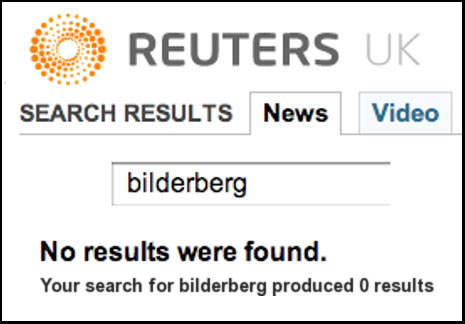
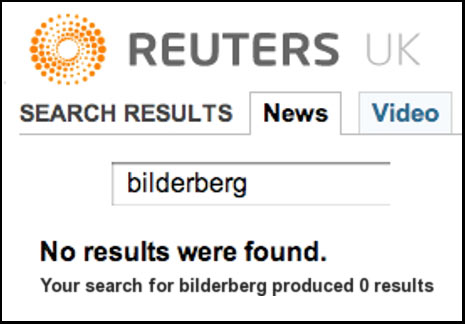
    Just now, I searched for “Bilderberg” on Reuters. I did the same on AP. And this is what I turned up:
    BilderbergPublicity is pure salt to the giant slug of Bilderberg. So I suggest next year we turn up with a few more tubs. If the mainstream press refuses to give proper coverage to this massive annual event, then interested citizens will have to: a people’s media. Find the biggest lens you can and join us for Bilderberg 2010. No idea where it’s going to be, but there’s usually a few days’ notice.

    We’ll have a barbecue selling bilderburgers (with extra lies), and we will set up our own press centre near the cordon. Get some lanyards. Email me at [email protected] and we’ll start prepping.

    Meanwhile, petition newspapers to send a correspondent. Petition your MP to ask a question in parliament. This happened a few days ago in Holland. Citing an article by Paul Joseph Watson on prisonplanet.com, a Dutch MP asked in parliament about the involvement of the prime minister, the minister for European affairs and Queen Beatrix, asking them to make public any items that were on the agenda, and whether the ratification of the Lisbon treaty was discussed.

    I’ve got a couple of questions I would like to ask Peter Mandelson, mainly about the freedom of the press and what he thinks about a Guardian journalist being detained, shoved and intimidated by the Greek state police on his behalf. Mandelson’s office has confirmed his attendance at this year’s meeting: “Yes, Lord Mandelson attended Bilberberg. He found it a valuable conference.”

    Oh, good. Maybe he stole a bathrobe. Peter has been a busy baron these last few days: all that beach volleyball and global strategising, then straight back to address the Google Zeitgeist conference on Monday, where he talked about “the need for regulation” of the internet. “There are worries about the impact of the internet on our society,” he said. I bet he is worried; but not half as worried as I am about “the need for regulation”.

    But these worries are small potatoes compared with the biggest concern Bilderberg 09 has given me. My experience over the last several days in Greece has granted me a single, diamond-hard opinion. Meaning I now have two: that John McEnroe is the greatest sportsman of all time; and that we must fight, fight, fight, now – right now, this second, with every cubic inch of our souls – to stop identity cards.

    I can tell you right now that the argument “If I’ve done nothing wrong, why would I worry about showing who I am?” is hogwash. Worse than that, it’s horse hockey. It’s all about the power to ask, the obligation to show, the justification of one’s existence, the power of the asker over the subservience of the asked. (Did you know that most Greek police don’t wear a number? This is an obligation that goes one way.)

    I have learned this from the random searches, detentions, angry security goon proddings and thumped police desks without number that I’ve had to suffer on account of Bilderberg: I have spent the week living in a nightmare possible future and many different terrible pasts. I have had the very tiniest glimpse into a world of spot checks and unchecked security powers. And it has left me shaken. It has left me, literally, bruised.

    I can tell you this from personal experience: the onus upon the individual to carry with them some external proof of their identity is transformative of his or her status as a human being. The identity card turns you from a free citizen into a suspect. It is a spanner with which to beat the individual around the head. It is the end of everything. And how much easier to put all that information inside a microchip so you don’t have to carry around that pesky card all the time. How much more efficient!

    Listen. I don’t care if you don’t love liberty. For the love of yourself: fight identity cards. Don’t let them happen. STOP IDENTITY CARDS. Stop identity cards. And while you’re about it: stop identity cards. And that’s all I have to say, you will be delighted to know, about Bilderberg 2009. Oh, except for a giant word of thanks to everyone who has written supportive or interested comments on these blogposts (let’s meet up for a proper debrief!) And one little correction: for the record, Kenneth Clarke’s office has said he was “in his constituency” at the weekend, not at the Astir Palace doing sambuca shots with the CEO of Airbus. Just in case he remembers differently when asked again.

    Source: www.guardian.co.uk
  • A Special Conference held at British House of Commons

    A Special Conference held at British House of Commons

    British House of Commons: Demanding Justice For Armenians, Not Just Genocide Recognition

    Harut Sassounian

    At the invitation of the British-Armenian All-Party Parliamentary Group (BAAPPG), I spoke on May 7 at a special conference on the Armenian Genocide held at the House of Commons, Committee Room 3, the British Parliament, London.

    Dr. Israel Charny, Director of the Institute on the Holocaust and Genocide in Jerusalem, was also invited to speak at this conferenceRegrettably, due to a last minute illness, Dr. Charny could not attend. His prepared remarks titled, “Denial of Genocide is not only a political tactic, it is an attack on decent people’s minds and emotions,” was read by Peter Barker, a former broadcaster of BBC Radio. The conference was chaired by House of Lords member Baroness Cox, Chairman of BAAPPG. In attendance were members of the House of Lords, the Armenian Desk officer of the Foreign Office, representatives from the Embassies of Greece, Kuwait, Serbia, Slovenia, and Syria, non-governmental organizations, scholars, journalists, and other distinguished guests. In my remarks entitled, “Armenian Genocide and Quest for Justice,” I cited the acknowledgment of the Armenian Genocide by the United Nations, European Parliament, legislatures of more than 20 countries, U.S. House of Representatives, Pres. Reagan, 42 out of 50 U.S. States, and the International Association of Genocide Scholars. I concluded that “after so many acknowledgments, the Armenian Genocide has become a universally recognized historical fact.” I expressed regret that the United Kingdom remained one of the rare major countries that has yet to acknowledge the Armenian Genocide. I pointed out that “Britain’s siding with a denialist state is not so much due to lack of evidence or conviction, but, sadly, because of sheer political expediency, with the intent of appeasing Turkey.” I urged British officials to heed the cautionary words of Prime Minister Winston Churchill who said: “An appeaser is someone who feeds a crocodile, hoping it will eat him last.” I suggested that Armenians no longer needed to convince the world that what took place during the years 1915-23 was “a genocide.” Here are excerpts from my May 7 speech:

    “A simple acknowledgment of and a mere apology, however, would not heal the wounds and undo the consequences of the Genocide. Armenians are still waiting for justice to be meted out, restoring their historic rights and returning their confiscated lands and properties.””In recent years, Armenian-American lawyers have successfully filed lawsuits in U.S. federal courts, securing millions of dollars from New York Life and French AXA insurance companies for unpaid claims to policy-holders who perished in the Genocide. Several more lawsuits are pending against other insurance companies and German banks to recover funds belonging to victims of the Armenian Genocide.” “In 1915, a centrally planned and executed attempt was made to uproot from its ancestral homeland and decimate an entire nation, depriving the survivors of their cultural heritage as well as their homes, lands, houses of worship, and personal properties.” “A gross injustice was perpetrated against the Armenian people, which entitles them, as in the case of the Jewish Holocaust, to just compensation for their enormous losses. “Restitution can take many forms. As an initial step, the Republic of Turkey could place under the jurisdiction of the Istanbul-based Armenian Patriarchate all of the Armenian churches and religious monuments which were expropriated and converted to mosques and warehouses or outright destroyed.” “In the absence of any voluntary restitution by the Republic of Turkey, Armenians could resort to litigation, seeking ‘restorative justice’.” “In considering legal recourse, one should be mindful of the fact that the Armenian Genocide did neither start nor end in 1915.” “Large-scale genocidal acts were committed starting with Sultan Abdul Hamid’s massacre of 300,000 Armenians from 1894 to 1896; the subsequent killings of 30,000 Armenians in Adana by the Young Turk regime in 1909; culminating in the Genocide of 1.5 million Armenians in 1915 to 1923; and followed by forced Turkification and deportation of tens of thousands of Armenians by the Republic of Turkey.” “Most of the early leaders of the Turkish Republic were high-ranking Ottoman officials who had participated in perpetrating the Armenian Genocide. This unbroken succession in leadership assured the continuity of the Ottomans’ anti-Armenian policies. The Republic of Turkey, as the continuation of the Ottoman Empire, could therefore be held responsible for the Genocide.” “An important document, recently discovered in the U.S. archives, provides irrefutable evidence that the Republic of Turkey continued to uproot and exile the remnants of Armenians well into the 1930’s motivated by purely racist reasons. The document in question is a ‘Strictly Confidential’ cable, dated March 2nd, 1934, and sent by U.S. Ambassador Robert P. Skinner from Ankara to the U.S. Secretary of State, reporting the deportation of Armenians.” “In the 1920’s and 30’s, thousands of Armenian survivors of the Genocide were forced out of their homes in Cilicia and Western Armenia to locations elsewhere in Turkey or neighboring countries. In the 1940’s, these racist policies were followed by the Varlik Vergisi, the imposition of an exorbitant wealth tax on Armenians, Greeks and Jews. And, during the 1955 Istanbul pogroms, many Greeks as well as Armenians and Jews were killed and their properties destroyed.” “This continuum of massacres, genocide and deportations highlights the existence of a long-term strategy implemented by successive Turkish regimes from the 1890’s to more recent times, in order to solve the Armenian Question with finality.” “Consequently, the Republic of Turkey is legally liable for its own crimes against Armenians, as well as those committed by its Ottoman predecessors. Turkey inherited the assets of the Ottoman Empire; And, therefore, it must have also inherited its liabilities.” “Finally, since Armenians often refer to their three sequential demands from Turkey: ‘Recognition’ of the Genocide; ‘Reparations’ for their losses; and the ‘Return’ of their lands, Turks have come to believe that once the Genocide is recognized, Armenians will then pursue their next two demands.” “This is the main reason why Turks adamantly refuse to acknowledge the Armenian Genocide. They fear that acceptance of the Genocide would lead to other demands for restitution. They believe that by denying the first demand, they would be blocking the ones that are sure to follow.” “The fact is that, commemorative resolutions adopted by legislative bodies of various countries and statements made on the Armenian Genocide by world leaders have no force of law, and therefore, no legal consequence.” “Armenians, Turks and others involved in this historical, and yet contemporary issue, must realize that recognition of the Armenian Genocide or the lack thereof, will neither enable nor deter its consideration by international legal institutions.” “Once Turkish officials realize that recognition by itself cannot and would not lead to other demands, they may no longer persist in their obsessive denial of these tragic events. “Without waiting for any further recognition, Armenians can pursue their historic rights through proper legal channels, such as the International Court of Justice (where only states have such jurisdiction), the European Court of Human Rights and U.S. Federal Courts.” “Justice, based on international law, must take its course.”

    Following an extensive question and answer period, Armenia’s Ambassador to Great Britain, Vahe Gabrieliyan, delivered the closing remarks. Based on the speeches of the two speakers, the BAAPPG issued a statement calling on the British Government to acknowledge the Armenian Genocide.

    Source:  www.huffingtonpost.com, May 20, 2009

  • Başbuğ questions media perception

    Başbuğ questions media perception

    ANKARA – Chief of General Staff Gen. İlker Başbuğ poses questions to well-known foreign scholars of history on the perception of Turkey in the West. ’Today, we see very strong prejudice against Turks is still there,’ replies historian Justin McCarthy.

    Well-known scholars of Turkish history received a flurry of questions at a two-session panel held by the General Staff to commemorate the 90th anniversary of the Turkish War of Independence on May 19.

    During his presentation, historian Justin McCarthy said the Western media largely labeled the Turks before the War of Independence as barbarians and tyrants, but that the situation began changing after the victory by the forces of Mustafa Kemal Atatürk, the founder of the Turkish Republic.

    In the question-and-answer part of the session, Chief of General Staff Gen. İlker Başbuğ, who was in the audience, asked McCarthy about the reason for these differing perceptions. Gen. Başbuğ also posed a second question, which he warned could be provocative, about how the Western press covers Turkey today. “Is it like before the war, or after the war?” he asked.

    In response, McCarthy said the negative coverage of Turks mostly stemmed from ignorance and strong prejudices in the West that developed as a result of the World War I-era killings of Armenians at the hands of the Ottoman Empire.

    ’Prejudice against Turks is still there’
    “Today, we see very strong prejudice [against Turks] is still there,” he said, adding that the New York Times was one of the most anti-Turkish newspapers in the United States, both during the war years and today. As an example, he cited the paper’s language referring to the Armenian killings as “genocide.”

    McCarthy also said the newspaper once printed an article about Turkish lobbying groups in the United States fighting against genocide claims, while mentioning nothing about the Armenian side.

    Another panelist, Prof. Salahi Sonyel, said he had advised the Turkish government to give up on the Armenian diaspora and instead concentrate on the Armenians of Armenia. In his opinion, the Armenian diaspora will never come to good terms with Turkey, but it is important for Turkey to normalize ties with neighboring governments, including the one in Yerevan.

    Following the panel, Gen. Başbuğ inaugurated a statue of Atatürk that had been crafted by Sait Rüstem. The statue, decorated with quotes from the Turkish leader, stands 4 meters tall and weighs 2.3 tons.

    Source:  www.hurriyet.com.tr, May 20, 2009‎

  • Adi Ignatius to discuss the future of media

    Adi Ignatius to discuss the future of media

    Adi Ignatius.

    WATERTOWN, MASS. – Adi Ignatius, the editor-in-chief of Harvard Business Review and a former executive editor of Time magazine will be the guest speaker at the dinner meeting of the St. James Armenian Church Men’s Club on Monday, June 1.

    Mr. Ignatius will discuss “The future of media. Who will survive? Who won’t? How we’ll consume news.”

    The meeting will take place at the church cultural hall, 465 Mount Auburn Street in Watertown. The social hour starts at 6:15, with a dinner of losh kebab and kheyma at 7.

    Mr. Ignatius is the son of Paul Ignatius, the former secretary of the Navy who was the highest-ranked Armenian-American in the Kennedy and Johnson administrations.

    Source:  www.reporter.am, May 22, 2009

  • Myth of Armenian claims against Turks

    Myth of Armenian claims against Turks

    Name of the book: Lies,Lies and More Lies
    Author: Col Masud Akhtar Shaikh (R)
    Reviewed by: Col Ghulam Sarwar (R)
    Published by: Encore, Islamabad
    Pages: 250

    A reputed Pakistani scholar of the Turkish language and literature, Col Masud Akhtar Shaikh is the proud author of sixteen books and some of these are translations from Turkish literature. A few more books, I understand, are in the pipeline. Besides, writing books on Turkish literature, he has carried out an indepth analysis of the Armenian issue and in the process has exploded the myth of the Armenian genocide by the Ottoman Turks. He has convincingly brought out that the issue of genocide is a total hoax and has nothing to do with facts on ground. He holds that this “hoax” was woven by some Christian powers during World War I, as a part of their vicious propaganda against the Turks. Col Shaikh, on the other hand, makes us believe that the myth of Armenian genocide by the ottoman Turks, was designed to cover up the genocide of the Turks at the hands of the Armenians.

    It is extremely deplorable that the propaganda against the Turks has so successfully been launched that the world has seriously started believing that the Armenians were the most oppressed nation in the world and that the Ottoman Turks had mercilessly subjected them to genocide and for this, the Turkish Republic should accept responsibility. The learned author feels that it is high time that this myth is exposed threadbare.

    From the narrative, we learn that knowing that the Ottoman government would not easily agree to further disintegration of the Empire, the Americans had adopted the policy of terrorism on an extensive scale. Gradually, the terrorist operations engineered by the Armenians had become so frequent and so widespread, that it had become almost impossible to keep a count of the number of Turks killed by the Armenians. It was also difficult to assess the value of Turkish assets that were destroyed by the latter. To put facts in their proper perspective, the author makes us believe that during the Ottoman Empire, there was no bar or prejudice against the employment of Armenians in any government or ministry. Also, there was no objection to their elevation to the higher echelons of the bureaucratic hierarchy. This situation continued right upto the end of World War I. This fact was borne out by the Report of the Commission led by General Horbord, and presented to the American Senate. This Commission had carried out a study on the status of Armenians in Antolia and Russia at the end of the Great War.

    The report had stated that the Turkish people and the Armenians had been living side by side on friendly and peaceful terms. In fact, the Armenians had lived in peace and prosperity for many centuries as the loyal citizens of the Ottoman Empire, enjoying full confidence of the Ottoman Rulers. However, starting from the last quarter of the 19th century, this situation had started undergoing a drastic change in relation between the Turks and the Armenians. Thus, through cunning mechanism of the Big Powers, the age-old brotherly feelings between the two communities were gradually replaced by feelings of mutual hatred and acrimony. With regard to geo-political importance of Turks, the author brings out that all along history, Turkey had remained the centre of attraction for various powers, because of its extremely important strategic and geo-political location. Obviously, it had served as a bridge between Europe and Asia. To add to its importance, we see that it controlled two highly important straits, the Dardanelles and the Istanbul straits (Bosophorus), which provided passage between the Mediterranean Sea and the Black Sea. It was located at a nodal point where the natural energy resources of Asia, Caucasus and Middle East intersect each other. In view of this enviable position, Turkey has always been the centre piece of plots and conspiracies hatched against it by big powers. Further, we learn from the narrative that Armenia is in dire need of economic developments, both in the industrial and the agricultural sectors. For this, it has to rely on outside help in terms of technical know-how, heavy equipment and machinery and external investment. With the present strained relations with Azerbaijan, Turkey, Georgia and to some extent, Iran, it would be futile on the part of Armenia to expect desired goodwill from any of these countries. In view of above constraints, what Armenia needs in the immediate future is a friendly Turkey, a friendly Azerbaijan and a friendly Georgia. All these neighbouring countries can be of a great assistance to Armenia in its economic and social development as well as its security as an independent nation. It is in Armenia’s own interest to realise that no attempt at reconciliation can be successful unless the outside powers, namely Russia, America and France realise that their respective national interests can be served better if durable peace prevails in the region. By contributing towards accelerated economic and industrial development of the region, these powers can also reap rich dividends in terms of greater opportunities for secure investment in the whole region. International development and financial agencies would also be encouraged to invest substantial funds for speedy regional development. This done, hopefully, within a short period, Armenia would no longer remain a permanent liability for Russia and America, as well as for rest of the Christian world, as it has been for the last many decades. So, in the interest of Armenian people, it is imperative that Russia, America and France, voluntarily lend their support in paving the way for inter-state reconciliation in the region.

    Source: www.pakobserver.net, May 24 2009

  • Turkey’s ambassador to Azerbaijan reacts to the reports about closing of Turkish mosques

    Turkey’s ambassador to Azerbaijan reacts to the reports about closing of Turkish mosques

    Baku. Kamala Guliyeva –APA. “The Turkish mosques in Azerbaijan were not closed”, said Turkey’s ambassador to Azerbaijan Hulusi Kilic, APA reports.

    Kilic said the embassy’s counselor for religious affairs also denied the reports about the closing of Turkish mosques in Azerbaijan. “The people are going to these mosques for Friday Namaz”, said the ambassador. “The mosques are open. Unfortunately there are such reports, which sadden us. Unfortunately some newspapers also publish such wrong reports”.

    The ambassador said the Turkish mosques were opened in Azerbaijan 15 years ago. “If these mosques are open for 15 years and the people were going there to pray, it means that it is the people’s will to open these mosques”.

    Source:  en.apa.az, 23 May 200