Month: May 2009

  • Chief of Russia’s Intelligence in Armenia

    Chief of Russia’s Intelligence in Armenia

    Prime Minister Tigran Sargsyan received Director of Russia’s External Intelligence Mikhail Fradkov on Tuesday, said Sargsyan’s press office.

    The sides reportedly agreed that such meetings within the framework of Armenian-Russian strategic partnership helps focus attention on political, economic and security issues in the world, region and both countries with the view to outlining further ways of cooperation in meeting the new challenges of the modern-day world and finding effective ways out of the current situations.

    The prime minister introduced Armenian government views on the economic situation, negative impacts of the global financial and economic crisis and ways of overcoming them, as well as relations with neighboring countries among which are Iran and Turkey.

    Source:  www.armenianow.com, 05 May, 2009

  • Armenia withdraws from NATO drills in Georgia

    Armenia withdraws from NATO drills in Georgia

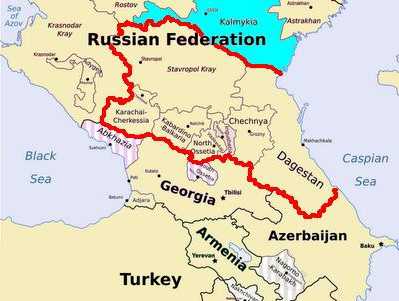
    MOSCOW, May 5 (Xinhua) — Armenia will not participate in the NATO-led military exercises in Georgia, Russian news agencies reported on Tuesday, citing the Armenian Defense Ministry.

    “Due to the current situation, Armenian troops will not take part in NATO’s exercises in Georgia,” the ministry was quoted by Itar-Tass and RIA Novosti as saying in a statement.

    A spokesman for the Russian Foreign Ministry said on Tuesday that Russia is satisfied with some countries’ decision to pull out of the drills, Itar-Tass reported.

    The planned exercises, scheduled for May 6 to June 1, have drawn strong opposition from Moscow. About 1,300 soldiers from over a dozen NATO member or ally states were originally scheduled to participate, but Kazakhstan, Latvia, Estonia, Moldova and Serbia have already withdrawn.

    Source: news.xinhuanet.com, 06-05-2009

  • UN report condemns Israel over Gaza war

    UN report condemns Israel over Gaza war

    tolA United Nations investigation yesterday accused Israel of “reckless disregard” for human life in using white phosphorus munitions that killed and injured Palestinians sheltering in a UN school during the Gaza war.

    The four-man UN panel, led by Ian Martin, a former head of Amnesty International, confirmed that smoke projectiles containing white phosphoros had twice struck UN premises, causing two deaths.

    The UN board had a limited mandate to investigate the nine worst attacks on UN premises and vehicles during the war earlier this year.

    It found the Israel Defence Forces responsible for seven of those attacks, including one it described as a “direct and intentional strike into UN premises” that killed three young men at a UN school in Asma.

    The UN panel blamed “a Palestinian faction, most likely Hamas” for one attack using a homemade Qassam rocket on a UN warehouse at the Karni crossing, saying the rocket was probably aimed at Israel but fell short. It was unable to establish responsibility for the ninth incident.

    In the highly publicised case of the shelling of the UN’s Jabalia school on January 6, panel-members demanded that Israel apologise for falsely claiming that it was responding to Hamas mortar fire when it attacked, killing up to 40 people in the vicinity and injuring seven people inside.

    Israel also wrongly claimed Hamas had fired from a UN field office it hit with artillery fire, the panel said.

    “These allegations were untrue, continued to be made after it ought to have been known that they were untrue, and were not adequately withdrawn and publicly regretted,” the panel said.

    The UN panel documented Israel’s use of white phosphoros munitions that hit the UN compound in Gaza City and the UN’s Beit Lahia school.

    Two children, aged 5 and 7, were killed by shards of projectile casings at the Beit Lahia school on January 5 and smoke from the burning white phosphorus injured others.

    “The firing by the IDF of projectiles containing white phosphorus in such close promixity to the school as to cause the death of two young children and serious injuries to others, as well as property damage, was highly negligent and amounted to reckless disregard for the lives and safety of those sheltering in the school,” an unclassifed 28-page summary of the 184-page report said.

    Israel’s deputy UN Ambassador, Daniel Carmon, called the report “biased” and “one-sided”.

    Source:  www.timesonline.co.uk, May 6, 2009

  • Israel must accept Palestinian state, Joe Biden says

    Israel must accept Palestinian state, Joe Biden says

    Vice-President Joe Biden placed America on a collision course with Israel on Tuesday, urging the new government to accept the goal of a Palestinian state and stop expanding Jewish settlements on occupied land.

    By Alex Spillius in Washington
    Last Updated: 11:16PM BST 05 May 2009

    U.S. Vice President Joe Biden at a media conference at NATO headquarters in Brussels Photo: AP

    Mr Biden used an address to the American Israel Public Affairs Committee – the leading pro-Israeli lobby group in the United States – to deliver a tough message to Benjamin Netanyahu, the country’s new prime minister.

    “Israel has to work for a two-state solution,” said Mr Biden. “You’re not going to like my saying this, but not build more settlements, dismantle existing outposts and allow Palestinians freedom of movement.”

    Mr Netanyahu, by contrast, has not accepted the principle of a Palestinian state and his government plans to build more homes inside existing Jewish settlements in the West Bank and East Jerusalem. It has also refrained from removing any of the illegal settler outposts that Mr Biden mentioned. Meanwhile, hundreds of checkpoints scattered across the West Bank continue to restrict the freedom of movement of Palestinians.

    Mr Biden’s comments brought the differences between America and Israel into the open. They came ahead of Mr Netanyahu’s first official visit to Washington, expected later this month.

    The new prime minister, who leads a coalition government in which Right-wing parties have the most influence, told the AIPAC conference by satellite that he was ready to begin peace talks with the Palestinians “the sooner the better”. But Mr Netanyahu made no reference to the possibility of a Palestinian state.

    Instead, he outlined a “triple track” approach to peace, a strategy that emphasises political, economic and security schemes to resolve the conflict.

    On the economic track, Mr Netanyahu said Israel was prepared to remove as many obstacles as possible to advance the Palestinian economy.

    “I want to see Palestinian youngsters know that they have a future,” he said. “I want them not to be hostage to a cult of death, and despair and hate.”

    Privately, British officials predict that Mr Netanyahu will eventually accept the principle of Palestinian statehood, largely because of American pressure. But they believe he will hold out for a while in order to avoid being seen to give way easily.

    In his speech, Mr Biden was careful to call on the Palestinian Authority to “combat terror and incitement against Israel”. He stressed that the US would never abandon its commitment to Israel’s security. Mr Biden also sought to reassure Israel’s supporters that the administration’s conciliatory approach towards Iran was not open-ended and the goal of preventing the Islamic republic from acquiring nuclear weapons remained unchanged. “We are intensely focused on avoiding the grave danger … of a nuclear armed Iran,” said the Vice-President.

    Meanwhile, a United Nations inquiry was deeply critical of the Israeli army’s behaviour during the offensive in the Gaza Strip in January.

    It blamed Israeli forces for six of the nine incidents when UN buildings in Gaza were attacked, causing death and injuries to people sheltering inside.

    Source:  www.telegraph.co.uk, 05 May 2009

  • Tackling the Turkish taboo

    Tackling the Turkish taboo

    Last December, about 200 Turkish academics and journalists challenged a longstanding Turkish taboo when they launched a petition on the internet apologising for “the Great Catastrophe that the Ottoman Armenians were subjected to in 1915”. To date 30,000 have signed the petition.

    The reaction was twofold. The Turkish president, Abdullah Gül, who had earlier attended a World Cup qualifying match between Turkey and Armenia in Yerevan, said that being able to discuss every opinion was the policy of the state. The prime minister, Recep Tayyip Erdogan, on the other hand, said there was no need to apologise because Turkey had not committed a crime.

    In a further move, Canan Aritman, the Izmir deputy for the opposition Republican People’s party, accused the president’s mother of being Armenian, and when Gül explained that both sides of his family were Muslim and Turkish, she demanded a DNA test. A defamation lawsuit followed which resulted in the president being awarded a symbolic 1 Turkish lira (50p).

    Inevitably, after a complaint that the website campaign had violated article 301 of the Turkish penal code for “public denigration of the Turkish nation”, the Ankara public prosecutor’s office investigated the matter. The conclusion, surprisingly, was that there was no need for a criminal prosecution on the grounds that opposing opinions are also protected under freedom of thought in democratic societies. However, the high criminal court annulled this ruling and the issue is still pending.

    In recent years, a number of high-profile cases in Turkey have illustrated the fact that public discussion of the events of 1915 is still fraught with risk. Three years ago, the Nobel prize winner Orhan Pamuk was prosecuted for stating in an interview with a Swiss daily that “30,000 Kurds and a million Armenians were killed in these lands and nobody but me dares to talk about it”. The charge was dropped on a technicality but it transpired that an ultranationalist gang was trying to raise 2m lira to get someone to kill him.

    Another Turkish novelist, Elif Şafak, was also prosecuted under article 301 because a character in her novel The Bastard of Istanbul had raised the issue of the Armenian genocide, but the charge was ultimately dropped because of insufficient evidence. And two years ago, Hrant Dink, a Turkish-Armenian editor, was murdered outside his office in Istanbul by a young Turkish nationalist.

    Even on an academic level this topic is controversial. Four years ago, scholars who organised a conference at Bosphorus University on the Armenian issue during the Ottoman empire were accused by the government’s spokesman and minister of justice, Cemil Çiçek, of “stabbing the Turkish nation in the back”. The conference was postponed, but after an international outcry it was finally reconvened at Bilgi University four months later.

    More fuel was added to the fire last November when the defence minister, Vecdi Gönül, on the 70th anniversary of the death of the founder of modern Turkey, Mustafa Kemal Atatürk, said: “If there were Greeks in the Aegean and Armenians in most places in Turkey today, would it be the same nation state?”

    But a fortnight ago the chief of the Turkish general staff, İlker Başbuğ, in a keynote speech reminded his audience that Atatürk had said it was the people of Turkey, without ethnic and religious distinction, who had founded the Republic of Turkey. If he had spoken of the Turkish people, that would be an ethnic definition.

    Both Barack Obama and Hillary Clinton pledged to recognise the Armenian genocide to garner the substantial Armenian-American vote during their presidential campaigns, but now geopolitical reality has set in. On Obama’s visit to Turkey at the beginning of this month, the US president maintained that his views on the incidents of 1915 had not changed and in his statement last Friday on Armenian Remembrance Day he reiterated that stance.

    However, without using the dreaded g-word, Obama instead spoke of “one of the great atrocities of the 20th century” and “Meds Yeghern” – the Armenian for the “Great Catastrophe”. His goal was still “a full, frank and just acknowledgement of the facts” and he strongly supported efforts by the Turkish and Armenian people to work through their painful history in an honest, open and constructive manner.

    While trying to manoeuvre between a rock and a hard place, Obama was met with criticism from both sides. The chairman of the Armenian National Committee of America expressed his “sharp disappointment” and Erdogan called Obama’s remarks “an unacceptable interpretation of history”.

    Nine months after Dink was murdered, his son Arant Dink and another Turkish-Armenian journalist received suspended sentences of one year’s imprisonment for using the term genocide. The Turkish court in its judgment stated: “Talk about genocide, both in Turkey and other countries, unfavourably affects national security and the national interest.”

    After the first world war, the treaty of Sèvres in 1920 was the instrument by which the victorious allies dismembered Ottoman Turkey and divided the spoils among themselves. It was only after the Turkish war of independence and a heroic struggle under the leadership of Atatürk that the treaty of Lausanne (1923) established the borders of modern Turkey.

    The Armenian diaspora is also responsible for Turkey’s fears of partition. In December 2007, journalist Harut Sasunian, a prominent member of the Armenian community in the US, said the ultimate objective of Armenians was to get recognition of their genocide claims and to obtain territory and compensation from Turkey.

    According to the prominent Turkish historian Taner Akcam, “Turkey needs to stop treating the discussion of history as a category of crime”. Perhaps the rapprochement between Turkey and Armenia and the agreement on a “roadmap” to normalise ties will one day lead to that.

    Published on : https://www.theguardian.com/commentisfree/2009/apr/29/armenian-genocide-turkey

  • Armenian Genocide Motion Passed in South Australia

    Armenian Genocide Motion Passed in South Australia

    “That, whereas the genocide by the Ottoman state between 1915-1923 of Armenians, Hellenes, Syrian and other minorities in Asia Minor is one of the greatest crimes against humanity, the people of South Australia and this House –

    (a) join the members of the Armenian-Australian, Pontian Greek-Australian and Syrian-Australian communities in honouring the memory of the innocent men, women and children who fell victim to the first modern genocide;

    (b) condemns the genocide of the Armenians, Pontian Greeks, Syrian Orthodox and other Christian minorities, and all other acts of genocide as the ultimate act of racial, religious and cultural intolerance;

    (c) recognises the importance of remembering and learning from such dark chapters in human history to ensure that such crimes against humanity are not allowed to be repeated;

    (d) condemns and prevents all attempts to use the passage of time to deny or distort the historical truth of the genocide of the Armenians and other acts of genocide committed during this century;

    (e) acknowledges the significant humanitarian contribution made by the people of South Australia to the victims and survivors of the Armenian Genocide and the Pontian Genocide; and

    (f) calls on the Commonwealth Parliament officially to condemn the genocide.”

    South Australia Passes Armenian Genocide Motion

    Soykırım Tasarısı Güney Avustralya’da Kabul Edildi