Month: May 2009

  • Sun Language Theory

    Sun Language Theory

    The theory according to the The New York Times (“Turks Teach New Theories”, New York Times (Istanbul), 1936-02-09) was:

    “claims that the Sumerians, being Turks, originating in Central Asia, all languages also consequently originated there and first used by the Turks. the first language, in fact, came into being in this wise: Prehistoric man, i.e., Turks in the most primitive stage, was so struck by the effects of the sun on life that he made of it a deity whence sprang all good and evil. Thence came to him light, darkness, warmth and fire, with it were associated all ideas of time: height, distance, movement, size, and give expression to his feelings the sun was thus the first thing to which a name was given. It was “ag” [pronounced agh], and from this syllable all words in use today are derived. This, briefly, is the theory about the “sun language,” and with the new conception of Turkish history it will be taught in the new Angora school.”

    Read more on Turkipedia

  • Turkish PM Erdogan to make a speech at Azerbaijani Parliament

    Turkish PM Erdogan to make a speech at Azerbaijani Parliament

    05 May 2009 [10:53] – Today.Az

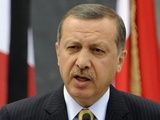
    Turkish Prime Minister Tayyip Erdogan will visit both Azerbaijan and Russia next week as diplomacy traffic intensifies in efforts aimed at solving long-standing disputes in the region.

    Recep Tayyip Erdogan will start his visit to Azerbaijan on May 12, CNN Turk informs. The Turkish prime minister will have meetings in the capital Baku on May 13.

    Erdogan’s visits come as diplomatic contacts gain momentum in relation to efforts aimed at solving long-standing disputes, including those between Turkey and Armenia, and Azerbaijan and Armenia.

    CNN Turk informs that the Prime Minister will also make a speech at Azerbaijani Parliament.

    Erdogan will later meet with Russia’s Prime Minister Vladimir Putin in the Black Sea resort of Sochi on May 16.
    /ANS PRESS/

    URL: http://www.today.az/news/politics/52023.html

  • Georgia’s top defense officers arrested in attempted coup

    Georgia’s top defense officers arrested in attempted coup

    nato-georgiaTBILISI, May 5 (Xinhua) — Several top Georgian Defense Ministry officials were arrested on Tuesday for an attempted coup, which ended without violence after most mutineers surrendered, officials said.

    “It’s over. Most of the people have surrendered,” Interior Ministry spokesman Shota Utiashvili said.

    Georgian officials said servicemen of an armored cavalry battalion based in Mukhrovani, 30 km from Tbilisi, mutinied earlier in the day. President Mikhail Saakashvili viewed the mutiny as “a very serious incident,” according to the Interfax news agency.

    Defense Minister David Sikharulidze said the mutiny had been planned “on a broader scale” and was aimed at foiling the planned NATO exercise in Georgia.

    “The general objective was to topple the government with an armed revolt,” he added.

    Officials of the Defense and the Interior Ministries were at the scene to negotiate with the mutineers at the base.

    “They know about our proposal,” he said, adding all commanders in Mukhrovani involved in the mutiny had been dismissed from their posts.

    Utiashvili, the Interior Ministry spokesman, said the organizers were former high-ranking Defense Ministry officials.

    “The preliminary investigation materials showed that the plot was coordinated with the Russians and was aimed at disrupting the NATO training scheduled to take place in Georgia on May 6,” he said.

    Georgian officials said one organizer of the coup is Giya Gvaladze, head of the special task unit Delta in the 1990s, while another is Koba Kobaladze, who was previously reported by Interfaxas Koba Otaradze.

    Kobaladze has been detained on suspicion of co-organizing the military mutiny, Interfax reported, citing local Imedi TV.

    The arrested officers will be charged with planning a coup and involvement in the Russian special services, Utiashvili said.

    The uprising unit has been confined to barracks, according to Utiashvili.

    A video seized by the Interior Ministry showed Gvaladze talking to his followers about the coup planned for Thursday.

    “The Russians will come to help us, a total of 5,000 people, who intend to liquidate such leaders as Interior Minister Vano Merabishvili,” Gvaladze said in the video, according to Interfax.

    “If the coup is a success, Georgia will reunite with Russia,” Gvaladze said in the video, adding that elections would be held in Georgia if the coup succeeds.

    Russia has denied accusations of involvement in the coup, the Itar-Tass news agency reported, citing a source in the Russian security services.

    Russia’s permanent representative to NATO, Dmitry Rogozin, also called the accusations ridiculous and absolutely unfounded.

    “Of course we have slowly begun to get accustomed to mad accusations by Georgian political and military authorities that if there is hail or thunderstorms, this is all Moscow’s work,” Rogozin was quoted by Interfax as saying on Tuesday.

    A NATO military exercise under the Partnership for Peace program is set to begin Wednesday in Georgia. NATO spokeswoman Carmen Romero was quoted by Itar-Tass as saying that the exercise would go on despite the armed revolt.

    Georgian opposition leaders also called an emergency meeting upon the mutiny, the RIA Novosti news agency reported.

    The opposition has been staging protests in Tbilisi recently demanding the resignation of Saakashvili.

    Source: news.xinhuanet.com, 05.05.2009

  • Obama Targets Overseas Tax Dodge

    Obama Targets Overseas Tax Dodge

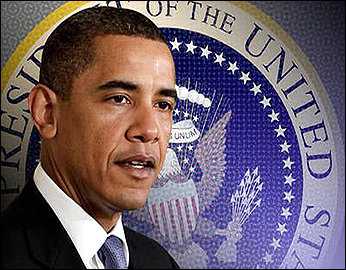
    obama-flag

    Plan Would Crack Down On Individuals, Firms With Money Abroad

    Video
    Obama Announces Plan to Close Tax Loopholes
    President Barack Obama is proposing to close tax loopholes for companies and individuals with operations or bank accounts overseas.
    » LAUNCH VIDEO PLAYER
    By Lori Montgomery and Scott Wilson

    Washington Post Staff Writers
    Tuesday, May 5, 2009

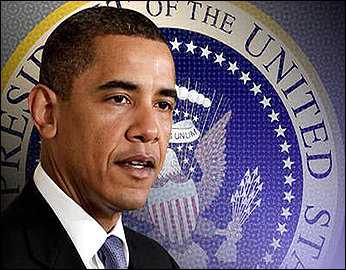
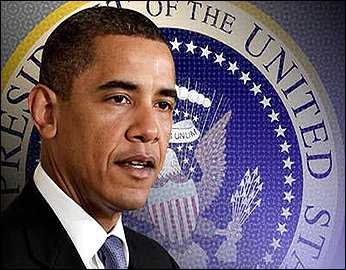
    President Obama yesterday announced a major offensive against businesses and wealthy individuals who avoid U.S. taxes by parking cash overseas, a battle he said would be fought with new tax laws, new reporting requirements and an army of 800 new IRS agents.

    This Story
    • Obama Targets Overseas Tax Dodge
    • Highlights of New Tax Initiatives…

    During an event at the White House, Obama said his proposal would raise $210 billion over the next decade and make good on his campaign pledge to eliminate tax advantages for companies that ship jobs abroad.

    “I want to see our companies remain the most competitive in the world. But the way to make sure that happens is not to reward our companies for moving jobs off our shores or transferring profits to overseas tax havens,” Obama said, flanked by Treasury Secretary Timothy F. Geithner and Internal Revenue Service Commissioner Douglas Shulman.

    The nation’s largest business groups immediately assailed the proposal, arguing that it would subject them to far higher taxes than their foreign competitors must pay and ultimately endanger U.S. jobs. Key Democrats were cool to the plan, and said Obama’s ideas should be considered as part of a broader effort to streamline the nation’s complex corporate tax code.

    “Further study is needed to assess the impact of this plan on U.S. businesses,” Sen. Max Baucus (D-Mont.), chairman of the Senate Finance Committee, which has jurisdiction over U.S. tax law, said in a written statement. “I want to make certain that our tax policies are fair and support the global competitiveness of U.S. businesses.”

    Yesterday’s announcement offered the first details of a tax plan that was sketched out in the $3.4 trillion budget request that Obama sent to lawmakers earlier this year and that Congress approved last week. If the measures do not survive congressional scrutiny, the lost revenue would increase already-elevated deficit projections, unless lawmakers find money elsewhere.

    Obama said his plan could serve as “a down payment on the larger tax reform we need to make our tax system simpler and fairer.”

    The proposal takes aim at what corporate executives consider to be one of the most critical features of the U.S. tax code: permission to indefinitely defer paying U.S. taxes on income earned overseas.

    Currently, U.S. companies can avoid paying taxes on foreign profits until they bring the money back home. So a U.S. company doing business in Ireland, for example, must pay the Irish tax of 12.5 percent, like every other company doing business in Ireland. But the U.S. firm would owe an additional 22.5 percent to the U.S. Treasury (the difference between Ireland’s tax rate and the 35 percent U.S. tax rate) unless it reinvests the money overseas.

    The United States is the last major economic power to tax the profits of locally headquartered companies if that income is earned abroad. Other nations, including most recently Japan and Britain, are moving to a territorial system that taxes only corporate profits earned within their borders.

    Instead of following that trend, Obama proposes to move in the opposite direction. He argues that the current system gives tax breaks to U.S. multinationals at the expense of companies that operate solely on American soil. In 2004, the most recent year for which statistics are available, U.S. multinationals paid an effective U.S. tax rate of just 2.3 percent on $700 billion in foreign profits, according to the administration.

    “It’s a tax code that says you should pay lower taxes if you create a job in Bangalore, India, than if you create one in Buffalo, New York,” the president said yesterday.

    To level the playing field, Obama would bar firms from taking deductions for expenses that support their overseas investments until they pay U.S. taxes on the profits. He would also crack down on firms that overstate their foreign tax bills. And he would reverse a Clinton-era rule known as “check the box,” which permits firms to more easily transfer cash between countries. In practice, Obama officials said, “check the box” has been used to shift income away from higher-tax countries and into tax havens such as Bermuda and the Cayman Islands, allowing firms to reduce their tax bills both at home and abroad.

    Those provisions would take effect in 2011 and would raise about $190 billion by the end of the next decade. In return, Obama proposes to make permanent an existing tax credit for companies that spend money on domestic research and development programs, worth about $75 billion over the next decade.

    Obama also proposes to crack down on wealthy people who evade taxes through offshore bank accounts, primarily by targeting financial institutions in tax-haven jurisdictions. That plan, which would net another $9 billion over the next decade, appears to have few opponents.

    By contrast, more than 200 U.S. companies and trade groups have signed a letter asking congressional leaders to oppose Obama’s proposal to limit their ability to defer U.S. tax payments. The letter, signed by Alcoa, General Electric, McDonald’s and Microsoft, among others, warned that restricting the deferral rules would make it difficult to compete abroad.

    The U.S. Chamber of Commerce also denounced Obama’s plan. And John Castellani, president of the Business Roundtable, a coalition of the nation’s largest firms, called it “the wrong proposal at the wrong time for the wrong reasons” that will “make us less competitive in the international marketplace, where, by last count, 95 percent of the world

    Rosanne Altshuler, co-director of the Tax Policy Center, a joint project of the Urban Institute and the Brookings Institution, said some of Obama’s proposals have merit. But “the big question mark is whether limiting deferral will lead to more jobs in the U.S., and it’s not clear to me that this is what will happen.” Instead, Altshuler said, the result may be to create a tax advantage for U.S. firms to be acquired by foreign owners, an “unintended consequence” that “would probably be bad.”

    “There’s a big difference between abusive tax avoidance and legitimate tax policy that recognizes the global economy,” said Sen. Charles E. Grassley (Iowa), the senior Republican on the Senate Finance Committee. “To the extent the president continues on the road of cracking down on tax abuse, he can count on my support. But if he’s using tax shelters as a stalking horse to raise taxes on corporations at the cost of U.S. jobs, he’ll lose me.”
  • Armenian Patriarch of Turkey:  Religious or Political Leader?

    Armenian Patriarch of Turkey: Religious or Political Leader?

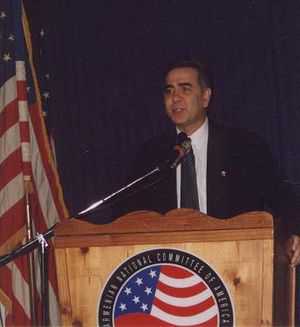
    sassun-2

    By Harut Sassounian

    Publisher, The California Courier

    A year ago, the 53-year-old Patriarch of Turkey, Mesrob Mutafyan, was unexpectedly diagnosed with a debilitating and apparently incurable illness. His official duties were assumed on a temporary basis by Archbishop Aram Ateshian, 55, and Archbishop Shahan Svajian, 83.

    There have been many puzzling questions as to the cause of the Patriarch’s illness. His doctors have announced that he is suffering from an unspecified neurological disorder and loss of memory.

    Members of the Istanbul Armenian community have expressed conflicting opinions as to the advisability of replacing the Patriarch. Electing a replacement is problematic, as Patriarchs usually serve for life. However, such an important seat cannot remain vacant for long. Patriarch Mutafyan was elected to his post in 1998.

    There are only about 10 Armenian clergymen worldwide who qualify to stand as candidates in a new patriarchal election, since Turkish law disqualifies those not born in that country. Two of the 10 clergymen reside in Istanbul, while the rest are in Armenia, the United States and Germany.

    Since Archbishop Atesyan has already taken on many of the patriarchal duties, he may emerge as the front-runner in a future election for that post. It is therefore important for the Armenian public to be informed about his background, actions and statements.

    In previous patriarchal elections, the Turkish government has indicated to the local Armenian community its preferred candidate. An early indication of such a preference would be the number of times a particular clergyman is invited to Ankara for “consultation.”

    To gain insight into Abp. Atesyan’s positions on Armenian-Turkish issues, here are several excerpts from his lengthy interview with Spiegel online, the electronic version of the prominent German Der Spiegel magazine. The interview was conducted shortly after the Armenian clergyman, along with the Jewish Rabbi, the Patriarchal Vicar of the Syriac Orthodox Church, and the Islamic Mufti of Istanbul met with Pres. Obama in Istanbul last month. The Greek Patriarch met separately with the U.S. President.

    Abp. Atesyan told Spiegel that he “spoke with Pres. Obama about the events of 1915 and told him that both peoples suffered.” He also the President: “We, the Armenians in Turkey, are like the children of a divorce. In Turkish, we call our homeland ‘Anavatan’ — that means ‘motherland’ — and in Armenian we call it ‘Hayrenik,’ which means ‘fatherland.’ We have lived with our mother for the past 80 years. Now we want our parents to finally reconcile.”

    Commenting on Pres. Obama’s April 24 statement, Abp. Atesyan said: “The Turkish government is unhappy that the US president used the term ‘Meds Yeghern,’ the ‘Great Catastrophe.’ That is the common Armenian name for the events of 1915 and basically means the same thing. But there is also some disappointment among Armenians. Many wished that he would specifically use the G-word. But of course he did not. The US needs Turkey, it is one of its most important strategic partners.”

    Abp. Atesyan proceeded to explain that “Armenians have been living on Anatolian soil for the past 2,000 years, and for the last thousand we have shared this land with the Turks. Our people were like brothers — until the tragic events of 1915. Now there is hope once again, but we should not gamble it away. Therefore the next step is diplomatic rapprochement between Turkey and Armenia, followed by the opening of common borders.” Interestingly, he dismissed the much talked about possible formation of a “historical commission,” by asserting that “a closer examination of our history will not be attempted for the time being.”

    When asked about the Armenian Diaspora’s demands for genocide recognition, Abp. Atesyan responded very cautiously: “I do not want to judge them. I do not want to judge anyone. I am a member of the clergy, it’s not my responsibility to conduct historical research or raise questions of guilt. The only thing I want to say to my Turkish and Armenian counterparts is: We know that something very terrible happened to my people in 1915. We also know that Turks and Muslims suffered. And we know that today there is a chance for our people to engage with each other.”

    Abp. Atesyan then commented on recent developments in Turkey: “Yes, there is certainly a change of mentality in Turkey. Ten years ago, no one would have had the courage to ask questions about the events of 1915. This fear has receded; today one can write about the issue or discuss it on television. In comparison to the 1990s, human rights in this country have made a big leap forward. This also affects our ability to practice our religion. We are now in a position to freely renovate our churches. Until recently, we had to ask permission from the government for each new nail…. It is an unwritten law in this country that a Christian can never be a government minister or a military officer. But I believe that this could change in the future.”

    The problem in giving such interviews is that Armenian clergymen in Turkey have to be extremely careful about what they say publicly, given that country’s draconian laws restricting freedom of speech. One wrong word can land them in jail or worse! In his case, Abp. Atesyan has an even more compelling reason for minding his words. He could either ingratiate himself to the Turkish authorities or have them veto his patriarchal candidacy.

    The wisest course for an Armenian clergyman in Turkey is to deal exclusively with religious issues and not discuss politics, thus avoiding the possibility of being used as a propaganda tool for the Turkish government.

  • Turkey’s new FM meets senior Azarbaijani official as first work

    Turkey’s new FM meets senior Azarbaijani official as first work

    The official’s visit to Turkey comes before Azerbaijan and Armenia summit.

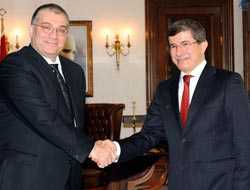
    azimov-davutogluNew Foreign Minister of Turkey Ahmet Davutoglu received Azerbaijan’s deputy Foreign Minister Araz Azimov as his first guest.

    Azarbaijan’s ambassador to Turkey, Zakir Hasimov, accompanied Azimov during the visit.

    A statement was not released after the meeting between Turkish Foreign Minister Ahmet Davutoglu and Azerbaijan’s deputy Foreign Minister Araz Azimov, but press members were allowed to take pictures.

    Before leaving his post to Davutoglu, Ali Babacan said the political consultation period among 6 countries, including Turkey and Armania, would start in a couple of weeks.

    Azimov who is responsible for Nagarno-Karabagh and energy issues among other things, evaluated regional developments during the meeting with Davutoglu.

    Azerbaijan President Ilham Aliev and Armenian President Serzh Sargsyan will meet in Prag over Nagorno-Karabakh in a land occupied by Armenian soldiers during the energy summit that will be held on may 7-8.

    Azimov’s visit to Turkey comes before this summit.

    Source:  www.worldbulletin.net, 04 May 2009