Month: February 2009

  • The credit crunch according to Soros

    The credit crunch according to Soros

    The credit crunch according to Soros

    By Chrystia Freeland

    Published: January 30 2009 11:38 | Last updated: January 30 2009 11:38

    On Friday, August 17 2007, 21 of Wall Street’s most influential investors met for lunch at George Soros’s Southampton estate on the eastern end of Long Island. The first tremors of what would become the global credit crunch had rippled out a week or so earlier, when the French bank BNP Paribas froze withdrawals from three of its funds, and in response, central bankers made a huge injection of liquidity into the money markets in an effort to keep the world’s banks lending to one another.

    Although it was a sultry summer Friday, as the group dined on striped bass, fruit salad and cookies, the tone was serious and rather formal. Soros’s guests included Julian Robertson, founder of the Tiger Management hedge fund; Donald Marron, the former chief executive of PaineWebber and now boss of Lightyear Capital; James Chanos, president of Kynikos Associates, a hedge fund that specialised in shorting stocks; and Byron Wien, chief investment strategist at Pequot Capital and the convener of the annual gathering – known to its participants as the Benchmark Lunch.

    The discussion focused on a single question: was a recession looming? We all know the answer today, but the consensus that overcast afternoon was different. In a memo written after the lunch, Wien, a longtime friend of Soros’s, wrote: “The conclusion was that we were probably in an economic slowdown and a correction in the market, but we were not about to begin a recession or a bear market.” Only two men dissented. One of those was Soros, who finished the meal convinced that the global financial crisis he had been predicting – prematurely – for years had finally begun.

    His conclusion had immediate consequences. Six years earlier, following the departure of Stan Druckenmiller from Quantum Funds, Soros’s hedge fund, Soros converted the operation into a “less aggressively managed vehicle” and renamed it an “endowment fund”, which farmed most of its money out to external managers. Now Soros realised he had to get back into the game. “I did not want to see my accumulated wealth be severely impaired,” he said, during a two-hour conversation this winter in the conference room of his midtown Manhattan offices. “So I came back and set up a macro-account within which I counterbalanced what I thought was the exposure of the firm.”

    Soros complained that his years of less active involvement at Quantum meant he didn’t have the kind of “detailed knowledge of particular companies I used to have, so I’m not in a position to pick stocks”. Moreover, “even many of the macro instruments that have been recently invented were unfamiliar to me”. Even so, Quantum achieved a 32 per cent return in 2007, making the then 77-year-old the second-highest paid hedge fund manager in the world, according to Institutional Investor’s Alpha magazine. He ended 2008, a year that saw global destruction of wealth on the most colossal scale since the second world war, with two out of three hedge funds losing money, up almost 10 per cent.

    Soros’s main goal was to preserve his fortune. But, as has been the case throughout his career, his timing and financial acumen enhanced his credibility as a thinker, and never more so than in 2008. In May and June, after more than two decades of writing, he hit bestseller lists in the US and in the UK with his ninth book, The New Paradigm for Financial Markets. In October, he received an invitation to testify before Congress about the financial crisis. In November, Barack Obama, whom he had long backed for the presidency, defeated John McCain.

    “In the twilight of his life, he’s achieved the recognition he has always wanted,” Wien said. “Everything is going for him. He’s healthy, his candidate won, his business is on a solid footing.”

    . . .

    Many comparisons have been drawn between 2008 and earlier periods of turmoil, but the historical moment with most personal resonance for Soros is not one of the conventional choices. The parallel he sees is with 1944, when, as a 13-year-old Jewish boy in Nazi-occupied Budapest, he eluded the Holocaust.

    Soros credits his beloved father, Tivadar, with teaching him how to respond to “far from equilibrium situations”. Captured by the Russians in the first world war, Tivadar was imprisoned in Siberia. He engineered his own escape and return home through a Russia convulsed by the Bolshevik revolution. That sojourn stripped him of his youthful ambition and left him wanting “nothing more from life than to enjoy it”. Yet on March 19 1944, the day the Germans occupied Hungary, the 50-year-old sprang into action, rescuing his immediate family and many others by arranging false identities for them.

    Before the invasion, George was still enough of a child, his father thought, to need a bit of parental coddling. Yet the teenager who spent the war living apart from his parents under a false name found the danger exhilarating. “It was high adventure,” Soros wrote, “like living through Raiders of the Lost Ark.” And as the latest financial crisis gathered momentum, he admitted to the same thrill. “I think the same thing applies again. I feel the same kind of stimulation as I felt then,” he told me.

    Part of the stimulation is intellectual. Soros’s experiences in 1944 laid the groundwork for the conceptual framework he would spend the rest of his life elaborating and which, he believes, has found its validation in the events of 2008. His core idea is “reflexivity”, which he defines as a “two-way feedback loop, between the participants’ views and the actual state of affairs. People base their decisions not on the actual situation that confronts them, but on their perception or interpretation of the situation. Their decisions make an impact on the situation and changes in the situation are liable to change their perceptions.”

    It is, at its root, a case for frequent re-examination of one’s assumptions about the world and for a readiness to spot and exploit moments of cataclysmic change – those times when our perceptions of events and events themselves are likely to interact most fiercely. It is also at odds with the rational expectations economic school, which has been the prevailing orthodoxy in recent decades. That approach assumed that economic players – from people buying homes to bankers buying subprime mortgages for their portfolios – were rational actors making, in aggregate, the best choices for themselves and that free markets were effective mechanisms for balancing supply and demand, setting prices correctly and tending towards equilibrium.

    The rational expectations theory has taken a beating over the past 18 months: its intellectual nadir was probably October 23 2008, when Alan Greenspan, the former Federal Reserve chairman, admitted to Congress that there was “a flaw in the model”. Soros argues that the “market fundamentalism” of Greenspan and his ilk, especially their assumption that “financial markets are self-correcting”, was an important cause of the current crisis. It befuddled policy-makers and was the intellectual basis for the “various synthetic instruments and valuation models” which contributed mightily to the crash.

    By contrast, Soros sees the current crisis as a real-life illustration of reflexivity. Markets did not reflect an objective “truth”. Rather, the beliefs of market participants – that house prices would always rise, that an arcane financial instrument based on a subprime mortgage really could merit a triple-A rating – created a new reality. Ultimately, that “super-bubble” was unsustainable, hence the credit crunch of 2007 and the recession and financial crisis of 2008 and beyond.

    As an investor and as a thinker, Soros has always thrived in times of upheaval. But he has also remained something of an outsider. He recalls how he “discovered loneliness” when he arrived to study at the London School of Economics in 1947. Later on, as he worked his way up from being a journeyman arbitrage trader in London and then New York, to running one of the world’s most successful hedge funds, Soros remained, in the words of one private equity acquaintance, a bit of “an oddball”, both on Wall Street and in the academic world. He is frequently described as “charming”, yet few see the fit, tanned, twice-divorced billionaire as an emotional confidant. “If I had an idea about India-Pakistan, I would talk to him about it,” Wien said. “If I were having a problem in my marriage, I don’t think I would go and talk to George about it.”

    Strobe Talbott, now the president of the Brookings Institute and a former deputy secretary of state, said: “He likes to think of himself as an outsider who can come in from time to time, including to the Oval Office, where I took him on a couple of occasions. But simply hobnobbing with the powerful isn’t important.”

    That lack of clubbiness, and the associated trait of iconoclasm, may explain why, for all his worldly success, Soros has had a rather mixed public reputation. His speculative plays, which have often targeted currencies, have earned him the wrath of political leaders around the world. The ambitious, global reach of his richly funded Open Society foundation has prompted some critics to accuse him of suffering from a Messiah complex. He was so effectively demonised by the US right earlier this decade that he kept fairly quiet about his support of Obama, lest the association hurt his candidate. Probably most painfully, his forays into economics and philosophy often have met with considerable scepticism, especially from academia.

    The one time and place where he instantly became a highly regarded insider was in the former Soviet Union and its satellites, at the moment the Berlin Wall came down. More completely and more swiftly than any other foreigner, Soros grasped and embraced the systemic transformation that was unfolding, and was rewarded with influence and respect. The question for Soros today is whether, as the west undergoes its own once-in-a-century systemic shock, this arch-outsider will finally find himself in the mainstream in the society which has been his main home for more than half a century.

    . . .

    Soros’s most famous – or infamous – speculative play as an investor was his bet against sterling in 1992, a wager which won him more than $1bn and earned him the epithet from the British press of “the man who broke the Bank of England”. That bet also turns out to be a perfect illustration of the specific talent which his past and present fund managers agree has been central to his investing success.

    Soros’s best-known investment was not, in actual fact, his own idea. According to both Soros and Druckenmiller, who was managing Quantum at the time, it was Druckenmiller who came up with the plan to short the pound. But when Druckenmiller went through his rationale with Soros, in one of their twice- or thrice-daily conversations, Soros told his protégé to be bolder: “I said, ‘Go for the jugular!’.” Druckenmiller duly raised their stake – Quantum and several related funds wagered nearly $10bn, according to interviews Soros gave afterwards – and Soros earned both a fortune and an international reputation.

    Druckenmiller, who spent 12 years at Quantum, says that conversation exemplifies Soros’s singular financial gift: “He’s extremely good at using the balance sheet – probably the best ever. He is able to use leverage when he likes it, but he is also able to walk away. He has no emotional attachment to a position. I think that is an unusual characteristic in our industry.”

    Chanos agrees: “One thing that I’ve both wrestled with and admired, that [Soros] conquered many years ago, is the ability to go from long to short, the ability to turn on a dime when confronted with the evidence. Emotionally, that is really hard.”

    Soros denies any great degree of emotional self-control. “That’s not true, that’s not true,” he told me, shaking his head and smiling. “I am very emotional. I am as moody as the market, so I’m basically a manic depressive personality.” (His market-linked moodiness extends to psychosomatic ailments, especially backaches, which he treats as valuable investment tips.)

    Instead, Soros attributes his effectiveness as an investor to his philosophical views about the contingent nature of human knowledge: “I think that my conceptual framework, which basically emphasises the importance of misconceptions, makes me extremely critical of my own decisions … I know that I am bound to be wrong, and therefore am more likely to correct my own mistakes.”

    Soros’s radar for revolution is the second key to his investing style. He looks for “game-changing moments, not incremental ones”, according to Sebastian Mallaby, the Washington Post columnist and author who is writing a history of hedge funds. As examples, Mallaby cites Quantum’s shorting of the pound and Soros’s 1985 “Plaza Accord” bet that the dollar would fall against the yen – his two most famous currency trades – as well as a lesser-known 1973 bet that, as a consequence of the Arab-Israeli war, defence stocks would soar. “It’s not that reflexivity tells you what to do, but it tells you to be on the look-out for turn-around situations,” Mallaby said. “It’s an attitude of mind.”

    Some Soros-watchers intimate that his vast network of international contacts might be an important source of his market prescience. But it was in the one part of the world where Soros really did have an inside track – the former Soviet bloc – that he made his most disastrous deal. In Russia, as in much of the former Soviet Union, he was intensely engaged with the country’s political and economic transformation. In June 1997, as the Kremlin struggled to pay overdue wages, Soros extended a bridge loan to the Russian government, acting as a one-man International Monetary Fund.

    He came to believe in Russia’s commitment to reforms, and to see himself as an insider – two convictions that were his financial undoing. He invested $980m with a consortium of oligarchs who acquired a 25 per cent stake in Svyazinvest, the national telecoms company, deciding to participate because “I thought that this is the transition from robber capitalism to legitimate capitalism”. But instead, the Svyazinvest privatisation turned out to be the moment when the oligarchs redirected their energies from fleecing the state to fleecing one another. Soros, as an outsider, was an obvious casualty. “Never have I been screwed so much since Russia. For them, they get a satisfaction out of doing it.

    “It was the biggest mistake of my investment career. I was deceived by my own hope.” In his most recent book he dismisses Russia with a single sentence, further diminished by parenthesis: “(I don’t discuss Russia, because I don’t want to invest there.)”

    . . .

    On a chilly Monday night in December, Soros took the hour-long drive from Manhattan to the Bruce Museum in Greenwich, Connecticut. He was due to speak at a benefit for the Scholar Rescue Fund, a programme he has partly financed and which, since 2002, has provided safe havens for 266 persecuted academics from 40 countries. After his talk (on the global financial crisis, of course), Soros filed out of the auditorium chatting with Stanley Bergman, a founding partner of the law firm that had sponsored the evening.

    “You like the game?” Soros asked his host with a smile.

    “Yes,” the white-haired Bergman replied.

    Then, in a flash of the competitive spirit that makes Soros an avid skier and player of tennis and chess, Soros asked: “And how old are you?”

    “75.”

    “I’m 78,” Soros replied. “But what’s the use of good health if it doesn’t buy you money?” The vigorous septuagenarians flashed each other a complicit smile.

    According to Wien, Soros likes the game, too: “George loves to be able to show from time to time that he can do it.” But while he loves to play, he is disdainful of a life lived purely to accumulate more chips. His epiphany came in 1981, when he had to scramble to raise money to pay for an investment in bonds. “I thought I would have a heart attack,” he told me. “And then I realised that to die just for the sake of getting rich, I would be a loser.”

    For Soros, the solution was philanthropy. “To do something really that would make a significant difference to the world, that would be worth dying for,” he said. “The Foundation enabled me to get out of myself and to somehow be concerned with other people than myself.” Soros’s fortune has given his causes enormous firepower: according to Aryeh Neier, the human rights activist who has been running the Open Society Foundation since 1993, its budget was $550m in 2008 and will increase to $600m this year. By his own calculation, Soros has donated a total of more than $5bn to his causes, primarily directing his giving through his foundation.

    “No philanthropist in the second half of the 20th century has done better in deploying resources strategically to change the world,” Larry Summers, the newly appointed head of Barack Obama’s National Economic Council, told me in a conversation early last autumn. Talbott compares Soros’s impact to that of a sovereign nation. In the 1990s, says Talbott, “when I got word that George Soros wanted to talk, I would drop everything and treat him pretty much like a visiting head of state. He was literally putting more money into some of the former colonies of the former Soviet empire than the US government, so that merited treating him as someone with a very high impact.”

    Soros’s philanthropic lieutenants report an approach remarkably similar to the investing style observed by his fund managers: he knows how to make big, original bets, and he isn’t afraid to cut his losses when a project isn’t working out. Anders Aslund, an economist who has studied Russia and Ukraine and who has worked with Soros on various projects, believes his philanthropic style “is very much formed by the money markets, which are always changing. He assumes any idea he has now will be wrong in a few years. He is always asking himself, when he has a wonderful project going, ‘When should I stop this project?’.”

    Soros’s war chest, and his determination to deploy it beyond the usual blue-chip charities of hospitals, universities, museums or even poverty in Africa, had long made him an occasionally controversial figure outside the US. He was among the western culprits accused by the Kremlin of inciting Ukraine’s 2004 Orange Revolution; his foundation’s offices have been raided in Russia and he was forced to close them down in authoritarian Uzbekistan.

    America, it turns out, can also be sensitive to plutocrats using their wealth to address socially contentious subjects. In recent years, his foundation became more active in the US, taking on issues including drug policy. His engagement became more intense during the George W. Bush presidency, when Soros decided that the open society he had worked to foster in repressive regimes abroad was imperilled in his adopted home.

    Some admired his chutzpah. The famously independent-minded Paul Volcker, who was appointed to lead the Fed by Jimmy Carter and reappointed by Ronald Reagan, said: “The drug thing is a perfect example that he doesn’t adopt a conventional view. I think drug policy needs a new look and he’s been one of the people who say that.”

    Soros’s money has been crucial in enabling him to voice maverick views: “That’s what led me to oppose Bush very publicly, because I was in a position that I could afford to do it,” he said. But he also believes his fortune and the automatic credibility it gives him in America has drawn the fire of conservative pundits such as Fox’s Bill O’Reilly and extremist pamphleteer Lyndon LaRouche. “Given the excessive esteem in which people who make money are held in America, I had to be demonised,” he said.

    Their attacks worked. So much so that last year, as the Obama bandwagon gained speed and American financiers, along with much of the rest of the country, clamoured to jump on, his earliest heavyweight Wall Street backer kept a low profile. “Obama seeks to be a unifier,” Soros said. “And I have been a divisive figure because I’ve been demonised by the right. I thought my vocal support for him would not necessarily benefit him.”

    . . .

    At around 1.00am on November 5 2008, Soros sat on a peach-coloured sofa in his elegant Fifth Avenue apartment, with Queen Noor of Jordan to his left and Steve Clemons, of the New America think-tank, perched on the edge of a chair to his right. Around them milled a crowd of eclectic and jubilant guests, many still teary-eyed from Obama’s Grant Park victory speech, which had been broadcast on four flat-screen television sets in the apartment. Like most Soros soirées, the gathering included more artists and statesmen than Masters of the Universe: Michèle Pierre-Louis, the prime minister of Haiti and former head of her country’s Soros foundation; former World Bank chief James Wolfensohn; Volcker; and twentysomething Kwasi Asare, a hip-hop music promoter, were among the visitors.

    Soros drank an espresso and, a few minutes later, a final champagne toast with the last of his guests. Alexander, his 23-year-old son, perched on the arm of his chair and ruffled his father’s hair in farewell. Everyone else took that as a signal to depart, too. Soros was in a mellow, triumphant mood that night – and with good reason. He had spotted Obama early on. His ubiquitous political consigliere, Michael Vachon, still has among his papers a rumpled itinerary from a trip he and Soros took to Chicago in February 2004. In the upper right-hand corner of the page, Vachon had scrawled, “Barack guy”. The Senate candidate had been keen to meet Soros and called the pair repeatedly during their visit. But it was a packed schedule and Soros could only offer a 7.30am breakfast slot at the Four Seasons.

    Soros left that meal “very impressed”, a view that was confirmed when he read Obama’s autobiography and deemed him “a real person of substance”. A few months later, on June 7, Soros hosted a packed fundraiser for Obama’s Senate campaign at his upper east side home. Soros and his family contributed roughly $80,000, then the legal maximum.

    Obama was impressing a lot of people at that time. But once it became clear that Hillary Clinton would be in the presidential race, nearly all of the established New York Democrats, particularly the older Wall Street crowd, lined up behind their local Senator and her machine, driven by a combination of loyalty and calculation. Dominique Strauss-Kahn, now the head of the IMF and then a possible French presidential candidate, said Soros told him in 2006 he was supporting “this young guy, Barack Obama. He was the first one to tell me this and he was right.” On January 16 2007, the day Obama formed a presidential exploratory committee, Soros contributed to his campaign and officially offered his backing. Before doing so, Soros called Hillary Clinton to let her know. “I look forward to your support in the general election,” she told him.

    His decision to back Obama was consistent with his life-long affinity for moments of radical change. “I felt that America had gone so far off base that there was a need for discontinuity,” he said. As in the markets, Soros’s political bet on systemic transformation – his support for Obama, but also his early opposition to the war in Iraq and the “war on terror” – has come good.

    For Soros, one happy consequence of now being in tune with the zeitgeist is that he is being taken seriously as a thinker on American public policy issues, particularly to do with the financial crisis. When he, along with the other four highest-earning hedge fund managers, testified before Congress in November, he was treated with respect and even deference – not the prevailing attitude towards billionaire financiers at the moment. Before Soros had even taken his coat off, he was greeted in the corridors by Democratic New York Congresswoman Carolyn Maloney. “Give him a nice office,” she told a staffer who was looking for a place where Soros could wait before his testimony. “He creates a lot of jobs in my district and supports a lot of good people.” After the hearing, a lawmaker and a staffer both approached Soros and asked him to autograph their copies of his book.

    . . .

    Being listened to on Capitol Hill, and by global policymakers more generally, is important to Soros. But what matters to him most of all – more than money, more than the political and social accomplishments of his foundation – is leaving an enduring intellectual legacy. He describes reflexivity as “my main interest”. Even as Soros met with increasing financial and public success through his fund and his foundation, he was deeply frustrated by his failure to be accepted as a serious thinker. He titled one chapter in his latest book “Autobiography of a Failed Philosopher”, and once delivered a lecture at the University of Vienna called “A Failed Philosopher Tries Again”. As a young man, he wanted to become an academic, but “my grades were not good enough”.

    He writes that his first book, The Alchemy of Finance, was “dismissed by many critics as the self-indulgence of a successful speculator”. That reaction still prevails in some circles. Paul Krugman, the Nobel prize-winning economist, devotes half a chapter to Soros in his latest book, characterising him as “perhaps the most famous speculator of all times”. He also raises an eyebrow at Soros’s intellectual “ambitions”, tartly observing that he “would like the world to take his philosophical pronouncements as seriously as it takes his financial acumen”.

    Another barrier to academic respectability is Soros’s self-confessed “phobia” of formal mathematics: “I understand mathematical concepts but I’m afraid of mathematical symbols, because you can easily get lost in them.” That fear proved no impediment to success in the quantitative world of finance, but it has hurt Soros’s street cred in economics departments. “Among academics, he suffers from the additional liability of not expressing it in the language of mathematics that has become fashionable,” Joe Stiglitz, another Nobel prize-winning economist, said. But Stiglitz believes his friend’s writing has become more current, partly thanks to the financial crisis: “By those economists interested in ideas, I think his work is taken seriously as an idea that informs their thinking.”

    In the view of Larry Summers: “Reflexivity as an idea is right and important and closely related to various streams of existing thought in the social sciences. But no one has deployed a philosophical concept as effectively as George has, first to make money and then to change the world.”

    Paul Volcker delivered a similar verdict: “I think he has a valid insight which is not always expressed as clearly by him as I might like.” Overall, he said, Soros is “an imaginative and provocative thinker … he’s got some brilliant ideas about how markets function or dysfunction.”

    This is as close to mainstream intellectual acceptance as Soros has come in his two decades of writing and more than five decades since he gave up on academia. It feels like a breakthrough. When I asked him if he would still describe himself as a failed philosopher, he said no: “I think that I am actually succeeding as a philosopher.” For him, that is “obviously” the most important human accomplishment.

    “I think it has to do with the human condition,” he said. “The fact that we are mortal and we would like to be immortal. The closest thing you can come to that is by creating something that lives beyond you. Wealth could be one of those things, but evidence shows that it doesn’t survive too many generations. However, if you can have an artistic or philosophical or scientific creation that withstands the test of time, then you have come as close to it as possible.”

    Chrystia Freeland is the FT’s US managing editor

    Click here to read an extract from George Soros’s e-book update to The New Paradigm for Financial Markets – The credit crisis of 2008 and what it means

  • AMERICAN INTERESTS IN TURKEY

    AMERICAN INTERESTS IN TURKEY

    President Obama requested that we, the citizens, suggest ideas of change for him to consider. This is a response to that request.

    Former president George W. Bush made many decisions based on religious considerations. His faith-based politics at home are a good example. These were perfectly unconstitutional decisions. His premise in foreign policy was the same. He said he invaded Iraq after consulting with God and he wanted to subdue a Middle Eastern group of countries with Turkey as a model. In this process, he wanted to convert Ataturk’s laic (Secular) Turkey to a mildly Islamic country. Arabs don’t like Turks and did not want to have any part of it. Besides they were not ready for democracy. But in Turkey he found an ally in Recep Tayyip Erdogan who under the guise of abiding by the laic laws, wanted to Islamize Turkey. Ataturk’ political philosophy in respect to religion was very close to that of our Thomas Jefferson [“Jefferson & Ataturk, Political Philosophies” G.W.Sheldon, 2000 Peter Lang Publishing] Ataturk had made a revolution, among other things, llto separate State from Islam because Islam had been part of the problem in the fall of the Ottoman Empire. Thus the U.S. was returning a westernized Turkey to where Ottoman Empire had failed. While we were fighting Islamic radicals in Afghanistan and elsewhere, it makes no sense to convert a state like us to an Islamic republic, mildly or not.

    Former president Bush proved to be an irrational man. In stead of consulting with his father, his Secretary of State, with the Pentagon, and with the CIA, he decided to make war on Iraq just by himself, by appealing to a “higher Father” for strength [Bob Woodward in Washington Post, 1-18-09] We know the result. His plans for Turkey were similarly flawed, irrational decisions.

    There were, and there still are, two possibilities of dealing with Turkey.

    1) Support the “laic” republic founded by Ataturk, that aimed at converting Turks to Westerners, culturally, technologically, educationally, and every which way. Such a government has been a truly friendly ally, politically, and culturally, was reliable, and would cooperate in our fight in Afghanistan against the Taliban and other Islamic radicals. An Ataturkist regime would be perfectly democratic, since they have practiced it for the last 89 years.

    2) Support the government of Recep Tayyip Erdogan, that would Islamize Turkey to a weaker, unreliable, in-name only ally, that would be easier for the United States to manage as a “Puppet Regime” [Remember Brave New World!]. However, in time, it would slide to full Islamic policies, that would be anti-U.S., anti-Israel, pro-Russian, and pro-Iranian. This is now happening before our eyes. Mr. Erdogan is taking sides with Hamas in the Gaza conflict and alienating Turkey’s long time ally Israel. In his fury, he is now taking it from Turkish Jews. After his very public argument with President Perez at Davos, he said that he considers anti-Semitism a crime against humanity. Thus, Mr. Erdogan incriminated himself by what he is doing at home.

    Which policies are more in the basic interests of the United States and of the world? Obviously, it is the first.

    President Obama made a wise decision: The U.S. will not take sides in Turkish politics which also creates domestic unrest. I hope, this means, he will no longer push for a mildly Islamic Republic. But this would mean that he walked half-way in the right direction. In my opinion, real American interest would dictate that he should walk the whole way and help Turks getting rid of the dangerous anti-U.S. Islamic regime. The U.S. should not push Turkey into the laps of Putin and the Mullahs. We should instead help Turkey restore the modern Ataturkist principles and values..

    I congratulate President Obama for his election with such a high percentage of the American vote and wish him much success in his programs, especially in straightening up our relations with Turkey.

    R E A D ER’ S  C O M M E N T  O N     P U B L I C     E D U C A T I O N

    Can Korman sent my article on Public Education to an American friend who stayed many years outside the U.S. Below is her comments. She seems to be happy with the Dewey system.

    Hi Can,

    …The education article is some thing I know a little more about and therefore have stronger opinion about. I thought grades1,2,6,and 7th grade history and geography. In summer sessions I thought grades 3 .and 4. I also was administrator of schools in Sofia, Yaounde, and Jakarta. From the teaching perspective I have been exposed to and practiced many techniques of teaching. My training/education was at UCLA and taught in Beverly Hills, CA. My own education, primary through university was in Los Angeles. Background. As an elementary school kid you might say I was exposed to the John Dewey System and for that I am so thankful! Why? I’ll give a little example. In grade 6 we studied Westward expansion. Our studies included building a log cabin furnished with stuff we made and items donated by our families who had relevant antiques at home. We also made a covered wagon, dressed in pioneer clothes, churned butter, made powder horns from horns obtained by our teacher from a slaughter house, trekked through some vacant land near our school. We studied routes followed by settlers and explorers, wars, treaties…. Now when I study history which I learned to love through that teaching method, I always want to know much more than a few memorized names and dates. I’m able to put myself in the shoes of people I can never know. We did memorize the multiplication tables and spelling words. We also enjoyed real music and art instruction…. The Ayn Rand admirers and other conservatives would have us “learn” a national set of “facts” and be tested on successful memorization at least once a year. Hello, No Child Left Behind in its present adaptation. Yes, learning is an individual mental process, but there are many techniques which are successful in teaching and not all of those techniques work for each individual child/person. There are many reasons for “failing” schools. Closing them does not cure them. Oh, Can, we/I could go on and on. Let’s talk about one day….But ,one more example of the fallacy, in my opinion, of Mr.Tarhan’s premise… . The state Department decided some years ago to adopt just one method of teaching foreign languages. That method was to listen and repeat. At least that’s what my Czech teacher said. I dropped the class after several weeks, because I cannot learn language that way. I must be able to see what is being said/taught. Same with Arabic. One size never fits all. Using some of the elements of the John Dewey system enable many of us to develop a life long love of learning and appreciation of the learning process.

    An Anonymous Reader

    W R I T E R’ S     R E S P O N S E

    I thank the Anonymous lady for her comments.

    It is obvious that what John Dewey called “class projects” such a Westward expansion is a lot of fun , both for people who teach it and those who learn it. A great deal of details is learned about a subject that covers at least several months time and the child misses to learn a systematic history of America during that time. In the boarding school in Istanbul (Galatasaray) a French physics teacher had led a project to build a glider. Participation was voluntary, and work was done evening. After two years he had tried to fly it. I did participate and we learned how to build structured wings, how to construct the whole thing as light as possible. But that was not done in stead of the physics courses, but in addition to. The regular physics course was still given. That school project was great fun too. Yes, learning must be fun, but the purpose of education does not consist of fun alone. There are so many things to learn and there is no question that our schools do not measure up to European and Japanese schools where kids are taught to think. In our schools still some one may ask “Does in your country the sun set from the East or from the West?”

    I have no premise to learn foreign languages by hearing and repeating. I learned three foreign languages by immersing myself in environments where every one was speaking that language.

    Ayn Rand is being misquoted. All she required was that kids learn by understanding. Once that happens there is no need to memorize. One remembers what one understands.

    No Child Left Behind is a lousy program that would lower the knowledge level of the class to the level of the dumbest kid.

    ………………………………………………………………………………………….

    To Readers’ Attention: Any one who wishes to receive THE ORHAN TARHAN LETTER should sent an e-mail to [email protected] with his/her full name, e-mail address , and PLEASE phone number, in case there is an interruption caused by the server, or in case of e-mail address change. It is free. Comments are welcome. These LETTERs are also published in AmericanChronicle.com

  • Turkish PM Erdogan storms out of Davos over Gaza

    Turkish PM Erdogan storms out of Davos over Gaza

    with  comments


    A star is born.

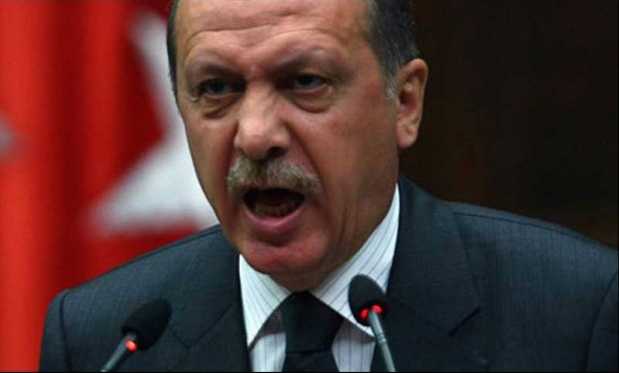
    Turkish PM Recep Tayyip Erdogan quotes Avi Shlaim, reminds Shimon Peres of the sixth commandment (Thou shalt not kill), tells him ‘You are killing people’, and tells Davos he’s never coming again before storming off the stage.

    So first it was Venezuela, then Bolivia, and now Turkey. Have the Arab states no shame?

    Norman Finkelstein doesn’t think so. Here is what he told an audience in Bahrain: ‘The reaction from the Arab world was a total disgrace, a disgrace to the whole region and its people…What you showed in the last massacre in Gaza is that you have no shame at all…The most powerful reactions in the world came from Bolivia, Venezuela, Mauritania, Turkey and Qatar…There was more solidarity in South America than here’.

    Stormy debate in Davos over Gaza

    The Turkish prime minister has stormed out of a heated debate at the World Economic Forum in Davos over Israel’s offensive in the Gaza Strip.

    Recep Tayyip Erdogan walked out of the televised debate on Thursday, after the moderator refused to allow him to rebut the Israeli president’s justification about the war that left about 1,300 Gazans dead.

    Before storming out, Erdogan told Shimon Peres, the Israeli president: “You are killing people.”

    Peres told Erdogan during the heated panel discussion that he would have acted in the same manner if rockets had been falling on Istanbul.

    Moderator David Ignatius, a Washington Post columnist, then told Erdogan that he had “only a minute” to respond to a lengthy monologue by Peres.

    Erdogan said: “I find it very sad that people applaud what you said. There have been many people killed. And I think that it is very wrong and it is not humanitarian.”

    Ignatius twice attempted to finish the debate, saying, “We really do need to get people to dinner.”

    Erdogan then said: “Thank you very much. Thank you very much. Thank you very much. I don’t think I will come back to Davos after this.”

    ‘Understandable’

    Amr Moussa, the secretary-general of the Arab League and former Egyptian foreign minister, said Erdogan’s action was understandable.

    He said: “Mr Erdogan said what he wanted to say and then he left. That’s all. He was right,” adding that Israel “doesn’t listen”.

    The exchange took place on the second day of the summit, where business and political leaders have been discussing trade, financial regulation and global security.

    After grappling with a bleak global economy on the opening day, leaders attending the forum switched to debates on the new administration in the United States and unrest in the Middle East, Pakistan and Afghanistan.

    Kamal Nath, India’s trade minister, warned that the global economic crisis could fuel protectionism to safeguard national industries and jobs.

    Ban Ki-moon, the United Nations secretary-general, used the forum to announce the launch of an emergency appeal for $613m to help Palestinians recover from Israel’s attack on Gaza.

    Protectionist fears

    Nath said that India saw growing signs of protectionism and would respond with its own measures if its exporters were threatened “which will be good for no one.”

    He said: “We do fear this because one must recognise that at the heart of globalisation lies global competitiveness, and if governments are going to protect their non-competitive production facilities it’s not going to be fair trade.

    India has raised tariffs on steel to protect local producers, a measure trade experts say was aimed at China, which India does not regard as a market economy.

    The deepening economic crisis, and the failure to complete the World Trade Organisation’s long-running Doha round on freeing up global commerce, have raised fears that countries will block their partners’ exports to protect jobs at home.

    Such protectionism, if it led to tit-for-tat retaliation, would intensify the current crisis.

    Emerging economies

    The economies of India, China and Russia, which have been experiencing rapid growth in recent years, have taken precedence at the forum.

    Timothy Garton Ash, professor of European studies at Oxford University, said emerging markets are almost overshadowing the importance of the US economy.”What is really striking to me about this Davos, is the lack of a sense of a new beginning with Barack Obama,” he told Al Jazeera.

    “That is not what we’ve been hearing about in the last 24 hours, we’ve been hearing about China, about Russia, about India, about emerging economies, and that I think is a very significant fact.

    “It’s not just the American investment banks that have gone down, it’s America’s own soft power, and ability to lead that has been badly damaged by the crash.”

    Rachid Mohamed Rachid, Egypt’s minister of trade and industry, said there would be a rush towards emerging markets.

    “People understand today that there will not be growth in developed countries for a long time to come, the growth will continue to be in emerging markets, even more than before,” he told Al Jazeera.

    Gaza appeal

    The UN secretary-general said he had been deeply moved by his visit to Gaza and that he had given his word that the UN would help the Gazans in their hour of need.

    He said the appeal for fund covered the requirements of the UN and other aid organisations for the next six to nine months.Ban said it would help provide aid such as medical care and clean water and that an appeal for longer-term needs would be launched later.

    Asked about achieving peace in Gaza, Benjamin Netanyahu, the leader of Israel’s Likud party who was attending the forum, swiftly turned his answer to Iran, which he said was in a “100-yard dash” to get nuclear weapons.

    While he did not specify any planned military action, Netanyahu said if Iranian rulers were “neutralised”, the danger posed to Israel and others by Hamas in Gaza and Hezbollah in south Lebanon would be reduced.

    Netanyahu said the global financial meltdown was reversible but “what is not reversible is the acquisition of nuclear weapons by a fanatic radical regime”.

    Meanwhile, Manouchechr Mottaki, Iran’s foreign minister, who is also in Davos, said Tehran had taken note of the intention of Barack Obama, the US president, to withdraw troops from Iraq and believed he should also pull troops out of Afghanistan.

    Mottaki told a panel at the forum that Obama had “courage” to say which of the policies of George Bush, the former US president, he disagreed with and said his approach marked a “milestone” away from an era of “might equals right”.

    Turkish PM Erdogan storms out of Davos over Gaza

    Responses to ‘Turkish PM Erdogan storms out of Davos over Gaza’

    Subscribe to comments with RSS or TrackBack to ‘Turkish PM Erdogan storms out of Davos over Gaza’.

    1. Thank you for this. Excellent as usual.
      Ithink it is those shoes they are wearing….. First Muntadar threw his Turkish made shoes at Bush, and now the Turkish Prime Minister is head-butting with Perez. Yes Im sure he has his bought a new pair of Muntas :)))

      no2wars

      29 Jan 09 at 11:08 pm

    2. […] Read more here on PULSE.ORG […]

      It must be in those Turkish shoes they are wearing… « Ignited Identity

      29 Jan 09 at 11:11 pm

    3. Woohoo! Feels good!

      Dean

      29 Jan 09 at 11:28 pm

    4. Following the massacre on Google Trends Turkey was one of the countries which seemed most interested in Gaza. I’m sure he will have a lot of popular support for this at home.

      Well done Mr Erdogan!

      Dave

      30 Jan 09 at 12:31 am

    5. Shame on all the shameless arab leaders. They are cowards and puppets. Very soon they will all go to hell for their silence. Yaaaaaaaaaaaaaaaayyyyy Erdogan

      fred

      30 Jan 09 at 12:52 am

    6. […] Veo más en Pulse, en inglés. “A star is born“. Possibly related posts: (automatically generated)Israel destruye y deja sitio al […]

      Erdogan, Gaza, la dignidad de Turquía y Davos « Situjihadismo

      30 Jan 09 at 1:07 am

    7. Thank you, PM Erdogan, for standing up for what is right, for showing some spine and conscience when much of the rest of the world’s sham representatives stayed silent. Shame Shame Shame to most of the Arab “leaders”. Kudos to Türkiye.

      peoplesgeography

      30 Jan 09 at 1:12 am

    8. That was beautiful! Brought tears to my eyes and a lump in my throat. What a man. Erdoğan was heroic, and he made the others look like dickless little prigs at tea. Viva Türkiye! To think the EU gave them so much shit about membership. They should have been pleading.

      99

      30 Jan 09 at 1:37 am

    9. Al Jazeera was just showing Erdogan receive a hero’s welcome on his return. Crowds were gathered at the airport with Turkish and Palestinian flags to greet him. I bet the Kemalists are squirming.

      m.idrees

      30 Jan 09 at 1:49 am

    10. Turkey has some room to maneuver vis-a-vis Israel and the US, which is not speaking much of those Arab states. Erdogan will be showered with praise.

      How deeply ironic is it that those who are the most vocal on the Palestinian cause ARE not Arab but Turk, Lebanese Shiite and Persian?

      Joshua

      30 Jan 09 at 4:59 am

    11. A shame file of Arab journalists giving Israel a free pass from Iqbal Tamimi:

      peoplesgeography

      30 Jan 09 at 8:02 am

    12. Shame on American leaders. Even when america presidents were kicked on th face( by Sharon as reported by BBC during gaz conflict of 2002, albeit metaphorically) Americans could not react out of fear of Zionist lobby.Erdogan is man with back bone. a man of honour and courrage.

      Dr.Joji Cherian

      30 Jan 09 at 1:22 pm

    13. Muhammad,

      I just read over at Philip Weiss’s blog a rather more detailed description of what went over at Davos. I haven’t watched the entire episode unfold but I wonder what is your take on it?

      Nevertheless, Peres is one official on crack.

      Joshua

      31 Jan 09 at 4:56 am

    14. […] consistently and impartially applying rules to speakers. That debate in which Turkish PM Erdoğan walked out involved deliberately unequal times for speakers (see my calculations of actual speaking times in […]

      Peres’s Propaganda and Gaza Panel’s Biased Moderator « Silver Lining

      31 Jan 09 at 3:13 pm

  • Armenians respond to apology

    Armenians respond to apology


    ISTANBUL – The apology campaign initiated by a group of Turkish intellectuals has inspired Armenians to launch a similar initiative to apologize to the Turks for murders committed by the Asala organization in the 1980s.

    Dr. Armen Gavakian from the Macquarie University in Sydney, who is also co-chair of the Turkish-Armenian Dialogue Group, is behind the initiative. The statement will be opened for signatures next week, Gavakian told daily Radikal. “Through this campaign we will show that we support our Turkish friends’ campaign with all our heart,” he said. The petition will read: “I apologize to the Ottomans and Turks for murders committed in the name of the Armenian people and I empathize with the feelings and pain of the Ottomans and Turks.”

    Gavakian said Turks’ “I apologize” campaign inspired him to launch a similar effort. “This was a great initiative that was proof of nobility since it is hard to face one’s past, whether as an individual or a nation É I hope the Armenians can show the same courage as the Turks and face the skeletons in their own closet,” he said.

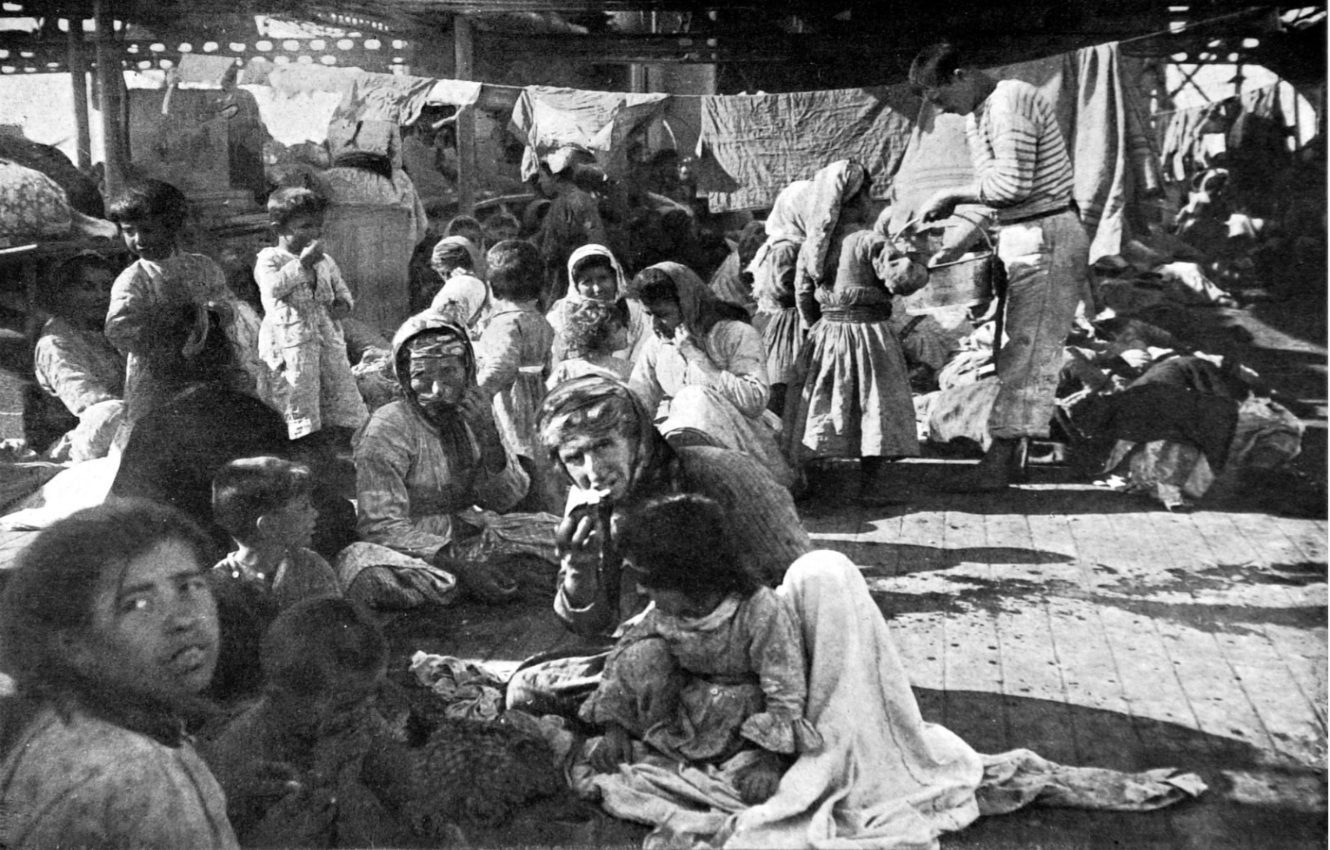
    “My conscience does not accept the insensitivity and the denial of the ’Great Catastrophe’ that the Ottoman Armenians were subjected to in 1915. I reject this injustice and for my share, I empathize with the feelings and pain of my Armenian brothers and sisters. I apologize to them,” said the Turkish campaign’s petition signed by more than 30,000 people so far.

    __._,_.___

  • Erdogan’s Outburst Could Damage Turkey’s International Standing

    Erdogan’s Outburst Could Damage Turkey’s International Standing


    February 01, 2009
    By Abbas Djavadi
    Radio Free Europe/Radio Liberty
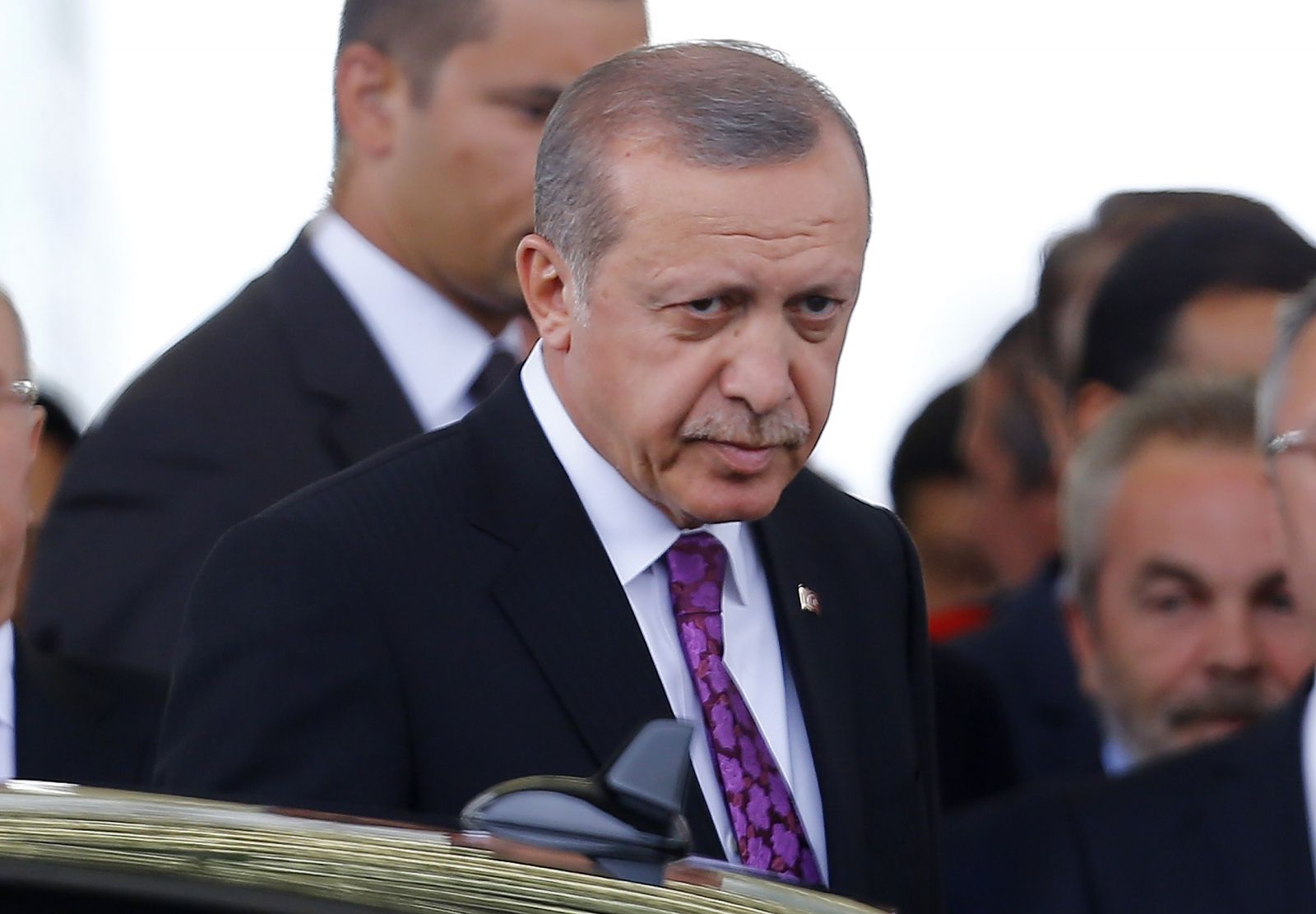
    Turkish Prime Minister Recep Tayyip Erdogan’s fiery exchange with Israeli President Shimon Peres on January 29 at the World Economic Forum in Davos may earn him votes in Turkey’s March local elections or sympathy on the “Arab Street.”

    But it could well harm Turkey’s role as a bridge between the West and the Muslim world and as a would-be mediator between Israel and its Arab neighbors. Moreover, it won’t help Ankara’s relations with Washington or the country’s EU membership bid.

    Thousands gave Erdogan a hero’s welcome at Istanbul airport, hailing his pro-Palestinian outburst, and chanting: “Turkey is proud of you!” Turkey’s pro-government newspapers, as well as much of the Arab and Iranian media, reported positively on Erdogan’s appearance.

    But other commentators — including some in the Turkish media — are wondering how Erdogan’s outburst will affect Turkey’s international and regional standing.

    There have been attempts at damage control: Peres called Erdogan to say that, regardless of the dispute, he admired Turkey and the prime minister.

    And Erdogan reiterated that he stood by his criticism of the Gaza assault, but that he respected the Jewish people and his comments should not be interpreted as “anti-Semitic.” But the damage may be hard to reverse.

    Traditionally, Turkey has maintained good relations with both Israel and the Arab world. Last year, Ankara successfully tried to mediate Israeli-Syrian peace talks, despite a cool approach by the Bush administration.

    Turkey’s efforts under Erdogan’s Justice and Development Party (AKP) to liberalize the economy and make legislative reforms has earned it positive feedback from Brussels, which is considering Turkey’s EU membership, and from Washington, which is keen to see the success of a moderate and democratic Muslim country.

    Move Toward Muslim World

    But last year, Turkey took steps that many analysts saw as a shift away from the West and toward closer ties with the Muslim world and Russia.

    While freezing the internal reform process, Ankara reacted rather passively in criticizing Russia’s offensive in Georgia last summer and campaigned for a Caucasus Stability and Cooperation Pact, which had not been coordinated with the West and would include Russia.

    Erdogan himself called off Ankara’s mediation efforts in talks between Israel and Syria. He pointedly did not visit Israel as part of his Middle East visit in recent weeks.

    Resisting the overwhelming Western approach to consider Hamas and Hizballah as terrorist organizations, Ankara has argued that these groups represent parts of the Arab world that must be reckoned with and talked to instead of isolating and antagonizing them.

    On January 29, Turkish Foreign Minister Ali Babacan reiterated his government’s position that Ankara is critical of Hamas but says it should be included in peace talks.

    Turkey was the first pro-Western Muslim country to invite a delegation of Hamas for an official visit to Ankara in 2006. And according to Murat Yetkin, writing in the liberal “Radikal” newspaper, Erdogan met with foreign journalists ahead of the Davos debate with Peres and noted that U.S. President Barack Obama would be better advised to redefine terrorist organizations in the Middle East and follow a new policy based on those new definitions.

    It appears, though, that Erdogan’s outburst was about more than just political calculation and perhaps reflected his bossy and undiplomatic style, triggered by his anger over Gaza.

    Turkish journalists close to the AKP report that Erdogan has been boiling with anger since Israel’s Gaza offensive. “I have been watching Erdogan since the late 1980s,” wrote Turkish analyst Rushen Chakir in the daily “Vatan,” “seeing him angry many times.” “From the point of diplomacy, I was certainly surprised. But [the fiery appearance at Davos] was typically Erdogan as I know him.”

    In his Davos outburst, the Turkish prime minister used the informal form of the word “you” (sen) instead of the more respectful “siz,” something he does when addressing the opposition in the Turkish parliament.

    His style of talking loudly, in a bossy and didactic tone, with little respect for the political opponent, has been a subject of both concern and humor among the Turkish people. Some critics refer to him as the “cowboy of Kasimpasha,” the area of Istanbul where Erdogan grew up. His style is shared by Erdogan’s main political opponent, Deniz Baykal, who heads the opposition and secular Republican People’s Party in parliament.

    But in a time of economic crisis, ever-less-promising talks on EU accession, a shaky relationship with Washington, and an increasing need and opportunity for a negotiated peace in the Middle East under President Obama, Turkey cannot afford such emotional outbursts.

    The country deserves leaders who care not just about getting votes domestically but can also regain diplomatically the international support the AKP received when it was elected in 2007.

    Abbas Djavadi is associate director of broadcasting at RFE/RL. The views expressed in this commentary are the author’s own and do not necessarily reflect those of RFE/RL

  • ASURE (NOAH’S PUDDING) -AND-  FETULLAH GULEN’S DIALOG FOUNDATIONS

    ASURE (NOAH’S PUDDING) -AND- FETULLAH GULEN’S DIALOG FOUNDATIONS

    Pudding for peace

    Noah’s Pudding

    Photograph by: Pierre Obendrauf, The Gazette

    If a total stranger offers you a cup of pudding in the next few weeks, don’t be surprised.

    Members of the local Turkish community are distributing 5,000 servings of Noah’s pudding, a traditional treat they trace all the way back to the biblical story of Noah’s ark.

    This is more than a random act of dessert.

    Organizers hope the offerings will promote peace and heal rifts between different faiths and cultures.

    A tall order for a cup of pudding, but then, this is no ordinary dessert.

    Noah’s pudding is one of the world’s oldest recipes.

    According to Turkish tradition, it originated when Noah’s ark landed on Mount Ararat after the great flood recounted in the Book of Genesis.

    The story goes that food was running short on the ark and Noah told the survivors to contribute whatever they had left to celebrate their safe arrival. The result was a sweet porridge of wheat, chickpeas, dried beans, apricots, raisins, orange peel and sugar.

    In Turkey, people offer the pudding to friends, neighbours and the poor during Muharrem, the first month of the Islamic calendar.

    In recent years, Turkish Muslim organizations across North America have transplanted the tradition as a way to reach out to the wider community.

    “Our aim is to get people from different faiths, bring them together on a common platform of love and tolerance and build understanding,” said Fehmi Kala, executive director of the Dialog Foundation, a non-profit organization founded three years ago (By Fetullah Gulen) to build bridges between different religious and cultural groups.

    Montreal’s Turkish community numbers 10,345, according to the 2006 census. Kala said most live in Montreal North, St. Michel and St. Laurent.

    Nezihe Tekin, 27, was one of a dozen women preparing thousands of portions of pudding last week in the Communauté

    Islamique Turque du Québec, a community centre in the St. Michel district.

    Turkish cuisine is known for its desserts, said Tekin, as she stirred a huge stockpot.

    “We have a saying, ‘let’s eat sweets and speak sweetly,’ ” she said.

    The most famous, of course, is Turkish delight, a confection served to guests with Turkish coffee.

    Rice pudding is a popular summer dessert, while baklava is mostly eaten during the winter, Tekin said.

    Noah’s pudding is traditionally cooked on the 10th day of Muharrem to commemorate Noah’s landing, but it is also eaten at other times of year in Turkey.

    The pudding is surprisingly delicious, considering its eclectic ingredients, said Tekin.

    It is an apt symbol of diversity, she said. Just as each of the ingredients contributes its own flavour, different faiths and cultures enrich society.

    “When you put it all together, you can make something nice, no matter what colour or religion.”

    Kala said Turkey has been a cultural crossroads since antiquity because of its strategic location as a land bridge between Europe and Asia and its proximity to Africa.

    He grew up in Antioch, formerly a great city of the ancient world and a cradle of Christianity.

    “My friends were Armenian, Kurdish, Shiite, Sunni, Christian and Jewish,” said Kala, 30, who was a history teacher until immigrating to Canada six years ago. “We all got along well.”

    When Tekin came to Montreal eight years ago as a 19-year-old newlywed, she didn’t know anyone in the Turkish community, so she cooked Noah’s pudding for her Italian landlord in the St. Michel district.

    “He liked it and my husband said, ‘Cook it for all the neighbours.’”

    The pudding has endless variations, some calling for as many as 40 ingredients.

    Some versions use barley instead of wheat, or a mixture of wheat and rice. Milk is optional. Many recipes call for rose water or orange flower water.

    It is garnished with nuts, pomegranate seeds and sometimes cinnamon.

    Variations exist throughout the Mediterranean world. Armenians serve a similar pudding at Christmas and Sephardic Jews have a tradition of preparing the pudding at Tu Bishvat, a holiday associated with the planting of trees.

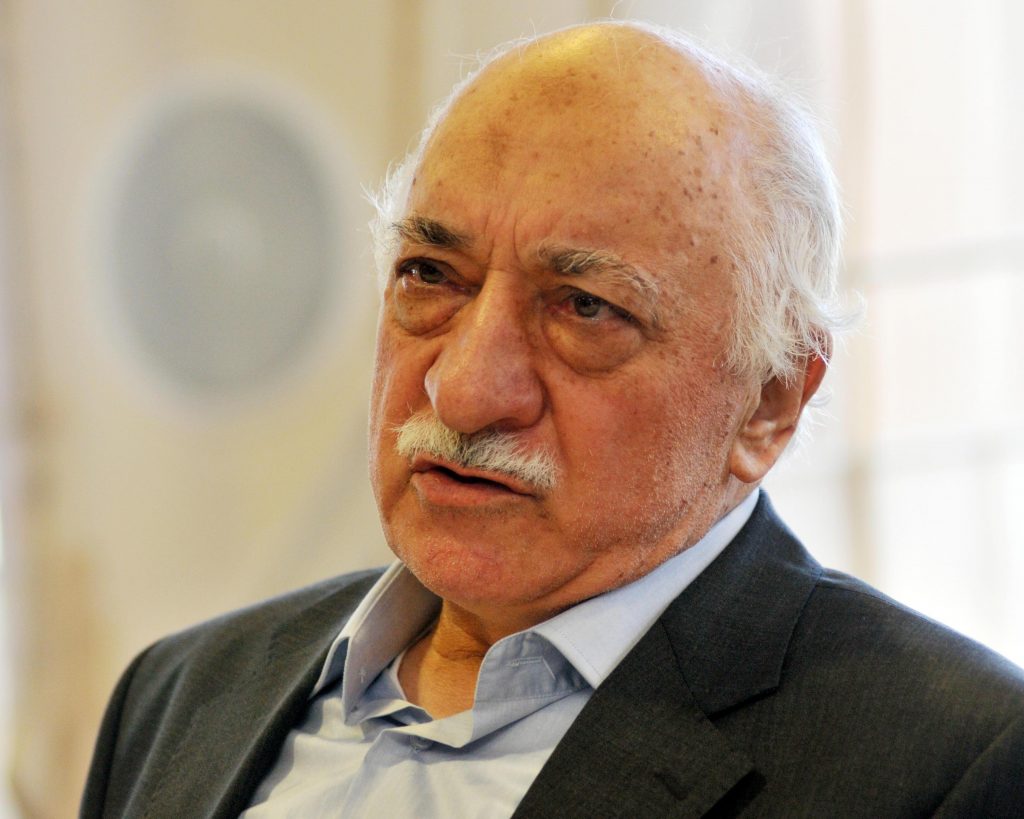
    The idea of distributing Noah’s pudding to the wider community in different North American cities is credited to Fethullah Gülen, a Turkish Muslim cleric living near Philadelphia.

    Gülen is the leader of a global movement that reconciles Islamic mysticism with modern education and tolerance of other faiths. The author of more than 60 books, Gülen is responsible for the creation of a worldwide network of schools, universities, media outlets and community organizations. He has condemned Islamic terrorism and has also spoken out against the Israeli offensive in Gaza.

    Local Turkish businessmen and other members of the community underwrote the costs of the Noah’s pudding distribution, said Kala.

    The Dialog Foundation started distributing the pudding three years ago. It also holds Turkish arts festivals, intercultural dinners and interfaith conferences throughout the year.

    Last week, volunteers distributed the pudding to 1,500 worshippers at St. Joseph’s Oratory.

    The foundation will hold distributions at churches, university campuses, schools, nursing homes and homeless shelters in the coming weeks.

    On Feb. 17, volunteers will cook Noah’s pudding with students at Concordia University. The cooking session will provide an opportunity to talk with students from a wide spectrum of religious and cultural backgrounds, he said.

    Other pudding distributions will take place at the following locations:

    St. John Brébeuf Parish, 7777 George St., LaSalle: Sunday at 9 a.m. and 11 a.m.

    Montreal North, door to door distribution: Sunday and Monday, after 5 p.m.

    Montreal Police Station 39, Montreal North: Feb. 3 at 11 a.m.

    McGill University: International Student Network potluck dinner at Gert’s, 3480 McTavish St., Feb. 4, 6:30 to 7:30 p.m.

    The Church of St. James the Apostle, 1439 Ste. Catherine St. W.: Feb. 8 at 11 a.m.

    Dans la Rue: Volunteers will ride in the van to share Noah’s Pudding with street youth. Feb. 8 and 9 at 8 p.m. and 10 p.m.

    École Sogut (a Turkish private school): Feb. 9 at noon.

    Université de Montréal, 3200 Jean Brillant St.: Feb. 10, 10 a.m to 2 p.m.

    Montreal Unitarian Church, 5035 de Maisonneuve Blvd. W.: Feb. 15, 11 a.m to 1 p.m.

    Concordia University, Multi-faith Chaplaincy Services, 2090 Mackay St.: Feb. 17, 11 a.m. to 1 p.m.

    © Copyright (c) The Montreal Gazette

    Noah’s Pudding: The recipe

    Esem Baran (left), Risele Alper (centre) and Demex Kesmen pour cooked Noah’s Pudding in a cooling vat at the Turkish Cultural Centre on January 17, 2009.

    Photograph by: Pierre Obendrauf, The Gazette

    There are endless versions of this nutritious pudding. Feel free to experiment with other grains, fruits and nuts or to substitute honey for the sugar. If desired, you may flavour it with rosewater or orange flower water after the pudding is cooked.

    The recipe calls for white pearl wheat. Pearl wheat resembles pearl barley but is lighter in colour. White wheat is a whole grain that has a paler colour than the more common red wheat. It is available at Middle Eastern groceries, bulk stores and health food stores. This version is made with milk but you may substitute water.

    Noah’s Pudding

    Serves 10

    3⁄4 cup (175 mL) white pearl wheat

    * 1⁄4 cup (50 mL) dried white beans

    * 1⁄4 cup (50 mL) dried chickpeas

    1⁄3 cup (75 mL) golden raisins

    1⁄3 cup (75 mL) whole, blanched almonds

    4 dried apricots, diced in 1/4-inch (6 mm) pieces

    ** 1 tablespoon (15 mL) fresh orange rind, chopped in 1⁄8-inch (3 mm) dice

    2 cups (500 mL) sugar

    4 cups (1 litre) of water, plus additional water for soaking and cooking

    2 cups (500 mL) of whole milk (you may substitute water)

    To garnish: shelled pistachios, chopped walnuts, pomegranate seeds and/or cinnamon

    * You may substitute 1/3 cup each of canned beans and chickpeas.

    ** Use a sharp knife or vegetable peeler to remove the zest (orange-coloured skin) of the orange. You can include a thin sliver of the white pith. Use a sharp knife to chop the zest.

    Rinse the wheat, white beans and chickpeas several times. Place each in a separate saucepan and add water to cover generously. Bring each to a boil, then simmer for 15 minutes. Cool and leave to soak overnight in the refrigerator.

    Soak the almonds overnight in cold water. Soak the raisins and apricots in water overnight or for at least two hours.

    The next day, drain the wheat, reserving the soaking water, and place it in a medium saucepan with 4 cups (1 litre) of water. (Use the soaking water). Bring to a boil, then lower the heat and simmer for one and a half hours, stirring occasionally, until the wheat is soft and plump. (Add extra water if needed.)

    Meanwhile, in separate, small saucepans, bring the beans and chickpeas to a boil and simmer until tender but not mushy, about one hour. (The cooking time can vary, depending on how fresh the beans and chickpeas are.) Squeeze the outer skins from the chickpeas and skim off any skins that float away from the beans .

    Drain the soaked almonds, raisins and apricots. Drain the cooked beans and chickpeas.

    Place the cooked wheat with its liquid in a large stock pot or the top of a double boiler. Add the milk. Partially purée the mixture by buzzing it with a hand blender for about 10 seconds. (Alternatively, use a potato masher.)

    Add the drained fruit and almonds, drained, cooked beans and chickpeas and the sugar to the wheat-milk mixture.

    Simmer for 30 minutes, stirring frequently, until the pudding thickens to the consistency of an Indian-style rice pudding. (You can adjust the consistency by adding extra milk or water or by increasing the cooking time.)

    Cool. Spoon into one large or several small bowls. Garnish with shelled pistachios, walnuts and pomegranate seeds or sprinkled with cinnamon.