Month: February 2009

  • Turkey’s Turn from the West

    Turkey’s Turn from the West

    Soner Cagaptay

    Washington Post, February 2, 2009

    Turkey is a special Muslim country. Of the more than 50 majority-
    Muslim nations, it is the only one that is a NATO ally, is in
    accession talks with the European Union, is a liberal democracy and
    has normal relations with Israel. Under its current government by the
    Justice and Development Party (AKP), however, Turkey is losing these
    special qualities. Liberal political trends are disappearing, E.U.
    accession talks have stalled, ties with anti-Western states such as
    Iran are improving and relations with Israel are deteriorating. On
    Thursday, for example, Prime Minister Recep Tayyip Erdogan walked out
    of a panel at Davos, Switzerland, after chiding Israeli President
    Shimon Peres for “killing people.” If Turkey fails in these areas or
    wavers in its commitment to transatlantic structures such as NATO, it
    cannot expect to be President Obama’s favorite Muslim country.
    Consider the domestic situation in Turkey and its effect on relations
    with the European Union. Although Turkey started accession talks,
    that train has come to a halt. French objections to Turkish
    membership slowed the process, but the impact of the AKP’s slide from
    liberal values cannot be ignored. After six years of AKP rule, the
    people of Turkey are less free and less equal, as various news and
    other reports on media freedom and gender equality show. In April
    2007, for instance, the AKP passed an Internet law that has led to a
    ban on YouTube, making Turkey the only European country to shut down
    access to the popular site. On the U.N. Development Program’s gender-
    empowerment index, Turkey has slipped to 90th from 63rd in 2002, the
    year the AKP came to power, putting it behind even Saudi Arabia. It
    is difficult to take seriously the AKP’s claim to be a liberal party
    when Saudi women are considered more politically, economically and
    socially empowered than Turkish women.

    Then there is foreign policy. Take Turkey’s status as a NATO ally of
    the United States: Ankara’s rapprochement with Tehran has gone so far
    since 2002 that it is doubtful whether Turkey would side with the
    United States in dealing with the issue of a nuclear Iran. In
    December, Erdogan told a Washington crowd that “countries that oppose
    Iran’s nuclear weapons should themselves not have nuclear weapons.”

    The AKP’s commitment to U.S. positions is even weaker on other
    issues, including Hamas. During the recent Israeli operations in
    Gaza, Erdogan questioned the validity of Israel’s U.N. seat while
    saying that he wants to represent Hamas on international platforms.
    Three days before moderate Arab allies of Washington, including
    Egypt, Jordan and Saudi Arabia, gathered on Jan. 19 in Kuwait to
    discuss an end to the Gaza conflict, Erdogan’s officials met with
    Iran, Syria and Sudan in Qatar, effectively upstaging the moderates.
    Amazingly, Turkey is now taking a harder line on the Arab-Israeli
    conflict than even Saudi Arabia.

    For years, Turkey has had normal relations with Israel, including
    strong military, tourist, and cultural and commercial ties. The Turks
    did not emphasize religion or ideology in their relationship with the
    Jewish state, so Israelis felt comfortable visiting, doing business
    and vacationing in Turkey. But Erdogan’s recent anti-Israeli
    statements — he even suggested that God would punish Israel — have
    made normal relations a thing of the past. On Jan. 4, 200,000 Turks
    turned out in freezing rain in Istanbul to wish death to Israel; on
    Jan. 7, an Israeli girls’ volleyball team was attacked by a Turkish
    audience chanting, “Muslim policemen, bring us the Jews, so we can
    slaughter them.”

    Emerging anti-Semitism also challenges Turkey’s special status. Anti-
    Semitism is not hard-wired into Turkish society — rather its seeds
    are being spread by the political leadership. Erdogan has pumped up
    such sentiments by suggesting Jewish culpability for the conflict in
    Gaza and alleging that Jewish-controlled media outlets were
    misrepresenting the facts. Moreover, on Jan. 6, while demanding
    remorse for Israel’s Gaza operations, Erdogan said to Turkish
    Jews, “Did we not accept you in the Ottoman Empire?” Turkey’s tiny,
    well-integrated Jewish community is being threatened: Jewish
    businesses are being boycotted, and instances of violence have been
    reported. These are shameful developments in a land that has provided
    a home for Jews since 1492, when the Ottomans opened their arms to
    Jewish people fleeing the Spanish Inquisition. The Ottoman sultans
    must be spinning in their graves.

    The erosion of Turkey’s liberalism under the AKP is alienating Turkey
    from the West. If Turkish foreign policy is based on solidarity with
    Islamist regimes or causes, Ankara cannot hope to be considered a
    serious NATO ally. Likewise, if the AKP discriminates against women,
    forgoes normal relations with Israel, curbs media freedoms or loses
    interest in joining Europe, it will hardly endear itself to the
    United States. And if Erdogan’s AKP keeps serving a menu of
    illiberalism at home and religion in foreign policy, Turkey will no
    longer be special — and that would be unfortunate.

    Soner Cagaptay is a senior fellow and director of the Turkish
    Research Program at The Washington Institute, and author of Islam
    Secularism and Nationalism in Modern Turkey: Who Is a Turk?
  • Turkish Scholar Exposes Ankara’s Vain  Attempt to Split Armenia from Diaspora

    Turkish Scholar Exposes Ankara’s Vain Attempt to Split Armenia from Diaspora

    ALLEGED SCHOLAR TANER AKCAM -AND HIS VIEWS

    AN ANALISIS BY HARUT SASSONIAN

    From: Harut Sassounian [mailto:[email protected]]
    Sent: Monday, February 02, 2009 6:54 PM

    Turkish Scholar Exposes Ankara’s Vain

    Attempt to Split Armenia from Diaspora

    By Harut Sassounian

    Publisher, The California Courier

    In their persistent efforts to distort the facts of the Armenian Genocide, Turkish denialists resort to all sorts of tricks. Their latest scheme is trying to drive a wedge between Armenia and the Diaspora by claiming that authorities in Yerevan are all too willing to forget about the Genocide and reconcile with Turks, were it not for the “sinister influence” of Diaspora Armenians who constantly undermine all attempts at reconciliation between Armenia and Turkey.

    Prime Minister Recep Erdogan, during a press conference in Ankara last week, claimed that “the Armenian Diaspora is plotting. We can see very clearly and sharply that their efforts are aimed at utilizing [the Armenian Genocide issue]. This is so obvious. But I also see that the current administration in Armenia doesn’t take part in this.”

    Significantly, it was Turkish scholar Taner Akcam who exposed the false arguments of all those who share Prime Minister Erdogan’s false notion that Armenia and the Diaspora are split on the issue of recognition of the Armenian Genocide. In a recent issue of the Turkish newspaper Taraf, Prof. Akcam wrote a lengthy analysis of Turkish misperceptions and misrepresentations on this issue. He argued against the view that “good neighbor” Armenia and the “bad” Diaspora have opposing views on the Armenian Genocide. Prof. Akcam correctly stated that Armenians everywhere agree that what occurred in 1915 was genocide and feel that it needs to be acknowledged by Turkey. He noted, however, that there are differences among Armenians (regardless of where they live) about the consequences of such an acknowledgement.

    Prof. Akcam dismissed the Turkish claim that “the Armenian state has not been very insistent on the subject of ‘recognition of the Genocide.’” Most Turkish analysts wrongly allege, according to Akcam, that Armenia is a very “good” neighbor to Turkey and that it reflects its “goodness” by “refraining from use of the word ‘Genocide’ and by not demanding ‘recognition’” during the course of Pres. Gul’s visit to Armenia last September. Turkish analysts further claim that “the Armenian state is seriously in the grip of and under the influence of the ‘bad’ diaspora.” They conclude that “in order to relieve Turkish-Armenian tension, ‘our good neighbor Armenia’ must be saved from the ‘bad’ diaspora.”

    According to Prof. Akcam, Turkish analysts falsely claim that “the biggest reason why Armenia has fallen under the influence of the ‘bad’ diaspora” is “poorly conceived Turkish policies. As a result, in order to save Armenia from the diaspora, Turkey must relinquish its bad policies and foster ‘good’ relations with Armenia. Consequently, Armenia will be able to distance itself from the bad policies of the diaspora, policies like ‘insisting on recognition of genocide.’”

    Prof. Akcam categorically refuted those allegations by stating that “when it comes to acknowledging the genocide, Armenia and the diaspora are on the same page. It is improper to draw a distinction between the sides on an axis of ‘those who insist on recognition and those who do not.’ It needs to be emphasized right here, right now, that Armenians everywhere agree that what occurred in 1915 was genocide and they feel that it needs to be acknowledged by Turkey.”

    Prof. Akcam then acknowledged that there may be legitimate differences among Armenians, regardless of whether they live in Armenia or the Diaspora, on such complex subjects as “what does it mean to recognize the genocide?” and “on the issue of addressing an historical injustice, what steps Turkey might take that will be considered sufficient?”

    Prof. Akcam then wondered which option Turkey should pursue — the Japanese or German model — in confronting its history? The Japanese model, he explained, would entail a “half-hearted expression” of apology. The German model, on the other hand, constitutes “acceptance of all consequences that arise from that acknowledgement, including providing reparations if necessary, would be required. To follow in Germany’s footsteps, Turkey would have to identify the events of 1915 as genocide and make serious effort to compensate all who were injured by those events both emotionally and materially.” He thus raised the serious issue of bringing “restorative justice” to the victims of the Armenian Genocide.

    It is high time that Turkish denialists face squarely the brutal history of their nation and focus their attention on making amends to heal the wounds of the past rather than seeking to blame the descendants of the victims of the Armenian Genocide, be they in Armenia or the Diaspora!

  • Abdullah, Gul to discuss Palestine, bilateral relations

    Abdullah, Gul to discuss Palestine, bilateral relations

    Posted by: “ALI BENLIOGLU” [email protected]

    Sun Feb 1, 2009 2:45 pm (PST)

    GHAZANFAR ALI KHAN / ARAB NEWS

    RIYADH: Custodian of the Two Holy Mosques King Abdullah will hold talks with Turkish President Abdullah Gul here tomorrow in a renewed bid to boost bilateral ties and exert more efforts to pressure Israel and the international community to resolve the crisis and restore peace in the Middle East.

    “The Turkish president, who will be accompanied by a 140-member delegation, will begin a four-day official visit to the Kingdom on Tuesday,” said Turkish Ambassador Naci Koru, here yesterday.

    The visit of Gul on the invitation of King Abdullah is very important keeping in view the fact that Turkey can play an influential role in eliminating divisions among the Palestinians, a move strongly supported by King Abdullah himself. Koru said the two leaders would discuss the whole gamut of bilateral, regional and international issues, including Gaza,
    Iraq, Iran and Afghanistan in their talks.

    Turkish Prime Minister Recep Tayyip Erdogan was given a hero’s welcome recently on his return to Istanbul after accusing Israel of “knowing very well how to kill” during a heated debate at the World Economic Forum. Moreover, Riyadh and Ankara have also renewed their commitments to boost bilateral ties, which have been progressively growing following the historic visit of King Abdullah to that country in 2006.

    Asked about any accord to be inked by the Kingdom and Turkey during the president’s visit, Koru said that Gul would also witness the signing of two major agreements. The accords include an agreement in maritime transport sector and another in the field of youth and sports. He said that Gul’s itinerary, which will take him to Riyadh and Jeddah, would be intense because of several official-level meetings and visits to Saudi academic institutions.

    The ambassador said that the Turkish president would also visit the Riyadhbased King Saud University, the King Abdulaziz City for Science and Technology (KACST) and a military center near Al-Kharj, some 45 km south of Riyadh.

    He said that the Turkish president would address members of the Turkish community in Riyadh on Wednesday. He will visit the headquarters of the Organization of Islamic Conference on Feb. 5, the day he will arrive in Jeddah. The diplomat said that Riyadh and
    Ankara had forged closer ties on all fronts. The two-way trade exceeds $5 billion annually, representing a growth of 30 percent. Also, the tourism traffic has reported a massive increase from 22,000 Saudis visiting Turkey in 2001 to over 70,000 in 2008.

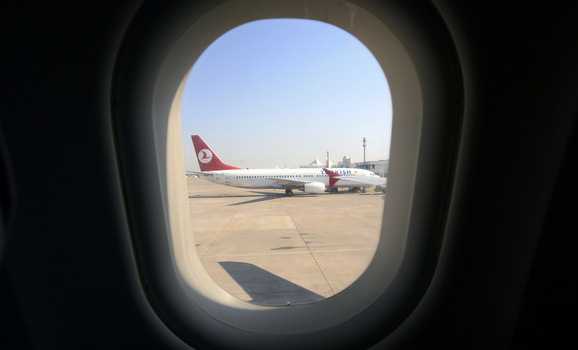
    Turkish Air is currently operating 28 flights a week from Saudi Arabia, compared to only a few flights per week four years back.

    This is in addition to the flights operated by Saudia and other Gulf carriers. In the field of agriculture, Riyadh and Ankara have mapped out a new strategy, which is now facilitating joint agriculture projects. Several Saudi and Turkish companies have come forward with proposals for joint projects, which need to be OK’d by regulatory authorities. In fact, the
    recent visit of Saudi Minister of Commerce and Industry Abdullah bin Zainal Alireza
    to Turkey cleared the decks for agriculture cooperation.

  • TURKEY DECODED by: Ann DISMORR

    TURKEY DECODED by: Ann DISMORR

    Immediate Media Release –
    “TURKEY DECODED” with Ambassador Ann DISMORR
    Date:
    On Wednesday, February 25, 2009, NYC.
    Today’s Date:
    January 28, 2009, NY
    For INVITATION of the Program>

    LIGHT MILLENNIUM in collaboration with the COLUMBIA University Middle Eastern and Asian Languages and Cultures, Middle East Institute, and the Consulate General of SWEDEN in New York, proudly presents:

    A Book Presentation and Signing:

    TURKEY DECODED
    by:
    Ann DISMORR
    Swedish Ambassador to Turkey from 2001-2005

    Introduction of the author by:
    Ambassador Ulf HJERTONSSON

    Moderator:
    Professor Peter AWN
    Dean of General Studies and Director of MEI at Columbia University

    WHEN:On Wednesday, February 25, 2009
    TIME: Registration & Reception 6:30 pm, with program to follow

    WHERE:Columbia University, International Affairs Building (IAB room 1501, 15th floor)
    Located at 420 W. 118th Street (at Amsterdam Avenue)

    Please RSVP by:
    February 24, 2009, 5PM.

    Please RSVP to> [email protected]

    Web site:

    – This event is free and open to the general public.

    Ann DISMORR’s book, “Turkey Decoded”, examines Turkey’s foreign policy, ties with the US and the Middle East, as well as troubled relations with the EU.

    Some of the twenty-first century’s greatest challenges are reflected in Turkey-EU relations: the widening gap between the West and the Muslim world, terrorism, and the struggle for human rights and democratization. Although membership talks were launched more than three years ago and are anticipated to finish in 2014, fully fledged membership is far from certain. There is growing concern in both Turkey and the West about Turkey’s “Islamization.”

    Ann DISMORR
    examines the implications of Turkey’s affiliation with Europe while also addressing its role in the Middle East and its complex relationship with the U.S. She pays particular attention to the sweeping reforms initiated by the Justice and Development Party, and to the career and policies of one-time political prisoner and current Prime Minister Tayyip Erdogan.

    From the unique view point of one of the few female ambassadors to Turkey, DISMORR describes a country in transition, covering topics from the Kurds to the Iraq War, women’s rights, the crisis over Cyprus and the polarizing presidential election of 2007.

    “Turkey Decoded” includes the following 12 chapters:

    1) Turkish Identity;
    2)
    Turkey in the Waiting Room of the European Union;
    3)
    Changing EU-Turkish Relations, 1999-2007;
    4)
    Pro-Islamic Party Gained Power and Succeed in Historic EU Breakthrough;
    5)
    From Human Rights Deficit to Progress;
    6)
    The Kurdish Question: A Roadblock to Turkish EU Membership?;
    7) Women Between Tradition and Transformation;
    8)
    Changing US-Turkish Relations and their Impact on the EU Process;
    9)
    Turkey’s Role in the Middle East: Possibilities and Limitations;
    10)
    Turkey: Bridge or Barrier Between East and West?;
    11)
    Turkey’s Future: EU Success Story or Unfulfilled Promise?;
    12)
    The Beginning of a Post-Kemalist Era.

    Following the presentation, there will be an open discussion moderated by Prof. Peter AWN.


    The American Turkish Society
    (www.americanturkishsociety.org), as a part of its Meet the Ambassadors program, will host a reception in honor of Ambassador Ann DISMORR and guests at the event’s venue.

    * * * * *

    About the Author:

    Ann DISMORR has extensive knowledge of the region and of Islam, having lived in Saudi Arabia, worked on the Middle East peace process and served as an ambassador in Lebanon. Since 2006 she is the Ambassador/Head of the International Department of the Swedish Parliament, and working actively to enhance the understanding and dialogue with the Muslim world.

    DISMORR’s other key positions:

    Swedish Foreign Ministry 1981
    Senior advisor on Parliament’s project on its relations with the Muslim world in the EU’s immediate vicinity (launched in 2005)
    Ambassador in Turkey and Azerbaijan 2001-2005
    Ambassador in Lebanon 1999-2001
    Counsellor, Swedish UN Mission in Geneva 1995-99; in charge of human rights issues
    Deputy Director, Foreign Ministry in Stockholm 1993-95; political department, Middle East department
    Diplomatic Advisor to Sten Andersson, Former Foreign Minister and special envoy to the Israeli-Palestinian peace talks 1993-97
    Executive assistant to Foreign Minister Margareta af Ugglas, 1991-92
    Negotiating EU-EFTA affairs, Foreign Ministry Trade Department, 1988-89
    Embassy in the UK; first secretary, economic affairs, 1985-88
    Embassy in Zimbabwe; second secretary, 1983-85
    Chairperson of the Friendship Association of the Swedish Research Institute in Istanbul.
    Author of the book “Turkey Decoded” (published by Saqi books, London in 2008)
    Co-author of the book “Plikten och äventyret” (published by Carlsson Bokförlag 2008)
    PhD studies at Yale University, Connecticut, USA, 1990-91, political science (EU-USA relations)
    Postgraduate studies (political science), University of Gothenburg
    Bachelor of Arts, University of Stockholm
    Lived in Riyadh, Saudi Arabia 1979-1981, 1982-83.


    About Ambassador Ulf HJERTONSSON:

    As of March 1, 2006, Ambassador Ulf HJERTONSSON is the Consul General of Sweden in New York. Ambassador Ulf HJERTONSSON has worked for the Swedish Ministry for Foreign Affairs since 1965.  His career in the Swedish foreign service has included a number of key appointments, both in Stockholm and abroad.

    Most recently, from 2001 to 2006, he was Ambassador of Sweden in Helsinki, Finland.  Prior to this, he served as Special Adviser to the Foreign Minister and Chairman of the EU-US Task Force during the Swedish EU Presidency in 2001.

    Previous appointments include Director General for Political Affairs at the Ministry for Foreign Affairs in Stockholm in 1995; Ambassador of Sweden in Madrid, Spain, in 1989; Minister at the Embassy of Sweden in Washington DC in 1985; Foreign Policy Adviser to Prime Minister Olof Palme in 1984; and Assistant Under-Secretary for Political Affairs in 1983.

    His first diplomatic assignment was at the Swedish Embassy in Santiago de Chile, followed by the Permanent Mission of Sweden to the United Nations in New York in 1967, and the Swedish delegation to the European Communities in Brussels in 1978.

    Ulf HJERTONSSON has a special interest in language and literature and has published a number of literary translations, including works by Pablo Neruda and Michel Tournier.


    About Professor Peter J. AWN:

    On July 1, 2008, Professor Peter J. AWN took up his three-year term as Director of the Middle East Institute. He also continues to serve as Dean of the School of General Studies at Columbia.

    Peter J. AWN is Professor of Islamic Religion and Comparative Religion in the Department of Religion. He received his Ph.D. in Islamic Religion and Comparative Religion from Harvard University in 1978, at which point he joined the Columbia faculty. Previously he earned degrees in Philosophy, Classical Languages, and Christian Theology. Professor AWN‘s book, “Satan’s Tragedy and Redemption: Iblîs in Sufi Psychology“, received a book award from the American Council of Learned Societies. In 1984 he was the first recipient of the “Phillip and Ruth Hettleman Award” for distinguished teaching and research. In 1995 Professor AWN was awarded the “Great Teacher Award” from the Society of Columbia Graduates. Professor AWN has received numerous grants including a Fulbright and several grants from the National Endowment for the Humanities. He was also a Principal Investigator on the Muslim Communities in New York City research project, sponsored by the Ford Foundation. In addition to his work at Columbia, Professor Awn has been Visiting Professor of Religion at Princeton University. Professor AWN has traveled widely in Europe, the Middle East, North Africa, Iran, and South Asia.

    In addition to his service as Dean of the School of General Studies (GS), Professor AWN currently serves as Acting Dean of the School of Continuing Education (SCE). He has served as chair of the Department of Religion, chair of the Steering Committee of the Chairs of the Arts & Sciences Departments, and chair of the Executive Committee of the Faculty of Arts & Sciences. In addition he has served as Director of Graduate Studies for the Department of Religion, and Arts & Sciences Faculty Liaison to the Office of University Development and Alumni Relations.


    Producers of the program: Bircan Ünver, Light Millennium & Prof. Etem Erol, Columbia University &
    Martina Högberg
    , Consulate General of Sweden in New York


    For more information:
    [email protected], [email protected], [email protected] or/ [email protected]

    – For INVITATION> https://www.lightmillennium.org/events/ann_dismorr_turkey.html


    “The Light Millennium, is a 501 (c) (3) Tax Exempt and Public Benefit Organization &

    has become associated with the Department of Public Information of the United Nations effective December 12, 2005, and member of the Non-Profit Coordination Committee of New York. – – . Based in Queens, New York – On the Web since August 1999…
    YOU ARE THE SOUL OF THIS GLOBAL PLATFORM. & WE ARE FOR THE GREATNESS IN HUMANITY.”

    If you wish to receive The Light Millennium’s media releases, announcements or about future events
    or to be part of the Light Millennium,
    please send us an e-mail to> [email protected]

  • “İstanbul in Turkish and World Culture”

    “İstanbul in Turkish and World Culture”

    Conference web page:

    The Seventh International Congress on Turkish Culture will be held in 2009 with the theme of  in relation with “İstanbul 2010: European Capital of Culture”. International Congresses on Culture are organized by the Atatürk Center for Culture in every four years.
    The Congress will be held on October 6-10, 2009 in Ankara. The participants are expected to fill up the attached form and to send it together with a summary of their papers to the Atatürk Center for Culture with e-mail, mail or fax no later than March 1, 2009. I would like to thank to all participants for their invaluable contributions.
    Sincerely yours,

    Prof. Dr. Osman HORATA
    Chair
    The Atatürk Center for Culture

  • Will the AKP’s Foreign and Economic Policies Help in Local Elections?

    Will the AKP’s Foreign and Economic Policies Help in Local Elections?

    Will the AKP’s Foreign and Economic Policies Help in Local Elections?

    Publication: Eurasia Daily Monitor Volume: 6 Issue: 21
    February 2, 2009
    By: Saban Kardas

    Following his controversial remarks about Israel’s policies in Gaza made at the World Economic Forum (WEF) summit in Davos, Prime Minister Recep Tayyip Erdogan has refocused his attention on domestic politics. The municipal elections on March 29 are expected to be a major test of the policies of the Justice and Development Party (AKP). As the elections approach, the government is gearing its economic and foreign policies toward boosting the electoral performance of AKP candidates.

    In November Erdogan challenged his opponents, saying that if his party came in second in the elections, he would step down from the AKP chairmanship (Zaman, November 25). An earlier EDM analysis maintained that the March elections would be dominated by national political issues and the AKP might exploit its position as the incumbent to improve the chances of its candidates against their rivals (EDM, December 3).

    AKP representatives are capitalizing on Turkey’s new international profile to mobilize popular support. Deputy Speaker of Parliament Nevzat Pakdil told AKP party supporters that the coming elections were not just about voting for mayors or city council members but that the Turkish people would be asked to “approve Prime Minister Erdogan’s noble stance in Davos, which put Turkey on the map worldwide” (www.cnnturk.com, February 1).

    Indeed, most Turks view Erdogan’s walking out of the Davos meeting in protest over Israeli policies as a staunch defense of Turkey’s image and the rights of Palestinians in international forums (EDM, January 30). Erdogan’s team was successful in couching his policy in terms of conducting an independent foreign policy, and the Davos incident prompted the Turkish public to “rally ’round the flag.” Since the Turkish people historically have the impression of being treated as inferiors in international diplomacy, people from across the political spectrum expressed their support for Erdogan, welcoming him almost like a new national hero. Likewise, most party leaders affirmed Erdogan’s reaction, though expressing some reservations about his style.

    While Erdogan’s popularity has been boosted at home following the Davos incident, some critics charge that the government’s policies in the Middle East in general and Erdogan’s attitude in Davos in particular might be driven by populist concerns to secure victory in the elections. They also raise concerns that such short-sighted policies might undermine the country’s long-term interests (BirGun, Cumhuriyet, January 31).

    Analysts believe that that Davos incident will improve the AKP’s showing in the municipal elections. A survey conducted by the Metropoll polling company to measure the impact of the Davos incident revealed interesting results. As of January 31 Erdogan’s Davos position was supported by 78.3 percent of the respondents and Turkey’s Middle East policy by 82 percent. Compared with the results of Metropoll’s previous poll on January 24, the share of “those who approved the Prime Minister’s political style” increased from 55 to 74 percent. Moreover, when asked “what party would you vote for if there were an election this Sunday,” 49.3 percent said that they would vote for the AKP, in contrast to only 38.9 percent on January 24 (www.aktifhaber.com, January 31).

    The immediate impact of the Davos incident might have inflated the AKP’s support. Some analysts, including Tarhan Erdem of Konda polling company, believe that by the time of the elections the impact of Davos might have evaporated. Others, however, expect at least a 5 percent increase in the AKP’s vote in local elections. Observers point out in particular that through his Davos stance, Erdogan would probably undermine the performance of the Nationalist Action Party (MHP) and the Felicity Party (SP). The AKP is likely to prevent its nationalist and conservative voters from switching to the MHP and the SP, respectively, while attracting supporters from these two parties’ (www.haber3.com, January 31).

    After his abrupt return from Davos, Erdogan spent the weekend in Istanbul in a bid to throw his weight behind his party’s candidate for mayor of Istanbul, Kadir Topbas. He attended the opening ceremonies of several billion dollars worth of infrastructure investments in Istanbul, as well as AKP gatherings. He opened new lines extending Istanbul’s subway network and attended celebrations for the introduction of new ferries to Istanbul’s transportation fleet (Cihan Haber Ajansi, January 31; www.ntvmsnbc.com.tr, February 1).

    Speaking to large crowds, Erdogan touted the government’s successes in foreign policy, economy management, and tough bargaining with the International Monetary Fund (IMF). He accused the opposition, especially the leader of the main opposition Republican People’s Party (CHP), of populism and empty talk. He presented his own party as the only one that could “talk the talk and walk the walk,” noting improvements in the economic indicators.

    Although Erdogan promised that the AKP would not resort to populism, several of its policies and their timing raise questions about how sincere he was on that score. Providing free coal to low-income families has been a constant source of accusations that the AKP uses state money to solicit votes. Erdogan has responded to such criticism by claiming that the government was fulfilling the “social state’” requirement laid down in the constitution (Cihan Haber Ajansi, February 1).

    Erdogan also announced a price cut for natural gas by 17 percent for residences and 18 percent for industry effective on February 1 (www.cnnturk.com, February 1). In response to the falling energy prices on global markets, the government had been under pressure to reduce gas prices domestically. Although preparatory work on a formula to cut prices had been in progress for some time, the announcement of such a decision during the election campaign is significant.

    In a similar move, the Agricultural Minister announced that between January and March, the ministry would pay farmers half of the 5.026 billion lire ($3.023 billion) allocated for agricultural subsidies (www.dunyagazetesi.com.tr, January 31).

    It is perhaps unfair to charge the government with basing its economic and foreign policies on the short-term interest of winning the local elections; but undoubtedly the AKP skillfully capitalizes on its position as incumbent to the advantage of its own candidates, which raises the question: How level is the playing field for the opposition parties?

    https://jamestown.org/program/will-the-akps-foreign-and-economic-policies-help-in-local-elections/