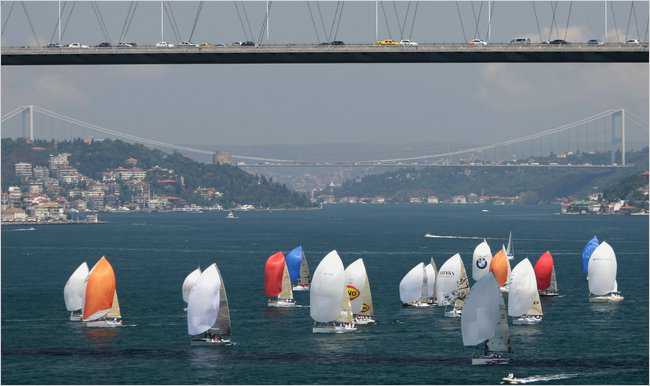
ANKARA, Turkey: Turkey’s Cabinet says it has decided to deploy navy ships in the Gulf of Aden to help protect cargo vessels from pirates.
The government says it sent a decree to the parliament for approval on Thursday. The decision comes after the release of the third Turkish cargo ship held by pirates off the Somali coast earlier this week. Parliament is expected to vote and approve the decree next week.
A Turkish frigate already had served in the region under NATO, but the mission of that ship has expired and Turkey wants to contribute to anti-piracy efforts further.
In 2008, pirates attacked 111 ships in the waterway, hijacking 42 of them and receiving tens of millions of dollars in ransoms.
Source: International Herald Tribune, February 5, 2009
Feb 5th 2009 | ANKARA
From The Economist print edition
A dramatic Davos walkout raises new questions about Recep Tayyip Erdogan
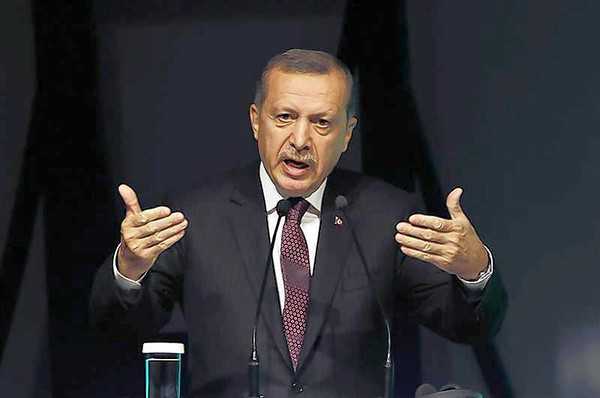
WAS it premeditated? Or did Turkey’s prime minister, Recep Tayyip Erdogan, lose control? Mr Erdogan’s walkout from a debate with Israel’s president, Shimon Peres, in Davos has made him the most talked about Turkish leader since Kemal Ataturk. His audience of financiers and policy wonks was stunned. But Muslims worldwide cheered as Mr Erdogan scolded Mr Peres over Israel’s war in Gaza. “When it comes to killing, you know very well how to kill. I know well how you hit and kill children on beaches,” thundered a crimson-faced Mr Erdogan.
The incident has led to new debate over Turkey’s strategic alliance with Israel, whether an increasingly erratic Mr Erdogan is fit to lead Turkey at all and, if so, in what direction: east or west? There is no question of Turkey walking away from NATO or the European Union, or scrapping military ties with Israel and America. Mr Erdogan’s critics say his outburst was a ploy to please voters. If so, it worked: his approval ratings have shot up. Polls suggest that 80% of Turks support Mr Erdogan’s actions. His mildly Islamist Justice and Development party will reap dividends in municipal elections on March 29th.
Mr Erdogan’s defiance has also helped to assuage his people’s long-running feelings of humiliation and inferiority, which date back as far as the Ottoman defeat in the first world war. Many insist that Mr Erdogan’s reaction was spontaneous and utterly sincere. Turkey has assumed “moral leadership” based on Western values, opined Cengiz Candar, a liberal commentator. Mindful of the public mood, Turkey’s secular opposition leader, Deniz Baykal, grudgingly declared that his rival had done the right thing.
Not everybody agrees, however. Mr Erdogan’s behaviour makes it less likely that Turkey can successfully mediate between Israel and Syria. His call to Barack Obama to “redefine” what terrorist means has been seen as an appeal to remove the label from Hamas. Although European and American reaction has been muted, in private officials are unhappy. “What [the Davos spat] does leave in Europe is the feeling that Mr Erdogan is unpredictable,” says a European diplomat. Mr Obama is highly unlikely now to pay Turkey an early visit.
Mr Erdogan’s temper tantrums are not new. But they used to be reserved for his critics at home. The Davos affair, says another foreign diplomat, is further evidence of “Mr Erdogan’s conviction that the West needs Turkey more than Turkey needs it.”It is of a piece with Mr Erdogan’s threat to back out of the much-touted Nabucco pipeline to carry gas from the Caspian Sea to Europe via Turkey. In Brussels recently Mr Erdogan said that, if there were no progress on the energy chapter of Turkey’s EU accession talks then “we would of course review our position”. Meanwhile, Turkey sided with Saudi Arabia and the Vatican in opposing a UN statement suggested by the EU to call for the global decriminalisation of homosexuality.
Mr Erdogan’s supporters argue that EU foot-dragging on Turkey’s membership bid explains why Turkey is now seeking new friends in the Middle East and beyond. Its growing regional clout is another reason why the EU should embrace Turkey. But the reverse is also true. It is because it is the sole Muslim country that is at once secular, democratic and allied with the West that Turkey commands such respect in the rest of the world. Growing numbers of Arab investors have flocked to Turkey, “because we see it as part of Europe, not the Middle East,” says an Arab banker in Istanbul.
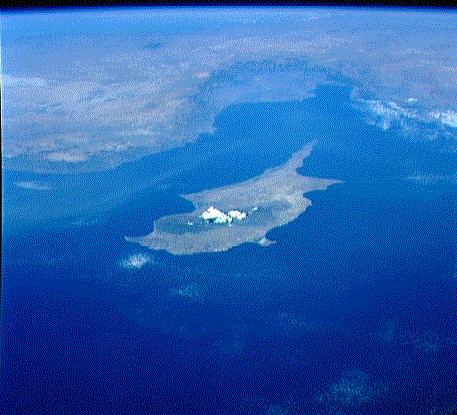
To retain its allure, Turkey will need to swallow its pride and make further concessions on Cyprus. The EU may suspend membership talks altogether unless Turkey meets a December 2009 deadline to open its ports to Greek-Cypriots. The hope is that Egemen Bagis, who was chosen as Turkey’s official EU negotiator in January, will remind Mr Erdogan that, at least in these talks, it is Turkey that is the supplicant not the other way round.
Feb 5th 2009 | ANKARA
From The Economist print edition
WAS it premeditated? Or did Turkey’s prime minister, Recep Tayyip Erdogan, lose control? Mr Erdogan’s walkout from a debate with Israel’s president, Shimon Peres, in Davos has made him the most talked about Turkish leader since Kemal Ataturk. His audience of financiers and policy wonks was stunned. But Muslims worldwide cheered as Mr Erdogan scolded Mr Peres over Israel’s war in Gaza. “When it comes to killing, you know very well how to kill. I know well how you hit and kill children on beaches,” thundered a crimson-faced Mr Erdogan.
The incident has led to new debate over Turkey’s strategic alliance with Israel, whether an increasingly erratic Mr Erdogan is fit to lead Turkey at all and, if so, in what direction: east or west? There is no question of Turkey walking away from NATO or the European Union, or scrapping military ties with Israel and America. Mr Erdogan’s critics say his outburst was a ploy to please voters. If so, it worked: his approval ratings have shot up. Polls suggest that 80% of Turks support Mr Erdogan’s actions. His mildly Islamist Justice and Development party will reap dividends in municipal elections on March 29th.
Mr Erdogan’s defiance has also helped to assuage his people’s long-running feelings of humiliation and inferiority, which date back as far as the Ottoman defeat in the first world war. Many insist that Mr Erdogan’s reaction was spontaneous and utterly sincere. Turkey has assumed “moral leadership” based on Western values, opined Cengiz Candar, a liberal commentator. Mindful of the public mood, Turkey’s secular opposition leader, Deniz Baykal, grudgingly declared that his rival had done the right thing.
Not everybody agrees, however. Mr Erdogan’s behaviour makes it less likely that Turkey can successfully mediate between Israel and Syria. His call to Barack Obama to “redefine” what terrorist means has been seen as an appeal to remove the label from Hamas. Although European and American reaction has been muted, in private officials are unhappy. “What [the Davos spat] does leave in Europe is the feeling that Mr Erdogan is unpredictable,” says a European diplomat. Mr Obama is highly unlikely now to pay Turkey an early visit.
Mr Erdogan’s temper tantrums are not new. But they used to be reserved for his critics at home. The Davos affair, says another foreign diplomat, is further evidence of “Mr Erdogan’s conviction that the West needs Turkey more than Turkey needs it.” It is of a piece with Mr Erdogan’s threat to back out of the much-touted Nabucco pipeline to carry gas from the Caspian Sea to Europe via Turkey. In Brussels recently Mr Erdogan said that, if there were no progress on the energy chapter of Turkey’s EU accession talks then “we would of course review our position”. Meanwhile, Turkey sided with Saudi Arabia and the Vatican in opposing a UN statement suggested by the EU to call for the global decriminalisation of homosexuality.
Mr Erdogan’s supporters argue that EU foot-dragging on Turkey’s membership bid explains why Turkey is now seeking new friends in the Middle East and beyond. Its growing regional clout is another reason why the EU should embrace Turkey. But the reverse is also true. It is because it is the sole Muslim country that is at once secular, democratic and allied with the West that Turkey commands such respect in the rest of the world. Growing numbers of Arab investors have flocked to Turkey, “because we see it as part of Europe, not the Middle East,” says an Arab banker in Istanbul.
To retain its allure, Turkey will need to swallow its pride and make further concessions on Cyprus. The EU may suspend membership talks altogether unless Turkey meets a December 2009 deadline to open its ports to Greek-Cypriots. The hope is that Egemen Bagis, who was chosen as Turkey’s official EU negotiator in January, will remind Mr Erdogan that, at least in these talks, it is Turkey that is the supplicant not the other way round.
Bazaar
We will host a bazaar on Sunday February 15 2009 to benefit of our Gaspirali Ismail Bey School. Our national food CIBOREK and ayran will be sold along with various deserts and pastries.
The school children will dance and the choros will make a mini concert.
We have started collecting items to be sold at the bazaar. If you have any brand new or barely used items which you would like to donate to the fair, please drop them by our school any Saturday from 12 noon till 4pm. Items could be household goods, toys, jewelry, fabric materials, etc…
For more info callDilek Mergin 347-204-5247 or Ilke Altaygil 646-283-8659
—
45-09 New Utrecht Avenue
Brooklyn, NY 11219
www.kirimny.org
From February 3 to 5 Turkish President Abdullah Gul is visiting Saudi Arabia as King Abdullah’s official guest. Gul is accompanied by several members of the Turkish cabinet as well as about 150 Turkish businessmen. Since the visit comes amid discussions on how to bring calm to the Middle East in the wake of Israel’s Gaza offensive, it provides an opportunity for the leaders of the two major regional countries to discuss developments in their neighborhood. The visit also marks the deepening bilateral ties between Turkey and Saudi Arabia, which have gained momentum since the Justice and Development Party (AKP) came to power in 2002. In addition to bilateral and regional matters, Gul and his hosts discussed issues important to the Islamic world.
Gul spoke at the Consultative Assembly of Saudi Arabia, which made him the first Muslim head-of-state to address the Saudi assembly. Regional peace and Gaza-related developments took up a major part of Gul’s speech. He praised King Abdullah’s work toward ensuring regional peace and stability and described Riyadh’s foreign policy as “constructive and responsible.” “We always maintain close political consultation about regional issues,” Gul added (www.ntvmsnbc.com, February 4).
Gul complemented King Abdullah for his past efforts to resolve the Palestinian problem, and he gave his support to the Saudi peace plan, which called on Israel to withdraw to its 1967 borders in return for normalization of relations with its Arab neighbors. He also reiterated Turkey’s position that the solution of the conflict depends on ensuring reconciliation among Palestinian factions. As a successful example of mediation, Gul cited a meeting between Fatah and Hamas that was hosted by King Abdullah in Mecca in 2007. He asked the leaders of Arab and Muslim countries to work toward ensuring that Palestinians achieve a national unity government. In an Islamic internationalist tone, he presented the Palestinian problem as the responsibility of the Muslim nations: “The number one issue is the unity of the Palestinians, the unity of the Arab world, and the unity of the Muslim world, with all of us showing our responsibility and desire to act together when there are major issues” (Today’s Zaman, February 5).
In his address to the Saudi assembly, Gul also touched upon another issue of common interest to Muslims worldwide. Gul expressed his concern about growing “Islamiphobia” in the West. Gul argued that the source of misperceptions and growing enmity toward Islam was the tendency in some circles to equate Islam with terrorism. Noting that terrorism may spring from any society and any religion, he described Islam as a religion of peace that urged its followers to respect others (Zaman, February 5).
The visit also highlighted the flourishing Turkish-Saudi bilateral relationship. The Turkish president said that he felt at home on his the trip, calling Turkey and Saudi Arabia sister states and sister nations. Gul recalled that King Abdullah had gone to Turkey in 2006 and 2007 and that these two visits in such a short time had shown Riyadh’s “extraordinary attention and concern for Turkey.” Gul added that he had wanted to return the gesture by paying a visit without any delay to show the high esteem that Turkey attached to relations with Saudi Arabia (www.ntvmsnbc.com.tr, February 4). Diplomatic observers believe that Riyadh might be seeking to develop a strategic partnership with Turkey to counter the growing Iranian influence in the region (www.cnnturk.com, February 3).
Bilateral economic cooperation was a major theme on Gul’s agenda. He emphasized that the two countries had already signed agreements covering tax exemption, investment protection, and transportation (ANKA, February 4) and expressed the hope that the two sides could extend this cooperation further. Turkish ministers and the businessmen accompanying Gul signed new agreements with their counterparts in such areas as educational exchange programs, cooperation in youth and sports, and maritime transportation (Hurriyet Daily News, February 4).
Gul also spoke at a meeting of the Turkish-Saudi Business Council. Noting that structural reforms in Turkey had helped the country withstand the global crisis and created favorable conditions for foreign investors, Gul highlighted the strengths of the Turkish banking system. He invited Saudi businessmen to invest in Turkey. Given Saudi Arabia’s projected investments in infrastructure, Turkish businesses, especially contractors, view Saudi Arabia as a lucrative foreign market (Cihan Haber Ajansi, February 4).
Despite the positive outlook for the economy and financial sector that Gul presented, Turkey urgently needs an injection of foreign capital to cushion the effects of the crisis. The government has been reluctant to sign a credit agreement with the IMF, because it would impose stringent conditions on government spending (EDM, January 29). There has been constant talk in Turkey about attracting petrodollars, or “Gulf capital” as the Turks like to call it, as a way to finance Turkey’s economic development. Turkish businessmen have hoped that Turkey might be able to attract Gulf capital leaving the Western banking system, especially after September 11. Lately, it has often been said that Gulf capital might make Istanbul a worldwide financial center, and end Turkey’s dependence on the IMF (Zaman, January 28, 2008). As a matter of fact, although the AKP government has been successful in boosting the volume of Arab investments in Turkey, it could not raise it to a level that would reduce Turkey’s dependence on money borrowed from Western financial institutions.
Following Prime Minister Recep Tayyip Erdogan’s walkout from a meeting in Davos, the Turkish media was full of speculative reports that Middle Eastern countries, impressed by Erdogan’s stance, were preparing to invest further in Turkey. Reportedly, financial institutions in Saudi Arabia, Kuwait, and the United Arab Emirates might offer Turkey almost a “blank check,” which might relieve the Turkish economy (Yenicag, January 31). It remains to be seen, however, whether Gul can use Turkey’s new image in the Middle East and his personal ties to King Abdullah to bring home good news about Saudi investment.