Month: February 2009

  • TURKISH FORUM’S LETTER TO PRESIDENT OBAMA

    TURKISH FORUM’S LETTER TO PRESIDENT OBAMA

    TURKISH FORUM”S LETTER OF FACTS TO PRESIDENT BARRACK HUSEYIN OBAMA

    PO. Box 1104 Marblehead MA 01945 USA

    6 February 2009 cc:H.E James Jeffry Ambassador

    The Honorable Barack H. Obama
    President of the United States
    The White House
    1600 Pennsylvania Avenue NW
    Washington, DC 20500
    USA

    Dear Mr. President:

    Please accept our congratulations and best wishes, Mr. President, for a very fruitful and rewarding term at the White House.  We sincerely hope that your presidency will bring the much needed change in the world political scene, away from polarizations and conflict, and towards compassion and peace.  I am sure you will agree, that the great leader and founding father of Republic of Turkey in 1923, ATATURK’s immortal words may best guide us all into the anxious future:  “Peace at Home, Peace in the World.”

    We urge you to be fair in your dealings with all, but especially with Turkey, given the increased pressure the Armenian lobby has been applying on you recently.  In this day and age of global village with internet and satellites, I am sure you will agree with me, Mr. President, that the old motto  “all politics is local” is no longer valid.  We sincerely hope that you will not offend and estrange Turkey on 24 April 2009 by using the term genocide to describe the human tragedy that affected all the people of Anatolia during WWI (Turks, Armenians, and others alike,) not just the Armenians.

    Mr. President, you are the leader of the free world now with tremendous responsibility.  You are no longer a candidate without any accountability.   Whatever you promised Armenians when you were a candidate cannot be allowed to hold the great American interests hostage to nagging Armenian squabbling.   An erroneous choice of words on your behalf can have lasting destructive effects on  the United States-Turkey relations for many decades to come.   I hope and trust that you realize the gravity of this situation.  No internal politics is worth losing the confidence and support of one of the greatest allies of America in the last 50+ years.

    The Turkish-Armenian conflict is one of inter-communal warfare fought by Muslim and Christian irregular forces against a backdrop of a world war.  This issue cannot be explained without acknowledging the Armenian propaganda, agitation, terrorism, raids, rebellions, treason, territorial demands, and Turkish suffering and losses caused by all of these factors, in that order, from 1890 to 1921,  where 1915 is a stop in that tragic journey.

    We urge you, Mr. President, to be on the side of dialog and peace; not polarization and conflict.  Please support more research, study, and debate on such complex historical events by impartial historians, not legislation of history by politicians.  Principles of fairness prevent the settlement of this matter by partisan groups with vested interests. We support, therefore, Turkey’s 2005 offer to Armenia to establish a Joint Historical Commission which is, so far, rejected by Armenia.

    As Turkish Forum, we look forward to meeting the challenges of a new chapter between the United States and Turkey and pledge to you our full support to improve and advance this relationship to the benefit of both of our nations.

    Truthfully Yours,

    Dr. Kaya Buyukataman, CEO
    President & Founder Turkish Forum

    Cc: Mr. M. Kaska, Chairman BOT
    Mr. Taner Ertunc, VP Turkish forum
    Dr. Robert B. McKay Advisor to President
    Mr. Sukru S. Aya Advisor to President
    Mr. Ergun Kirlikovali, Advisor to President
    BOD, Advisory Board, File, Members of Turkish Forum

    Attachments:  

    1- (File / Folder) Compiled 6-parts of “Documents discovered “as follows  

    a- Book: “WHY ARMENIA SHOULD BE FREE” Boston 1918 Auth: Arthur G. Pastermacian, Formerly terrorist in raiding Ottoman Bank, Elected representative of ERZURUM. Armenian revolution Lieder, USA ambassador for the Armenian Republic: Book outlines Armenian Massacres before the Relocation and prior to WWI, with references to General Dro, and Adranik administrated murders. Founding of free Armenian State under Ottoman protection. Armenian massacres to Ottomans Turks after the relocation.

    b- “THE ARMENIAN QUESTION Before the Peace Conference” Submitted By The Armenian Delegation Feb 26th 1929 (Clarification of all facts of treason, revolutions, braveries and asking in return more than half of Anatolia, (Free of non Christian people). [Question: Why are they asking Turkish lands if 1.5 million Armenian killed during relocation, who is going to occupy these lands“]. Also outlines previous formation of Free Armenian State by Ottomans, Their siding with Russia, and genocides committed by Armenian armed forces on Muslim population, after the formation Free Armenia by Ottomans.

    c- “ARMENIA and the Settlement ” Booklet for the minutes of Conference held in London on June 19th 1919 by prominent pro-Armenian Dignitaries, confessing anti-Turkism and support of British politicians. .. Booklet outlines how brave were Armenians in killing unarmed Muslim population, and how well they served Christian world.

    d- “NEAR EAST RELIEF REPORT” Joint resolution of the U.S. Senate & Congress, accepted unanimously on April 22nd, 1922. The contents of these official documents believe the arguments and reasons enlisted in HS-106. Though many other references were made in HS-106, “this one was overlooked or by-passed. WHY?” Resolution states that 1410 000. Armenians were alive and living in the lands of (with majority being in) Armenia, Syria, and Turkey, and they need 72 Million Dollars financial aid. (Question: if 1.5 million Armenian killed during relocation, where these people did came from). The 72 Million dollars were released by U. S. and distributed among Armenian population, no other race were given any financial aid or any help by U.S. officials send to above lands for that purpose.

    e- Documents: Adjustment of Payments due to United States by Turkey, Sept 1937. (No indemnity claims by USA is possible) Us requested originally 5 Million dollars and they settled 1 400 000 Dollars at The end. This was to cover all claims made by all U.S. citizens (MOSTLY ARMENIANS) from Turkish Government. “CASE CLOSED AND CANNOT BE OPENED AGAIN”.

    f- Order of the Court Case, European Court of Justice Dec. 17th 2003. Court unanimously rejected an application for < paying of indemnities and refusals of Turkey’s acceptance into E.U. unless she accepts the “genocide allegation” based on a decision of the European Parliament back in 1987>. Court resolved that 1987 resolution are political declarations that CAN CHANGE IN TIME. Cannot therefore have binding legal consequences for other institutions. Details are also posted in Turkish Forum web pages.

    2- (Book) “The Genocide of Truth” (Jan. 2008) Istanbul Commerce Univ. Pub. No.25 ISBN 978-975-6576-24-9 This 702 pages book does contain large number documents from reliable and non Turkish sources including National Archives of various countries, Author: S. S. Aya

    Note: Other documents compiled by non-Turkish or Turkish sources are also available through TURKISH FORUM if requested. Please place above documents to National Archives for all to see. < THE GENOCIDE OF TRUTH>.
  • Middle East parties must be brought together

    Middle East parties must be brought together

    Gordon Brown has insisted that all parties to the Middle East dispute over Palestine must be brought together to thrash out a lasting peace settlement despite the recent hostilities in Gaza.

    Speaking at a press conference with Palestinian President Mahmoud Abbas in Downing Street on Thursday, the PM said that peace could be achieved in the Middle East based on a secure Israel and a viable Palestinian state. Progress on the issue remains a top priority for the UK and international partners will be urged to work together to come to an agreement, he said.


    www.number10.gov.uk

  • Drama in Davos: A reading of the bizarre incident

    Drama in Davos: A reading of the bizarre incident

    By Ferruh Demirmen


    Turkish Prime Minister Recep Tayyip Erdogan’s walkout from the Gaza panel in Davos last week created quite a stir on the international scene. The walkout strained the Israeli-Turkish relations, and the direction the Turkish foreign policy is headed became a subject of debate.


    The occasion was a panel discussion on the Gaza crisis where two of the four panelists were Erdogan and Israeli President Shimon Peres. During his talk Erdogan blamed Israel for the Gaza violence, and Peres passionately defended his country’s policy. The tempers became inflamed when the moderator refused to allow Erdogan sufficient time to reply to Peres. This brought the panel discussion to a breaking point, and the PM walked off.


    The prevailing sentiment in Turkey is that Erdogan was justified in his action. Upon return from Davos, the PM was welcomed as a courageous leader by his supporters in Istanbul. The Arab world, in particular Hamas, lauded Erdogan’s action. There were alarm signals from the American Jewish lobby and the Israeli media, the former warning that Turkey’s image was damaged and making a sarcastic reference to PKK. In the rest of the world, the reaction was one of bemusement,


    The substance


    In substance, it is difficult to disagree with Erdogan on his criticism of Israel on the Gaza crisis. While the Jewish state deserved sympathy for the plight of its citizens that came under rocket attack from Hamas militants, its response was grossly disproportionate. Israel’s assault on the Gaza Strip created a humanitarian crisis in an area that was already reeling under a military lockdown. Some 1300 Palestinians lost their lives, as opposed to 13 on the Israeli side. Gaza’s industry was destroyed, and even schools, mosques, hospitals and a UN compound came under attack.


    The notion that a vastly superior military firepower was turned on a nearly defenseless population under siege, with graphic images of Palestinian civilians suffering and dying, was too much to bear for the world at large, in particular the Islamic world. Erdogan verbalized these sentiments.


    What made the Israeli action particularly offensive was that the military campaign appeared to be planned months in advance, and that Israel was timing its military campaign according to presidential turnover at the White House. Israel’s banning of journalists from the war zone also exacerbated anti-Israeli sentiments.


    The style


    Putting substance aside, the manner in which Erdogan handled himself in Davos was both right and wrong. To make sense of conflicting reports of the incident, this writer viewed the official webcast of the panel discussion. It is clear from the webcast that Erdogan was justified in protesting to the moderator.


    A cardinal rule in panel discussions is that the participants are allowed equal time. In this case, Peres was allowed to speak considerably longer than Erdogan.


    It is also a standard practice in panel discussions to allow a second chance to the speakers to respond to each other. There was no such provision in the panel discussion. Erdogan wrestled to get additional time to respond to Peres, the last speaker, but when the moderator cut him off after two minutes, the PM became visibly agitated. Turning red-faced, he stormed out.


    Because the other two panelists had talked shorter than both Erdogan and Peres, the moderator could have allowed Erdogan more time to respond, thereby preventing a diplomatic crisis.


    On the other hand, the PM could have chosen to remain calm, letting the audience judge the unfairness of the situation. His parting remark to the moderator, “For me, Davos is finished,” was unnecessary, and his rhetoric aimed at Peres, “You are older than me. Your voice is coming strong, this has to do with a guilty conscience.” … ”You know well how to kill,” were quite inappropriate. He had lost his temper.


    In diplomacy, there is no substitute for composure.


    In Ankara, retired Turkish diplomats who criticized Erdogan’s behavior in Davos also drew the PM’s ire, who called them “monsieurs” – a thinly disguised pejorative term.


    Some commentators in Turkish media compared the PM’s action to the bluster of Soviet leader Nikita Khrushchev when he, in a fury, took his shoe off and banged it at the table at a United Nations conference in 1960. The comparison, however, was off the mark.


    The motive


    Erdogan’s action raised some basic questions. What was the PM trying to accomplish by becoming the spokesman for Hamas when the Arab world is almost indifferent to the plight of Palestinians on the Gaza Strip?


    And if the PM was sincere in his humanitarian concerns over the Gaza crisis, why did he not raise similar objections to the killing fields in Darfur, and, for that matter, next-door Iraq?


    Erdogan twice welcomed in Ankara Sudan’s President Omar al-Bashira radical Islamist – who has been accused of war crimes in Darfur by the International Criminal Court. These are questions only the PM can answer.


    But there is little doubt that Erdogan’s stance in Davos was driven at least in part by domestic politics. Local elections are scheduled for March, and by embracing the staunchly Islamic-oriented Hamas, the PM calculated that he could boost his popularity with his Islamist base at home. His popularity, in fact, did receive a boost, at least temporarily.


    The rallying welcome the PM received at the Istanbul airport in the early hours of the morning just after leaving the panel discussion was obviously planned in advance.


    Israeli-Turkish relations


    The larger issue with the Davos incident is whether it heralded a major shift in Turkey’s foreign policy vis-à-vis Israel. In press releases, both sides tried to downplay the significance of the event, claiming that the relations between the countries remained fundamentally strong.


    There is considerable truth in that assessment, as the two countries have long had close bilateral ties, from tourism to commerce to defense. The two countries also have shared common strategic interests, a point verbalized by Peres during his talk at the Turkish Parliament in November 2007. Both countries will want to continue the alliance.


    The alliance, however, will face challenges. Hamas is widely recognized as a terrorist organization, and unless the organization becomes more moderate, a serious rift in the Israeli-Turkish alliance will be inevitable. Turkey’s relationship with the US and the EU will also be affected.


    There is also the concern, raised by the American Jewish lobby, but also by the Turkish Jewish community, that Erdogan’s pro-Hamas stance may stoke anti-Semitism in Turkey. The PM tried to allay this concern by stating that his quarrel is with the Israeli administration, not Jewish people.


    The problem with this argument is that his constituents in the Islamic camp may not make such distinction.


    Any rise in anti-Semitism in Turkey would be very unfortunate. Since the Ottomans welcomed Sephardic Jews expelled from Spain in the 15th century, Turks and Jews have lived in peaceful coexistence. The secular republic established by Kemal Atatürk bestowed full citizenship rights on Jews, as it did on other religious and ethnic groups.


    Conclusion


    In summary, a badly administered panel discussion was at the root of a bizarre incident in Davos. Although there will be challenges, Turkey and Israel should put the bizarre incident behind and move on. The Jewish state should use the Davos incident as a wakeup call from a friend for resolution of the long-festering Israeli-Palestinian conflict. On Turkey’s part, it should weigh carefully its association with Hamas. A lasting peace in the Middle East is far too important to let an emotionally charged panel discussion to be a distraction. On Erdogan’s part, he should learn how to control his anger in conflict situations.


    [email protected]


  • Greater Israel

    Greater Israel

    By Wayne Madsen
    Online Journal Contributing Writer

    Jan 30, 2009, 00:20

    WMR) — Israeli expansionists, their intentions to take full control of the West Bank and the Gaza Strip and permanently keep the Golan Heights of Syria and expand into southern Lebanon already well known, also have their eyes on parts of Iraq considered part of a biblical “Greater Israel.”

    Israel reportedly has plans to relocate thousands of Kurdish Jews from Israel, including expatriates from Kurdish Iran, to the Iraqi cities of Mosul and Nineveh under the guise of religious pilgrimages to ancient Jewish religious shrines. According to Kurdish sources, the Israelis are secretly working with the Kurdistan Regional Government (KRG) to carry out the integration of Kurdish and other Jews into areas of Iraq under control of the KRG.

    Kurdish, Iraqi Sunni Muslims, and Turkmen have noted that Kurdish Israelis began to buy land in Iraqi Kurdistan, after the U.S. invasion in 2003, that is considered historical Jewish “property.”

    The Israelis are particularly interested in the shrine of the Jewish prophet Nahum in al Qush, the prophet Jonah in Mosul, and the tomb of the prophet Daniel in Kirkuk. Israelis are also trying to claim Jewish “properties” outside of the Kurdish region, including the shrine of Ezekiel in the village of al-Kifl in Babel Province near Najaf and the tomb of Ezra in al-Uzayr in Misan Province, near Basra, both in southern Iraq’s Shi’a-dominated territory. Israeli expansionists consider these shrines and tombs as much a part of “Greater Israel” as Jerusalem and the West Bank, which they call “Judea and Samaria.”

    Kurdish and Iraqi sources report that Israel’s Mossad is working hand-in-hand with Israeli companies and “tourists” to stake a claim to the Jewish “properties” of Israel in Iraq. The Mossad has already been heavily involved in training the Kurdish Pesha Merga military forces.

    Reportedly assisting the Israelis are foreign mercenaries paid for by U.S. Christian evangelical circles that support the concept of “Christian Zionism.”

    Iraqi nationalists charge that the Israeli expansion into Iraq is supported by both major Kurdish factions, including the Patriotic Union of Kurdistan headed by Iraq’s nominal President Jalal Talabani. Talabani’s son, Qubad Talabani, serves as the KRG’s representative in Washington, where he lives with his wife Sherri Kraham, who is Jewish.

    Also supporting the Israeli land acquisition activities is the Kurdistan Democratic Party, headed by Massoud Barzani, the president of the KRG. One of Barzani’s five sons, Binjirfan Barzani, is reportedly heavily involved with the Israelis.

    The Israelis and their Christian Zionist supporters enter Iraq not through Baghdad but through Turkey. In order to depopulate residents of lands the Israelis claim, Mossad operatives and Christian Zionist mercenaries are staging terrorist attacks against Chaldean Christians, particularly in Nineveh, Irbil, al-Hamdaniya, Bartalah, Talasqaf, Batnayah, Bashiqah, Elkosheven, Uqrah, and Mosul.

    These attacks by the Israelis and their allies are usually reported as being the responsibility of “Al Qaeda” and other Islamic “jihadists.”

    The ultimate aim of the Israelis is to depopulate the Christian population in and around Mosul and claim the land as biblical Jewish land that is part of “Greater Israel.” The Israeli/Christian Zionist operation is a replay of the depopulation of the Palestinians in the British mandate of Palestine after World War II.

    In June 2003, a delegation of Israelis visited Mosul and said that it was Israel’s intentions, with the assistance of Barzani, to establish Israeli control of the shrine of Jonah in Mosul and the shrine of Nahum in the Mosul plains. The Israelis said Israeli and Iranian Jewish pilgrims would travel via Turkey to the area of Mosul and take over lands where Iraqi Christians lived.

    Previously published in the Wayne Madsen Report.

    Copyright © 2008 WayneMadenReport.com

    Wayne Madsen is a Washington, DC-based investigative journalist and nationally-distributed columnist. He is the editor and publisher of the Wayne Madsen Report (subscription required).

    Copyright © 1998-2007 Online Journal

    Source:  Online Journal, Jan 30, 2009

  • Misreading Turkey

    Misreading Turkey

    Letters to Editor

    Thursday, February 5, 2009; Page A16

    Regarding Soner Cagaptay’s Feb. 2 op-ed, “Turkey’s Turn From the West”:

    Mr. Cagaptay’s piece contained grossly misleading information purporting to be evidence of Turkey’s turning its back on the West.

    Since 2002, the AK Party has pursued a vigorous regional policy that aims to correct an anomaly of the Cold War era. Turkey strives to reintegrate itself into the Balkans, the Black Sea, the Caucasus, the Middle East and the Eastern Mediterranean. Far from being a choice, this is a necessity because of our geography. Our outreach to our neighbors is not done at the expense of our relationship with the West. On the contrary, it is complimentary to it. Interpreting our regional policy as a shift in our orientation misses the sophistication behind our efforts to stabilize a troubled neighborhood. Mr. Cagaptay’s piece, unfortunately, smells of ill-intent or is simply another sample of his poor analysis of Turkey.

    Prime Minister Recep Tayyip Erdogan has underlined on a number of occasions that he criticizes Israel’s policies in Gaza, not Israelis or Jews per se. Indeed, he has said that anti-Semitism is a crime against humanity. Despite Turkey’s objections to the war in Gaza, Turkey values its partnership with Israel and intends to maintain this special relationship, which has benefited our nations for decades.

    SUAT KINIKLIOGLU
    AK Party Deputy Chairman
    for External Affairs
    Spokesman of the Foreign Affairs Committee
    in the Turkish Parliament
    Ankara, Turkey

    Source:  www.washingtonpost.com, February 5, 2009

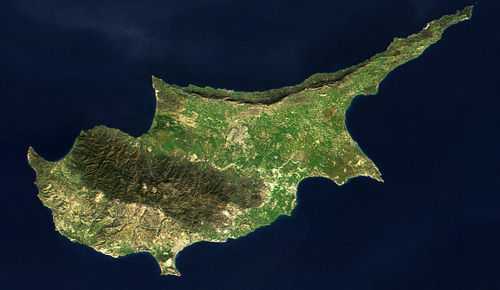
  • Christofias: “Turkey cannot join EU until troops out – Cyprus”

    Christofias: “Turkey cannot join EU until troops out – Cyprus”

    Thu Feb 5, 2009 2:15pm GMT

    NICOSIA, Feb 5 (Reuters) – Cypriot President Demetris Christofias said on Thursday that Turkey would not be able to join the European Union as long as it kept troops stationed in northern Cyprus.

    “It’s not possible for Turkey to be accepted as a member of the union while continuing the occupation of Cyprus,” he told reporters. (Reporting by Michele Kambas; editing by Elizabeth Piper)

    Source:  Reuters, Feb 5, 2009