Month: December 2008

  • ANOTHER SMALL STEP FOR NABUCCO

    ANOTHER SMALL STEP FOR NABUCCO

    Caucasus Update, Issue 13, December 8, 2008

    Released by Caucasian Review of International Affairs (www.cria-online.org)


    In late November a trilateral summit was hosted in the city of Turkmenbashi , on Turkmenistan ’s Caspian coast. In attendance were President Gurbanguly Berdimuhammedov, the host; President Ilham Aliyev of Azerbaijan , and President Abdullah Gul of Turkey . Apart from a number of cultural and transportation agreements, the three leaders were there to discuss the much-hyped Nabucco project. Nabucco would transport Central Asian and Azerbaijani gas to Europe, via an undersea pipeline in the Caspian Sea, through Azerbaijan , Georgia and Turkey . The project would do for gas what the Baku-Tbilisi-Ceyhan pipeline did for oil – tap into Central Asian resources bypassing Russian territory.


    The concluding statements emerging from the summit were typically vague. However, Vladimir Socor at the Jamestown Foundation has suggested that the official line was to avoid publicly naming particular projects for fear of offending Russia (although the Kremlin can hardly have doubted the topic of discussions). This explains the oblique reference to Azerbaijan and Turkmeniatan’s “common position on the policy of diversification of exports of energy resources to the world”, and President Gul’s ‘keen interest’ in energy collaboration. Similar rectitude with the name of Nabucco was observed during a recent oil and gas conference in Ashgabat.


    Such reluctance on the part of the Turkmen government was to be expected, however frustrating to Western energy pundits. The country’s secretive attitude towards its oil and gas wealth is a reflection of its isolationist political stance. It is highly unlikely that President Berdimuhammedov will be prepared to publicly back a project of Nabucco’s size without cast-iron guarantees on transit infrastructure, destination markets, and prices. However, the references to energy diversification and the role of the Caspian region’s energy potential as a bridge between Asia and Europe are extremely significant, signalling that, in principle at least, Turkmenistan is on board.


    Where would this leave Moscow ? Russia currently accounts for almost all of Turkmenistan ’s gas exports, and has been staging a rearguard action – or a determined offensive, depending on your viewpoint – against Nabucco for months. In November 2007 Gazprom struck a gas deal with Turkmenistan in which the Russian gas corporation would pay $130 per thousand cubic metres (tcm) in the first half of 2008, and $150tcm in the second half. This was a major rise from the 2007 level of $100, but it pales into significance next to the deal that Gazprom chief Alexei Miller made with Ashgabat in July. This would raise the price to around $350tcm: according to Mr Socor, once an expected rise in transit fees by other states is accounted for, Turkmenistan would still pocket between $225 and $295/tcm. An attractive offer. But President Berdimuhammedov remains unwilling to place all his eggs in one basket, however financially appealing, hence his moves towards Nabucco. It is not implausible that Gazprom will offer to pay even higher prices, since the July deal was already underpinned by political, rather than economic, motives. Pushing the price even higher would be a gamble for the Kremlin, already reeling from the financial crisis. In any case, even a price hike will not be enough to tempt Turkmenistan , provided that Nabucco’s other backers, principally the EU and Azerbaijan , remain committed. Azerbaijan has not yet given a positive response to Russia ’s offer to buy its whole gas at European prices, judging that such a Faustian pact would cost more in political terms than it would provide in economic terms. President Aliyev has insisted that, since Azerbaijan lacks the reserves to fill Nabucco alone, “this is not only our project”, implying that the West must apply pressure to Ashgabat instead of Baku .


    The EU is a different matter. The Union’s backing of Nabucco has been, like much of the EU’s policy towards the former Soviet Union , fitful and patchy. In mid-November President Berdimuhammedov made an unprecedented visit to Germany and Austria . As at the Turkmenbashi summit, no concrete plans were formally announced, but much noise was made about the chances for co-operation in the energy sector amongst others. Germany’s reputation as something of an apologist for Russia within the EU (certainly in the eyes of Britain and Scandinavia) makes these statements of intent rather interesting, suggesting that Berlin is willing to throw its weight behind Nabucco (the growing German support for Nabucco could also be linked to the ongoing difficulties with the construction of the North European Gas Pipeline from Russia to Germany). This probably reflects growing support for Nabucco amongst the Union as a whole. For instance, EU special representative to Central Asia Pierre Morel announced, after talks with President Berdimuhammedov on December 3, that the Union would take “concrete steps” towards including Turkmenistan in Nabucco (somewhat undermining the official veil of silence on the project in Ashgabat). It may take a dramatic event, such as an escalation of the current Ukraine-Russia gas dispute, to underline the urgent need for supply diversification and prod Europe into action.


    It would be unfair to characterise the EU as the only obstacle to Nabucco, however. Turkey has been surprisingly obstructive for a country so eager to portray itself as a regional energy hub. The prices it has offered for Azeri gas are unacceptably low for Baku , and it has also allegedly demanded 15% of the project’s supply to feed its own rising demand. In the light of Russia ’s ongoing offer to buy Azeri gas, this is a move that could conceivably backfire on Ankara . Although it will calculate – correctly – that Azerbaijan ’s commitment to Nabucco will force it into concessions regarding Turkish transit, this would sour relations at a time when Azerbaijan is already wary of Turkey ’s diplomatic overtures to Armenia .


    Energy analyst Andrew Neff has argued that planned gas links between Iran and Turkey will allow Ankara to use Iranian gas for domestic consumption and therefore allow Turkmen and Azeri gas to pass to Europe : the political complications with such an approach are obvious. This situation would create an uncomfortable scenario in which Europe was indirectly reliant on Tehran for the security of its gas security, since any cuts in supply to Turkey would draw off Azeri and Turkmen gas from the European route to feed Turkey ’s internal consumption.


    Nabucco still has a long way to go before becoming reality. Although there is a tendency to overstate the political, as opposed to economic, risks involved in any trans-national pipeline project, in this case the tendency seems justified. The problems with implementing Nabucco tap into a whole range of wider (geo)political issues – the EU’s relationship with Turkey , the future of the landlocked Central Asian states, Russia ’s role in Eurasia, and the isolation of Iran – of profound significance. One should not, therefore, underestimate the importance of the Turkmenbashi summit. Although it produced no clear victories for Nabucco, negotiating these obstacles will only be possible one small step at a time.
  • The US road through Turkey

    The US road through Turkey

    The two countries share strategic concerns. They should work more closely together.

    By The Monitor’s Editorial Board

    To celebrate Barack Obama’s election as the 44th US president, villagers in a remote province of Turkey sacrificed 44 sheep. It was a small gesture in a faraway land, but one with a big message: hope for a revived relationship.

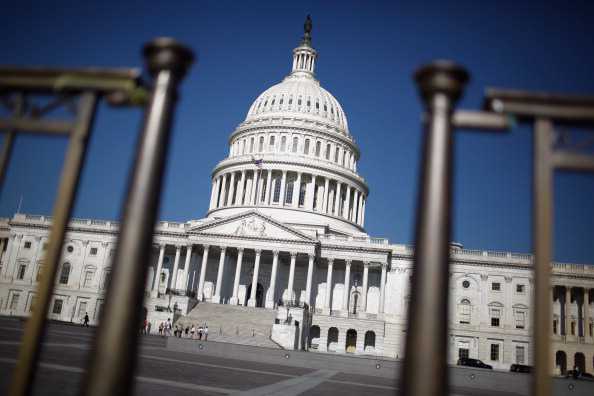
    Polls show this NATO ally and Middle East powerhouse holds opinions of America that are among the lowest in the world. That’s mostly due to the 2003 invasion of Iraq and related issues. The incoming Obama administration would do well to repair ties with this secular Muslim democracy, and take greater advantage of Turkey’s role in a tense region where the countries’ interests overlap.

    To Turkey’s north lie authoritarian Russia and the Caucasus states, site of frozen and hot conflicts. To the east sit the energy-rich Caspian Sea basin, Iran and its nuclear program, and, beyond that, Afghanistan. Directly south are Iraq and Syria, two troubled states in the region.

    Ankara, the capital, has taken on the ambitious goal of “zero problems” on its borders and is trying to become a neighborhood troubleshooter. After Moscow rolled over Georgia in August, for instance, Ankara proposed a regional dialogue, but Georgia wasn’t interested in talking to the Russian bear that nearly swallowed it whole.

    Turkey has brought Syria and Israel together to negotiate over the Golan Heights. Last week, it hosted the leaders of Pakistan and Afghanistan for antiterrorism talks. It is at long last reaching out to Armenia – despite a controversial history over the 1915 massacres of Armenians under the Ottoman Empire. Now it’s offering to mediate between the US and Iran, and has been elected to a temporary seat on the UN Security Council – center stage for the Iran stalemate.

    Turkey has offered its land for an alternative gas pipeline network for Europe and the Middle East, has greatly increased trade with its neighbors, and is opening about a dozen embassies in Africa.

    Call this diplomatic and economic expansion “Ottoman Lite.”

    The US has much to gain from Turkey’s emerging role, including a region-altering breakthrough in talks between Israel and Syria that need a big push from a President Obama. And Turkey will be an important player as the US pulls out of Iraq. Ankara has faulted the US for not doing enough to halt attacks on Turkey from Kurdish terrorists in northern Iraq.

    Even if the two countries smooth over tensions, though, the road ahead will be as hilly as the Turkish capital.

    At US election time, Turkish television obsessed over the prospect of the new US Congress passing a resolution – with Mr. Obama’s blessing – that recognizes the Armenian massacres as genocide. Turkey staunchly denies the claim. Yet in focusing on this, Turkey makes the genocide controversy America’s problem, when it’s really Turkey’s to resolve. The obsession hints at other issues to work out, including human rights abuses.

    The US, on the other hand, must not expect Turkey to be the automatic ally of cold-war days. Russia has become its largest trading partner, and the Muslim party now in power feels a greater kinship with its Muslim brothers in the region.

    Turkey is attempting to balance its allegiance with the West with a new attentiveness to its neighbors. It is a tricky balance indeed, but one that can also benefit Washington.

  • European court rules DNA database breaches human rights

    European court rules DNA database breaches human rights

    Only DNA samples for those convicted of crimes should be kept, according to the ruling. Photograph: PA

    Police forces in much of the UK could be forced to destroy the DNA details of hundreds of thousands of people with no criminal convictions, after a court ruled today that keeping them breaches human rights.

    The European court of human rights in Strasbourg said that keeping innocent people’s DNA records on a criminal register breached article eight of the Human Rights Convention, covering the right to respect for private and family life.

    The decision was welcomed by civil liberties campaigners, but the home secretary, Jacqui Smith, said she was “disappointed”. Police chiefs warned that destroying DNA details would make it harder to investigate many crimes.

    The European court said that keeping DNA material from those who were “entitled to the presumption of innocence” as they had never been convicted of an offence, carried “the risk of stigmatisation”.

    Attacking the “blanket and indiscriminate nature” of the power to retain data, the judges said protections offered by article eight “would be unacceptably weakened if the use of modern scientific techniques in the criminal justice system were allowed at any cost and without carefully balancing the potential benefits of the extensive use of such techniques against important private-life interests”.

    The decision could oblige the government to order the destruction of DNA data belonging to those without criminal convictions among the approximately 4.4m records on the England, Wales and Northern Ireland database.

    Scotland already destroys DNA samples taken during criminal investigations from people, who are eventually not charged or who are later acquitted.

    The decision follows a lengthy legal challenge by two British men. Michael Marper, 45, was arrested in March 2001 and charged with harassing his partner, but the case was later dropped.

    Separately, a 19-year-old named in court only as “S” was arrested and charged with attempted robbery in January 2001, when he was 12, but he was cleared five months later.

    The men, both from Sheffield, asked that their fingerprints, DNA samples and profiles be destroyed. South Yorkshire police refused, saying the details would be retained “to aid criminal investigation”.

    They applied to the European court after their case was turned down by the House of Lords, which ruled that keeping the information did not breach human rights.

    Shami Chakrabarti, the director of the human rights group, Liberty, which helped fund the case, said parliament should be allowed to debate new DNA database rules.

    “This is one of the most strongly-worded judgments that Liberty has ever seen from the court of human rights,” she said, arguing that the court had ensured “the privacy protection of innocent people that the British government has shamefully failed to deliver”.

    Smith, however, said existing laws would remain in place while ministers considered the judgment.

    “DNA and fingerprinting is vital to the fight against crime, providing the police with more than 3,500 matches a month, and I am disappointed by the European court of human rights’ decision,” she said.

    “The government mounted a robust defence before the court and I strongly believe DNA and fingerprints play an invaluable role in fighting crime and bringing people to justice.”

    Chris Sims, the chief constable of Staffordshire police, who speaks on forensics for the Association of Chief Police Officers, said the ruling would have a “profound impact” on policing.

    Analysis of 200,000 DNA samples retained on the database between 2001 and 2005, which would have to be destroyed under today’s ruling, showed that 8,500 profiles had been linked to crime scenes, among them 114 murders and 116 rapes, said Sims.

    Source: www.guardian.co.uk, December 4 2008

  • Armenian Activities in the Archive Documents 1914-1918

    Armenian Activities in the Archive Documents 1914-1918

    Turkish Armed Forces published archive documents about Armenian activities between 1914 and 1918. You can download those documents below. (In English, Turkish and original documents in Ottoman)

    Volume 1 | Volume 2 | Volume 3 | Volume 4 | Volume 5 | Volume 6

  • ABOUT INNOCENT ARMENIANS

    ABOUT INNOCENT ARMENIANS

    “As an  Armenian, I never condone terrorism, but there must be a reason behind this. Maybe terrorism will work. It worked for the Jews.

    They have  Israel.”

    Kevork Donabedian, the editor of the Armenian Weekly, an ethnic  newspaper published in the United States, reported in an  article in The  Christian Science Monitor, November 18, 1980

    ————-

    “We have first hand information and evidence of Armenian atrocities against our people (Jews). Members of our family witnessed the murder of 148 members of our family near Erzurum, Turkey, by Armenian neighbors, bent on destroying anything and anybody remotely Jewish and/or Muslim. Armenians should look to their own history and see the havoc they and their ancestors perpetrated upon their neighbors.

    Armenians were in league with Hitler in the last war, on his premise to grant themselves government if, in return, the Armenians would help exterminate Jews. Armenians were also hearty proponents of the anti-Semitic acts in league with the Russian Communists.”

    Signed Elihu Ben Levi, Vacaville, California.

    Source: Extracts from a letter dated December 11, 1983, published in the San Francisco Chronicle, as an answer to a letter that had been published in the same journal under the signature of one B. Amarian.

    ——————–

    ERMENİLERİN YAPTIĞI KATLİAMLARDAN FOTOĞRAFLAR

    Balta ile Katliam: İzmit’in Kollar köyünden Ermeniler tarafından balta ile katledilen müslümanlardan bir kısmının olaydan sonra çekilen fotoğrafı; 1- Boşnak Malik 2- Abdulmecid oğlu Ali 3- Ali oğlu Seyid (14 yaşında) 4- Ömer oğlu Abdulgani 5- Abdulgani oğlu Mecid 6- Abdullah oğlu Hüseyin 7- Bekir oğlu Yusuf 8- Osman oğlu Ismail
    Kaynak : Ermeni Ayaklanmaları ve Ihtilal Hareketleri.

    Erzincan’da Ermeniler tarafından ırzına geçilerek öldürülen Pakize adlı bir Türk kadını.
    Kaynak :Massacre Exerted By The Armenian On The Turks During World War I Pictures.


    25 Nisan 1918’de, Subatan’da Ermeniler tarafından öldürülen Türk çocuklar, kadınlar ve karınları deşilerek bebekleri çıkarılan anneler.
    Kaynak:Massacre Exerted By The Armenian On The Turks During World War I Pictures.

    Erzincan’ın Odabaşı bölgesinde, Ermeniler tarafından oyularak katledilen bir Türk.
    Kaynak :Massacre Exerted By The Armenian On The Turks During World War I Pictures.


    Sivas’ta Ermeni çeteleri tarafından yapılan katliamda boğazı kesilerek öldürülen jandarma Mustafa.
    Kaynak : Ermeni Ayaklanmaları ve Ihtilal Hareketleri.


    Ordudan hava değişikliği için terhis edilen ve 23 Temmuz 1915 de Diyarbakır’ın Lice kazasına bağlı Kum ve Çom köyleri civarında elleri ayakları bağlanarak Ermeni komitecileri tarafından şehid edilen askerler.
    Kaynak : Ermeni Ayaklanmaları ve Ihtilal Hareketleri.

    Diyarbakır’ın Şark nahiyesine bağlı Hızır İlyas köyü Mersani deresi (23 Temmuz 1915). Hono ismindeki ermeninin başında bulunduğu çete tarafından hançer ve kurşunla şehit edilen erkek, kadın ve çocuklar.
    Kaynak : Ermeni Ayaklanmaları ve Ihtilal Hareketleri.


    29 Ağustos 1914 tarihinde Ermeni çeteleri tarafından Siverek-Urfa Yüksekyol ve Karacadağ civarında türbe ziyareti sırasında esir edilip canlı hedef yapılarak şehit edilen müslüman Türkler.
    Kaynak : Ermeni Ayaklanmaları ve Ihtilal Hareketleri.


    Silvan civarında, Beşnik ermeni köyüne Van ve Tolorya’dan gelip, Doryan Dano ve kardeşlerinin başında bulunduğu Ermeni çeteleri tarafından 11 Haziran 1915 tarihinde Şeytankaya mevkiinde şehit edilen milis subayı Hamid Efendi komutasında bulunan erzak kafilesi, jandarması ve subayları.
    Kaynak : Ermeni Ayaklanmaları ve Ihtilal Hareketleri.

    Erzincan Odabaşı bölgesinde, birbirlerine bağlanmış halde öldürülmüş kadın ve çocukların cansız bedenleri.
    Kaynak :Massacre Exerted By The Armenian On The Turks During World War I Pictures.


    16 Şubat 1918’de, Erzincan’ın Vagarir köyünde, Ermeniler tarafından şehit edilen ve bir evin arkasında bulunan şehit edilmiş Türkler.
    Kaynak :Massacre Exerted By The Armenian On The Turks During World War I Pictures.


    Hasankale’de, Ermeniler tarafından şehit edilen kadın ve çocuklar.
    Kaynak:Massacre Exerted By The Armenian On The Turks During World War I Pictures


    Düşmanım, düşmanlığından vazgeçinceye kadar, ben de onun amansız düşmanıyım.
    Gazi Mustafa Kemal ATATÜRK


    Özkan BOSTANCI
  • The German-Turk Miracle: Arnold Reisman’s Turkey’s Modernization

    The German-Turk Miracle: Arnold Reisman’s Turkey’s Modernization

    Vol. 48 No. 4 (October 2007)

    http://etc.technologyandculture.net/2007/12/17/the-german-turk-miracle-arnold-reismans-turkeys-modernization/#respond

    Yakup Bektas

    This book, long overdue, brings to light the little-known story of how Turkey welcomed (and thus saved) several hundred prominent, predominantly Jewish, intellectuals, scientists, doctors, legal scholars, architects, librarians, and musicians fleeing the Nazis. They came from Germany and other German-speaking parts of Europe, mainly Austria and parts of Czechoslovakia and Hungary, with a number also from France and Spain. Reminding us that the Ottoman Empire had long offered refuge to the persecuted, among them the Jews expelled from Spain in 1492, Arnold Reisman tells in Turkey’s Modernization: Refugees from Nazism and Atatürk’s Vision (Washington, D.C.: New Academia Publishing, 2006, pp. xxvii+571, $30) how the empire’s young heir, Turkey, again provided a safe haven from 1933 through World War II. In the absence of this Turkish effort, Reisman shows how the knowledge and expertise of these Jewish scientists and artists might have been lost forever, and he also shows how much Turkey’s own modernization and educational and social reforms owe to them.

    What was left of the Ottoman Empire after World War I became today’s Republic of Turkey in 1923 following a difficult war of independence led by Mustafa Kemal, later called Atatürk, the republic’s founding father and first president (1923–38). Unceasing conflict had left the country impoverished and greatly reduced in territory and population, with all of its institutions in dire need of reorganization. A French-inspired model that the “Young Turks” had been designing for the disintegrating Ottoman Empire since the late nineteenth century began to take shape under the leadership of Atatürk. He envisioned a nation-state based not on religion or ethnicity but on “science” and positivist philosophy. The caliphate was abolished in 1924 and four years later the Latin alphabet was adopted to replace the Arabic script. Turkey’s new secular laws and dress codes emulated Western European models.

    To help with this modernization effort and in particular with university and educational reforms, Atatürk’s government invited European experts to Turkey and also sent a large number of students to Europe for academic training beginning in 1927. Shortly after Hitler came to power in Germany in 1933, all professors of Jewish ancestry were dismissed, and Austria followed suit after its annexation by Germany. Atatürk’s government opened Turkey to these academics, offering them the best positions in Turkey’s few fledgling colleges at a time when Jews were elsewhere refused not only jobs but even visas. This intellectual influx suited Atatürk’s aims well and was particularly important to his radical program for reforming higher education on the European university model. In 1933, the old Istanbul Darülfünun was renamed Istanbul University, signifying its transformation from the “madrassa”-based system to the modern university.

    In autumn that year, the first group of more than thirty professors arrived to start teaching at Istanbul University, among them pathology professor Philipp Schwartz, who, on behalf of a new organization established to help dismissed German professors find employment abroad, had negotiated an agreement with the Turkish government that was hailed as “the German-Turk miracle” (p. 9). Even Albert Einstein is believed to have been considering the Turkey option as he was waiting to hear from Princeton, which he had been told “would not hire a Jew” (pp. 318–20). Led by émigré professors, Istanbul University earned the rank of “the best German university” of the time, an official German document of 1939 describing it as having “turned Jewish” (p. 279). Indeed, the overwhelming majority of these “German professors”—as they were called in Turkey—were Jewish, although there were also a good number of non-Jewish anti-Nazi intellectuals and political dissidents, including Ernest Reuter, who became Berlin’s mayor after the war.

    Turkish contracts and invitations even brought some out of concentration camps. When a son of chemistry professor Fritz Arndt was caught fighting the Germans during their invasion of Poland, the Turkish government intervened and got him to safety in Istanbul. But nothing was automatic: the deals had to be negotiated with and approved by the German government. Germany tried to persuade Turkey to employ only members of the National Socialist Party, but strong economic ties and Germany’s desire to secure an alliance made it possible for Turkey to bargain about such matters.

    Apart from positions at Istanbul University, the émigré professors were also given posts at what became Istanbul Technical University (1944) and Ankara University (1946), as well as other public institutions such as the Academy of Fine Arts. The School of Language, History, and Geography (Ankara, 1935) could hardly be imagined without émigré professors such as Assyriologist Benno Landsberger, Hittiotologist Hans Gustav Güterbock, Sinologist Wolfram Eberhard, and Indologist Walter Ruben, who not only established these disciplines there but also became world-regarded authorities.

    Reisman puts the number of these émigrés at “approximately 300 academicians and 50 technicians and supporting staff” (p. 9), or more than 1,000 men and women with their families. The émigré professors were offered high salaries, with many being honored as “ordinarius” or distinguished professor, and the list is very long: Erich Auerbach, who wrote his much-acclaimed literary critique Mimesis while in Turkey; philosopher-mathematicians Hans Reichenbach and Richard von Mises, two prominent figures of the “Berlin Group”; philosopher and Diderot expert Herbert Dieckmann; Orientalist Helmut Ritter; law scholars Ernst H. Hirsch and Andreas Schwarz; economists Alexander Rüstow, Alfred Isaac, and Wilhelm Röpke; biochemist Felix Haurowitz; botanist Alfred Heilbronn; physicist Arthur von Hippel; astrophysicist E. Finlay Freundlich; pediatrician Albert Eckstein; surgeon Rudolf Nissen; ophthalmologist Joseph Igersheimer; architect Clemens Holzmeister; opera director Carl Ebert; conductor Ernst Praetorius; composer Paul Hindemith. Among the women were applied mathematician Hilda Geiringer (von Mises) and architect and designer Margarete Schütte-Lihotzky. Reisman contrasts the egalitarian attitude toward women in Turkey (and Europe) with the situation in the United States, where he contends that sexual bias coupled with racial bias later made it difficult for these female émigrés to find tenured faculty positions.

    Although conditions in Turkey in the 1930s and 1940s were not sufficiently ripe for reaping the full benefits of this émigré bonanza, as Reisman notes, its profound influence is still alive in Turkey, especially in the formation of its universities and the shaping of its higher educational programs. Émigré professors helped Atatürk and his modernizing elite define the foundations of a “modern society.” It is no exaggeration to say that they stimulated in Turkey an educational and intellectual renaissance that invigorated its institutions, from education to music, science and medicine to archaeology, architecture to urban planning, conservation to preventive health, and they promoted the establishment of libraries, theaters, and music halls.

    The death of “the émigrés champion” Atatürk in late 1938 deeply saddened the newcomers. Ismet Inönü, the next president, continued Atatürk’s policy, but with a less charismatic leadership. When war broke out in 1939, Turkey resisted pressure from both sides to get involved. The German occupation of Bulgaria, Romania, and Greece terrified the émigrés, and Miriam Schmidt, at the time the teenage daughter of medical professor Karl Hellmann, recollects having “packed backpacks under our beds, in case the Germans came to Istanbul and we would have to flee to Anatolia” (pp. 396–7). Turkey’s government itself felt no less vulnerable. Although it managed to remain neutral, Turkey suffered economically. Serious inflation set in and by the end of the war food was rationed. Even highly paid professors felt the hardship, and after 1945 most of these refugee academics secured positions at the best colleges in the United States. Others left for Palestine (later Israel); some returned to Germany. After 1949, only a small number of them remained in Turkey, the departure of the others hastened not only by economic conditions but also by jealousies on the part of some Turkish professors and the opposition of Turkish nationalists to the renewal of their contracts.

    The bulk of Reisman’s book is devoted to describing the background and personal stories of a large number of the émigrés, and their work and experience in Turkey. He draws on oral histories, personal correspondence with colleagues and friends (as many as seventeen of them corresponded with Albert Einstein), and memoirs, both published and unpublished, as well as his own correspondence with their descendants and students. Only in the last chapter does he depart from the main story, offering some insights into Turkey’s technological and industrial development by comparing it with Israel and India. His most valuable observation is that Turkish universities have until recently lacked a link to industry, perhaps primarily because funding has been provided exclusively by the state. But he does not tell whether this lack of cooperation with industry and other characteristics of Turkey’s current university system have anything to do with the German émigré legacy.

    A number of minor shortcomings should be noted. Pages 397 and 399 have been transposed. Footnotes and references show imperfections, and online sources in particular are not fully digested. The book on the whole book could have been further refined, and the brief section on “Music and Islam” is too opinionated, especially relative to Iran and more particularly to the “expert” Reisman consulted there. The idea of “modernity” that emerges is simplistic, implying nothing less than a total assimilation to whatever is “Western.” But such flaws are trivial if not entirely irrelevant to the larger story.

    Turkey’s Modernization ends with a quote from economist Fritz Neumark, an émigré who stayed in Istanbul until his retirement in 1953, expressing the “admiration and gratitude” toward Turkey on the part of “German scientists, politicians and artists who looked for and found shelter along the Bosporus during [a] difficult time” (p. 465). Reisman deserves the highest praise for shedding light on a major intellectual exodus of the twentieth century, especially because this aspect has drawn little attention in English. Although the role of émigré scientists and intellectuals in the transformation of other areas is well known, the story of Turkey’s experience deserves further study. This book stimulates such an endeavor and provides an excellent start.

    Yakup Bektas, a graduate of the School of Language, History, and Geography in Ankara, is now with the Tokyo Institute of Technology.