Month: December 2008

  • Senator Saxby Chambliss: Resolution on the so-called Armenian genocide will damage US foreign policy

    Senator Saxby Chambliss: Resolution on the so-called Armenian genocide will damage US foreign policy


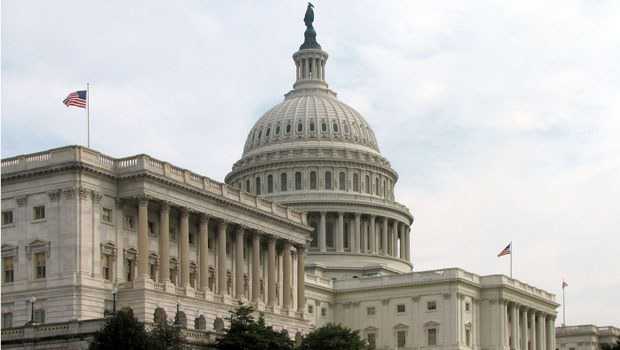
    Washington – APA. Senator Saxby Chambliss of Georgia said the passage of the resolution on the so-called Armenian genocide in the US Senate would damage the country’s foreign policy.

    APA reports that answering the letter sent through US Azeris Network, the senator noted that the passage of S.RES.106 would damage United States-Turkish relations and possibly harm U.S. interests in the Middle East and Central Asia.
    “Such a resolution will not advance the Turkish-Armenian dialogue and it will not improve the process of Turkey’s examination of its own past. The United States-Turkish relationship is both deep and broad. Turkey is a strategic partner with the United States in a number of significant areas, including the War on Terror and the United States ’ involvement in Iraq. Our friendship with Turkey goes back a very long way and we must continue to work together on issues of importance.

    In response to the appeals of the US Armenian community for recognition of the so-called Armenian genocide to the White House, Azerbaijani and Turkish communities of the US have also begun counterpropaganda among the White House officials, Congressmen and public. Letters about the real essence of the 1915 happenings are sent to the US officials through US Azeris Network.

  • Iraq Turkmen Participated in Turkic Forum in United Kingdom

    Iraq Turkmen Participated in Turkic Forum in United Kingdom

    Iraq Turkmen Participated in Turkic Forum in United Kingdom

    By Mofak Salman Kerkuklu

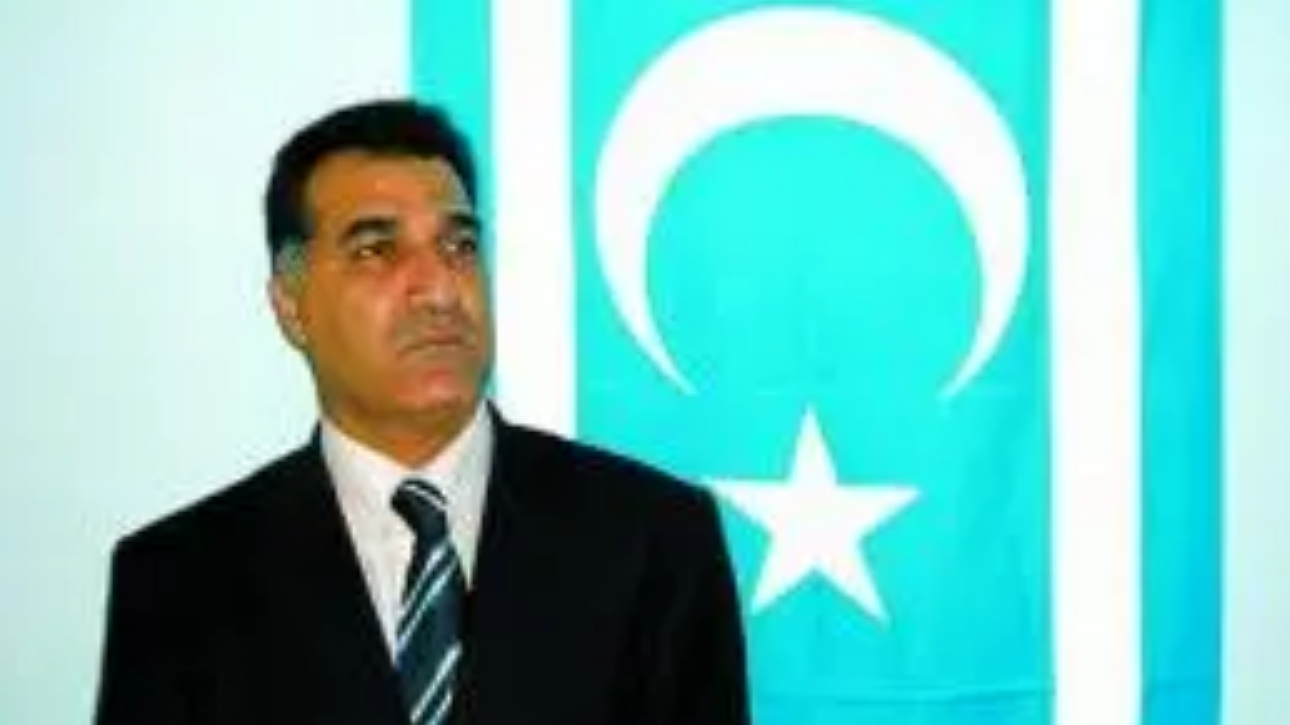
    On the 6th of December, the Turkmens of Iraq have participated in the Turkic forum in United Kingdom that was held at the Azerbaijani House, London, United Kingdom.

    The event was commenced with an introduction, networking and refreshments of Turkish food and Turkish cuisine and then the opening speech was started by Dr. Ali Tekin Atalar the Chairman of Azerbaijan House in UK by welcoming the Turkish participants from different countries to the Azerbaijan House and congratulating all the participant for their dedication and enthusiasm that have shown by making the effort to attend this most important meeting.

    After that, Dr. Ali Atalar started by given a brief an introduction about the Azerbaijan House in the UK. The Azerbaijani centre was officially opened its doors on the 14th of November with the aim of severing the Azerbaijani community that are living in UK. The Azerbaijani House has been established by the initiative of individual intellectuals, professionals and student living in UK. The organisation and Turkic Forum are strictly non political non profit making organisation and aiming to serve as a community centre, promoting culture activities and friendship between Azerbaijanis and host community.

    Azerbaijan Hose aims to become a registered charity at the earliest time possible. Dr. Ali Atalar also kindly stated looking forward to the support of Azerbaijani members and friends towards achieving this goal. Moreover, he revealed that Azeri people feel privileged by being able to tackle the initiative and establish this centre which can be considered as a first permanent home that has been established by a Turkic community in the UK.

    He sincerely hoped that this will motivate Azeri’s friends and brothers from the Turkic communities to establish similar centres. If more cultural centres are established by the Turkic community it would lead without doubt to a stronger community link and as a result of this a better service could be provided to our community. In addition to, in recent years huge numbers of Turkic speaking people getting together in London  have been organizing cultural events and looking for  opportunities to meet and interact with each other and members to enhance the Turkic cultural from different groups.

    Furthermore he stated that he had many wonderful groups of people, Turkmens from Kerkuk, Tatars from Kazan, Kyrgyzstan, Turkmen from Turkmenistan, Uzbek, Bulgarian Turks, Kazakhs, Uigurs and many more. All groups are very enthusiastic and anxious to meet regularly, support each other and express their culture. Finally he has expressed his gratitude and thanks to Mr Şener Sağlam, the President of the Federation of Turkish Associations UK. Who is one of the most active members in organizing this event in London, being one of the most diverse and multicultural cities in the world which is home to a huge variety of ethnic communities. Within this hustle and bustle these communities attempt to represent their culture and traditions and act as a platform to lobby for their respective countries of origin while trying to overcome many difficulties and problems this great city brings.

    Turkish Cypriot and Azerbaijani communities have identified needs amongst the various Turkic communities for raising cultural awareness and cultivating friendship and solidarity between different Turkic groups living in Britain. Our aim is to build a strong community in the UK by working on specific projects such as creating media organisations, opening cultural centres and  libraries, organising various events, meetings and forums so that common cultural traditions and languages can be shared and celebrated.

    It is a fact that a strong and organised community can contribute far more to society in Britain and as a result gain more support from local authorities and government. It would therefore make sense to unite our strength and abilities, to share our experiences and knowledge, to work together on various opportunities and thus obtain more successful results.

    When we take into account that there are many other Turkic communities like Kazakhs, Uzbeks, Turkmens from Turkmeneli, Turkmen from Turkmenistan, Kyrgyz but a few, we can identify a huge potential. If we can succeed in bringing together all these related groups into one big and powerful Turkic family then whenever necessary we can move and act together as one and be far more effective in achieving our aims within the UK.

    It is for this reason that we have come together to organize the “Cultural Forum of Turkic Communities in Britain” as the first step. We wish to meet and share ideas so as to find ways to direct our activities and that will lead us to become one of the most influential communities in Britain. Moreover, Mr Levent Hassan highly contributed in the translation into English language and the discussion that was held during the event in order to facilitate the understanding the meaning of the discussion to participatents who did not speak the Turkish language.

    Moreover, Mr Altan Ataturk, the representative of the Republic of South Azerbaijan gave an introduction Azeri population and he had revealed the suffering and oppression of the Azeri on the hand of the Iranian government and also explained the culture and language similarity between the Azeri population in the Republic of South Azerbaijan and other Turkic Estates.

    The meeting also has covered the discussion of the election of management committee, representative’s committees, Auit committee and Nevruz celebration committee. The Turkic Forum event was extremely fruitful and beneficial for all the participants and considered as a stepping stone for bring all Turkic spoken people together and working as team under one umbrella. The goal and the objective of the Turkic forum can be fully utilized for lobbying for the cultural and political right for Turkic people whom are residents in the United Kingdom.

    The established Turkic forum would greatly enhance the integration of the Turkish into the British society especially by contributing with a rich Turkish culture from various Turkic countries.


    Mofak Salman Kerkuklu

    ireland

  • Armenian Intellectuals Appeal To Gul For Genocide Recognition

    Armenian Intellectuals Appeal To Gul For Genocide Recognition


    By Lilit Harutiunian

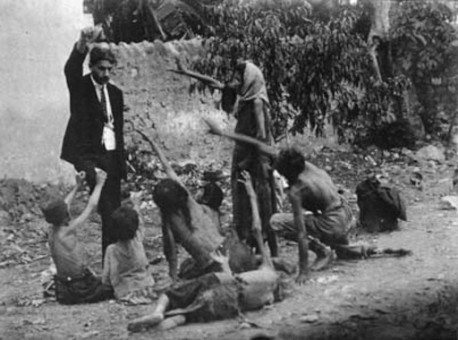
    Nearly 300 Armenian intellectuals and other public figures have appealed to Turkey to acknowledge that the 1915 mass killings of Armenians in the Ottoman Empire constituted genocide, saying that is a necessary condition for Turkish-Armenian reconciliation.

    In an open letter to Turkish President Abdullah Gul made public on Tuesday, they said modern-day Turkey bears “hereditary responsibility” for what they consider an “monumental crime against humanity.”

    “Genocide is a crime against humanity and present civilization values, and no individual, organization or even state authority can cast doubt on what happened,” the letter said, challenging Ankara’s vehement denial of any government policy to exterminate Ottoman Turkey’s Armenian population.

    “Your generation of Turkish leaders must accept the undeniable truth and recognize the fact of the Armenian Genocide … Only in that case can there be a sincere dialogue and a process of real reconciliation between our peoples,” it said.

    The letter was apparently initiated by prominent writers, musicians and artists close to Armenia’s ruling establishment, suggesting that it was approved by President Serzh Sarkisian. The latter has been instrumental in an unprecedented thaw in Turkish-Armenian relations observed in recent months. Sarkisian has won plaudits in the West for inviting Gul to visit Yerevan and watch with him a September match between Armenia’s and Turkey’s national soccer teams.

    The so-called “football diplomacy” was followed by a series of further negotiations between the Turkish and Armenian foreign ministers. It is still not clear, however, whether Ankara is ready to normalize relations with Yerevan before a resolution of the Nagorno-Karabakh conflict.

    The unprecedented open letter to Gul was welcomed on Tuesday by Giro Manoyan, a leading member of the Armenian Revolutionary Federation (Dashnaktsutyun), a junior partner in the ruling coalition that has watched with unease Sarkisian’s diplomatic overtures to the Turks. “I think this letter is significant in the sense that it originated from Armenia and clearly reflects our public’s view that it is impossible to evade the issue of genocide recognition,” Manoyan told reporters.

    Dashnaktsutyun’s top governing body urged the Sarkisian administration last week to exercise caution in the ongoing rapprochement with Turkey, saying that Ankara is using it to scuttle recognition of the Armenian genocide by more countries, notably the United States.

    https://www.azatutyun.am/a/1598796.html

  • The key to the Caucasus

    The key to the Caucasus

    By Stanley A. Weiss

    BAKU, Azerbaijan: ‘Welcome to Houston on the Caspian,” said Anne Derse, the U.S. ambassador to this booming, oil-rich nation, as our delegation of American business executives arrived on the final leg of a visit to Georgia, Armenia and Azerbaijan.

    After days of discussion with political, military and business leaders across the region – including a talk with President Ilham Aliyev of Azerbaijan, whose office overlooks the Caspian Sea, home to perhaps a quarter of the world’s new oil production – it all seemed obvious. As one U.S. diplomat put it, Azerbaijan “is central to all we’re trying to do in this part of the world.”

    Azerbaijan is the indispensable link to reducing European energy dependence on Moscow, with the only pipelines exporting Caspian oil and gas that bypass Russia altogether, with routes through Georgia and Turkey.

    Without Azerbaijan, there will never be what the U.S. energy secretary Samuel Bodman calls “a new generation of export routes” bypassing Russia. Known as the “southern corridor,” it includes plans by Kazakhstan and Turkmenistan to ship oil and gas by barge across the Caspian to Baku, as well as the EU’s long-planned Nabucco gas pipeline from Turkey to Europe.

    Aliyev stresses that, unlike President Mikheil Saakashvili of Georgia, he will not taunt the Russian bear, continuing instead to walk a fine line between East and West. This policy includes allowing his military to train with NATO, but not rushing to become a NATO member.

    Aliyev insists that “time is up” for the return of the Azerbaijani territory of Nagorno-Karabakh – the Armenian-majority region occupied by Armenia, with Russian support, since the war over the area in the early 1990s. Still, he seems determined not to give Moscow a pretext to intervene, as it did with its invasion of Georgia this summer.

    Azerbaijan – like Turkey, with which it shares deep ethnic and linguistic ties – is one the world’s most secularized Muslim countries, with a strict separation between mosque and state. Moreover, the nearly 20 million ethnic Azeris living in neighboring Iran – about a quarter of Iran’s population – are culturally closer to their brethren in Baku than their Persian rulers in Tehran. Azerbaijan also draws the ayatollahs’ ire as one of the few Muslim nations with diplomatic ties with Israel.

    Yet for all its strategic significance – and its support for the U.S. war on terrorism, including sending troops to Afghanistan and Iraq – Azerbaijan remains the neglected stepchild of U.S. Caucasus policy. Despite Saakashvili’s miscalculations with Russia, Georgia remains the darling of the West, garnering another $1 billion in post-war aid from the U.S. atop the nearly $2 billion Washington has bestowed over the years. The powerful Armenian-American lobby has not only secured some $2 billion for Armenia to date, it has succeeded in limiting U.S. aid to Azerbaijan because of the dispute over Nagorno-Karabakh.

    To be sure, this country is no democracy; the 46-year-old Aliyev learned well from his authoritarian father, who ruled Azerbaijan both as a Soviet Republic and after independence. Indeed, not long before our delegation arrived, Aliyev claimed re-election with 89 percent of the vote.

    But if Azerbaijan is “central” to everything Washington is trying to accomplish in the Caucasus, then Azerbaijan should be at the forefront of U.S. Caucasus policy. To help Azerbaijan – and the region – realize its full economic potential, the incoming Obama administration should make a major push to resolve Nagorno-Karabakh, which – as one development official here tells me – “is the main issue that prevents regional integration.”

    A breakthrough is possible. Every member of the so-called Minsk Group charged with resolving the conflict – Azerbaijan, Armenia, Russia, several European countries and the U.S. – have powerful incentives for  compromise.

    Aliyev wants Nagorno-Karabakh back, but understands that Moscow won’t allow him to take it by force. Landlocked, impoverished Armenia desperately wants Azerbaijan and Turkey to end a 16-year economic blockade of its borders. Turkey wants to improve relations with Armenia. Europe wants to avert another crisis that would complicate plans for its Nabucco pipeline. And with new competing diplomatic initiatives, Turkey and Russia clearly want to play a leadership role in the region.

    This “frozen conflict” will not thaw easily. But through a gradual process backed by the major powers, the Caucasus countries could finally focus on economic cooperation rather than military confrontation. And the trade routes of the old Silk Road could become a new energy corridor of the 21st century.

    Stanley A. Weiss is founding chairman of Business Executives for National Security, a nonpartisan organization based in Washington.

  • EU calls on Turkey to get close to Armenia

    EU calls on Turkey to get close to Armenia


    [ 09 Dec 2008 19:37 ]
    Brussels. Alexander Kean – APA. The EU believes that Croatia should speed up reforms, and Turkey has not made sufficient progress for the EU membership, according to a ministerial meeting of the EU General Affairs and External Relations Council in Brussels, reports the APA correspondent.

    The Council welcomed Croatia’s considerable efforts it has undertaken this year, but stated that the country should accelerate reforms, particularly in the judiciary, in public administration, fighting corruption, punishment for military crimes, as well as economic reforms.

    However, the EU said that Turkey has not made sufficient progress in reforms over this year.

    “The Council notes with regret that Turkey has achieved limited progress, particularly on the issue of political reform over the current year “, said the statement.

    The Council underlined the strategic importance of Turkey for the EU and praised its active role in diplomatic initiatives in the South Caucasus and Middle East.

    In addition, the Council called onTurkey to come close to Armenia.

    Ministers noted that Turkey still has to do much more in the fields of judicial reform, fight againt corruption and protection of the human rights, torture and attitude towards prisoners, protection of the rights and freedoms, in particular freedom of speech and faith.

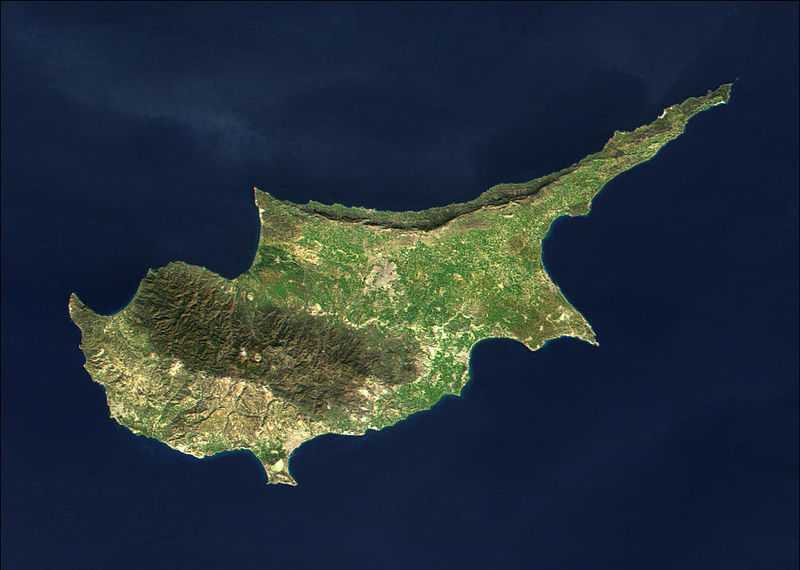
    In conclusion, the Council also added that Turkey didn’t manage to make progress towards improving relations with Cyprus and expressed hope for progress in the near future.

  • Macedonia name dispute ‘holds hostage’ EU credibility

    Macedonia name dispute ‘holds hostage’ EU credibility

    ELITSA VUCHEVA 

    Today @ 08:54 CET

    EUOBSERVER / BRUSSELS – Macedonia is ready to start accession talks with the EU and the fact that a 17-year-old dispute with Greece over its name is hindering the process harms not just Skopje, but the EU’s credibility as well, Macedonian foreign minister Antonio Milososki has said.

    This name issue has been “misused by one EU member country,” and this fact is “to a certain extent taking hostage the credibility of the EU” when it comes to establishing and promoting objective membership criteria, Mr Milososki told EUobserver in an interview.

    Alexander of Macedon – often finds himself dragged into the name dispute (Photo: wikipedia)

    Macedonia has been an EU candidate since 2005, but has not yet opened membership negotiations with the 27-nation bloc.

    It had hoped to do so this year, but a European Commission progress report released in November did not recommend to EU member states to launch the process, citing deficiencies in a number of areas, and highlighting violent incidents that took place during this summer’s elections in Macedonia.

    Skopje believes there is another reason behind Brussels’ decision, however.


    “I am not convinced that’s the only reason why Macedonia was not given a chance to open accession negotiations. Maybe there is something that is beyond the reports,” Mr Milososki said, referring to the dispute with Greece over Macedonia’s name – an issue which he said is making his “small country disproportionately more famous worldwide than [its] size.”

    Greece has been refusing to recognise its neighbour’s constitutional name – Republic of Macedonia – since it declared independence from Yugoslavia in 1991, as a northern region in Greece is also called Macedonia and Athens fears allowing Skopje to use the name will open the way to territorial claims. It also believes the appellation is part of its own historical heritage.

    The dispute has been going on for more than 17 years. Meanwhile, the international community has been using Former Yugoslav Republic of Macedonia (FYROM) as a “provisional” term designating the country since 1993.

    Separately, Macedonia’s name has been recognised by some 120 other countries worldwide, including Russia, the US, China, Canada, Turkey, as well as a number of EU states.

    ‘It’s the name,’ says France

    Earlier this year, the deadlock over Macedonia’s name caused Greece to block a NATO invitation to Skopje, and Athens has indicated that its neighbour’s EU integration would also be slowed down as long as the issue is not solved.

    On Monday (8 December), current EU president France said that the unsolved name dispute was clearly Macedonia’s biggest problem at the moment as far as its EU accession process is concerned.

    “The problem of Macedonia, it’s the name,” French foreign minister Bernard Kouchner told journalists after a meeting with his EU counterparts in Brussels.

    “Frankly, you can ask me about visas and about progress [towards the EU], as long as the name issue is not solved, you are knocking on the wrong door. This problem must be solved,” he added.

    After all these years of UN-mediated negotiations between Greece and Macedonia, the situation seems today “very very complicated for such a simple problem,” the French minister concluded.

    For his part, Mr Milososki stressed the EU should help to tone down the issue and not to let it become a criterion for his country to join the EU.

    “We would like this issue to retain its bilateral dimension and not to be Europeanised, because it’s not a dispute with the EU, it’s a dispute with Greece,” Macedonia’s top diplomat said.

    ‘Merit-based’ approach

    Mr Milososki also stressed that despite the reforms his country still has to make in a number of areas, it is already prepared to start EU membership talks.

    “We are aware we are not perfect, but …Macedonia is not less prepared than some other countries – already negotiating or already members of the EU – to open accession negotiations,” he said.

    “[On a] merit-based approach, Macedonia should be considered as soon as possible as the next country opening accession negotiations,” the minister added.

    Skopje is also hoping to obtain visa free travel to the EU as early as next year.

    For its part, Brussels noted that Macedonia had made “good progress” on the visa arrangements and is expected to deliver its assessment on the country’s readiness for visa liberalisation in the “first quarter of 2009.”

    https://euobserver.com/eu-political/27255