Month: December 2008

  • Essence and terms of Gurban Bayrami

    Essence and terms of Gurban Bayrami

    Baku. Elbrus Seyfullayev –APA. “Every Muslim who can afford to do, sacrifices their best domestic animals (usually sheep, but also camels, cows, and goats) on the day of Gurban Bayrami (Festival of Sacrifice), but pilgrims conducting Hajj are certain to do sacrifice in Mecca”, chief of the Education and Science Department of the Caucasian Muslims Office Haji Miraziz Seyidzadeh told APA. Eid-al-Adha, or the Festival of Sacrifice is celebrated in commemoration of the willingness of Prophet Ibrahim to sacrifice his son Ismayil in Mina Mountain as an act of his love and obedience to Allah. As Ibrahim was about to sacrifice his son, the knife didn’t cut and Allah instead provided a lamb as the sacrifice. This is why today all over the world Muslims who have the means to, sacrifice an animal (usually a goat or a sheep), as a reminder of Ibrahim’s obedience to God.
    Seyidzadeh said the Festival of Sacrifice was one of the greatest holidays of Islam. The festivities begin 70 days after the end of Holy Ramadan and last for three days. “The meat of sacrificed animals is divided into three shares, one share for the poor, one share for the relatives and neighbors, and the last to keep to oneself. A large portion of the meat must be given towards the poor and hungry people so they can all join in the feast which is held on Eid-al-Adha. The remainder is cooked for the family celebration meal in which relatives and friends are invited to share. The regular charitable practices of the Muslim community are demonstrated during Eid al-Adha by the concerted effort to see that no impoverished person is left without sacrificial food during these days”, said Seydizadeh.
    The Caucasian Muslims Office told APA the Ismayil’s sacrifice can be done on one of the three days of the festivities.
    This year Azerbaijan celebrates Gurban Bayrami on December 8-10. The pilgrims will do sacrifice on December 8 in Mecca. The Azerbaijani mosques will conduct Holiday Namaz (Prayer) on December 8 at about 09.00.

  • Mosques are ‘land grab, not a place of prayer’, says Ralph Giordano

    Mosques are ‘land grab, not a place of prayer’, says Ralph Giordano

    The building of huge mosques throughout Germany is nothing short of a “a bid for power and influence, a land grab”, according to Ralph Giordano, 85, the German Jewish writer and Holocaust survivor, in an interview with The Times that is likely to stir Muslim anger.

    The comments from Mr Giordano came as the Muslim community of Cologne – about 120,000 strong – prepared to lay the foundation stone for yet another giant mosque, one of more than a hundred that are being planned or built across the country.

    Barely six weeks ago another mosque, capable of accommodating 1,200 worshippers, was opened in Duisburg in the nearby Ruhr region of northwest Germany.

    Spiky minarets are starting to punctuate the German urban skyscape – and the rumble of discontent from nonMuslim Germans is growing louder. One result is that the issue of immigration seems sets to be on the agenda in the general election next year. The Christian Democrats resolved this week that the German language should be anchored in the constitution – seen as a slight by the three million Turks who live in the country.

    “When I first saw the blueprints for the grand mosque in Cologne, I was shocked,” said Mr Giordano, who is now very active in the campaign against Turkish mosque-building. “It sent a completely wrong signal, it was a bid for power and influence, a land grab, not a place of prayer, so I told the mayor: Stop this mosque now!” That was in a public discussion that was filmed and placed online. The result was, he says, an avalanche of many hundred of supportive letters.

    “They all struck the same note: Mr Giordano we are afraid as you are of this creeping Islamification but we can’t say anything in public because we will end up being branded as neo-Nazis.”

    The novelist and essayist pauses for effect. “Well, that’s something that cannot be pinned on me!”

    Mr Giordano finds himself in the company of far-right activists. “Of course, you have to distance yourself clearly from these people – obviously their racist, neo-Nazis arguments are quite different from mine – but I am not going to be muzzled just because people are fighting on the same issue with false arguments and a false ideology.”

    Fritz Schramma, the Mayor of Cologne, argues that the mosque will become a tourist attraction and that it will be integrated into the urban culture. “It’s not right that Muslims should have to pray in old factory warehouses,” he said.

    There is a hope too that if Muslims are allowed to become part of the urban landscape rather than hidden away there will be less risk of furtive fundamentalism.

  • Israel ‘prepared to attack’ Iran nuclear plants

    Israel ‘prepared to attack’ Iran nuclear plants

    Sheera Frenkel in Jerusalem and Times Online

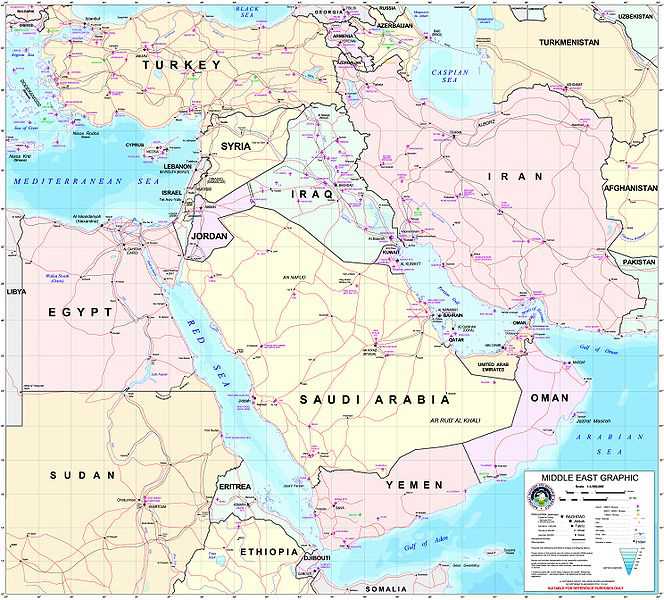
    Israel is drawing up plans to attack Iran’s nuclear facilities and is prepared to launch a strike without backing from the US, it has been reported.  

    Officials in the Israeli Defence Ministry told the Jerusalem Post that while they prefer to act in consultation with the US, they were preparing plans that would allow them to act in isolation.

    “It is always better to coordinate,” a senior Defence Ministry official told the newspaper. “But we are also preparing options that do not include coordination.”

    However defence officials played down the reports today, telling The Times that an attack by Israeli forces alone would probably fail to take out all of Iran’s nuclear facilities, which experts say are scattered across several sites, some deep underground.

    “We could not risk an operation which would only partially succeed,” one defence official told The Times.

    “That would leave us open to a nuclear attack from Iran’s remaining weapons stock. Israel would likely need the support, the backing, of forces from a Western ally to successfully carry out the operation,” he said.

    A senior Israeli official quotes in the Jerusalem Post said that while it would be difficult, it would not be impossible to launch a strike against Iran without permission from the US.

    “There are a wide range of risks one takes when embarking on such an operation,” a senior Israeli official was quoted as saying.

    The US Airforce controls the Iraqi airspace Israel’s jets would have to cross on a bombing mission and access to codes from the Americans, would “significantly improve” Israel’s chances of a successful strike on Iran, an official told The Times.

    He added that because the Iranians have been moving the bunkers deep underground, sophisticated weaponry would be needed to successfully destroy the facilities.

    Responding to reports that Israel would use low-yield nuclear “bunker-busters”, the official said the method was largely speculative and unreliable.

    Ehud Olmert, the Israeli prime minister, has reportedly asked the US for a green light to attack Iranian facilities as recently as May.

    According to Israeli officials, the US denied the request, although it outfitted Israel with the X-band radar system which would shave several crucial minutes off Israel’s reaction time to an Iranian missile launch, and allow the United States to oversee Israel’s airspace.

    “There is always the option of Israel going it alone. It just does not seem like a good option at present time,” an Israeli MP told the Times.

    There are three central locations where experts believe Iranian facilities are producing goods for nuclear weapons.

    Israeli officials named these sites as: Natanz, where thousands of centrifuges produce enriched uranium; Isfahan, where 250 tons of gas are stores in tunnels; and Arak, where a heavy water reactor produces plutonium.

    Israeli officials said they were heartened that international sanctions on Iran were having an effect, but did not feel they were enough to stop Tehran’s nuclear ambitions.

    The most recent Israeli intelligence reports estimate that Iran will have enough enriched uranium for a nuclear weapon in late 2009, barring any interruptions in its programme.

    “There is still time and there is no need to rush into an operation right now,” another Israeli official said. “The regime there is already falling apart and will likely no longer be in power 10 years from now.”

    On Monday, Teheran dismissed the possibility of an Israeli strike, saying it didn’t take Israel seriously.

    “We think that regional and international developments and the complicated situation faced by Israel itself will not allow it to launch military strikes against other countries,” Iranian Foreign Ministry spokesman Hassan Qashqavi told reporters in Teheran, adding that “Israel makes threats to promote its psychological and media warfare.

    Some Israeli security officials fear that the Iranian retaliation for a strike on its facilities could include a large-scale missile attack on Israel from several Iranian allies, disruption of oil supplies to the West, and terror attacks against Jewish targets around the world.

    They-(Israel)- live so close to the enemy-(Iran), and are so mad at them.
    While we-the USA-support Israel to a point. However if Israel
    wants to make this move,without proper diplomatic channels
    there will be a price to pay.The price may be considerable.
    Human life on both sides will be lost.

    randy, florida, usa

    Are all Iran’s current leaders religious maniacs ? There must be some Iranian pragmatists lurking in the background who are capable of taking over the leadership and establishing some sort of detente with Israel and its allies ? Good Iranian men will take action and remove Ahmadinejad eventually.

    Dr. Jimmy, Nottingham, England

    but its ok for israel to have nuclear waepons.

    its ok for vanunu to spend years in prison.

    such hypocrisy

    aj, london, UK


    If Irael do this I would hope the Americans cut them off from the $3bn a year they give to the Iraeli state. If the americans don’t approve it, Israel will risk more by doing it than not doing it. It’s time for the madness to end, even if they had nukes Iran won’t strike Israel, it’d be suicide.

    Abharrisson, London,

    Honestly i doubt the will attack. While Israel is capable of attacking iran. They also need to take into a account that they have to fly into currently US controlled air space to get into iran so unless they fly around it chances are this wont happen till the US gives approval.

    Mike, Roseville, USA

    Good for them….at least some people are willing to take action on this. Israel learned long ago that they can’t count on the United States much less Europe to back them up.

    Ian , Fort Collins , United States

    This is inevitable. And after the Israelis attack, Iran will retaliate wildly against any US facility and all Arabian Gulf traffic, because they are too weak to strike Israel directly. That will bring the US and possibly other gulf countries into it, giving cover for a second strike from the US.

    Kevin Finnerty, Atlanta, USA

    Israel is looking out for itself. Israel realizes that Iran is a threat, and with the party swing the U.S. elections brought about, especially seeing how Barack Obama promises to leave Iraq entirely in a few years, Israel needs to be militarily independent. I hope they can do it, for liberty’s sake.

    William Mayer, Mahwah, New Jersey, U.S.A

    These reports seem to surface every 3 months or so, yet nothing happens. My guess, Israel is waiting for the outcome of the Iranian elections and the American transition to take decisive action.

    Jeremy, Atlanta, USA

    Iraq or Iran – Seems confusing

    Edward Manley, London, UK

  • Mumbai attacks put spotlight on Lashkar-e-Taiba

    Mumbai attacks put spotlight on Lashkar-e-Taiba

    The evidence pointing to the Pakistan-based group’s hand in the rampage in India’s financial hub raises the question of whether Pakistan’s elite spy agencies continue to nurture militant groups.
    By Laura King
    December 5, 2008 From

    Reporting from Islamabad, Pakistan — Lashkar-e-Taiba, the self-styled “Army of the Pure,” has left its footprints in the snows of Kashmir, the back alleys of Lahore and Karachi, the harsh terrain along the Pakistan-Afghanistan frontier — and now, investigators say, in Mumbai, India, the scene of last week’s horrific rampage by gunmen.

    The growing case against the Pakistan-based militant organization speaks directly to a doubt that has plagued U.S.-Pakistani relations since the two countries became allies after the Sept. 11 attacks: whether present or former officials in Pakistan’s powerful security establishment continue to nurture radical Islamic groups.

    Pakistan’s relatively weak civilian government, in power less than a year, has shown a degree of reluctance to forcefully confront militant groups or to assert control over the intelligence establishment — a pattern that could bode ill as fallout from the attacks on India’s financial capital poisons relations between the two nuclear-armed countries.

    Lashkar-e-Taiba’s alleged social wing, which gained prominence after Lashkar was officially banned in 2002, operates openly on a sprawling campus outside the eastern Pakistani city of Lahore. Its head, Hafiz Saeed, was one of the founders of Lashkar and is on a list of about 20 militant suspects India has demanded be handed over.

    Pakistan’s government vehemently denies involvement in the Mumbai attacks, which left more than 170 people dead and 300 injured, and U.S. officials say no formal links between the attackers and Pakistani officialdom have been found.

    However, Secretary of State Condoleezza Rice told Pakistani officials during a visit Thursday that the evidence gathered so far by Indian and Western investigators against Pakistan-based militants was compelling enough that Islamabad should be acting on it.

    Successive Pakistani governments have tolerated and abetted Lashkar-e-Taiba, which for much of its two-decade history was used by Pakistan’s intelligence service as a proxy for fighting Indian rule in the disputed Himalayan territory of Kashmir.

    Pakistani officials insist that in recent years the country’s premier spy agency, the Directorate of Inter-Services Intelligence or ISI, has been purged of militant sympathizers. But as recently as four months ago, U.S. intelligence officials alleged that the ISI aided militants who struck another Indian target, its embassy in the Afghan capital, Kabul.

    “You could argue that if you have 20 years of active sponsorship, it takes time for these linkages to disappear from the state apparatus,” said Ishtiaq Ahmad, a professor of international relations at Quaid-i-Azam University in Islamabad.

    Pakistani President Asif Ali Zardari assured Rice that he would take “strong action” against anyone in Pakistan found to have taken part in the Mumbai attacks. But the government has largely brushed aside investigators’ allegations — some gleaned from the confessions of the sole suspect captured, some from Western intelligence — that the assailants trained at Lashkar-e-Taiba camps in Pakistan, began their sea journey from the Pakistani port of Karachi and conferred with Pakistani handlers in the midst of the assault.

    Indian officials, who are being assisted in their investigation by Scotland Yard and the FBI, also say they believe two known Lashkar-e-Taiba commanders masterminded the attack. Pakistani politicians from across the spectrum say India is motivated in its allegations by the long standing enmity between the neighbors.

    Lashkar-e-Taiba has maintained an unbroken presence in Pakistan since about 1990 — sometimes operating clandestinely, and sometimes brazenly. Its most visible presence is through Jamaat ud-Dawa, the self-described political and religious movement that U.S. officials believe maintains active ties with Lashkar.

    On Thursday, Jamaat took journalists on a tour of its extensive complex in Muridke, outside Lahore. Followers showed off classrooms and dormitories, though they did not allow photos. They insisted that the group is an educational and charitable institution and nothing more. A spokesman, Abdullah Muntazir, told reporters that there was “no link” to Lashkar-e-Taiba.

    Saeed, speaking to Pakistan’s GEO television this week, declared that he was not involved in militant activity. But he has never disowned the Islamist beliefs he regularly espouses in fiery sermons.

    Pakistan has indicated that it will not comply with India’s demand to extradite the 63-year-old former professor.

    The investigation of the Mumbai attacks is complicated, analysts say, by the fact that much of Lashkar-e-Taiba’s operational capability has migrated from the Pakistan-controlled slice of Kashmir to the lawless tribal areas along the border with Afghanistan, where many of its camps and training centers are now believed to be.

    Tariq Naqash, a journalist in Muzaffarabad, the capital of Pakistani Kashmir, says the group has dramatically lowered its profile in the area.

    “You don’t hear their name these days,” said Naqash, who has written extensively about Lashkar-e-Taiba.

    Even the Jamaat, which provided extensive relief aid in Pakistani Kashmir after a devastating earthquake in 2005, largely disappeared from view after a dispute with locals last summer, Naqash said.

    Analysts say Lashkar began fragmenting, and to some extent reinventing itself, after Pakistan and India agreed to a Kashmir border truce in late 2003, which stemmed guerrilla infiltration of the Indian side. Feeling that the Kashmiri jihad had lost its momentum with Pakistani peace overtures to India, some adherents, while maintaining ties to Lashkar-e-Taiba, turned their attention to global jihad.

    “The tribal belt has attracted a lot of militants who were shunted out of their own organizations, or left in the cold, as they saw it,” said Talat Hussain, a prominent Pakistani television journalist.

    Many longtime observers of the group say that although the Mumbai attackers’ military prowess and pinpoint coordination are hallmarks of Lashkar-e-Taiba, the group in all likelihood did not act alone. In recent years, evidence has emerged, according to current and former U.S. and allied counter-terrorism officials, that the group has been working more closely with Al Qaeda and other extremist groups.

    “In my opinion, this is an Al Qaeda-planned attack using local surrogates in order to relieve pressure on them in [the tribal areas],” said Ahmed Rashid, a Lahore-based author who writes about Pakistani militant groups. “What better way to do that than create a conflict between India and Pakistan?”

    The Kashmir struggle left Pakistani groups well-schooled for carrying out attacks like those in Mumbai, Rashid said.

    “They were well-versed in urban surveillance and urban terrorism — these are not Pashtun tribesmen and mullahs,” he said. “These were well-trained, sophisticated guys with 15 years of battle experience.”

    Indian investigators have said that the captured suspect told them that at least one former Pakistani military officer took part in training the gunmen — a credible scenario, in the view of some observers.

    “Some handlers of these organizations, intelligence officials, didn’t wear a uniform,” said Hassan Abbas, a former Pakistani law enforcement official who is a research fellow at Harvard University’s Belfer Center. “Even if they’ve been thrown out of their agency, their clients might not know; they meet in a small mountain town, and their clients don’t really know whether they are current or former ISI.”

    But even if the attack is tied indirectly to the ISI, the main thrust at the agency’s top levels appears to be to disassociate itself from militant activity, in an attempt to rehabilitate its tarnished image.

    “I’m not sure it’s become a moral organization overnight, but when you already have a ‘rogue agency’ label stuck on your forehead, you’re going to be busy trying to rip it off,” said Hussain, the TV journalist.

    “They are trying to curry favor with Washington and build an institutional linkage with them,” he said. “So the advantages of being associated with something like this are hugely outweighed by the disadvantages.”

    King is a Times staff writer.

    [email protected]

    Special correspondent Anjum Herald Gill in Muridke contributed to this report.
  • Olmert accuses Jewish settlers of pogrom

    Olmert accuses Jewish settlers of pogrom

    The Associated Press,

    Published: December 7, 200

    JERUSALEM: Prime Minister Ehud Olmert says Jews who attacked Palestinian civilians carried out a “pogrom.”

    Settlers went on a rampage after Israeli forces evicted a group of squatters from a contested building in the West Bank city of Hebron.

    Video footage supplied by an Israeli human rights group shows a settler firing shots at Palestinian rock-throwers from close range, hitting two of them. A second settler is also seen opening fire.

    Palestinians said that in all 17 Palestinians were wounded in the clashes, five of them by gunfire.

    Olmert told his Cabinet on Sunday that the incidents have “no name other than pogrom” and that he was “ashamed.”

    Pogrom is a word most often used to describe mob attacks against Jews in Europe.

    The two settlers caught on film have turned themselves in to police.

    Source: International Herald Tribune, December 7, 2008

  • Riots sweep Greece after teen shot

    Riots sweep Greece after teen shot

    Riots have broken out in several Greek cities after police shot dead a teenage boy in the capital Athens, in the Mediterranean nation’s worst civil disturbances in years.

    The rioting began in Athens on Saturday soon after the shooting in the central Exarchia district, where youths threw petrol bombs at police, burned dozens of cars and smashed shop windows.

    It quickly spread to Greece’s second largest city of Thessaloniki and other towns in northern Greece.

    Cities on the holiday islands of Crete and Corfu also saw protests at the shooting, which prompted Interior Minister Prokopis Pavlopoulos to offer his resignation.

    Prime Minister Costas Karamanlis, whose fragile government has been rocked by a series of scandals, rejected it, a ministry spokeswoman said.

    “On behalf of the government and the prime minister, I express sorrow for the incident and especially the death of the young boy,” Pavlopoulos said.

    “An investigation to clarify the incident has already begun. There will be an exemplary punishment and, above all, measures will be taken so that this will never be repeated.”

    Two police officers were arrested and being questioned over the incident, according to a police statement.

    The officers said their patrol car had been attacked by 30 youths throwing stones and other objects. When they attempted to arrest the youths, they were attacked again and one of the officers fired three shots, killing the boy, the statement said.

    It was the first time since 1985 that police have killed a minor in Greece, a police spokesman said. A hospital official said the boy was 15 years old.

    ITN