Month: December 2008

  • Trouble in the Other Middle East

    Trouble in the Other Middle East


    December 8, 2008
    Op-Ed Contributor
     

    Washington

    THE divisions we split the world into during the cold war have at long last crumbled thanks to the Mumbai terrorist attacks. No longer will we view South Asia as a region distinct from the Middle East. Now there is only one long continuum stretching from the Mediterranean to the jungles of Burma, with every crisis from the Israeli-Palestinian dispute in the west to the Hindu-Muslim dispute in the east interlocked with the one next door.

    Yet this elongated Greater Near East does not signify something new but something old.

    For significant parts of medieval and early modern history, Delhi was under the same sovereignty as Kabul, yet under a different one from Bangalore. From the 16th to the 18th centuries, the Mughal dynasty, created by Muslims from Central Asia, governed a sprawling empire encompassing northern and central India, almost all of Pakistan and much of Afghanistan — even as Hindu Maratha warriors in India’s south held out against Mughal armies. India’s whole history — what has created its rich syncretic civilization of Turko-Persian gems like the Taj Mahal and the elaborate Hindu temples of Orissa — is a story of waves of Muslim invaders in turn killing, interacting with and ultimately being influenced by indigenous Hindus. There is even a name for the kind of enchanting architecture that punctuates India and blends Islamic and Hindu styles: Indo-Saracenic, a reference to the Saracens, the term by which Arabs were known to Europeans of the Middle Ages.

    Hindu-Muslim relations have historically been tense. Remember that the 1947 partition of the subcontinent uprooted at least 15 million people and led to the violent deaths of around half a million. Given this record, the relatively peaceful relations between the majority Hindus and India’s 150 million Muslims has been testimony to India’s successful experiment in democracy. Democracy has so far kept the lid on an ethnic and religious divide that, while its roots run centuries back, has in recent years essentially become a reinvented modern hostility.

    The culprit has been globalization. The secular Indian nationalism of Jawaharlal Nehru’s Congress Party, built around a rejection of Western colonialism, is more and more a thing of the past. As the dynamic Indian economy merges with that of the wider world, Hindus and Muslims have begun separate searches for roots to anchor them inside a bland global civilization. Mass communications have produced a uniform and severe Hinduism from a host of local variants, even as the country’s economically disenfranchised Muslims are increasingly part of an Islamic world community.

    The Muslim reaction to this Hindu nationalism has been less anger and violence than simple psychological withdrawal: into beards, skull caps and burkas in some cases; self-segregating into Muslim ghettos in others. The terrorist attacks in Mumbai had a number of aims, one of which was to set a fuse to this tense intercommunal standoff. The jihadists not only want to destroy Pakistan, they want to destroy India as well. India in their eyes is everything they hate: Hindu, vibrantly free and democratic, implicitly and increasingly pro-American, and militarily cozy with Israel. For Washington, this is no simple matter of defending Pakistan against chaos by moving troops from Iraq to Afghanistan. It is a whole region we are dealing with. Thus for the jihadists, the concept of a 9/11-scale attack on India was brilliant.

    Just as the chaos in Iraq through early 2007 threatened the post-Ottoman state system from Lebanon to Iran, creeping anarchy in Pakistan undermines not only Afghanistan but also the whole Indian subcontinent. The existence of terrorist outfits like Lashkar-e-Taiba that have links with the Pakistani security apparatus but are outside the control of Pakistan’s own civilian authorities is the very definition of chaos.

    A collapsing Pakistan, and with it the loss of any real border separating India from Afghanistan, is India’s worst nightmare. It brings us back toward the borders of the Mughal world, but not in a peaceful way. Indeed, the route that intelligence agencies feel was taken by the fishing boat hijacked by the terrorists — from Porbandar in India’s Gujarat State, then north to Karachi in Pakistan, and then south to Mumbai — follows centuries-old Indian Ocean trade routes.

    The jihadist attack on India’s financial center not only damages Indian-Pakistani relations, but makes Pakistan’s new civilian government — which has genuinely tried to improve ties with India — look utterly pathetic. Thus, the attack weakens both countries. Any understanding over Kashmir, the disputed Muslim-majority territory claimed by Pakistan, is now further than ever from materializing, with mass violence there a distinct possibility.

    This, in turn, reduces the chance of an Indian-Pakistani rapprochement on Afghanistan, whose government Pakistan seeks to undermine and India sends millions of dollars in aid to help prop up. The Pakistani security services want a radical Islamized Afghanistan as a strategic rear base against India, while India wants a moderate, secular Afghanistan as a weapon against Pakistan.

    Pakistan is not only chaotic but dangerously lonely. Islam has not proved effective in bringing together its regionally based ethnic groups, and thus a resort to a fierce ideology as a unifying device among fundamentalist Muslims has been the country’s signal tragedy. Meanwhile, Pakistan’s military suspects that Washington will desert their nation the moment the leadership of Al Qaeda is, by any chance, killed or captured.

    Making matters worse, every time the United States launches an air attack into Pakistan from Afghanistan, it further destabilizes the Pakistani state. That is why the Mumbai attacks bring true joy to the most dangerous elements of the Pakistani security establishment: the tragedy has caused the world to focus on India’s weaknesses — its lax security, its vulnerability to age-old maritime infiltration and, most of all, the constant threat of caste and tribal violence — that have been obscured by its economic success. See, many Pakistanis are saying, your beloved India is not so stable either.

    This is nonsense, of course. India, with all its troubles, is far more stable than Pakistan. In the meantime, every day that goes by without riots in India is a defeat for the Mumbai terrorists. Indeed, India’s own Muslims have demonstrated against the attacks.

    But India, not just Pakistan, desperately needs help. Just as solving or at least neutralizing the Israeli-Palestinian dispute is a requirement for reducing radicalism and Iranian influence throughout the Levant, the same is true of the Indian-Pakistani dispute at the other end of the Greater Middle East. Our notion of the “peace process” is antiquated and needs expanding. We need a second special negotiator for the Middle East, a skilled diplomat shuttling regularly among New Delhi, Islamabad and Kabul. (There has been some speculation, in fact, that Barack Obama is considering Richard Holbrooke, the former United Nations ambassador, for just such a job.)

    The Middle East is back to where it was centuries ago, not because of ancient hatreds but because of globalization. Instead of bold lines on a map we have a child’s messy finger painting, as the circumvention of borders and the ease of communications allow the brisk movement of ideas and people and terrorists from one place to another. Our best strategy is, as difficult and trite as it sounds, to be at all places at once, Not with troops, necessarily, but with every bit of energy and constant attention that our entire national security apparatus — and those of our allies — can bring to bear.
    Robert D. Kaplan is a national correspondent for The Atlantic and a senior fellow at the Center for a New American Security.

  • Obama plans major speech in Muslim world to ‘reboot’ America’s image abroad

    Obama plans major speech in Muslim world to ‘reboot’ America’s image abroad

    Washington

    During the campaign, President-elect Obama put the goal of repairing America’s image abroad – and in particular in the Muslim world – at the top of his foreign-policy agenda. Mr. Obama began defining how he intends to do that this week by discussing his plans to deliver a major speech in an Islamic capital, perhaps within the first 100 days of his presidency.

    Obama’s plan, still in the formative stages, immediately set off speculation over where the new American president would choose to deliver his message and what he would say.

    “He has to develop how he plans to support and encourage democracy and human rights,” says Radwan Masmoudi, president of the Center for the Study of Islam and Democracy in Washington. “It is something Muslims in general care deeply about, but it was used and abused by the [Bush] administration.”

    Obama plans major speech in Muslim world to ‘reboot’ America’s image abroad | csmonitor.com

  • Obama’s Turkish Partners

    Obama’s Turkish Partners

    A democratic Turkey that has respect in Muslim capitals is exactly what the West needs.

    By Mustafa Akyol | NEWSWEEK

    Published Dec 6, 2008
    From the magazine issue dated Dec 15, 2008

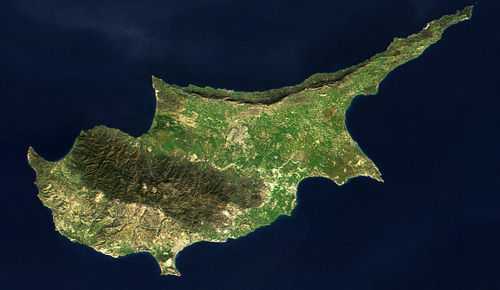
    For years Ankara’s foreign policy was fixated on a few narrow topics—how to handle the Greeks, the Kurds and Armenians—and Turkish policymakers seemed unable to solve even these chronic problems, let alone the problems of others. But these days Turkey has tackled such regional concerns with a new gusto—making the first real headway on the Cyprus issue in decades, for instance—while playing a far larger role in global affairs. In May Turkish Prime Minister Recep Tayyip Erdogan’s government mediated indirect peace talks between Syrian and Israeli officials in Istanbul. The talks are now ongoing, and further meetings have reportedly been scheduled. Erdogan also recently stepped forward to offer help to U.S. President-elect Barack Obama to deal with Iran, which Turkey’s prime minister and many others expect to be Obama’s biggest foreign-policy challenge. On November 11 Erdogan told The New York Times his government was willing to be the mediator between the new U.S. administration and Tehran. “We are the only capital that is trusted by both sides,” he reiterated later in Washington. “We are the ideal negotiator.”

    This surge of interest in becoming something of a global peacemaker is in part the result of the ongoing process of Turkish democratization. The nation’s old elite consisted of the more isolationist Kemalists, the dedicated followers of Mustafa Kemal Atatürk, who established a republic without democracy in 1923 to westernize and secularize the nation. For many decades to come, society remained divided between the dominant Kemalist center and the more traditional periphery it kept under its thumb. But things fundamentally changed after the election victories of Erdogan’s Justice and Development Party (AKP) in 2002 and 2007. The “other Turkey” was now out of the periphery and into power, and while it proved to be more religious than the old elite, it also proved to be more pro-Western, and more committed to the European Union accession bid than its growingly xenophobic secular rivals.

    This was not simply a convenient tactic, as some have argued. Turkey’s conservative Muslims had been undergoing a silent reformation since the 1980s, as evidenced by the country’s growing “Islamic bourgeoisie,” which sees its future in global markets, not Sharia courts. Ideas about the compatibility of Islam and liberal democracy flourished, as recently evidenced by headscarved women rallying in the streets for civil liberties for all.

    Meanwhile, Ahmet Davutoglu, an erudite scholar who became Erdogan’s chief adviser, outlined a new foreign-policy vision. Turkey had unwisely denied its cultural links with the Middle East for decades, he argued, but the time had come to turn Turkey into a “soft power” that exports peace, stability and growth in its region. Hence came the rapprochement in recent years and months with Greece, Lebanon, Iraq, Iraqi Kurdistan and most recently Armenia, where President Abdullah Gül paid an ice-breaking visit in September.

    Kemalist Turks dislike this “neo-Ottoman” approach, which prescribes closer relations with other Muslim nations. When Erdogan greets his Arab counterparts “in the name of God,” they are horrified and argue that the country’s secular principles are under threat. And to garner support from Westerners who are concerned about political Islam, for good reasons, they try to depict the AKP as Taliban in sheep’s clothing. But, in fact, a democratic Turkey that has respect in Muslim capitals, that can speak their language and that is willing to use this leverage for peace and reconciliation is exactly what the West needs.

    Some in the West fear this approach as well, taking notice of AKP’s interests in Islam and the rampant anti-Americanism in Turkey, and sometimes conflating and confusing the two. Yet that anti-American wave is a reaction to the Iraq War and its aftermath. By empowering the Kurds in the north, the post-Saddam era unleashed the deepest of all Turkish fears: the emergence of a Greater Kurdistan. In other words, anti-Americanism is almost a derivative of anti-Kurdism, and, not too surprisingly, is strongest in the nationalist circles, which include the Kemalists. These groups, represented by the two main opposition parties, deride the AKP as American puppets and Kurdish collaborators. A 2007 bestselling book, whose Kemalist author was covertly financed by the military intelligence, even argues that both Erdogan and former AKP member President Gül are actually covert Jews who serve “the elders of Zion” by undermining Atatürk’s republic.

    Turkey’s new elites are not covert Jews as some fringe Kemalists fantasize, of course. But neither are they creeping Islamists as smarter Kemalists portray. In fact they are Muslim democrats, who can both take Turkey closer to becoming a true capitalist democracy and inspire other Muslim nations to follow a similar route. For sure, they need to combat ugly nationalism inside their borders and take continued steps toward deepening liberal reforms. With such a combination of sound domestic leadership and visionary foreign policy, they would be ideal partners for the Obama administration in its own effort to reach out to the troublesome actors in the Middle East.

    Akyol is a columnist for Istanbul-based Hürriyet Daily News & Economic Review.

    © 2008

    Source: Newsweek, 6 December 2008

  • Greek riots signal troubled future for Europe

    Greek riots signal troubled future for Europe

    WASHINGTON, Dec. 11 (UPI) — Cleanup teams started work on repairing an estimated $300 million worth of damage in Athens Thursday, but as Greece still simmered from its worst riots in 40 years, fears grew around Europe that the violence may be a sign of the shape of things to come.

    For the first time since last Saturday, life seemed to be returning to normal in the capital, but there were reports of high school students joining the violence and demonstrating outside police stations across the country.

    Sympathy demonstrations in Madrid and Barcelona also turned violent.

    The riots centered on the central Athens district of Exarchia. They were set off last Saturday when two police officers dealing with a gang of youths shot a 15-year-old boy dead. A lawyer representing the two police officers Thursday said forensic examination showed the fatal bullet was badly deformed, indicating it had hit the teenager only after ricocheting off another surface.

    The government of Prime Minister Kostas Karamanlis has responded to the riots with a textbook case of weakness, delays and appeasement.

    Karamanlis was badly discredited, to begin with, following major corruption scandals that forced the resignation of two senior ministers, and his party is hanging onto power in the Greek Parliament by a majority of only a single vote.

    The government failed to rush in sufficient police and troops to smother the protests in Athens after the first days of disturbances, and as a result scores of banks and department stores in Exarchia were rapidly reduced to burned-out hulks. The Athens Trade Association estimated the total cost to the national economy of the destructive attacks around the country to be as high as $1.3 billion.

    Greece is no stranger to fiery national protests, but the extent and fierceness of the rioting and the damage it has caused are unprecedented in the country for at least 40 years.

    As was the case in the U.S. inner-city riots of the 1960s, pundits, politicians and self-proclaimed “experts” have offered as many explanations, causes and even justifications for the riots as there are stars in the sky.

    Greek commentators have described the protests as an eruption of anger by the “600 euro a month” people — members of the Greek underclass who earn only that amount or less. Anti-immigration campaigners have even claimed that Islamic activists were involved in stirring up the violence, though the evidence for that seems almost non-existent at the moment.

    Students were certainly involved. One major question, therefore, is whether these riots were just sparked by anger at the economic downturn in Greece, or whether they set off a continent-wide fashionable season of protest leading to more widespread violence across other nations of the 27-nation European Union.

    Greece is one of 15 nations in the EU that have the euro as their common currency. Slovakia is scheduled to become the 16th nation to join the eurozone on Jan. 1.

    But the global economic crisis has hit the smaller, more vulnerable nations of the European Union like Greece, Ireland and Belgium very hard. And the common euro currency has deprived the national governments in Athens, Dublin and Brussels of their old economic safety valve of devaluing their local currencies.

    The euro, in fact, has become a trap for such smaller and more financially exposed European nations. To pull out of the common currency now would risk triggering a full-scale banking crisis and economic meltdown in any of them.

    The Greek riots are certainly not unprecedented in recent European affairs. France has suffered far more violent and widespread mob violence in widespread clashes with gangs of immigrant youths who for months at a time made vast poor neighborhoods around Paris and other cities virtual no-go areas for the police.

    But the Greek riots are noteworthy because they are the first widespread expression of urban anger in Europe since the global financial crisis erupted out of the Wall Street financial meltdown in September. The central role of the students also recalls the destabilizing role a large, overeducated but impractical and underemployed student population played in the fierce anti-American riots that swept Europe 40 years ago.

    American and European intelligence and senior police officers have privately expressed concern for many years that the combination of low economic growth and generous, perpetual welfare benefits in many European countries was creating an angry, alienated subclass that could turn resentful and hostile to public safety and responsibility, especially when economic times turned tough.

    The violence across Greece suggests those fears may be tested very soon.

  • THE FUTURE OF TURKEY?

    THE FUTURE OF TURKEY?

    Ramday Javed Iqbal (lead)

    Alistair Corbett

    October 2008


    The Royal College of Defence Studies


    RCDS 2008 – CONTEMPORARY STRATEGIC ISSUES

    Key Judgements

    Turkey is likely to internally consolidate its democracy, resolve conflict between secularism and political Islam and sustain economic growth. Some tension between democratic forces and secular elite will remain.


    The Kurdish problem will slightly ease up due to mitigating internal political developments but essentially stay frozen due to external regional situation.

    While Turkey-EU dialogue will continue, Turkey is likely to face continuous hurdles in securing full membership of the EU, in the foreseeable future.

    Turkey’s position as a hub of energy pipelines linking Caspian Sea with Europe will increase its importance to EU for its energy security.

    In view of the efforts at resolution of Cyprus issue the likelihood of its settlement has increased.

    The EU attitude towards Turkish membership, Russian reassertiveness in her “near abroad”, the stability and orientation of the Persian Gulf region, Chinese influence in Central and West Asia and the orientation of the future Iraq will determine Turkey’s role as regional power.


    Discussion

    Having lost an empire Turkey has been trying to find its soul for a century. Internally, it decided to make a break with the imperial past by opting for a harsh form of western secularism. Economy remained on the rocks. Turkish nationalism was brittle and paranoid. Externally, problems with Greece persisted even as both had membership of NATO. The twenty first century has begun with changes in the internal and external scene for Turkey. How Turkey perceives threats and opportunities in the new environment will dictate the future of Turkey. This paper essentially follows and examines dominant factors to draw relevant conclusions and reach key judgments.


    Secularism vs Political Islam. In recent years the long drawn battle between secularism and political Islam has come to the fore. Although Justice and Development Party (AKP) is not yet clearly out of the woods the tide of political legitimacy seems to be turning in favor of democratic forces. The military and judiciary seem to have realized that, political space will have to be conceded to democratic forces particularly when it brings along economic prosperity, keeps Turkey on track for EU membership and safeguards the security interests. Slowly, and due to EU membership requirements, the democratic culture will mature in the mid-term.

    Economy. After the shock of 2001, Turkey embarked upon macro institutional reforms opening up the economy, within the framework of an IMF programme. As a result, Turkish economy has witnessed sustained and robust growth. The current global financial crises will impact Turkey less than others. Having received the dividends it is unlikely that any government will reverse course.

    Kurds. No other security issue has engaged the Turkish mind and energies as the Kurdish problem. The broader issue is not the PKK but Kurdish independence. The US invasion of Iraq and resultant autonomy for the Kurds in the north has raised the spectre of an independent or autonomous Kurd region with Kirkuk oil wealth. This could further create a pull on the Turkish Kurds. In the past, Turkish response to the challenge has been brutal suppression of any Kurdish cultural or political expression. Recently, in addition to military operations the AKP government has slightly eased the political environment. While this may work, the external regional linkages are likely to strain the Turkish restraint in the foreseeable future. The issue will continue to dog Turkish governments for at least another generation.

    EU. The AKP government has undertaken several political, legal and economic reforms to prepare itself for EU membership. It has also maintained a steady political course for securing membership. Meanwhile, it has made reasonable economic progress, remains important to European energy security and made moves to reduce the baggage of its Cyprus issue. On the EU side however, still there are significant historical, religious and psychological barriers to Turkish entry in to the club. In the mid-term this could change. However, this is not, and will not be a settled issue till at least 2015. Eventually, Turkey may choose to be a beneficiary of EU “variable geometry” (ie not a full member but economically integrated while independently sovereign). Turkey will certainly continue to seek markets and allies to the east also.

    US and NATO. Increasingly, Turkey’s anchors to the west are drifting or are under strain. NATO, for decades the bedrock of Turkey’s western identity, particularly for its influential military, has lost lustre. Despite laudable garden-tending by senior officials on both sides, US-Turkish relations have not recovered the depth and breadth they had in the 1990’s. This is happening at a time when Middle East, West Asia, Central Asia and Caucasus are transforming and Turkey’s relevance to the US is increasingly going to come to the fore. Recently, in the wake of August war in Georgia, Turkey has opposed introduction of NATO forces in to the Black Sea. While a dramatic NATO split is not envisaged, in the future the alliance will come under strain.

    Greece and Cyprus. Turkey – Greece rivalry goes back several centuries. However, starting in 1999, the earthquake diplomacy has helped thaw the relations and Greece has supported Turkey’s candidacy for EU membership. Meanwhile, Greek Cyprus has joined the EU – granting Nicosia a veto over all things Turkish. There are efforts at hand to resolve the Cyprus issue. Should they succeed, they will free Turkey from a significant burden and improve her chances for the EU membership as well. 

    Conclusions


    Turkey is the heir to the Ottoman Empire, which at various points dominated the eastern Mediterranean, North Africa, the Balkans, the Arabian Peninsula, and the Black Sea region until it met the expanding Russian empire. Its collapse after WW-I created an oddity – an inward looking state in Asia Minor. It sat out 20th century or allowed its strategic space to be used. The situation has changed dramatically.


    Turkey is at a critical stage in its quest for a democratic political dispensation and economic upswing. The road ahead remains rocky. However, the signs indicate that Turkey will most likely stay the course and internal stability will lead to its increased potential for playing a regional role.

    Turkey has quietly emerged as the prize in a new great game over who will develop and bring to the EU / world markets the vast oil and gas resources of the Central Asian states. Turkey will in the years ahead become one of the world’s major energy hubs, supplied by the pipelines which will crisscross Anatolia. It will depend on US and EU as to where those lines run and whose products pass through those lines.

    Turkey’s EU project faces a hopeful but uncertain future. The relevance of NATO has dimmed. The US nexus has fallen victim to the US invasion of Iraq and support for the Iraqi Kurds. Yet, all this happens at a time when Turkey is rising and in the future the West’s need for Turkey will increase. The strategic spaces around Turkey are all in turmoil. They have also been traditional areas of Turkish influence. Turkey will inevitably attempt to influence these spaces. How and to whose advantage this happens will depend as much on US / EU, as on Turkey.


    Ramday Javed Iqbal (lead)

    Alistair Corbett

  • Soul-Searching in the CHP: Baykal’s “Chador Opening”

    Soul-Searching in the CHP: Baykal’s “Chador Opening”

    Soul-Searching in the CHP: Baykal’s “Chador Opening”

    Publication: Eurasia Daily Monitor Volume: 5 Issue: 236
    December 11, 2008
    By: Saban Kardas

    Deniz Baykal, the leader of the main opposition Republican People’s Party (CHP), kindled a controversial debate in Turkish politics when he introduced his new project to reach out to conservative circles. During a party meeting, Baykal pinned party rosettes on women wearing black chadors (carsaf), welcoming them to the CHP (www.ntvmsnbc.com, November 17). Since then, Baykal’s “chador initiative” has sparked a major debate within the CHP as well as between the CHP and other parties.

    The initiative was surprising to many, because the CHP, like Turkey’s military and higher echelons of the judiciary, has presented itself as a major defender of Kemalist principles, in particular the narrow interpretation of secularism. After all, it was the CHP that brought the case before the Constitutional Court earlier this year, demanding the annulment of legislative changes that would have enabled girls with headscarves to attend universities. The court, sharing the same worldview as the CHP, annulled those changes in June (EDM, June 5).

    Given the party’s previous position on the headscarf issue, criticism was expressed across the political spectrum over Baykal’s latest political move. Pundits in conservative and secularist camps slammed Baykal’s move: for the former, it was insincere (Vakit, November 23); and for the latter it was a regression from the gains of the Kemalist revolution and a step toward Shari’a rule (Hurriyet, November 20). Both camps believe that Baykal is seeking to make inroads into conservative circles but that the effort will be futile. Others also noted the women Baykal met were not representative of conservative women; they joined the party only because of their husbands’ opportunistic hopes of gaining political positions (www.internethaber.com, November 20).

    Some of the CHP’s political opponents found this initiative a tactical move to attract conservative voters in the forthcoming local elections. Ironically, Culture and Tourism Minister Ertugrul Gunay, who is a former secretary-general of the CHP and a member of the governing Justice and Development Party (AKP) since 2007, sharply criticized the move. “This is mere vote hunting. Far from being a [libertarian] opening, I see this as abuse,” he said. Gunay, however, also fired a few shots at his own party’s supporters, by referring to the chador as outmoded apparel for women (Sabah, December 6). Gunay’s position contrasted with Prime Minister Recep Tayyip Erdogan’s sympathetic response to his archenemy Baykal. Erdogan congratulated Baykal for this courageous move and encouraged him to be vigilant against criticism (www.ntvmsnbc.com, November 25).

    In response to charges of pragmatism, CHP officials stressed that this development was sincere and was demanded by the party’s grass-roots supporters. In defense of his position, Baykal said, “Turkey is going through a healthy debate. This is not a [political] opening, but rather completely humanitarian and ethical behavior.” Noting that 70 percent of Turkish women cover their hair, Baykal added that chador was a traditional outfit in Turkey, not a political symbol. Arguing that the CHP valued people for their opinion, not their appearance, he added that his party was open to those who did not have problems with secularism and the state. (ANKA, November 26).

    When criticism from within the secularist camp continued unabated, Baykal took further radical steps and argued that the CHP should engage in self-criticism and come to terms with the mistakes in its past, acknowledging that there might have been undue interference in people’s private lives. Viewing people’s clothing as a challenge to the state “is a mentality of a one-party regime. Everybody has to abandon that obsession.” Noting that Turkey was already socially fragmented, Baykal confronted his critics and maintained that the CHP could not afford the luxury of dividing the country further by judging people based on their appearance (Yeni Safak, December 3).

    Nonetheless, the “chador initiative” has provoked enmity within the CHP. Baykal’s call for a critical reflection on the party’s past angered more radical voices. Necla Arat, a parliamentary deputy from Istanbul and one of the fervent advocates of the headscarf ban, disparaged Baykal. She said that “criticizing practices during the era of Ataturk and Ismet Inonu [the second president of Turkey] because of ‘one-party-rule’ is unfortunate. My friends and I have started wondering whether the party is betraying its heritage [reddi miras].” Scores of other CHP deputies reportedly share Arat’s opinion (Hurriyet, December 4).

    A rather surprising attack on Baykal came from the leader of the Nationalist Action Party (MHP), Devlet Bahceli, who said that this issue was, in fact, a non-issue and did not correspond to the real problems of the people. He said, “As part of the Greater Middle East Project, there is an attempt to shape Turkish politics through moderate Islam… The Right pillar of moderate Islam is the AKP…Is there an attempt to erect a Left pillar of moderate Islam through this opening?” (Anadolu Ajansi, December 9).

    Baykal issued a written response to Bahceli, in which he drew a distinction between a legitimate right to certain religious freedoms and moderate Islam as a political project. Baykal attacked Bahceli by saying, “only those who either abuse religion or come from a tradition of setting political traps [referring to the MHP’s controversial role in urging the AKP to pass the constitutional amendments on headscarves] will dislike this [the CHP’s defense of religious freedom]” (ANKA, December 10).

    Baykal indeed took a bold step by opening one-party rule to debate and indicating that the CHP would defend religious freedom, but there are grounds for being skeptical about the prospects of the “chador initiative.” As political scientist Bekir Berat Ozipek says, having ruled the country singlehandedly during the one-party-era (1923-1950), the CHP has not been able to adapt itself to competitive electoral politics since Turkey moved to multi-party rule in the 1950s (Today’s Zaman, December 8). Indeed, the CHP’s critical distance from the masses and their lifestyles and its modernization project of transforming Turkish society have shaped the identity of the party’s core grassroots. Therefore, even if Baykal’s intentions were sincere, many analysts like Ozipek are skeptical about the CHP’s ability to transform itself from a statist party to a liberal party embracing human rights and religious fr
    eedom.

    Skeptics also refer to Baykal’s track record. He promised in the 1990s to develop a new platform that would be called the Liberal Left or the Anatolian Left and would represent the conservative people. For some, this project failed because of Baykal’s low credibility and unprincipled pragmatism (www.internethaber.com, November 20). Ozipek believes that those steps were never taken, because such a move would contradict the identity and the ideology of the CHP’s core secularist constituency. Ozipek put it sarcastically: “a party leader could experience such enlightenment all of a sudden, but expecting a change in party politics in such a brief period of time would be naïve.”

    https://jamestown.org/program/soul-searching-in-the-chp-baykals-chador-opening/